A honing stone’s grit matrix determines whether your kitchen edge shaves or just scrapes. Too coarse and you carve grooves into the apex; too fine and you polish a dull belly all day. The real work lies in matching abrasive type—natural novaculite, synthetic corundum, or monocrystalline diamond—to the alloy hardness of your blade.
I’m Mohammad Maruf — the founder and writer behind AirfryerBite. I spent months cross-referencing particle density, binder hardness, and flattening frequency across nine distinct honing stone models to isolate which grit progression actually delivers a lasting, micro-serrating apex.
After comparing grain size consistency, wash-out resistance, and dish rates under sustained use, the best honing stone for most knife owners prioritizes a tight flatness tolerance and a dual-grit progression that bridges repair and polish without an awkward gap.
How To Choose The Best Honing Stone
Selecting a honing stone requires matching the abrasive material and grit structure to your blade steel. Diamond stones cut super-hard powdered metallurgy alloys instantly, while softer alumina ceramics produce a finer polish on traditional carbon steels. Ignoring this match leads to either a stone that glazes over or a blade that chips.
Abrasive Type: Diamond vs. Ceramic vs. Natural
Monocrystalline diamond plates sharpen any steel hardness but require no soaking and never dish out of flat. Ceramic stones like Shapton’s Kuromaku series offer a creamy cutting feel with slow wear but need periodic flattening. Natural Arkansas novaculite produces a refined edge on simple carbon blades but cuts too slowly on high-vanadium alloys. The right choice depends entirely on whether you own basic stainless or advanced CPM-series steels.
Grit Progression and Gap Management
A single coarse grit tears the edge; a single fine grit polishes without setting the apex. The optimal honing stone kit offers a coarse-medium-fine ladder with no jump larger than 2000 grit between steps. Kits that skip from 400 directly to 6000 force you to spend excessive time on the finer side just to remove deep scratches, wearing the stone unevenly.
Flatness Tolerance and Stone Stability
Every stone dishes over time. Premium brands specify flatness within 0.002 inches, ensuring consistent blade angle contact across the entire surface. Stones with high dish rates—typical of soft water stones under heavy pressure—require frequent flattening with a lapping plate. A non-slip base or rubber pad prevents the stone from shifting mid-stroke, which ruins the apex alignment.
Quick Comparison
On smaller screens, swipe sideways to see the full table.
| Model | Category | Best For | Key Spec | Amazon |
|---|---|---|---|---|
| SHARPAL 168H | Diamond | Hard powdered steels | 325/1000 grit diamond, 8″ x 3″, ±0.002″ flatness | Amazon |
| Shapton Kuromaku A-set | Ceramic | Fine polish on chef knives | 1000/5000 grit ceramic, 210 x 70 mm | Amazon |
| Norton IM200 | Oil Stone | Restoration & multi-tool | 100/150/320 grit trio, 11.5″ stones | Amazon |
| KING Starter Set | Water Stone | Beginner kit with angle holder | 1000/6000 grit combo, soaking required | Amazon |
| Goodjob Full Kit | Corundum | Complete home bundle | 400/1000 and 3000/8000 dual stones | Amazon |
| Work Sharp Benchtop | Corundum | Guided angle sharpening | 1000/6000 grit, water control base | Amazon |
| Goodjob 3-in-1 Diamond | Diamond | Versatile all-in-one grit | 400/1000/8000 diamond & ceramic | Amazon |
| KING K#1200 | Water Stone | Entry-level medium stone | 1200 grit aluminum oxide, soaking | Amazon |
| Dan’s Arkansas Fine | Natural | Pocket carry field touch-up | Fine grit novaculite, 3″ x 1″ | Amazon |
In‑Depth Reviews
1. SHARPAL 168H Dual-Grit Diamond Sharpening Stone
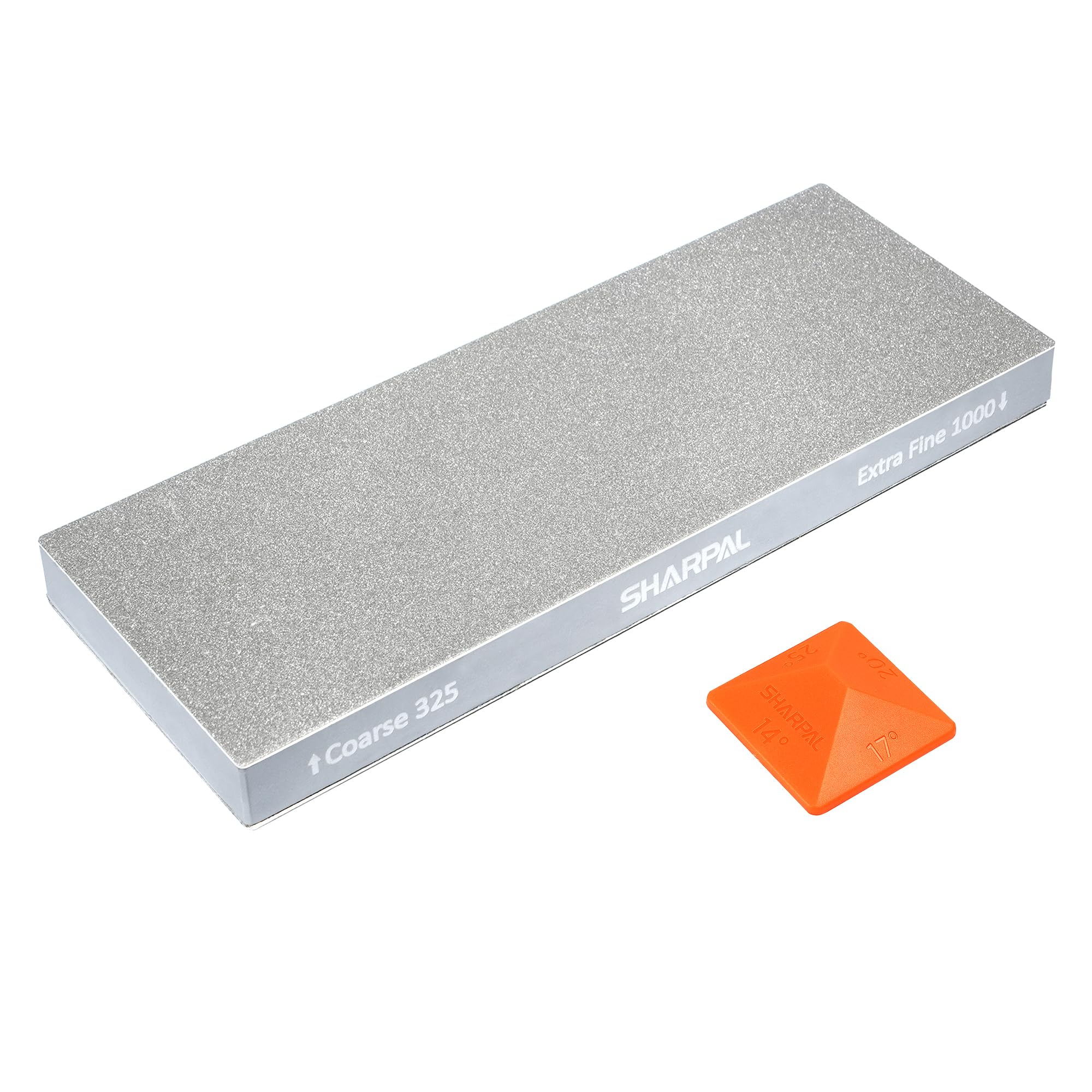
The SHARPAL 168H uses monocrystalline diamond particles anchored via a three-times electroplating process, preventing the particle pullout common with cheaper polycrystalline plates. The 325 grit (45 micron) side tears through dull apexes on CPM-M390 and Elmax alloys without glazing, while the 1000 grit (15 micron) side refines the edge to a shaving-ready finish. MirrorFlat technology holds the working surface to within 0.002 inches, eliminating the high-spot wobble that ruins bevel consistency.
Measuring 8 inches by 3 inches, the plate provides enough real estate to sharpen a full chef’s knife in a single continuous stroke, reducing the guesswork of segmented passes. The included angle pyramid offers four common settings (14°, 17°, 20°, 25°) to guide muscle memory without clamping the blade into a fixed sled. No soaking is required—the diamond surface works dry or with a light water mist, making it ready for immediate use.
Experienced sharpeners will appreciate that this stone never dishes out of flat, a critical advantage over soft water stones that require regular lapping. The non-slip silicone pad grips most counter surfaces firmly, and the steel backing plate adds enough mass to resist sliding under heavy pressure. For anyone routinely sharpening high-hardness super steels, this is the most efficient honing path available.
Why it’s great
- Cuts even the hardest powdered metallurgy steels instantly
- Zero dish rate means no flattening maintenance over its lifespan
- Large 8″ x 3″ surface supports full-length knife strokes
Good to know
- Diamond surface feels more aggressive than ceramic stones; requires lighter pressure
- The 1000 grit side leaves a slightly toothier edge than a 6000 grit water stone
2. Shapton Ha No Kuromaku A-set (1000 + 5000 Grit)

The Shapton Kuromaku series—often called the “Pro” line—features a dense ceramic binder that releases fresh abrasive particles at a consistent rate without the rapid dishing of soft King stones. The 1000 grit stone cuts aggressively enough to reset a dull bevel on VG-10 or AUS-8 steel in under two minutes, while the 5000 grit stone refines the scratch pattern to a near-mirror finish suitable for sushi-grade knives. Both stones come in ventilated plastic storage boxes that double as work-holding bases.
These stones require a brief soak of roughly one minute—far shorter than traditional water stones—because the ceramic binder is less porous. The working surface measures 210 mm by 70 mm, slightly narrower than full-size diamond plates, which means chefs repairing a 240 mm gyuto must execute a slightly diagonal stroke to cover the entire edge. However, the feedback is exceptional: the stone transmits a tactile “grab” when the blade is held at the correct angle.
In terms of longevity, Kuromaku stones dish significantly slower than King’s standard line, needing flattening only after dozens of sessions. The 5000 grit side produces a polished edge that pairs well with a leather strop loaded with green compound. For a sharpener who wants a fast-cutting yet refined finishing stone that fits in a standard kitchen drawer, this pair represents the gold standard of ceramic whetstones.
Why it’s great
- Slow dish rate extends time between flattening intervals
- 1000 grit cuts fast enough to repair moderately dull edges
- Integrated plastic base keeps the stone stable during work
Good to know
- Narrower working width requires diagonal strokes on long blades
- Requires a light soak despite ceramic construction
3. Norton IM200 Knife Sharpener Oil Stone Kit

Norton’s IM200 kit bundles three oil stones—100 grit silicon carbide for chip repair, 150 grit silicon carbide for edge setting, and 320 grit aluminum oxide for honing—mounted in a rotating bench unit. The oil reservoir base keeps the stones lubricated continuously, preventing metal swarf from clogging the pores. The 11.5-inch stone length accommodates even the longest hunting or fillet knives without requiring multiple passes.
The rotating axis allows the user to flip between grits without removing the blade, speeding up the progression from repair to final honing. An included plastic angle guide clips onto the blade to maintain a consistent bevel angle, though experienced sharpeners may remove it for freehand work. The rubber feet and lid stabilize the unit on the workbench and keep the stones clean when stored.
This system excels at restoring heavily damaged edges and maintaining older carbon steel blades that benefit from oil lubrication rather than water absorption. However, the 320 grit honing stone produces a working edge rather than a polished one—users wanting a razor polish will need a separate fine ceramic stone. For a workshop or garage environment where knives arrive chipped and dull, the IM200 delivers unmatched restoration speed.
Why it’s great
- Three-grit progression covers repair, sharpening, and honing
- Long 11.5-inch stones handle large blades easily
- Rotating base keeps workflow sequential without removing the knife
Good to know
- Requires honing oil; not compatible with water
- Finest grit (320) leaves a toothy edge unsuitable for fine cutlery
4. KING Whetstone Starter Set (1000/6000 Grit)

This KING starter set packages the classic 1000/6000 grit combination stone with a plastic angle holder, a wiping cloth, and a non-slip base—everything a novice needs to produce their first sharp edge. The 1000 grit side cuts at a moderate speed on kitchen stainless steels, while the 6000 grit side polishes the apex to a refined finish. Soaking in water for five to ten minutes is required before use.
The angle holder features two ceramic guide rods that maintain a fixed bevel angle, eliminating the guesswork of freehand sharpening for beginners. The wiping cloth removes loose slurry and swarf between grit changes, keeping the stone surface clean. The plastic base includes rubber feet to prevent sliding, though the combination stone itself is only 9 inches long, which requires multiple passes on larger chef’s knives.
Advanced users should note that KING stones dish more quickly than Shapton or diamond alternatives, requiring periodic flattening with a lapping or flattening stone. However, the 1000/6000 jump is practical: the 1000 grit sets a clean bevel, and the 6000 grit refines it without an excessive gap. For a home cook investing in their first honing stone system, this set provides a gentle learning curve with everything included.
Why it’s great
- Angle holder takes the angle-setting guesswork away from beginners
- Complete bundle includes stone, base, cloth, and guide
- 1000/6000 grit pair is a practical home kitchen progression
Good to know
- Stone dishing is faster than premium ceramic or diamond plates
- Requires soaking before each use—not instant dry operation
5. Goodjob Complete Knife Sharpening Stone Kit

Goodjob’s comprehensive kit delivers two dual-grit water stones—400/1000 and 3000/8000—plus a bamboo base, cut-resistant gloves, a honing guide, a leather strop, and green polishing compound. The 400/1000 stone handles coarse repair and edge restoration, while the 3000/8000 stone advances through medium refinement to a fine polish. The corundum abrasive is fired at 2000 degrees using Japanese Osaka production techniques, giving the stones a consistent wear rate.
The bamboo base provides a stable, non-slip platform for both stones, and the included honing guide attaches to the blade to lock in angles for beginners. The leather strop paired with green compound allows final edge refinement after the 8000 grit stone, producing a hair-whittling apex if the progression is followed correctly. The cut-resistant gloves add safety for users still developing consistent pressure control.
The largest drawback is the aggressive grit jump from 1000 to 3000, which requires more passes on the 3000 side to fully erase the scratch pattern left by the 1000. Additionally, the stones are relatively soft and will dish faster than premium alternatives, requiring flattening every few sharpening sessions.
Why it’s great
- Full 400-to-8000 grit coverage in a single bundle
- Includes leather strop and compound for final polishing
- Cut-resistant gloves and honing guide support novice sharpeners
Good to know
- Grit gap between 1000 and 3000 adds extra sharpening time
- Soft stone material requires more frequent flattening
6. Work Sharp Benchtop Whetstone Knife Sharpener

The Work Sharp Benchtop combines a 1000/6000 grit corundum water stone with a water-control base that collects slurry and minimizes cleanup. The base includes a sponge-lined reservoir that keeps the stone surface lubricated as you sharpen, while the anti-skid mat prevents movement. Two removable sharpening guides set the bevel angle at either 15° or 17°, covering most kitchen and outdoor knife geometries.
The 1000 grit side cuts efficiently on 3Cr13 and 440C stainless steels commonly found in mid-range kitchen knives, and the 6000 grit side hones the apex to a crisp, polished edge. The guides can be detached entirely for freehand sharpening, giving the user flexibility as they gain experience. The stone measures 4 inches by 2.25 inches, which is smaller than full-size whetstones and requires more passes on long blades.
Work Sharp backs this unit with a limited lifetime warranty, reflecting confidence in the corundum’s durability. The main limitation is the stone’s compact footprint—users with 10-inch chef’s knives will need to execute multiple overlapping strokes rather than a single sweep. However, for those transitioning from pull-through sharpeners to a guided fixed-angle system, the visual feedback and water control make this a clean, confidence-building introduction to water stone sharpening.
Why it’s great
- Water-control base keeps the surface lubricated and reduces mess
- Removable angle guides stabilize inexperienced hands
- Limited lifetime warranty backs the build quality
Good to know
- Smaller stone surface requires multiple passes on larger knives
- Base design is less stable on uneven counters
7. Goodjob 3-in-1 Diamond Sharpening Stone (400/1000/8000)

This three-sided stone from Goodjob integrates two diamond plates—400 grit and 1000 grit—and an 8000 grit ceramic surface into a single block. The 400 diamond side removes chips and resets bevels on any steel hardness, the 1000 diamond side refines the edge, and the 8000 ceramic side polishes to a mirror finish. All three surfaces are bonded to a wide non-slip plastic base that keeps the stone stable during aggressive strokes.
The included angle guide offers 14°, 17°, and 20° settings, matching common kitchen and pocket knife bevel angles. The diamond plates work dry or with water, while the ceramic side benefits from a light water spray to prevent clogging. The stone measures 10.35 inches by 4.15 inches, providing ample length for full-pass strokes on most chef’s knives.
Three years of after-sales support add peace of mind for first-time buyers. However, the jump from 1000 grit diamond directly to 8000 grit ceramic demands more polishing passes to remove the coarser scratch pattern. Some users may prefer to add a separate 3000-5000 grit intermediate stone for smoother progression. For a single tool that spans aggressive repair to fine polishing, this three-sided design packs exceptional versatility into a compact footprint.
Why it’s great
- Three grits in one solid block saves storage and setup time
- Diamond surfaces cut any steel hardness effectively
- Large base provides excellent stability during use
Good to know
- 1000 to 8000 grit gap is too wide for optimal scratch progression
- Ceramic side wears faster than diamond; requires light pressure
8. KING K#-WHET STONE (1200 Grit)

KING’s 1200 grit water stone is a single-sided medium stone made from aluminum oxide abrasive. It sits at the sweet spot for daily touch-ups—aggressive enough to remove minor dulling but fine enough to leave a usable edge without a finishing stone. The 8.8-inch length provides sufficient surface area for most kitchen knives, and the standard soaking requirement of five minutes ensures the stone is saturated before cutting begins.
Despite its moderate price, this stone delivers a consistent cut rate on common blade steels like VG-10, 8Cr13MoV, and AUS-8. The abrasive releases at a steady pace, maintaining fresh cutting particles throughout the session. The brown color is uniform and the stone sits flat out of the box, though it will dish over time with regular use and require a flattening plate.
There is no included base, guide, or storage case—this is a bare stone intended for freehand sharpeners who already own accessories. Serious practitioners often pair it with a KING 6000 grit stone for a complete coarse-to-fine progression. For an entry-level stone that puts a functional, sharp edge on everyday kitchen knives without breaking the bank, this single-grit stone is a reliable workhorse.
Why it’s great
- 1200 grit is versatile for both dull revival and edge refinement
- Consistent abrasive release maintains cutting efficiency
- 8.8-inch stone supports comfortable strokes on most kitchen blades
Good to know
- No base or guide included; requires separate accessories
- Soft binder dishes faster than premium ceramic alternatives
9. Genuine Arkansas Hard Fine Pocket Knife Sharpening Stone

This pocket-sized stone from Dan’s Whetstone Company is cut from genuine Arkansas novaculite—a natural microcrystalline quartz that produces a fine, consistent abrasive surface. At just 3 inches long, 1 inch wide, and 0.25 inches thick, it slides into a leather pouch that fits in a pocket or pack. The fine grit is equivalent to roughly 600-800 mesh, making it suitable for field touch-ups on hunting, fishing, or EDC knives.
Users must apply water or light oil as a lubricant; the stone absorbs moisture slowly but cuts best when wet. The natural stone composition means color varies between white and grey with streaks and spots that do not affect performance. On carbon steels like 1095 and AUS-8, the novaculite raises a burr quickly and hones a keen edge with only a dozen strokes per side.
The primary limitation is size: longer blades cannot be sharpened in a single pass, and the small surface demands frequent cleaning as swarf builds up. The fine grit is also too refined to repair chipped edges—users need a separate coarse stone for that task. For a lightweight, zero-maintenance honing solution that lives in a hunting pack or emergency kit, this natural Arkansas stone offers authentic material provenance and reliable field performance.
Why it’s great
- 100% natural Arkansas novaculite—no synthetic binders
- Ultra-portable 3-inch design fits in any pocket or pouch
- Leather case protects the stone and prevents bag damage
Good to know
- Too small for full-length chef’s knife strokes
- Fine grit only; cannot repair chipped or heavily dulled edges
FAQ
Can I use a honing stone on ceramic kitchen knives?
How often should I flatten a water stone versus a diamond plate?
Is it better to soak a honing stone in water or use oil for lubrication?
Final Thoughts: The Verdict
For most users, the best honing stone winner is the SHARPAL 168H because it cuts the widest range of steel hardnesses with zero maintenance flatness. If you want a traditional water stone feel with a refined polish, grab the Shapton Kuromaku A-set. And for heavy restoration work on abused knives, nothing beats the Norton IM200 three-stone oil system.