The wrong board dulls blades quickly, harbors bacteria in deep scratches, or warps after a few washes. The right board becomes a daily workhorse that improves with age.
I’m Mohammad Maruf — the founder and writer behind AirfryerBite. I’ve spent years analyzing wood density, grain orientation, and adhesive construction across dozens of maple, walnut, acacia, and teak boards to separate durable builds from decorative pieces.
Whether you’re a home cook prepping nightly dinners or a weekend griller carving roasts, the best choice comes down to grain type, thickness, and wood species. This guide cuts through the marketing to help you find the best hardwood cutting board for your kitchen routine.
How To Choose The Best Hardwood Cutting Board
Not all hardwood cutting boards are created equal. The grain orientation, wood species, thickness, and added features determine whether a board protects your knives or destroys them. Here are the key factors serious buyers consider before purchasing.
End-Grain vs. Edge-Grain vs. Face-Grain
End-grain boards expose the wood fibers vertically, allowing knife blades to slide between the fibers rather than cutting through them. This self-healing property keeps your knives sharper longer and hides scratch marks naturally. Edge-grain boards are more affordable and still durable, but they show cutting marks over time. Face-grain boards are the least expensive but dull knives fastest. For daily heavy use, end-grain is the premium choice.
Wood Species and Hardness
Maple is the classic choice—hard enough to resist deep gouging yet gentle on blades. Walnut offers similar hardness with richer color and natural anti-bacterial properties. Acacia is exceptionally hard and water-resistant, though it can be tougher on knife edges. Teak provides excellent moisture resistance and a beautiful grain, but requires regular oiling. Avoid overly soft woods like pine or bamboo if you use sharp knives.
Thickness and Stability
A board less than 1.5 inches thick is prone to warping, especially if exposed to humidity or occasional moisture. Thicker boards (1.5 to 1.75 inches) add weight that prevents sliding and resist bowing over time. Rubber feet on some models provide additional stability, but a heavy end-grain board typically stays put on its own.
Juice Grooves, Handles, and Compartments
Juice grooves catch runoff from meat, fruit, and vegetables, keeping your countertops clean. Handles—whether cut-out or routed—make it easier to lift and move the board, especially when cleaning. Sorting compartments on the reverse side help organize prepped ingredients, a feature favored by meal preppers and charcuterie enthusiasts.
Quick Comparison
On smaller screens, swipe sideways to see the full table.
| Model | Category | Best For | Key Spec | Amazon |
|---|---|---|---|---|
| Sonder Los Angeles Alfred | End Grain | Premium everyday prep | 17x13x1.5 in Black Walnut | Amazon |
| CONSDAN Hard Maple | Edge Grain | Knife-friendly daily prep | 16x12x1.5 in Maple | Amazon |
| Teakhaus Butcher Block | End Grain | Moisture-resistant durability | 20x15x1.5 in Teak | Amazon |
| Yes4All Medium Teak | End Grain | Affordable end-grain entry | 17x13x1.5 in Teak | Amazon |
| BABILONIA Black Walnut | End Grain | Heavy-duty carving & serving | 19.7×12.2×1.7 in Walnut | Amazon |
| All-Clad Acacia | End Grain | Brand reliability & size | 19x14x1.5 in Acacia | Amazon |
| FANICHI Acacia End Grain | End Grain | Versatile prep & serving | 17x13x1.5 in Acacia | Amazon |
| WALDWERK Acacia Set | Edge Grain | Multi-size kitchen set | 3 boards + stand | Amazon |
| GAOMON Large Acacia | Edge Grain | Budget-friendly large board | 20x15x1.5 in Acacia | Amazon |
In‑Depth Reviews
1. Sonder Los Angeles Alfred Cutting Board
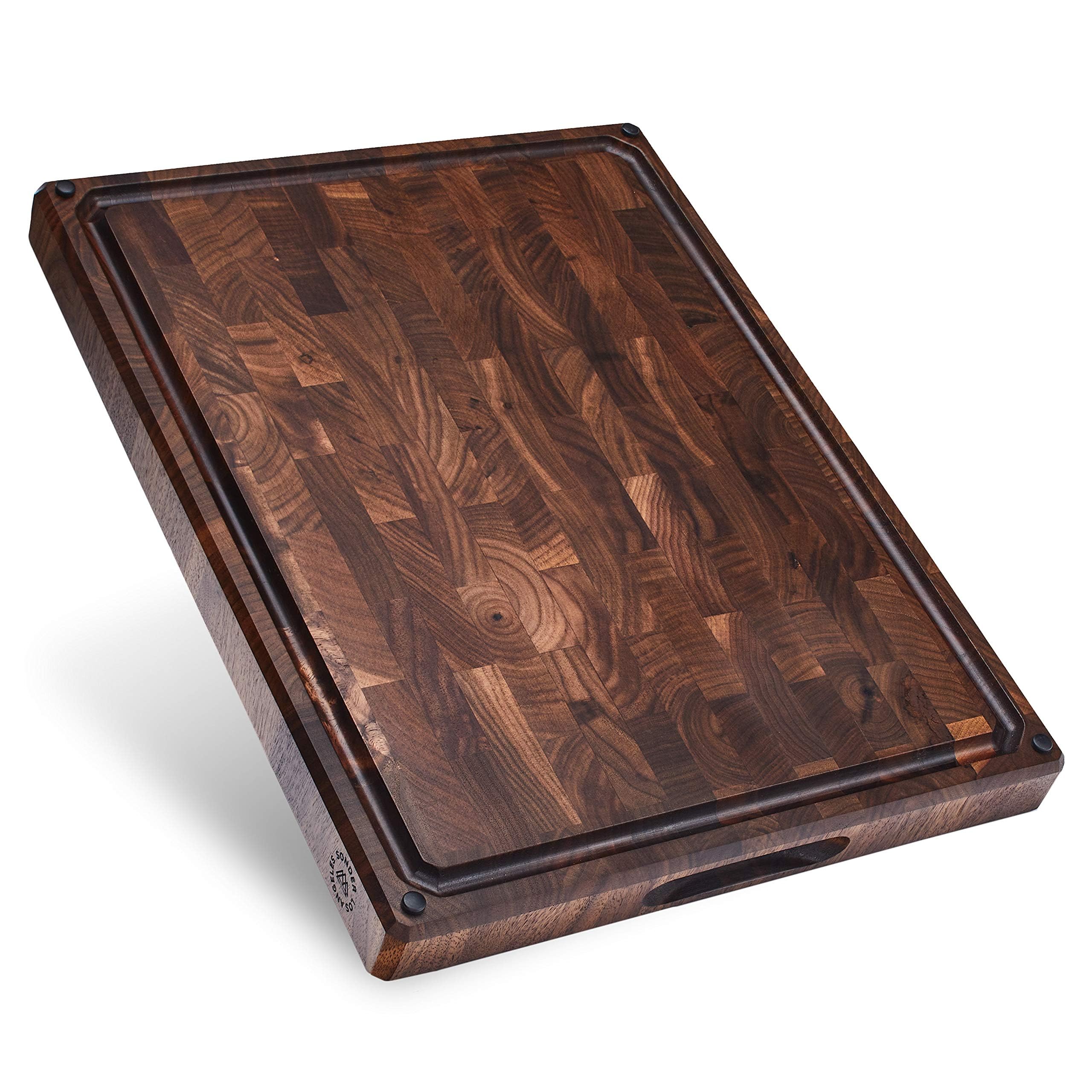
This American-made end-grain board from Sonder Los Angeles is the definitive premium choice. At 17x13x1.5 inches and crafted from sustainably sourced Black Walnut, it offers the self-healing properties end-grain users demand. The wood fibers reclose after each cut, keeping your knife sharp and the surface smooth for years. The deep juice groove holds up to 3.5 fluid ounces of liquid, while three sorting compartments on the reverse side help you organize prepped ingredients mid-cooking.
Non-slip rubber feet provide rock-solid stability on any countertop, eliminating the need to place a damp towel underneath. The board arrives pre-oiled and ready to use, though Sonder recommends oiling every three weeks to maintain the wood’s moisture balance. The included gift box makes this an obvious choice for serious home cooks who value both function and aesthetics.
Customer feedback consistently praises the craftsmanship, the heft that prevents sliding, and the way the board’s appearance improves with use. Retired chefs and hobbyists alike note that the walnut’s natural anti-bacterial properties add a hygiene benefit that plastic boards simply cannot match. If you invest in quality knives, this is the surface they deserve.
Why it’s great
- Self-healing end-grain preserves knife edges
- Built-in sorting compartments streamline prep
- Made in the USA with sustainably sourced walnut
Good to know
- Requires oiling every 3 weeks
- Premium price point reflects domestic craftsmanship
2. CONSDAN Hard Maple Wood Cutting Board
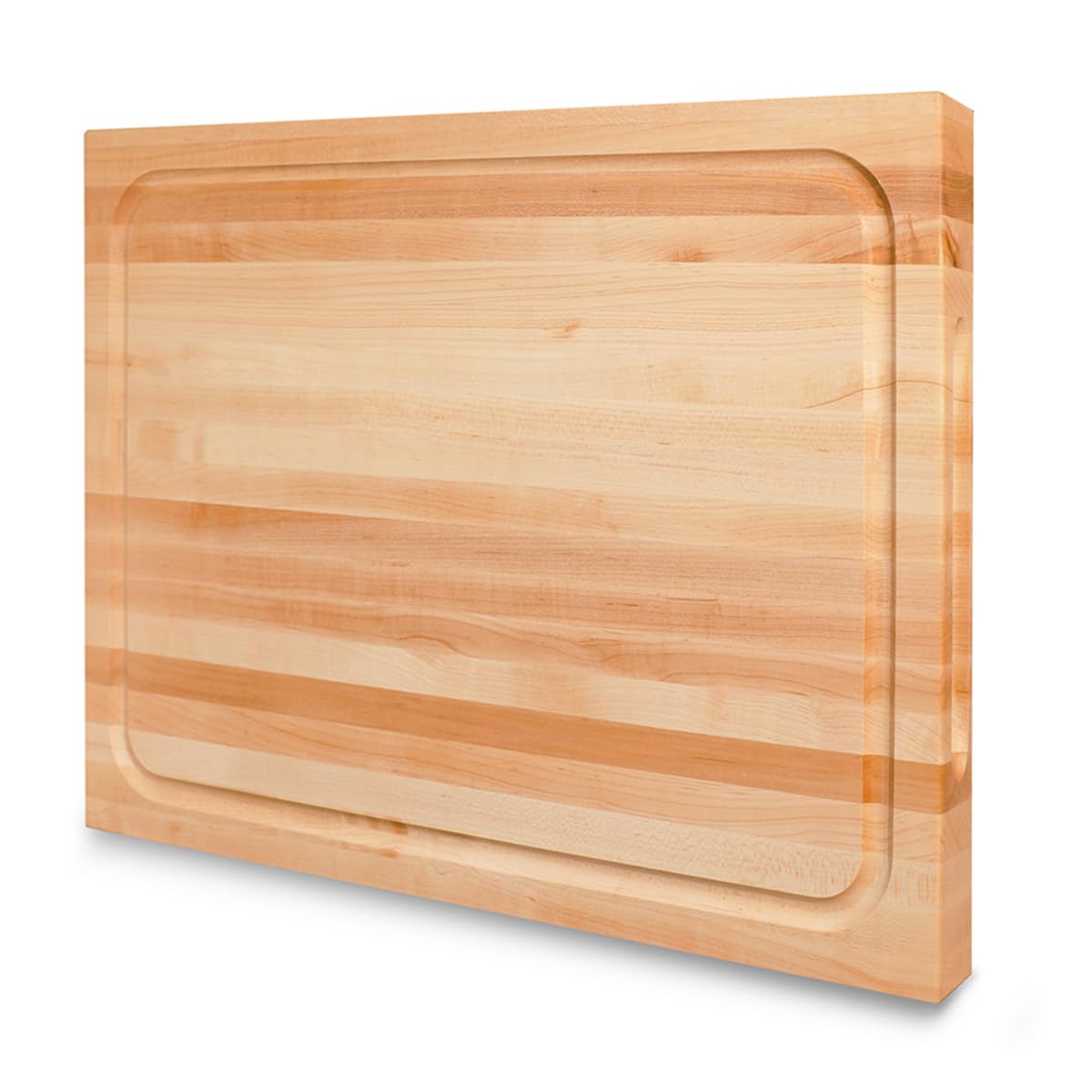
CONSDAN’s maple board is a serious contender for anyone who wants a knife-friendly surface without stepping up to end-grain pricing. At 16x12x1.5 inches, this edge-grain board delivers the closed-grain, low-porosity surface that maple is known for, which means less absorption of juices and odors compared to more open-grained woods. The board is pre-finished with food-grade oil, so it is ready for immediate use straight out of the box.
The invisible inner handles on both sides make lifting and transporting the board easy, while the deep juice groove catches runoff effectively during meat prep. Users report that the smooth surface stays flat even after months of daily chopping, though a few noted minor warping after prolonged exposure to humidity—a reminder to store the board on its edge in a dry location. The lifetime warranty against defects in materials and workmanship is a strong vote of confidence.
Home cooks frequently mention that this board outperforms their previous Boos blocks in terms of flatness and finish quality. The maple’s light cream color brightens up any kitchen, and the 1.5-inch thickness provides enough weight to stay put during heavy chopping tasks. For users who want a durable, knife-friendly workhorse at a reasonable cost, this is a top pick.
Why it’s great
- Hard maple surface is gentle on blades
- Invisible handles for easy transport
- Lifetime warranty on craftsmanship
Good to know
- Edge grain shows knife marks over time
- Should be stored upright to avoid warping
3. Teakhaus Butcher Block Cutting Board

Teakhaus delivers one of the largest end-grain boards on the market at 20x15x1.5 inches, making it ideal for batch prep, large roasts, and charcuterie displays. The FSC-certified teak is naturally moisture-resistant and contains high natural oil content that helps repel liquids without requiring frequent oiling. The end-grain construction protects your knives while also hiding the inevitable cutting marks that come with heavy use.
This board is reversible, offering one flat surface and one side with a juice groove and plate cut-out for easy transfer of chopped ingredients. At over 8 pounds, it is heavy enough to stay planted during even the most aggressive chopping sessions. Users consistently praise the gorgeous block pattern and the fact that teak’s natural silica content makes it harder than maple, though this also means it may be slightly less forgiving on ultra-thin Japanese blades.
Owners note that the board requires minimal care beyond hand washing and occasional oiling. A small number of users experienced cracking after dry indoor conditions, which underscores the need to oil the board every 4-6 weeks, especially in heated homes. For those who want a massive, durable surface with natural moisture resistance, Teakhaus is a tough contender to beat.
Why it’s great
- Very large 20×15 inch prep area
- FSC-certified, moisture-resistant teak
- Reversible with juice groove and plate cut-out
Good to know
- Heavier than most boards
- Natural silica can be harder on thin blades
4. Yes4All Medium End Grain Teak Cutting Board
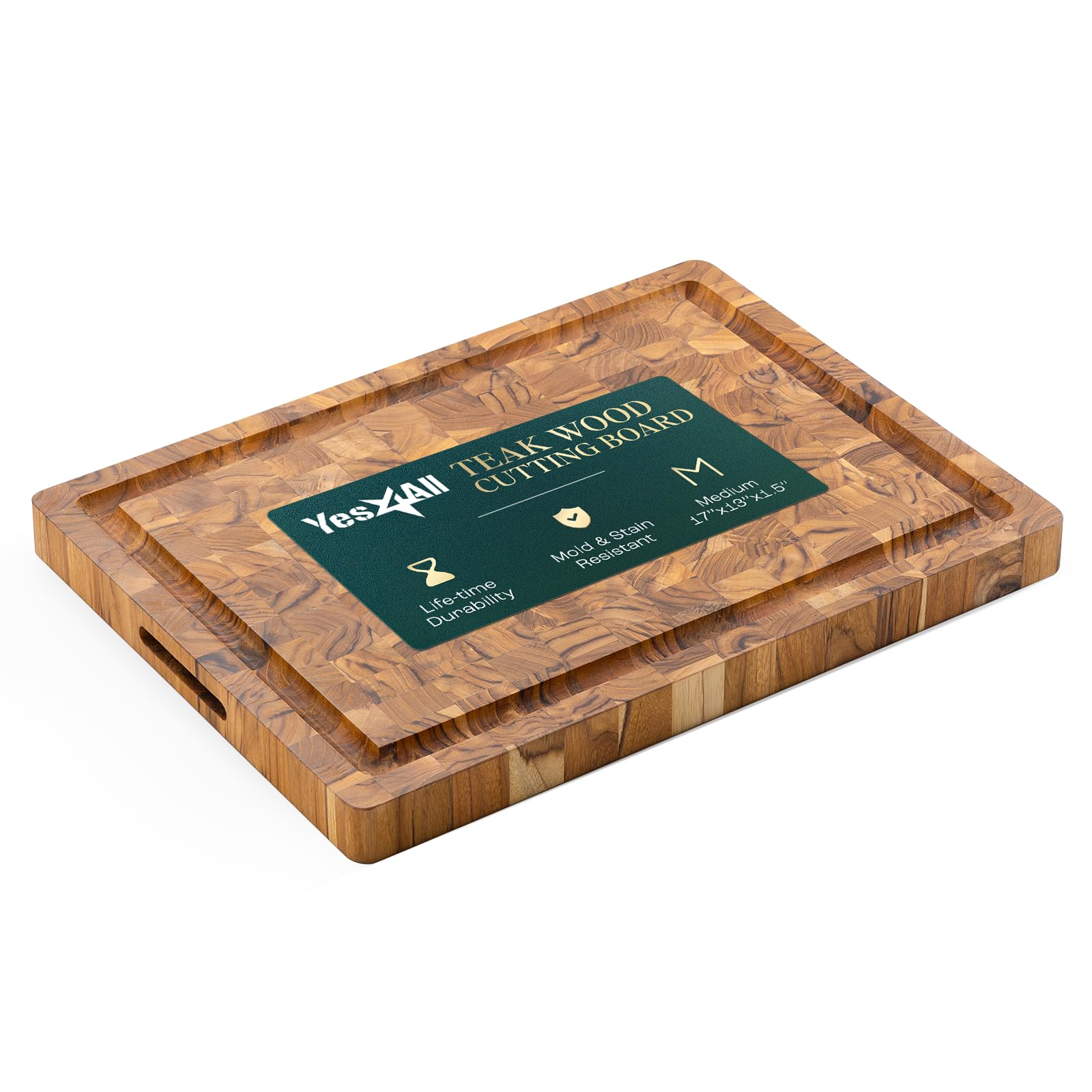
Yes4All offers a compelling entry into end-grain territory with this 17x13x1.5-inch teak board. The end-grain construction is inherently gentle on knives, and teak’s natural oil content provides built-in moisture resistance that reduces the risk of warping. The board comes pre-oiled with food-friendly oil, so you can start cutting immediately without an initial seasoning step.
Built-in handles on both sides make it easy to lift the 8.3-pound board, and the ample juice groove channels liquids away from your prep area. The teak’s rich golden-brown grain patterns make this board attractive enough to double as a serving platter for cheeses and charcuterie. The reversible design means you can use the flat side for bread or the grooved side for juicy meats.
Because this is a newer model with limited customer reviews, long-term durability data is still emerging. However, the combination of end-grain construction and teak material at this price point is rare. Users seeking an affordable entry into end-grain performance without jumping to the highest price tier should consider this board a strong candidate.
Why it’s great
- End-grain teak at a moderate price
- Pre-oiled and ready to use right away
- Deep juice groove and built-in handles
Good to know
- Few long-term reviews available yet
- Teak can be hard on delicate knives
5. BABILONIA American Black Walnut Cutting Board
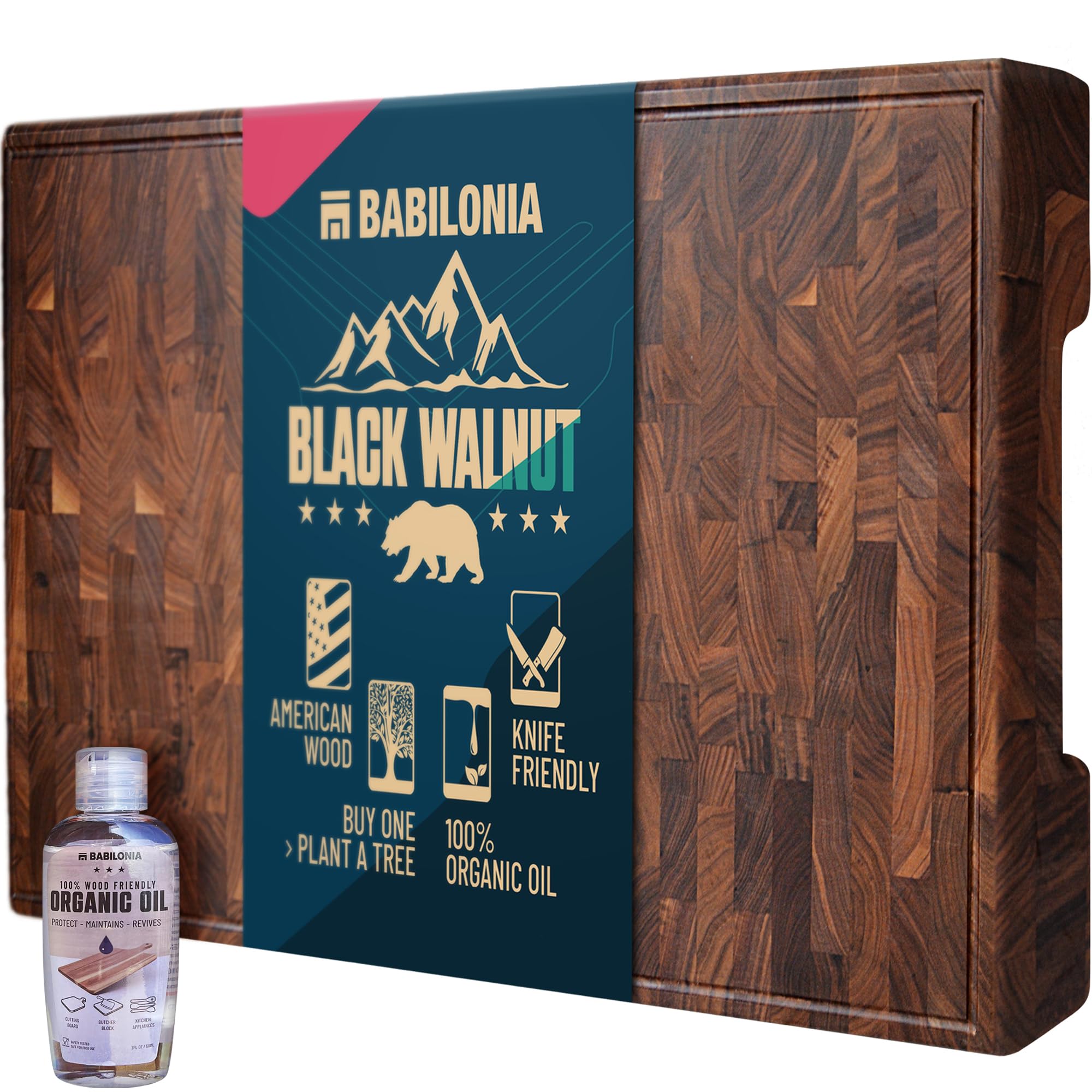
BABILONIA’s walnut board stands out for its extra-thick 1.7-inch construction, adding stability that resists warping even under heavy, daily use. Measuring 19.7×12.2 inches, it provides a generous cutting surface without overwhelming standard countertops. The end-grain technique exposes the wood fibers vertically, allowing knife blades to slide between them rather than through them, preserving sharpness longer than edge-grain or face-grain alternatives.
A unique design feature is the built-in notch and included plate, which lets you slide chopped vegetables directly from the board into a pot or bowl without lifting the board. This practical addition saves time during meal prep and reduces the risk of spills. The board arrives pre-oiled with a free bottle of organic oil included, and the reversible design allows the flat side to double as a serving tray.
Created in Italy with sustainably sourced American black walnut, this board packs an aesthetic punch with its rich chocolate-brown tones and distinctive grain patterns. The 2-year warranty and money-back guarantee from BABILONIA add peace of mind. For anyone who wants a thick, stable end-grain board with clever design touches, this is a worthy investment.
Why it’s great
- Extra-thick 1.7-inch construction resists warping
- Notch and plate system for easy ingredient transfer
- Includes organic oil for maintenance
Good to know
- Narrower than some comparable boards
- Walnut darkens with age and oiling
6. All-Clad Kitchen Essentials Acacia Cutting Board

All-Clad extends its reputation for kitchen durability into the cutting board category with this acacia end-grain board. Measuring 19x14x1.5 inches, it offers a broad cutting surface suitable for everything from chopping vegetables to carving large roasts. Acacia wood is one of the hardest hardwoods available, providing excellent resistance against deep scratch marks, though it is slightly less forgiving on knife edges compared to maple or walnut.
The board features integrated handles on both sides for easy lifting, and a deep juice groove runs around the perimeter to capture runaway liquids. Rubber feet on the underside keep the board stable during use, even on smooth countertops. As an All-Clad product, it is backed by a limited lifetime warranty, and the design is engineered in Canonsburg, Pennsylvania USA.
Customer reviews highlight the board’s solid feel, with several users noting that it remains flat and crack-free after months of daily use. The acacia’s unique grain patterns and warm brown color make it a visually striking addition to any kitchen. For shoppers who trust the All-Clad name and want a large, stable cutting board from a proven manufacturer, this is a safe bet.
Why it’s great
- Large 19×14 inch cutting area
- Backed by All-Clad limited lifetime warranty
- Rubber feet provide slip-resistant stability
Good to know
- Acacia is harder on knife edges than maple
- Made in China despite US design origin
7. FANICHI Acacia End Grain Cutting Board

FANICHI’s acacia board is a cleverly designed two-in-one tool. One side features a traditional flat cutting surface with a juice groove for meat and produce prep. Flip it over, and you’ll find three built-in compartments that serve as sorting trays for diced vegetables, minced garlic, sliced fruits, or crackers and breads for charcuterie service. The inner handles on both sides make it easy to carry the board from counter to table.
At 17x13x1.5 inches, the end-grain acacia construction offers knife-friendly durability while the natural oil content of the wood helps resist moisture penetration. Users consistently praise the board’s versatility, with many noting that the compartment side eliminates the need for separate prep bowls. The acacia grain patterns vary from board to board, making each piece visually unique.
Some users report that the surface scratches more easily than expected, though this is typical of acacia and does not affect functionality. Regular oiling helps maintain the wood’s appearance and longevity. For home cooks who value organization during meal prep and want a single board that transitions from chopping to serving, the FANICHI is a space-saving winner.
Why it’s great
- Three sorting compartments on reverse side
- End-grain acacia offers good durability
- Inner handles for easy transport
Good to know
- Surface scratches more easily than maple
- Requires regular oiling to maintain appearance
8. WALDWERK Cutting Board Set

WALDWERK’s three-board set is the solution for cooks who need different sizes for different tasks. The set includes a large 15.75×12 inch board, a medium 13×9.5 inch board, and a small 10×7 inch board, all crafted from solid acacia wood at 0.8 inches thick. A black metal stand with anti-slip knobs keeps the boards organized and allows for air drying after washing.
Each board features a milled juice groove to contain runoff, and the surface is pre-treated to be ready for use. The acacia wood is hard, stable, and develops a rich patina with age. The set is ideal for cooks who want to designate specific boards for different food groups—one for raw meat, one for vegetables, and one for fruit or bread—without taking up excessive counter space.
Customer feedback over months of use is overwhelmingly positive, with users praising the boards’ durability and the stand’s stability. Some users noted a mild odor from the wood when new, which dissipates after a few washes and oilings. At 0.8 inches thick, these boards are lighter and more portable than thick butcher blocks, making them easy to handle and store. For a complete prep system that keeps your countertop tidy, this set delivers.
Why it’s great
- Three sizes cover every prep task
- Includes a sturdy storage stand with anti-slip knobs
- Acacia wood offers long-term durability
Good to know
- Boards are 0.8 inches thick, not as heavy
- New wood may have a temporary smell
9. GAOMON 20 Inch Large Acacia Wood Cutting Board

GAOMON’s acacia board delivers the largest dimensions in this lineup at 20x15x1.5 inches, making it one of the most generous cutting surfaces available without moving into commercial-grade territory. The edge-grain acacia construction provides a hard, durable surface that resists deep cuts while offering a warm wood-grain aesthetic that complements any kitchen. The board includes a deep juice groove and cutout handles for easy lifting.
This board is heavy at over 8 pounds, which helps it stay stable during use. The acacia wood’s natural hardness means it stands up well to daily chopping, though it may show knife marks more readily than end-grain alternatives. The price is accessible for those who want a large hardwood board without a large investment, making it a solid entry-level choice for cooks transitioning from plastic or bamboo boards.
Customer experiences are mixed but generally positive. Most users are satisfied with the board’s appearance and size, though one notable review reported an ant infestation issue, which could indicate that the wood was not properly kiln-dried. As with all hardwood boards, regular oiling and proper drying after washing are essential to prevent issues. For a budget-friendly large board, the GAOMON offers good value if you’re willing to provide diligent maintenance.
Why it’s great
- Very large 20×15 inch cutting surface
- Heavy weight prevents sliding during use
- Budget-friendly entry to hardwood
Good to know
- Edge grain shows marks over time
- Some quality control concerns reported
FAQ
How often should I oil my hardwood cutting board?
Can I put a hardwood cutting board in the dishwasher?
Does end grain actually keep knives sharper longer?
Which wood is best for heavy daily chopping?
Final Thoughts: The Verdict
For most users, the best hardwood cutting board winner is the Sonder Los Angeles Alfred because it combines American-made black walnut end-grain construction with sorting compartments, non-slip feet, and a deep juice groove—features that justify its placement at the top. If you want knife-friendly maple at a more accessible price, grab the CONSDAN Hard Maple. And for massive batch prep with natural moisture resistance, nothing beats the Teakhaus Butcher Block.