You turn on the faucet and a faint chlorine smell hits you, or you catch a metallic aftertaste in your morning coffee. For many households, that slightly off taste and odor is a daily reminder that the water coming out of the tap isn’t as pure as you’d like. Choosing the right system to fix this means sorting through a surprisingly deep list of options, from compact countertop purifiers to whole-house installations that protect every fixture.
I’m Mohammad Maruf — the founder and writer behind AirfryerBite. I have spent years analyzing water filtration hardware, tracking certification data, and comparing the real-world performance specs that separate a quality system from a frustrating one.
My goal here is to cut through the marketing noise and give you a practical, spec-focused guide to the best home water filtration systems available right now, so you can confidently pick the exact type your home actually needs.
How To Choose The Best Home Water Filtration Systems
With so many configurations on the market, picking the right system starts with understanding your home’s specific water profile and your installation constraints. A whole-house unit is overkill for an apartment renter, just as a small gravity filter is useless if you need to tackle iron and sulfur in well water. Here are the three biggest factors to get right.
Installation Type: Whole House vs. Point-of-Use
This is the first fork in the road. Whole-house systems sit at your main water line and filter everything — every shower, every toilet, every laundry load. These units typically use large 20×4.5-inch cartridges and can handle flow rates of 12 to 17 gallons per minute, making them ideal for homes with four or more occupants. Point-of-use systems — like countertop reverse osmosis units or under-sink filters — treat water at a single tap, perfect for improving drinking and cooking water without altering your whole plumbing setup. Gravity-fed countertop systems require zero installation and work even during a power outage, which makes them popular for emergency preparedness and off-grid cabins.
Contaminant Reduction and Certification
Not all filters are created equal, and the marketing language on the box can be misleading. The only reliable truth is third-party certification. Look for systems tested against NSF/ANSI Standard 42 for aesthetic chlorine and taste reduction, Standard 53 for health-related contaminant reduction like lead and VOCs, and Standard 58 specifically for reverse osmosis systems. If a product claims to remove arsenic, mercury, or PFAS but does not reference an NSF or WQA certification, you should demand proof. Reverse osmosis (RO) systems are the gold standard for dissolved solids, heavy metals, and fluoride, but they waste some water and typically require a 3:1 or 2:1 pure-to-drain ratio.
Filter Life and Flow Rate
A system with a high gallon capacity rating sounds great on paper, but it is useless if the flow rate doesn’t match your household demand. A typical 3-stage whole-house system with a 15 GPM flow rate can supply four people simultaneously without pressure drop. Countertop RO units often have a flow rate below 0.5 gallons per minute because the water has to pass through a semi-permeable membrane. Gravity filters sit at the lower end of the flow spectrum — around 4 gallons per hour — because they rely solely on gravitational pressure. Filter lifespan varies widely: carbon block filters usually last 3–6 months, while RO membranes can last 1–2 years depending on your incoming water quality.
Quick Comparison
On smaller screens, swipe sideways to see the full table.
| Model | Category | Best For | Key Spec | Amazon |
|---|---|---|---|---|
| Waterdrop G3P800 | Tankless RO | Ultra-fast refill & smart monitoring | 800 GPD flow rate | Amazon |
| Express Water WH300SCKP | Whole House | Anti-scale protection & steel frame | 100,000 gallon capacity | Amazon |
| iSpring WGB32B | Whole House | Commercial-grade chlorine & sediment removal | 15 GPM flow rate | Amazon |
| AquaTru Carafe | Countertop RO | Renters & no-plumbing households | 4-stage RO filtration | Amazon |
| Bluevua RO100ROPOT-Lite | Countertop RO | Compact design with UV sterilization | 3:1 pure-to-drain ratio | Amazon |
| HQUA WF3-01 | Whole House | Heavy metal reduction with pressure gauges | 15 GPM flow rate | Amazon |
| SimPure DB20P-3 | Whole House | Clear housing visibility & DIY install | 150,000 gallon capacity | Amazon |
| iSpring WCB32C-KS | Whole House | PFAS, lead & chloramine reduction | 30,000 gallon capacity | Amazon |
| Purewell PW-KS | Gravity | No-power emergency & camping use | 0.01 micron UF membrane | Amazon |
In‑Depth Reviews
1. Waterdrop G3P800 Reverse Osmosis System
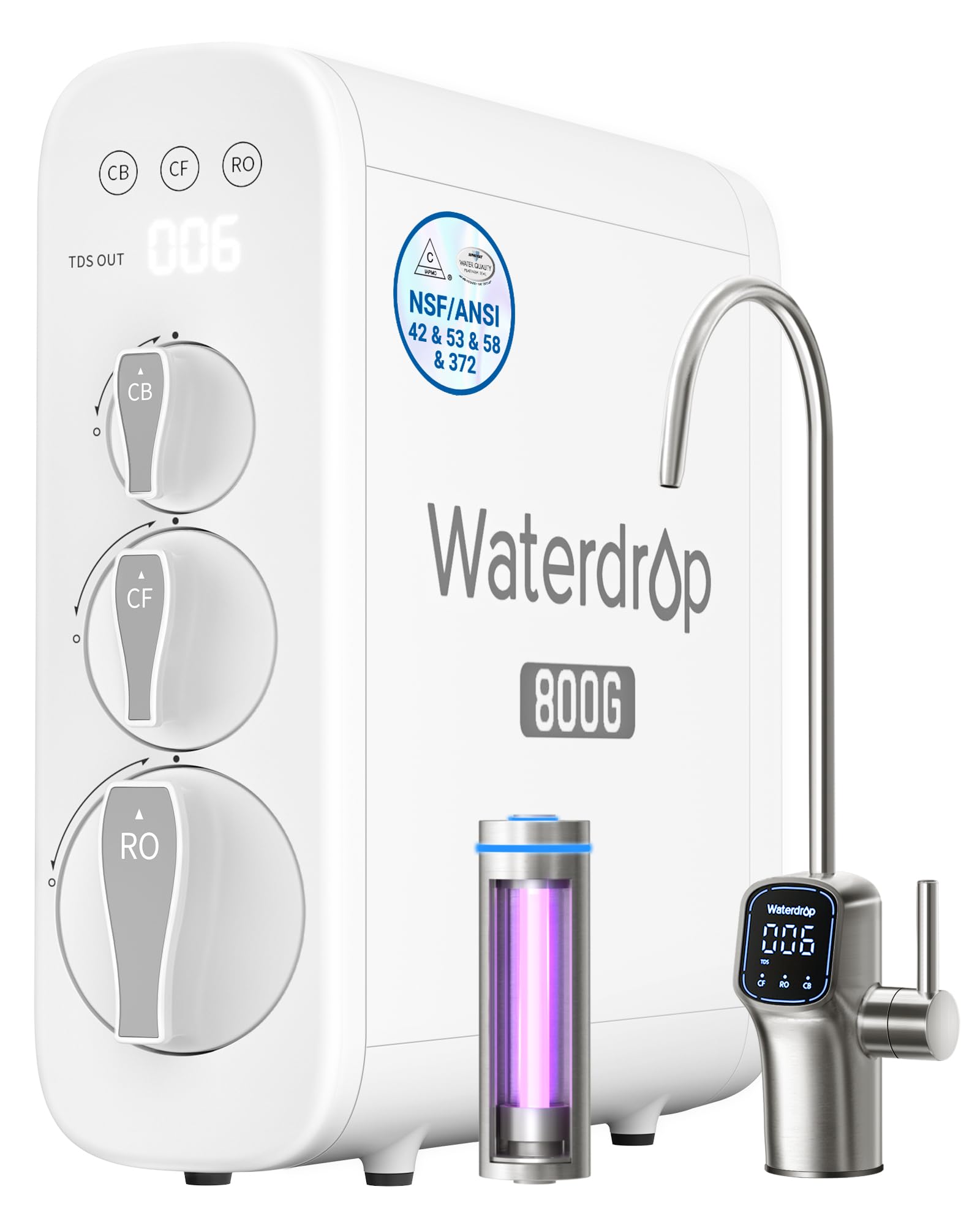
The Waterdrop G3P800 is a tankless under-sink reverse osmosis system that delivers an impressive 800 gallons per day, filling a standard cup in roughly five seconds. Its 10-stage filtration process is backed by third-party SGS testing and carries NSF certifications for standards 42, 53, 58, and 372, meaning it is verified to reduce PFAS, fluoride, lead, chromium, chlorine, and radioactive substances like radium. The tankless design frees up under-sink space and eliminates the risk of bacterial growth that can occur in traditional storage tanks.
The smart faucet includes an LED display that shows real-time TDS levels and water quality, giving you immediate feedback on system performance. The 3:1 pure-to-drain ratio is excellent for a high-output membrane, producing only one cup of wastewater for every three cups of clean water. Installation requires two drilled holes — one for the dedicated faucet and one for the drain line — so a small amount of DIY work is necessary. The system is also designed to connect to refrigerator ice and water lines, which is a major convenience for most modern kitchens.
At the premium end of the price spectrum, the Waterdrop G3P800 offers the fastest flow and most thorough certification package among tankless RO systems. The 50-year rated LED is a durability detail that speaks to the overall build quality. For households ready to invest in a permanent under-sink solution with the lowest maintenance overhead and the highest daily output, this is the undisputed top pick.
Why it’s great
- Industry-leading 800 GPD flow rate fills a cup in 5 seconds
- Full NSF 42, 53, 58, and 372 certification for contaminant verification
- Tankless design saves under-sink space and eliminates bacteria risk
- Smart LED faucet shows real-time TDS and water quality
Good to know
- Requires two holes for installation: one for the faucet, one for the drain line
- Premium price point is a significant upfront investment
2. Express Water WH300SCKP 3-Stage Whole House Filter

The Express Water WH300SCKP is a three-stage whole-house system built on a heavy-duty stainless steel freestanding frame. It is designed to address chlorine, heavy metals including lead, arsenic, and chromium, and calcium scale formation through polyphosphate injection. The 100,000-gallon capacity means you can expect roughly 6 to 12 months of use between filter changes depending on your water quality and household consumption.
Three pressure gauges are integrated into the frame, which is a smart feature that lets you monitor filter clogging in real time. Pressure release buttons on each housing make filter replacement significantly easier compared to systems that require heavy-duty wrenches to break the seal. The maximum flow rate is rated at 17 gallons per minute, which comfortably supports simultaneous showering, washing dishes, and laundry without noticeable pressure loss.
The system does not reduce TDS, which is normal for a whole-house carbon-based filtration setup. If your primary concern is dissolved solids, Express Water recommends pairing this with a reverse osmosis system at the kitchen sink. With a robust steel stand, tool-free maintenance features, and anti-scale chemistry, this is a premium solution for homes dealing with hard water and municipal chlorine.
Why it’s great
- Stainless steel freestanding frame provides durable, stable support
- Integrated anti-scale polyphosphate protects pipes and appliances
- Three pressure gauges allow easy monitoring of filter clogging
- High 17 GPM flow rate handles whole-home demand
Good to know
- Heavy unit at 63 pounds requires adequate installation space
- Does not reduce TDS — needs an RO system for that
3. iSpring WGB32B Commercial-Grade Whole House Filter

The iSpring WGB32B is a 3-stage whole-house system that uses standard 20-by-4.5-inch cartridges, making replacement filters widely available and affordable. The first stage uses a 5-micron sediment filter to catch sand, rust, and silt. Stages two and three use CTO carbon block filters made from high-quality coconut shell carbon, which are tested by third-party labs to meet NSF/ANSI standards for chlorine, taste, and odor reduction.
With 1-inch NPT inlet and outlet ports, the WGB32B maintains a robust flow rate of up to 15 gallons per minute. This is sufficient for a four-person household running multiple fixtures simultaneously. The system has a 100,000-gallon capacity, which translates to roughly a year of use before the cartridges need replacement. The DIY installation is straightforward, and iSpring provides both a detailed manual and YouTube video guides to walk through the process.
One often-overlooked advantage is that iSpring includes a filter housing wrench and a user manual with every purchase. The system is designed to retain healthy minerals like calcium and magnesium, so it is not suitable for those seeking TDS removal. For the mid-range budget, the WGB32B delivers certified chlorine elimination and sediment protection without the complexity of a stainless steel frame or pressure gauges.
Why it’s great
- Standard 20×4.5-inch cartridges are easy to find and replace
- Coconut shell carbon filters tested against NSF/ANSI standards
- 1-inch NPT ports maintain strong 15 GPM flow rate
- DIY-friendly installation with full video support
Good to know
- No stainless steel frame — less robust than freestanding models
- Does not reduce TDS or remove dissolved minerals
4. AquaTru Carafe Countertop Reverse Osmosis System
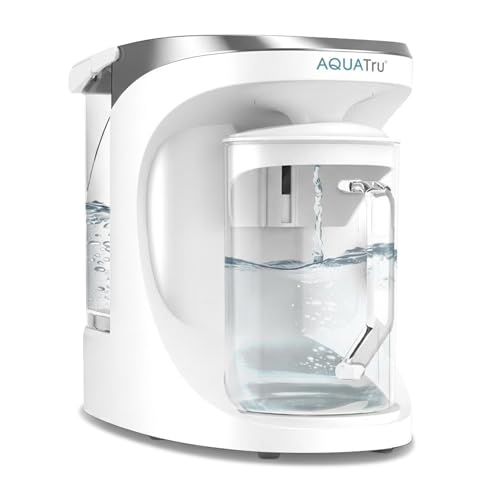
The AquaTru Carafe is a plug-and-play countertop reverse osmosis system that requires zero permanent installation or plumbing modifications. It uses a patented 4-stage RO process certified by IAMPO to NSF standards for reducing fluoride, lead, chlorine, microplastics, and PFAS/PFOA forever chemicals. The system comes with a 64-ounce borosilicate glass carafe, which eliminates the plastic taste issues common with reservoir-based countertop purifiers.
Each filter set is rated to replace up to 4,500 plastic bottles, making this a genuinely eco-friendly upgrade. The system is designed for apartment dwellers and renters who cannot modify their plumbing; you simply fill the top reservoir, plug the unit in, and let the RO membrane do its work. The 0.5 gallon per minute flow rate is slower than a whole-house system but perfectly adequate for daily drinking and cooking water.
The compact footprint — 14 inches tall and 7.5 inches wide — fits neatly under most standard cabinets or on a corner of the kitchen counter. The tool-free filter replacement is a user-friendly touch, and the long-lasting filters can go 6 months to 2 years between swaps depending on usage. For anyone who wants truly purified RO water without calling a plumber, the AquaTru Carafe is a strong mid-range contender.
Why it’s great
- Zero installation required — works right out of the box on any counter
- Glass carafe avoids plastic contamination and tastes cleaner
- Certified to reduce PFAS, lead, fluoride, and microplastics
- Each filter set replaces up to 4,500 single-use plastic bottles
Good to know
- Slower flow rate compared to tankless under-sink systems
- Countertop footprint takes up permanent kitchen surface space
5. Bluevua RO100ROPOT-Lite Countertop RO System
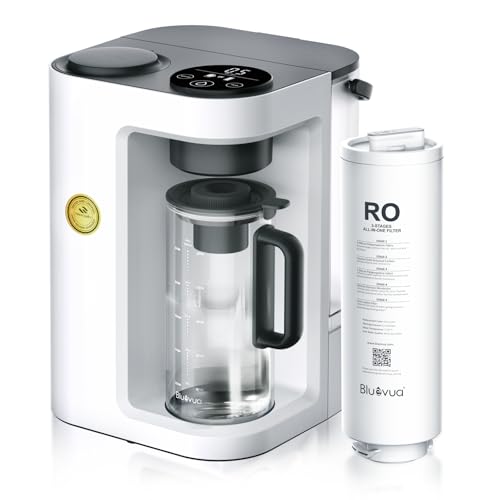
The Bluevua RO100ROPOT-Lite is a compact countertop reverse osmosis system that packs 7 stages of filtration into a small footprint, including a 5-in-1 composite filter, a remineralization stage, and a UV light for biological sterilization. WQA certified against NSF/ANSI/CAN 372 for lead-free materials, this unit adds essential minerals back into the water after RO treatment, balancing the pH and avoiding the flat taste often associated with demineralized RO water.
The 3:1 pure-to-drain ratio is efficient for a countertop RO unit, and the smart LED control panel displays real-time water quality while letting you select the exact volume you want to dispense. The high borosilicate glass carafe includes a fruit infuser that fits inside, adding a layer of functionality for those who enjoy naturally flavored water. Filter replacement is a simple twist-and-lock mechanism that takes about three seconds, and the annual replacement schedule keeps maintenance effort low.
At a slightly lower price bracket than the AquaTru, the Bluevua delivers UV sterilization — a feature that older countertop RO models lack. The compact dimensions (roughly 10 by 9.5 by 14 inches) and 1,200 ml carafe capacity make it ideal for one to two people. For anyone seeking a feature-rich countertop RO with remineralization and UV protection, this is a compelling mid-range choice.
Why it’s great
- UV light stage adds biological sterilization missing from many RO units
- Remineralization filter restores essential minerals for balanced taste
- WQA certified for lead-free materials and third-party verified
- Twist-and-lock filter swap takes only 3 seconds
Good to know
- 1200 ml carafe fills less quickly than larger gravity or whole-house systems
- Countertop unit requires dedicated space near an outlet
6. HQUA WF3-01 3-Stage Whole House Filtration System

The HQUA WF3-01 uses three Big Blue 20-by-5.5-inch filters to handle heavy metals like lead, mercury, arsenic, cadmium, and chromium, alongside chlorine, sediment, and VOCs. Its Compound GAC+KDF filter cartridge is the key differentiator here: KDF media chemically transforms heavy metals and chlorine into harmless byproducts, which is a more aggressive reduction technique than simple carbon adsorption.
The system comes with multiple pressure gauges, 180-day countdown timers on each filter stage, pre-installed pressure relief and drain valves, and a long housing cleaning brush. These maintenance-friendly features are unusual at this price tier and make the WF3-01 easier to service than most comparably priced whole-house units. The bracket-mounted or freestanding flexibility allows installation in tight basements or mechanical rooms.
Maximum flow rate is 15 gallons per minute, matching the iSpring WGB32B, but the HQUA includes the extra filtration stages for heavy metal removal that the iSpring does not offer at this level. The overall dimensions are 31 inches tall by 23 inches wide by 8 inches deep, so measure your available space carefully. For homeowners dealing with known heavy metal contamination, the WF3-01 delivers exceptional contaminant-specific chemistry.
Why it’s great
- GAC+KDF composite reduces lead, mercury, arsenic, cadmium, and chromium
- Built-in 180-day countdown timers eliminate guesswork for filter changes
- Pressure gauges and drain valves simplify maintenance significantly
- Includes a housing cleaning brush for deep maintenance
Good to know
- Large physical footprint requires careful space planning
- Some users report needing to upgrade the provided thread tape for leak-free installation
7. SimPure DB20P-3 3-Stage Whole House Filter
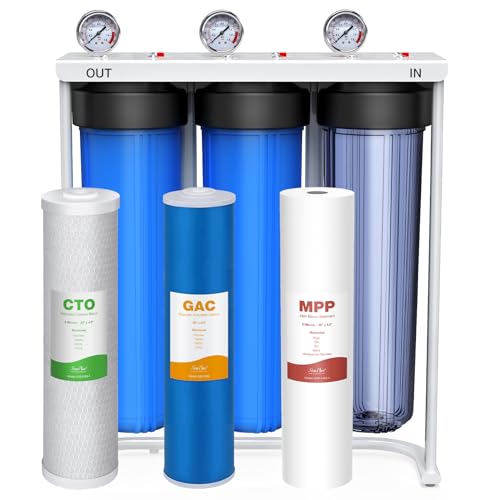
The SimPure DB20P-3 is a 3-stage whole-house unit that uses 20-by-4.5-inch filters with a generous annual capacity of 150,000 gallons. The filtration train includes an MPP sediment filter for sand and rust, a GAC filter for chlorine taste and color, and a CTO carbon block for residual odors and fine particulate. The standout design feature is the clear housing on stage two, which lets you visually inspect the cartridge condition without disassembling the system.
Brass 1-inch NPT fittings and a dual O-ring seal system minimize the risk of leaks, which is a common failure point on budget whole-house systems. The SimPure is relatively compact for a whole-house unit at roughly 23 inches long and 11 inches wide, making it easier to fit into tight mechanical spaces. The 15 GPM flow rate is competitive with the rest of the category, and the BPA-free construction is a nice health-focused detail.
Customer feedback from plumbers and DIY installers is notably positive, with repeated mentions of the leak-proof brass fittings and easy installation. The system is compatible with standard 20-by-4.5-inch cartridges from other brands, so you are not locked into proprietary replacements. For a mid-range budget, the SimPure DB20P-3 offers the highest total gallon capacity and the most visual feedback of any system in its price band.
Why it’s great
- Highest 150,000-gallon annual capacity in this mid-range group
- Clear housing on stage two lets you visually check filter condition
- Brass 1-inch NPT fittings with dual O-ring design reduce leak risk
- Compatible with standard 20-by-4.5-inch cartridges from other brands
Good to know
- Requires operating pressure between 25 and 90 PSI
- Filters need replacement every 3 to 6 months depending on water quality
8. iSpring WCB32C-KS Whole House Water Filter System

The iSpring WCB32C-KS is a 3-stage whole-house filtration system with a specific focus on reducing PFAS, lead, chloramine, chlorine, and radon. The second stage uses a GAC and KDF composite filter, which is more effective at removing chemical contaminants than a standard carbon block alone. The first stage is a 5-micron PP sediment filter that protects the downstream stages from clogging, and the third stage is a CTO carbon filter that polishes residual chlorine and odor.
The transparent first-stage housing makes it easy to see when the sediment filter is loaded and needs replacement, a small but practical convenience. The 30,000-gallon capacity is lower than other whole-house systems in this lineup, so it is best suited for two to three-person households or as a targeted pre-treatment for specific contaminant issues. The wall-mountable design and included filter housing wrench make installation manageable for a confident DIY homeowner.
The heavy-duty build uses polypropylene and PVC materials, and the system is backed by iSpring’s extended warranty activation and lifetime technical support. At the entry-level end of the whole-house category, the WCB32C-KS offers certified PFAS reduction without requiring the plumbing overhaul of larger systems. For homeowners on a budget who need specific chemical reduction, this is a perfectly targeted entry point.
Why it’s great
- GAC and KDF composite stage targets PFAS, lead, and chloramine
- Transparent first-stage housing allows visual sediment monitoring
- Wall-mountable design with included wrench for easy installation
- Lifetime technical support and extended warranty registration
Good to know
- 30,000-gallon capacity is lower than many whole-house alternatives
- Designed mainly for families of up to four people
9. Purewell 2.25G Gravity Water Filter System

The Purewell PW-KS is a stainless steel gravity-fed countertop filter that uses 0.01-micron hollow fiber ultra-filtration membranes, which is significantly finer than the 0.2-micron pores found on many gravity competitors. This level of precision catches 99.99% of microscopic particles including rust, sediment, organic matter, and heavy metals, while still maintaining a flow rate of 4 gallons per hour — fast for a no-power system. The upper chamber holds unfiltered tap water, and the lower chamber collects the filtered output via a built-in spigot.
The unit requires zero electricity, making it valuable for emergency preparedness, camping, or off-grid cabins. The water level window on the front lets you monitor the filtered water volume without opening the lid, which reduces the risk of bacterial contamination. The pair of included black carbon filters provides a combined 6,000-gallon lifespan (3,000 gallons each), with a recommended replacement every six months for optimal performance.
It is important to note that this system does not reduce TDS, so it is not a substitute for reverse osmosis if dissolved solids are your main concern. The stainless steel and polypropylene construction feels durable, and the 2.25-gallon capacity is enough to provide drinking water for a small family for a day. For the budget-friendly entry point, the Purewell delivers extraordinary microfiltration without any plumbing or power requirements.
Why it’s great
- Ultra-fine 0.01-micron hollow fiber membrane catches 99.99% of contaminants
- Zero electricity required — works off-grid and during power outages
- Transparent water level window prevents unnecessary lid opening
- Long combined filter life of 6,000 gallons with two included filters
Good to know
- Does not reduce TDS or remove dissolved minerals
- Gravity filtration is slower than electric powered systems
FAQ
What is the difference between ultrafiltration and reverse osmosis for home use?
How often do I need to replace filters on a whole-house water filtration system?
Can a whole-house filtration system remove hard water and prevent scale buildup?
Final Thoughts: The Verdict
For most users, the best home water filtration systems winner is the Waterdrop G3P800 because it combines the highest output rate with tankless convenience and full NSF certification across four standards. If you want whole-house protection from heavy metals and scale without sacrificing flow, grab the Express Water WH300SCKP. And for a no-install, renter-friendly setup that still delivers certified contaminant reduction, nothing beats the AquaTru Carafe.