The rectangular shape of a tamagoyaki pan is not a novelty—it is a geometry engineered for rolling fluffy omelets without a crease, for browning protein evenly, and for searing over a steady flame. But buyer hesitation is real: no one wants a pan that rusts after three uses or a nonstick coating that peels into breakfast. The market is split between pre-seasoned cast iron, raw carbon steel, copper with tin lining, and hard-anodized aluminum—each with a thermal personality that changes how your food cooks.
I’m Mohammad Maruf — the founder and writer behind AirfryerBite. Over years of analyzing cookware metallurgy, coating durability, and heat distribution patterns, I have tracked which Japanese frying pan specs translate to reliable kitchen performance and which manufacturing shortcuts create headaches.
This guide breaks down the specific build materials, temperature limits, and seasoning requirements that separate a genuine tool from a passing gimmick—delivered as a focused exploration of the best japanese frying pan options available, no fluff included.
How To Choose The Best Japanese Frying Pan
A Japanese frying pan is not a generic skillet—the material choice directly controls whether your egg rolls stick, your fish skin sears without tearing, and your pan lasts beyond a single season. Before browsing models, lock in three decisions: the metal body, the presence or absence of synthetic nonstick, and the physical dimensions relative to your cooktop.
Cast Iron vs. Carbon Steel vs. Copper: The Real Trade-Off
Cast iron delivers heavy heat retention—once hot, a cast-iron Japanese pan stays hot, making it ideal for rolling tamagoyaki over a steady temperature. The trade-off is weight and slower heat-up. Carbon steel is lighter, responds faster to flame adjustments, and seasons into a natural nonstick surface, but it can warp under extreme thermal shock. Copper offers the highest thermal conductivity—heat spreads instantly across the surface—but requires tin or stainless lining to prevent metallic reactivity with acidic foods. Aluminum hard-anodized pans heat quickly and evenly but rely on a synthetic nonstick coating that degrades over time, unlike the self-renewing seasoning of cast iron or carbon steel.
Pre-Seasoning and the First Cook Ritual
Some Japanese pans arrive pre-seasoned with a layer of oil baked into the iron. These need only a rinse and a thin oil wipe before first use. Others ship with a beeswax or silicone resin coating that must be scrubbed off with hot water before seasoning. Skipping this step means food will stick violently. Always check the manufacturer’s initial-care instruction—ignoring it is the most common reason a first-time buyer declares the pan unusable.
Rectangular Shape: Omelet Tool or Daily Driver?
The defining silhouette of a traditional Japanese frying pan is the rectangular tamagoyaki shape—typically 7×5.5 inches or 9×7 inches. This shape is not a gimmick: the straight walls create uniform rolling pressure for layered egg sheets and maximize cooking surface on narrow burners. The depth, usually around 1.2 inches, is sufficient for fried rice and shallow frying meat. If your cooking is limited to eggs and small portions, the rectangle works. If you regularly sear large steaks or cook for more than two people, consider keeping a round skillet alongside it.
Quick Comparison
On smaller screens, swipe sideways to see the full table.
| Model | Category | Best For | Key Spec | Amazon |
|---|---|---|---|---|
| YYMIYU Japanese Cast Iron Tamagoyaki Pan | Pre-Seasoned Cast Iron | All-in-one omelet & camping pan | 9×7 inch, liquid nitrogen treated, 1.5kg weight | Amazon |
| Pearl Metal HB-2403 Tsubame Sanjo Iron Pan | Iron (Silicone Resin) | Lightweight everyday iron skillet | 10.2 inch diameter, 1.2mm bottom thickness | Amazon |
| de Buyer MINERAL B Carbon Steel Fry Pan | Carbon Steel | High-heat searing & sauteing | 8 inch diameter, beeswax coating, oven safe | Amazon |
| Iwachu Nambu Ironware Tamagoyaki Pan | Nambu Cast Iron | Heirloom-quality egg rolling | 7.1×5.9 inch inner, black baked finish | Amazon |
| Calphalon Hard-Anodized Nonstick Pan Set | Hard-Anodized Aluminum | Easy cleanup & stovetop versatility | 8 inch + 10 inch, dishwasher safe, oven safe to 450°F | Amazon |
| Iwachu Iron Tamagoyaki Omelette Pan | Pre-Seasoned Cast Iron | Premium tamagoyaki & bento prep | Rectangle cast iron, durable pre-seasoning | Amazon |
| TIKUSAN Copper Tamagoyaki Pan with Wood Lid | Copper (Tin Lined) | Precision temperature control for eggs | 5.9×5.9 inch, tin coating, wooden lid included | Amazon |
| Made In Seasoned Carbon Steel Frying Pan | Seasoned Carbon Steel | Professional searing & induction cooking | 8 inch, 1200°F heat tolerance, Swedish-made | Amazon |
In‑Depth Reviews
1. YYMIYU Japanese Cast Iron Tamagoyaki Pan
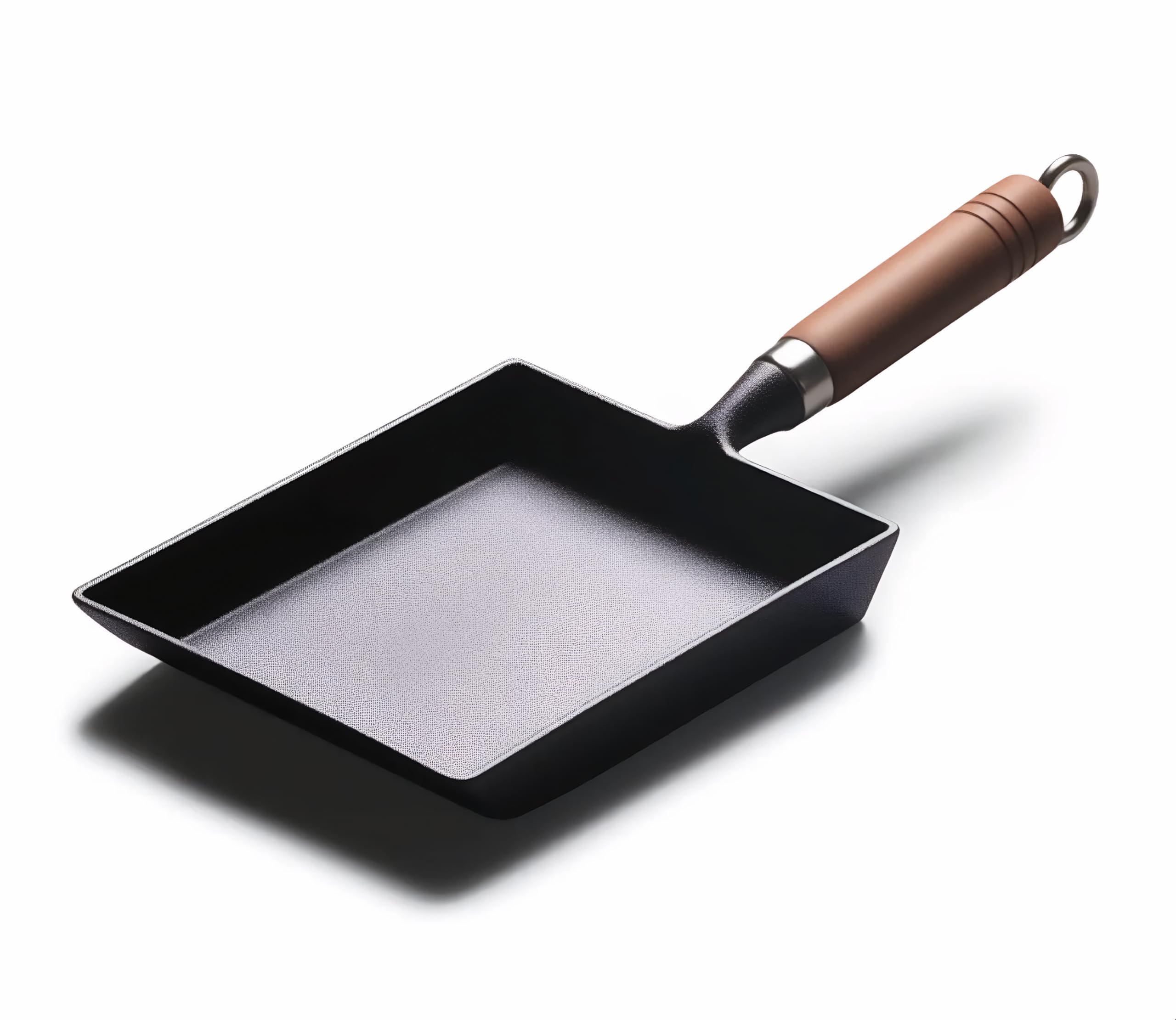
The YYMIYU arrives pre-seasoned with a liquid nitrogen treatment that resists rust better than standard raw cast iron. At 1.5 kilograms, the pan feels substantial without being cumbersome, and the rectangular 9×7 inch shape provides enough real estate for rolled eggs, small steaks, and even campfire cooking. The detachable wood handle is a practical touch—it allows the pan body to go into an oven up to 500°F without risking handle damage.
Customer feedback consistently calls out the generous accessory kit, which includes chopsticks, a stainless scraper, and a silicone oil brush, making first-time seasoning maintenance straightforward. A few users mention the included spatula feels flimsy, but the pan itself has drawn high marks for egg release after the first few uses, with the seasoning layer improving over time as oil polymerizes into the iron.
The chemical-free nonstick surface—no PTFE or PFOA—is a strong selling point for health-conscious cooks. The pan works on gas, electric, induction, and open flame, so it transitions from a kitchen stovetop to a grill grate without missing a beat. For someone wanting a single rectangular pan that handles both breakfast and dinner without synthetic coatings, this is the most versatile start.
Why it’s great
- Pre-seasoned with rust-resistant liquid nitrogen treatment—ready to cook immediately
- Detachable wood handle allows oven use up to 500°F and easy storage
- Works on induction, gas, electric, and campfire
Good to know
- Included spatula is not durable and may need replacement
- Hand-wash only; not dishwasher safe
- Cast iron requires periodic oil seasoning to maintain nonstick performance
2. Pearl Metal HB-2403 Tsubame Sanjo Iron Frying Pan

The Pearl Metal HB-2403 comes from the Tsubame Sanjo region of Japan, an area known for metalworking heritage. This round iron pan measures 10.2 inches across with a bottom thickness of 1.2 millimeters, making it noticeably lighter than traditional cast iron while still offering responsive heat conduction on gas and induction cooktops. The silicone resin coating on the exterior gives it a clean, modern look that resists minor scratches.
User experiences are mixed regarding the initial coating durability. Several buyers report the silicone resin layer peeling after the first few uses, which exposes the raw iron underneath. Once the coating wears, the pan behaves like standard bare iron—it needs seasoning and will develop patina. The natural wood handle stays cooler during stovetop use, but the pan is not oven-safe due to the handle construction.
At just under two pounds, this is a practical round alternative to the rectangular tamagoyaki shape. It suits cooks who want a Japanese-made iron skillet for daily frying without the heft of cast iron. The main caution is to manage expectations about the resin coating—treat it as a temporary layer and plan to season the iron after it wears.
Why it’s great
- Lightweight iron construction heats quickly and evenly on induction
- Authentic Tsubame Sanjo manufacturing with regional craftsmanship
- Natural wood handle stays cooler during stovetop cooking
Good to know
- Exterior silicone resin coating may peel after repeated use
- Wood handle is not detachable; pan is not oven-safe
- Some units arrive with surface scratches from packaging
3. de Buyer MINERAL B Carbon Steel Fry Pan

De Buyer’s MINERAL B is a reference standard in the carbon steel world. The 8-inch diameter provides a cooking surface of 5.5 inches, which is compact but intentional—small surface area concentrates heat for aggressive searing and quick egg cooking. The pan ships coated in beeswax, not oil seasoning, so the first step is to scrub the wax off with hot water before building your own seasoning layer.
Carbon steel shares similarities with cast iron—natural nonstick after seasoning, high heat tolerance, and the ability to develop patina—but it is roughly half the weight and responds faster to temperature adjustments. The MINERAL B is rated oven-safe up to 400°F for ten minutes, useful for finishing a frittata or melting cheese on top of a seared protein. The stainless steel handle is riveted and stays firmly attached under high heat.
The natural nonstick surface means no PTFE, PFOA, or other synthetic chemicals. Several professional cooks prefer this pan for tasks where a traditional nonstick skillet would degrade quickly. The learning curve involves committing to the seasoning process and avoiding acidic ingredients like tomato sauce until the patina is well established.
Why it’s great
- Lighter and more responsive than cast iron for high-heat searing
- Beeswax coating protects during shipping; no synthetic nonstick chemicals
- Oven-safe to 400°F for short finishing cooks
Good to know
- Beeswax must be fully removed before initial seasoning or food will stick
- 8-inch size is small for cooking beyond single servings
- Not dishwasher safe; hand-wash only
4. Iwachu Nambu Ironware Tamagoyaki Pan

Iwachu is a storied Japanese ironware brand from Iwate Prefecture, and this Nambu Ironware tamagoyaki pan reflects that heritage with a black baked finish and a weight that signals durability. The inner cooking surface measures 7.1 by 5.9 inches—slightly smaller than some competitors—but the depth of 1.1 inches is sufficient for rolling three to four egg layers without spillover. The wood handle is separate from the cast iron body, making the pan oven-safe.
Customer reviews consistently use the word “heirloom” to describe the construction. The pre-seasoning is thin but functional; several users report that after a gentle preheat and a thin wipe of oil, eggs slide without sticking. The cast iron retains heat exceptionally well, which is noticeable when cooking multiple batches of omelets sequentially—the pan does not cool down between rolls. Some owners mention that the surface feels slightly rougher than machined vintage cast iron, but the roughness aids seasoning adhesion.
The Nambu Ironware pan is compatible with induction, gas, and electric cooktops. It is oven-safe thanks to the removable handle, but like all cast iron, it requires hand-washing and thorough drying. The premium price reflects the manufacturing location and the long-term value—properly cared for, this pan will outlast several nonstick replacements.
Why it’s great
- Premium Nambu cast iron construction delivers exceptional heat retention
- Oven-safe with removable wood handle for versatile cooking
- Thin pre-seasoning allows easy initial nonstick performance
Good to know
- Surface is slightly rougher than vintage machined iron
- Small cooking area limits batch cooking for larger families
- Requires hand-washing and immediate drying to prevent rust
5. Calphalon Hard-Anodized Nonstick 8″ and 10″ Frying Pan Set

Calphalon’s hard-anodized nonstick set departs from the traditional Japanese iron and carbon steel approach—it uses aluminum that is electrochemically hardened, then coated with advanced nonstick. The set includes an 8-inch and a 10-inch frying pan, both dishwasher-safe and oven-safe up to 450°F. The stainless steel handles are stay-cool on the stovetop and provide a balanced feel when flipping.
The hard-anodized aluminum heats faster and more evenly than cast iron or carbon steel, with no hot spots. This makes the pans forgiving for cooks who want immediate nonstick performance without the ritual of seasoning. Long stainless steel handles keep hands safe from heat, and the coating has been kitchen-tested over 100,000 cycles for durability. The main trade-off is that the nonstick coating is synthetic and will degrade over years of use, unlike the self-renewing seasoning of iron.
This set works on electric, glass, and gas stoves but is not induction-compatible because aluminum lacks the magnetic base required for induction heat. For cooks who prioritize quick cleanup and want a round pan set for everyday eggs, pancakes, and sautés without maintenance, the Calphalon set delivers a hassle-free experience. The 10-inch pan handles larger portions, while the 8-inch covers small sides.
Why it’s great
- Dishwasher-safe for effortless cleanup after cooking
- Hard-anodized aluminum heats evenly without hot spots
- Oven-safe to 450°F and backed by a 10-year limited warranty
Good to know
- Not compatible with induction cooktops
- Synthetic nonstick coating degrades over time—not a lifetime pan
- Stainless steel handles can get warm during extended high-heat cooking
6. Iwachu Iron Tamagoyaki Omelette Pan

The higher-priced Iwachu tamagoyaki omelet pan follows the same cast iron tradition as the Nambu model but arrives with a more durable pre-seasoning that customers describe as remarkably nonstick right out of the box. Multiple verified reviews mention eggs sliding freely with just a thin layer of butter, and the pan required only a rinse from the factory before first use. The rectangular shape is traditional for rolled omelets, bento prep, and small-batch frying.
Several buyers upgraded to this pan after wearing out nonstick tamagoyaki pans. The cast iron construction is noticeably heavy at 2.7 pounds, but it stabilizes firmly on the burner. The wood handle is not detachable on this model, so oven use is limited to lower temperatures or avoided altogether. However, the pan’s heat retention means most cooking is finished on the stovetop anyway.
The pre-seasoning is described as a dark baked-on layer that has a slightly textured feel. Users recommend preheating on low to medium-low heat for a full ten minutes before cooking, applying a thin oil layer each time. The pan is induction-compatible and works well for frying steak, vegetables, and fried rice in addition to tamagoyaki. The size is best suited for one to two servings.
Why it’s great
- Durable pre-seasoning provides immediate nonstick egg release
- Traditional rectangular design perfectly shaped for rolled omelets
- Induction-compatible and works well for multiple cooking tasks
Good to know
- Wood handle is not detachable; oven use is not recommended
- Heavier than carbon steel alternatives at 2.7 pounds
- Best suited for small portions—limited capacity for larger families
7. TIKUSAN Japanese Tamagoyaki Copper Pan with Wooden Lid

TIKUSAN’s copper tamagoyaki pan is a different material proposition entirely—copper offers the highest thermal conductivity of any common cookware metal, meaning the pan heats instantly and evenly across its 5.9-inch square surface. The interior is lined with tin, which prevents copper from leaching into food and neutralizes the metallic smell that raw copper can impart. A wooden lid is included, useful for gentle steaming or keeping food warm between rolls.
The copper body is lighter than cast iron and reacts to flame changes in seconds. This responsiveness is valuable for tamagoyaki, where controlling the heat between rolling layers prevents burning the thin egg sheet. The tin lining is soft—it will develop a natural patina over time and cannot withstand high heat or metal utensils. The manufacturer explicitly warns against using dishwashing detergent on the interior, as it strips the oil film that forms during use.
The pan is not induction-compatible and should only be used on gas or electric coil stoves. It is also not oven-safe. The learning curve is steeper than cast iron or carbon steel because the tin lining requires gentler care. For a cook specifically seeking the thermal precision of copper for delicate egg work, and willing to maintain the tin lining, this is a performance-focused tool.
Why it’s great
- Copper provides superior thermal conductivity for precise heat control
- Tin lining prevents metallic taste and neutralizes copper smell
- Wooden lid adds steaming capability for fluffy egg layers
Good to know
- Not induction-compatible—use only on gas or electric coil
- Tin lining is soft and scratches easily with metal tools
- Not oven-safe; hand-wash with hot water and no detergent on the interior
8. Made In Seasoned 8″ Carbon Steel Frying Pan
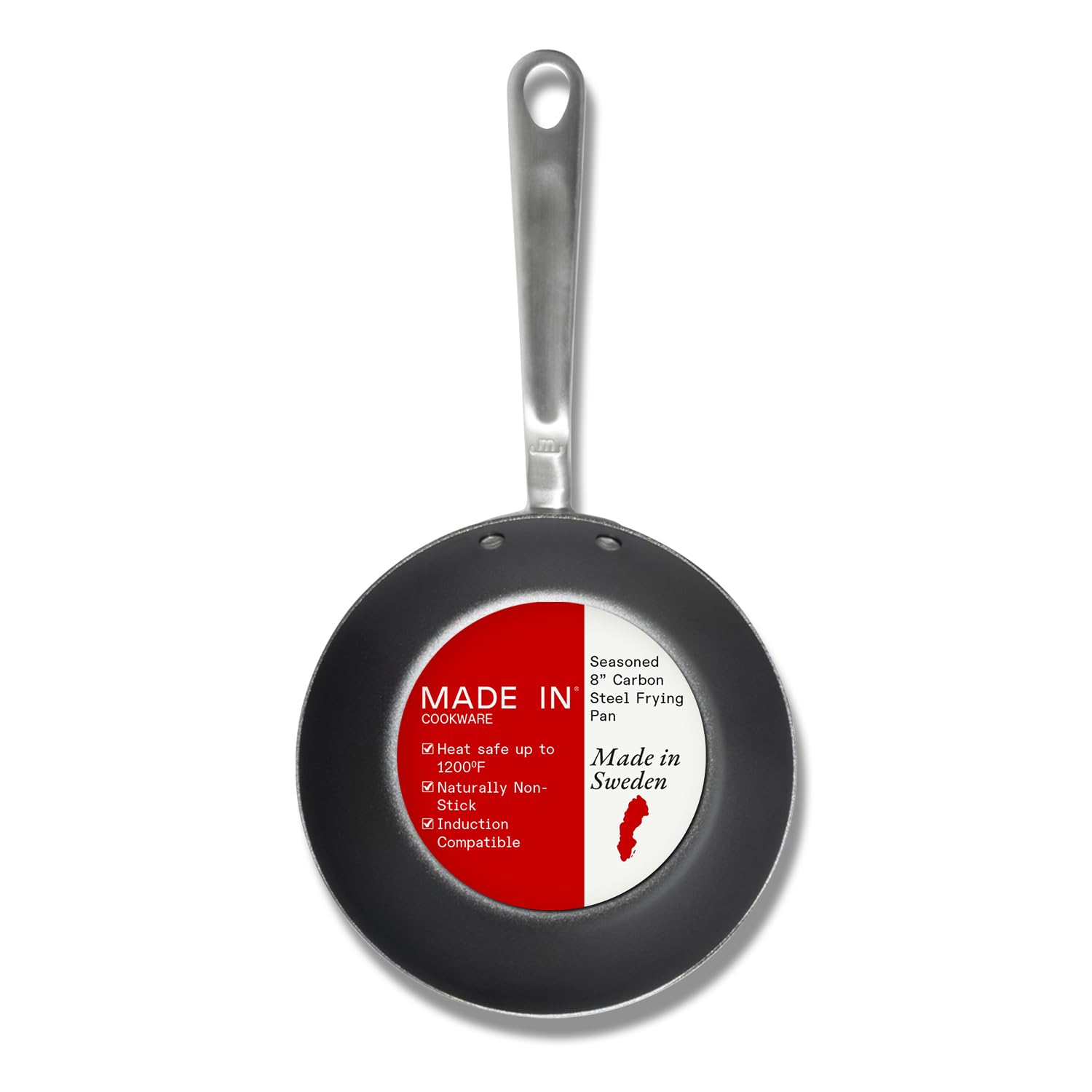
Made In’s carbon steel pan is crafted in Sweden and arrives pre-seasoned with a factory-applied oil layer, bypassing the initial beeswax scrub that de Buyer requires. The 8-inch diameter yields a 5.5-inch cooking surface with a depth of 1.8 inches—deeper than most competing carbon steel pans, which makes it more forgiving for tossing vegetables or shallow frying. The stainless steel handle is riveted and remains cool during stovetop use.
The manufacturer states the pan can handle heat up to 1200°F, making it truly oven-safe and grill-ready without risk of warping or handle damage. The carbon steel body is lighter than cast iron but heavier than thin stainless steel, striking a balance between heat retention and maneuverability. The pre-seasoned surface provides a decent nonstick layer, though it will improve with continued oil applications over the first few weeks of use.
Made In positions this as a hybrid tool—cast iron’s heat-holding properties merged with stainless steel’s thermal responsiveness. It works on induction, gas, electric, and open flame. The cooking surface is small, limiting batch sizes, but for searing a single steak, cooking two eggs, or reheating leftovers, it performs with professional speed. Several chef endorsements highlight its even browning and easy release.
Why it’s great
- Pre-seasoned at the factory—no beeswax removal needed before first use
- Extreme heat tolerance up to 1200°F is safe for oven and grill
- Deeper profile than standard carbon steel pans at 1.8 inches
Good to know
- 8-inch size limits capacity to single servings or small sides
- Pre-seasoning is thin; additional seasoning layers improve nonstick performance
- Requires hand-washing and oiling to maintain patina
FAQ
Can I use a Japanese cast iron tamagoyaki pan on an induction cooktop?
How often do I need to season a Japanese carbon steel or cast iron pan?
Is a rectangular Japanese frying pan useful for anything besides omelets?
Why do some Japanese pans have a tin lining instead of seasoning?
Final Thoughts: The Verdict
For most users, the best japanese frying pan winner is the YYMIYU Japanese Cast Iron Tamagoyaki Pan because it combines pre-seasoned convenience, versatile rectangular shape, oven-safe detachable handle, and compatibility with every cooktop including induction—all without synthetic nonstick coatings. If you want a lighter, faster-reacting pan for high-heat searing, grab the Made In Seasoned Carbon Steel Frying Pan. And for precision temperature control in delicate egg work, nothing beats the TIKUSAN Copper Tamagoyaki Pan with wooden lid.