Pouring a glass of tap water should not come with a side of doubt about chlorine taste, heavy metals, or microscopic debris.
I’m Mohammad Maruf — the founder and writer behind AirfryerBite. I have spent years analyzing water filtration certifications, cartridge chemistries, and real-world flow rates to separate marketing claims from measurable performance in home filtration gear.
This buying guide breaks down the most effective ways to upgrade your tap water without overspending, and I have curated only the options that define a true budget water filter value — certified reduction, sensible capacity, and honest contaminant lists that matter for daily drinking.
How To Choose The Best Budget Water Filter
Navigating the entry-level water filter aisle means balancing upfront pitcher cost against ongoing filter replacement expense and actual contaminant removal. The cheapest plastic shell on the shelf is no bargain if the cartridge lacks certification against the specific impurities in your local municipal supply.
Certification Tells The Truth
Ignore pretty marketing claims and look for the tiny certification logos. NSF/ANSI Standard 42 covers aesthetic improvements like chlorine taste and odor. Standard 53 addresses health-related contaminants such as lead, mercury, and volatile organic compounds. Standard 401 targets emerging contaminants like pharmaceuticals and certain pesticides. A filter bearing all three certifications — or IAPMO equivalent — is doing the chemical work, not just trapping sediment.
Cartridge Chemistry And Filter Life
Activated carbon block filters excel at chlorine reduction and general taste polishing, but they do little against dissolved solids. For homes with hard water or measurable TDS, a 5-stage ion exchange cartridge (like ZeroWater technology) pulls virtually everything out, producing water near zero TDS. The trade-off: ion exchange cartridges deplete faster, often needing replacement at 15 to 40 gallons versus 40 to 120 gallons for carbon-based filters. Calculate your household consumption per week to pick the right replacement cycle for your budget.
Capacity And Kitchen Fit
Standard 10-cup pitchers serve one to two people comfortably and slide into most refrigerator shelves. Countertop dispensers holding 20 to 30 cups work for families and reduce refill trips, but check height and depth clearance under your cabinet or on the counter. Faucet-mounted units bypass the pitcher entirely, freeing fridge space, but require standard faucet compatibility and do not work with pull-out or spray-style heads.
Quick Comparison
On smaller screens, swipe sideways to see the full table.
| Model | Category | Best For | Key Spec | Amazon |
|---|---|---|---|---|
| ZeroWater 22-Cup Ready-Read | 5-Stage Ion Exchange | Zero TDS water purity | 22-cup with built-in TDS meter | Amazon |
| Waterdrop ED01W Electric | Electric Carbon Block | Instant 1-second dispensing | 200-gallon filter, rechargeable | Amazon |
| Brita UltraMax 27-Cup | Elite Carbon Block | Large family dispenser | Elite filter lasts 120 gallons | Amazon |
| Waterdrop CTF-05 Faucet | Faucet-Mounted | No fridge space | 4,000-gallon capacity, NSF 372 | Amazon |
| PUR 30-Cup Dispenser | Countertop Dispenser | High-volume household | 30-cup, pull-down spout, NSF 42/53 | Amazon |
| Brita Large Pitcher | Standard Carbon | Reliable everyday pitcher | 10-cup, standard filter 40 gal | Amazon |
| Culligan ZeroWater Pitcher | 5-Stage Ion Exchange | PFAS and dissolved solids | 10-cup with TDS meter, IAPMO | Amazon |
| Amazon Basics 10-Cup Pitcher | Multi-Stage Carbon | Brita-compatible value | 10-cup, WQA certified NSF 42/53/401 | Amazon |
| ZeroWater 2-Pack Filter | Replacement Cartridge | Refilling existing ZeroWater | 5-stage ion exchange, IAPMO | Amazon |
In‑Depth Reviews
1. ZeroWater 22-Cup 5-Stage Water Filter Dispenser with Instant Read Out
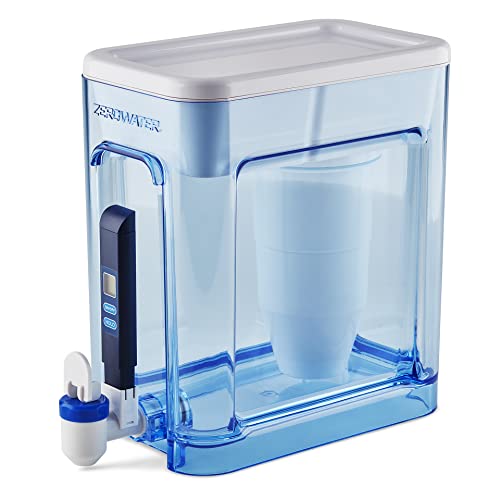
The ZeroWater 22-Cup Ready-Read dispenser is the top contender for anyone who wants laboratory-grade water without a reverse-osmosis system. Its integrated TDS meter gives you an instant digital readout of dissolved solids, so you know exactly when the 5-stage ion exchange cartridge has reached its limit — typically around 006 on the meter. The 22-cup capacity suits families or heavy drinkers, and the ergonomic handle makes pouring from a full fridge shelf easy.
Filtration happens through five stages: coarse screen, foam distributor, activated carbon, a dual-layer ion exchange mix, and a final non-woven membrane. This setup removes virtually all dissolved solids, including lead, chromium, PFAS compounds, and mercury, earning IAPMO certification. Expect noticeably slower drip speed compared to carbon-only pitchers because the ion exchange media is denser, but the resulting water has zero measurable TDS, which many describe as the purest possible taste.
Build quality is solid with a BPA-free plastic body that fits standard refrigerator shelves. The one included filter lasts about 15 gallons depending on your starting TDS, so factor in replacement frequency. For households with high mineral content in their tap, this is the most effective entry-level solution for achieving bottled-water clarity at a fraction of the per-gallon cost.
Why it’s great
- Built-in TDS meter removes guesswork from filter changes
- 5-stage ion exchange removes virtually all dissolved solids
- IAPMO certified against lead, chromium, PFAS, and mercury
Good to know
- Filter life is shorter (approx 15 gallons) compared to carbon pitchers
- Slower drip rate due to dense ion exchange media
2. Waterdrop ED01W Electric Water Filter Pitcher
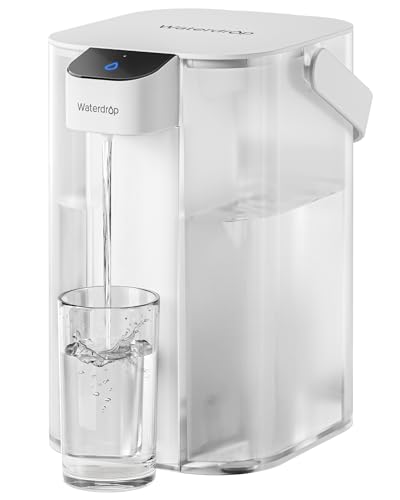
The Waterdrop ED01W changes the game for budget-filter buyers who hate waiting for gravity-fed pitchers. Its electric one-touch dispense delivers filtered water in about one second, powered by a rechargeable battery that holds charge for up to 30 days via USB-C. The 15-cup reservoir holds enough for daily drinking, and the 0.5-micron premium carbon block filter offers 10x better filtration efficiency than standard woven carbon pads, reducing over 45 contaminants including lead, microplastics, chlorine, and benzene.
Certification matters here: the ED01W is IAPMO certified against NSF/ANSI 42, 53, 401, and 372 standards. Third-party lab tests also confirm reduction of PFOA and PFOS. The filter lasts an impressive 200 gallons or roughly three months before replacement, which dramatically lowers your per-ounce cost compared to smaller cartridges. Note that this unit does NOT lower TDS — it targets chemical and particulate impurities while retaining beneficial minerals, so if you want zero TDS water, look at the ZeroWater category.
Setup is truly plug-and-play: unbox, rinse the reservoir, insert the pre-soaked filter, and press the top button to dispense. The sleek footprint takes up about the same counter space as a small blender, and the battery eliminates the need for a nearby outlet. This is the most convenient pick for apartment dwellers or anyone who wants fast, certified filtration without the wait.
Why it’s great
- Instant electric dispensing eliminates gravity wait time
- 200-gallon filter life lowers per-glass cost significantly
- NSF/ANSI 42, 53, 401, 372 certified for over 45 contaminants
Good to know
- Does not reduce TDS; retains minerals
- Rechargeable battery needs periodic USB-C charging
3. Brita 27 Cup Water Filter Dispenser with Elite Filter
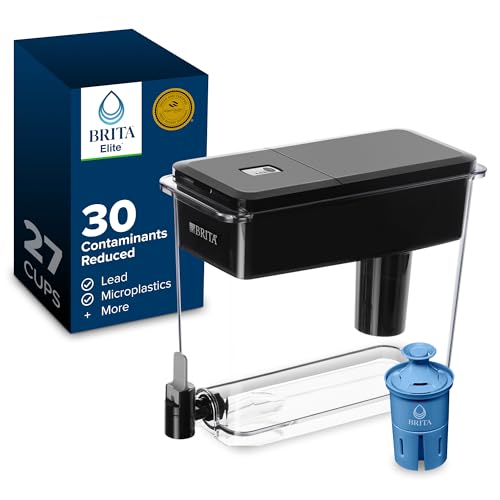
Brita’s UltraMax dispenser fills a specific need for large households that want a single fill-and-forget solution. The 27-cup capacity holds enough water to fill six reusable 24-ounce bottles, and the precision pour spigot makes dispensing one glass at a time easy without tipping the whole vessel. The Elite filter lasts 120 gallons — roughly six months for typical usage — which translates to fewer replacement cycles compared to standard Brita or competitor filters.
Filtration is NSF certified to remove 99% of lead and reduce over 30 contaminants, including microplastics, mercury, cadmium, and benzene. The SmartLight indicator uses an electronic sensor to track filter life and flashes when it’s time to swap, removing the guesswork. The polystyrene body is BPA-free and fits inside most refrigerator shelves, though the 14.37-inch depth requires some pre-measurement for side-by-side fridges.
Customer feedback consistently highlights the improved taste over tap, with many noting the water feels “cleaner” than the standard Brita pitcher. A small number of units have reported spigot-lever alignment issues or slow leaks after months of use, so check the lever position after each fill. For a high-capacity, low-maintenance dispenser with long filter life, this is the best fit for families that drink primarily filtered water all day.
Why it’s great
- 27-cup capacity with spigot for easy glass filling
- Elite filter lasts 120 gallons, reducing replacement frequency
- NSF certified to remove 99% of lead and 30+ contaminants
Good to know
- Requires measuring fridge depth — 14.37 inches deep
- Occasional spigot lever alignment issues reported
4. Waterdrop CTF-05 Water Filter for Sink Faucet

For kitchens where refrigerator shelf space is at a premium, the Waterdrop CTF-05 faucet filter eliminates the pitcher entirely. It mounts directly to your standard faucet with no tools needed in about one minute — just unscrew the aerator and thread on the diverter. A dedicated filtered-water channel separates cooking and drinking water from tap water, and the mechanical life tracker lets you set the start month so you know when the cartridge needs swapping after 4,000 gallons or roughly six months.
Filtration uses advanced carbon block technology to reduce chlorine, unpleasant taste and odor, colloids, rust, sediment, and heavy metals. It is certified by IAPMO to meet NSF/ANSI 372 for low lead content. However, this unit does NOT reduce TDS, and it is important to note that it works only with standard faucets — pull-out, handheld, spray-style, or sensor-equipped faucets are incompatible, so check your faucet head before buying.
The flow rate is slightly slower than full-blast tap, similar to a drinking fountain pace, but the 4,000-gallon capacity per cartridge makes this one of the lowest-maintenance options on the list. If your primary complaint is chlorine taste and general sediment, and you want zero countertop clutter, this is the smartest entry-level upgrade for your kitchen sink.
Why it’s great
- Mounts directly to faucet, freeing counter and fridge space
- 4,000-gallon cartridge lasts up to six months
- Tool-free install in about one minute
Good to know
- Does not reduce TDS
- Only compatible with standard faucets — no pull-out or spray heads
5. PUR 30-Cup Countertop Water Filter Dispenser

PUR’s 30-cup dispenser is built for volume — holding over seven liters of filtered water in a slim countertop footprint that fits in most refrigerator shelves. The pull-down spout makes pouring a single glass or filling a large pot easy, and the carrying handle simplifies transport to the sink for refills. The genuine PUR filter is NSF certified to reduce chlorine, mercury, copper, and zinc, and it lasts up to 40 gallons or two months, depending on your water quality.
The 2-in-1 filtration uses a double-layer process to mechanically trap sediment while the carbon core reduces chemical impurities. Users consistently report a noticeable improvement in taste compared to tap, and the unit is dishwasher safe for easy cleaning. The plastic construction is lightweight but feels durable enough for daily use, and the blue-tinted reservoir lets you see the water level at a glance.
Some users have noted that the spigot lever can be finicky — it needs to be fully pushed up after each use to prevent dripping, and a few units have developed slow leaks after extended use. The 30-cup capacity means the dispenser is best for households of three or more, and the two-month filter cycle keeps ongoing costs predictable. For high-volume drinking without the premium price tag, this is a straightforward workhorse.
Why it’s great
- Massive 30-cup capacity for families or offices
- Pull-down spout and carrying handle for easy use
- Dishwasher safe for effortless cleaning
Good to know
- Spigot lever must be fully closed to prevent drips
- Occasional leaking issues reported after extended use
6. Brita Large Water Filter Pitcher
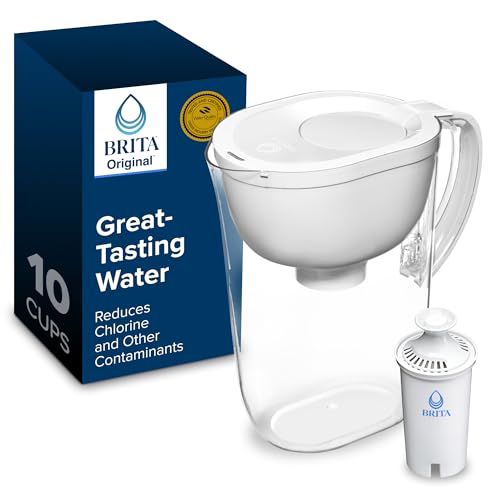
Brita’s large 10-cup pitcher is the benchmark entry-level filter for good reason. The BPA-free pitcher holds enough to fill three 24-ounce reusable bottles, and the space-efficient design fits neatly on refrigerator shelves. The standard filter reduces chlorine taste and odor, mercury, copper, zinc, and cadmium, and Brita’s reputation for consistent quality is backed by decades of market presence.
Filter life is 40 gallons or roughly two months, and the easy-fill locking lid lets you refill from the tap without removing the lid entirely. The spout is designed for drip-free pouring, and the ergonomic handle makes one-handed pouring comfortable even when full. Brita is the most widely known brand in pitcher filtering, which means replacement filters are available everywhere, often at competitive prices.
This is a simple, reliable solution that sticks to the basics. It does not have a TDS meter, digital indicators, or multi-stage ion exchange, so it will not remove dissolved solids or PFAS to the level of ZeroWater systems. If your main concern is removing chlorine taste and improving drinking water acceptability — and you want a proven, no-fuss pitcher — this is the standard that others are compared against.
Why it’s great
- Proven carbon filtration with wide filter availability
- 10-cup capacity fits fridge shelves
- Easy-fill locking lid and drip-free spout
Good to know
- No TDS reduction for hard water
- Standard filter lasts 40 gallons vs Elite’s 120
7. Culligan with ZeroWater Technology 10-Cup Pitcher
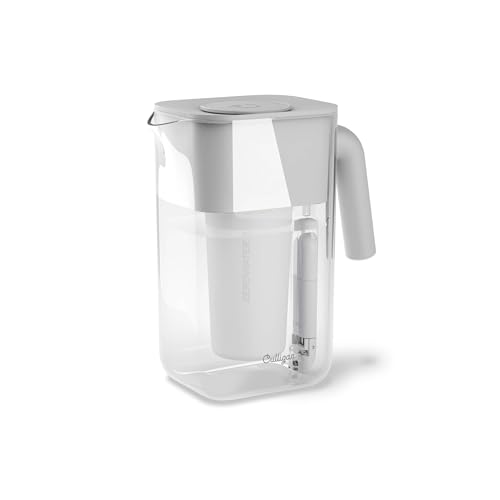
The Culligan ZeroWater 10-Cup pitcher brings the same 5-stage ion exchange technology found in the premium ZeroWater dispenser but in a smaller, more affordable package. The built-in TDS meter gives instant feedback on your water’s dissolved solids level, and the IAPMO certification confirms reduction of total PFAS (forever chemicals), lead, mercury, fluoride, and chlorine. For households concerned about emerging contaminants, this is one of the most honest budget-tier solutions available.
The 10-cup capacity is ideal for one to two people, and the BPA-free plastic body fits easily in most refrigerator shelves. The 5-stage process uses ion exchange to remove virtually all dissolved solids, producing water that registers 0 TDS when the filter is fresh. The included TDS meter lets you track when the filter is exhausted (typically around 006), so you never drink partially filtered water.
Filter life is shorter than carbon-only pitchers because the ion exchange media saturates faster — expect around 15 gallons per cartridge depending on your starting TDS. The ergonomic handle pours smoothly, and the lid seals well to prevent leaks. If tackling PFAS, fluoride, and heavy metals is your priority and you do not need a giant reservoir, this pitcher delivers certified high-level performance at a fraction of the cost of reverse-osmosis systems.
Why it’s great
- 5-stage ion exchange removes virtually all dissolved solids
- IAPMO certified to reduce PFAS, lead, mercury, and fluoride
- Built-in TDS meter tracks filter condition
Good to know
- Short filter life (approx 15 gallons) requires frequent replacement
- Slower drip rate compared to carbon-only filters
8. Amazon Basics 10-Cup Pitcher with Filter

The Amazon Basics 10-Cup pitcher proves that entry-level pricing does not have to skip serious certification. It is WQA certified against NSF/ANSI 42, 53, 401, and 372 standards to reduce nine contaminants including chlorine taste and odor, zinc, copper, cadmium, mercury, benzene, and three pharmaceuticals (atenolol, linuron, trimethoprim). That is a broader contaminant list than most budget pitchers cover, and the multi-stage carbon filtration produces consistently fresh-tasting water.
The 10-cup capacity fills up to three 24-ounce bottles, and the compact design fits standard refrigerator shelves — 5.7 inches deep, 9.84 inches wide. The Secure Lid Technology is designed to prevent leaks during pouring, though some users have noted the lid can feel slightly loose if not pushed down firmly. The pitcher is compatible with Brita standard and Longlast filters, which means replacement cartridges are widely available and often cheaper than proprietary alternatives.
Water flow through the filter is competitive with other carbon designs, averaging a minute or two for a full pitcher. The plastic construction feels lightweight but durable enough for daily handling, and the 40-gallon filter life keeps operating costs low. For buyers who want a certified multi-contaminant reduction at the lowest possible entry point, this is the smartest value on the list, provided you are willing to push the lid down firmly after each refill.
Why it’s great
- WQA certified against NSF 42, 53, 401, 372 standards
- Compatible with widely available Brita filters
- 10-cup size fits standard fridge shelves
Good to know
- Lid can feel loose if not fully pressed down after every use
- No TDS reduction for hard water concerns
9. ZeroWater Official Replacement Filter 5-Stage 2-Pack

The ZeroWater 5-stage replacement filter 2-pack is an essential refill for anyone who already owns a ZeroWater or Culligan ZeroWater pitcher or dispenser. Each filter uses the same ion exchange technology that strips dissolved solids down to 0 TDS — removing organic and inorganic materials like metals, minerals, salts, and ions. The pack comes with two cartridges, certified by IAPMO to reduce PFOA/PFOS, lead, chromium, and mercury.
Filter life is an estimated 15 gallons per cartridge, though this varies heavily depending on your starting TDS level. If your tap water reads 300 TDS, expect shorter life than someone with 50 TDS. The included TDS meter that comes with ZeroWater pitchers lets you track exactly when the filter hits 006, meaning you never run the risk of drinking partially filtered water. The BPA-free construction meets all relevant safety standards.
This 2-pack is compatible with virtually every ZeroWater system, from the 10-cup pitchers to the 22-cup and 30-cup dispensers. Buying in bulk lowers the per-filter cost compared to single replacements, and the filters are steam-treated for hygiene. If you are already invested in the ZeroWater ecosystem for its zero-TDS performance, stocking up on these ensures you avoid the gap between cartridges and keep your water tasting pure.
Why it’s great
- IAPMO certified to reduce lead, chromium, PFAS, and mercury
- 5-stage ion exchange produces 0 TDS water
- Bulk 2-pack reduces per-filter cost
Good to know
- Filter life varies widely based on starting TDS level
- Only compatible with ZeroWater and Culligan ZeroWater systems
FAQ
Will a budget water filter remove lead from my tap water?
What does a TDS meter reading of 006 mean on a ZeroWater filter?
Can I put a water filter pitcher in the refrigerator after filling?
How often should I replace the filter in my budget water pitcher?
Final Thoughts: The Verdict
For most users, the budget water filter winner is the Waterdrop ED01W Electric Pitcher because it combines instant electric dispensing, a 200-gallon filter life, and NSF/ANSI certification against 45+ contaminants at an entry-level price that keeps per-glass costs exceptionally low. If you want zero-TDS water that removes virtually every dissolved solid including PFAS, grab the ZeroWater 22-Cup Ready-Read Dispenser. And for large families who need a high-volume dispenser with the longest possible filter change interval, nothing beats the Brita UltraMax 27-Cup with Elite Filter.