Finding a decaf K-Cup that actually tastes like real coffee is a challenge most caffeine-free drinkers know too well. The struggle against watery brews, metallic aftertastes, and thin body leaves many searching for that elusive full-flavor cup without the jolt, and the wrong pod can ruin your entire morning ritual.
I’m Mohammad Maruf — the founder and writer behind AirfryerBite. Over the past 15 years I’ve analyzed thousands of single-serve coffee pods, dissecting roast profiles, decaffeination methods like Swiss water processing, and the measurable specs that define a satisfying brew from a forgettable one.
This guide focuses exclusively on the market’s top contenders, breaking down the roast levels, processing techniques, and count sizes that truly matter. If you are searching for the best tasting decaf k-cups, the seven reviews below will steer you toward a morning cup worth waking up for.
How To Choose The Best Tasting Decaf K-Cups
Not all decaf pods are created equal. The method used to remove caffeine, the origin of the beans, and the roast profile each leave a distinct fingerprint on the final cup. Understanding these three variables will instantly separate the rich, aromatic brews from the flat, chemical-tasting ones.
Decaffeination Method: Swiss Water vs. Chemical Solvents
The most critical spec for a decaf K-Cup is how the caffeine is removed. Swiss water processing or CO2 methods preserve more of the bean’s natural oils and complex flavors, resulting in a brew that tastes nearly identical to its caffeinated counterpart. Pods using methylene chloride or ethyl acetate often carry a faint chemical aftertaste that ruins the drinking experience, especially in a medium or light roast.
Roast Level and Bean Quality
Decaf K-Cups start losing flavor during the decaffeination process, so a medium or dark roast tends to mask any subtle flavor drop-off better than a light roast. Look for 100% Arabica beans from single-origin sources or reputable roasters. Blended robusta may boost caffeine content (which is being removed anyway), but it adds bitterness that no decaf drinker wants. A medium roast offers the best balance of body and acidity without turning bitter.
Pod Count and Storage
Since decaf pods sit on shelves longer than caffeinated varieties, buying in bulk (60 or 100 count) increases the chance of stale coffee if you don’t drink quickly. Smaller boxes like 40 or 48 counts ensure fresher rotation. Check the roast date if available — a pod roasted six months ago will taste noticeably flatter than one roasted within the last few weeks, even if the packaging is sealed.
Quick Comparison
On smaller screens, swipe sideways to see the full table.
| Model | Category | Best For | Key Spec | Amazon |
|---|---|---|---|---|
| Boxer Coffee 48ct | Single-Origin | Depth of flavor without chemicals | Swiss water processed | Amazon |
| Eight O’Clock 60ct | Classic | Smooth daily driver with value | 60 count medium roast | Amazon |
| Starbucks Decaf House | Brand Name | Consistent medium roast with toffee notes | 40 count medium roast | Amazon |
| Lavazza Decaf 60ct | Italian | Full-bodied dried fruit profile | 60 count full-bodied | Amazon |
| Krispy Kreme Classic | Doughnut Shop | Big batch, strong smooth flavor | 72 count medium roast | Amazon |
| Peet’s Decaf House | Dark Roast | Bold, smoky decaf that hides its lack of caffeine | 60 count dark roast | Amazon |
| Tim Hortons Decaf | Canadian | Balanced medium roast in a massive box | 100 count medium roast | Amazon |
In‑Depth Reviews
1. Boxer Coffee 48ct Decaf Colombian – Single-Origin, Swiss Water Process
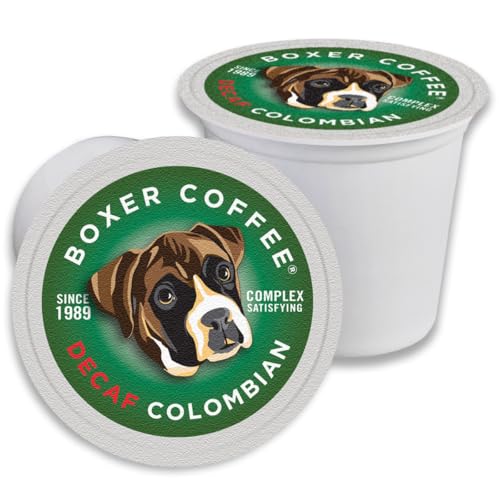
Boxer Coffee’s single-origin Colombian decaf uses Swiss water processing, which means no chemical solvents touch the beans. The result is a medium roast that reviewers consistently describe as robust, smooth, and entirely free of the metallic aftertaste that plagues cheaper decaf pods. Each pod contains more coffee than typical K-Cups, delivering a fuller body per cup without needing a stronger brew setting.
The 48-count box lands in the sweet spot of bulk without overwhelming your pantry, and the eco-friendly recyclable packaging cuts down on waste. A portion of every sale goes to animal welfare causes, adding a philanthropic layer that resonates with many buyers. Customers note that the coffee is strong enough that selecting a larger cup size on the brewer is sometimes preferable if you want a milder finish.
Customer feedback highlights the absence of hexane and the rich aroma that rivals high-end restaurant blends. With dozens of five-star reviews mentioning “no chemical taste” and “best decaf pod coffee,” this is the clear frontrunner for drinkers who prioritize pure flavor and ethical sourcing.
Why it’s great
- Swiss water processed for clean flavor without chemical aftertaste
- Single-origin Colombian beans provide deep aromatic profile
- Pods contain more coffee than average for richer body
Good to know
- 48 count is smaller than some bulk competitors at 60-100 pods
- Strong profile may require adjusting cup size on your Keurig
2. Eight O’Clock Coffee The Original Decaf, 60 Count
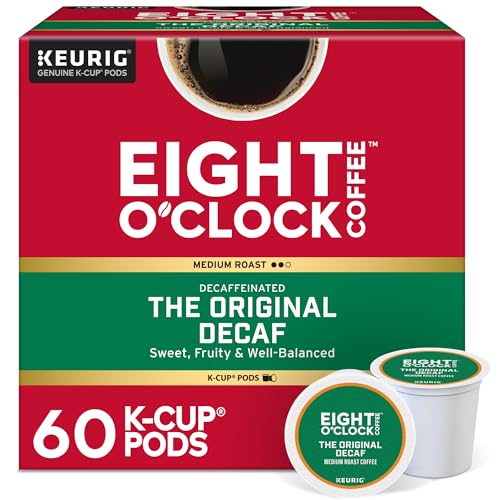
Eight O’Clock’s Original Decaf delivers exactly what its name promises: a classic, unpretentious medium roast that drinks smoothly without surprises. The 100% Arabica beans are certified Orthodox Union Kosher, and the flavor profile leans toward a full-bodied yet gentle finish that avoids the bitterness that sometimes creeps into budget decaf pods. At 60 pods, the per-cup cost makes it one of the most economical options on this list for daily drinking.
The roast is balanced enough to satisfy both black coffee purists and those who add milk or cream. Reviewers consistently call it “great tasting” and “smooth,” with many using it as their household’s sole decaf choice. The packaging is consistent and the pods work reliably across all Keurig models without leaking or weak extraction.
The main caveat is recent price volatility — some customers noted a sharp increase in cost that took the edge off the value proposition. If the price normalizes, this is an easy recommend for anyone who wants a reliable, no-fuss decaf that doesn’t taste like it’s missing caffeine.
Why it’s great
- Superb cost-per-cup value at 60 pods per box
- 100% Arabica beans deliver smooth, balanced medium roast
- Consistent brew quality without bitterness or watery finish
Good to know
- Recent price hikes have reduced its value advantage
- Not Swiss water processed, so flavor purists may prefer alternatives
3. Starbucks K-Cup Coffee Pods, Decaf House Blend, 40 Count
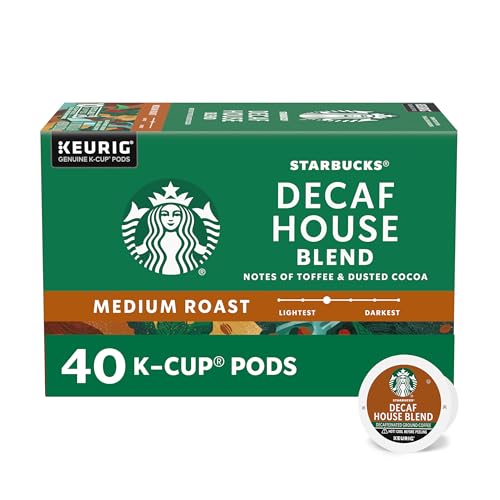
Starbucks Decaf House Blend brings the same toffee and cocoa notes that define their caffeinated House Blend, but without the caffeine. The medium roast is made from 100% Arabica beans roasted fresh, and the brand’s massive scale ensures consistent quality across batches. The 40-count box is smaller than most bulk options, but that works in its favor for freshness — you’ll go through these before any staleness sets in.
Brewing a 12-ounce cup produces a recognizable Starbucks flavor profile that pairs well with milk, cream, or flavored syrups. Reviews are overwhelmingly positive, with drinkers calling it “the best decaf coffee you can find” and “very satisfying.” The ethically sourced beans also give you a sustainability story that aligns with the company’s global partnerships.
The primary complaint is price relative to warehouse clubs — Sam’s Club often undercuts the Amazon price significantly. For convenience buyers who want the trusted Starbucks name without a membership, this is a strong pick. Just be aware you’re paying a premium for the brand recognition.
Why it’s great
- Recognizable Starbucks flavor with toffee and cocoa notes
- Ethically sourced beans with sustainability certifications
- Smaller 40-count box ensures peak freshness during use
Good to know
- More expensive per pod than bulk competitors
- Better pricing often available at warehouse clubs
4. Lavazza Decaf, Single-Serve Keurig K-Cup Pods, 60 Count
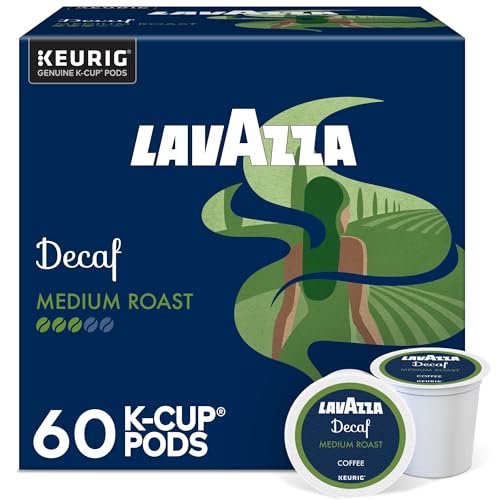
Lavazza’s decaf K-Cups bring a distinctly Italian approach to single-serve coffee: balanced, full-bodied, with a hint of dried fruit that sets it apart from the more one-dimensional American roasts. The medium roast profile is decaffeinated without sacrificing the thick mouthfeel that Italian coffee lovers demand. At 60 pods per box, it competes directly with Eight O’Clock and Peet’s in the bulk decaf category.
Customer reviews repeatedly mention that they “can’t even tell it is decaf” and praise the “wonderful full-bodied” character that holds up even in a 12-ounce cup. The Certified Orthodox Union Kosher certification adds another layer of confidence for buyers with dietary requirements. Lavazza’s long history as a coffee roaster since 1895 lends credibility to the roast profile.
The price lands at a premium compared to entry-level decaf pods, and some Amazon reviews note that the cost has crept upward over time. If you are willing to pay for a more sophisticated flavor, Lavazza delivers a cup that feels closer to café quality than most K-Cups manage.
Why it’s great
- Distinctive dried fruit notes and full-bodied Italian profile
- 60-count box offers bulk savings without sacrificing quality
- Blind taste test often fools drinkers into thinking it’s caffeinated
Good to know
- Premium pricing per pod compared to domestic brands
- Not Swiss water processed, though flavor remains very strong
5. Krispy Kreme Classic Decaf, 72 Count
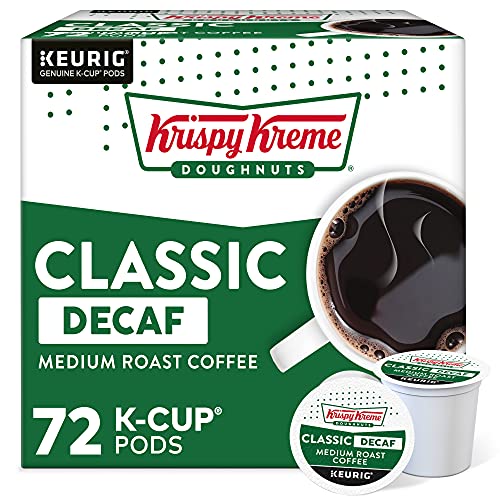
Krispy Kreme’s Classic Decaf K-Cups replicate the doughnut shop experience with a richly roasted medium profile that balances strength and smoothness. The 72-count box is one of the largest options in this lineup, ideal for households that go through multiple decaf cups daily. The 100% Arabica beans are kosher certified and designed to work seamlessly with any Keurig brewer.
Reviews highlight “strong, smooth flavor” and describe the brew as satisfyingly bold without crossing into bitter territory. Many customers who switch from other decaf brands find the Krispy Kreme version holds its own against more expensive dark roasts, particularly when brewed at the 8-ounce setting. The recognizable brand name gives it instant credibility among casual coffee drinkers.
Some drinkers note that the flavor profile is lighter than expected — one review described it as “like tea” in terms of body. If you prefer a thicker, syrupy mouthfeel, this may not satisfy. But for those who want a smooth, easy-drinking decaf that doesn’t taste like chemicals, the sheer count and consistent quality make a strong case.
Why it’s great
- 72-count box is one of the largest, perfect for heavy use
- Strong, smooth medium roast that doesn’t turn bitter
- Recognizable brand trust and kosher certification
Good to know
- Body is lighter than some dark roast decaf options
- Price point per pod is mid-range, not budget-friendly
6. Peet’s Coffee, Dark Roast Decaf, Decaf House Blend 60 Count
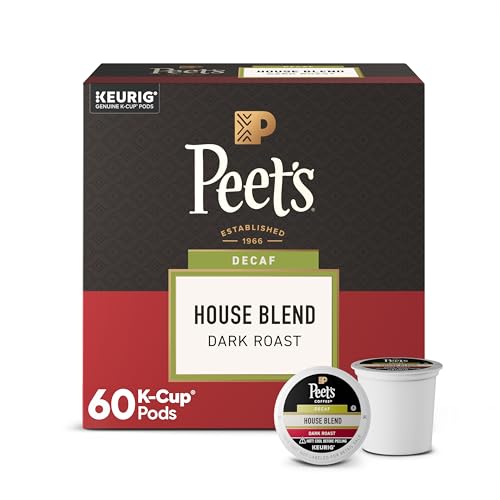
Peet’s Decaf House Blend is a dark roast that delivers what few other decaf K-Cups can manage: a bold, smoky, nearly full-caffeine taste experience. The beans are naturally water-processed, and Peet’s deep roasting style amplifies the sweetness and body without relying on chemical shortcuts. The 60-count box is packaged in six 10-pod sleeves, making it easy to grab a sleeve for the office or travel.
Customer feedback is emphatic — “the best decaf coffee available” and “bold, smoky, not bitter” are recurring themes. The flavor is robust enough that many drinkers report they “wouldn’t know from drinking it that it’s decaf.” The dark roast profile also masks any residual flavor loss from decaffeination better than lighter roasts, making this a top choice for people who prioritize intensity.
Recent packaging changes have caused some complaints about consistency, with a small number of reviewers noting a decline in quality from a specific batch. However, the overwhelming majority of feedback remains extremely positive. If you want a decaf that can stand toe-to-toe with a dark roast caffeinated coffee, Peet’s is the one to beat.
Why it’s great
- Swiss water processed for a clean, chemical-free dark roast
- Bold, smoky flavor profile that rivals caffeinated dark roasts
- Sleeve packaging keeps pods fresh and portable
Good to know
- Recent batch inconsistency reported by a few customers
- Dark roast may be too intense for light-roast drinkers
7. Tim Hortons Decaf, Medium Roast, 100ct K-Cups

Tim Hortons Decaf brings Canada’s most iconic coffee blend to the K-Cup format in the largest bulk count on this list — 100 pods per box. The medium roast is expertly balanced with a smooth finish that hasn’t changed in over five decades. The 100% Arabica beans are sourced from renowned growing regions, and the company encourages recyclable disposal of used pods.
Reviews are overwhelmingly positive, with customers calling it “the best decaf” and noting its “smooth and rich flavor.” The large count makes it ideal for offices, large families, or anyone who drinks multiple cups throughout the day. The recognizable Tim Hortons flavor is consistent, delivering a cup that tastes like the café experience without the drive.
The biggest consideration is storage — 100 pods take up significant pantry space, and if you don’t drink decaf quickly enough, the last pods may lose freshness. Additionally, the flavor is lighter and more balanced than dark roasts like Peet’s, so drinkers seeking heavy body may find it underwhelming. But for sheer volume and reliable taste, this is a category leader.
Why it’s great
- 100-count box is the largest bulk option for heavy users
- Classic medium roast with a smooth, balanced finish
- Reliable quality from one of the most trusted coffee brands in North America
Good to know
- Large box requires significant storage space at home
- Flavor is lighter-bodied compared to dark roast decaf alternatives
FAQ
Why does some decaf K-Cups have a chemical aftertaste?
How many ounces should I brew for the best flavor from a decaf K-Cup?
Final Thoughts: The Verdict
For most users, the best tasting decaf k-cups winner is the Boxer Coffee 48ct Decaf Colombian because its Swiss water processing and single-origin beans deliver a depth of flavor that routinely fools drinkers into thinking it’s caffeinated. If you want an economical daily driver, grab the Eight O’Clock 60ct for its smooth, no-fuss medium roast at a bulk-friendly count. And for those who need dark roast intensity, nothing beats the Peet’s Decaf House Blend 60 Count for bold, smoky flavor that stays robust even after decaffeination.