The right chef knife makes the difference between a prep session that flows and one that fights you. A blade that arrives dull, flexes on a bell pepper, or loses its edge mid-onion is a waste of counter space. Most buyers over-index on brand prestige and under-check the actual steel hardness, edge geometry, and handle balance — the three specs that determine whether a knife performs for years or sits unused after the first month.
I’m Mohammad Maruf — the founder and writer behind AirfryerBite. I’ve spent over a decade analyzing kitchen cutlery metallurgy, comparing Rockwell hardness ratings, edge retention data, and handle ergonomics across hundreds of models to separate genuine performance from marketing hype.
This guide covers seven top-tier options across mid-range and premium tiers, focusing on the concrete specs that define a truly capable blade. Whether you value edge longevity at a 60+ HRC rating, the nimble feel of a thin Japanese profile, or the durability of a full-tang German build, the best rated chef knife for your kitchen balances sharpness, steel quality, and comfort without compromise.
How To Choose The Best Rated Chef Knife
Selecting a chef knife means decoding three interconnected specs: steel hardness, edge geometry, and handle-to-tang construction. A knife that excels in one area but compromises another will feel wrong during extended prep. Focus on these factors to match your cutting style.
Steel Hardness & Edge Retention
Rockwell hardness (HRC) directly correlates to how long a knife stays sharp. Blades rated 56-58 HRC are easier to sharpen on a rod but require more frequent honing. Steel in the 60-62 HRC range holds its edge longer — ideal for dense vegetables, herbs, and continuous slicing — but demands a whetstone rather than a steel for maintenance. Japanese high-carbon stainless grades like VG-10 or 9CR18MOV often hit 60-61 HRC, while German steels typically sit at 55-57 HRC for easier field sharpening.
Blade Profile & Edge Angle
A standard Western chef knife edge is ground at 20 degrees per side, offering durability for rocking cuts and light bone work. Japanese-style edges at 12-16 degrees per side deliver exceptional slicing precision through soft ingredients but are more prone to chipping on hard forces. The blade profile — whether a tall flat Kiritsuke, a curved Gyuto, or a traditional German belly — determines whether the knife rocks, push-cuts, or slices most naturally for your prep style.
Handle Ergonomics & Tang Design
A full-tang knife (metal extending through the entire handle) provides balanced weight distribution and durability. Handle materials like Pakkawood, Micarta, or G10 resist moisture and thermal expansion better than basic polymer. The handle shape should fill your palm without pressure points — D-shaped or oval profiles generally suit both pinch and hammer grips better than rectangular handles.
Quick Comparison
On smaller screens, swipe sideways to see the full table.
| Model | Category | Best For | Key Spec | Amazon |
|---|---|---|---|---|
| Miyabi Kaizen 8-Inch | Premium Japanese | Precision slicing & thin cuts | 60 HRC VG-10 Cryodur | Amazon |
| Shun Classic 8″ Kiritsuke | Premium Japanese | Versatile all-purpose & aesthetics | 16-degree VG-MAX edge | Amazon |
| ZWILLING PROFESSIONAL S 8″ | German Forged | Durable all-purpose rocking cuts | Sigmaforge ice-hardened | Amazon |
| Dalstrong Valhalla 8″ | Premium Japanese-Style | Statement piece & daily prep | 60+ HRC 9CR18MOV | Amazon |
| HOSHANHO 3-Piece Set | Mid-Range Japanese Set | Full knife set on a budget | 60 HRC 10Cr15CoMoV | Amazon |
| Dalstrong Gladiator Kiritsuke 8.5″ | Mid-Range German-Style | Rock-solid build for push cuts | 56+ HRC German steel | Amazon |
| Dexter-Russell S5198 Chinese Chef | Budget Traditional | Budget-friendly veggie prep | 1/16″ thin high-carbon steel | Amazon |
In‑Depth Reviews
1. Miyabi Kaizen 8-Inch Chef’s Knife

The Miyabi Kaizen combines a VG-10 super steel core with 65 layers of flower Damascus cladding, ice-hardened via the Cryodur process to a Rockwell hardness of 60. The three-step Honbazuke hand-honing produces a 9.5- to 12-degree edge per side — among the sharpest production edges available. This geometry excels at push-cutting through tomatoes without compression, slicing raw fish paper-thin, and mincing herbs with minimal resistance.
The D-shaped Micarta handle with mosaic pin and red accent spacers provides a secure pinch grip during extended prep. At 11.2 ounces, the knife feels nimble and balanced, reducing wrist fatigue. The thin blade profile, however, means the Kaizen is not suited for heavy-duty tasks like cutting through spaghetti squash or poultry bones — those forces risk micro-chipping the delicate edge. Owners should maintain the edge with a whetstone rather than a honing rod.
For home cooks who prioritize precise vegetable work, fish preparation, and boneless protein slicing, the Kaizen delivers a level of sharpness and edge retention that justifies its premium standing. The aesthetic appeal of the Damascus pattern and the Japanese craftsmanship from Seki, Japan, add tangible value for serious cooks.
Why it’s great
- Extreme 9.5-12 degree edge for effortless slicing
- Cryodur ice-hardening improves edge retention significantly
- Beautiful 65-layer Damascus pattern and Micarta handle
Good to know
- Thin blade not suitable for hard squash or bones
- Requires whetstone sharpening, not a steel rod
- Premium price reflects specialized performance
2. Shun Classic 8″ Kiritsuke Knife

The Shun Classic Kiritsuke combines a VG-MAX super steel core with 68 layers of Damascus stainless cladding, handcrafted in Seki, Japan. The 16-degree edge angle provides a balanced middle ground between extreme Japanese thinness and Western durability — sharp enough for translucent vegetable slices yet robust enough for general protein work. The flat Kiritsuke profile suits push-cutting and slicing rather than the rocking motion common with curved German blades.
The D-shaped Pakkawood handle feels warm and secure in hand, with a full-tang construction that delivers balanced weight distribution for both left and right-handed users. At 0.6 pounds, the knife feels light and fast, making it ideal for repetitive slicing tasks. Reviewers consistently note the out-of-box sharpness and the free sharpening service Shun offers, which offsets the harder steel’s tendency to need professional re-edging more frequently than Western knives.
This knife replaces an entire block for cooks who prefer a single versatile blade. The Kiritsuke cross between a nakiri and a chef knife handles vegetable prep, boneless meat, and fish with equal precision. The premium cost reflects the hand-finishing and material quality, making it a long-term investment for dedicated home cooks and professionals.
Why it’s great
- VG-MAX core with 68-layer Damascus for excellent edge retention
- Versatile Kiritsuke profile handles veggie and protein prep
- Free sharpening service from Shun
Good to know
- Hard steel can chip if used on bones or hard squash
- Needs sharpening more often than German steel
- Significant investment for a single knife
3. ZWILLING PROFESSIONAL S 8-Inch Chef’s Knife

The ZWILLING PROFESSIONAL S is forged from a single piece of special-formula high-carbon NO STAIN steel using the Sigmaforge process, then ice-hardened via FRIODUR technology for superior resilience. The laser-controlled edge ensures a consistent 20-degree angle per side, making this a durable workhorse suited for both rocking cuts and the occasional light bone work. At 12.8 ounces, the knife has a satisfying heft that many Western cooks prefer for continuous rocking motion.
The ergonomic polymer handle with three rivets is perfectly bonded to the full tang, creating a seamless, sanitary build that resists moisture and thermal expansion. An unusual feature for a premium German knife is the dishwasher-safe claim — though experienced owners recommend hand-washing to preserve the edge and handle integrity. The bolster provides a comfortable pinch grip anchor and finger guard.
This knife is the standard for cooks who want German durability and edge stability without the brittleness of harder Japanese steels. The edge is easy to maintain on a honing rod, and the steel’s corrosion resistance means less fuss during busy prep sessions. For a balanced all-purpose blade that can handle garlic, onions, chicken breakdown, and hearty vegetables without specialized care, the ZWILLING PROFESSIONAL S is a reliable mid-range choice.
Why it’s great
- Sigmaforge full-tang construction for excellent balance
- FRIODUR ice-hardened edge maintains sharpness longer
- Easy to sharpen on a honing rod
Good to know
- Heavier than Japanese alternatives (12.8 oz)
- 20-degree edge less precise than thinner grinds
- Dishwasher-safe claim is technically true but not recommended
4. Dalstrong Valhalla Chef Knife 8 Inch
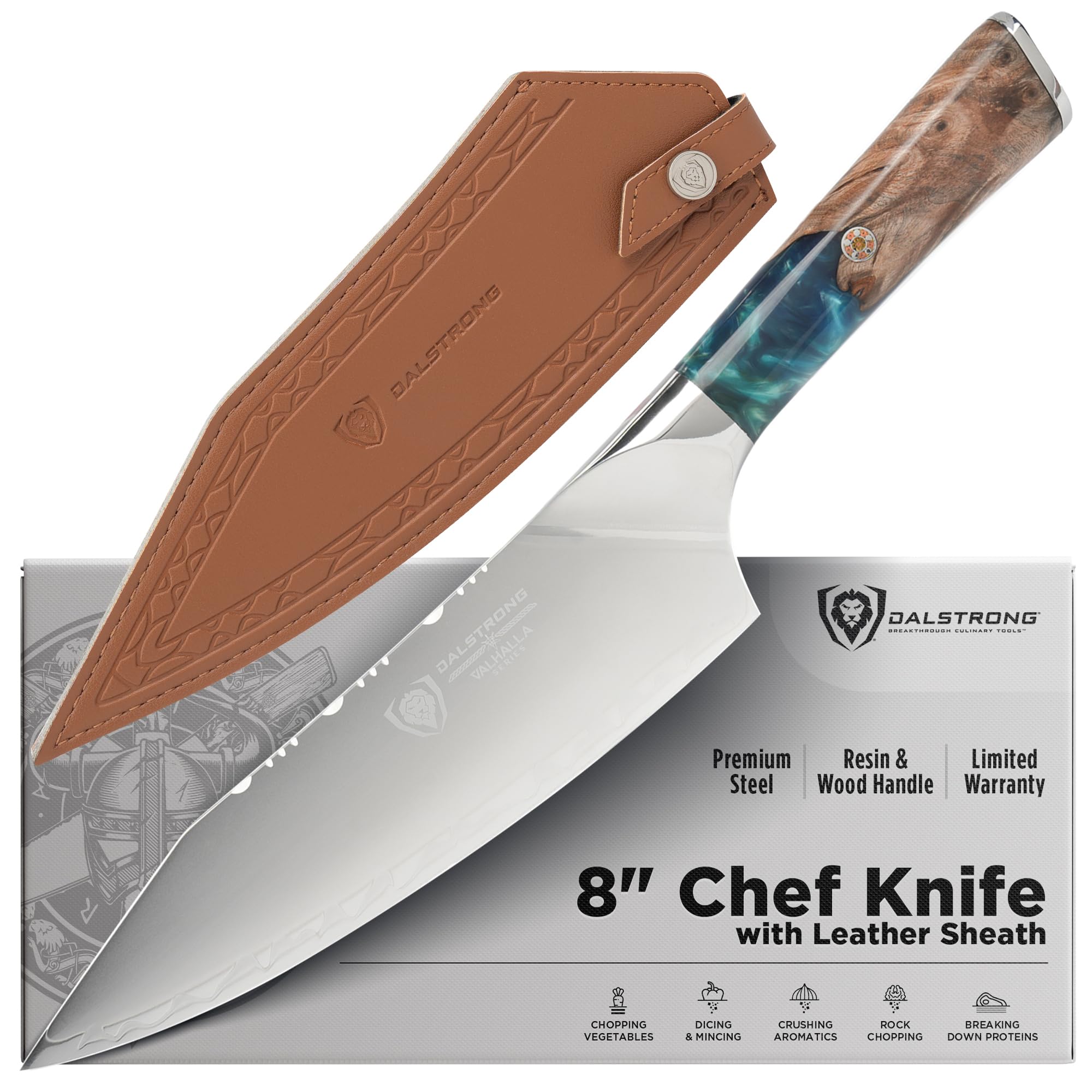
The Dalstrong Valhalla features a 9CR18MOV high-carbon stainless steel blade forged to 60+ HRC and enhanced with Dalstrong’s Lionshield heat/cold treatment for improved edge retention. The hand-sharpened edge at 8–12 degrees per side matches Japanese-level sharpness, slicing through tomatoes and herbs without crushing. The 8-inch blade serves as a versatile workhorse for daily home cooking — onions, peppers, chicken, and root vegetables.
The Celestial resin and stabilized wood handle is individually cast, meaning no two handles look identical. The stainless steel bolster provides solid balance from heel to tip, while the D-shaped profile fits comfortably in a pinch grip. A Valhalla-embossed leather sheath and premium gift-ready packaging make this a strong candidate for weddings or housewarming gifts. Some users reported handle loosening after months of use, but Dalstrong’s customer service responded with same-day replacements.
This knife occupies a unique intersection: it offers the sharpness and steel quality of a premium Japanese blade while carrying the visual impact of a collector piece. For home cooks who want both performance and a conversation-starting aesthetic, the Valhalla delivers. However, the thin edge requires careful use — avoid bones and hard winter squash to preserve the edge.
Why it’s great
- Scalpel-fine 8-12 degree edge for razor-sharp cuts
- Unique Celestial resin and wood handle
- Includes premium leather sheath and gift packaging
Good to know
- Thin edge prone to chipping on hard ingredients
- Some units developed handle looseness over time
- Premium price for a home-use knife
5. HOSHANHO 3 Pieces Knife Set
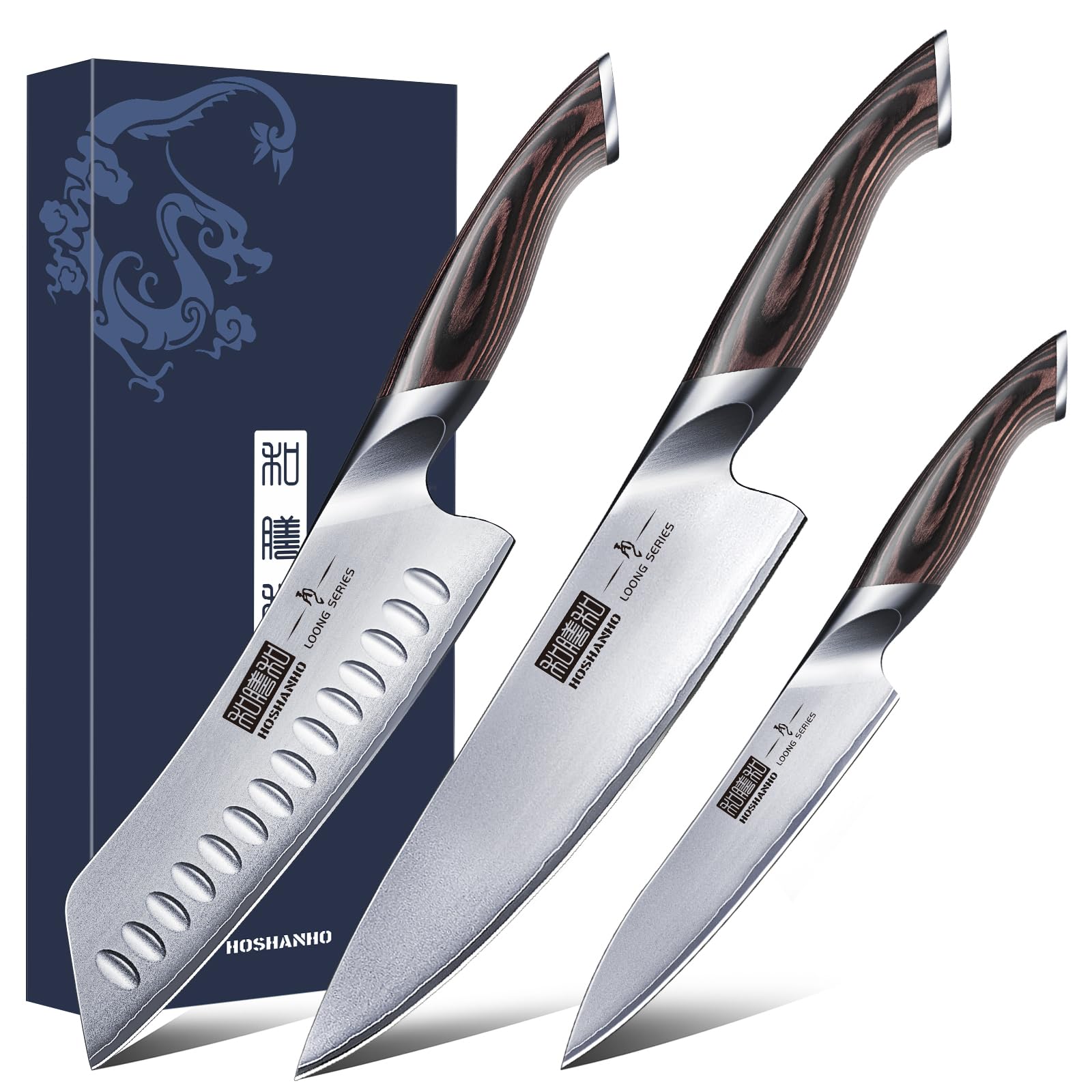
The HOSHANHO set includes an 8-inch chef’s knife, 7-inch santoku, and 6-inch utility knife, all forged from Japanese 10Cr15CoMoV high-carbon stainless steel at 60 HRC. The blades undergo high-temperature vacuum treatment and low-temperature cold nitrogen treatment before being hand-polished to a 15-degree edge per side. This delivers sharpness comparable to premium single-knife offerings, with the advantage of three functional blade profiles for different prep tasks.
Each Pakkawood handle is ergonomically shaped and securely fitted, providing a comfortable grip even during extended use. The full-tang construction ensures balanced weight distribution. Reviewers with large hands specifically noted that the handle dimensions accommodate a full grip without crowding the fingers. The set comes in a simple, classic gift box suitable for multiple occasions.
While the steel performs well at 60 HRC, it is not in the same league as VG-10 or VG-MAX for extreme edge retention — expect to touch up the edge on a whetstone every few months with regular use. The set is an excellent entry point for home cooks who want a full Japanese-style knife set without a premium price tag, offering three distinct shapes for versatility.
Why it’s great
- Three knives (chef, santoku, utility) for full prep versatility
- Japanese 10Cr15CoMoV steel at 60 HRC
- Comfortable Pakkawood handles suit larger hands
Good to know
- Edge retention not as long as VG-10 or VG-MAX
- Requires whetstone maintenance
- Limited to home-use tasks, not pro-grade density
6. Dalstrong Gladiator Kiritsuke 8.5 Inch

The Dalstrong Gladiator Elite features forged high-carbon German steel with a hand-polished edge at 14-16 degrees per side and a Rockwell hardness of 56+. The 8.5-inch Kiritsuke blade profile has a low tip and flat belly, optimized for push-cutting rather than rocking. The full-tang construction with a black G10 handle offers a dense, solid feel that many professionals appreciate for precise, controlled cuts.
The G10 handle is laminated and polished for a sanitary build, resistant to moisture and thermal expansion — a practical choice for busy kitchens. The blade is tall enough to provide useful knuckle clearance, which is essential for safe, comfortable chopping. Reviewers note the knife is heavy and substantial, almost like a hatchet, which provides momentum but can feel cumbersome for delicate work. The flat belly makes fine mincing with a rocking motion less natural.
This knife is best suited for cooks who prefer push-cutting techniques and need a robust blade that holds an edge with regular honing. The German steel is easy to maintain on a rod, making it a low-fuss option. The included sheath and gift-ready packaging add value. However, home cooks accustomed to rounded Gyuto profiles may find the flat Kiritsuke shape less versatile for all-purpose prep.
Why it’s great
- Solid full-tang German steel construction
- Sanitary G10 handle resists moisture
- Tall blade provides excellent knuckle clearance
Good to know
- Heavy and large, not ideal for delicate tasks
- Flat belly limits rocking cuts
- Out-of-box sharpness is good but not exceptional
7. Dexter-Russell S5198 Chinese Chef’s Knife
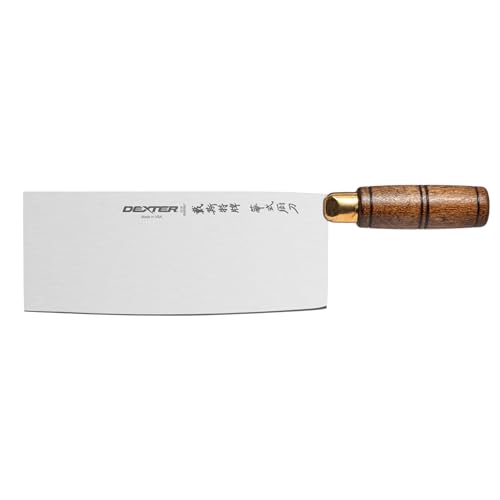
The Dexter-Russell S5198 is a traditional Chinese chef knife — often mistaken for a cleaver — with an 8-inch by 3.25-inch blade made from high-carbon stain-free steel. The blade is individually ground and honed to a plain edge, and at only 1/16-inch thick, it is significantly thinner than standard Western chef knives. This thin profile excels at slicing through vegetables, herbs, and boneless proteins with minimal resistance.
The walnut handle is simple but functional, and the full-tang construction provides adequate balance for the price. Made in the USA, this knife has a loyal following among cooks who appreciate the light weight and maneuverability of a traditional Chinese blade. Reviewers note that the knife arrives sharp out of the box and is easy to sharpen due to the high-carbon steel. The blade height (3.25 inches) provides ample knuckle clearance and allows for scooping up chopped ingredients efficiently.
This is not a cleaver — it should not be used on bones or hard squash. The thin steel can flex or chip under lateral force. The handle is mass-produced and may feel basic compared to premium Western or Japanese options. However, for budget-conscious home cooks who do a lot of vegetable prep and want a lightweight, nimble blade that sharpens easily, the Dexter-Russell offers remarkable value.
Why it’s great
- Very thin 1/16-inch blade for efficient veggie slicing
- High-carbon steel is easy to sharpen
- Made in the USA with a loyal following
Good to know
- Not a cleaver — cannot handle bones or hard squash
- Basic handle design feels mass-produced
- Blade is tall and may not fit standard knife drawers
FAQ
Is a 60 HRC chef knife better than a 56 HRC one for a home cook?
What is the practical difference between a Kiritsuke and a traditional chef knife?
How often should I sharpen a chef knife with 60 HRC steel?
Can I put a premium chef knife in the dishwasher?
Final Thoughts: The Verdict
For most users, the best rated chef knife is the Miyabi Kaizen 8-Inch because it combines a 60 HRC VG-10 Cryodur blade with a 9.5- to 12-degree edge and a comfortable Micarta handle — delivering Japanese-level sharpness and edge retention that outperforms comparably priced German alternatives. If you prefer the durability of a Sigmaforge German blade with easy honing, grab the ZWILLING PROFESSIONAL S 8-Inch. And for home cooks who want a complete set at a fair price, nothing beats the HOSHANHO 3-Piece Set with its 60 HRC steel and versatile blade shapes.