A professional vegetable knife is the single most important tool for any cook who values precision, speed, and clean cuts on produce. Unlike a standard chef’s knife, these blades are optimized for the unique demands of slicing, dicing, and chopping vegetables with minimal effort and maximum accuracy.
I’m Mohammad Maruf — the founder and writer behind AirfryerBite. I’ve spent years analyzing the metallurgy, geometry, and ergonomics of kitchen cutlery to help cooks find the blade that truly fits their hand and their workload.
Whether you are a line cook prepping mise en place or a home cook who demands restaurant-quality cuts, the right blade transforms your workflow. I have broken down the steel types, handle materials, and edge geometries to find the best professional vegetable knife for every kitchen.
How To Choose The Best Professional Vegetable Knife
Choosing the right vegetable knife is not just about brand recognition. The key lies in three interconnected factors: the blade steel and its hardness, the blade geometry and edge angle, and the handle’s ergonomics for your specific hand size and cutting style. Ignore one of these, and you will end up with a knife that either dulls too quickly, chips on hard squash, or causes hand fatigue.
Blade Steel, Hardness (HRC), and Edge Retention
High-end stainless steels like VG10, SG2, or high-carbon German steel deliver a hardness of 58-63 HRC. A harder steel holds a razor edge longer but can be more brittle. For heavy vegetable prep, you want a hardness around 60-62 HRC to balance edge retention with toughness. Avoid softer stainless steel that will require constant honing.
Blade Geometry and Profile
Most professional vegetable knives use a Nakiri profile—a flat, rectangular blade that allows the entire edge to contact the cutting board in one stroke. This eliminates accordion cuts where vegetables hang by a thread. Look for a thin blade spine (around 2.5mm) and a 15-degree or less edge angle for effortless slicing through dense root vegetables and delicate herbs alike.
Handle Ergonomics and Balance
Japanese Wa-style octagonal or D-shaped handles are lightweight and promote a pinch grip, offering precise control. Western handles with full bolsters provide more heft and a different balance point. For long prep sessions, the handle should feel like an extension of your hand, not a separate weight. Consider your hand size and whether you prefer a lighter, nimble knife or something with more forward weight.
Quick Comparison
On smaller screens, swipe sideways to see the full table.
| Model | Category | Best For | Key Spec | Amazon |
|---|---|---|---|---|
| Miyabi Birchwood SG2 | Premium | Ultimate edge retention & beauty | SG2 Micro Carbide Powder Steel | Amazon |
| Shun Premier Blonde Nakiri | Premium | Professional prep & hammered finish | 68-layer Damascus, VG-MAX core | Amazon |
| WÜSTHOF Classic IKON Nakiri | Premium | German durability & hollow edge | PEtec Blade, 58 HRC | Amazon |
| Yoshihiro VG10 Damascus Nakiri | Mid-Range | Traditional Japanese craftsmanship | 46-layer Damascus, VG10 core | Amazon |
| HOSHANHO Damascus Nakiri | Mid-Range | Value Damascus with anti-stick grooves | 10Cr15CoMoV steel, 62 HRC | Amazon |
| Mac Knife Vegetable Cleaver | Mid-Range | Heavy squashes & large volume | Molybdenum stainless steel | Amazon |
| Global Hollow Ground Veggie Knife | Entry-Level | Lightweight & sanitary all-metal build | Hollow ground edge, 8 inch blade | Amazon |
In‑Depth Reviews
1. Miyabi Birchwood SG2 Japanese Nakiri Knife

The Miyabi Birchwood SG2 is a pinnacle of Japanese cutlery engineering. Its core uses SG2 micro-carbide powder steel—hardened to 63 HRC—that delivers exceptional edge retention and feels surgically sharp out of the box. The 100-layer flower Damascus cladding is not just aesthetic; it also helps reduce drag as you slice through dense sweet potatoes or delicate mushrooms.
The handle is crafted from Karelian birch with a unique D-shape profile that naturally guides your hand into a pinch grip. The ferrule is polished stainless steel, ensuring the transition from handle to blade is seamless. At 6.5 inches, the blade is nimble yet capable of handling large cabbage quarters without feeling undersized.
This knife is best suited for those who treat their tools with care. The birch handle is not sealed against moisture, so you must hand-wash and dry immediately. It is expensive, but for a professional or a serious enthusiast, the performance and beauty justify every penny.
Why it’s great
- SG2 powder steel holds a razor edge longer than VG10 or German stainless.
- Karelian birch handle is lightweight, warm, and ergonomically superior.
- Damascus cladding reduces food sticking during long prep sessions.
Good to know
- Birch handle requires careful drying to prevent water damage.
- Premium price point, not an entry-level buy.
2. Shun Premier Blonde 5.5″ Nakiri Knife
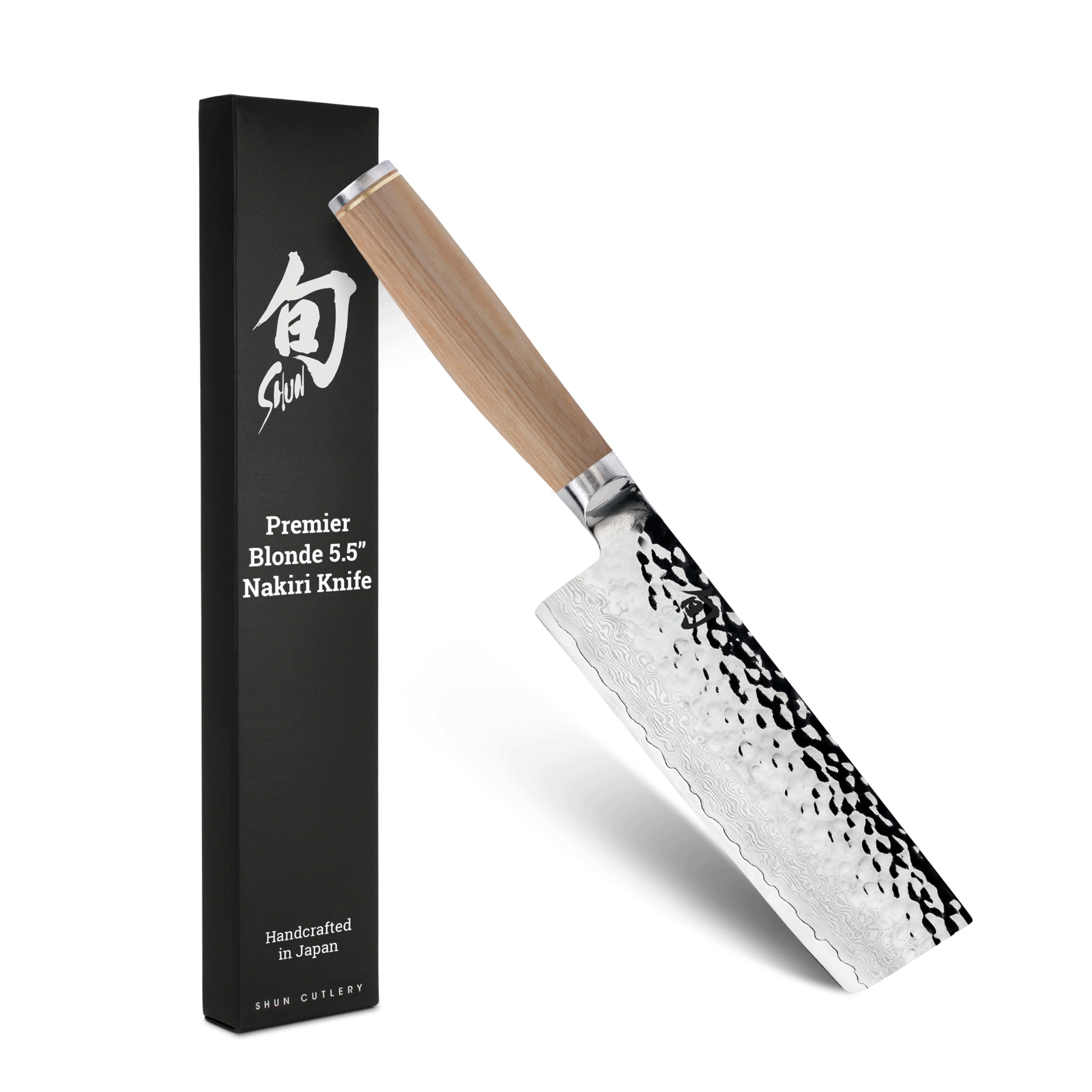
The Shun Premier Blonde is a specialized vegetable knife that excels at precision work. With a blade length of 5.5 inches, it is the shortest option here, but it cuts with surgical accuracy. The VG-MAX core is clad in 68 layers of Damascus stainless steel, and the hammered tsuchime finish prevents food from clinging to the blade—a huge advantage when dicing onions or slicing tomatoes.
This knife is noticeably lightweight at roughly 4 ounces, which reduces wrist fatigue during extended prep. The blonde Pakkawood handle is contoured for both left and right-handed users and features a stainless steel bolster for balance. Professional users have reported using this knife for 10 hours a week in restaurant settings with only occasional sharpening.
The 16-degree edge angle is ideal for delicate produce, but it also handles lean proteins like raw fish and chicken with ease. The included free sharpening service from Shun adds long-term value. For those with smaller hands or a preference for a nimble, controlled blade, this is a top contender.
Why it’s great
- Hammered finish minimizes sticking for clean, fast cuts.
- Lightweight design reduces hand strain during long shifts.
- Free sharpening service included with purchase.
Good to know
- 5.5-inch length may feel short for large melons or cabbages.
- Not as forgiving on hard bones or frozen foods.
3. Yoshihiro VG10 46 Layers Hammered Damascus Nakiri
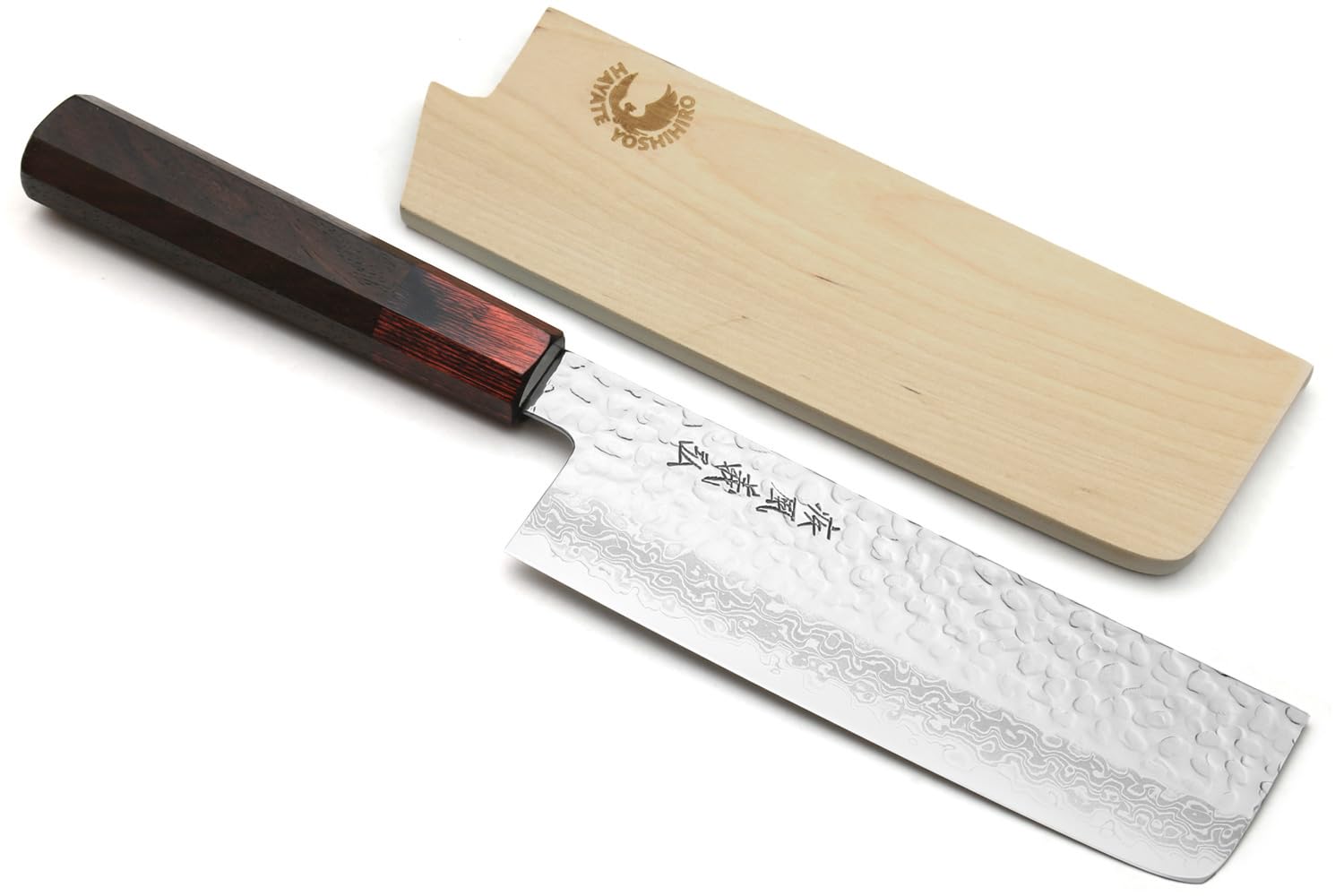
Yoshihiro delivers a traditional Japanese vegetable knife that punches above its mid-range price. The 46-layer hammered Damascus cladding over a VG10 core yields a hardness of 60 HRC—ideal for long-lasting sharpness without becoming brittle. The hammered texture reduces friction significantly, so sliced potatoes and carrots fall away from the blade effortlessly.
The octagonal (hachikaku) Wa-handle is made of rosewood and feels natural in a pinch grip. It is lighter than a full-tang Western handle, which makes the knife feel agile and responsive. The included magnolia wood Saya sheath protects the blade during storage and adds a classic touch.
Users report this knife retains its edge for months with normal use. The flat profile ensures clean, full-contact cuts on herbs, greens, and root vegetables. Hand-washing with a water whetstone is required, but the long-term performance rewards the extra care.
Why it’s great
- Excellent edge retention with VG10 core at 60 HRC.
- Hammered Damascus finish effectively prevents food sticking.
- Includes a magnolia wood Saya sheath for safe storage.
Good to know
- Rosewood handle can be slippery when wet; not ideal for oily hands.
- Requires careful maintenance with water whetstones only.
4. WÜSTHOF Classic IKON 7″ Hollow Edge Nakiri Knife

WÜSTHOF brings German engineering to the vegetable knife with the Classic IKON Nakiri. The high-carbon stainless steel blade is precision-forged and treated to 58 HRC, making it slightly softer than Japanese options but more resistant to chipping. The hollow edge (Granton-style) features vertical indentations that create air pockets, significantly reducing friction and sticking.
The IKON handle is the standout feature here: a sleek black synthetic material that is contoured and double-bolster balanced. It feels substantial in the hand without being heavy, and the full bolster provides a secure finger guard. The blade is 7 inches long, offering more reach than most Nakiri knives for those who prefer to slice rather than chop.
The PEtec edge technology claims to be 20% sharper with twice the edge retention of standard WÜSTHOF blades. Real-world use confirms it handles everything from basil chiffonade to hard butternut squash with consistency. It is also easier to sharpen on a standard whetstone than harder Japanese steels.
Why it’s great
- Hollow edge prevents food sticking better than smooth blades.
- Robust German build is more impact-resistant than thin Japanese blades.
- Ergonomic IKON handle with double bolster provides excellent balance.
Good to know
- Heavier feel may not suit users preferring ultra-light knives.
- 58 HRC steel requires more frequent honing than harder steels.
5. HOSHANHO Damascus Nakiri Knife 6.5 Inch

The HOSHANHO Nakiri offers an impressive combination of Damascus aesthetics and high-performance steel at a mid-range price. The core is Japanese 10Cr15CoMoV alloy steel, hardened to 62 HRC, which approaches premium-level edge retention. The blade features unique anti-stick grooves that reduce the contact surface between food and blade, making it effective for slicing sticky ingredients like raw potatoes or beets.
The handle is made from olive wood, which is denser and more water-resistant than many softer woods. It has a contoured shape that fits comfortably in larger hands, though the handle is not fully sealed, so care is required. The 6.5-inch blade length is standard for a Nakiri and works well for both fine dicing and heavy chopping.
Customer reviews are consistently positive about the sharpness out of the box, with many noting it stays sharp for months. Some users reported minor chipping concerns, but overall, this knife is a strong contender for anyone wanting a Damascus vegetable knife without stepping into the premium price bracket.
Why it’s great
- 62 HRC hardness rivaling much more expensive knives.
- Olive wood handle is comfortable and distinct from standard rosewood.
- Anti-stick grooves genuinely help with sticky vegetables.
Good to know
- Olive wood handle requires oiling and cannot go in the dishwasher.
- Some units may have slight inconsistencies in the Damascus pattern.
6. Global 7″ Hollow Ground Vegetable Knife
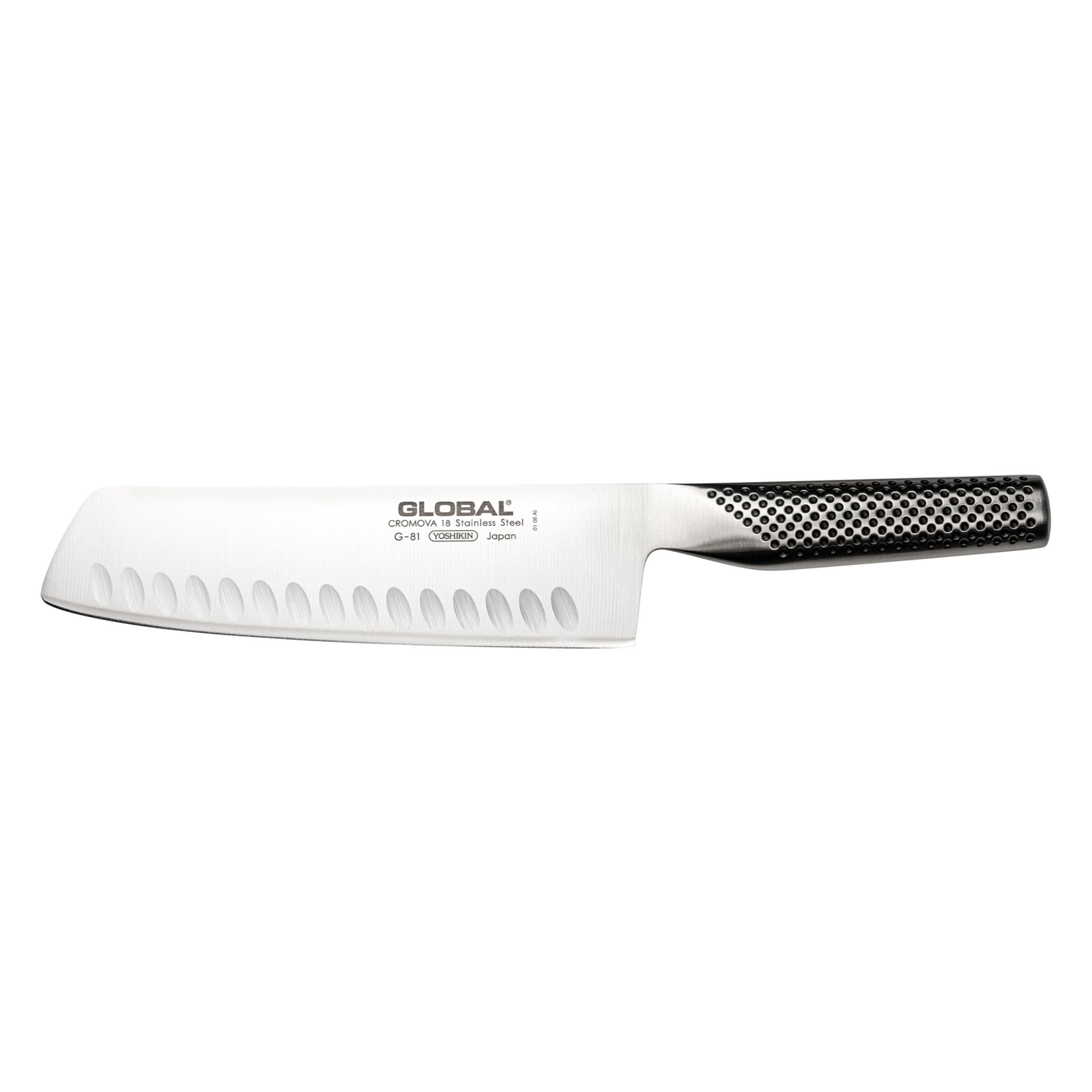
The Global 7″ Hollow Ground Vegetable Knife takes a different approach with an all-metal, seamless construction. The blade and handle are forged from a single piece of stainless steel, which eliminates any joint gaps where bacteria can accumulate. The hollow ground edge is extremely thin, making it one of the sharpest entry-level options for slicing through delicate produce.
At 8 inches, this knife is longer than typical Nakiri models, offering more slicing length for larger vegetables. The handle is textured with small dimples for grip, but because it is entirely metal, it can feel slick if your hands are greasy. The weight is balanced well, and users with weak wrists or arthritis often find it easier to maneuver than heavier Western knives.
While the steel is not as hard as VG10 or SG2 options, it is corrosion-resistant and easier to maintain. The hollow ground edge is great for thin slicing but may not hold up well against heavy chopping on hard cutting boards. It is an excellent entry into professional-style vegetable knives for those who prioritize hygiene and simplicity.
Why it’s great
- One-piece stainless steel construction is hygienic and easy to clean.
- Very sharp out of the box with a thin, precise edge.
- Lightweight and well-balanced for users with smaller hands or wrist issues.
Good to know
- Smooth metal handle can be slippery when wet or oily.
- Not ideal for heavy chopping of dense root vegetables.
7. Mac Knife Japanese Series Vegetable Cleaver, 6-1/2-Inch

The Mac Knife Japanese Series Vegetable Cleaver is a hybrid that combines the heft of a cleaver with the precision of a Nakiri. The 2.5mm thick molybdenum stainless steel blade is thicker than most Japanese vegetable knives, giving it the authority to crack open hard squashes and dense cabbage heads without flexing. The horizontal finish on the blade surface helps prevent food from sticking upward.
The Pakka wood handle is comfortable for both large and small hands, and while the knife is not full tang, it remains well-balanced for its weight. Users have reported owning this knife for years with minimal upkeep—it holds a good edge and is easy to hone back to sharpness. It is especially effective for cooks who do high-volume vegetable prep and want a knife that feels sturdy.
Be aware that the molybdenum steel will stain if exposed to acidic ingredients for long periods; a quick rinse after cutting tomatoes or citrus is necessary. The knife is not dishwasher safe, but the edge retention and durability make it a long-term workhorse for any kitchen.
Why it’s great
- Thicker blade excels at heavy squash and cabbage work.
- Horizontal finish reduces sticking during continuous chopping.
- Proven long-term durability with many users reporting over a decade of use.
Good to know
- Molybdenum steel can stain from acidic foods if not rinsed promptly.
- Not as sharp out of the box as thinner Japanese options.
FAQ
What is the difference between a Nakiri knife and a standard chef’s knife?
How hard should the steel be on a professional vegetable knife?
Final Thoughts: The Verdict
For most users, the best professional vegetable knife winner is the Yoshihiro VG10 Damascus Nakiri because it offers the best balance of a high-performing VG10 core, a beautiful Damascus finish, and an accessible mid-range price point. If you want the absolute pinnacle of edge retention and exclusive materials, grab the Miyabi Birchwood SG2. And for German durability with a hollow edge that fights sticking, nothing beats the WÜSTHOF Classic IKON Nakiri.