You can ignore the marketing hype about single-origin romance and focus on the one number that matters: the lab-verified polyphenol count in milligrams per kilogram. A high-polyphenol olive oil delivers a distinct peppery throat burn — that’s oleocanthal at work — alongside measurable antioxidant density that separates genuine functional food from mass-produced cooking fat.
I’m Mohammad Maruf — the founder and writer behind AirfryerBite. I’ve spent months cross-referencing third-party lab certificates, harvest dates, and packaging specs to identify olive oils that prove their polyphenol content rather than just claiming it.
A properly selected best polyphenol olive oil should deliver a balanced antioxidant profile, a verifiable oleocanthal kick, and storage packaging that protects against light and oxygen degradation.
How To Choose The Best Polyphenol Olive Oil
Polyphenol olive oil is not a single product category — it’s a spectrum defined by harvest timing, olive varietal, pressing temperature, and, most critically, third-party verification. Retail shelves are full of bottles printed with “high polyphenol” claims that have no lab report behind them. A disciplined buyer ignores the front label and looks for the certificate.
Verifiable Polyphenol Content vs. Marketing Claims
Many brands print “30X more polyphenols” without stating the baseline they are comparing to. The meaningful metric is milligrams per kilogram (mg/kg) measured by HPLC (high-performance liquid chromatography). Premium oils typically land between 300 mg/kg and 1,000 mg/kg. Anything below 200 mg/kg is ordinary supermarket oil. Seek brands that publish the lab report or batch number so you can verify the number yourself.
The Oleocanthal Throat Tingle
Oleocanthal is the polyphenol compound responsible for a momentary peppery sensation at the back of the throat when you swallow high-quality fresh oil. That feeling is a freshness signal — it degrades with time, heat exposure, and poor storage. Oils that produce no tingle are often older, lower in polyphenols, or stored improperly. A genuine oleocanthal burn should last 5 to 15 seconds and then resolve without bitterness.
Packaging Integrity and Harvest Transparency
Polyphenols are fragile molecules that break down under direct light and contact with oxygen. Clear glass bottles and plastic containers allow UV degradation. The best packaging is opaque dark glass, tin, or ceramic that blocks light entirely. Additionally, the bottle should display a harvest date — not just a “best by” date — because freshness is time-sensitive. If the harvest year is missing, the oil may already be entering its degradation window.
Quick Comparison
On smaller screens, swipe sideways to see the full table.
| Model | Category | Best For | Key Spec | Amazon |
|---|---|---|---|---|
| Papa Vince | Drinking / Premium | Lab-verified daily consumption | 515 mg/kg total polyphenols | Amazon |
| Fresh Press Farms | American / High Heat | Cooking & salads | 1,000 mg/kg polyphenols | Amazon |
| Kosterina | Greek / Balanced | Everyday finishing oil | 500+ mg/kg polyphenols | Amazon |
| Zahara | Sicilian / Award | Gifting & special dishes | 400 mg/kg average polyphenols | Amazon |
| Yolioo | Tuscan / Organic | Salads & pasta finishing | Cold pressed within 6 hours | Amazon |
In‑Depth Reviews
1. Papa Vince Hydroxytyrosol Lab-Verified EVOO
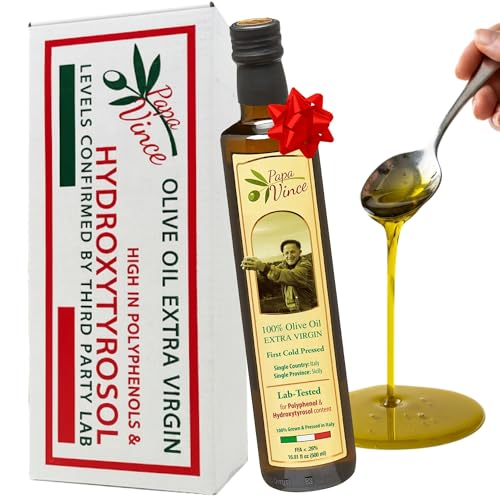
Papa Vince provides the most transparent lab documentation of any oil in this selection. The World Olive Center for Health at the National and Kapodistrian University of Athens independently verified a total polyphenol count of 515 mg/kg with a specific hydroxytyrosol reading of 211 mg/kg and oleocanthal at 161 mg/kg — 19 percent above the UC Davis international study average. Those numbers matter because hydroxytyrosol is one of the most studied antioxidant compounds in Mediterranean diet research.
The Nocellara del Belice olives come from volcanic soil in Sicily and are cold pressed within hours of harvest. The flavor profile is intentionally smooth — described by the brand as “drinkable” — with a light peppery finish that signals oleocanthal without the harsh burn of older oils. Dark glass packaging blocks UV degradation, and the harvest date is printed on every bottle so you can confirm freshness at purchase.
At roughly 16.9 fluid ounces, the volume is aligned with the premium-tier segment. Many users report taking two tablespoons daily as a morning supplement, which makes sense given the hydroxytyrosol density. The bottle works best for those who want both a cooking oil and a functional food with fully disclosed lab results. If you value third-party verification over front-label claims, this is the benchmark.
Why it’s great
- Lab-verified hydroxytyrosol and oleocanthal breakdown per batch
- Smooth, drinkable taste with minimal bitterness
- Harvest date printed on dark glass packaging
Good to know
- Premium price tier for single 500ml bottle
- Some may prefer a more aggressive grassy bite
2. Fresh Press Farms Cold Pressed High Polyphenol Pure Gold EVOO

Fresh Press Farms claims 1,000 mg/kg of polyphenols — double the concentration of many premium imports — and backs that number with batch testing. The oil comes from olives grown, harvested, cold pressed and bottled in Georgia, which eliminates the supply-chain degradation risk inherent in imported oils. The pack includes two 16.4-ounce recyclable aluminum bottles with convenient spouts designed for controlled pouring.
Flavor-wise, reviewers describe it as “not overly strong” compared to some foreign oils, which makes it suitable for medium-temperature cooking — sautéed vegetables, pasta dishes, and grilling — rather than just finishing. It contains naturally occurring vitamins E, A, B, C, and D plus omega-9 fatty acids. Certifications include Whole30, Paleo, Non-GMO, and Kosher, so it clears most dietary protocol boundaries without conflict.
The aluminum packaging offers excellent light protection and eliminates plastic contamination concerns. However, users note that the bottles arrived inside greasy plastic sleeves, so the outer packaging can be messy. At roughly 32.8 total fluid ounces across two bottles, the per-ounce value sits comfortably in the mid-range. This is the pick for anyone who wants measurable polyphenol density in a cooking-friendly oil produced entirely on US soil.
Why it’s great
- Lab-tested 1,000 mg/kg polyphenol concentration
- 100% US-grown, pressed, and bottled in Georgia
- Aluminum spout bottles preserve freshness
Good to know
- Mild flavor — less peppery bite than early-harvest imports
- Outer packaging can arrive greasy
3. Kosterina Original Extra Virgin Olive Oil
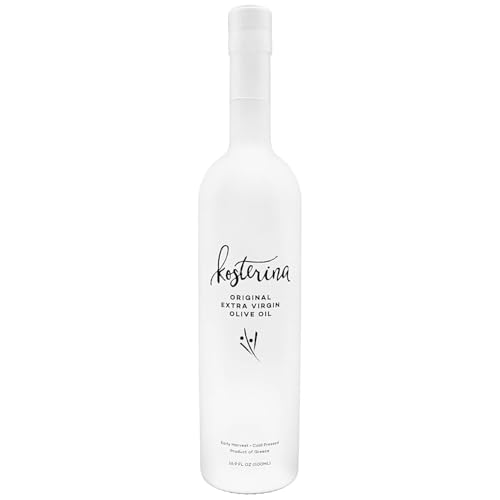
Kosterina’s 500+ mg/kg polyphenol count hits a sweet spot between potency and price. The oil is cold pressed from early-harvest Koroneiki olives hand-picked in southern Greece, a varietal known for producing high phenolic density and a pronounced peppery finish. Multiple user reviews confirm the “throat tickle” that signals active oleocanthal, and the flavor profile comes through as robust, grassy, and fresh.
The 16.9-ounce bottle is made from opaque white glass, which blocks UV light far better than clear glass or plastic. This is critical because polyphenol degradation accelerates under light exposure. The brand markets this as a finishing oil rather than a cooking oil — ideal for drizzling over salads, roasted vegetables, or bread. Certifications include non-GMO, vegan, and gluten-free.
Price-wise, Kosterina lands in the mid-range tier with a per-ounce cost that undercuts many competitors with similar polyphenol claims. One key advantage is that the brand publishes a general lab range rather than a single batch number — buyers looking for batch-level verification may prefer oils that share individual reports, but for everyday reliability at this price point, the consistency is solid. If you want a bold Greek EVOO that delivers value without sacrificing polyphenol density, this is your entry point.
Why it’s great
- 500+ mg/kg polyphenol content with consistent batch quality
- Opaque white glass bottle prevents light damage
- Bold, peppery finish from early-harvest Koroneiki olives
Good to know
- Packaged as a single 16.9 oz bottle
- No batch-level lab certificate included in the box
4. Zahara Extra Virgin Olive Oil from Sicily

Zahara, produced by the Guccione family mill in Chiaramonte Gulfi, Sicily, has earned Gambero Rosso’s “3 Leaves” rating four consecutive years — Italy’s highest olive oil recognition. The oil routinely tests at 400 mg/kg polyphenol content with acidity below 0.2 percent, well under the 0.8 percent threshold required for extra virgin classification. Those two numbers together indicate an exceptionally fresh, well-handled oil.
The flavor profile is unusually specific for a mass-produced EVOO: notes of tomato leaf, thistle, Mediterranean herbs, and white pepper. This makes it a strong match for raw applications — tomato Caprese, orange salad, or grilled fish — where the oil’s character can stand alone. The Tonda Iblea olive varietal is a heritage strain unique to this Sicilian region, picked by hand from secular trees and pressed within hours of harvest.
The presentation includes a gift box, which reviewers consistently mention using in place of wine as a host gift. The per-ounce cost lands in the upper-mid range, but the bottle is 16.9 fluid ounces, smaller than the Fresh Press Farms twin-pack. If your priority is gifting an award-winning, traceable Sicilian oil with verified polyphenol content and distinctive herbal flavor, this bottle delivers a presentation that few competitors match.
Why it’s great
- Gambero Rosso 3 Leaves award for four consecutive years
- Heritage Tonda Iblea olives with 0.2% acidity
- Comes in a premium gift box ideal for foodie gifting
Good to know
- Single 16.9 oz bottle — less volume than twin-packs
- Lighter throat tingle compared to 500+ mg/kg oils
5. Yolioo 100% Italian Organic Extra Virgin Olive Oil
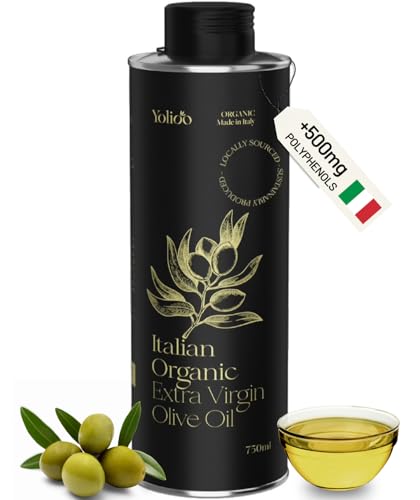
Yolioo sources its olives from a third-generation family farm near Florence, Tuscany, and cold presses them within six hours of harvest at a controlled temperature of 22–24°C. That processing window is critical — phenolic degradation starts the moment olives are crushed, and a six-hour limit preserves far more antioxidants than the 24- to 48-hour standard common among larger producers. The oil carries organic certification and full traceability to the producer.
The flavor profile is described by reviewers as smooth with a slight lemon note and a well-balanced profile that works for both raw finishing and cooking. The 25.4-fluid-ounce bottle offers more volume than many premium competitors, which lowers the per-use cost noticeably. Some user feedback notes that the packaging arrived dented, making pouring messy — the brand could improve its shipping protection.
Yolioo does not publish an exact mg/kg polyphenol number on its product page, which puts transparency a step behind Fresh Press Farms and Papa Vince. However, the early-harvest Tuscan provenance and cold-pressing discipline strongly suggest high phenolic retention. This bottle works well for buyers who prioritize organic certification, Tuscan origin, and larger volume at a mid-range price point and who are willing to trust the production method over a printed lab report.
Why it’s great
- Cold pressed within 6 hours at 22–24°C for peak preservation
- Organic certified and traceable to a Tuscan family farm
- Larger 25.4 fl oz bottle for better per-serving value
Good to know
- No specific mg/kg polyphenol number published on listing
- Metal can packaging prone to denting during shipping
FAQ
What does the throat tingle in olive oil actually mean?
Is a higher polyphenol count always better?
How should I store high-polyphenol olive oil at home?
Does “cold pressed” guarantee high polyphenol content?
Can I cook with high-polyphenol olive oil or is it only for salads?
Final Thoughts: The Verdict
For most users, the best polyphenol olive oil winner is the Papa Vince because it provides the most complete third-party lab verification — hydroxytyrosol, oleocanthal, and total polyphenols — plus a drinkable flavor profile and harvest-date transparency. If you want maximum polyphenol density for cooking, grab the Fresh Press Farms twin-pack with its 1,000 mg/kg rating and US-based production. And for a daily finishing oil with bold Greek flavor at a mid-range price, nothing beats the Kosterina.