Five seconds under the faucet does not remove the grit lodged in a potato’s eyes or the fine soil clinging to a carrot’s root end. A dedicated scrub brush with the right bristle stiffness and handle reach solves this without damaging the thin skins that hold the most fiber and nutrients. The wrong brush either bends after a week or scratches the surface of your cookware when you repurpose it.
I’m Mohammad Maruf — the founder and writer behind AirfryerBite. I’ve spent years analyzing kitchen tool specifications, from bristle material and handle ergonomics to replacement head longevity, to understand what separates a tool you reach for daily from one that ends up in a drawer.
Below, I’ve filtered the market to find the absolute best potato scrubber options that balance bristle durability, handle comfort, and eco-friendly construction for real home cooks.
How To Choose The Best Potato Scrubber
Choosing a potato scrubber comes down to three factors: bristle aggressiveness, handle ergonomics, and whether you value replaceability or a permanent build. Scrub too soft and dirt stays in the cracks; scrub too hard and you risk scratching non-stick coatings or stripping the thin skin of new potatoes.
Bristle Material and Firmness
Tampico fibers offer a medium stiffness that dislodges soil without scratching non-stick or cast iron seasoning. Sisal is slightly softer and works well for general dish pre-wash. Coconut coir is harder and more durable — excellent for root vegetables and cast iron but too aggressive for delicate mushroom or berry cleaning. Nylon bristles provide consistent stiffness across their lifespan but are plastic-based and less eco-friendly.
Handle Length and Grip Comfort
A 10- to 11-inch handle keeps your hand away from the sink basin and lets you apply more leverage when scrubbing elongated vegetables like carrots or celery. Rubberized or contoured grips prevent the tool from slipping when wet. Non-slip handles matter more for heavy scrubbing tasks; for light rinsing, a smooth wooden handle often suffices if a hanging loop allows proper drying.
Replaceable Heads vs. One-Piece Design
Brushes with replaceable heads reduce long-term waste and let you swap to a fresh scrubbing surface while keeping the same handle. The catch is the locking mechanism — some use a simple press-fit that can loosen, while others use a metal bead or screw collar. One-piece designs are typically more structurally robust but must be fully discarded when bristles wear down, usually after 6 to 12 months of daily use.
Quick Comparison
On smaller screens, swipe sideways to see the full table.
| Model | Category | Best For | Key Spec | Amazon |
|---|---|---|---|---|
| AMERWASH PLUS Dish Brush | Replaceable Head | Non-stick & cast iron safety | Tampico fiber bristles / 10″ beech handle | Amazon |
| Fox Run Vegetable Cleaning Brush | One-Piece | Ergonomic grip & mushroom cleaning | Medium polypropylene bristles / rubber handle | Amazon |
| Superio Fruit and Vegetable Scrub Brush | Double-Sided | Heavy soil & crevice cleaning | Dual-sided stiff nylon bristles / 11″ length | Amazon |
| ANTYA Bamboo Dish Brush | Eco Replaceable | Plastic-free & soft scrubbing | Sisal fiber bristles / bamboo handle | Amazon |
| growbycoco Tawashi Scrub Brush (6-Pack) | Natural Coir | Cast iron & bulk kitchen use | Handcrafted coconut coir bristles / 4″ x 3″ | Amazon |
In‑Depth Reviews
1. AMERWASH PLUS Dish Brush with Wooden Handle

The AMERWASH PLUS brush uses 1-inch-long Tampico plant fibers — stiff enough to dislodge dried soil from potato eyes yet flexible enough to avoid scratching non-stick pans or cast iron seasoning. The 10-inch beech wood handle keeps your knuckles out of the sink basin, and the PU leather lanyard lets you hang it to air dry, preventing the wood from darkening. Owners consistently report the bristles hold their shape for nearly a year without replacement.
Included are three spare brush heads that swap onto the same handle, extending the tool’s useful life well beyond a solid one-piece design. The heads can also be used alone as short scrubbers for tight spaces like bottle interiors. The BPA-free construction and natural fiber composition make it a strong choice for cooks who want to reduce plastic in their kitchen workflow.
One minor note: while the wood handle is comfortable, it must be dried after each use to avoid premature discoloration. A few users reporting early bristle shedding suggest checking the head’s fit before the first use — the friction-fit collar requires a firm push to seat fully.
Why it’s great
- Natural Tampico bristles clean gently on non-stick and cast iron
- Replaceable head system reduces long-term waste
- Long handle provides good leverage for root vegetables
Good to know
- Wood handle needs thorough drying to prevent discoloration
- Press-fit head connection can loosen if not seated firmly
2. Fox Run Vegetable Cleaning Brush with Handle

The Fox Run brush is a one-piece design that prioritizes hand comfort above all else. Its rubberized handle is contoured to reduce cramping during long washing sessions — a difference you feel immediately when scrubbing a dozen potatoes or cleaning a pile of garden beets. The polypropylene bristles are angled slightly, letting you push dirt out of nooks rather than just brushing across the surface.
Measurements come in at 10.5 by 3.5 by 1.25 inches, with a medium stiffness that works on mushrooms, apples, and delicate herbs as easily as on root crops. The brush is dishwasher safe on the top rack, and the hanging hole at the base allows air drying between uses. Bristle retention is notably good — owners report the fibers still stand upright after months of regular use rather than flattening like cheaper nylon options.
The only real limitation is the one-piece construction: when the bristles eventually wear down, you must replace the entire brush. There is also no replaceable head system, so cooks looking to minimize landfill waste may prefer a design with swappable heads.
Why it’s great
- Ergonomic rubber grip stays comfortable during long washing
- Angled bristles clean crevices effectively
- Dishwasher safe for deep sanitation
Good to know
- Not repairable — entire brush is replaced when bristles wear
- Slightly softer bristles mean more passes on heavily caked soil
3. Superio Fruit and Vegetable Scrub Brush

The Superio brush introduces a dual-sided bristle layout: a wide bottom surface for broad potato scrubbing and a narrow, coarse top strip for digging into crevices and stubborn residues. The 11-inch overall length and rubber grip handle provide excellent control when applying pressure on stuck-on dirt. Owners who move from the Fox Run or AMERWASH regularly note the Superio’s thicker handle is noticeably more comfortable for larger hands.
Nylon bristles are firm — customers describe them as “stiff enough to clean but not scratch clear plastic containers.” That firmness translates to efficient removal of dried mud from root vegetables and baked-on food from cookware. The hanging loop at the end of the handle makes storage simple, and the unit is tested and certified for food-contact safety. It arrives in a pack of two red-and-white brushes, giving you a backup or a second tool for the bathroom or utility sink.
Keep in mind that the dual-sided design adds bulk — this brush is less suitable for narrow-neck bottles or tight spaces. A few users note the top coarse bristles can be too harsh for thin-skinned produce like tomatoes or peaches, so reserve that side for potatoes, carrots, and dishes.
Why it’s great
- Dual bristle areas handle broad scrubbing and detail work
- Thick rubber grip reduces hand fatigue during heavy use
- Pack of two offers great backup value
Good to know
- Bulkier head doesn’t fit into narrow bottles or jars
- Top coarse bristles may be too aggressive for soft fruit skins
4. ANTYA Bamboo Dish Brush with Soft Bristle
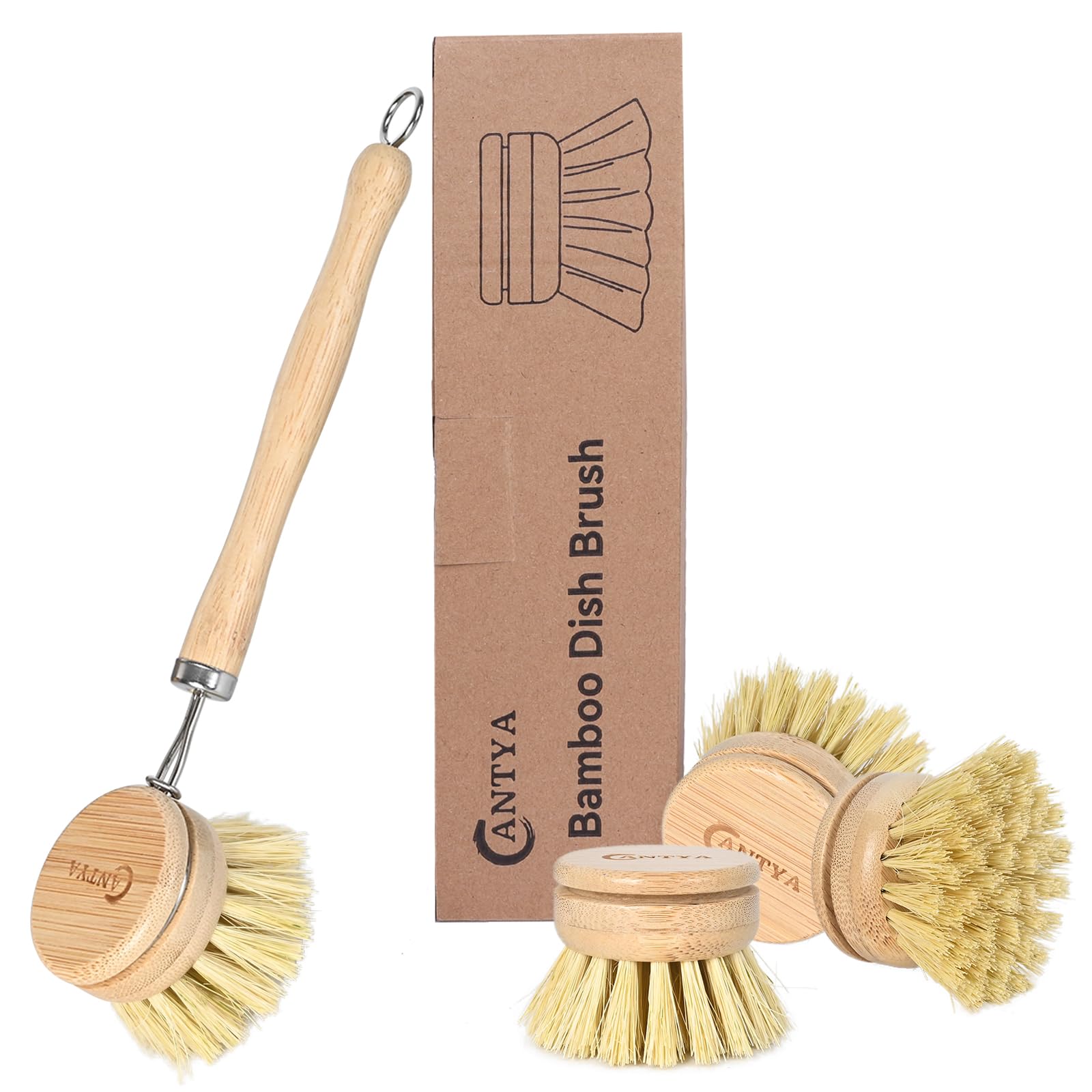
The ANTYA brush leans fully into a plastic-free philosophy: the handle and head are natural bamboo, the bristles are sisal fiber, and the entire assembly can biodegrade at end of life. Sisal is softer than Tampico or nylon, making this a good choice for pre-washing dishes and scrubbing potatoes where you want the dirt off without any risk of scratching. The package includes one handle and three replacement heads, allowing you to cycle through fresh bristles without discarding the handle.
The ergonomics are less refined than rubber-handled competitors — the bamboo handle is thin and round, which some users find less secure when wet. A stainless steel ring at the end enables hanging for air drying. Owners who prioritize sustainability over grip comfort will appreciate the reduction in plastic waste; the brush is sturdy enough for daily use, and the replacement heads are reasonably priced.
The main trade-off is bristle longevity. Sisal fibers wear down faster than synthetic options, especially if used on rough cast iron surfaces regularly. For dedicated potato and vegetable washing, the softness works in its favor — you rarely need the hardest possible bristle for just dirt and soil removal.
Why it’s great
- Fully biodegradable bamboo and sisal construction
- Includes 3 replacement heads for extended use
- Soft bristles are perfectly safe for all cookware surfaces
Good to know
- Thin handle can feel slippery when wet without a rubber grip
- Sisal bristles wear faster than synthetic or Tampico fibers
5. growbycoco Tawashi Scrub Brush (6-Pack)

The growbycoco Tawashi brushes use 100% coconut coir — the fibrous material extracted from coconut husks — handcrafted into a traditional Japanese Kamenoko shape. Coir bristles are notably harder than Tampico or sisal, making these brushes excellent for scrubbing garden root vegetables like potatoes, carrots, and beets where heavy soil is baked into the skin. They also clean cast iron and carbon steel pans without disturbing the seasoning, a trait many enamel-loving users confirm.
Each brush measures 4 by 3 by 2 inches — smaller than the handled options above, but the compact form gives you direct pressure control. The 6-pack means you can keep one at the kitchen sink, one in the utility room, one for outdoor grill cleaning, and still have spares. The coir bristles are biodegradable, and the iron wire holding the bundle is minimal, reducing overall plastic content.
The trade-off is a lack of handle length — these are palm-sized scrubbers, so your hand gets closer to the dirt and water. They also require thorough rinsing and drying between uses to prevent the coir from developing odors. For cooks who prioritize tough natural cleaning in bulk and don’t mind a handleless grip, this set offers exceptional value per unit.
Why it’s great
- Hard coconut coir bristles remove tough soil and cast iron grime
- 6-pack provides long-term supply for multiple sinks
- Fully biodegradable and plastic-free
Good to know
- No handle means hands get wet during scrubbing
- Must be completely dried after use to avoid odor buildup
FAQ
Can I use a potato scrubber on my non-stick pans?
How often should I replace a potato scrubber brush?
Final Thoughts: The Verdict
For most users, the best potato scrubber winner is the AMERWASH PLUS Dish Brush because its Tampico bristles balance cleaning power with surface safety, its replaceable heads reduce waste, and its long beech handle gives you real leverage. If you want an ergonomic grip that stays comfortable during heavy scrubbing sessions, grab the Fox Run Vegetable Cleaning Brush. And for bulk eco-friendly cleaning with hard-wearing natural fibers, nothing beats the growbycoco Tawashi 6-Pack.