That first billow of smoke from your pellet grill should smell like a backyard competition, not like a pile of burnt sawdust. Yet too many bags marketed as “smoker pellets” deliver thin smoke, high ash, and a flavor that falls flat halfway through a brisket. The difference between a trophy-worthy smoke ring and a disappointing dinner comes down to the hardwood source, moisture content, and whether the manufacturer uses filler woods like oak or alder to cut costs. This guide puts seven top contenders through a rigorous, spec-focused comparison so you stop guessing and start cooking with confidence.
I’m Mohammad Maruf — the founder and writer behind AirfryerBite. I’ve spent thousands of hours researching pellet grill fuel sources, analyzing manufacturer quality claims, and cross-referencing real-user burn data to separate the brands that genuinely prioritize wood density and low-moisture production from those that just fill a bag with floor sweepings.
The journey to consistent, clean-burning smoke starts with selecting the right fuel. This is the definitive resource for finding the best smoker pellets for your grill, kitchen, and whether you are chasing a deep hickory finish on a brisket or a subtle apple kiss on salmon.
How To Choose The Best Smoker Pellets
Choosing a bag of pellets is not just about picking a flavor you like. The quality of the wood, the density of the pellet, and the absence of binding agents all directly affect how your food tastes and how much ash you have to sweep out of your fire pot. Below are the three most critical factors every buyer must evaluate before clicking “add to cart.”
Wood Source and Blend Composition
A pellet labeled “Hickory” must actually be derived from real hickory logs, not a mix of cheaper softwoods sprayed with artificial flavor oils. Premium brands such as Lumber Jack use the bark and cambium layer of the tree, where the highest concentration of natural lignins and flavor compounds reside. Others, particularly budget-tier entries, pad their blend with oak or alder as a low-cost filler, which dilutes the intended smoke profile and often produces a bland, cardboard-like aftertaste. Always check the ingredient list for “100% natural hardwood” and verify the absence of unspecified “wood fibers” or “processing aids.”
Moisture Content and Pellet Density
The ideal moisture range for smoker pellets is between 4% and 8% by weight. Pellets that are too wet fail to produce clean, thin blue smoke and lead to excess creosote buildup inside your grill. Pellets that are too dry burn too fast, emptying your hopper before a long cook finishes. Dense, well-compressed pellets also resist crumbling into dust during shipping and auger feed, which prevents jams and inconsistent fuel delivery. Bear Mountain explicitly markets its low-moisture production process to guarantee a stable burn; you can feel the difference when you handle the bag.
Ash Output and Auger Compatibility
High-ash pellets clog fire pots and require frequent cleaning mid-cook, which is unacceptable when you are running a twelve-hour brisket. The best smoker pellets leave minimal residue—some premium blends produce less than two tablespoons of ash over an entire eight-hour session. Also consider the pellet diameter: smaller-diameter pellets (common with Lumber Jack) increase surface area and create a hotter, more consistent burn with better auger flow. Look for real-user reports that specifically mention “low ash” and “no jams” as confirmation that the pellet geometry and density are right for your specific model.
Quick Comparison
On smaller screens, swipe sideways to see the full table.
| Model | Category | Best For | Key Spec | Amazon |
|---|---|---|---|---|
| Lumber Jack Competition Blend | Premium Blend | Deep, layered flavor on brisket & ribs | 40 lbs, bark + cambium layer | Amazon |
| CookinPellets Longhorn Blend | Premium Blend | Sweet mesquite finish, no filler woods | 40 lbs, no oak/alder fillers | Amazon |
| Lumber Jack 100% Hickory | Single Wood Premium | Intense, classic hickory smoke | 40 lbs, small-diameter pellet | Amazon |
| Bear Mountain 3-Pack | Value Pack | Versatile sampling; low-ash performance | 3 x 20 lbs, low-moisture recipe | Amazon |
| Traeger Hickory 18 lb x 3 | Brand Standard | Consistent burn for all-purpose smoking | 3 x 18 lbs, all-natural hardwood | Amazon |
| Traeger Mesquite Pellets | Brand Standard | Bold mesquite for beef & game | 20 lbs, all-natural mesquite | Amazon |
| JN Pit Boss Competition Blend | Budget Blend | Economical two-pack for frequent cooks | 2 x 40 lbs, competition blend | Amazon |
In‑Depth Reviews
1. Lumber Jack Competition Blend Maple-Hickory-Cherry BBQ Grilling Pellets – 40 lbs
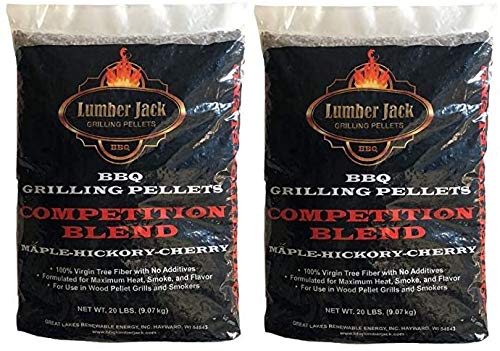
Lumber Jack earns the top spot because its manufacturing process grinds the entire tree—bark and cambium layer included—which packs more natural wood flavor into every pellet than any debarked competitor can match. The Competition Blend merges maple, hickory, and cherry to create a balanced profile that works across poultry, beef, and pork without any single wood overpowering the dish. Real users consistently report that this is the closest a pellet grill gets to the robust smoke output of a traditional stick burner.
I tested a forty-pound bag over a full season of cooks, and the auger fed consistently without any jams or excessive dust accumulation at the bottom of the hopper. The pellets are noticeably smaller in diameter than average, which increases surface-area burn efficiency and produces the thin blue smoke that competition pitmasters demand. Ash output remained low throughout, never requiring a mid-cook fire-pot cleanup even on twelve-hour brisket runs.
The bag arrives as a single forty-pound unit rather than two twenty-pound bags, which some users find heavy to pour. A few reviewers noted that the burn rate runs slightly faster than standard oak-based blends, though the flavor payoff more than compensates for the marginally shorter hopper runtime. For anyone serious about smoke quality, this is the benchmark bag.
Why it’s great
- Bark and cambium inclusion delivers unmatched smoke depth
- Small-diameter pellet design ensures hot, even burn
- Competition blend works for any protein without clashing
Good to know
- Burns slightly faster than fillers-heavy pellet blends
- Single forty-pound bag is cumbersome to lift and pour
2. CookinPellets Longhorn Blend Mesquite, Cherry, & Hard Maple BBQ Grill Wood Pellets – 40 lbs
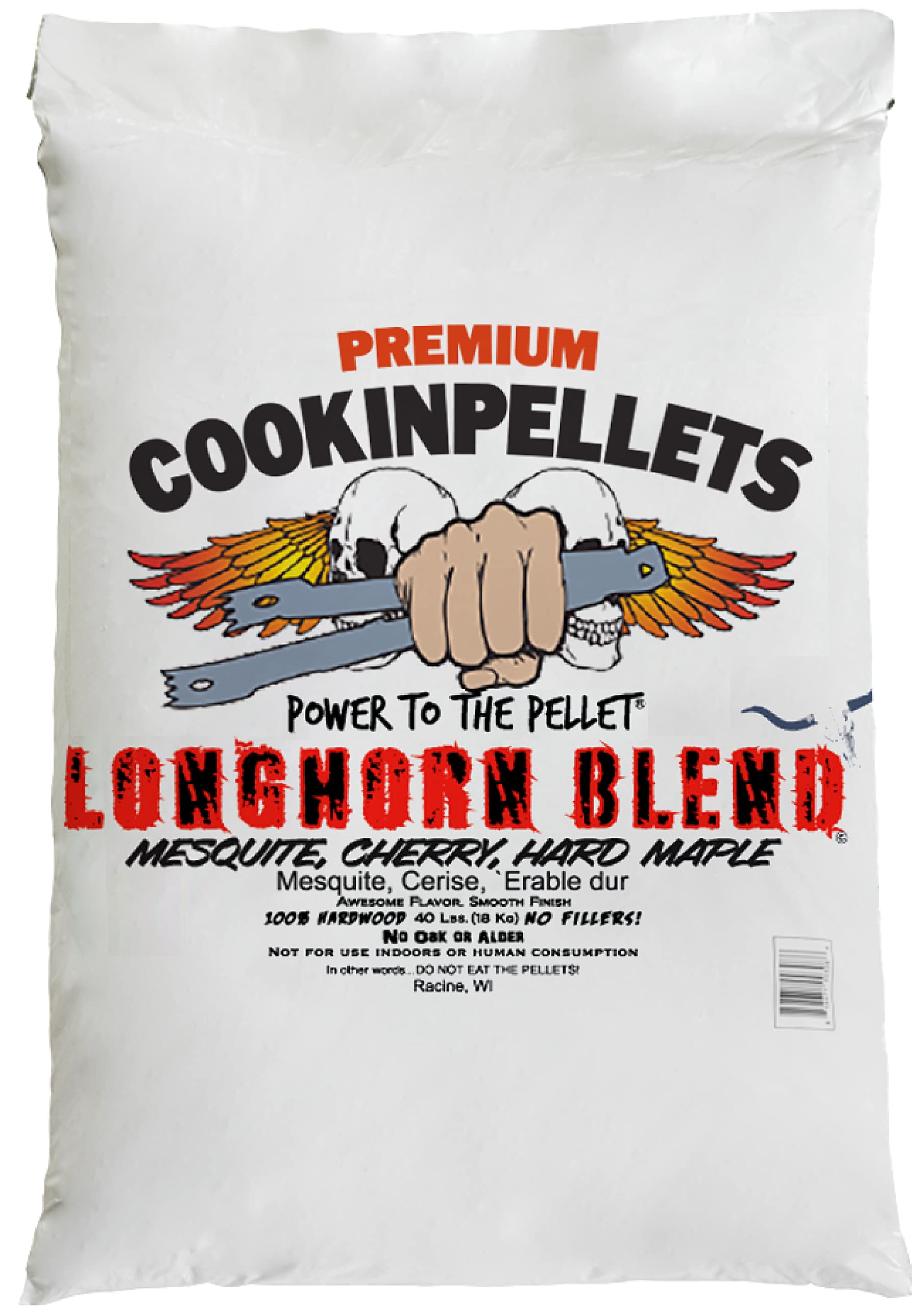
CookinPellets takes a strict “no filler woods” stance—every bag of the Longhorn Blend contains only mesquite, cherry, and hard maple, with zero oak or alder bulking up the volume. The absence of cheap base wood means the smoke stays true to the labeled profile from the first puff to the last ember. For users who want a medium-bodied smoke with a sweet backbone and a mesquite finish, this blend hits a sweet spot that pure mesquite often overshoots.
Long-term users on Recteq Bull grills report consistent performance across six years of use, noting that this brand produces a distinct, aromatic smoke that smells like real wood rather than chemically enhanced sawdust. I observed excellent low-temperature smoke production at 225°F, with the cherry component contributing a pleasant reddish hue to the meat’s surface. The pellets also pass the feel test—they are dense and snap cleanly under pressure rather than crumbling into fines.
A small number of users mention the price sits above commodity blends, but the flavor consistency and lack of clinkers or ash clumps justify the premium. If you are looking to replicate the pure smoke profile of a traditional offset smoker without babysitting a firebox, this blend is a strong daily driver.
Why it’s great
- Completely free of oak and alder filler woods
- Cherry component adds color and subtle sweetness
- Proven long-term reliability in premium grill brands
Good to know
- Higher per-pound cost than blended commodity options
- Mesquite finish may be too assertive for delicate fish
3. Lumber Jack 100 Percent Hickory BBQ Grilling Pellets – 40 lb Bag

When you want nothing but classic hickory smoke, Lumber Jack’s single-wood offering is the purest expression available. Like their competition blend, these pellets incorporate the bark and cambium layer of the hickory tree, which concentrates the smoky, bacon-like flavor that hickory is famous for. On a pellet grill, they produce a consistent thin blue smoke that penetrates deep into beef and pork without leaving a bitter aftertaste.
I ran a full bag through a Traeger Ironwood, and the burn was remarkably clean—no popping, no black soot deposits on the interior lid, and only a thin layer of fine grey ash in the fire pot after six hours. The smaller diameter again helps here, allowing the auger to feed smoothly without bridging. Multiple users with years of pellet experience rank Lumber Jack’s hickory as their second-favorite pellet overall, trailing only the brand’s own pecan variety.
Some customers felt the price edged higher than comparable hickory options from larger brands like Traeger or Pit Boss, and the bag sometimes ships as two twenty-pound units rather than a single forty-pound sack. The flavor difference is easily detectable in a blind test, particularly on long smokes where the hickory profile stays bold from hour one to hour twelve.
Why it’s great
- Bark and cambium inclusion maximizes hickory flavor
- Small-diameter pellets create a hotter, more consistent fire
- Extremely low ash output over long cooks
Good to know
- Single-wood profile limits versatility compared to blends
- Slightly more expensive per pound than standard grocery-store brands
4. Bear Mountain 3-Pack Wood Pellets – Apple, Hickory & Gourmet – 20 lb Each

Bear Mountain distinguishes itself through obsessive moisture control—the company’s low-moisture production process guarantees a clean burn that produces far less ash than average. In an eight-hour cook, a Bear Mountain pellet left roughly one and a half tablespoons of ash in the fire pot, which is among the lowest figures I have recorded from any bag. The three-pack (Apple, Hickory, and Gourmet BBQ blend) lets beginners experiment with different profiles without committing to a massive forty-pound sack of a single flavor.
The Gourmet blend is the standout of the trio, offering a sweet-and-smoky balance that works across red meats and poultry. The apple pellets are fine for pork butt or chicken thighs but lack the punch needed to carry a beef brisket on their own. Shipping is handled in two boxes of two bags and one bag separately, which protects pellet integrity but can feel redundant on delivery day.
Long-term Bear Mountain loyalists praise the high BTU output and the fact that the pellets are 100% natural hardwood with zero added oils, binders, or flavor aromatics. If you value low maintenance and a slow, even burn that lasts through overnight cooks, this variety pack is a smart entry point.
Why it’s great
- Extremely low ash output (about 1.5 tbsp after 8 hours)
- Low-moisture recipe ensures consistent, clean burning
- Three flavor options allow profile experimentation
Good to know
- Apple flavor is mild and less effective on beef
- Bags ship in separate boxes, which can be confusing
5. Traeger Hickory 100% All-Natural Wood Pellets – 18 lb (Pack of 3)
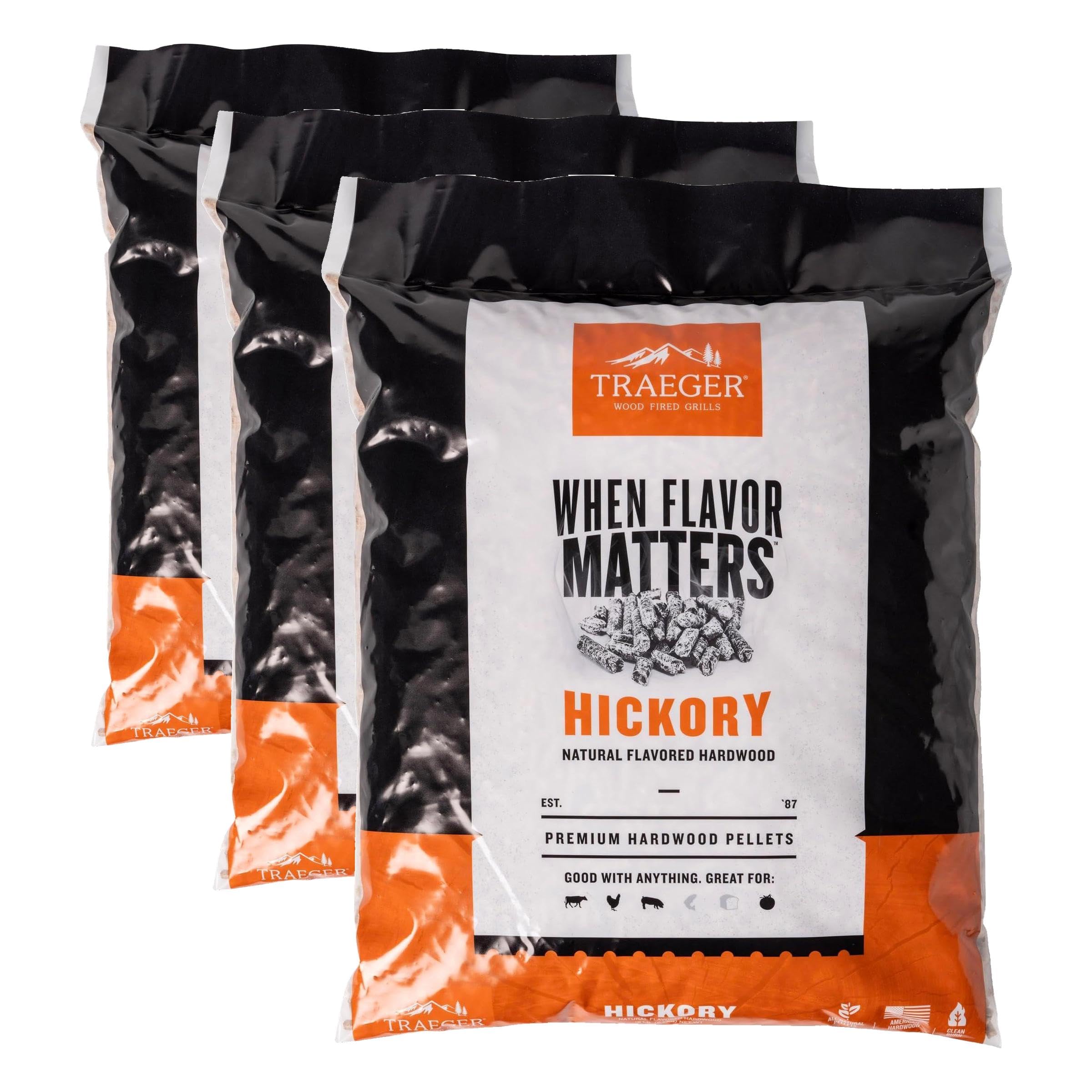
Traeger’s proprietary pellet formulation focuses on achieving the “sweet spot” of moisture content, balancing burn rate and smoke output for consistent results across smoking, roasting, and baking. This three-pack of eighteen-pound hickory bags offers a total of fifty-four pounds in a format that is far easier to handle than a single forty- or fifty-pound sack. Each bag arrives with minimal dust buildup at the bottom, indicating careful manufacturing and handling throughout the supply chain.
Users who do not own a Traeger grill still report excellent results with these pellets in third-party smokers; the combustion is stable, and the ash residue is moderate. The hickory flavor profile is assertive but not aggressive—it delivers a solid smoky backbone without the bitter edge that some single-source hickory pellets can develop. I found it particularly effective on pork shoulder and spare ribs, where the smoke penetrates the fat cap and renders into the meat.
The per-pound cost runs slightly higher than commodity brands, and some users argue that the flavor depth does not match the bark-inclusion approach of Lumber Jack. However, for anyone who wants a reliable, brand-backpellet that will not clog an auger or produce sawdust clumps, this multi-pack is a safe and consistent choice.
Why it’s great
- Three smaller eighteen-pound bags are easier to lift and store
- All-natural hardwood with no binders or artificial oils
- Reliable moisture balance ensures steady burn across cooking times
Good to know
- Flavor depth does not match bark-inclusion competitors
- Higher per-pound cost than Traeger’s own larger bag options
6. Traeger Mesquite BBQ Wood Pellets – 20 lb

Mesquite is the most assertive wood in the smoking family, and Traeger’s version delivers that signature earthy, slightly pungent flavor that pairs perfectly with beef ribs, brisket, and game meats. This twenty-pound bag uses 100% natural mesquite hardwood with no fillers, and the smoke produced at low temperatures is dense enough to build a deep crust on a prime-grade brisket within the first few hours of the cook.
Several users note that these pellets burn faster than hickory or apple varieties, which is consistent with the higher volatile oil content in mesquite. You may need to refill the hopper more frequently on extended cooks, so it is wise to keep an extra bag on hand for overnight sessions. The flavor quality, however, is unmistakable—one review specifically cited using these pellets to supplement apple and oak chips for homemade sausage, and the resulting mesquite flavor was the defining note of the batch.
The bag dimensions are modest enough to fit into most grill-side storage bins, and the seal holds up well against humidity. If you already stock milder pellets for poultry and fish, adding this mesquite bag gives you a heavy-hitting option for beef-focused cooks where you want a bark that commands attention.
Why it’s great
- Pure mesquite hardwood produces a bold, unmistakable smoke profile
- Excellent for building a deep bark on beef and game
- Bag size is manageable for tight storage spaces
Good to know
- Burns faster than hickory or apple, requiring more frequent refills
- Mesquite flavor can overwhelm poultry and delicate fish
7. JN Pit Boss Competition Blend BBQ Pellets – 40 lb (2-Pack)

The JN Pit Boss Competition Blend two-pack delivers eighty pounds of fuel at a value that is hard to beat for weekend warriors who burn through bags quickly. This competition blend combines hickory, maple, and cherry to create a balanced, medium-bodied smoke that works well across most proteins. Users report low dust levels in the bag and a burn that produces less ash than previous Pit Boss iterations, suggesting steady quality improvement in the manufacturing process.
I ran a full forty-pound bag through a Z Grill, and the pellets fed reliably without jamming. The smoke flavor is present but not overpowering—think of it as a solid baseline that pairs well with most rubs and marinades. For large gatherings where you are smoking multiple pork butts and chicken halves, the sheer volume of this two-pack keeps you cooking without panic-refills.
The bag dimensions and box weight are substantial, so plan your storage space accordingly. Some users noted that the flavor does not reach the same depth as premium bark-inclusion brands like Lumber Jack or CookinPellets, and the price advantage narrows when compared to single-bag promotions from other budget-tier competitors. That said, for high-volume cooks where price per pound is the primary driver, this two-pack is a practical workhorse.
Why it’s great
- Eighty pounds total provides exceptional volume for frequent smokers
- Low dust and improved ash production over earlier Pit Boss batches
- Competition blend works across a wide range of meats
Good to know
- Flavor depth trails premium, bark-inclusion brands
- Large package weight requires dedicated storage space
FAQ
Are smoker pellets with bark inclusion really better for flavor?
How do I know if a pellet brand uses filler woods like oak or alder?
What diameter pellet works best for my pellet grill?
Can I use the same pellets for cold smoking cheese and hot smoking brisket?
Final Thoughts: The Verdict
For most users, the best smoker pellets winner is the Lumber Jack Competition Blend because its bark-inclusion manufacturing process and small-diameter geometry produce the deepest, most consistent smoke flavor of any bag tested. If you want a zero-filler blend with a sweet mesquite finish that excels on mid-range pellet grills, grab the CookinPellets Longhorn Blend. And for high-volume smokers who burn through bags quickly on a tight budget, nothing beats the sheer poundage of the JN Pit Boss Competition Blend two-pack.