A good crust on a ribeye isn’t luck—it’s physics. The pan needs to hold a punishing amount of thermal energy and transfer it instantly without dropping temperature the second the meat hits the surface. Thin-gauge pans warp, cool down, and steam the protein instead of browning it. That loss of crust is the difference between a memorable meal and a mediocre one.
I’m Mohammad Maruf — the founder and writer behind AirfryerBite. I’ve spent thousands of hours cross-referencing clad-layer counts, thermal conductivity data, and real-world oven-safe thresholds to separate the searing pans that deliver a genuine crust from those that only look the part on a shelf.
Whether you are working with a gas burner, a glass-top induction coil, or a high-heat oven finish, choosing the right piece of cookware is the single most impactful hardware decision you will make. This guide walks through the construction, capacity, and material science that define the best searing pan for a variety of cooking styles and budgets.
How To Choose The Best Searing Pan
A pan designed for searing must excel at one thing above all else: maintaining surface temperature under a cold, heavy load. The wrong pan will drop heat the second the protein enters, drawing out moisture and turning a sear into a steam. Three factors separate the serious performers from the rest.
Material and Cladding Architecture
Tri-ply construction—two layers of stainless steel sandwiching an aluminum core—delivers the fastest, most even heat distribution for most home cooks. Five-ply adds extra aluminum and sometimes a copper layer for slightly better heat retention at the expense of weight. Cast iron, by contrast, is slow to heat but stores enormous thermal energy, making it ideal for a single, violent sear that doesn’t stop when the steak lands. Avoid single-layer stainless or thin-gauge nonstick pans; neither carries enough thermal mass for a proper crust.
Oven-Safe Temperature Ceiling
A sear on the stovetop is only half the job. Finishing a thick cut in the oven requires a pan that can handle 500°F to 600°F without warping or compromising the handle. Pans with phenolic or plastic handles top out around 350°F and must be avoided for oven finishing. All-metal construction—whether stainless steel, cast iron, or enameled cast iron—is mandatory for the reverse-sear method or for any recipe that calls for a hot oven finish.
Surface Smoothness and Seasoning Compatibility
Cast iron pans with a machined, smooth cooking surface create a more effective nonstick layer as seasoning builds because there are fewer microscopic peaks for food to cling to. Traditional rough-textured cast iron works well but requires more oil and patience. Stainless steel pans rely entirely on the Leidenfrost effect—preheating until a water droplet skates across the surface—to achieve release. Neither approach is wrong, but your patience for the learning curve should guide the choice.
Quick Comparison
On smaller screens, swipe sideways to see the full table.
| Model | Category | Best For | Key Spec | Amazon |
|---|---|---|---|---|
| All-Clad D3 12 | Tri-Ply Stainless | Professional sear on induction | Oven safe to 600°F | Amazon |
| Stargazer 12-Inch Cast Iron | Smooth Cast Iron | Vintage-style, slick surface | Machined cooking surface | Amazon |
| STAUB 13-Inch Double Handle | Enameled Cast Iron | High-heat oven finishing | Oven safe to 900°F | Amazon |
| KitchenAid 5-Ply 10-Inch | Five-Ply Stainless | Even heat across large surface | 5-ply clad construction | Amazon |
| T-Fal Pro Tri-Ply 12 | Tri-Ply Stainless | Mid-range workhorse | Fully bonded to the rim | Amazon |
| Ninja EverClad 10.25-Inch | Tri-Ply Stainless | Entry-level stainless searing | No-warp guarantee | Amazon |
| Bayou Classic 14-Inch Cast Iron | Pre-Seasoned Cast Iron | Large batch cooking | 14-inch cooking diameter | Amazon |
In‑Depth Reviews
1. All-Clad D3 Stainless Steel 12 inch Frying Pan
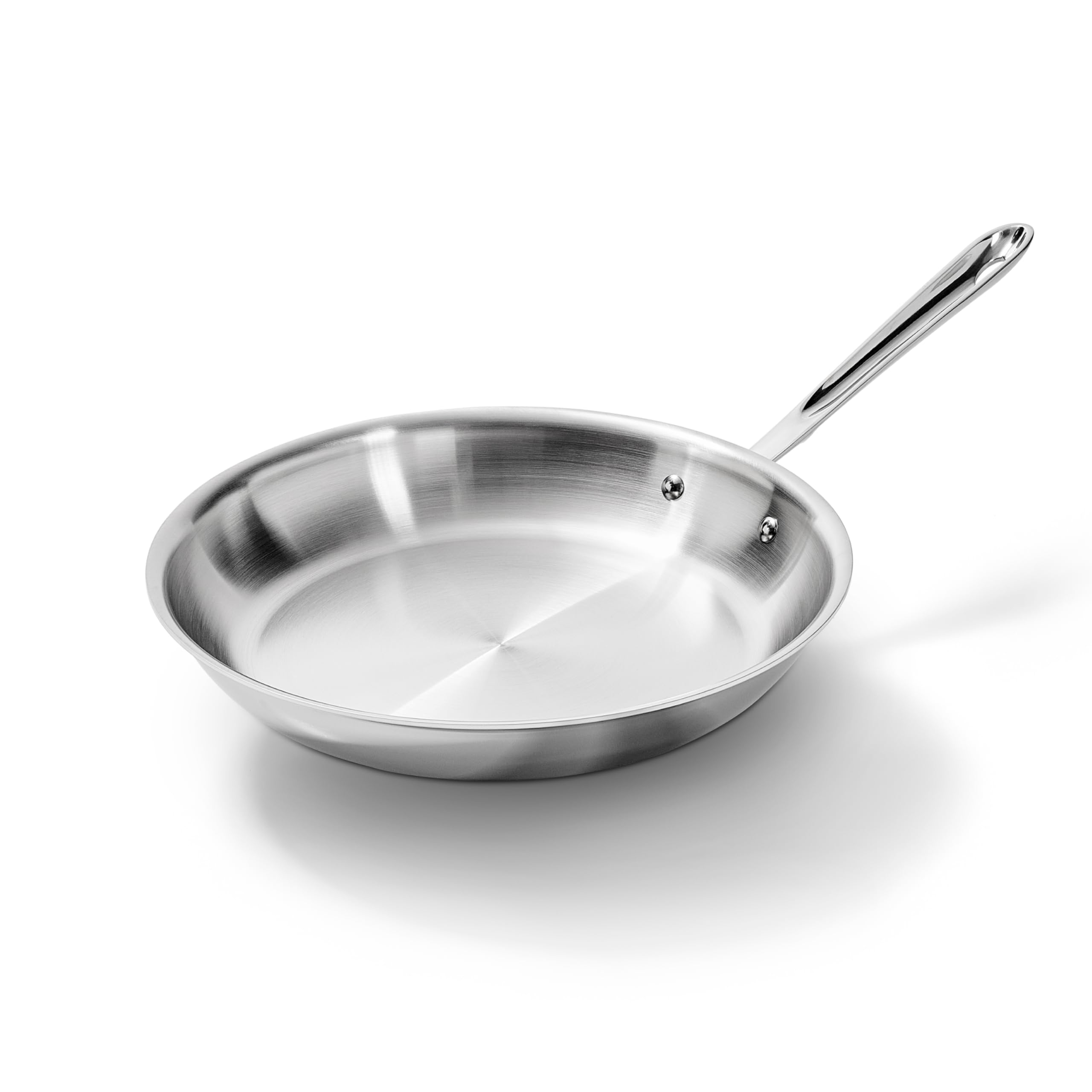
The All-Clad D3 is the benchmark that other tri-ply pans measure themselves against. Its 12-inch diameter and flared sides provide plenty of real estate for a pair of ribeyes while allowing easy flipping and tossing. The aluminum core is bonded edge-to-edge, which means the sidewalls conduct heat nearly as well as the base—a critical detail when you need a consistent sear all the way to the rim.
On an induction burner, this pan reaches searing temperature faster than any cast iron alternative and holds it steady across the entire surface. The 600°F oven-safe rating means you can reverse-sear a thick tomahawk without switching cookware. The riveted stainless handle stays cooler than you would expect on the stovetop, though it still requires a mitt when finishing in the oven.
Seasoned users note that it requires the Leidenfrost technique—preheat until water beads and skates—to prevent sticking. That is not a flaw; it is the trade-off for stainless steel’s aggressive browning. Bar Keepers Friend keeps the interior mirror-bright without abrasive scratching. At this tier, the build quality and U.S. manufacturing justify the investment for anyone who sears protein multiple times a week.
Why it’s great
- Rapid, even heat distribution from a proven tri-ply bond
- Oven and broiler safe to 600°F for flexible finishing
- Sturdy riveted handle with a secure, ergonomic grip
Good to know
- Requires preheating technique to prevent food adhesion
- Handle shape feels slightly inverted to some users
- Premium price point reflects U.S.-made quality
2. Stargazer 12-Inch Cast Iron Skillet

Stargazer solves the biggest frustration of modern cast iron: the rough, pebbled surface that grabs food before seasoning can build. This 12-inch skillet is machined smooth at the factory, which dramatically reduces initial sticking and accelerates the seasoning process. Within a few months of regular use, the surface develops a patina that rivals vintage pans from the early 20th century.
The handle design is the most thoughtful in the cast iron category. It stays noticeably cooler than traditional Lodge handles because of the extended length and the way the mass is distributed away from the pan body. The flared, drip-free rim means you can pour from any angle without spilling—a practical upgrade over the pour spouts found on cheaper cast iron skillets.
At 6.5 pounds, this is not a lightweight pan. It is meant to sit on a burner and absorb heat for a long, steady sear. The flat, machined bottom sits flush on glass-top stoves without wobbling, a common problem with rough-bottomed competitors. The lifetime warranty covers manufacturer defects, and the company has a reputation for quick replacements if the pan arrives with a concave base.
Why it’s great
- Smooth machined surface minimizes sticking from day one
- Stay-cool handle design improves safety and comfort
- Flared, drip-free rim allows pouring from any angle
Good to know
- Heavier than traditional cast iron skillets of the same diameter
- Slow heat-up time requires patience before searing
- Known quality-control issue with concave bottoms on rare units
3. STAUB Cast Iron 13-inch Double Handle Fry Pan

STAUB’s enameled cast iron skips the seasoning ritual entirely. The matte black enamel interior provides a naturally nonstick surface straight out of the box, and the 900°F oven-safe rating is unmatched by any stainless or raw cast iron alternative. You can take this pan from a screaming-hot sear on the induction burner directly into a 500°F oven for a reverse-sear finish without any thermal stress.
The double-handle design changes how you move the pan. Two short, ergonomic loops make it easier to lift and carry a heavy, loaded skillet—especially important at 10.1 pounds. The 13-inch diameter is generous enough for a whole spatchcocked chicken or four large pork chops without crowding. Pour spouts on both sides allow controlled fat removal without tilting the pan precariously.
Some buyers expect a nonstick performance similar to Teflon, which is not what this pan delivers. It is nonstick relative to raw cast iron but still requires a thin layer of oil for egg cookery. The enamel is dishwasher safe, but hand-washing preserves the matte finish longer. For anyone who wants cast iron heat retention without the maintenance, this is the definitive choice.
Why it’s great
- Enameled interior eliminates seasoning and rust concerns
- Unmatched oven-safe rating of 900°F for extreme cooking methods
- Double handles provide superior control for heavy loads
Good to know
- Heaviest pan in this comparison at over 10 pounds
- Not nonstick in the conventional Teflon sense
- Premium pricing reflects French manufacturing and materials
4. KitchenAid 5-Ply Clad Polished Stainless Steel 10 Inch

KitchenAid’s 5-ply construction packs three aluminum layers between two stainless steel sheets, creating a pan with heat retention that punches above its price class. The 10-inch diameter is ideal for single-serving steaks, chicken thighs, or a generous batch of sautéed vegetables. The extra aluminum mass smooths out temperature fluctuations more effectively than standard tri-ply when you add cold protein to a hot pan.
The black stainless steel handles are dual-riveted and provide a comfortable, secure hold. They are welded to a brushed base that hides the scuffs and scratches that inevitably appear on glass-top stoves. The sealed rims prevent moisture from seeping between cladding layers, a common failure point in cheaper clad cookware. It is dishwasher safe, though hand-washing preserves the polished interior finish.
Users report that this pan heats slightly slower than lighter tri-ply alternatives because of the added thermal mass, but the payoff is a more forgiving sear that maintains temperature through the crust formation. The 10-inch size is noticeably smaller than the 12-inch pans in this guide, so plan accordingly if you cook for more than two people. The set that includes an 8-inch companion pan is priced identically to the single 10-inch in some buying windows, making it an exceptional value.
Why it’s great
- Five-ply cladding provides superior heat retention for steady searing
- Sealed rims prevent delamination and corrosion over time
- Brushed base hides stovetop wear and scratches
Good to know
- Smaller 10-inch surface limits batch size for multiple servings
- Heats up more slowly than lighter tri-ply pans
- Exterior stainless surface scratches easily on glass cooktops
5. T-Fal Pro Tri-Ply Stainless Steel 12 Inch
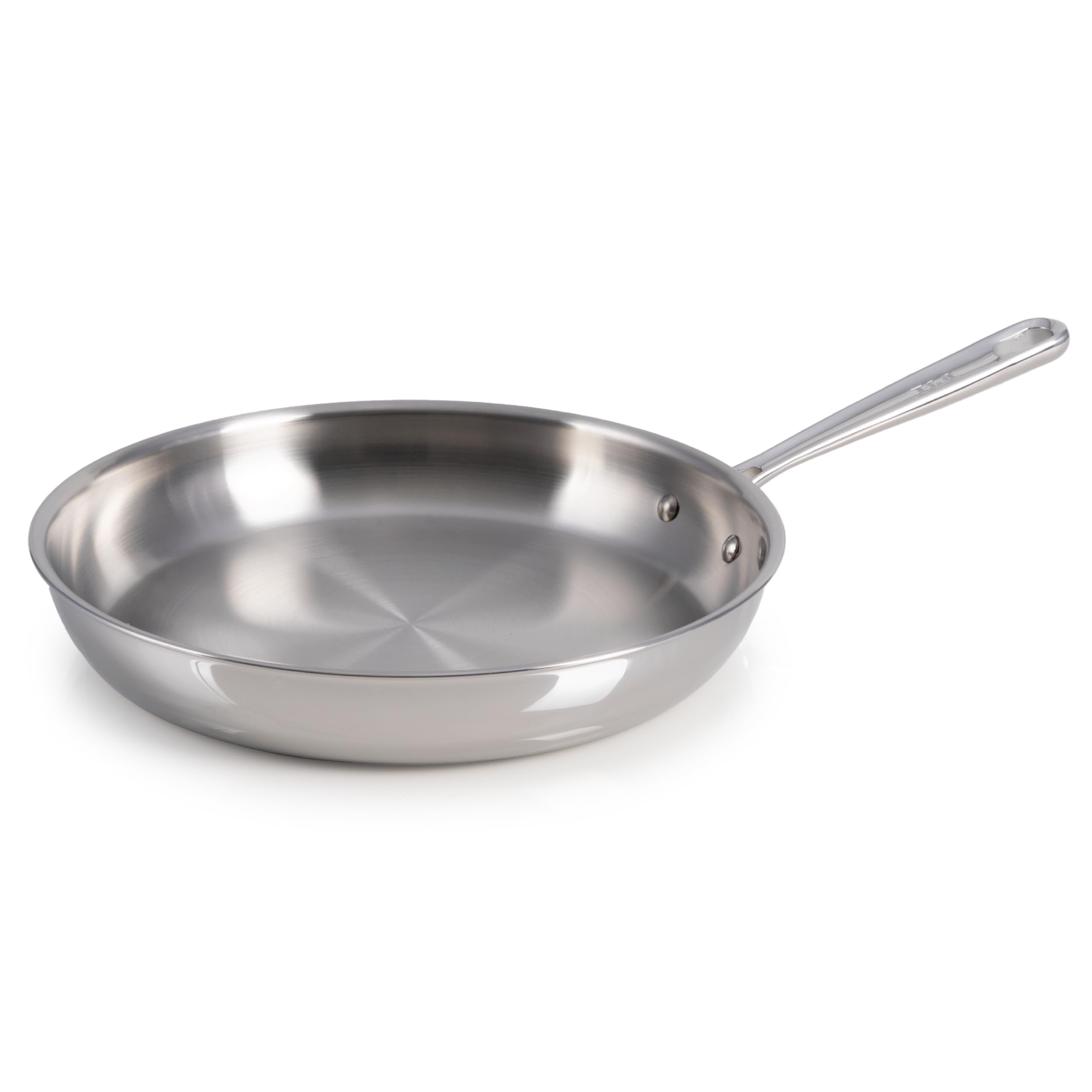
T-Fal’s Pro Tri-Ply delivers the essential tri-ply performance that most home cooks need at a price that undercuts the premium competitors by a wide margin. The 12-inch diameter can handle four to six hamburger patties without crowding, which is the real-world test of a searing pan’s capacity. The aluminum core is fully bonded to the rim, meaning the sidewalls are thermally active and contribute to even browning across the entire interior.
The mirror-finish exterior and polished interior give this pan a high-end look that belies its mid-range positioning. Built-in measuring marks on the interior wall are a practical touch that eliminates the need for a separate measuring cup when adding stock or wine for deglazing. The cast riveted metal handle stays cooler on the stovetop than you would expect, and the 500°F oven-safe rating covers most roasting and finishing applications.
NSF certification means this pan meets commercial kitchen standards for durability and material safety. Users note that it requires the same preheating discipline as any stainless steel pan—heat until water dances, then add oil—but once that technique is mastered, the nonstick release is comparable to pans costing twice as much. The limited lifetime warranty adds further confidence for daily use.
Why it’s great
- Full tri-ply bonding to the rim prevents cold spots
- NSF certification assures professional-grade durability
- Interior measuring marks add convenience during cooking
Good to know
- 500°F oven limit is lower than premium stainless competitors
- Requires careful preheating to achieve nonstick behavior
- 1.2-liter capacity is better suited for shallow frying than deep batches
6. Ninja EverClad Commercial-Grade 10.25-Inch Fry Pan

Ninja’s entry into the clad cookware market comes with a no-warp guarantee—a bold claim that addresses the most common failure mode of budget stainless pans. The tri-pyl construction uses an 18/10 stainless interior, a 99-percent pure aluminum core, and a polished stainless exterior. In practice, the pan heats evenly and maintains a stable searing temperature across its 3-quart capacity without developing hotspot rings.
The 10.25-inch diameter is a compromise: it is large enough for two chicken breasts or a single signature steak, but you will feel the squeeze when cooking for more than two. The high side walls are a plus for shallow frying and reducing splatter, but they also make flipping with a spatula slightly less nimble than a traditional sloped-side fry pan. The stainless handle is oven safe to 600°F, which matches the All-Clad ceiling at a significantly lower price.
PFAS-free construction appeals to cooks who want stainless without chemical coatings. The initial learning curve is real—users report that eggs and delicate foods stick aggressively until the preheating routine is locked in. Bar Keepers Friend is essential for maintaining the shine. For the entry-level price, this pan delivers legitimate searing capability that outperforms any nonstick alternative.
Why it’s great
- No-warp guarantee addresses the primary failure point of budget stainless
- 600°F oven-safe rating matches premium competitors
- PFAS-free construction for health-conscious cooking
Good to know
- 10.25-inch surface limits batch cooking capacity
- High sides reduce flipping agility compared to sloped pans
- Stainless steel requires dedicated cleaners to maintain appearance
7. Bayou Classic 14-Inch Cast Iron Skillet

When you need to sear six chicken thighs or a full pound of bacon in a single batch, the Bayou Classic 14-inch cast iron skillet is the logical choice. The massive 14-inch cooking surface and 10.4-pound weight provide enough thermal mass to hold temperature through the coldest protein additions. The pre-seasoned surface is smooth enough to release food after a few seasoning cycles, and the helper handle makes two-handed lifting manageable despite the heft.
Pour spouts on both sides allow controlled fat drainage without tilting the entire pan. This skillet is oven and broiler safe by virtue of being solid cast iron, though the bare iron construction means it requires the same maintenance as any traditional cast iron pan—dry immediately after washing and apply a thin oil coating. The seasoning that ships from the factory is functional but thin; users report that it improves significantly after a few rounds of cooking bacon or cornbread.
Real-world testing reveals that this pan is best suited to large gas burners or outdoor cookers. On a standard home electric burner, the outer edges of the 14-inch diameter will not reach the same temperature as the center, creating a gradient that matters for precision searing. For outdoor turkey fryer burners or restaurant-style rangetops, however, this pan is a powerhouse that outperforms smaller skillets on sheer volume.
Why it’s great
- 14-inch diameter accommodates large-volume searing in one batch
- Massive thermal mass prevents temperature drop with cold food
- Pour spouts and helper handle improve handling for heavy loads
Good to know
- Requires a large gas burner to achieve even edge-to-edge heat
- Factory pre-seasoning is thin and needs reinforcement
- Too heavy for standard kitchen storage and one-handed maneuvering
FAQ
Can I use a searing pan on a glass-top stove without scratching it?
Why does my stainless steel searing pan stick even when I use oil?
How often do I need to re-season a cast iron searing pan?
Is a heavier pan always better for searing?
Final Thoughts: The Verdict
For most users, the best searing pan is the All-Clad D3 12-Inch because it combines tri-ply evenness, a 600°F oven-safe ceiling, and a flat, induction-compatible base that works across every cooktop type with zero seasoning maintenance. If you want a smooth cooking surface that builds nonstick character over time, grab the Stargazer 12-Inch Cast Iron Skillet. And for extreme oven finishing and heirloom durability, nothing beats the STAUB 13-Inch Double Handle Fry Pan.