Most protein shakes are candy in disguise, packing 15 to 25 grams of sugar per bottle — enough to tank your glucose and turn a health move into a sugar spike. The real challenge is finding a shake that delivers serious protein density without the sweetener overload, the artificial aftertaste, or the digestive discomfort.
I’m Mohammad Maruf — the founder and writer behind AirfryerBite. Over the last year, I’ve analyzed the ingredient decks, macro grids, and sweetener profiles of over 40 ready-to-drink protein shakes to separate the genuinely low-sugar options from the marketing fluff.
This guide breaks down the seven best contenders that deliver real protein, real flavor, and genuinely low sugar counts. Whether you need a post-workout recovery tool or a meal replacement that doesn’t spike insulin, these low sugar protein shakes offer a clean, macro-conscious solution without the hidden sugar trap.
How To Choose The Best Low Sugar Protein Shakes
Not all low-sugar labels are created equal. Some brands use artificial sweeteners that cause bloating, while others hide sugar alcohols that count as carbs. Here is what to check before buying.
Decode the Sweetener Profile
The sugar content on the label tells only half the story. Look at the ingredient list for stevia, monk fruit, or sucralose — the three most common zero-calorie sweeteners in this category. If you see sugar alcohols like erythritol or maltitol, check the net carb math; some still raise blood glucose. The best options use a blend that masks the cooling aftertaste of stevia without triggering digestive upset.
Match Protein Density to Your Goal
A post-workout shake needs at least 25g of protein for muscle repair, while a meal replacement can work with 20g if it includes fiber and fat for satiety. Premium options now push to 45g per serving, but that high protein load can feel heavy if you are drinking it between meals. Choose the dose that fits your daily protein target without making you feel overfull.
Evaluate the Base Protein Source
Whey isolate and ultrafiltered milk protein deliver the fastest absorption and the lowest lactose residue — critical if you are sensitive to dairy. Plant-based blends (pea, pumpkin seed, and sunflower protein) offer a longer digestion curve and zero dairy issues, but often require natural flavors to mask the earthy taste. Cross-check the protein source against your digestive comfort, not just the sugar number.
Quick Comparison
On smaller screens, swipe sideways to see the full table.
| Model | Category | Best For | Key Spec | Amazon |
|---|---|---|---|---|
| Premier Protein Caramel Macchiato | Ready-to-Drink | Morning momentum with caffeine | 30g protein, 0g added sugar | Amazon |
| Dymatize Performance Cocoa Pebbles | Ready-to-Drink | Post-workout with cereal milk taste | 30g protein, 6.1g BCAA | Amazon |
| Premier Protein Powder Plus Fiber | Powder | Gut health with extra fiber | 25g protein, 7g fiber | Amazon |
| Slate Milk Classic Chocolate | Ready-to-Drink | Keto-friendly chocolate milk fix | 20g protein, 1g sugar | Amazon |
| OWYN High Protein Shake | Plant-Based | Vegan with zero sugar | 26g protein, 0g sugar | Amazon |
| Designer Wellness Protein Smoothie | Pouch/On-the-Go | Light real-fruit smoothie snack | 12g protein, 0g added sugar | Amazon |
| Quest Chocolate Protein Shake | Ready-to-Drink | Maximum protein density | 45g protein, 2g sugar | Amazon |
In‑Depth Reviews
1. Premier Protein Coffeehouse Caramel Macchiato
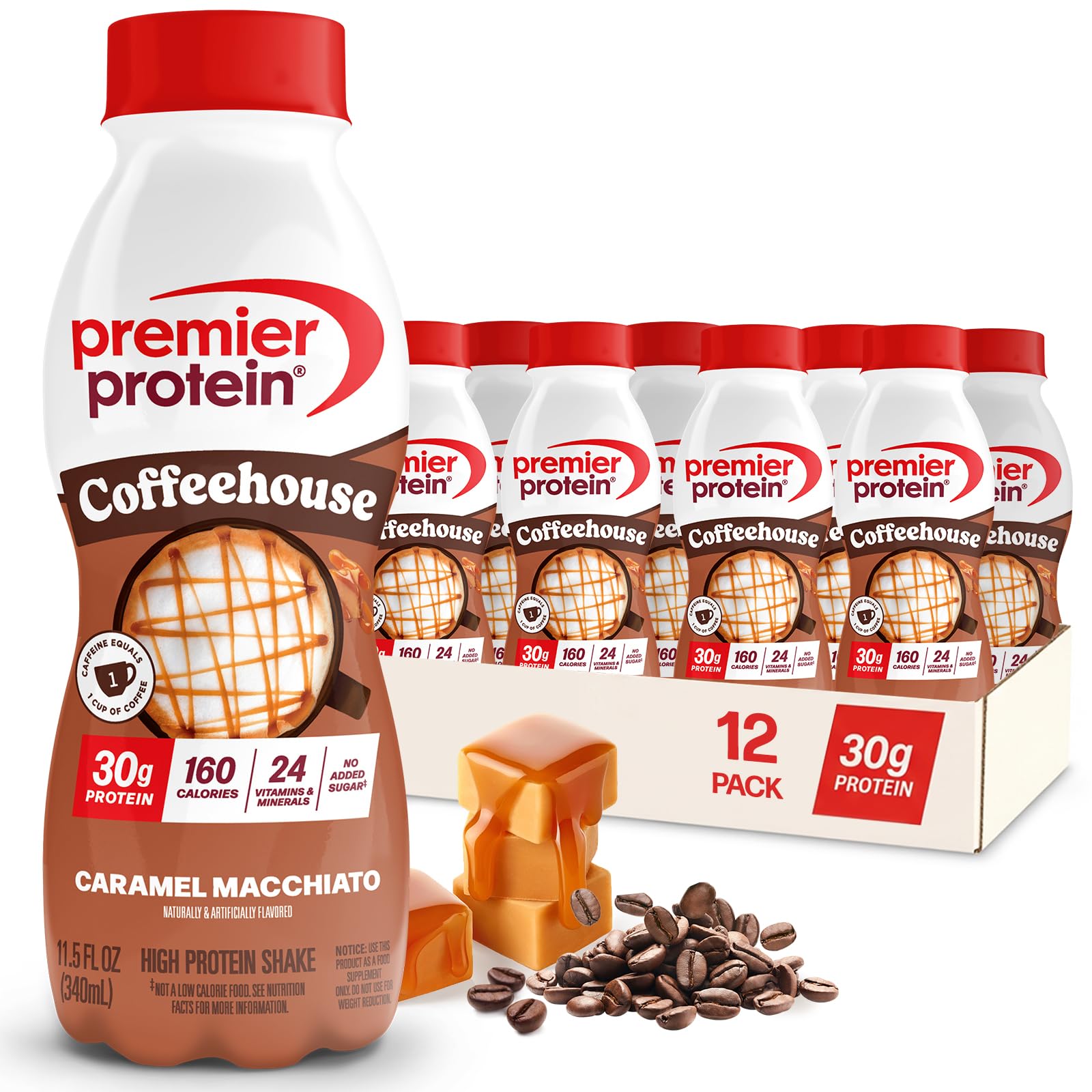
This shake bridges the gap between a morning coffee and a high-protein breakfast by delivering 30g of protein plus the caffeine equivalent of one cup of coffee — all without added sugar. The caramel macchiato flavor mimics a café latte without the syrupy sweetness that usually packs 15-20g of sugar. Real customer feedback confirms it works as a coffee creamer substitute, which removes the need for separate sweetened creamer.
Unlike many whey-based shakes that rely on carrageenan or cellulose gel for thickness, Premier Protein uses a leaner mouthfeel that stays smooth even when chilled. The 11.5 fl oz bottle fits easily into a bag, and the 12-pack format brings the per-serving cost down meaningfully. The protein source is a blend of calcium caseinate and whey protein concentrate, providing both fast and slow-release amino acids.
The caffeine content is calibrated to be noticeable but not jittery — equivalent to roughly 100mg of caffeine per bottle. This makes it a solid choice for replacing a sugary coffee drink during the morning commute.
Why it’s great
- 30g protein with zero added sugar and built-in caffeine
- Versatile as a standalone shake or coffee creamer
- #1 protein shake brand on Amazon by sales volume
Good to know
- Contains milk and is not suitable for dairy-free diets
- Sweetened with sucralose — some users detect a mild aftertaste
2. Dymatize Performance Protein Shake, Cocoa Pebbles
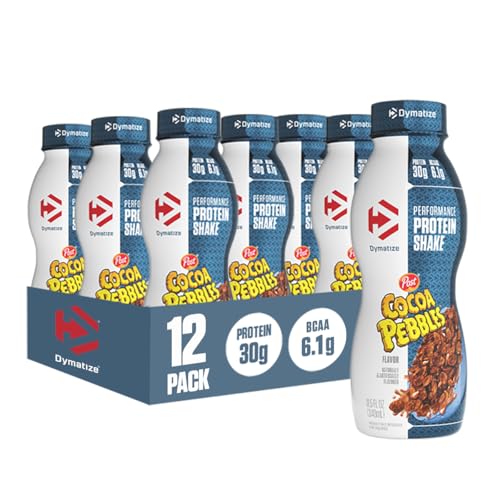
Dymatize solves the flavor problem that plagues most protein shakes: the dry, chalky mouthfeel. The Cocoa Pebbles variant tastes like the leftover milk at the bottom of a cereal bowl — sweet enough to satisfy, but with zero added sugar and only the natural, minor sugars from the milk. The 30g of protein comes from a blend of ultrafiltered nonfat milk and whey protein isolate, which keeps the texture thin rather than glue-like.
The BCAA count of 6.1g per bottle is meaningful for anyone timing this as a post-workout recovery tool. Leucine, isoleucine, and valine in those proportions lower muscle soreness and stimulate protein synthesis. Reviewers consistently mention that these do not cause the bloating typical of many ready-to-drink shakes, likely because the lactose is reduced during ultrafiltration.
The flavor lineup includes both Fruity Pebbles and Cocoa Pebbles, which gives variety without the artificial candy profile of some competitors. The 11.5 fl oz bottles are shelf-stable until opened, making them easy to stash in a gym bag or desk drawer. Athlete endorsements add credibility, but the real selling point is the taste-to-macro ratio: a genuinely enjoyable drink that happens to deliver premium macros.
Why it’s great
- Authentic cereal-milk taste with no added sugar
- High BCAA content for muscle recovery
- Ultrafiltered milk base reduces bloating
Good to know
- Sweetened with sucralose — not suitable for those avoiding artificial sweeteners
- Limited to two cereal-inspired flavors only
3. Premier Protein Powder Plus Fiber, Vanilla
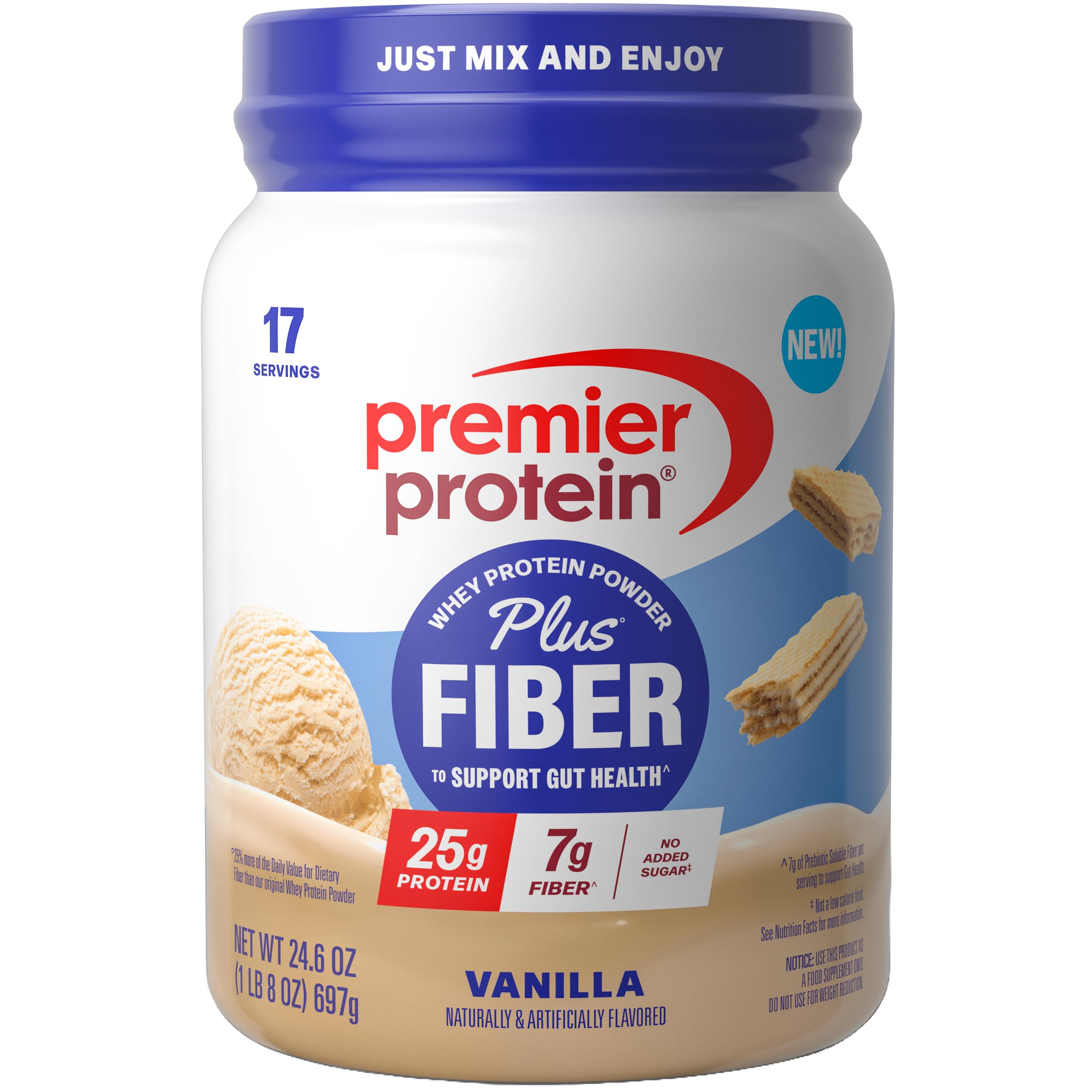
This is a powder format, not a ready-to-drink bottle, which gives you flexibility in dosing and mixing. The standout feature is the 7g of prebiotic fiber — a gut health boost that most low-sugar shakes ignore entirely. The fiber blend includes three types of prebiotic fiber, designed to feed beneficial gut bacteria while the 25g of whey protein supports muscle maintenance. No added sugar, with a natural vanilla base that blends into oatmeal, smoothies, or even coffee without clumping.
Users report that mixing requires a little effort — a shaker bottle or immersion blender works best to avoid small clumps — but the payoff is a clean flavor profile that works in both sweet and savory applications. The powder is lighter than many competitors, with 1.54 pounds per container yielding 17 servings. That makes the per-serving cost notably lower than premium ready-to-drink alternatives, especially when purchased on a subscription.
The American Masters of Taste Gold Medal award signals that the flavor passes professional palates, but individual taste varies — some find the vanilla too subdued and add a splash of coffee creamer. The lactose-intolerant reviewer mentions no digestive issues, though the label confirms milk-derived ingredients. If you prioritize digestive regularity alongside protein, this powder delivers a dual benefit that no ready-to-drink shake in this comparison matches.
Why it’s great
- 7g prebiotic fiber per serving supports gut health
- Versatile powder format works in baking, smoothies, and oatmeal
- Gold Medal taste award with no added sugar
Good to know
- Requires a shaker or blender to avoid clumps
- Vanilla flavor may be too mild for some palates
4. Slate Milk Classic Chocolate
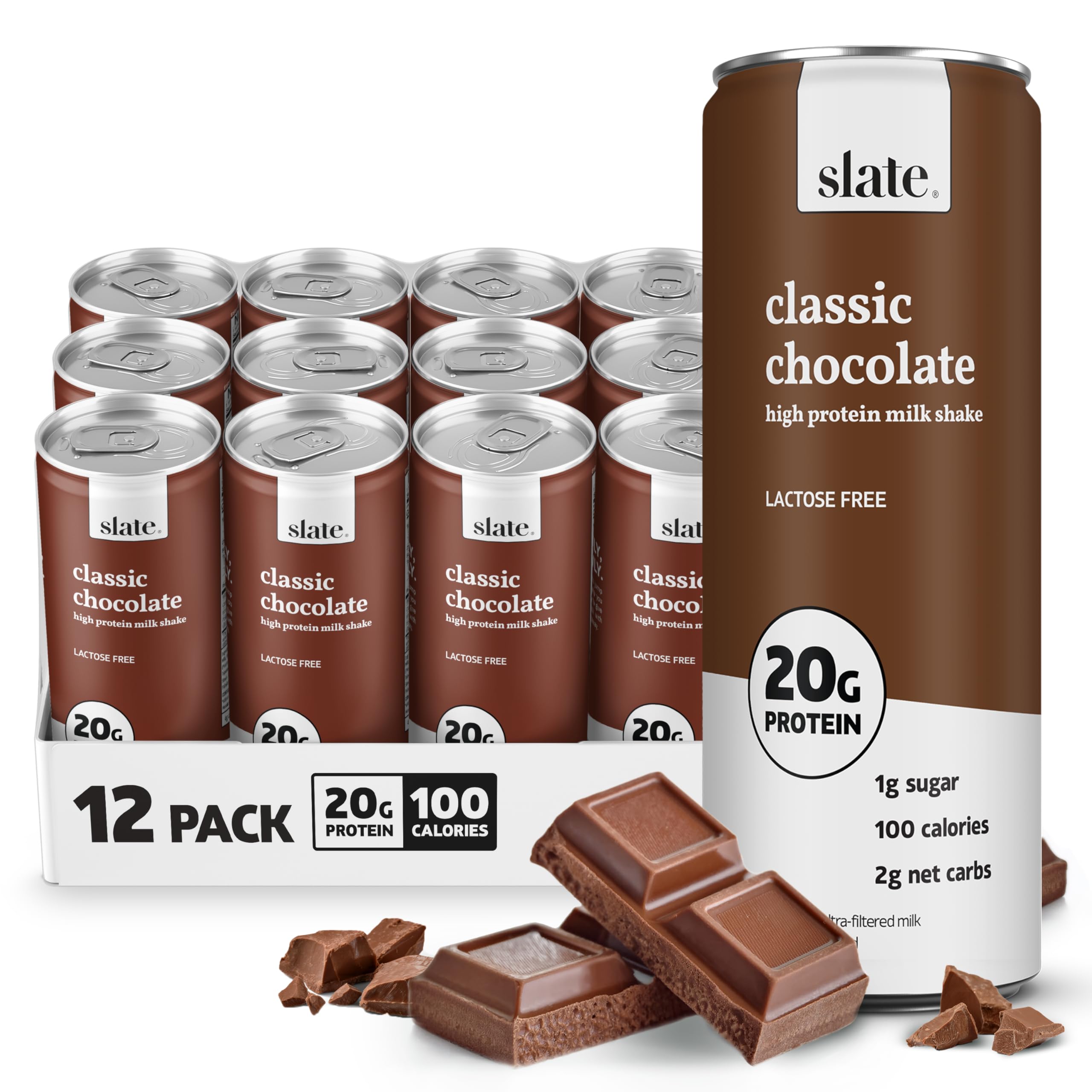
Slate Milk re-engineers chocolate milk using ultrafiltration to strip out lactose sugars while retaining the creamy mouthfeel that makes chocolate milk satisfying. The result is a 20g protein, 1g sugar, 100-calorie shake that fits strict ketogenic macros — only 2g net carbs per can. The sweetness comes from stevia and monk fruit, making it one of the few low-sugar shakes that relies entirely on natural zero-calorie sweeteners without any sucralose or aspartame.
The 11 fl oz cans are shelf-stable and do not require refrigeration until opened, which is convenient for tossing into a lunch bag or backpack. However, reviewers note that the chocolate flavor is lighter and less decadent than traditional chocolate milk — more like a light chocolate smoothie than a thick milkshake. The ultrafiltration process also means the shake contains essential electrolytes like potassium and magnesium, which aids post-sweat recovery.
Lactose-free certification is a strong point for those with dairy sensitivity who still want a milk-based protein. The can format is somewhat polarizing — some prefer the familiar bottle shape — but the ultra-low sugar count (genuinely 1g, not just “no added sugar”) sets a benchmark in this category. If you are chasing single-digit sugar numbers and keto compliance, Slate delivers the tightest macros in the mid-range tier.
Why it’s great
- Only 1g sugar and 2g net carbs per can
- Lactose-free and sweetened with stevia/monk fruit only
- Ultrafiltered milk base retains natural electrolytes
Good to know
- 20g protein is lower than many competitors at this price tier
- Can format is less portable than a resealable bottle
5. OWYN High Protein Shake, Chocolate
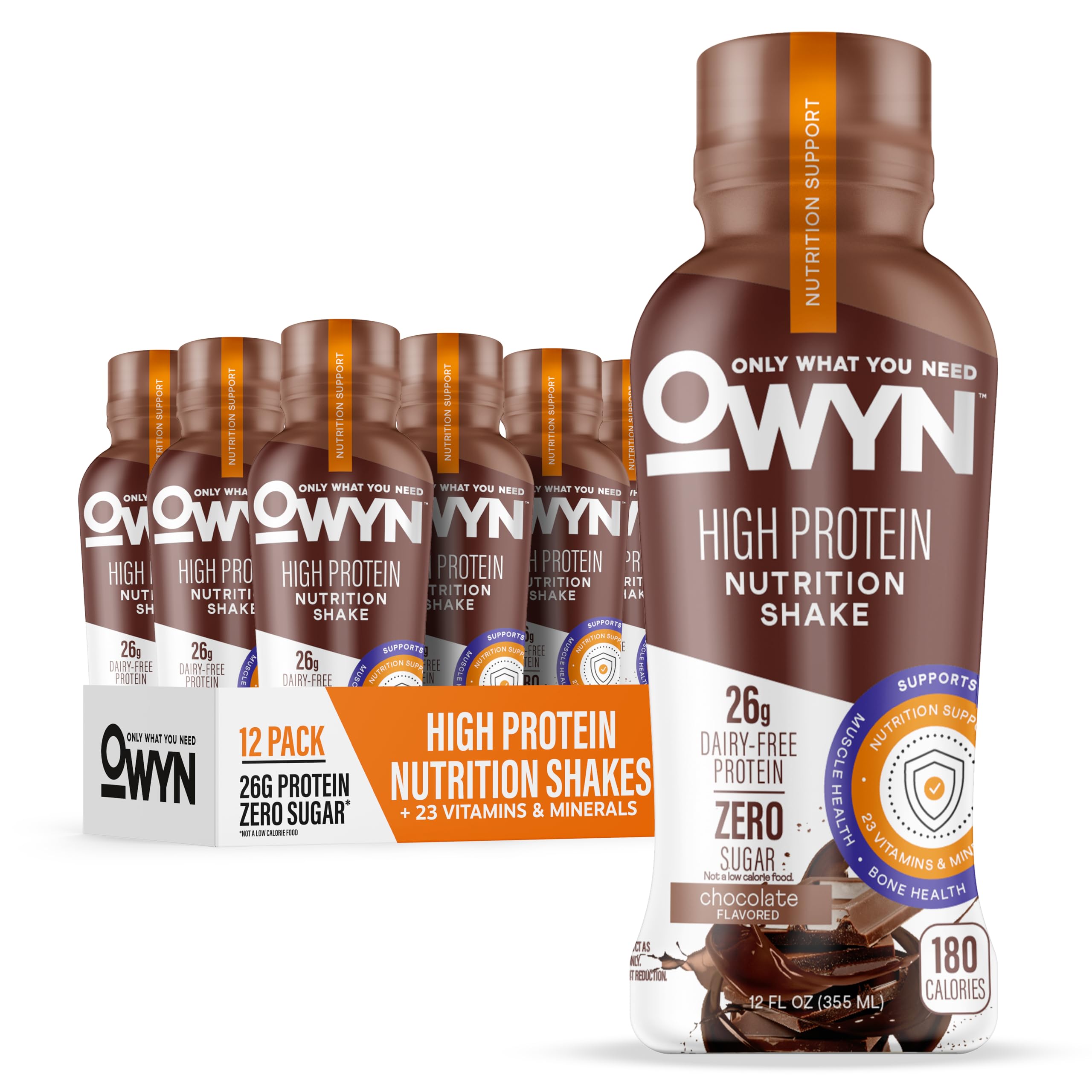
OWYN (Only What You Need) targets the clean-label, plant-based audience with a shake that delivers 26g of vegan protein from pea, pumpkin seed, and sunflower seed blends, plus 3g of fiber and zero grams of sugar. The 180-calorie count qualifies it as a meal replacement by FDA standards, with 23 vitamins and minerals at 20% of the daily value each. The absence of stevia means the sweetness comes from 5g of organic cane sugar — minimal enough to keep the sugar count at zero on the label, but enough to mask the earthy notes typical of plant protein.
Digestive tolerance is a major selling point. Reviewers with food allergies, fast metabolisms, and IBS report no bloating or stomach upset, thanks to the soy-free, dairy-free, and nut-free formulation. The protein matrix delivers all nine essential amino acids, which is rare among plant-based ready-to-drink products. The chocolate flavor is well-received, though the vanilla variant has reports of a sediment texture that undermines the drinking experience.
The 18-month shelf life is a practical advantage for bulk buyers who want to stock up without rotating stock frequently. The price point sits at the premium end of the spectrum, reflecting the higher cost of plant-based protein sourcing and third-party certifications (non-GMO, kosher, vegan). For anyone avoiding animal products or artificial sweeteners entirely, OWYN offers the most complete nutritional package that still tastes good enough to drink daily.
Why it’s great
- Zero sugar, 26g complete plant protein, and 3g fiber
- 100% vegan, soy-free, dairy-free, and nut-free
- 23 vitamins and minerals at 20% DV per serving
Good to know
- Premium price point per serving
- Vanilla flavor has reported sediment issues
6. Designer Wellness Protein Smoothie, Mixed Variety Pack

This product rethinks what a low-sugar protein shake can be: a fruit-forward smoothie pouch that requires no blender, no refrigeration, and no preparation. Each 4.2 oz pouch delivers 12g of whey protein isolate, 120 calories, and zero added sugar, with sweetness coming entirely from real fruit purees. The addition of MCT oil provides a quick energy source that complements the slow-digesting protein, creating a balanced snack rather than a heavy meal replacement.
The mixed variety pack includes several fruit flavors, which helps overcome the monotony of chocolate and vanilla protein shakes. Reviewers describe it as an ideal base for building a more substantial smoothie — blend it with ice and Greek yogurt to scale up the protein content. The small portion size is both a strength (it works as a discrete snack) and a limitation (12g of protein is too low for post-workout recovery or meal replacement).
The pouch format is the most distinctive feature: no bottle to carry back, no can opener, and no risk of breakage in a gym bag. The 12-pack provides 50.4 total fluid ounces, which is less volume per pack than the standard 11.5 fl oz bottles, but the convenience trade-off is clear. This is a category for people who need a light, on-the-go protein boost without drinking a full 11-ounce bottle.
Why it’s great
- No preparation, blender, or refrigeration needed
- Real fruit purees with no added sugar or artificial sweeteners
- MCT oil provides quick energy without carb load
Good to know
- 12g protein is low for meal replacement or post-workout
- Small 4.2 oz portion may be unsatisfying alone
7. Quest Nutrition Chocolate Protein Shake

Quest sets the protein density benchmark in this category with 45g of protein per 14 fl oz bottle — 50% more than most competitors — with only 2g of sugar and 4g of net carbs. The protein comes from ultrafiltered nonfat milk, which concentrates the milk protein while removing most lactose and sugar. The texture is notably thick, closer to a milkshake than a thin beverage, which makes it feel indulgent despite the low sugar numbers.
The key trade-off is the sweetener: Quest uses sucralose to achieve the sweet taste without sugar. While most reviewers find the aftertaste well-masked by the creamy chocolate flavor, a subset of users detects a lingering artificial note. The calorie count is higher than competitors (around 220 calories per bottle) due to the sheer protein mass, so it functions better as a full meal replacement than a between-meal snack.
Reviews consistently highlight the effectiveness of this shake for high-protein diets, post-surgery recovery, and appetite suppression. The 45g dose essentially eliminates the need for a second shake later in the day. However, the price per serving is the highest in this comparison, reflecting the premium cost of such concentrated protein. If your primary metric is protein-per-gram with minimal sugar, Quest wins on density alone.
Why it’s great
- 45g protein with only 2g sugar — highest protein density in this guide
- Thick, milkshake-like texture for satisfying feel
- Ultrafiltered nonfat milk base for clean macros
Good to know
- Sweetened with sucralose — detectable aftertaste for some
- Highest per-serving cost in this comparison
FAQ
What is the difference between no added sugar and zero sugar on a protein shake label?
How can I tell if a low-sugar protein shake will cause bloating?
Can I drink low-sugar protein shakes every day as a meal replacement?
Final Thoughts: The Verdict
For most users, the low sugar protein shakes winner is the Premier Protein Coffeehouse Caramel Macchiato because it combines 30g of protein with zero added sugar and built-in caffeine, eliminating the need for a separate coffee run. If you want the ultimate protein density and a thick milkshake experience, grab the Quest Chocolate Protein Shake. And for a plant-based, zero-sugar option with complete amino acids, nothing beats the OWYN High Protein Shake.