Pregnancy reshapes your body in countless ways, and for many women, the digestive system takes the hardest hit. Morning sickness, bloating, constipation, and heartburn can turn nine months into a battle with your own gut, making every meal a gamble. A targeted supplement can help stabilize these symptoms by supporting the delicate balance of bacteria that influences digestion, immunity, and even your baby’s developing microbiome.
I’m Mohammad Maruf — the founder and writer behind AirfryerBite. I’ve spent years analyzing the specific strain profiles, colony-forming unit counts, and delivery technologies that separate effective prenatal supplements from generic options that fail to survive stomach acid.
This guide breaks down the five most reliable formulas on the market, focusing on real clinical evidence and maternal-specific needs. If you are searching for the best prenatal probiotic, you need a formula that targets nausea, supports regularity, and passes safely to your baby — all without refrigeration or unnecessary fillers.
How To Choose The Best Prenatal Probiotic
Not all probiotics are formulated to address the unique demands of pregnancy. You need strains that can survive the acidic environment of the stomach, colonize the large intestine, and directly impact symptoms like nausea, gas, and irregularity. Here are the three most critical factors to evaluate before buying.
Strain Diversity and Specificity
A generic 10-strain blend won’t cut it. Look for formulas that include Lactobacillus rhamnosus and Bifidobacterium infantis, both of which have shown clinical efficacy in reducing gestational nausea and supporting vaginal health. Some premium options also add kiwi fruit extract or ginger to enhance regularity and soothe the stomach lining.
Delivery Technology and Survivability
Standard capsules lose most of their potency before reaching the gut. Time-release technology or acid-resistant capsules can increase survivability by up to 15 times, meaning more active bacteria make it to where they’re needed most. Always check whether the label specifies a delivery mechanism beyond standard gelatin.
Third-Party Testing and Purity
Supplements are not FDA-regulated, so independent verification is your only guarantee of potency. Look for products that are third-party tested for purity and potency, manufactured in NSF or cGMP-certified facilities, and free from common allergens like gluten, dairy, and soy.
Quick Comparison
On smaller screens, swipe sideways to see the full table.
| Model | Category | Best For | Key Spec | Amazon |
|---|---|---|---|---|
| Hyperbiotics Pro-Natal | Premium | Constipation & nausea relief | Time-release; 15x survivability | Amazon |
| Momma Prenatal Probiotics | Premium | Postpartum & nursing support | 18 strains; 14 billion CFU | Amazon |
| LOVEBUG Prenatal Probiotic | Mid-Range | Morning sickness & heartburn | Herbal soothe blend; 20B CFU | Amazon |
| Physician’s CHOICE 60B | Value | General gut health & regularity | 60 billion CFU; 10 strains | Amazon |
| Jarrow Fem-Dophilus | Mid-Range | Vaginal & urinary tract health | 10B CFU; 6 targeted strains | Amazon |
In‑Depth Reviews
1. Hyperbiotics Vital Nutrients Pro-Natal Prenatal Probiotics

Hyperbiotics Pro-Natal is built around a proprietary time-release delivery system that the manufacturer claims boosts survivability by 15 times compared to standard vegetarian capsules. This means more of the six clinically studied strains, including B. infantis and L. plantarum, reach the deep intestinal tract where colonization actually matters. The addition of kiwi fruit extract adds a natural fiber source that enhances regularity without causing gas or bloating.
Pregnant women consistently report relief from third-trimester constipation and a reduction in yeast infections during the second trimester, even when diet slips include more sugar than ideal. The once-daily pearl tablet is small enough to swallow without gagging, a practical detail that matters when morning sickness makes swallowing pills miserable. The formula is shelf-stable, vegan, and free from the top eight allergens.
While the CFU count is not disclosed on the label, the time-release technology compensates by ensuring higher active-bacteria delivery. Users with the MTHFR gene mutation also benefit from the strain selection, which supports natural folate production. This is the most comprehensive option for pregnant women dealing with both digestive discomfort and a desire for proven clinical backing.
Why it’s great
- Time-release coating delivers 15x more active bacteria to the gut
- Includes kiwi fruit for natural regularity support
- Shelf-stable, vegan, and free from top allergens
Good to know
- CFU count is not explicitly listed on the bottle
- Slightly higher price per serving than standard probiotics
2. Momma Prenatal Probiotics Mom & Baby
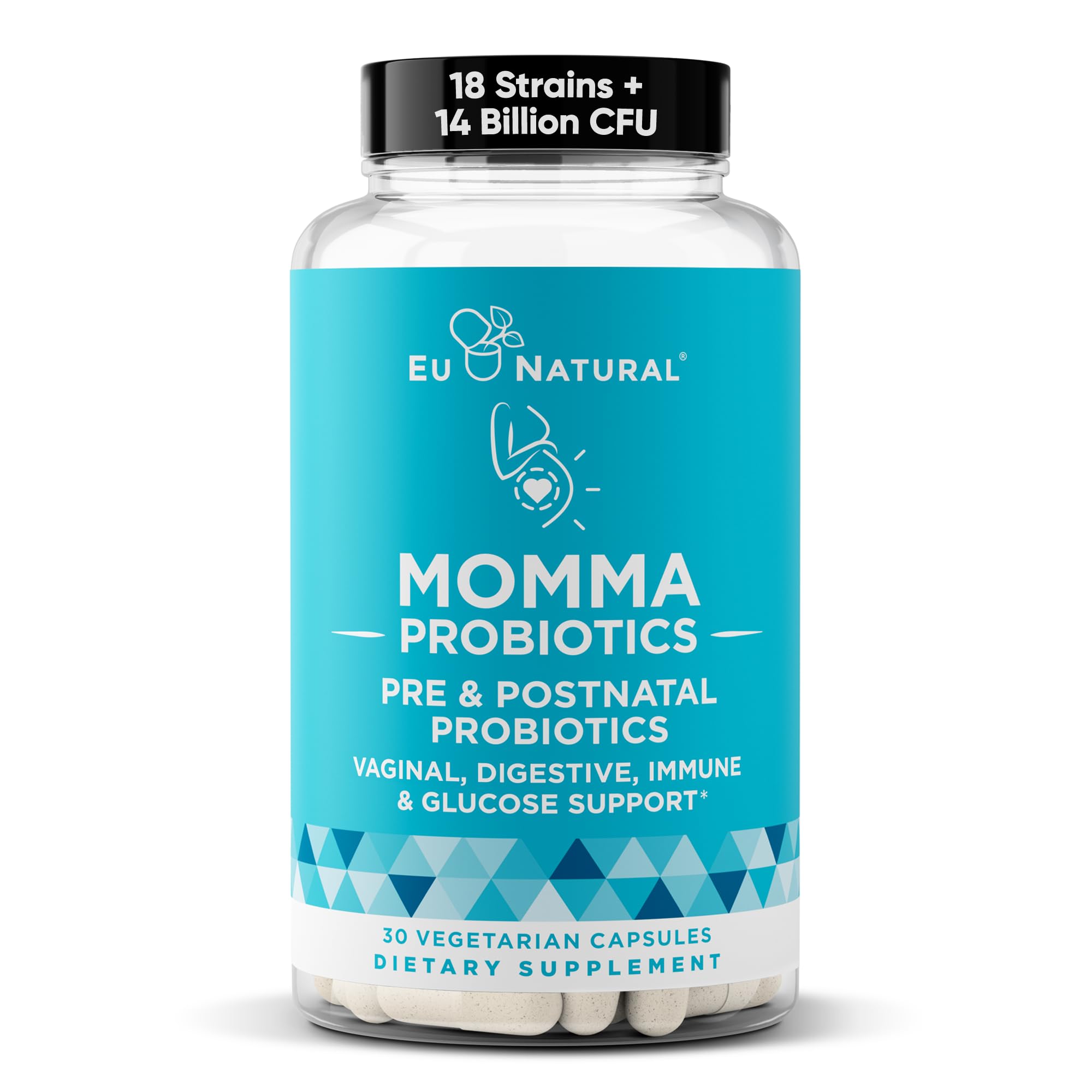
Momma Prenatal Probiotics packs 18 clinically validated strains into a single 14-billion-CFU delayed-release capsule, offering the widest strain diversity on this list. The vegetative DRcaps technology ensures the bacteria survive stomach acid and reach the intestine intact, even without refrigeration. This formula is designed to support both pregnancy and the postpartum period, including nursing mothers who need ongoing digestive and immune balance.
Customer feedback highlights significant improvement in nausea during early pregnancy, with some users noting the difference was night-and-day compared to a previous pregnancy without probiotic support. The mini capsule size is easy to swallow, and the absence of artificial fillers, binders, and allergens makes it a clean choice for women with sensitive stomachs. The delayed-release mechanism also helps prevent the capsule from dissolving in the esophagus, which is a common complaint with standard probiotics.
One unique benefit is the partnership with Vitamin Angels, where each purchase helps provide vitamins to underserved women and children. For those concerned about Group B Strep (GBS) positivity during delivery, some users reported that taking this probiotic helped restore gut flora balance after antibiotic courses administered during labor.
Why it’s great
- 18-strain diversity covers more gut targets than most prenatal formulas
- Delayed-release DRcaps maximize colonization efficiency
- Supports both pregnancy and postpartum/nursing needs
Good to know
- Some users wanted a higher CFU count for severe constipation
- The social-good partnership impacts price point
3. LOVEBUG Prenatal Probiotic

LOVEBUG Prenatal Probiotic is the only formula on this list that pairs probiotic strains with a herbal soothe blend of peppermint, ginger, raspberry, and lemon balm. This combination is specifically designed to tackle the dual issues of morning sickness and digestive discomfort simultaneously. The seven probiotic strains deliver 20 billion CFU, with particular emphasis on strains studied for their role in infant microbiome development during gestation.
First-time users report noticeable nausea reduction within the first 24 hours, though results vary widely. The capsules are tasteless and small enough to avoid triggering the gag reflex, which is critical during the first trimester when even water can be hard to keep down. The formula is free from the eight major allergens, vegan, and non-GMO, making it a safe choice for women with multiple dietary restrictions.
Some customers experienced no benefit after two weeks, which suggests individual biochemistry plays a role in effectiveness. The herbal addition may also interact with certain pregnancy medications, so a quick check with a healthcare provider is recommended. For those who respond well, the combination of probiotics and soothing botanicals provides fast relief without needing a separate supplement.
Why it’s great
- Herbal blend (ginger, peppermint) targets nausea directly
- Small, tasteless capsules are easy to swallow
- Strains selected for infant microbiome support
Good to know
- Effectiveness varies significantly between individuals
- Herbal ingredients may require pregnancy clearance
4. Physician’s CHOICE Probiotics 60 Billion CFU

Physician’s CHOICE delivers the highest CFU count on this list at 60 billion per capsule, combined with 10 diverse strains and organic prebiotics for synergistic effect. This formula is designed to survive the digestive tract using acid-resistant capsules and a shelf-stable bottle, though it is not specifically marketed as prenatal. The value proposition is clear: you get a high-dose probiotic that can also serve as a general gut health supplement for the whole family.
Long-term users report consistent relief from bloating and irregularity within one to two weeks, with many noting they have used the product for years without digestive setbacks. The capsule is easy to swallow and requires no refrigeration, which simplifies daily routine management during pregnancy. The third-party testing for purity and potency adds a layer of trust that is especially valuable for pregnant women who are cautious about supplement sourcing.
Despite not being labeled as a prenatal probiotic, many women use it successfully during pregnancy for general gut balance. However, it lacks the targeted herbal blends or strain selections that directly address pregnancy-specific symptoms like nausea or heartburn. For women who prioritize a high CFU count and broad strain coverage over pregnancy-specific formulation, this is an excellent budget-friendly option.
Why it’s great
- Highest CFU count (60B) ensures potent dosing
- Includes organic prebiotics for enhanced colonization
- Third-party tested for purity and potency
Good to know
- Not specifically formulated for pregnancy symptoms
- Large capsule size may be hard to swallow for some
5. Jarrow Formulas Fem-Dophilus Advanced

Jarrow Fem-Dophilus focuses on what most general probiotics neglect: vaginal, urinary tract, and immune health through six targeted strains at 10 billion CFU. The strain selection includes L. rhamnosus and L. reuteri, both of which have strong clinical evidence for supporting vaginal microbiome balance and preventing recurrent UTIs. The small, shelf-stable capsules are easy to take and have no aftertaste.
Users with PCOS and recurrent UTIs report the most dramatic improvements, with some noting complete elimination of UTIs since starting this formula. A particularly compelling review came from a post-surgery patient whose gut shut down completely for weeks — the surgeon specifically recommended Fem-Dophilus for its proven ability to restart digestion in compromised systems. The vegetarian capsule format and absence of common allergens make it suitable for sensitive digestive systems.
While the CFU count is lower than other options on this list, the strain specificity more than compensates for women whose primary concerns are vaginal health or UTI prevention rather than general bloating or constipation. The formula is also slightly more expensive per serving, reflecting the premium nature of the clinically validated strains. For pregnant women with a history of vaginal infections, this is the most targeted choice available.
Why it’s great
- Strains clinically validated for vaginal and urinary health
- Small, shelf-stable capsules with no aftertaste
- Doctor-recommended for post-surgery gut recovery
Good to know
- Lower CFU count may not address general constipation as effectively
- Price per serving is higher than broader-spectrum options
FAQ
Can prenatal probiotics reduce the risk of GBS infection during pregnancy?
How early in pregnancy should I start taking a prenatal probiotic?
Final Thoughts: The Verdict
For most users, the best prenatal probiotic winner is the Hyperbiotics Pro-Natal because its time-release delivery system ensures maximum strain survivability while specifically targeting nausea and constipation with kiwi fruit and clinically validated strains. If you want the widest strain diversity and postpartum support, grab the Momma Prenatal Probiotics. And for those dealing with recurrent UTIs or vaginal health concerns, nothing beats the targeted precision of Jarrow Fem-Dophilus.