You slide a pan onto the burner, sear a steak, or open the oven after roasting vegetables, and within seconds, a piercing shriek erupts from the ceiling. The family covers their ears, you wave a towel at the hallway, and a perfectly good dinner becomes a nuisance call. Panic isn’t the problem—false alarms are. Cooking smoke, steam from a kettle, and even ambient humidity can trigger a sensitive detector that wasn’t designed to sit near your stove. The fix isn’t removing the alarm; it’s picking the right one built to live in that environment.
I’m Mohammad Maruf — the founder and writer behind AirfryerBite. I’ve spent countless hours analyzing home safety hardware, cross-referencing sensor types, decibel ratings, and UL certifications to help you find a detector that stays quiet when it should and screams when it matters.
A kitchen needs a unit that filters out everyday cooking steam and smoke without sacrificing real fire detection. That’s exactly what a carefully selected smoke detector for kitchen is designed to do—keeping you safe without turning every meal into a false-alarm emergency.
How To Choose The Best Smoke Detector For Kitchen
Choosing a detector for this location is distinct from picking one for a hallway or bedroom. The high heat, moisture, and airborne grease from cooking demand specific hardware that can differentiate between a burned bagel and a real electrical fire. Focus on three main factors to avoid ending up with a unit that chirps every time you boil pasta.
Sensor Type Matters More Than You Think
Two dominant sensor types exist in consumer alarms: ionization and photoelectric. Ionization sensors are excellent at detecting fast-flaming fires but are notoriously sensitive to tiny combustion particles from cooking, leading to constant false trips in a kitchen. Photoelectric sensors use a beam of light to detect smoke particles from smoldering fires, and they are far less reactive to normal cooking steam and toasted bread. For a kitchen setting, a photoelectric unit is the clear choice.
Battery Life and False-Alarm Filtering
A sealed 10-year lithium battery is the gold standard for kitchen use. It eliminates the annual chore of swapping a 9-volt battery and, more importantly, removes the low-battery chirp that often plagues these devices. On top of that, look for detectors that advertise advanced sensing algorithms or precision detection—these models are engineered to ignore routine cooking smoke while still triggering an 85-decibel alarm when burning material is present. This is the primary feature that separates a good kitchen alarm from a frustrating one.
Installation Location and Ease of Mounting
Even the best sensor will fail if placed too close to the stove or oven. The National Fire Protection Association (NFPA) recommends installing smoke alarms at least 10 feet away from cooking appliances. In a small kitchen, this may mean placing the unit just outside the kitchen door or in an adjacent hall. Choose a model that comes with a simple mounting bracket, and ideally one that offers dual mounting options (screws and magnets) for quick placement or repositioning if needed.
Quick Comparison
On smaller screens, swipe sideways to see the full table.
| Model | Category | Best For | Key Spec | Amazon |
|---|---|---|---|---|
| Kidde 20SD10-V | Premium | Whole-home safety with voice alerts | Photoelectric + voice + 10-year battery | Amazon |
| X-Sense SC07 | Premium | Dual smoke and CO gas detection | Photoelectric + electrochemical + LCD | Amazon |
| SITERWELL GS525A | Mid-Range | False-alarm reduction in small kitchens | Photoelectric + 10-year sealed battery | Amazon |
| First Alert SMI110 | Value | Budget-friendly yet reliable detection | Ionization + 10-year sealed battery | Amazon |
| SITERWELL GS509A 2-Pack | Value | Covering multiple rooms on a budget | Photoelectric + replaceable 9V battery | Amazon |
In‑Depth Reviews
1. Kidde 20SD10-V

The Kidde 20SD10-V sits at the top of the list because it tackles the kitchen’s biggest problem—nuisance alarms—with a photoelectric sensor enhanced by advanced discrimination technology. Instead of screaming every time you sear a steak, it evaluates the smoke pattern and only sounds the full 85-decibel horn when it detects fire-related particulates. The voice alert feature is a smart addition, announcing “Fire!” which helps orient the response of anyone in the home, especially children or guests unfamiliar with the alarm pattern.
Power comes from a built-in 10-year lithium battery, which completely eliminates low-battery chirping. The unit is compact at just 1.88 inches deep, meaning it protrudes less from the ceiling and blends into the kitchen environment without being obtrusive. It meets UL 217 10th Edition standards, so you are getting a code-compliant safety device that performs even in humid or steamy conditions up to 100 degrees Fahrenheit.
Installation is straightforward with a simple twist-on mounting bracket, though some users note that the screw hole pattern differs from previous Kidde models, so you may need to drill fresh anchor points if replacing an older unit. The 5-inch diameter leaves a slight shadow ring on painted ceilings, but this is a minor cosmetic trade-off for a detector that actively reduces false trips while providing clear, spoken warnings.
Why it’s great
- Voice alerts provide clear hazard information
- Advanced false-alarm filtering handles kitchen steam and smoke well
- Sealed 10-year battery eliminates chirping and battery swaps
Good to know
- Mounting hole pattern differs from older Kidde models
- Small size may leave a paint shadow on ceilings
2. X-Sense SC07

The X-Sense SC07 elevates kitchen safety by combining two sensors into a single unit: a photoelectric smoke detector and an electrochemical carbon monoxide sensor. This makes it a particularly strong choice if your kitchen has gas appliances, where a CO leak from a faulty burner or pilot light could go unnoticed. The photoelectric side handles cooking smoke with fewer false alarms than an ionization sensor, while the CO side alerts you to a silent threat that a standard smoke alarm would never catch.
A key differentiator is the large LCD display that shows real-time CO levels from 30 to 999 parts per million, along with battery status and unit health. This transparency gives you data rather than just a siren. The alarm itself hits 85 decibels, which is loud enough to be heard throughout most homes. It is powered by a sealed 10-year lithium battery, so you get a full decade of continuous power without needing to swap batteries or worry about a hardwired setup.
Installation is simple: the mounting bracket attaches with screws, and the detector twists into place. It does not support wireless interconnection or Wi-Fi, so you will need one unit per zone if you want coverage in multiple rooms. Some users wish the mounting instructions were clearer, but the physical install is intuitive. For a kitchen with gas cooking, the dual protection and live CO readout make this a uniquely valuable safety tool.
Why it’s great
- Combined smoke and carbon monoxide detection in one body
- Real-time CO level display adds data-driven peace of mind
- Sealed 10-year battery and photoelectric sensor reduce nuisance trips
Good to know
- No interconnection or smart home integration
- Instructions could be more detailed for first-time users
3. SITERWELL GS525A
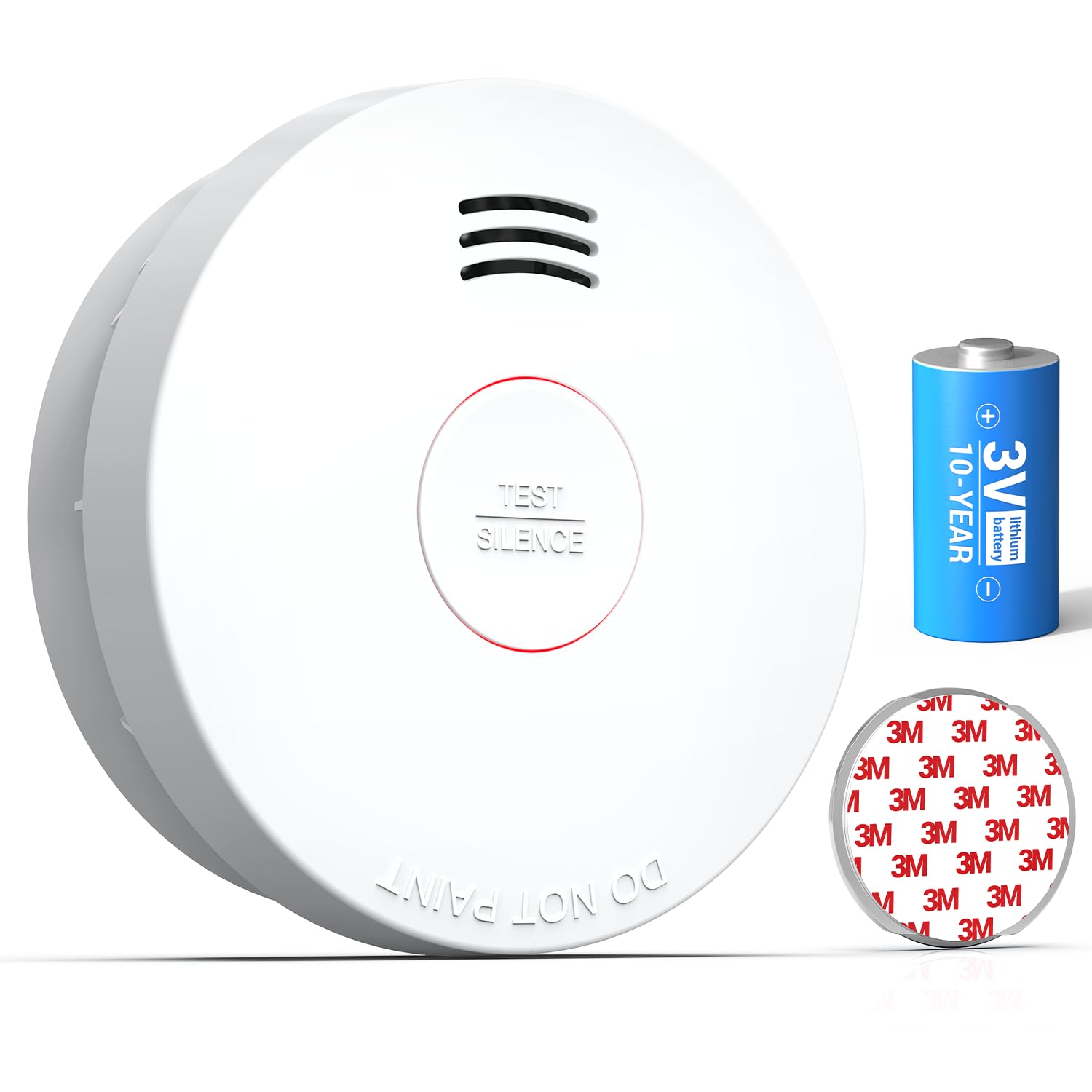
The SITERWELL GS525A is engineered specifically to minimize the number of false alerts caused by daily cooking activity. Its photoelectric sensor is paired with an optimized sensing algorithm that actively filters out steam and light cooking smoke, so you can boil water, run a dishwasher, or toast bread without triggering a deafening response. When a real fire threat does occur—smoldering plastic or a slow-burning electrical wire—the 85-decibel alarm cuts through with no hesitation.
This unit runs on a built-in 3V lithium battery that lasts a full 10 years, meaning zero battery changes and zero unwanted chirps over its lifetime. It is UL 217 listed, so it meets third-party safety standards. The compact 3.93-inch diameter and 1.38-inch depth make it unobtrusive in tight kitchen spaces, and the white polycarbonate housing resists heat and humidity within its rated 37.8°C (100°F) range.
Installation flexibility is a strong point—this detector includes both screws and a magnetic mounting plate, so you can either screw it permanently into drywall or stick the metal plate and snap the detector on via magnets. This magnetic option is great for renters or anyone who wants to reposition the unit without patching holes. Customer feedback consistently highlights its reliability compared to older units that chirped randomly near the kitchen.
Why it’s great
- Smart algorithm actively reduces false alarms from cooking
- Includes both screw and magnetic mounting options
- 10-year sealed battery with low-battery fault warning
Good to know
- Rated for interior use only, not for direct placement above stove
- No carbon monoxide detection
4. First Alert SMI110

The First Alert SMI110 uses the brand’s Precision Detection technology, which is designed to reduce nuisance alarms from everyday cooking while still providing early warning of a real fire. It is worth noting that this unit uses an ionization sensor rather than a photoelectric one. Ionization sensors are generally more prone to false triggers in kitchens, but First Alert has tuned the algorithm to filter out some common cooking-related particles, making it a passable budget option for those who want a brand name without spending more.
The unit is powered by a 10-year sealed lithium battery, which eliminates low-battery chirps and the need for annual battery replacements. It includes a test/silence button and an end-of-life warning chirp that signals when the unit should be replaced. The dimensions are 5.6 inches in diameter and 2 inches deep, making it slightly larger than some competitors, but the mounting bracket is compatible with older First Alert bases, which simplifies replacement for existing users.
Because it uses ionization technology, this detector will still be more sensitive to small smoke particles from searing or roasting. It is best used in a kitchen where cooking is relatively low-smoke, or placed at the maximum recommended distance of 10 feet from the stove. If you have a gas range or frequently char vegetables, the SITERWELL or Kidde photoelectric models will give you fewer interruptions. However, for the price, the SMI110 offers a well-known brand with a solid 10-year battery and a decent false-alarm track record for light cooking.
Why it’s great
- Trusted First Alert brand with Precision Detection algorithm
- 10-year sealed battery for zero maintenance
- Compatible with older First Alert mounting brackets
Good to know
- Ionization sensor is more sensitive to cooking smoke than photoelectric
- Some units may be defective out of the box; test immediately
5. SITERWELL GS509A 2-Pack
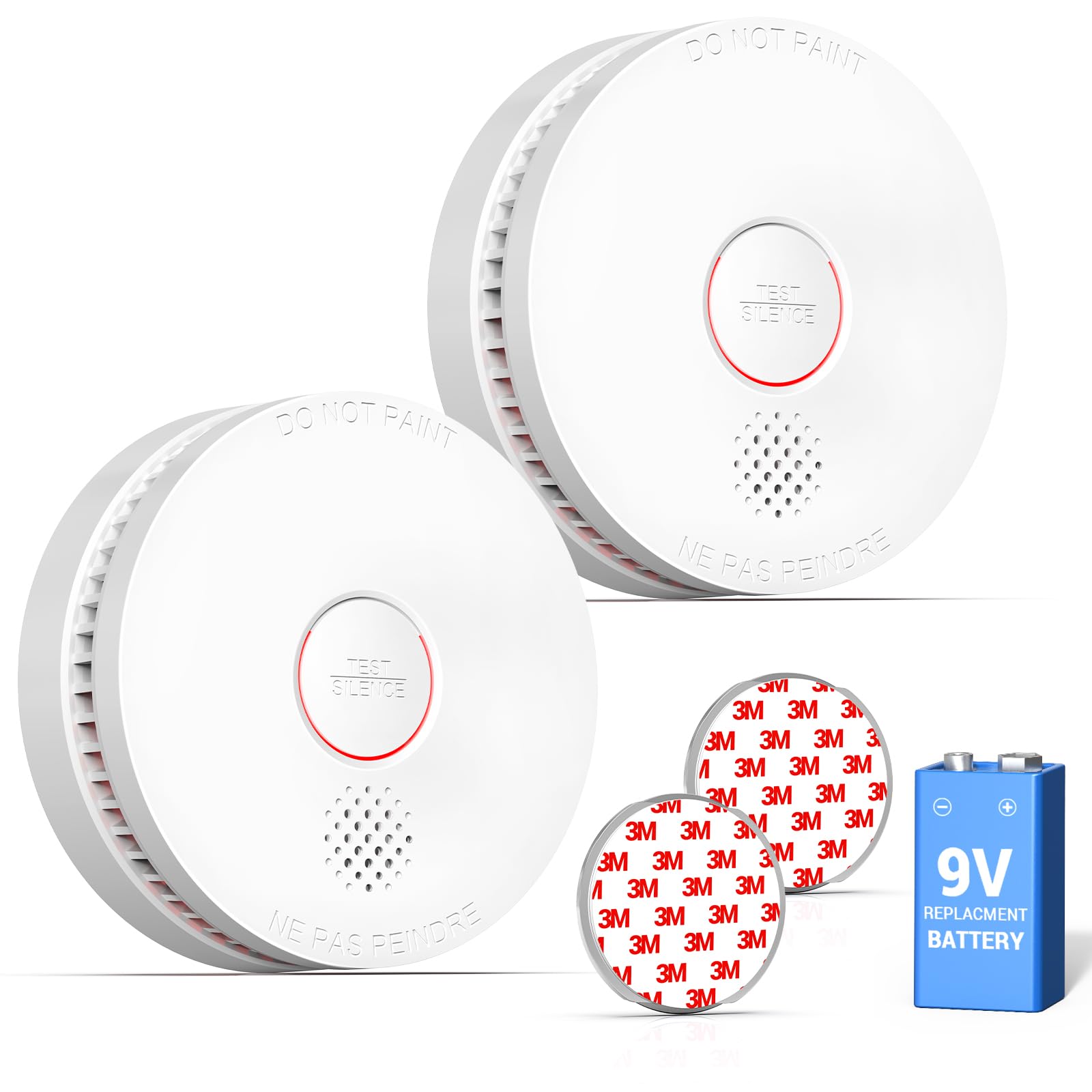
The SITERWELL GS509A is a photoelectric smoke alarm that comes as a two-pack, making it an excellent choice if you need to cover both a kitchen and an adjacent hallway or bedroom on a tight budget. Unlike the sealed-battery models above, this unit uses a standard 9-volt battery that you will need to change annually. That trade-off keeps the upfront cost lower, but you will have to remember to swap batteries each year to maintain reliable protection.
It offers the same photoelectric sensor technology as its pricier sibling, which means it is inherently better at ignoring cooking steam and light smoke than an ionization alarm. The alarm is audible at over 85 decibels, and the unit includes a test/mute button and a low-battery warning chirp. The product life is rated at 10 years, after which the entire unit should be replaced per NFPA standards. The magnetic mounting plate is a convenient feature for quick installation or temporary placement, though some customers have reported receiving adhesive pads instead of magnets in their package.
Installation is simple with the included bracket and screws, and the detector twists easily into place. If you plan to use this in a kitchen, be diligent about replacing the 9-volt battery annually to avoid the dreaded chirping at 2 a.m. For the price of two units, this is the most cost-effective way to get photoelectric detection in multiple rooms, especially if you are equipping a rental apartment or a starter home.
Why it’s great
- Two photoelectric detectors at an entry-level price
- Magnetic mount simplifies installation and repositioning
- Photoelectric sensor reduces false alarms from steam
Good to know
- Uses replaceable 9V battery (annual swaps required)
- Instructions are vague about the magnetic mounting process
FAQ
Can I use a regular smoke detector in the kitchen?
What is the difference between photoelectric and ionization sensors?
How far should a smoke detector be from the stove?
Do I need a smoke detector with a carbon monoxide sensor in the kitchen?
How long does a kitchen smoke detector last?
Final Thoughts: The Verdict
For most users, the smoke detector for kitchen winner is the Kidde 20SD10-V because it combines a photoelectric sensor tuned for false-alarm reduction with helpful voice alerts and a sealed 10-year battery that never chirps. If you want combined smoke and carbon monoxide protection with a live CO readout, grab the X-Sense SC07. And for a budget-friendly option that still uses a photoelectric sensor and includes a magnetic mount, nothing beats the SITERWELL GS525A.