The scent of fresh basil crushed between your fingers or the instant aroma of snipped chives over a finished dish is the entire point of growing herbs indoors. But that payoff dries up fast when root rot sets in or your rosemary bolts from a cramped pot. The physical act of growing herbs is a balance of moisture, light, and root space — and your choice of container determines whether you harvest for weeks or watch your plants struggle.
I’m Mohammad Maruf — the founder and writer behind AirfryerBite. My research into kitchen gardening containers focuses on how drainage geometry, material porosity, and self-watering wick density directly affect herb root health and flavor concentration.
Whether you’re starting a windowsill basil patch or expanding into oregano and mint, the right container prevents overwatering and root binding. This guide breaks down the top contenders for the pots for herbs category, focusing on material, drainage, and size for real kitchen use.
How To Choose The Best Pots For Herbs
Herbs have distinct root structures and watering tolerances. A container that works for a succulent will drown mint, and a pot that dries out in half a day will stunt basil. The selection process boils down to three factors: root space, moisture regulation, and material breathability.
Drainage Geometry
The number and placement of drainage holes matter more than the presence of a single hole. Herbs hate sitting in water. Multiple small holes distributed across the base — not one central hole — allow even water release and prevent anaerobic soil pockets. Pairs of holes at the bottom edge improve airflow into the root zone, which is critical for preventing damping-off disease in seedlings.
Self-Watering vs. Manual Watering
Self-watering pots with cotton wicks maintain consistent soil moisture, which is ideal for basil and parsley that need steady hydration. But Mediterranean herbs like rosemary, thyme, and oregano prefer a dry cycle between waterings. A self-watering system that keeps soil constantly moist will yellow their leaves. For a mixed herb garden, you need either individual control per pot or a manual watering approach with a good drainage tray.
Material and Thermal Mass
Ceramic and glazed pots hold temperature steadier than thin plastic, which matters near drafty kitchen windows. Unglazed terracotta wicks moisture away from the soil, which can be good for overwaterers but bad for basil that needs consistent dampness. Plastic pots with thick walls (above 2 mm) offer a middle ground — they retain moisture without the temperature swings of thin nursery pots.
Quick Comparison
On smaller screens, swipe sideways to see the full table.
| Model | Category | Best For | Key Spec | Amazon |
|---|---|---|---|---|
| Selamica Ceramic Set of 6 | Premium | Small succulents and compact herbs | 3.5″ width, drainage hole + mesh pad | Amazon |
| Vugosson Self-Watering 7-Pack | Premium | Mixed indoor herb gardens | Cotton wick, 4/8/17 inch sizes | Amazon |
| Yesland Ceramic Set of 3 | Mid-Range | Tabletop decor with herbs/flowers | 7″/5.5″/4″ diameters, glazed ceramic | Amazon |
| OurWarm Windowsill Planter Boxes | Mid-Range | Windowsill self-watering setups | 10.5″ x 4.5″ x 5.5″ each, cotton wick | Amazon |
| Usocik Plaid Plastic 4-Pack | Budget | Patio or outdoor herb containers | 10″ diameter, 8 drainage holes | Amazon |
In‑Depth Reviews
1. Selamica Ceramic Succulent Pots, Set of 6
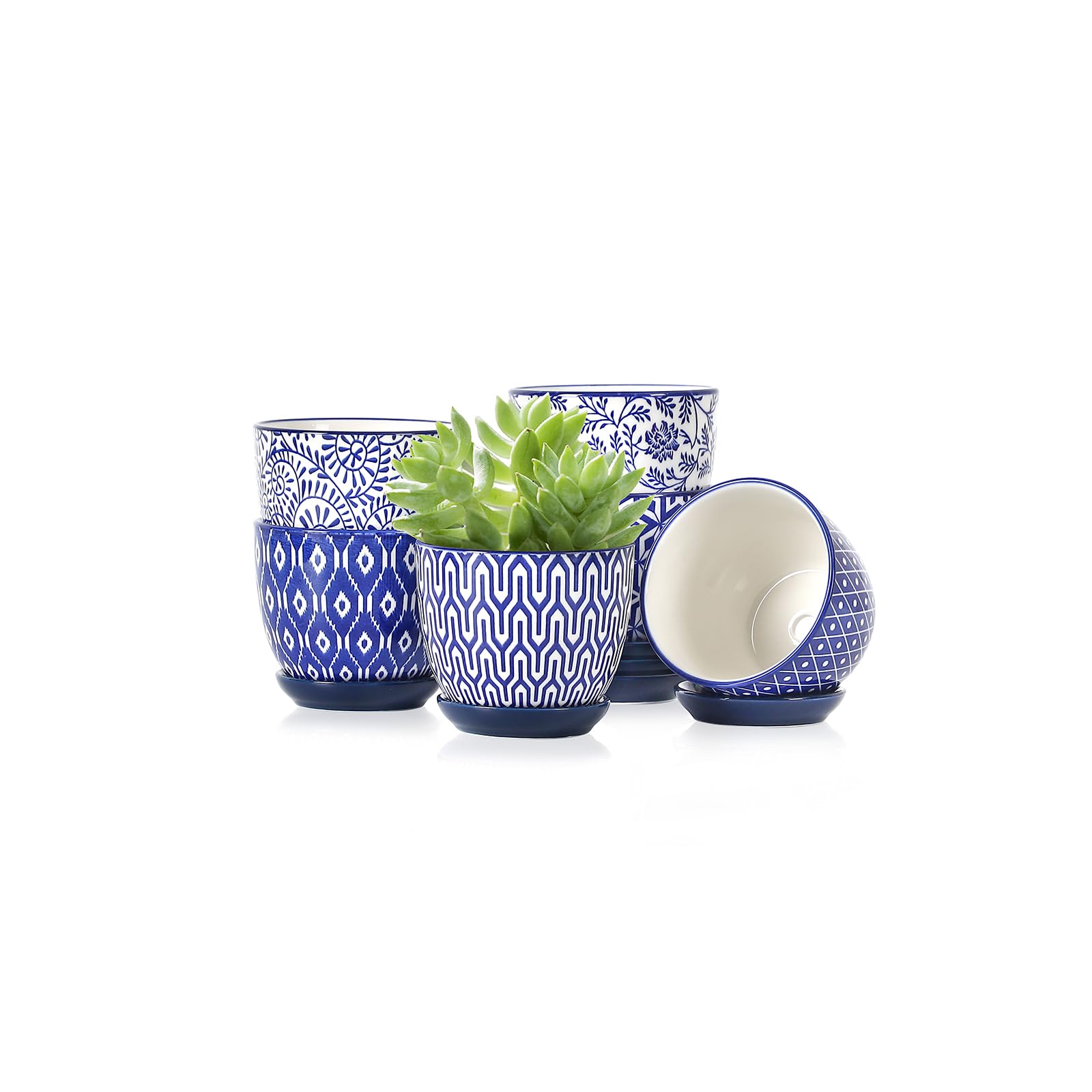
The Selamica set delivers six 3.5-inch porcelain pots with single drainage holes paired with mesh pads that prevent soil loss while keeping the hole clear. The vintage blue glaze has a polished finish that resists water marks and mineral buildup, which is a practical advantage over unglazed ceramic that develops white efflorescence. Each pot includes a raised-rim saucer that creates a small air gap between the pot base and any standing water.
At 2.9 inches tall, these are best suited for shallow-root herbs like thyme, oregano, and chives. The high-temperature firing gives the porcelain a dense structure that doesn’t absorb water, so the soil moisture stays where you want it — in the soil. The mesh pad included with each pot is a detail most ceramic sets skip, and it prevents the single drainage hole from clogging with perlite or fine potting mix.
For a mixed indoor herb setup where each small plant needs its own dedicated container, this set gives you six identical, well-finished vessels. The vintage blue pattern has subtle variation across pots, which adds visual interest without being distracting. They work as individual gifts or a coordinated windowsill lineup.
Why it’s great
- Fired at high temperature for dense, non-porous porcelain that won’t stain
- Mesh pads included for each drainage hole to keep soil contained
- Raised-rim saucer prevents pot from sitting directly in runoff water
- Smooth interior is quick to clean without scrubbing mineral deposits
Good to know
- 3.5-inch width is too small for basil or mint with larger root systems
- Single central drainage hole is less effective than multiple distributed holes
2. Vugosson Self-Watering Planters, 7-Pack

The Vugosson 7-pack covers three size tiers — one 17-inch long planter, two 8-inch medium pots, and four 4-inch small pots — making it the most versatile set in this guide for mixed herb gardens. Each pot uses a cotton wick that draws water from a reservoir up into the soil through capillary action. The wick system maintains consistent moisture for about 7 to 14 days depending on plant size and room temperature, which is a serious advantage for basil and parsley that stress under dry cycles.
The dark gray plastic body has a matte finish that looks closer to ceramic than typical nursery plastic. The wall thickness varies by size, with the 17-inch planter measuring about 2 cm thick. Each pot has drainage slots along the bottom edge rather than a single hole, which improves airflow into the root zone. The saucers are color-matched but not attached, so you can clean the reservoir separately.
One real-world compromise: the water reservoir on the small pots is shallow enough that thirsty plants like mint can drain it in under 24 hours. For low-water herbs like rosemary, you can simply leave the wick dry and water manually. The BPA-free PP resin is odorless and safe for edible plants, which matters when growing kitchen herbs.
Why it’s great
- Three size options in one set cover different root depth requirements
- Cotton wick system provides 7–14 days of consistent moisture for thirsty herbs
- Multiple drainage slots improve aeration compared to single-hole designs
- Non-BPA PP resin material is food-safe for edible herb growing
Good to know
- Small pot water reservoir is shallow and may need daily refills for heavy drinkers
- Self-watering wick is not suitable for Mediterranean herbs that need dry cycles
3. Yesland Ceramic Flower Plant Pots, Set of 3

The Yesland set offers three graduated sizes — 7-inch, 5.5-inch, and 4-inch diameters — each with a glazed white finish and ribbed exterior that catches light. The glazed surface is stain-resistant and wipes clean with a damp cloth, which is a practical advantage over matte ceramic that absorbs dirt over time. Each pot has a single drainage hole at the center with a matching saucer that catches runoff without the pot base sitting in water.
At 4 pounds for the set, these are heavier than plastic alternatives, which provides stability for top-heavy herb growth. The 7-inch pot gives enough depth for a single basil plant or a small mint clump, while the 4-inch pot works for individual chives or thyme starts. The unglazed interior is porous enough to allow some moisture exchange through the walls, which helps prevent overwatering in humid kitchens.
The thinness of the ceramic wall is the trade-off — some users report the walls feel lighter than expected compared to thick stoneware. The attached saucers are also relatively thin. For purely decorative display where aesthetics match a modern kitchen, the ribbed design is distinctive, but for heavy daily watering, the ceramic may feel less robust than the thicker porcelain used in the Selamica set.
Why it’s great
- Graduated three-size set covers small to medium herb needs in one purchase
- Glazed white surface resists staining and cleans easily with a wipe
- Ribbed exterior adds visual texture that stands out on a windowsill
- Heavier weight provides stability for top-heavy basil or mint plants
Good to know
- Ceramic wall thickness is on the thinner side and may feel less substantial
- Single central drainage hole lacks the air circulation of multiple holes
4. OurWarm Windowsill Herb Planter Box, Set of 3

The OurWarm planter boxes are purpose-built for windowsill use, measuring 10.5 inches long by 4.5 inches wide — a dimension that fits standard kitchen window ledges. Each of the three boxes uses a double-layer split design: an upper planting tray with cotton wicks and a lower water reservoir. A clear plastic window on the reservoir shows the remaining water level, so you can visually confirm whether the plant needs a refill without pulling the box apart.
The self-watering wicks draw moisture upward through osmosis, which keeps the soil consistently damp at the root level. The top of each box has a dedicated water injection port, so you can refill the reservoir without lifting the plant or disturbing the soil surface. This is a genuine convenience for basil and parsley that need consistent moisture but also for anyone who travels for a few days. The boxes come in three colors — white, coffee, and green — which helps visually separate different herb varieties.
Some units arrive with slightly warped reservoir bases that affect how the box sits flat on a ledge. A few customers report missing cotton wicks in one of the three boxes in the set, which defeats the self-watering function for that unit. For the price, the system design is solid, but quality control varies between units.
Why it’s great
- 10.5 x 4.5 inch dimension is designed for standard windowsill ledges
- Visual water level window eliminates guesswork for refill timing
- Top water injection port allows refill without removing the plant
- Three-color set makes it easy to label and separate herb varieties
Good to know
- Some units arrive with warped reservoir bases that affect stability on a flat surface
- Cotton wicks may be missing from individual boxes within the set
5. Usocik Plaid Pattern Plant Pots, 4-Pack
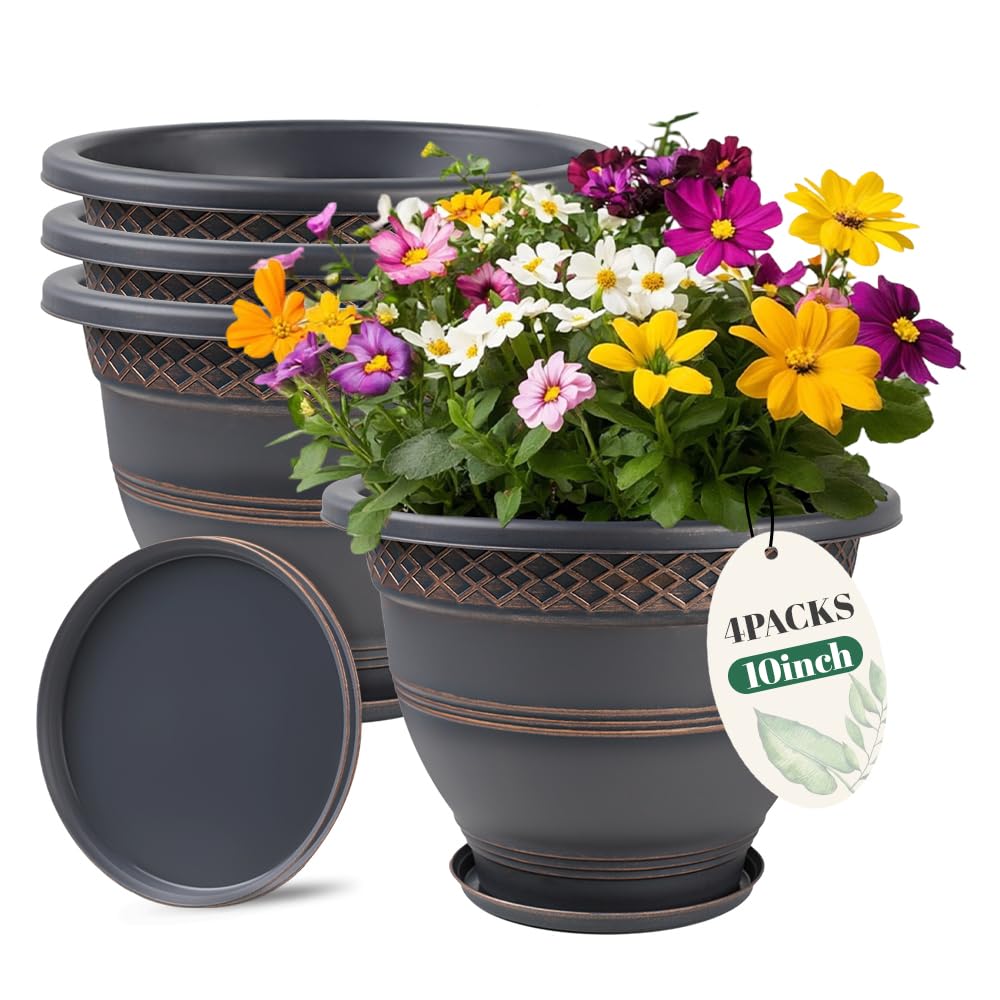
The Usocik 4-pack delivers 10-inch diameter pots at a price point that undercuts most ceramic options by a wide margin. Each pot is made from thick PP plastic with a lacquered copper plaid finish that hides surface scratches well. The standout spec is the 8 drainage holes distributed across the pot base — more than any other product in this guide — which provides superior water release and prevents the anaerobic soil conditions that cause root rot in herbs.
Each pot includes a matching saucer, though the saucer diameter is only slightly wider than the pot base. For heavy watering sessions, the saucer overflows quickly, so outdoor placement or a separate larger saucer is recommended for consistent use. The plastic walls are thick enough to resist UV cracking through a full growing season, and the 1.03-gallon capacity per pot gives enough root volume for a full basil or mint plant to mature.
The lightweight construction makes these easy to move indoors and out, but the same lightness means a fully saturated pot can tip in strong wind. The lacquered finish is more durable than painted plastic, but adhesive residue from packaging tape can peel the finish if removed carelessly. For a budget-friendly outdoor herb container with functional drainage, the Usocik set delivers where it counts.
Why it’s great
- 8 drainage holes provide the best water release of any pot in this guide
- 1.03-gallon capacity per pot allows full root development for mature herbs
- Thick PP plastic resists UV cracking for outdoor seasonal use
- Lacquered copper plaid finish hides scratches from handling and weather
Good to know
- Included saucers are too small for heavy indoor watering and overflow easily
- Lightweight plastic pots can tip in wind when fully saturated with soil
FAQ
How many drainage holes do herb pots actually need?
Can I use self-watering pots for rosemary and thyme?
Does ceramic material affect herb flavor compared to plastic?
Final Thoughts: The Verdict
For most users, the pots for herbs winner is the Selamica Ceramic Set of 6 because the dense porcelain construction, included mesh pads, and raised-saucer design give you the best material quality for small individual herb containers. If you want a self-watering system for thirsty basil and mint across multiple size tiers, grab the Vugosson Self-Watering 7-Pack. And for outdoor or patio herb containers with the best drainage in this group, nothing beats the Usocik Plaid Plastic 4-Pack at its price tier.