Swallowing giant, chalky tablets that leave a gritty aftertaste is the most common complaint among those shopping for a bone-support routine. The real challenge isn’t just finding a source of calcium—it’s finding one that actually fits a vegetarian or vegan lifestyle without relying on crushed oyster shells or bovine bone meal. The supplement aisle is crowded, but a genuine plant-derived option that bypasses animal byproducts requires careful label-reading.
I’m Mohammad Maruf — the founder and writer behind AirfryerBite. Over hours of cross-referencing supplement labels, I’ve scrutinized the ingredient sources, third-party testing claims, and dosage formats to separate truly vegetarian formulas from those that merely claim to be.
This guide breaks down five of the top contenders so you can identify the best vegetarian calcium supplement for your daily routine without guessing which bottle actually uses algae, citrate, or plant-based binders.
How To Choose The Best Vegetarian Calcium Supplement
Not all calcium is created equal, especially when animal byproducts are off the table. The source of the calcium, its form (caplet, capsule, or gummy), and the supporting nutrients all determine whether the supplement works with your digestion and dietary boundaries.
Calcium Source: Algae vs. Carbonate vs. Citrate
Vegetarian-friendly calcium comes from three main places: marine algae (a plant-based whole-food source), calcium carbonate (often mined from limestone, so technically vegetarian), and calcium citrate (a salt form that doesn’t require stomach acid for absorption). Algae-based options are popular because they often include trace minerals, while citrate is favored for those with low stomach acid or who take supplements on an empty stomach. Carbonate is the most common and inexpensive, but it requires food for proper breakdown.
Co-Factor Nutrients You Should See
A standalone calcium pill is only half the equation. Look for vitamin D3 (preferably vegan-sourced from lichen rather than lanolin), vitamin K2 (to direct calcium to bones rather than arteries), and magnesium (which works in tandem with calcium for muscle and nerve function). Zinc is an added bonus for bone tissue maintenance. A formula that includes these co-factors will deliver better results than plain calcium.
Format: Gummy, Caplet, or Capsule
Caplets and capsules are straightforward for those who can swallow pills, but they often lack the added vitamins that make calcium absorbable. Gummies are popular for their ease of use and palatable taste, but you must check the sugar content and serving size—some require four gummies to reach a meaningful dose. For vegetarians, verify that the gummy base uses pectin rather than gelatin.
Quick Comparison
On smaller screens, swipe sideways to see the full table.
| Model | Category | Best For | Key Spec | Amazon |
|---|---|---|---|---|
| Carlyle Calcium 1200mg with D3 | Caplet | High-dose routine | 1200 mg calcium carbonate per serving | Amazon |
| Amazon Elements Calcium Complex | Capsule | Vegan algae formula | 750 mg marine algae calcium | Amazon |
| Nature’s Answer Calcium Magnesium | Capsule | Dual mineral support | Aquamin red algae plus magnesium | Amazon |
| LILICARE Plant Based Calcium Gummies | Gummy | Digestive ease & co-factors | 600 mg algae calcium with D3, K2, Mg, Zn | Amazon |
| LUCNVEM Calcium Citrate Gummies | Gummy | Citrate absorption on empty stomach | 1200 mg citrate plus D3, K2, Mg, Zn | Amazon |
In‑Depth Reviews
1. LILICARE Plant Based Calcium Gummies 600mg

The LILICARE gummies use sustainably sourced red marine algae, which naturally contains over 70 trace minerals—this is a smarter plant-based foundation compared to standard limestone carbonate. Each serving delivers 600 mg of calcium paired with a 2:1 calcium-to-magnesium ratio (300 mg magnesium), plus vitamin D3, vitamin K2, and zinc to guide calcium utilization and support bone tissue maintenance.
The sugar-free formulation relies on monk fruit for sweetness, and the pectin-based gummy texture (peach flavor) avoids gelatin entirely, keeping it fully vegan. Users report improved digestion and less bloating compared to traditional tablets, and the innovative liquid-core delivery system aims to protect nutrient stability for better absorption. It’s a clean, guilt-free option for dairy-free individuals who struggle with large capsules.
The only practical trade-off is the serving size: 600 mg of calcium per day is half of what some doctors recommend for osteoporosis patients, so you may need two servings. The container is compact (just 60 gummies), so frequent reordering is necessary for those taking the full daily dose.
Why it’s great
- Plant-based red algae with trace minerals
- Sugar-free, monk-fruit sweetened, pectin gummy
- Includes D3, K2, magnesium, and zinc
Good to know
- Only 600 mg calcium per serving
- Small 60-count bottle may require frequent repurchase
2. LUCNVEM Calcium Citrate Gummies (2 Pack)

The LUCNVEM gummies stand out because they use calcium citrate, a form that doesn’t require stomach acid for absorption—making it an excellent choice for anyone who prefers taking supplements on an empty stomach or has low gastric acid. Each two-gummy serving provides 1200 mg of calcium citrate (roughly equivalent to 500 mg elemental calcium), 400 mg of magnesium glycinate, 10 mg of zinc, 1000 IU of vitamin D3, and 120 mcg of vitamin K2.
The white peach flavor is well-received, and the two-pack gives you 120 gummies for a 60-day supply at a reasonable cost per serving. Users highlight that the gummies taste clean without the bitterness common in some chewable calcium tablets. The inclusion of magnesium glycinate (gentler on digestion than magnesium oxide) plus K2 for calcium routing makes this a comprehensive formula.
Be aware that the gummies tend to stick together inside the jar, especially in warm conditions; refrigeration helps separate them. The jar opening is narrow, making it slightly tricky to extract the last gummies. Ingredient accuracy is manufacturer-stated but not third-party verified in customer reports.
Why it’s great
- Calcium citrate for absorption without food
- High elemental dose with D3, K2, Mg, Zn
- Two-pack provides solid value for daily use
Good to know
- Gummies can clump together in the jar
- Narrow jar opening makes retrieval difficult
3. Nature’s Answer Calcium Magnesium Capsules 120 Count
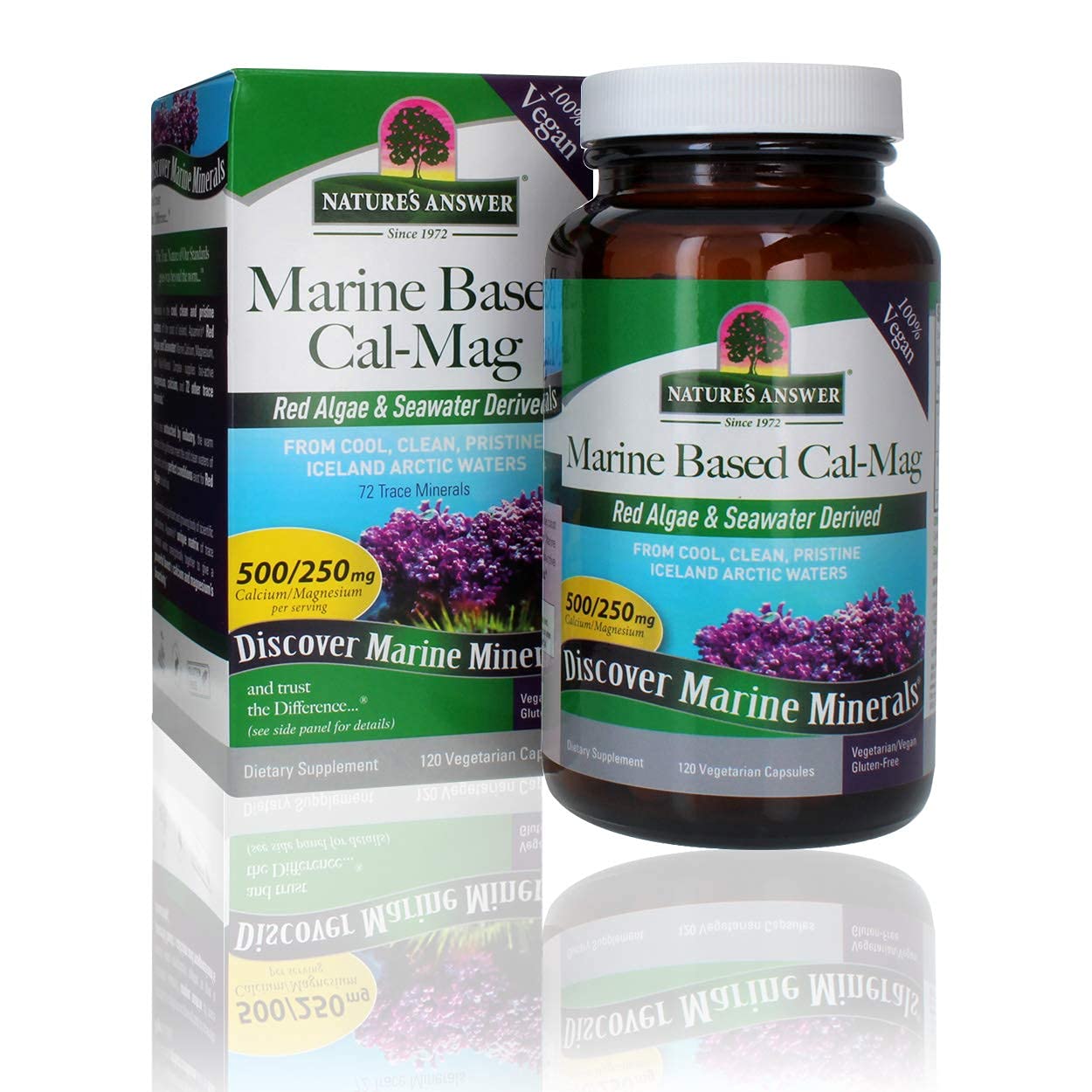
Nature’s Answer uses the trademarked Aquamin red algae from Icelandic sea beds, providing a whole-food mineral complex rather than isolated calcium carbonate. This two-in-one capsule delivers both calcium and magnesium in a form that users consistently describe as highly absorbable and gentle on digestion. It’s a favorite among those who need help with sleep, muscle cramps, and regularity.
The 120-count bottle offers a 60-day supply at the recommended two-capsule serving, and the formula is gluten-free and alcohol-free. Customer feedback repeatedly notes that this combination eases nighttime restlessness and supports calm muscle function without the harsh laxative effect of some magnesium oxide supplements. The unflavored capsules are easy to swallow for those comfortable with pills.
The downside is the lack of added vitamin D3 or K2, so you may need to pair it with a separate D3 supplement for optimal calcium absorption. Some users also mention that the price per bottle is on the higher end for a straightforward calcium-magnesium blend, though the clean ingredient profile justifies the cost for many.
Why it’s great
- Whole-food Aquamin red algae base
- High absorption reported for sleep and muscle relief
- Gluten-free, clean capsule formula
Good to know
- No vitamin D3 or K2 included
- Premium price for a two-mineral formula
4. Amazon Elements Calcium Complex 750mg

Amazon Elements provides a marine algae-sourced calcium combined with vitamin D2 (ergocalciferol) and 50 mg of magnesium per serving. The algae is harvested from Icelandic sea beds, offering a vegan alternative to the more common lanolin-based D3. This three-in-one capsule approach simplifies supplementation for those who want a single pill for bone, muscle, and immune support.
The unflavored capsules are easy to swallow and free from artificial colors, flavors, and chemical preservatives. Longstanding customer feedback points to consistent quality over years of use, though recent price changes have drawn criticism. The formula works well for vegetarians and vegans, particularly those who avoid gelatin-based capsules.
The main limitation is the calcium dose: 750 mg per serving is lower than many competing products, so you may need two capsules to meet higher daily requirements. Additionally, it uses vitamin D2 instead of the more bioavailable D3, which some research suggests is less effective at maintaining blood levels. The recent price volatility also makes it harder to budget for regular reorders.
Why it’s great
- Algae-based calcium with added D2 and magnesium
- No artificial preservatives or colors
- Easy-to-swallow capsule form
Good to know
- Only 750 mg calcium per serving
- Uses D2 instead of D3 for vitamin D
5. Carlyle Calcium 1200mg with Vitamin D3
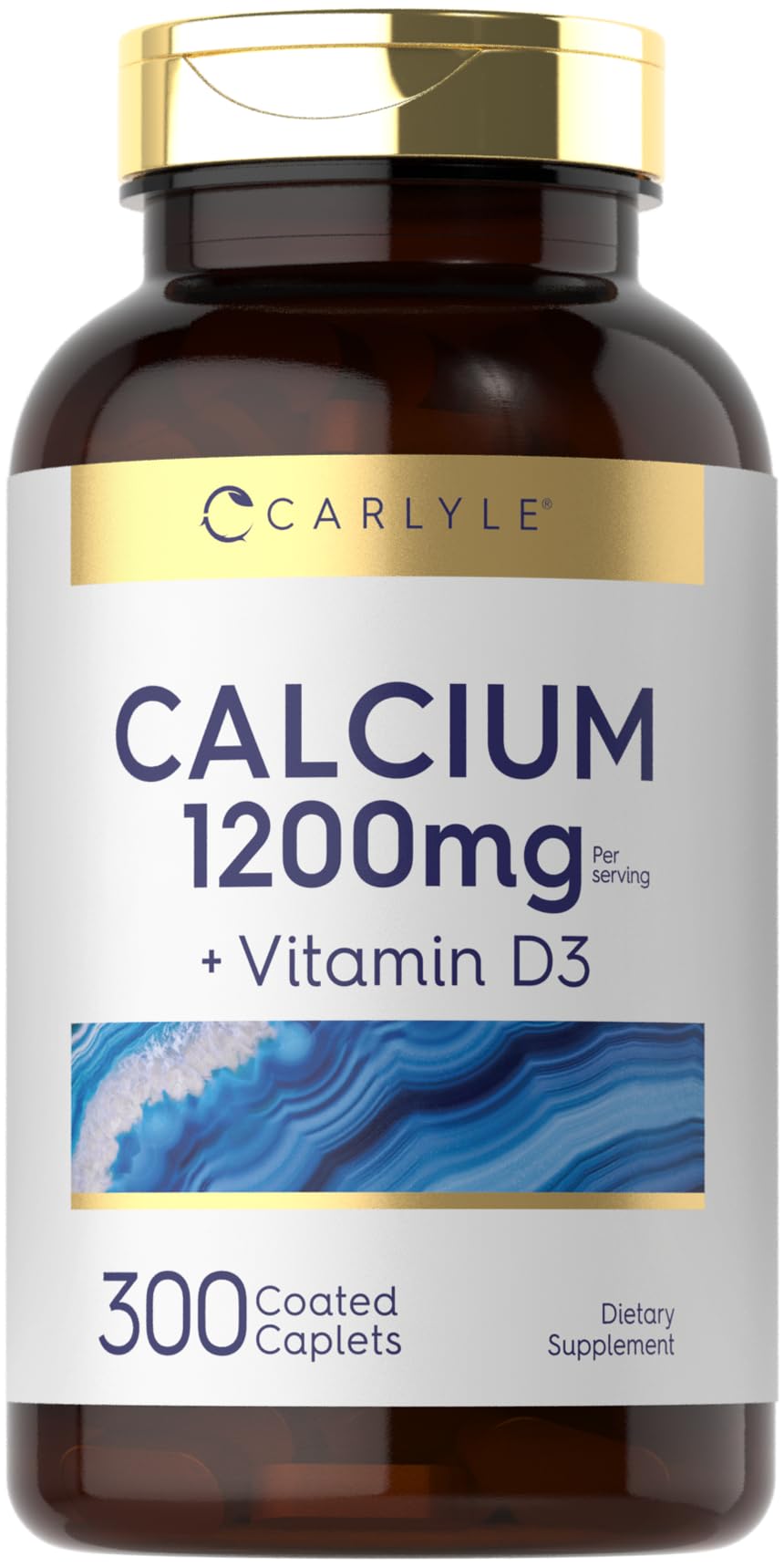
Carlyle offers a straightforward, high-dose option with 1200 mg of calcium (as carbonate) plus vitamin D3 in a coated caplet form. Calcium carbonate is the most cost-effective source and is vegetarian-friendly since it’s mined from limestone, but it requires food intake for optimal absorption. The 300-count bottle provides a long-lasting supply for those committed to daily supplementation.
The formula is non-GMO, gluten-free, wheat-free, and lactose-free, making it suitable for many common dietary restrictions. The coated caplets are designed to be easier to swallow, and the brand emphasizes laboratory testing for quality control. For users who simply want a high calcium dose without worrying about gummy textures or multiple capsules, this is a no-frills choice.
Because it relies on calcium carbonate, some individuals experience gas or constipation, and the absence of magnesium or K2 means the calcium may not be directed as effectively to bone tissue. The large caplet size can also be a challenge for anyone who dislikes swallowing pills. It’s a solid entry-level option but lacks the absorption enhancers found in more comprehensive formulas.
Why it’s great
- High 1200 mg calcium per serving in one caplet
- Long-lasting 300-count bottle
- Non-GMO, gluten-free, and lactose-free
Good to know
- Calcium carbonate requires food for absorption
- No magnesium or K2 for calcium routing
FAQ
Can I get enough calcium from plant-based foods without a supplement?
What is the difference between calcium carbonate and calcium citrate for vegetarians?
How do I know if a calcium gummy is truly vegan and not using gelatin?
Why does some algae calcium contain vitamin D2 instead of D3?
Should I take calcium with vitamin K2 or is it optional?
Final Thoughts: The Verdict
For most users, the best vegetarian calcium supplement winner is the LILICARE Plant Based Calcium Gummies because it combines a sustainably sourced red algae base with a complete co-factor profile (D3, K2, magnesium, zinc) in a sugar-free, vegan gummy format that is gentle on digestion. If you want a high-dose citrate option that works on an empty stomach, grab the LUCNVEM Calcium Citrate Gummies. And for a straightforward dual-mineral capsule with a whole-food algae foundation, nothing beats the Nature’s Answer Calcium Magnesium.