Painting kitchen cabinets is the single most transformative DIY project in a home, but the entire outcome hinges on a step most homeowners rush: the primer. Get the bond wrong, and your hard work peels, chips, or stains through within months. The right base coat locks in odors, blocks tannins from bleeding through oak, and gives your topcoat a mechanical tooth that lasts for years, not weeks.
I’m Mohammad Maruf — the founder and writer behind AirfryerBite. After combing through hundreds of real user reports and cross-referencing adhesion specs, dry times, and stain-blocking performance across five top contenders, I’ve pinpointed exactly which formulas earn their place on kitchen cabinetry.
The goal is to cut through the marketing and give you a clear, data-backed verdict on the primer for painting kitchen cabinets that delivers a factory-like finish without guesswork.
How To Choose The Best Primer For Painting Kitchen Cabinets
Kitchen cabinets face unique enemies: grease vapor, steam, constant opening and slamming, and the occasional splash of tomato sauce. A primer built for walls simply lacks the blocking power and physical adhesion to survive that environment. Here are the three specs that separate a ten-year finish from a six-month disappointment.
Bonding Chemistry vs. Standard Latex Primer
Standard wall primers use a simple latex binder that relies on a porous surface to grip. Kitchen cabinets, especially those finished with factory lacquer or polyurethane, present a slick, non-porous surface. A dedicated bonding primer uses a modified alkyd or high-adhesion acrylic that chemically grabs onto glossy substrates. If the label doesn’t mention “bonding” or “adhesion to glossy surfaces,” expect peeling where cabinet doors meet the frame.
Stain-Blocking and Odor-Sealing Capability
Oak cabinets bleed tannins — yellowish-brown streaks — through latex topcoats if the primer lacks a dedicated stain-blocking additive. Similarly, cabinets that have absorbed years of smoke, pet odors, or greasy buildup need a shellac-based or synthetic shellac primer to physically encapsulate the smell. Check whether the primer is labeled for “tannin blocking” or “odor sealing” if you’re working over raw wood or smoke-damaged surfaces.
Dry Time, Recoat Window, and Cure Cycle
Cabinet doors need to be painted on all six edges and then reassembled without sticking. A primer that dries to the touch in 30 minutes lets you flip doors and apply the first topcoat the same day. But the full cure time — the point where the film reaches its maximum hardness — dictates how soon you can rehang doors and start using the cabinets without denting or scratching. Fast-dry formulas (25-30 minute dry time) often come with a longer cure cycle (24-48 hours), so plan your assembly schedule around the cure, not just the touch-dry window.
Quick Comparison
On smaller screens, swipe sideways to see the full table.
| Model | Category | Best For | Key Spec | Amazon |
|---|---|---|---|---|
| Zinsser 305928 Odor Killing Primer | Premium | Odor sealing & stain blocking | Dries clear in 25-30 minutes | Amazon |
| INSL-X Cabinet Coat Enamel | Premium | Factory-like satin finish | Self-leveling, no brush strokes | Amazon |
| Heirloom Traditions ALL-IN-ONE | Mid-Range | No-sanding cabinet refresh | 140 sq. ft. coverage per quart | Amazon |
| Glidden Total Interior Paint & Primer | Entry-Level | Quick budget refresh on walls/trim | 400 sq. ft. coverage per gallon | Amazon |
| Rust-Oleum Painter’s Touch 2X Spray | Entry-Level | Small touch-ups & detail work | 12 oz aerosol, 12 sq. ft. per can | Amazon |
In‑Depth Reviews
1. Zinsser 305928 Odor Killing Primer
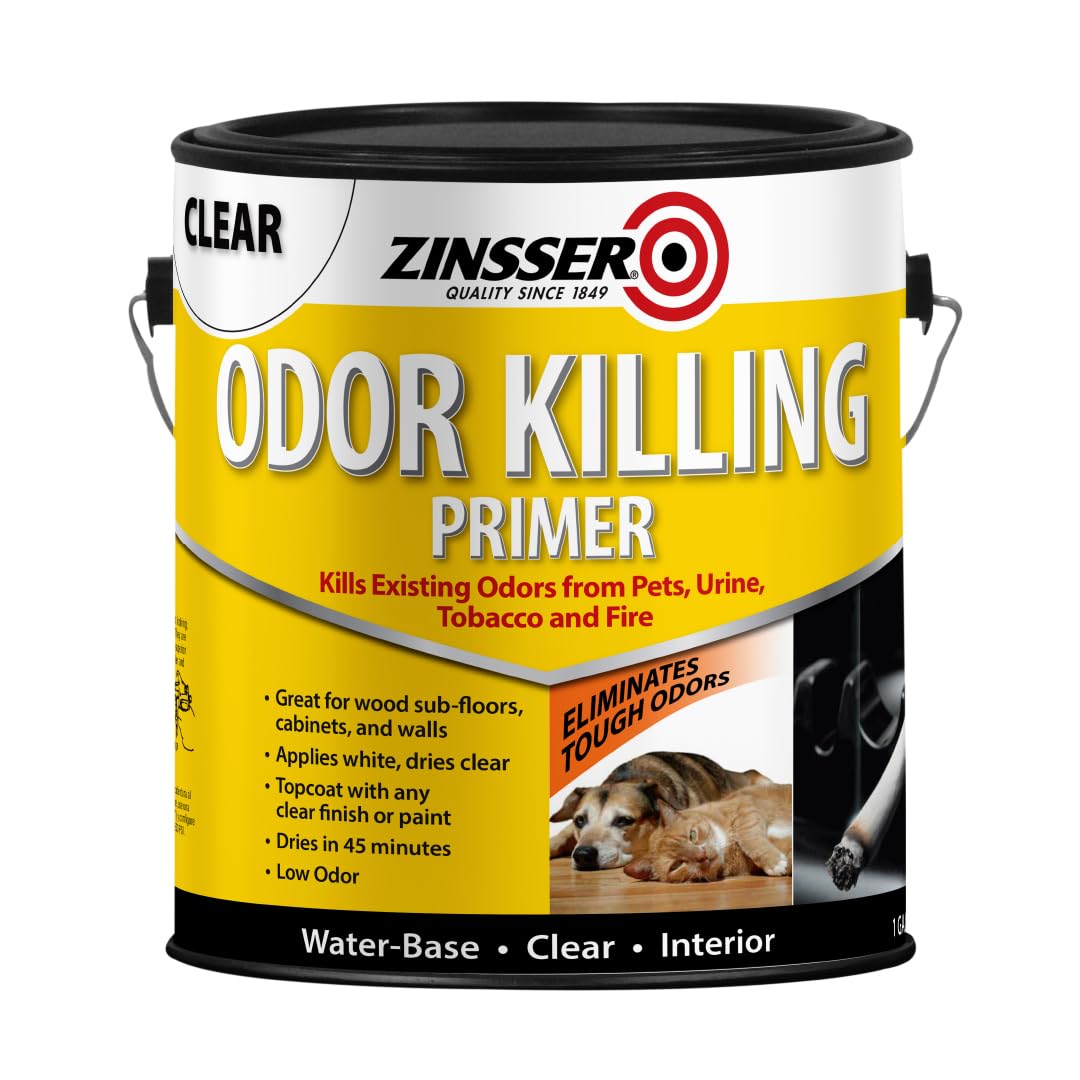
The Zinsser Odor Killing Primer is a synthetic shellac-based formula engineered to physically encapsulate and neutralize odors from smoke, pet urine, and fire damage, making it the most specialized primer in this lineup for problematic cabinets. Its 25-to-30-minute dry time is exceptionally fast for a full-gallon product, allowing you to apply a second coat or begin topcoating within the same afternoon. The clear drying finish is a unique advantage — it eliminates the need for multiple topcoats to cover a white primer layer, saving both paint and labor.
With coverage rated at 350 to 400 square feet per gallon, this primer stretches across an entire kitchen in one container. The formula adheres to glossy surfaces including ceramic tile and PVC without sanding or deglossing, which directly addresses the pain point of painting over factory-finished cabinet doors. Customer reports confirm that two coats permanently sealed odors that enzyme cleaners and bleach failed to touch, including subfloor-level urine contamination.
One trade-off: the primer emits a mild odor for several weeks during the curing process as the shellac-based formula fully hardens. This is not a health hazard but can be noticeable in closed-up kitchens. For projects where odor encapsulation is the primary goal — old smoke, pet damage, musty basements — this primer is the undisputed champion.
Why it’s great
- Dries clear in 25-30 minutes for fast recoating
- Eliminates even severe pet and smoke odors on first coat
- Adheres to glossy surfaces without sanding
Good to know
- Mild odor lingers during the multi-week cure cycle
- More expensive per gallon than general-purpose primers
- Not a bonding primer for heavily chipped laminate surfaces
2. INSL-X CC550109A-01 Cabinet Coat Enamel

The INSL-X Cabinet Coat Enamel is technically an acrylic paint with built-in primer properties, but it earns its place on this list because its self-leveling behavior gives a spray-like smoothness when applied with a roller or brush. It is engineered specifically for kitchen and bathroom cabinets, shelving, and trim — not as a general wall paint. The satin sheen resists chipping, scuffing, food stains, grease, and water, which are the exact failure points that ruin standard latex paints on cabinet surfaces.
Coverage is listed at 350 to 450 square feet per gallon, and the product requires a minimum application temperature of 50°F. The full cure time is 24 hours, meaning you can rehang doors and use the cabinets the next day without the finish marring. Customer feedback confirms that the self-leveling eliminates brush strokes even for novice painters, creating the “factory-like” look promised on the label. One user reported needing three to four coats over very old oak cabinets, but the final finish was polished and uniform.
The primary drawback is that this is a topcoat paint, not a dedicated stain-blocking primer. If your cabinets have heavy tannin bleed or odor issues, you should still apply a shellac-based primer (like the Zinsser) before using this as your finish coat. Over pre-primed or previously painted cabinets, however, this single product handles both priming and finishing in one step, saving significant labor.
Why it’s great
- Self-leveling formula eliminates visible brush strokes
- 24-hour cure time allows next-day cabinet reassembly
- Resists grease, stains, and scuffing in kitchen conditions
Good to know
- May require 3-4 coats over dark or raw oak cabinets
- Not a dedicated stain-blocking primer for tannin bleed
- Requires surface temperature above 50°F during application
3. Heirloom Traditions ALL-IN-ONE Paint

The Heirloom Traditions ALL-IN-ONE Paint is a self-formulated cabinet and furniture paint that contains both primer and topcoat, marketed with the bold claim that no sanding, no priming, and no top coat is required. It delivers a low-luster velvet sheen finish that leans matte, which is a popular aesthetic for modern farmhouse and contemporary kitchen styles. The quart covers up to 140 square feet, making it suitable for a small kitchen or a single cabinet bank.
The formula is designed to adhere to hard surfaces including wood, laminate, metal, glass, and even ceramic tile, which gives it an unusually wide application range for a single product. Customer feedback highlights the ease of application and the minimal prep required — just a clean surface. The paint blends well and cures to a scratch-resistant finish that holds up to daily cabinet use without waxing, which is a distinct advantage over chalk-style paints.
The main limitation is that the quart format may not stretch across a full-sized kitchen with multiple upper and lower cabinets. You may need two quarts or a gallon-equivalent for larger projects. Additionally, while the label says no sanding is required, performance over very glossy or sealed surfaces may still benefit from a light deglossing step to maximize adhesion longevity.
Why it’s great
- Requires no sanding, priming, or waxing for most surfaces
- Scratch-resistant after full cure, suitable for daily cabinet use
- Works on wood, laminate, metal, glass, and tile
Good to know
- Quart size may not cover a full kitchen in one coat
- Low-luster matte finish may not suit traditional gloss preferences
- Over extremely glossy surfaces, deglossing is still recommended
4. Glidden Total Interior Wall Paint & Primer All-in-One
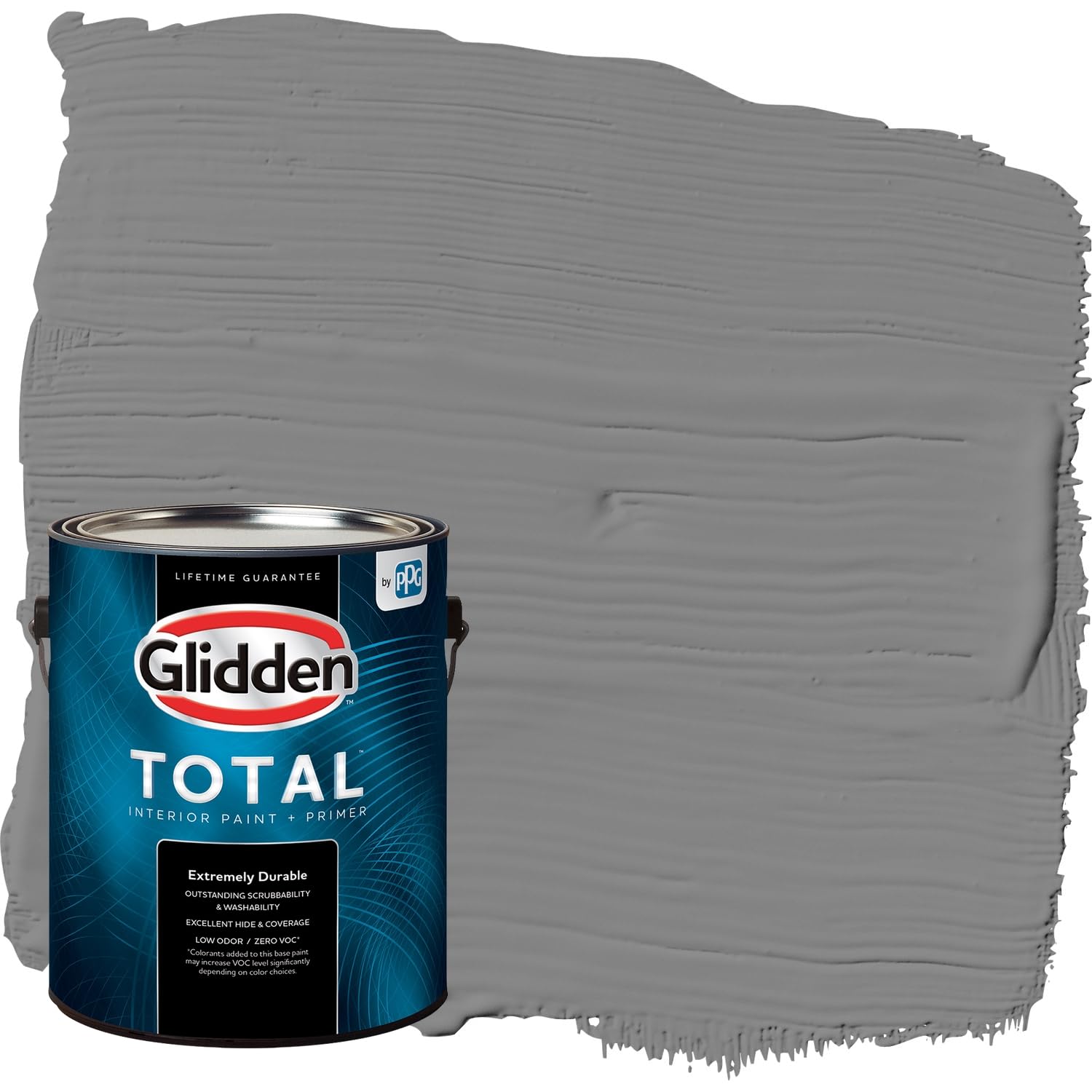
The Glidden Total Interior Paint & Primer All-in-One is a standard interior latex paint that includes built-in primer, but it is formulated for walls, ceilings, and trim — not specifically for high-wear cabinet surfaces. The semi-gloss finish provides some washability and scrubbability, and the gallon covers up to 400 square feet, making it the most cost-efficient option per square foot in this list. The color Dover Gray is a popular neutral gray tone that works well in contemporary kitchens.
The reality for cabinet use: this product works best on properly sanded and primed cabinets, or on previously painted cabinet surfaces that already have a strong mechanical bond. Customers who used it on raw or repainted wood reported good results when they applied an additional dedicated primer first and allowed the full 24-hour cure. The paint itself is low-VOC and low-odor, which is a plus for indoor kitchen projects where ventilation may be limited.
The key limitation is durability. Standard wall paint formulations lack the abrasion resistance and block-resistance needed for cabinet doors that rub against frames and handles every day. Over time, chipping at edges and corners is more likely compared to a dedicated cabinet enamel. For a budget-conscious refresh of cabinets that are in decent shape — especially if you don’t mind touching up edges annually — this can still produce a visually pleasing result at a fraction of the cost.
Why it’s great
- Low VOC and low odor for indoor application
- Covers 400 sq. ft. per gallon for maximum spread
- Semi-gloss finish offers washability and scrubbability
Good to know
- Standard wall paint lacks cabinet-grade chip resistance
- Requires a dedicated bonding primer for best adhesion
- Fast dry time means careful application to avoid brush marks
5. Rust-Oleum 249090-6PK Painter’s Touch 2X Ultra Cover Spray Paint

The Rust-Oleum Painter’s Touch 2X Ultra Cover Spray Paint is an oil-based aerosol formula that excels for small detail work, touch-ups, and painting cabinet hardware or small furniture pieces rather than full cabinet bodies. The 6-pack provides six 12-ounce cans, each covering approximately 12 square feet, which adds up to about 72 square feet total — enough for a set of cabinet doors or drawer fronts in a small kitchen. The gloss white finish gives a bright, fresh look that matches most modern cabinet styles.
The oil-based chemistry resists chipping and provides long-lasting protection on surfaces including wood, metal, plastic, and masonry. The spray dries to the touch in 20 minutes, allowing quick handling and recoating. Customers report that the double-coverage formula reduces the number of coats needed, and the nozzle control minimizes drips even for inexperienced spray painters. This is the most effective product in this list for painting cabinet hardware — hinges, handles, and knobs — to match new painted doors.
The downside for full cabinet painting: spray coverage from aerosol cans is inherently slower and more expensive per square foot than a gallon of brush-on primer. For a full kitchen cabinet set, you would need multiple 6-packs, and achieving consistent coverage across large flat door panels with spray cans is challenging without runs. This product is best reserved for accent details, hardware updates, and small furniture projects rather than primary cabinet priming.
Why it’s great
- Dries to the touch in 20 minutes for fast handling
- Durable oil-based formula resists chipping on hardware
- Excellent coverage and gloss on small detail projects
Good to know
- Not practical for priming full cabinet runs — too many cans needed
- Aerosol overspray requires extensive masking
- Full cure time is 48 hours before heavy use
FAQ
Can I use regular wall primer on kitchen cabinets?
How many coats of primer do I need for oak cabinets?
Final Thoughts: The Verdict
For most users, the primer for painting kitchen cabinets winner is the Zinsser 305928 Odor Killing Primer because it combines fast 25-minute dry time, clear drying that saves topcoat, and best-in-class odor and stain encapsulation — all while bonding to glossy surfaces without sanding. If you want a self-leveling, brush-stroke-free satin finish with built-in primer properties, grab the INSL-X Cabinet Coat Enamel. And for a no-sanding cabinet refresh with a modern matte look, nothing beats the convenience of the Heirloom Traditions ALL-IN-ONE Paint.