A scone pan does one job that a standard baking sheet cannot: it forces the dough into a defined, evenly-spaced shape so every wedge bakes with a golden crust and a tender, fully-cooked center. Without a dedicated pan, scone triangles spread into amorphous blobs or end up raw in the middle because the centers are too thick.
I’m Mohammad Maruf — the founder and writer behind AirfryerBite. I’ve spent months cross-referencing material science, oven temperature tolerances, and real-user baking complaints to separate the pans that deliver consistent results from the ones that stick, warp, or scorch.
This guide covers the five most reliable models in the narrow category of the best scone pan, including cast iron, ceramic, and silicone builds, so you can match the material to your baking style without guessing.
How To Choose The Best Scone Pan
A scone pan is a small investment, but the wrong material will either burn your crust, refuse to release the baked goods, or warp after a few uses. Focus on three variables before you buy.
Material: The Crust & Release Trade-Off
Cast iron delivers the crispiest, brownest edges because it retains heat far better than steel or silicone. But cast iron requires seasoning, manual hand-washing, and careful storage to avoid rust. Ceramic pans heat evenly and slide into the dishwasher, but they are heavy and can chip if dropped. Silicone is flexible, non-stick without any coating, and completely dishwasher-safe. The downsides: silicone alone is too floppy to carry a loaded pan to the oven, so look for a metal-reinforced outer frame that stiffens the structure.
Cavity Count & Wedge Depth
Most scone pans offer 8 wedges in a round, 11-inch skillet format. The wedge depth typically sits around 1.2 to 1.65 inches. Deeper cavities produce taller scones with a softer interior, while shallow wells (under 1 inch) yield thin, crisp biscuits that bake faster. If you bake for a crowd, a 12-cavity silicone mold doubles the batch size without increasing oven footprint. For standard baking, 8 wedges at ½-inch to 1-inch depth is the sweet spot.
Oven Safe Temperature & Maintenance
Every scone pan should survive 425°F to 450°F — the typical range for scone recipes. Ceramic pans are usually rated to 480°F. Silicone tops out at 446°F. Cast iron has no practical upper limit but it is not dishwasher-safe. Check the product care instructions: dishwasher-safe ceramic and silicone pans save significant cleanup time, whereas cast iron requires hand drying and occasional re-oiling. Silicone pans with a metal frame also need you to support them on a baking sheet for stability.
Quick Comparison
On smaller screens, swipe sideways to see the full table.
| Model | Category | Best For | Key Spec | Amazon |
|---|---|---|---|---|
| King Arthur Ceramic Scone Pan | Ceramic | Even heating & oven-to-table serving | Oven safe to 480°F, 8 wedges | Amazon |
| KUHA Cast Iron Scone Pan | Cast Iron | Crisp edges & outdoor cooking | 11″ round, 1.2″ deep, pre-seasoned | Amazon |
| Commercial CHEF Biscuit Pan | Cast Iron | Small batch versatility for 7 pieces | 3.5″ diameter cavities, induction-ready | Amazon |
| AOTASO Reinforced Silicone Pan | Silicone | Easy release & dishwasher cleanup | Metal frame, 446°F max, 8 cavities | Amazon |
| Silpat The Original Perfect Scone Mold | Silicone | High-volume 12-wedge batches | 15.7″ x 11.6″, 12 triangular wells | Amazon |
In‑Depth Reviews
1. King Arthur Baking Company Ceramic Scone Pan
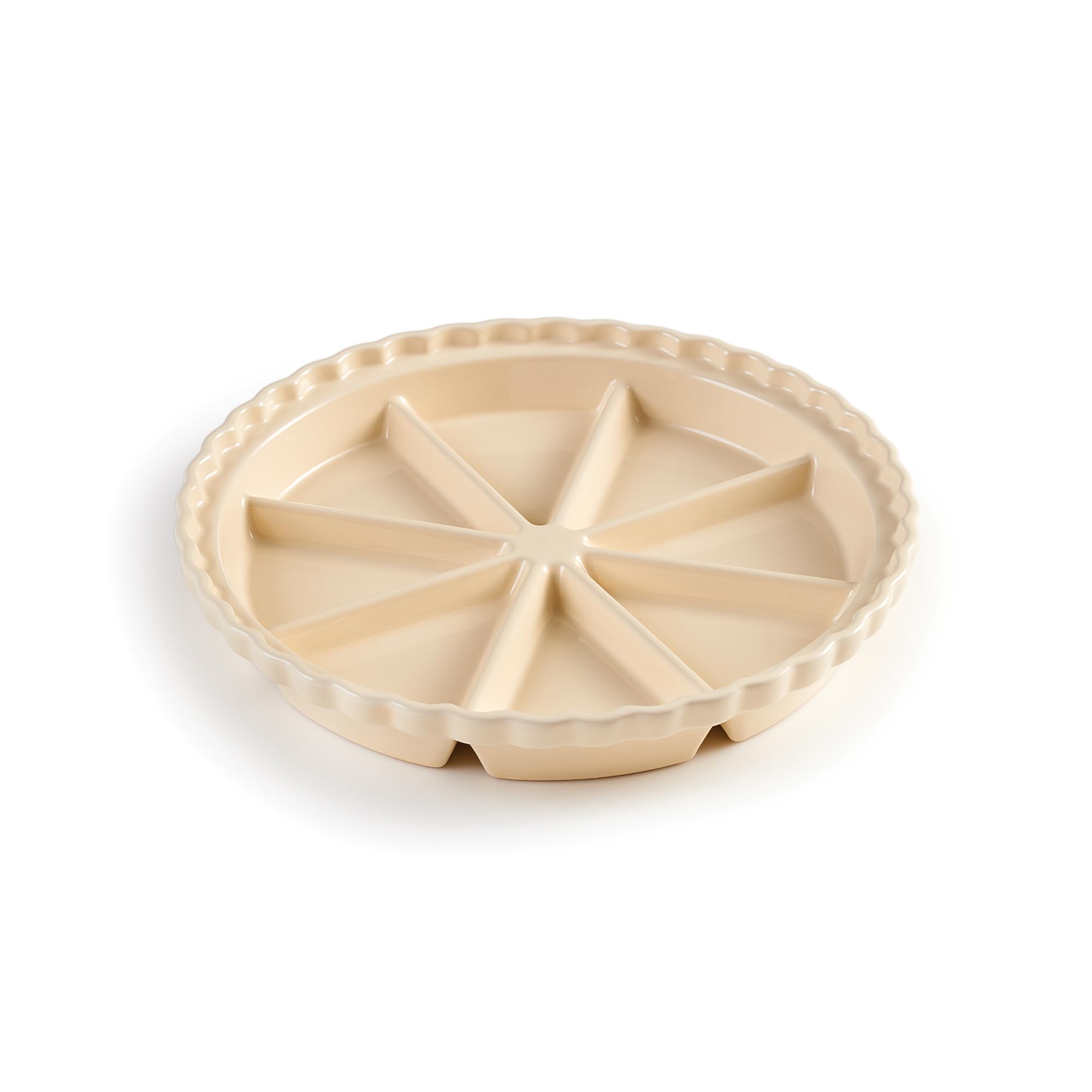
King Arthur’s ceramic pan skips non-stick coatings entirely — no PTFE, no PFOA, no PFAS — and still releases scones cleanly because the glazed surface is naturally slick. The 11-inch square body holds eight wedges, each about ½-cup capacity, and the ceramic material distributes heat so evenly that the edge-to-center color difference is minimal across all sections.
Bakers who want a single pan that goes from oven to table will appreciate the rustic beige finish that does not look out of place as a serving dish. The pan is rated to 480°F, which is 30°F above most scone recipes, giving you headroom for high-temp preheating or browned butter crusts. At 2.65 pounds, it has a solid, non-wobbly feel that does not shift when you slide it onto a rack.
Cleanup is straightforward — the pan is dishwasher-safe, and the smooth interior resists staining from butter and fruit fillings. The only real constraint is the fixed 8-wedge layout, which is ideal for a family batch but too small if you regularly bake for parties. For most home bakers, the combination of even heat, safe materials, and simple maintenance makes this the strongest all-around performer.
Why it’s great
- Even heat distribution prevents burnt edges and raw centers
- Ceramic surface is naturally non-stick without chemical coatings
- Dishwasherable and rated to 480°F for high-temp bakes
Good to know
- Heavier than silicone alternatives at 2.65 pounds
- 8-wedge capacity may be too small for large batches
2. KUHA Cast Iron Scone Baking Pan
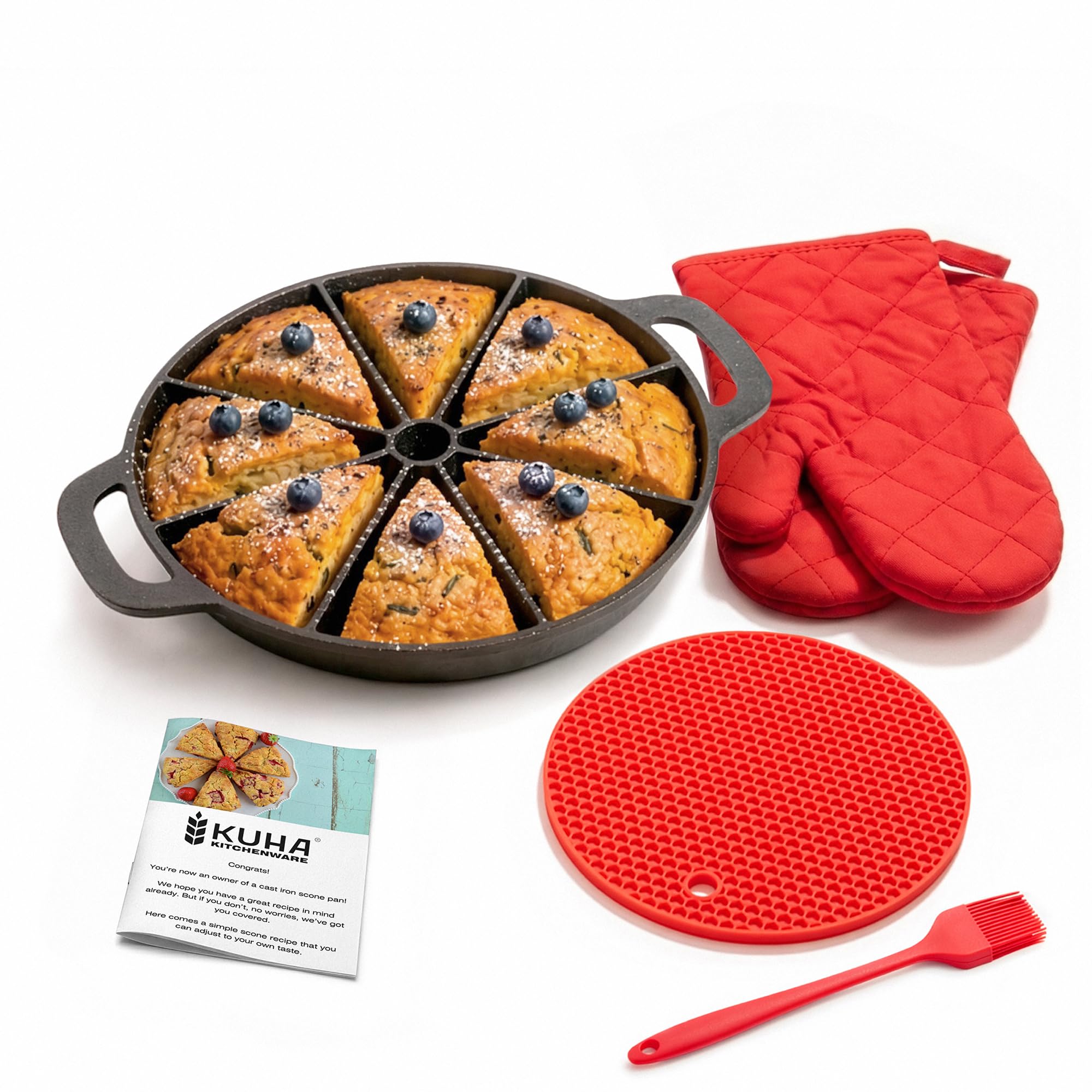
KUHA’s 11-inch cast iron pan produces the crispiest, darkest crust among all the models here because cast iron’s heat retention is unmatched by ceramic or silicone. The 8 wedges are pre-formed in a single skillet, so there is no knife work and no dough re-rolling. The pan ships pre-seasoned with 100% vegetable oil — no synthetic coating — and the seasoning layer improves with each use if you maintain it properly.
The pan works on induction, gas, electric, and ceramic cooktops, and it goes straight into the oven or over a campfire. The included oven mitts, silicone trivet, and oil brush add genuine value, especially for first-time cast iron users. Each wedge measures roughly 1.2 inches deep, which gives enough height for a fluffy interior without making the center bake slower than the edges. Several users report that the pan excels at cornbread and brownies, not just scones, so it doubles as a versatile baking skillet.
Cast iron requires care that silicone and ceramic do not — hand-wash only, dry immediately, and rub a thin layer of oil after each use. The dividers also create crevices that are harder to scrub than a flat pan. If you are willing to follow the seasoning routine, this pan will outlast any non-stick or ceramic alternative by decades.
Why it’s great
- Cast iron delivers the crispiest, most evenly browned crust possible
- Works on all cooktops, in ovens, and over open campfires
- Includes mitts, trivet, and oil brush for immediate use
Good to know
- Not dishwasher-safe; requires hand-washing and seasoning
- Dividers create corners that take extra effort to clean
3. AOTASO Silicone Scone Pan with Metal Frame
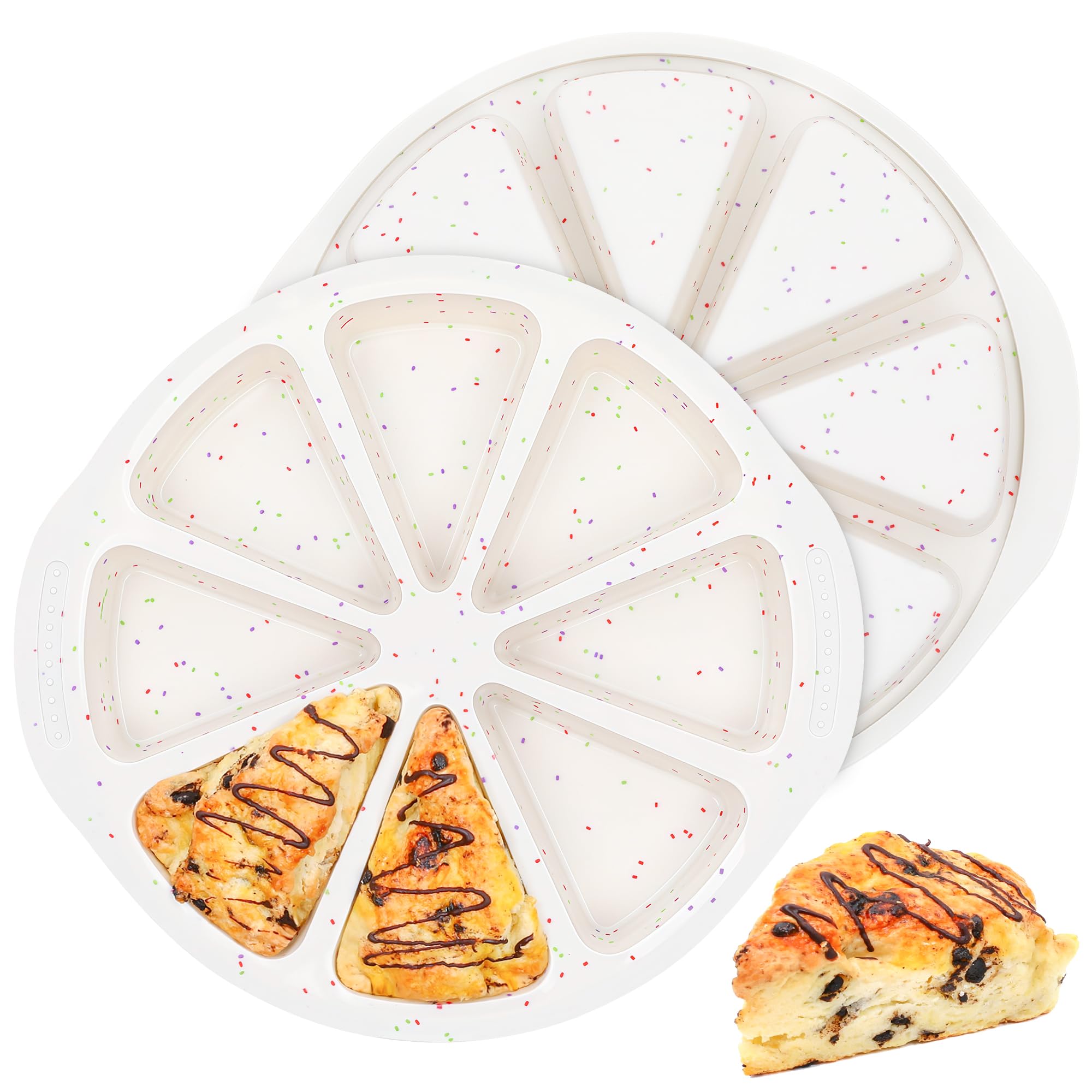
AOTASO solves the classic silicone problem — floppy sides that spill batter — by embedding a metal reinforced frame around the outer edge and across the handles. The result is a pan that stays rigid during transport and resists warping in the oven up to 446°F. The silicone itself is food-grade, BPA-free, and requires no non-stick coating; scones pop out when you push up from the bottom of each cavity.
The 8-cavity layout measures 11.5 x 10.6 x 1.3 inches, producing petite scones that are roughly the size of a standard muffin top. Because silicone is naturally flexible, you can also use the pan for egg bites, mini quiches, or freezer-to-oven applications without worrying about thermal shock. The cream color and metal trim give it a clean look that passes as a serving tray.
Cleanup is as simple as any silicone bakeware — the pan is dishwasher-safe, and stuck-on crumbs rinse off under warm water. The main practical drawback is that the metal-reinforced frame adds stiffness but does not turn the pan into a rigid baking sheet; you still need to place it on a metal baking tray for stability, especially when carrying a full load of wet dough. For the price tier, it is the easiest path to consistent scone shapes without the maintenance of cast iron.
Why it’s great
- Metal-reinforced frame prevents sagging and batter spills
- Flexible silicone releases scones without any greasing needed
- Dishwasher-safe and BPA-free for healthier, convenient baking
Good to know
- Requires a baking sheet underneath for stable oven handling
- Maximum temperature of 446°F is lower than ceramic or cast iron
4. Commercial CHEF Cast Iron Biscuit Pan

Commercial CHEF’s cast iron biscuit pan is noticeably smaller than the full-size options — seven cavities, each 3.5 inches in diameter and 1 inch deep. This makes it ideal for bakers who want small batches, individual serving sizes, or a pan that does not dominate the oven rack. The pre-seasoned surface is treated with 100% vegetable oil, and the pan is compatible with every cooktop type, including induction.
Because the cavities are shallower than a typical scone pan, the results lean toward crisp-edged biscuits rather than tall, soft-centered wedges. This geometry works very well for gluten-free baking, as several users noted: the shallow wells allow gluten-free dough to bake through before the exterior over-browns. The pan also performs admirably for Yorkshire puddings and mini quiches.
Cast iron care rules apply — hand-wash only, no dishwasher, and dry immediately to prevent rust. Some buyers find the 3.5-inch diameter restrictive for full-size scone recipes, and the shallow 1-inch depth means your scones will be flatter than those from a dedicated scone pan. If you value versatility across multiple baked goods and appreciate cast iron’s heat retention, this is a solid, space-saving option.
Why it’s great
- Compact size fits small ovens and stores easily
- Shallow cavities bake gluten-free doughs evenly without burning
- Pre-seasoned cast iron works on induction and over campfires
Good to know
- 7 cavities produce smaller, flatter scones than standard pans
- Requires hand-washing and seasoning maintenance
5. Silpat The Original Perfect Scone Mold

Silpat’s scone mold is a 12-cavity silicone sheet measuring 15.7 x 11.6 inches — the largest batch capacity of any pan in this guide. Each triangular well is 4 x 3.25 x 0.5 inches, producing slender, crisp scones that are closer to biscotti in shape. The silicone is the same material used in Silpat’s professional baking mats: non-stick without any applied coating, and fully oven-safe, freezer-safe, and dishwasher-safe.
The mold is thin and flexible, so it must be placed on a rigid baking sheet before filling and moving to the oven. Several users recommend adding a wire cooling rack under the mold to improve air circulation and prevent soggy bottoms.
Beyond scones, the 12 wells are excellent for mini banana breads, brownie bites, and madeleines. The mold is incredibly easy to clean: crumbs release with a rinse, and the orange trim makes it easy to spot in a drawer. The main trade-off is the thin, flexible construction and the lower well height, both of which shift the result away from a traditional thick scone toward a thin, snack-sized crisp.
Why it’s great
- 12 cavities deliver the largest single-batch output available
- Genuine non-stick silicone releases everything without greasing
- Dishwasher-safe, freezer-safe, and covered by a limited warranty
Good to know
- Must be placed on a rigid baking sheet or wire rack for stability
- Shallow 0.5-inch wells produce thin, crisp scones, not tall wedges
FAQ
Can I use a muffin pan instead of a scone pan?
How do I keep scones from sticking to a plain metal pan?
Do I need to preheat a cast iron scone pan before adding dough?
Final Thoughts: The Verdict
For most users, the best scone pan winner is the King Arthur Baking Company Ceramic Scone Pan because it combines even ceramic heating, a naturally non-stick and safe surface, and dishwasher-safe convenience without the maintenance demands of cast iron. If you want the crispiest possible crust and a pan that lasts for generations, grab the KUHA Cast Iron Scone Baking Pan. And for high-volume bakers who need 12 perfect wedges in a single batch with zero sticking, nothing beats the Silpat The Original Perfect Scone Mold.