A kitchen cabinet refinishing project can transform your entire kitchen, but that transformation starts with one brutal chore: removing the old finish. Sanding between every door, drawer, and face frame creates dust clouds that settle on every dish and countertop for days. The right chemical stripper cuts that work from hours to minutes, sparing your shoulders and your lungs from the dust.
I’m Mohammad Maruf — the founder and writer behind AirfryerBite. I’ve spent years analyzing the chemical formulations, safety profiles, and real-world user results of paint removers, deglossers, and degreasers specifically formulated for kitchen cabinet surfaces so you don’t have to experiment on your own cabinetry.
Whether you need to dissolve decades of greasy buildup or strip old paint down to bare wood before a fresh coat, choosing the right paint remover for kitchen cabinets depends on understanding the specific finish type you’re working with and the environmental conditions of your workspace.
How To Choose The Best Paint Remover For Kitchen Cabinets
Kitchen cabinet paint removers fall into distinct chemical families — deglossers, citrus solvents, thinners, and degreasers — each suited to a specific stage of the refinishing process. Selecting the wrong type can damage the wood or leave a residue that prevents new paint from bonding.
Identify Your Cabinet’s Current Finish
Your first step is determining whether the cabinets are sealed with polyurethane, varnish, shellac, latex paint, or oil-based paint. Deglossers like liquid sandpaper work best on intact varnished or polyurethane finishes to create a matte surface for repainting. If the existing paint is cracked, peeling, or thick, a stronger solvent that dissolves the coating entirely is necessary.
Assess Your Ventilation and Sensitivity
Kitchen cabinet projects happen indoors, often with limited cross-ventilation. Traditional chemical strippers emit strong fumes that can linger for days. Citrus-based solvents and low-VOC alternatives offer a milder profile while still effectively dissolving oil-based paints, varnishes, and grease. If you have respiratory sensitivities or share your home with children or pets, prioritize low-odor, biodegradable formulas.
Consider the Prep-to-Clean Ratio
Some removers require a thorough water rinse after application, which can raise wood grain and add drying time. No-rinse formulas save a full step and are safer for bare wood. Look for products labeled “no-rinse” or those that evaporate cleanly when planning your workflow.
Quick Comparison
On smaller screens, swipe sideways to see the full table.
| Model | Category | Best For | Key Spec | Amazon |
|---|---|---|---|---|
| Real Milk Paint Orange Peel Oil | Citrus Solvent | Natural paint stripping & thinning | 98% pure citrus peel oil | Amazon |
| TSPE Cleaner Spray | Degreaser & Prep | No-rinse paint prep cleaning | Phosphate-free, dilutes 1:40 | Amazon |
| Klean-Strip Easy Liquid Sander Deglosser | Deglosser | Deglossing varnished cabinets | Quart liquid, 3-pack | Amazon |
| ECO-HOUSE 115 Xtra Mild Paint Thinner | Mild Thinner | Cleaning brushes & thinning paints | Low-odor citrus, 16 oz | Amazon |
| FORTIVO Kitchen Cabinet Cleaner | Degreaser Cleaner | Daily grease removal & light prep | 32 oz spray + brush kit | Amazon |
In‑Depth Reviews
1. Real Milk Paint Orange Peel Oil

This is the heavyweight champion of natural paint removal for kitchen cabinets. Made from 98% pure orange peel oil, it tackles oil-based paint, varnish, and heavy grease without the petrochemical fumes of traditional strippers. Users report mixing it 1:1 with tung oil for deep-penetrating floor finishes, or using it straight as a brush cleaner that preserves bristles — a versatility that sets it apart from single-purpose chemical strippers.
The solvent evaporates cleanly within roughly an hour, which speeds up the refinishing timeline considerably. It leaves behind a fresh orange scent rather than the sickly sweetness of mineral spirits. Multiple reviewers used it to strip and refinish entire floors and butcher blocks, noting that it revitalized dry wood to a silky, non-oily finish without raising the grain.
One caveat: the scent, while pleasant, can be extremely strong indoors and may persist for days if used in a closed space without ventilation. It also sits at a higher price point per ounce compared to traditional chemical thinners, so large cabinet projects may require multiple cans. It pairs best with Real Milk Paint Pure Tung Oil for a fully natural refinishing system.
Why it’s great
- 98% pure natural citrus oil — virtually no VOCs or smog-forming emissions
- Evaporates quickly in about one hour, speeding up project timelines
- Works as a paint stripper, degreaser, brush cleaner, and tung oil thinner
Good to know
- Strong citrus odor may linger for days without proper ventilation
- Premium pricing compared to petroleum-based solvents
2. TSPE Cleaner Spray
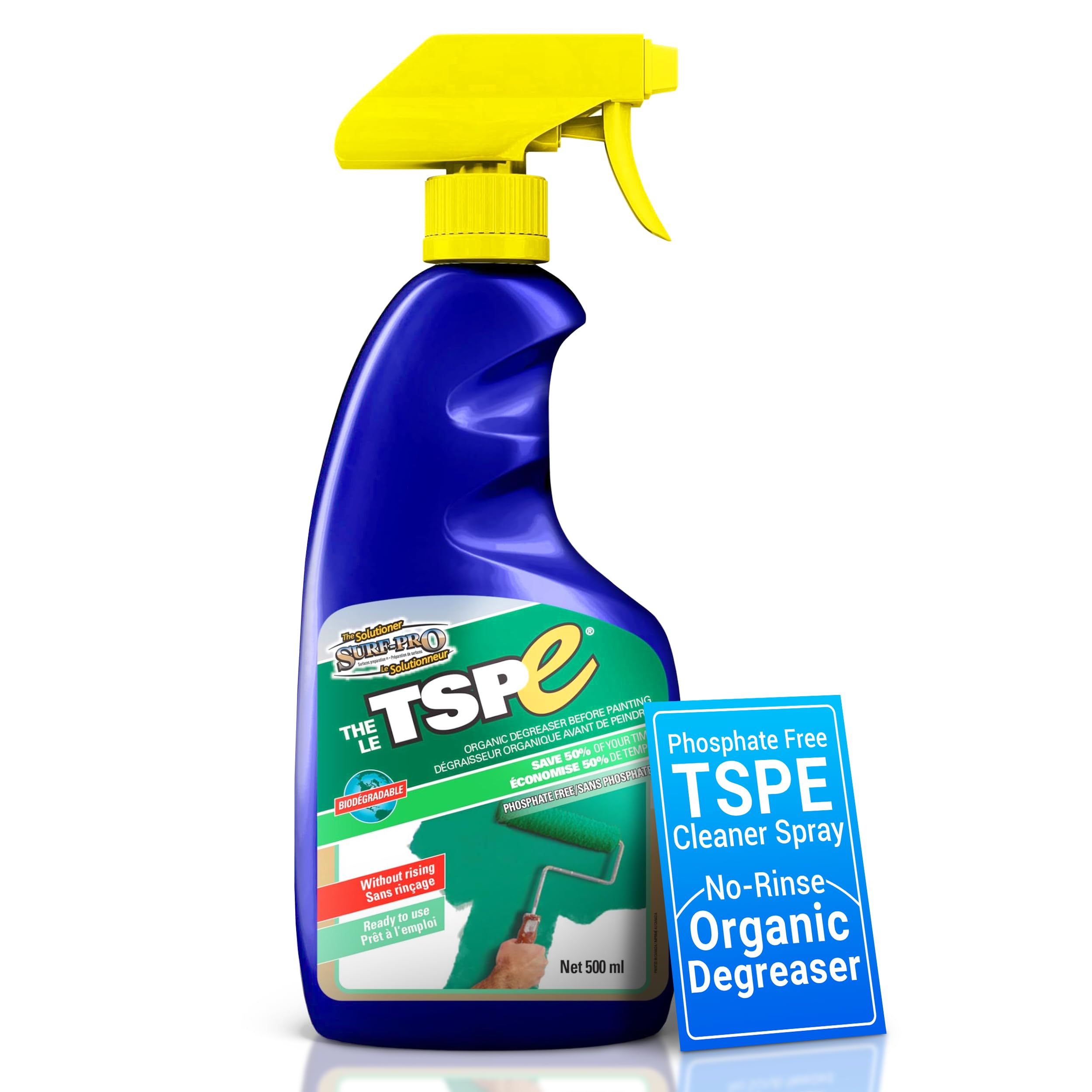
Before any paint remover touches your cabinets, the surface must be free of kitchen grease — and this no-rinse degreaser is the right tool for that job. It is a phosphate-free, biodegradable alternative to traditional trisodium phosphate (TSP) that cuts through years of cooking film without requiring a water rinse. Users specifically praised it for cleaning painted woodwork around sliders and kitchen walls without soaking the floor.
The formula is gentle enough for bare wood, untreated surfaces, and even outdoor vegetation if used on siding. It dilutes up to 1:40 with water, making the 500 ml bottle last through multiple rooms. It leaves only a light, clean scent and does not dry out or irritate skin the way conventional TSP-based cleaners can.
Because it is a no-rinse formula, it saves a significant step in the refinishing workflow — simply spray, wipe, and let dry before applying your stripper or new paint. The main limitation is bottle size; several reviewers noted they wished it came in a larger container for whole-home trim and door projects. For a single kitchen cabinet refresh, however, this bottle is ample.
Why it’s great
- No-rinse formula saves time and prevents raised wood grain
- Phosphate-free and biodegradable — safe for septic systems
- Dilutes up to 1:40, offering excellent value per use
Good to know
- 500 ml bottle may require multiple units for large projects
- Designed for cleaning/prep, not for stripping existing paint
3. Klean-Strip Easy Liquid Sander Deglosser (3-Pack)

If your kitchen cabinets have a solid polyurethane or varnish finish that is still intact, this deglosser eliminates the need for sandpaper entirely. Known in the painting trade as “liquid sandpaper,” the Klean-Strip formula chemically etches the glossy surface to create a matte tooth for paint adhesion. The 3-quart pack gives you enough volume to tackle a standard-sized kitchen without running out mid-project.
Long-time users confirm that this product has been their go-to for paneled walls, questionable woodwork, and molding for decades. It is applied with a green abrasive pad (not included) and requires firm elbow grease to work the chemical into the finish, but it outperforms dry sanding by eliminating airborne dust entirely. One reviewer noted it was ideal for creating a matte surface for repainting when dust was a major concern.
It does not strip paint — it only dulls the existing finish. If you need to remove thick layers of old paint, this is not the right product. Several reviewers also emphasized testing on a hidden spot first, as the chemical can reveal pre-existing finish damage. Gloves and ventilation are mandatory given the solvent strength.
Why it’s great
- Eliminates dust from sanding — ideal for indoor kitchen projects
- Three quarts provide enough coverage for a full kitchen
- Creates reliable mechanical tooth for paint to bond to
Good to know
- Requires firm scrubbing — not a no-effort solution
- Only deglosses; does not remove existing paint layers
4. ECO-HOUSE 115 Xtra Mild Paint Thinner
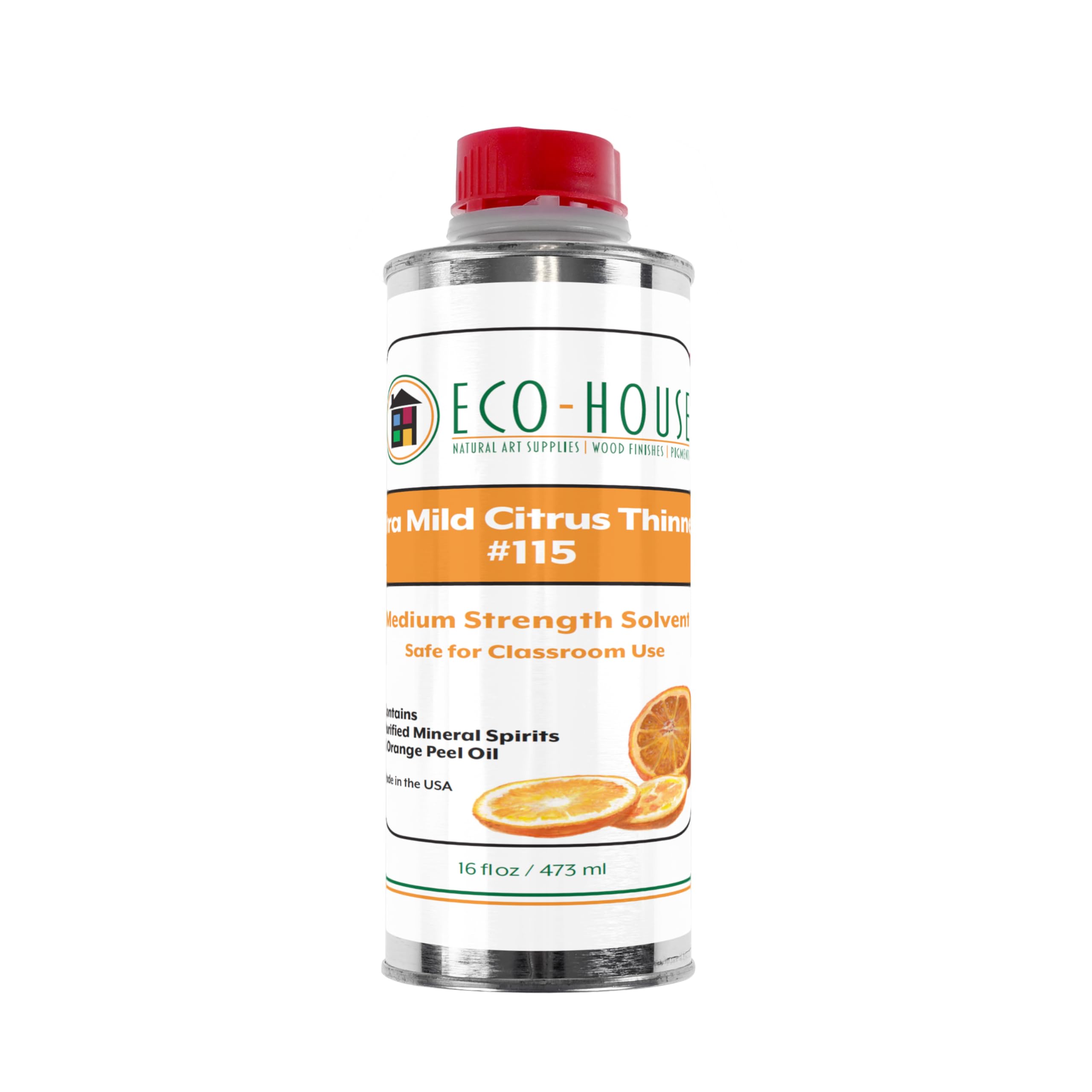
This citrus-scented thinner fills a specific niche in the cabinet refinishing process: thinning oil-based paints and varnishes, and cleaning brushes between coats. Made from natural plant oils, it is rated as low-toxicity and biodegradable, making it a safer choice for indoor work than traditional turpentine or mineral spirits. The 16 oz bottle is compact but adequate for a single cabinet project.
Oil painting students and woodworkers alike praise its mild orange fragrance and non-offensive working properties. It blends well with tung oil and other natural finishes, and it cleans oil paint from brushes without damaging bristles. Several users noted that it requires slightly more thorough brush cleaning compared to harsher chemical thinners, but the trade-off is worth it for the lack of fumes.
The main limitation for cabinet work is that it is not formulated as a heavy-duty stripper. It dissolves fresh paint and soft old varnish, but if you are trying to remove multiple layers of cured paint, you will need a stronger product in a prior step. It shines as a finishing-stage companion — thinning the top coat and cleaning up after application.
Why it’s great
- Low-odor citrus formula — pleasant to work with indoors
- Biodegradable and low-toxicity, safer for sensitive users
- Effective for thinning oil paints and natural varnishes
Good to know
- 16 oz volume is small for large-scale stripping projects
- Not designed to remove thick layers of cured paint
5. FORTIVO Kitchen Cabinet Cleaner
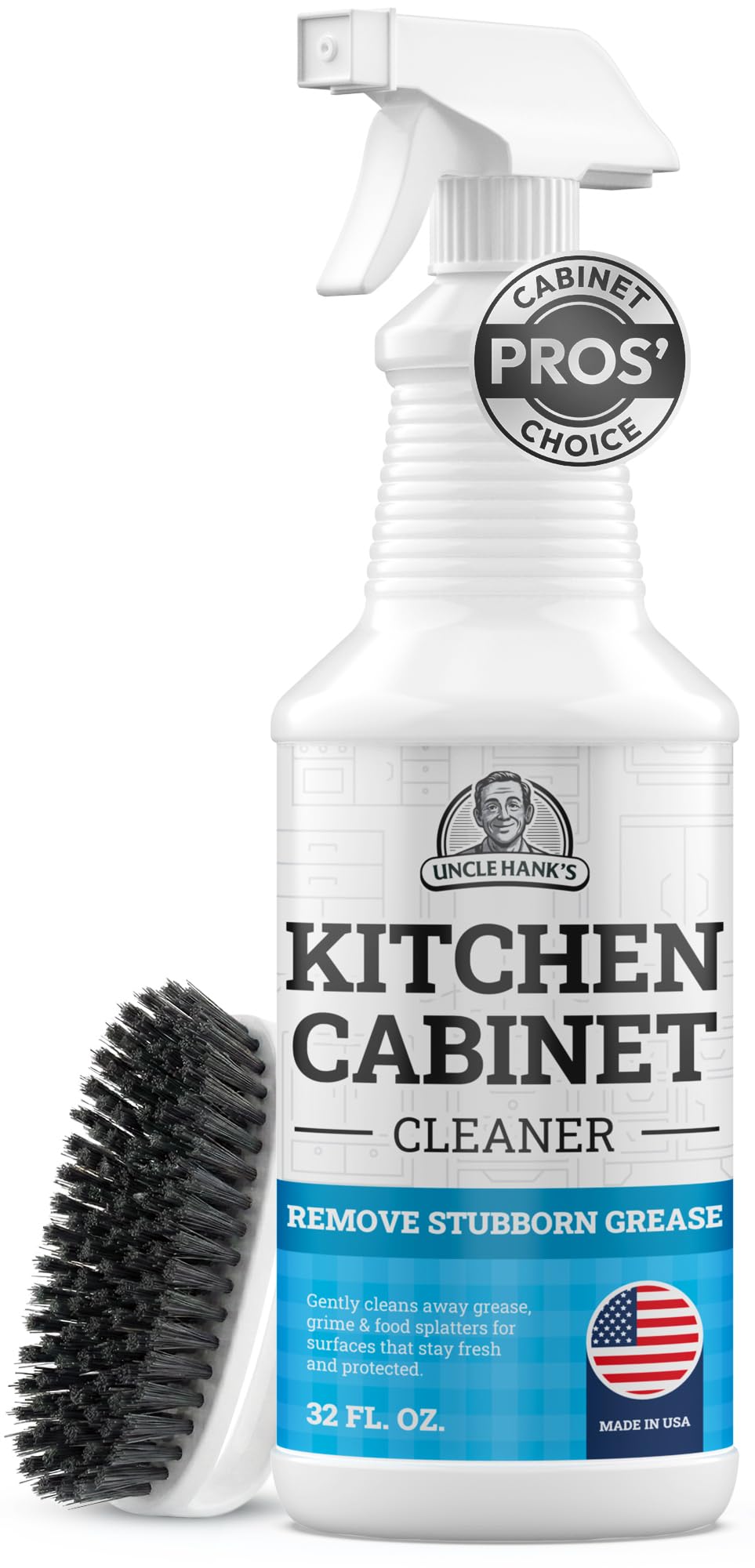
This entry-level kit is for homeowners whose cabinets need a deep clean rather than a chemical stripping. It includes a 32 oz spray bottle and a precision cleaning brush, designed to dissolve 20 years of kitchen grease buildup without damaging the paint or finish. Users reported that it restored the original color and smoothness of white painted cabinets without leaving streaks.
The formula is made in the USA and is gentle enough for wood, painted, laminate, and finished surfaces. It works as a degreaser that can be sprayed onto a towel for quick touch-ups or used with the included brush for more aggressive scrubbing on stubborn grime. Multiple reviews confirmed it saved them from costly repainting by restoring existing cabinet doors to a like-new appearance.
However, this is a cleaner, not a stripper — it will not dissolve paint or remove old coatings. A small number of users found it ineffective on heavy, baked-on grease, and some noted that scrubbing is required for full results. If your cabinets only need grease removal before light sanding or painting, this kit offers solid value with the brush included.
Why it’s great
- Complete kit with spray and brush for immediate use
- Gentle formula safe for painted and finished surfaces
- Effective on everyday grease and grime buildup
Good to know
- Not a paint stripper — cannot remove old coatings
- May require significant scrubbing on heavy baked-on grease
FAQ
Can I use a citrus-based paint remover on laminate cabinets?
Do I need to rinse cabinets after using a deglosser?
Final Thoughts: The Verdict
For most users, the paint remover for kitchen cabinets winner is the Real Milk Paint Orange Peel Oil because it combines powerful paint-stripping and degreasing capability with a natural, low-VOC formula safe for indoor use. If you want a quick, dust-free way to prep intact varnished cabinets for repainting, grab the Klean-Strip Easy Liquid Sander Deglosser 3-Pack. And for removing kitchen grease before any refinishing step, nothing beats the TSPE Cleaner Spray for its no-rinse convenience and biodegradable safety.