The difference between a meal that disappears and one you struggle through often comes down to a single grain. Short grain rice, with its plump, nearly round kernels and high starch content, delivers a distinct chew and natural sweetness that long grain varieties simply cannot replicate. Whether you are forming perfect sushi rolls, scooping a bowl of Japanese curry, or making sticky rice for a mango dessert, the variety of short grain you choose directly controls the texture and flavor of your final dish.
I’m Mohammad Maruf — the founder and writer behind AirfryerBite. I’ve spent years analyzing kitchen staples, comparing milling processes, starch profiles, and sourcing regions to understand what separates everyday rice from truly exceptional grain.
Short grain rice is a staple in East Asian cuisines and a growing favorite among home cooks looking for a more forgiving, flavorful base. After reviewing dozens of bags across price tiers and origins, I have narrowed the field to five solid candidates that represent the best short grain rice for different cooking goals.
How To Choose The Best Short Grain Rice
Short grain rice is not a monolith. The category spans from everyday table rice used in Japanese households to specialized glutinous varieties for desserts. Understanding these differences will help you avoid buying a bag that is too sticky or not sticky enough for your intended dish. Here are the three most important factors.
Starch Level and Grain Subtype
Standard short grain rice (often labeled Japonica) contains a moderate amount of amylopectin, the starch responsible for stickiness, giving it a cohesive but not gummy texture. Glutinous or sweet rice, also a short grain, is nearly 100% amylopectin, producing a dense, sticky, and almost jelly-like chew. If you plan to make sushi or onigiri, standard short grain is correct. For mango sticky rice, mochi, or rice cakes, you need the sweet rice variant.
Milling Freshness and Grade
Rice loses moisture and flavor over time. Fresher-milled rice retains a higher moisture content, which translates to a more tender and flavorful kernel after cooking. Premium grades like Koshihikari are known for their balanced sweetness and firmer bite. These premium varieties hold their texture longer after cooking, staying pleasant in a rice cooker for hours. Budget-oriented options often use lower-grade Japonica, which can turn mushy or dry out faster.
Certifications and Growing Practices
Non-GMO, gluten-free, and sustainably farmed labels are increasingly important to buyers in this category. Many premium short grain rices are grown without synthetic chemicals and are Verified Non-GMO. For those with gluten sensitivities, short grain rice is naturally gluten-free, but certified labels remove any cross-contamination concerns. Fourth-generation family farms in California produce some of the most reliable short grain rice outside of Japan, offering a clean taste and consistent batch-to-batch quality.
Quick Comparison
On smaller screens, swipe sideways to see the full table.
| Model | Category | Best For | Key Spec | Amazon |
|---|---|---|---|---|
| Tamaki Gold California Koshihikari | Premium | Sushi / Daily Bowl | 4.4 lb bag, Koshihikari variety | Amazon |
| Nishiki Premium Sushi Rice | Mid-Range | Daily Use / Value | 10 lb bag, standard Japonica | Amazon |
| Soeos Japonica Sushi Rice (3-Pack) | Mid-Range | Sushi Practice / Gifting | 6 lb total, 2 lb x 3 bags | Amazon |
| ROM AMERICA Sweet Sticky Rice | Specialty | Desserts / Tteokbokki | 4 lb bag, glutinous sweet rice | Amazon |
| 4Sisters Authentic Japonica | Entry-Level | Trial / Small Household | 2 lb bag, Non-GMO | Amazon |
In‑Depth Reviews
1. Tamaki Gold California Koshihikari Short Grain Rice

Tamaki Gold uses the Koshihikari varietal, the gold standard for premium Japanese table rice. Grown in California by the Williams Rice Milling Company, this grain produces a moist kernel with a firm bite that holds its shape and flavor for hours after cooking. Customers consistently note the superior sweetness and clean finish compared to standard Japonica rice, making it a true step up for anyone who eats rice daily.
The bag is sized at 4.4 pounds, which sits between a trial quantity and a household staple. This keeps the rice fresher than a massive 10-pound bag if you are cooking for one or two. Reviewers routinely describe it as the best rice they have ever eaten, with multiple repeat buyers citing its superiority over even well-regarded medium grain options like Nishiki.
Cook this rice in a rice cooker or on the stovetop with a one-to-one water ratio, rinse until the water runs clear first to remove excess surface starch for a less gummy result. The texture is ideal for sushi, onigiri, and any bowl where you want distinct, pearly grains that clump but do not paste.
Why it’s great
- Superior Koshihikari variety with balanced sweetness and firm bite
- Grains stay distinct and flavorful even hours after cooking
- Excellent reputation among sushi enthusiasts and home cooks
Good to know
- Higher cost per pound than standard Japonica rice
- Smaller 4.4 lb bag may require more frequent reordering
2. Nishiki Premium Sushi Rice
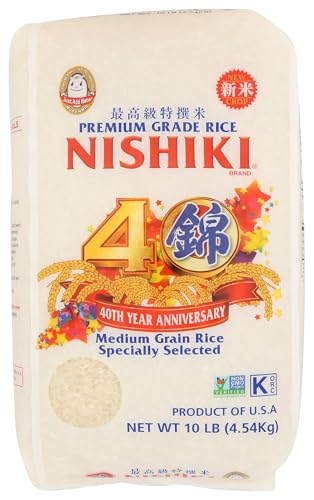
Nishiki is arguably the most recognized name in American sushi rice. This 10-pound bag offers a fantastic cost per pound for a consistent Japonica medium-grain that cooks fluffy and sticky without turning mushy. Customers have been buying this rice for years, praising its slightly sweet flavor and chewy texture that works perfectly for California rolls, onigiri, rice balls, and side dishes.
The grains are short, plump, and consistently sized, which means they absorb water evenly and rinse clean without excessive breakage. Reviewers highlight the stability of the quality batch over batch, a critical factor for anyone who relies on rice as a staple. Multiple users confirmed it cooks well in standard rice cookers and holds up for leftovers.
Because this is a standard Japonica, not a glutinous sweet rice, the stickiness is moderate and ideal for shaping. It is not the right choice for desserts that require an ultra-dense, glue-like texture, but for 90% of short grain applications, it delivers excellent value and performance. Store it in an airtight container in a cool, dry place to maintain freshness.
Why it’s great
- Industry-standard Japonica with reliable fluffy and sticky results
- Excellent cost per pound for a large 10 lb bag
- Consistent quality across batches over many years
Good to know
- Not a premium Koshihikari; lacks the nuanced sweetness of top-tier varieties
- Large bag requires proper storage to prevent moisture or pest issues
3. Soeos Japonica Sushi Rice (3-Pack)
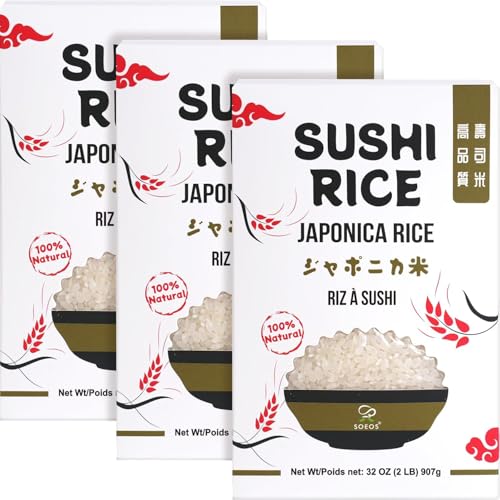
Soeos offers a three-pack of 2-pound bags, bringing the total to 6 pounds of Japonica sushi rice. This package format is smart for households that want to portion out bags for different storage locations or for gifting. The rice is Non-GMO, gluten-free, and sourced without additives, appealing to those with dietary restrictions.
The grain cooks to a fluffy and sticky texture that is beginner-friendly. Reviewers learning to make sushi at home found this rice forgiving and easy to shape, with several mentioning it made their first attempts successful. The mild, slightly sweet flavor complements stronger accompaniments like soy sauce, vinegar, and nori without competing.
One reviewer flagged the packaging as unremarkable and the price as slightly higher per pound compared to bulk bags. But if you prefer smaller bags that stay fresher longer or want to try a specific Japonica without committing to 10 pounds, this three-pack is a practical entry point. Cook it in a rice cooker or stovetop with a 1:1.1 water ratio after rinsing for best results.
Why it’s great
- Convenient 2 lb bag format helps maintain freshness
- Non-GMO and gluten-free with clean ingredient profile
- Good forgiving texture for beginners learning to make sushi
Good to know
- Cost per pound is higher than bulk options like Nishiki
- Packaging could be more robust for shipping protection
4. ROM AMERICA Sweet Sticky Glutinous Short Grain White Rice
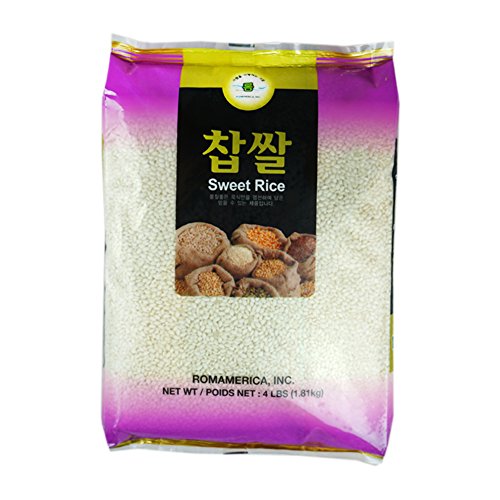
This is a specialty product within the short grain category. ROM AMERICA packages true glutinous sweet rice, also known as sticky rice or 찹쌀 (chapssal). Unlike standard Japonica, this grain is nearly 100% amylopectin, which results in an intensely sticky, dense, and slightly translucent texture when cooked. It is the correct rice for Thai mango sticky rice, Korean tteokbokki rice cakes, and mochi.
The grains are short, opaque white, and very different from sushi rice in appearance. One reviewer warned that rinsing this rice washes away the surface starch needed for its signature gloss and shape-holding quality. The recommended method is to skip rinsing and use a 1:2.25 liquid ratio, cooking covered on low heat for 18-25 minutes followed by a 10-minute rest.
Multiple repeat buyers confirm this is the most delicious sticky rice they have found, and many appreciate being able to order it online rather than traveling to a specialty Asian grocery store. The 4-pound bag is a convenient size for occasional dessert making or weekly Korean cooking. Do not confuse this with standard short grain rice; it is a different tool for a different job.
Why it’s great
- True glutinous sweet rice, ideal for Asian desserts and rice cakes
- Produces glossy, dense, shape-holding texture when cooked without rinsing
- Convenient online option if local Asian markets are not close
Good to know
- Not a substitute for sushi or daily table rice
- Higher cost per pound compared to standard short grain
5. 4Sisters Authentic Short Grain Japonica Sushi Rice

4Sisters offers a 2-pound bag of authentic Japonica short grain rice grown sustainably by a women-owned family farm in the USA. The rice is Non-GMO Project Verified, naturally gluten-free, and farmed without synthetic chemicals. This gives it a clean, pure flavor that customers describe as wholesome and delicious.
The grain cooks to a light and fluffy texture with the traditional stickiness expected from Japonica. One reviewer recommended seasoning it with a rice vinegar solution (1/4 cup vinegar, 1 tablespoon sugar, 1/4 teaspoon salt) for a proper sushi rice experience. Multiple customers have reordered this product multiple times, with one stating they eat it every day and appreciate the nurturing feel of buying from a family operation.
A recurring issue noted by multiple reviewers is poor packaging from Amazon during shipping. The bag arrived in a soft plastic envelope rather than a box, leading to tears and spilled rice. This is a fulfillment problem rather than a product quality problem, but it is worth noting if you plan to order. For a small household or a first-time Japonica shopper, the 2-pound size is a low-risk way to evaluate a high-quality grower.
Why it’s great
- Sustainably grown, Non-GMO, and chemical-free farming
- Women-owned family farm with consistent quality and pure flavor
- Small 2 lb bag is ideal for trying a new brand or for small households
Good to know
- Amazon shipping packaging is unreliable; bag may arrive damaged
- Higher per-pound cost due to smaller bag and specialty grower
FAQ
Can I use standard short grain rice for mango sticky rice?
Do I need to rinse short grain rice before cooking?
What is the water ratio for cooking short grain rice?
Final Thoughts: The Verdict
For most users, the best short grain rice winner is the Tamaki Gold California Koshihikari because it delivers the superior Koshihikari variety with a firm bite and natural sweetness that outperforms standard Japonica in every bowl. If you want the biggest bang for your buck with proven consistency, grab the Nishiki Premium Sushi Rice in the 10-pound bag. And for dessert recipes requiring an ultra-sticky, glossy texture, nothing beats the ROM AMERICA Sweet Sticky Glutinous Rice.