There is a specific disappointment that comes from watching a high-end ceramic knife crack mid-slice on a piece of fruit, or worse, shatter after a single drop from counter height. Buyers enter this category expecting the legendary edge retention and rust-proof convenience of ceramic, but many discover the hard way that the material demands a completely different set of handling priorities than their steel knives.
I’m Mohammad Maruf — the founder and writer behind AirfryerBite. I analyze small-kitchen hardware categories full time, and I have spent hundreds of hours cross-referencing blade material recipes, handle ergonomics, and failure-mode reports across the ceramic knife market to separate the well-engineered sets from the fragile ones.
This guide focuses exclusively on the top-performing models so you can confidently select the right rated ceramic knives for your daily prep routine.
How To Choose The Best Rated Ceramic Knives
Picking a ceramic knife set means balancing the material’s genuine advantages — extreme hardness, non-reactive chemistry, zero rust — against its inherent fragility. The models that earn high marks all share specific engineering decisions that reduce the risk of chipping without sacrificing the sharpness that makes ceramic attractive in the first place.
Zirconia Purity and Manufacturing Origin
The raw ceramic used in most quality blades is zirconium dioxide. Knives made from advanced zirconia with a finer grain structure achieve higher density, which translates directly into chip resistance. Japanese-manufactured blades, like those from Kyocera, use proprietary zirconia formulations that consistently outlast generic Chinese-sourced blades in edge retention. Look for explicit statements about zirconia quality and country of manufacture in the product specs.
Blade Geometry and Thickness
A ceramic blade needs adequate thickness at the spine to withstand lateral stress during slicing. The thinnest blades cut with less resistance but chip more readily when torqued against a hard cutting board or a fruit pit. Models with a thicker cross-section and a double-bevel edge distribute force more evenly, reducing the chance of a hairline fracture during normal use. Avoid single-bevel ceramic blades for general-purpose chopping.
Edge Type: Plain versus Micro Serrated
A plain edge on a ceramic knife delivers the glass-smooth cuts that enthusiasts love on tomatoes and soft fruit, but it loses bite on smooth-skinned produce. A micro-serrated edge grips the surface of items like peppers and tomatoes without slipping, and it remains functional even after the microscopic teeth dull slightly. The trade-off is that serrated edges are more difficult to sharpen at home; proprietary sharpening services from the manufacturer are often required.
Handle Material and Ergonomics
Because ceramic blades are lightweight, the handle becomes the primary interface for control. Handles made from textured plastic, wheat-straw composite, or rubberized materials provide a secure grip even with wet hands. Ergonomically contoured handles that fill the palm reduce hand fatigue during extended prep sessions. Avoid designs with a slippery polished finish, as they force the user to grip harder, which increases the chance of twisting the blade against a hard surface.
Quick Comparison
On smaller screens, swipe sideways to see the full table.
| Model | Category | Best For | Key Spec | Amazon |
|---|---|---|---|---|
| Kyocera Revolution 2-Piece Set | Premium | Long-term value buy | Zirconia ceramic, edge lasts 10x longer than steel | Amazon |
| Kyocera Santoku 6-Inch | Premium | All-purpose daily slicing | Proprietary zirconia, plain edge, 6.5 oz weight | Amazon |
| Kyocera Micro Serrated 5-Inch | Mid-Range | Tomato and bread slicing | Micro-serrated edge, black zirconia | Amazon |
| Cuisinart 12-Piece Set | Mid-Range | Full set with color-coded guards | Ceramic-coated stainless steel | Amazon |
| VegItPro 2-Piece Set | Entry-Level | Budget-friendly fruit prep | 6-inch + 4-inch blades, wheat-straw handle | Amazon |
| Farberware 6-Inch Chef | Entry-Level | Camping or occasional use | Lightweight ceramic, soft-grip handle | Amazon |
In‑Depth Reviews
1. Kyocera Revolution 2-Piece Ceramic Knife Gift Set
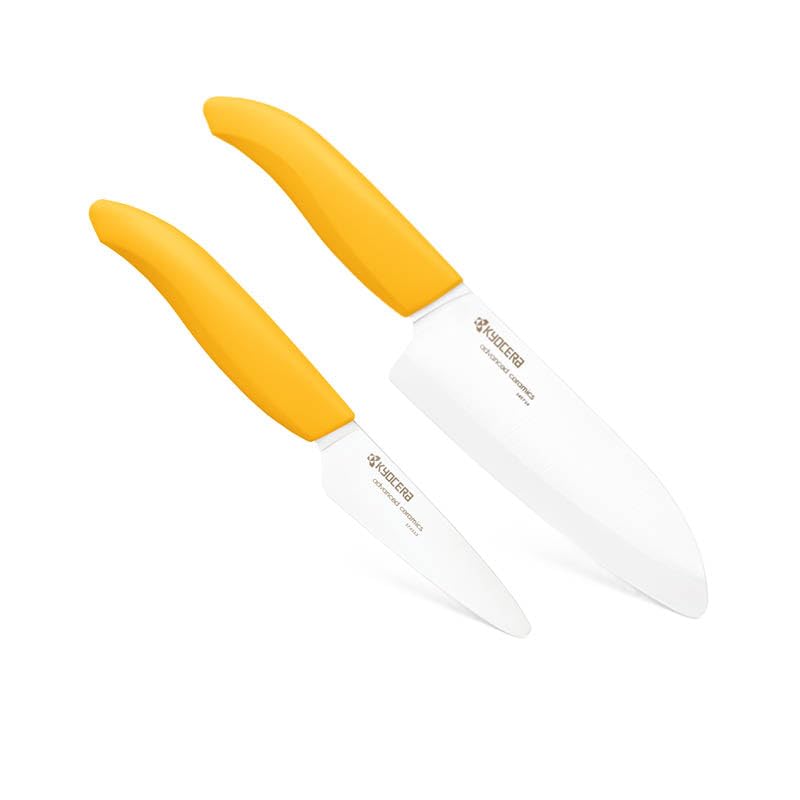
This Kyocera set uses advanced zirconia ceramic produced in Japan — the same proprietary material that gives the brand a reputation for edge retention that genuinely reaches ten times that of standard steel knives. The 5.5-inch Santoku and paring knife both feature a double-bevel edge, which distributes impact force more evenly than single-bevel alternatives and reduces the risk of chipping during routine vegetable prep. At roughly half the weight of a comparably sized steel knife, the set minimizes hand fatigue during long cooking sessions.
The Santoku blade handles slicing, dicing, and mincing for the bulk of daily tasks, while the paring knife covers small detail work like hulling strawberries or trimming green beans. Both blades are white zirconia, which is fully non-reactive — it will not discolor acidic foods like lemons or tomatoes, and it never transfers metallic odors. Users report the knives stay razor-sharp for years with normal use on wood or plastic cutting boards, provided they avoid bones, frozen food, and stone surfaces.
A small percentage of users experienced blade breakage within two months, which highlights the fundamental requirement for ceramic: careful handling and proper cutting surface discipline. The set includes blade covers for safe storage, and both knives are dishwasher safe on the top rack, though hand washing preserves the edge longer. For buyers seeking a premium ceramic experience with proven longevity, this set represents the most cohesive starter package available.
Why it’s great
- Genuine advanced zirconia with verified 10x edge retention over steel
- Double-bevel edge on both knives reduces chip risk during normal use
- Ultra-lightweight design at half the weight of equivalent steel knives
Good to know
- Not suitable for cutting bones, frozen food, or hard squash pits
- Requires wood or plastic cutting boards to prevent edge fracturing
- Some early breakage reports suggest batch variability exists
2. Kyocera Advanced Ceramic Revolution Series 6-Inch Chef’s Santoku Knife
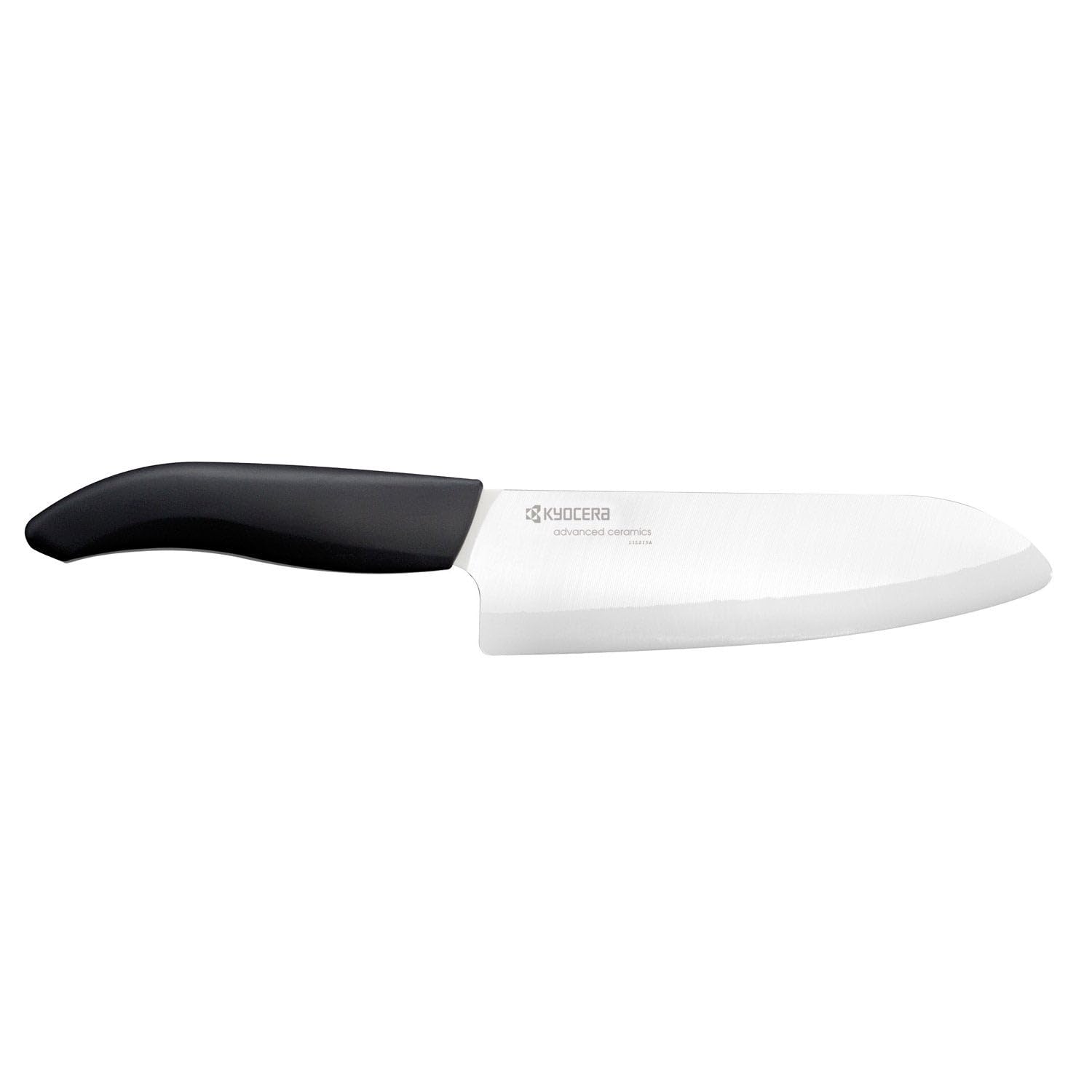
The proprietary Kyocera zirconia blade is fired at high temperatures to achieve a density that resists micro-chipping along the edge, even when slicing through dense root vegetables like carrots and sweet potatoes. Users routinely report five to seven years of daily use with no measurable dulling.
The handle is a two-piece plastic and alloy steel design that provides a solid balance point slightly behind the blade heel, which gives the knife a planted feel during rock-chopping motions. It cuts tomatoes without crushing them, slices raw meat without tugging, and handles delicate herbs like rosemary without bruising. The white blade is stain-resistant, though some users note that cutting deeply pigmented ingredients like basil can leave a temporary discoloration that washes off with scrubbing.
The primary constraint is the handle clearance — cooks with larger hands may find the space between the handle and the cutting board too tight when the blade is fully flat. Kyocera backs this knife with a five-year limited warranty, which is unusually long for a ceramic blade and signals confidence in the material. It is not a multi-piece set, so buyers building a full kit will need to purchase additional knives separately, but as a single go-to chef knife, this remains one of the most tested and trusted ceramic options on the market.
Why it’s great
- Proven track record of 5+ years of daily use without edge degradation
- High-density zirconia withstands regular root vegetable prep
- 5-year manufacturer warranty reflects confidence in build quality
Good to know
- Handle-to-board clearance is tight for larger hands
- Not dishwasher safe despite some user reports — hand wash recommended
- White blade can temporarily stain from deeply colored herbs
3. Kyocera Advanced Ceramic Revolution Series 5-Inch Micro Serrated Tomato Utility Knife
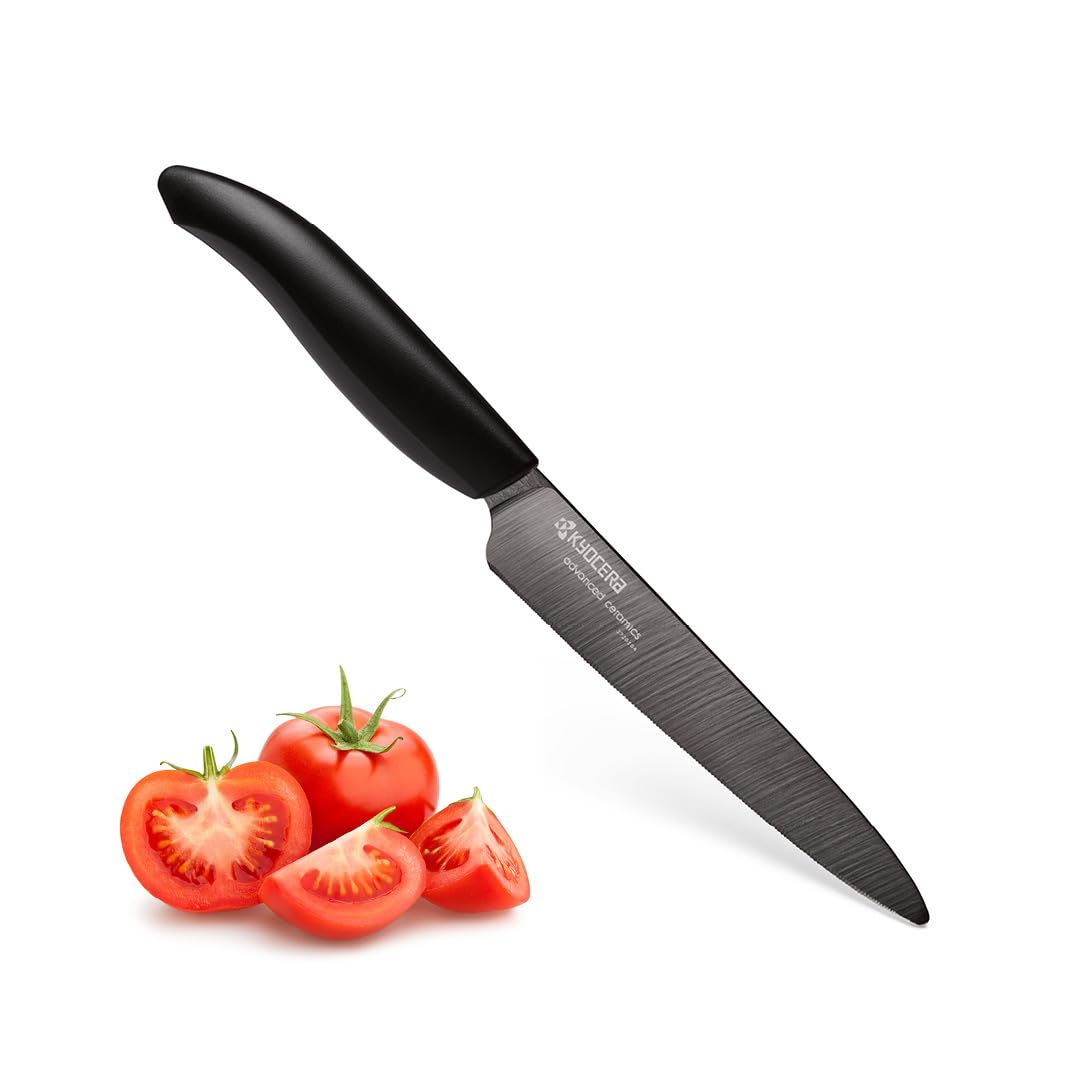
The defining feature of this knife is the micro-serrated edge, which uses hundreds of tiny scalloped teeth to grip the surface of smooth-skinned produce. This design solves the biggest frustration with plain-edge ceramic knives — the tendency to skate off a tomato or pepper skin before biting in. The black zirconia blade is formulated to be harder and more chip-resistant than the standard white variant, which is a meaningful upgrade for anyone prone to dropping knives.
Beyond tomatoes, the micro serrations excel on bread crusts, bagels, chestnuts, and thick-skinned winter squash. The 5-inch blade length keeps the knife nimble enough for utility tasks like slicing avocados or segmenting citrus, and the lightweight construction means you can use it for extended prep without wrist strain. Users report the micro-serrated edge remains functionally sharp for years — one reviewer noted seven years of daily use without needing a sharpening service.
The downsides are consistent with all ceramic knives: the blade is brittle and can chip if dropped onto a hard floor or used to cut through bone or frozen items. The micro-serrated edge also cannot be resharpened with a standard bench stone; Kyocera offers a mail-in sharpening service, but the cost and inconvenience mean most users simply replace the knife after the edge degrades completely. For the specific use case of slicing soft-skinned produce and bread, this knife outperforms nearly every steel alternative at any price point.
Why it’s great
- Micro-serrated edge grips tomato and pepper skins without slipping
- Black zirconia formulation is denser and more drop-resistant than standard ceramic
- Exceptional longevity — users report 5-7 years of regular use
Good to know
- Cannot be resharpened at home; requires mail-in service or replacement
- Not designed for boneless meat or dense root vegetables
- Brittle if dropped — treat with the same care as glass
4. Cuisinart 12-Piece Ceramic Coated Knife Set

This Cuisinart set takes a different approach: rather than solid ceramic blades, it uses stainless steel blades with a nonstick ceramic coating. The coating prevents food from sticking during slicing and provides a rust-resistant surface, but it lacks the extreme hardness of a pure zirconia edge. The set includes six knives — Chef, Slicing, Bread, Santoku, Utility, and Paring — each with a matching color-coded blade guard that keeps the edges protected during drawer storage.
The ceramic coating reduces friction noticeably when cutting sticky items like cheese or raw meat, and the stainless steel core means the blades will not shatter if dropped. Users consistently note that the knives arrive sharp and remain functional for years of everyday use, though the coating can show wear over time, especially if the knives are run through the dishwasher frequently. The set is dishwasher safe per the manufacturer, but hand washing preserves the nonstick surface longer.
This is not a solid ceramic set, so buyers expecting the same edge retention as pure zirconia knives will be disappointed. However, the combination of a full range of blade types, included guards, and a limited lifetime warranty makes it a practical choice for households that want the easy-cleaning benefit of ceramic coating without the fragility of solid ceramic blades. It is best suited for casual home cooks who value convenience and variety over peak edge sharpness.
Why it’s great
- Complete 6-knife set with guards covers every kitchen task
- Ceramic coating prevents food sticking and resists corrosion
- Steel core eliminates the breakage risk of solid ceramic blades
Good to know
- Ceramic coating will wear over time, especially with dishwasher use
- Edge sharpness does not match solid zirconia ceramic knives
- Blades are stamped steel; not suitable for heavy commercial use
5. VegItPro 2-Piece Ceramic Knife Set
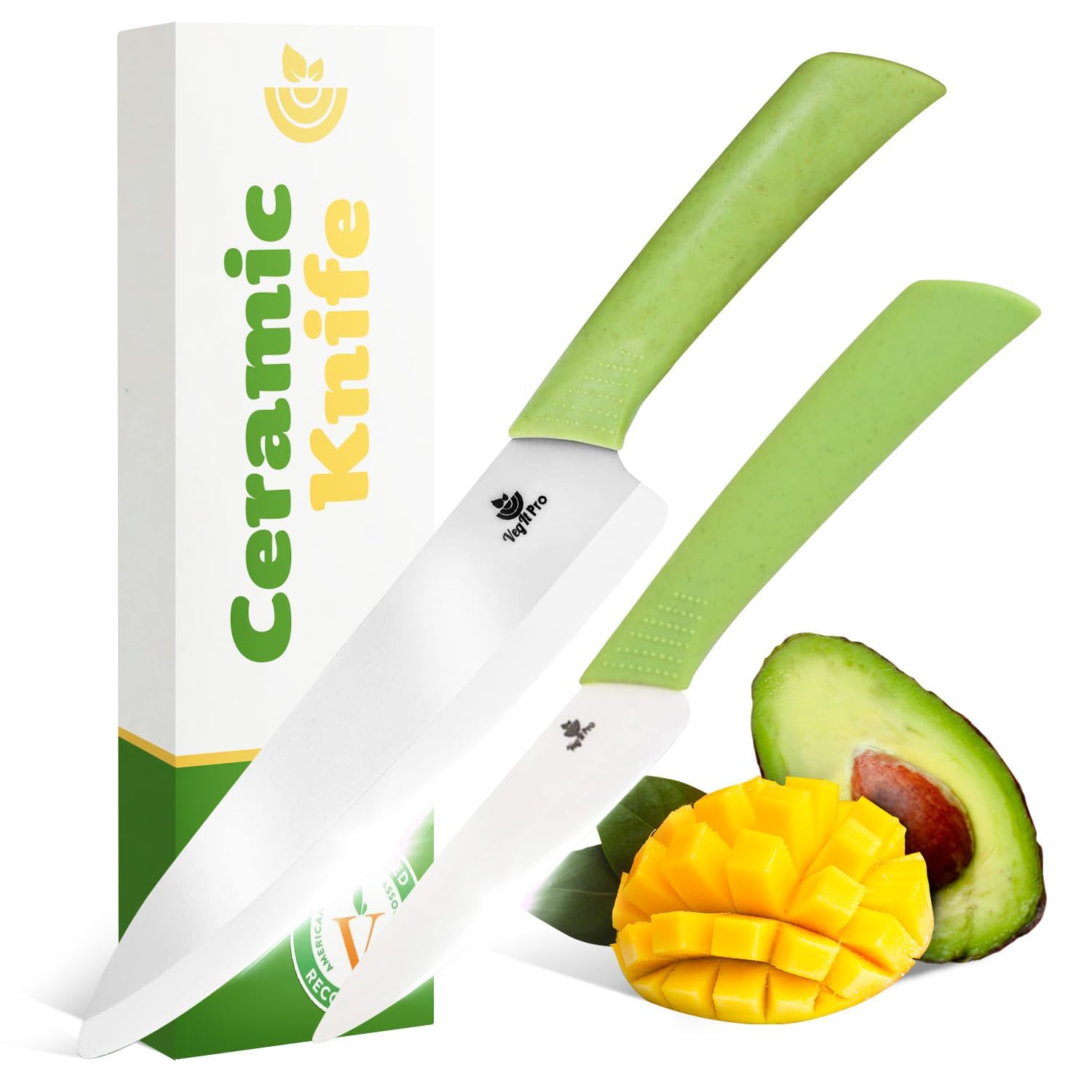
VegItPro’s entry-level option pairs a 4-inch paring knife with a 6-inch chef knife, both made from ceramic and fitted with wheat-straw composite handles. The wheat-straw material is biodegradable and provides a textured grip surface that stays secure even when wet — a thoughtful detail at this price point. The white ceramic blades are rust-proof and non-reactive, so they will not discolor apples or pears after cutting.
Users report that the knives arrive exceptionally sharp and maintain their edge for months with normal use on vegetables and fruit. The lightweight construction helps cooks with arthritis or hand fatigue, as the knives require almost no downward pressure to cut through soft produce. The set includes blade covers for safe storage, and the overall package is compact enough for small kitchens or RV setups.
The fragility of ceramic is the main risk here: multiple reviews describe the blade breaking on the first use, including one report of a fracture while cutting lettuce. This suggests the zirconia density may not be as consistent as premium Japanese-manufactured options. The wheat-straw handles are not dishwasher safe and should be hand washed to avoid moisture damage. For buyers on a tight budget who are willing to handle ceramic with care, this set offers a functional introduction to the category.
Why it’s great
- Extremely affordable entry point for trying ceramic knives
- Wheat-straw handle provides secure grip and is biodegradable
- Lightweight build reduces hand fatigue for users with arthritis
Good to know
- Zirconia quality is inconsistent; some blades break on first use
- Not dishwasher safe due to wheat-straw handle material
- Only two blade sizes — limited versatility for heavy prep
6. Farberware 6-Inch Ceramic Chef Knife

Farberware offers a single 6-inch ceramic chef knife with a black soft-grip handle and an included blade sheath, designed for users who want a single workhorse blade without paying for a set. The ceramic blade is advertised as harder than steel, and user reports confirm that it arrives sharp enough to slice tomatoes cleanly and handle lettuce chopping with no crushing. The soft-grip handle provides a secure hold even with oily or wet hands.
The knife is marketed as dishwasher safe on the top rack, and the included sheath makes storage safe in a drawer or bag. Multiple reviewers describe using this knife for two years or longer without significant dulling, using it for vegetables, boneless meat, and even some light bread slicing. The plastic handle and ceramic blade combination keeps the total weight very low, making it a practical option for camping kitchens or small apartment prep.
The known failure mode is tip breakage — the thin ceramic tip is vulnerable to snapping off if the knife is dropped or used for prying. Some users also report that the initial razor sharpness fades faster than expected, though this appears to vary between production batches. This is a no-frills tool that performs well within its limitations, but it lacks the refined geometry and dense zirconia of the Kyocera options. It works best as a secondary blade or for users who want to test ceramic without a significant investment.
Why it’s great
- Sharp out of the box with solid cutting performance on vegetables
- Soft-grip handle provides a secure hold in wet conditions
- Included sheath enables safe drawer or bag storage
Good to know
- Tip is thin and prone to snapping if dropped or misused
- Sharpness consistency varies between production batches
- Only available as a single knife; no larger blade options in this line
FAQ
How long does a ceramic knife blade stay sharp?
Can I sharpen a ceramic knife at home?
Why did my ceramic knife chip on the first use?
Is a ceramic-coated steel knife the same as a solid ceramic knife?
Can ceramic knives cut through meat and bone?
Final Thoughts: The Verdict
For most users, the rated ceramic knives winner is the Kyocera Revolution 2-Piece Ceramic Knife Gift Set because it combines genuine advanced zirconia, a practical Santoku-plus-paring pairing, and double-bevel edges that reduce chip risk better than any single-blade option. If you need a dedicated tomato and bread knife that will not skate off the skin, grab the Kyocera 5-Inch Micro Serrated Utility Knife — the micro teeth grip smooth surfaces without effort. For a complete everyday chef knife with a proven decade-long track record, nothing beats the Kyocera 6-Inch Santoku.