Selecting a potassium supplement means choosing between delivery forms that behave very differently in your body. Capsules offer a precise, no-taste daily dose, while powders give you control over serving size and can double as a sodium-free salt swap in the kitchen. Each form has distinct advantages, and picking the right one hinges on how you plan to use it and what your specific health goals are.
I’m Mohammad Maruf — the founder and writer behind AirfryerBite. I’ve spent years analyzing supplement labels, comparing elemental potassium content per serving, and reviewing customer feedback on these specific products to understand which forms deliver on their promises consistently.
My goal is to help you cut through the confusion around serving sizes, elemental potassium levels, and form-specific benefits so you can confidently choose a best potassium powder that fits your daily routine and wellness needs.
How To Choose The Best Potassium Powder
Potassium supplements come in several different salt forms, each with unique properties that affect how your body absorbs them and how you can use them in daily life. Your choice should be guided by your specific health needs, your tolerance for certain forms, and whether you want a precise pre-measured dose or a flexible powder you can mix into food and drinks.
Identify the Right Potassium Form for Your Needs
Potassium citrate is often recommended for those concerned with kidney stone prevention because the citrate component can help bind to calcium in the urine. Potassium bicarbonate is a good choice for buffering acids in the body and supporting bone health. Potassium chloride is the most common form found in sodium-free salt substitutes, making it ideal for those looking to reduce sodium intake without sacrificing salty flavor. Potassium gluconate is generally gentle on the stomach and is often used for general electrolyte replenishment.
Check the Elemental Potassium Per Serving
Label reading is critical here. A product might list its total weight as 1000mg, but the actual elemental potassium content could be a fraction of that. For example, potassium citrate typically contains about 20% elemental potassium by weight, so a 99mg capsule actually provides around 99mg of elemental potassium from a larger compound weight. Powders list the elemental potassium per scoop, often around 400-500mg for a small quarter-teaspoon serving. Compare the elemental number, not the total compound weight, when deciding between products.
Consider Form and Versatility
Capsules are convenient, tasteless, and provide a consistent dose every time. They are ideal for travel or for those who dislike the mineral taste that some potassium powders have. Powders can be mixed into water, juice, or smoothies, and some forms like potassium chloride or potassium bicarbonate can be used in cooking and baking as a sodium substitute. However, powders require measuring, and the taste can range from neutral to distinctly bitter or metallic depending on the form and concentration.
Quick Comparison
On smaller screens, swipe sideways to see the full table.
| Model | Category | Best For | Key Spec | Amazon |
|---|---|---|---|---|
| PYUNAFIT Potassium 1000mg | Capsule | High-potency daily dose | 1000mg elemental per serving (2 caps) | Amazon |
| Nutricost Potassium Bicarbonate | Powder | Flexible dosing & cooking | 494mg elemental potassium per 1/4 tsp | Amazon |
| NatureBell Potassium Citrate | Capsule | Long-lasting supply | 99mg elemental per capsule, 500 count | Amazon |
| BulkSupplements Potassium Citrate | Capsule | Kidney stone support | 99mg elemental per capsule, 500 count | Amazon |
| Bakers Club Potassium Chloride | Powder | Sodium-free salt substitute | Pure potassium chloride powder, 2 lbs | Amazon |
In‑Depth Reviews
1. PYUNAFIT Potassium 1000mg
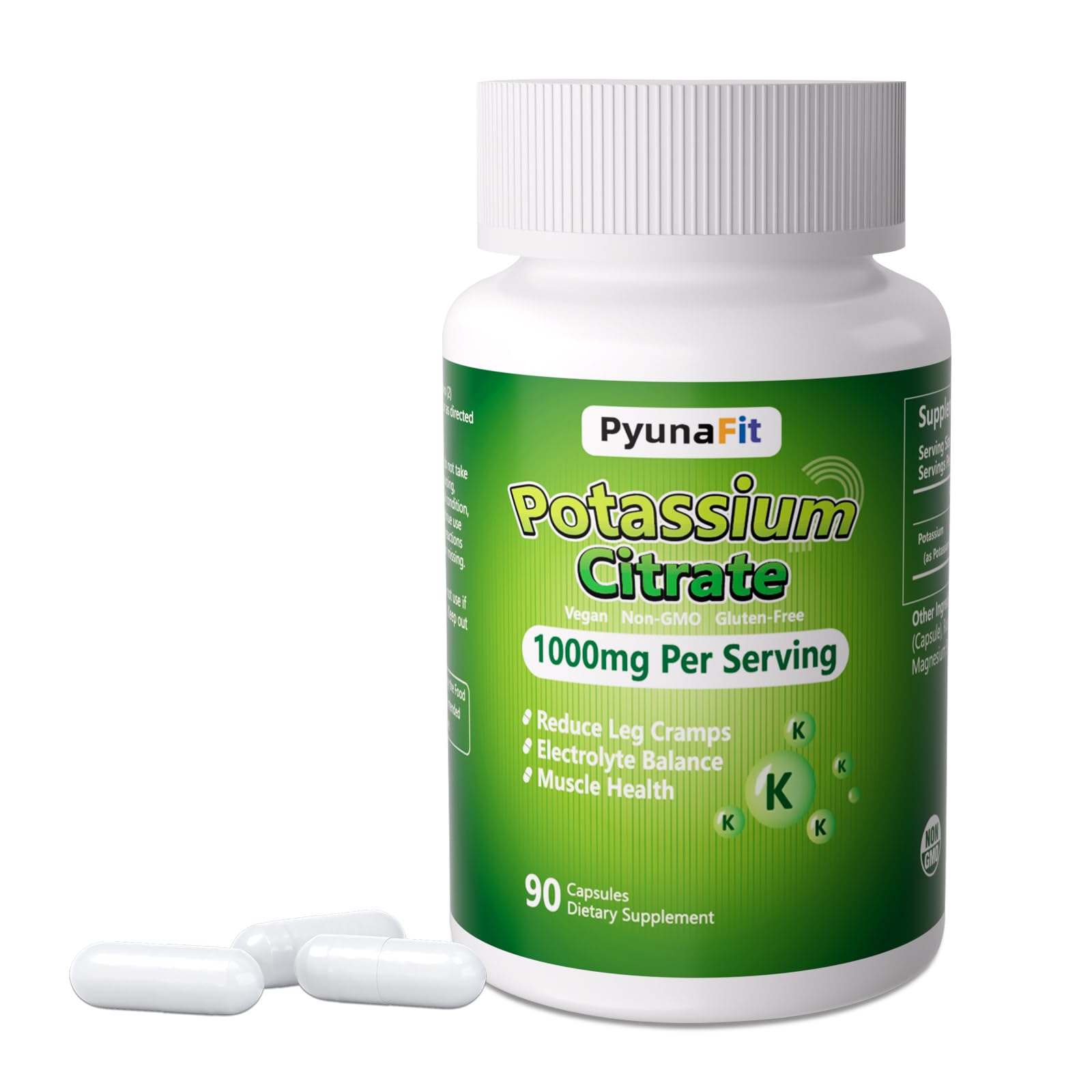
This high-potency capsule delivers 1000mg of elemental potassium per two-capsule serving in the well-absorbed citrate form. Users report rapid relief from leg cramps, with one reviewer noting their bloodwork returned to normal range within weeks after following their doctor’s recommendation. The capsules are vegan, non-GMO, and gluten-free, made in a GMP-certified facility.
The citrate formulation is known for being gentler on the stomach compared to other potassium forms, which is a common pain point for supplement users who experience bloating or discomfort. At 90 capsules per bottle, a single-capsule daily maintenance dose provides a 90-day supply, while the full two-capsule serving lasts 45 days. The small capsule size makes them easy to swallow, even for those who typically struggle with larger pills.
Customer feedback consistently highlights its effectiveness against muscle cramps and its role in overall muscle health and heart support. No side effects were reported in the reviews, and multiple buyers mentioned purchasing a second bottle after seeing clear results with their potassium levels and cramp frequency.
Why it’s great
- High elemental potassium per serving at 1000mg
- Gentle citrate form for sensitive stomachs
- Fast relief for leg cramps reported by multiple users
Good to know
- 90-count bottle provides 45 days at full dose
- No powder form for cooking use
2. Nutricost Potassium Bicarbonate Powder
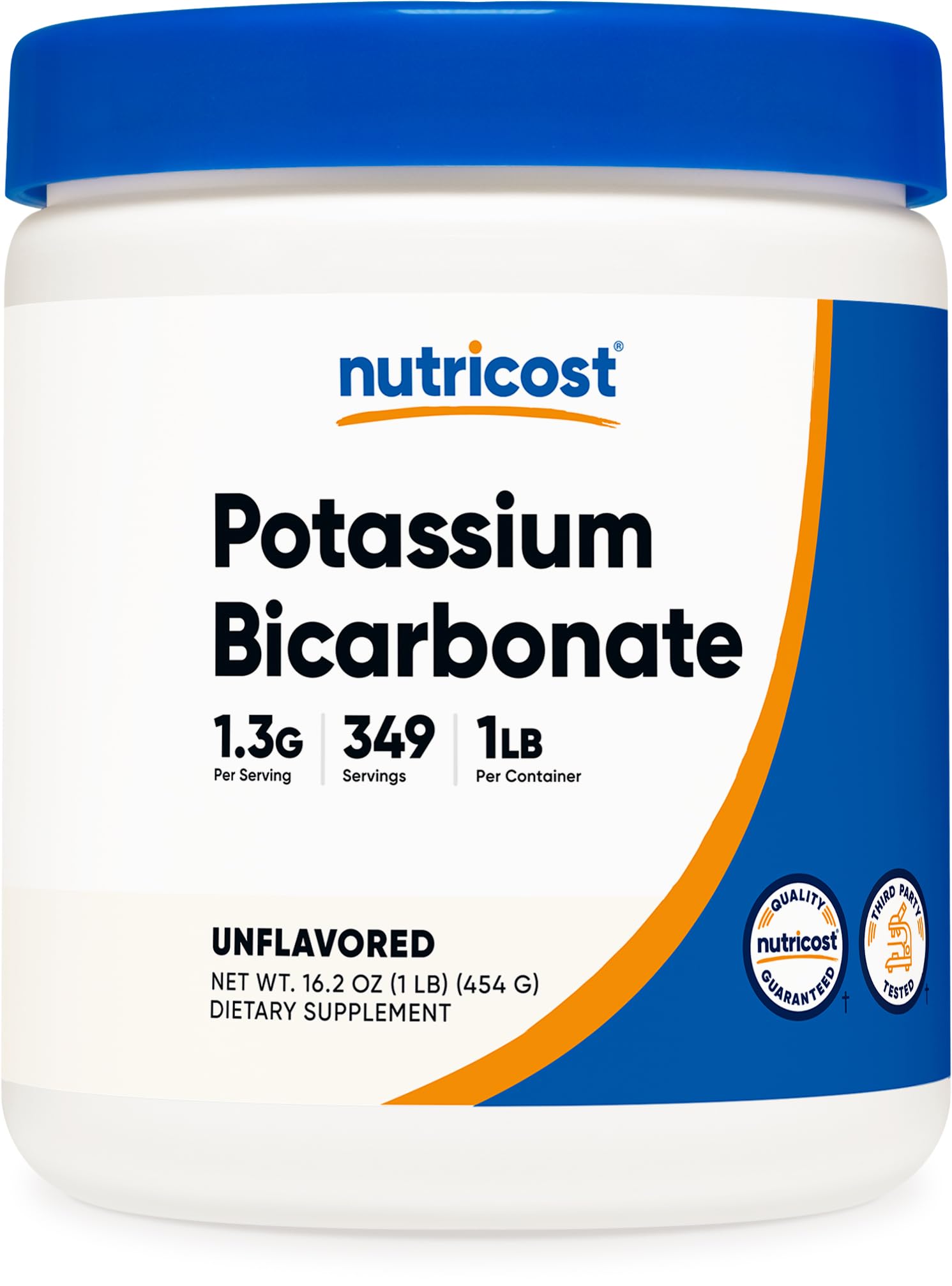
This unflavored powder offers 494mg of elemental potassium per 1/4 teaspoon serving, giving you full control over your dosage. The bicarbonate form is notable for its buffering properties, and users report it dissolves easily in water despite a taste one reviewer described as “booger water” — a common trade-off with concentrated mineral powders. The included scoop makes measuring straightforward.
Beyond supplementation, this product serves as a low-sodium baking soda substitute for those following restricted diets. The pure potassium bicarbonate reacts with acids similarly to baking soda, allowing for sodium-free leavening in recipes. One verified reviewer uses it specifically to help maintain consistent blood pressure levels, taking two scoops daily in water.
The 1-pound container provides roughly 180 servings at the standard 1/4 teaspoon dose, making it one of the more cost-effective options per serving. Several customers emphasize caution with dosing, noting that exceeding the recommended amount can cause heart palpitations — a reminder that potassium supplements require respect for their potency.
Why it’s great
- Flexible dosing for customized potassium intake
- Doubles as sodium-free baking leavening agent
- Excellent value with approximately 180 servings per container
Good to know
- Distinct mineral taste that some find unpleasant
- Must measure carefully to avoid overconsumption
3. NatureBell Potassium Citrate 99mg, 500 Capsules
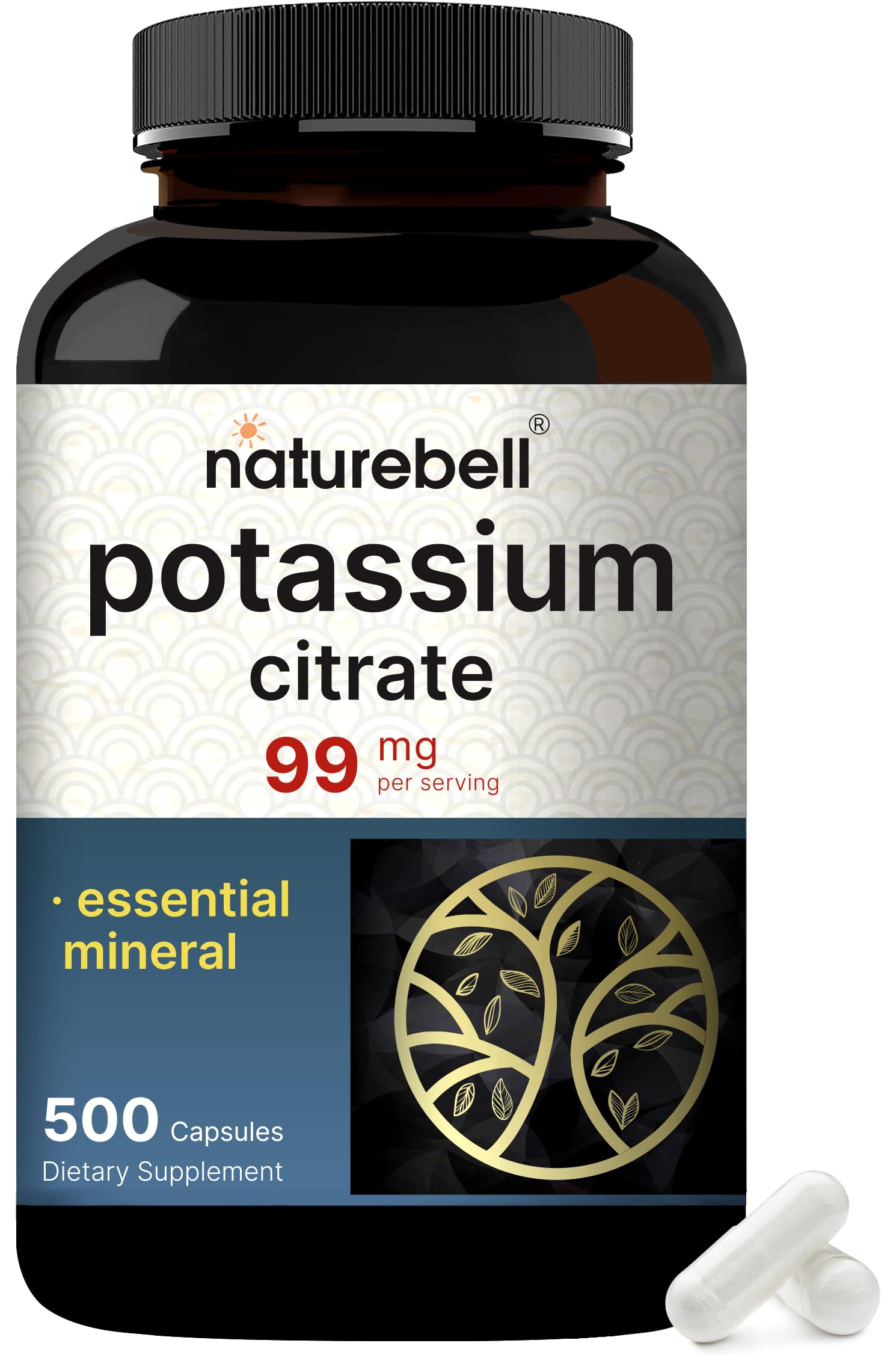
This NatureBell offering delivers 99mg of elemental potassium per capsule in the citrate form, packaged in a massive 500-count bottle that provides over 16 months of daily use at one capsule per day. The one-a-day serving size is designed for simple integration into morning routines, with customers reporting the capsules are easy to swallow and leave no aftertaste.
Potassium citrate is specifically recommended by some physicians for patients with kidney concerns, as the citrate component can help manage kidney stone formation. One verified reviewer confirmed their doctor directed the switch from gluconate to citrate for this reason. The supplement is third-party lab tested for safety and purity, and is certified non-GMO, gluten-free, dairy-free, and soy-free.
Customer reviews emphasize the exceptional value given the bottle size and the consistent quality. Multiple buyers noted that they experience no side effects and appreciate the long-lasting supply that reduces the frequency of repurchasing. The cGMP compliance adds a layer of quality assurance for those concerned about manufacturing standards.
Why it’s great
- 500 capsules provide long-term supply with fewer repurchases
- Physician-recommended citrate form for kidney health
- Third-party tested for purity and safety
Good to know
- 99mg per capsule is a lower elemental dose per pill
- Not suitable for high-dose single-capsule needs
4. BulkSupplements Potassium Citrate Capsules, 500 Count

BulkSupplements provides 99mg of elemental potassium per capsule in the citrate form, with 500 capsules per bottle for extended use. Several customers report it helped with kidney stone breakdown and maintenance, aligning with the known benefits of potassium citrate for urinary health. The capsules are small and easy to swallow according to verified purchasers.
Manufactured in a cGMP-compliant facility, this supplement focuses on providing a clean, straightforward potassium source without added magnesium or other minerals that could complicate your existing supplementation regimen. The unflavored capsules are designed for those who want precision dosing without the taste concerns associated with powders.
One reviewer noted wishing the dosage came in a higher potency to reduce the number of capsules needed, which is a common sentiment with 99mg options. However, the value proposition is strong given the 500-count bottle, and customer satisfaction is high for those who are comfortable with the one-capsule-at-a-time approach to reaching their daily target.
Why it’s great
- 500 capsules for extended daily use
- Reported effective in supporting kidney stone management
- cGMP-compliant manufacturing for quality assurance
Good to know
- 99mg per capsule may require multiple capsules for some users
- No magnesium content for those seeking combined mineral support
5. Bakers Club Potassium Chloride Powder, 2 Pounds

This 2-pound bag of pure potassium chloride powder is a filler-free, sodium-free salt alternative designed for cooking. The unflavored powder dissolves easily into liquids and works well in soups, stews, chili, roasted chicken, and eggs according to reviewer feedback. One customer noted it requires more than standard salt and that you should taste as you go to avoid metallic notes.
Beyond culinary use, this product is used by customers to make their own electrolyte drinks at home, providing a cost-effective and ingredient-transparent alternative to pre-made sports drinks. The bag has been reported to last a very long time, even with regular use. It’s important to note that this form is not suitable for baking applications where sodium is needed for chemical reactions like leavening.
Reviewers with high blood pressure particularly appreciate this as a tool for reducing dietary sodium without sacrificing flavor. Some found it works best in dishes that already have some bitterness or strong flavors to mask the characteristic potassium chloride taste, while using a small amount of regular salt alongside it to lower total sodium.
Why it’s great
- 2-pound bag provides exceptional longevity for daily cooking use
- No fillers or additives for pure ingredient control
- Dissolves easily in hot and cold liquids
Good to know
- Metallic aftertaste in some dishes requires recipe adjustment
- Not suitable for baking due to lack of sodium for leavening
FAQ
What is the difference between potassium citrate and potassium gluconate?
How much elemental potassium should I aim for per day?
Can I use potassium powder as a salt substitute in cooking?
Why do some potassium supplements have a bitter taste?
Final Thoughts: The Verdict
For most users, the best potassium powder winner is the PYUNAFIT Potassium 1000mg because it offers the highest elemental potassium per capsule in a well-tolerated citrate form, with proven results for cramp relief and blood level correction. If you want flexible dosing and a form that doubles as a cooking ingredient, grab the Nutricost Potassium Bicarbonate Powder. And for a long-lasting, budget-friendly supply with physician-recommended kidney support, nothing beats the NatureBell Potassium Citrate 500-Capsule Bottle.