Sourdough bakers know the frustration of a gritty, dense crumb or a scoring blade that drags through a rough surface. The wrong rice flour can ruin your artisan loaf — leaving a chalky residue on the bottom of your bread or failing to prevent your banneton dough from sticking. Selecting a flour with the proper milling fineness and protein structure is non-negotiable for achieving that professional, open crumb and crisp, clean ear.
I’m Mohammad Maruf — the founder and writer behind AirfryerBite. I have spent years analyzing mill certifications, particle size consistency, and gluten-free cross-contamination protocols to understand precisely which rice flour properties deliver the best results for sourdough bakers.
Whether you are dusting bannetons, feeding a brown rice starter, or blending flours for a lighter loaf, identifying the rice flour for sourdough that balances moisture absorption and fine grind is the single most impactful decision you can make.
How To Choose The Best Rice Flour For Sourdough
Not all rice flours behave the same when you mix them into a wet dough or dust a proofing basket. The particle size, bran content, and protein percentage of the flour dictate how much water it will absorb and whether it forms a sticky paste or a dry, non-stick barrier. For sourdough specifically, you need a flour that releases cleanly from the banneton and integrates smoothly into your starter without clumping.
Milling Fineness: Standard vs. Superfine Grind
Standard rice flour feels like fine sand to the touch; superfine rice flour approaches the consistency of commercial powdered sugar. For banneton dusting, superfine rice flour adheres evenly to the dough surface and absorbs just enough moisture to create a release layer without turning into a paste. Standard grinds often leave gritty patches that bake into the crust. For incorporating into doughs, superfine grinds also blend more uniformly, preventing dry pockets in your final crumb.
White Rice vs. Brown Rice Flour
White rice flour, milled from polished grains, has a lower protein and fat content, making it more shelf-stable and milder in flavor — ideal for blending into high-hydration sourdoughs where you do not want the bran competing with the wheat flavor. Brown rice flour retains the bran and germ, adding a nutty flavor and more fiber, which can throw off the hydration balance of a delicate starter. Stick with white rice flour for a neutral, predictable partner for your weekly bake.
Quick Comparison
On smaller screens, swipe sideways to see the full table.
| Model | Category | Best For | Key Spec | Amazon |
|---|---|---|---|---|
| Authentic Foods Superfine White Rice Flour | Premium | Silky banneton dusting & scoring | Superfine grind, never gritty | Amazon |
| Anthony’s Premium White Rice Flour | Mid-Range | General gluten-free baking blends | Batch-tested gluten free, fine powder | Amazon |
| Sadaf Rice Flour (Pack of 3) | Mid-Range | High-volume baking & sourdough | 4.5 lb bulk, fine texture | Amazon |
| Food to Live Organic Brown Rice Flour | Mid-Range | Nutty-flavored sourdough & noodles | Stone-ground, organic, 1.5 lb | Amazon |
| Birch & Meadow Rice Flour | Budget | Breading & occasional dusting | 3.31 lb, Non-GMO, fine texture | Amazon |
In‑Depth Reviews
1. Authentic Foods Superfine White Rice Flour – 3lb
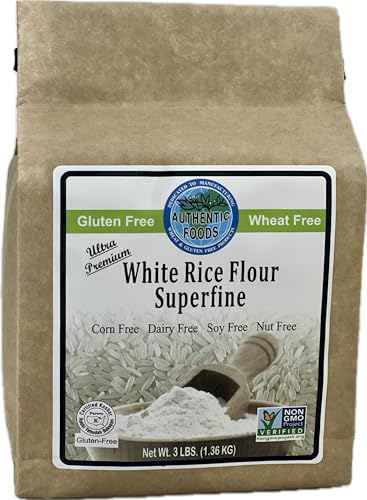
This is the gold standard for sourdough bakers who demand a silky, non-gritty dusting flour. The superfine grind — finer than any standard rice flour on the shelf — means it clings evenly to the dough surface in a banneton and releases cleanly without leaving a chalky ring on the bottom of your loaf. Customers with celiac confirm it mixes without clumping, which is critical when you incorporate it into a high-hydration dough.
The 3-pound bag gives you roughly thirty to forty banneton dusting sessions, and the flour is certified gluten-free, dairy-free, nut-free, corn-free, and soy-free — making it a safe choice for kitchens managing multiple allergies. One reviewer noted that hydrating it a bit longer or using near-boiling water before cooking yields fluffiness comparable to regular wheat flour, which speaks to its superior absorption properties.
For bakers who have fought with gummy or gritty loaves, switching to this superfine flour is an immediate upgrade. The only real tradeoff is the premium positioning versus bulk alternatives, but the clean release and improved crumb texture justify the investment for serious sourdough enthusiasts.
Why it’s great
- Superfine grind eliminates grittiness in crumb and crust.
- Certified free of gluten, dairy, nuts, corn, and soy.
- Mixes without clumping; hydrates evenly for smooth dough.
Good to know
- Premium tier compared to commodity white rice flours.
- 3-pound bag may require more frequent reordering for weekly bakers.
2. Anthony’s Premium White Rice Flour, 3 lb
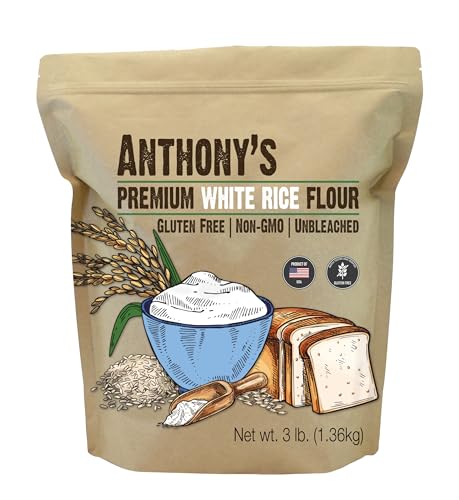
Anthony’s delivers a reliable fine white rice flour that sits comfortably in the mid-range — priced well below superfine specialty products but still milled to a consistent, non-gritty texture. The 3-pound bag is a practical size for bakers who use rice flour both for banneton dusting and for blending into gluten-free sourdough recipes. Multiple celiac reviewers confirm it works well for bread making and does not trigger reactions.
The flour is batch-tested and verified gluten-free, Non-GMO, and vegan, which gives confidence to those managing dietary restrictions. One reviewer mentioned mixing it with brown rice flour, protein powder, and baking powder to make fluffy waffles that did not stick to the iron — a useful data point for bakers who want a multi-purpose flour beyond just sourdough dusting.
On the downside, some users found the price slightly higher than they expected for the bag size, though the quality consistency offsets that concern. This is a solid workhorse choice for mid-volume home bakers who want a clean flavor profile and reliable gluten-free certification without paying a superfine premium.
Why it’s great
- Batch-tested gluten-free certification protects celiac bakers.
- Fine powder blends well into dough without dry pockets.
- Versatile for dusting, thickening, and gluten-free baking blends.
Good to know
- Not superfine; slightly coarser than premium competitor for dusting.
- Some bakers find the per-pound cost higher than bulk bins.
3. Sadaf Rice Flour – Pure White Rice Flour, 1.5 LB (Pack of 3)
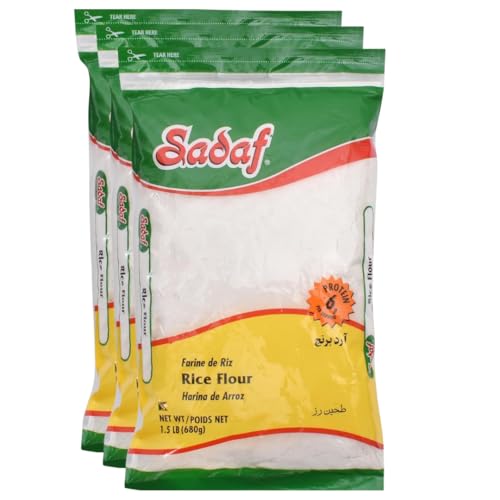
Sadaf offers an excellent value proposition for sourdough bakers who go through rice flour quickly — the three-pack gives you a total of 4.5 pounds, making it one of the largest total volumes in this comparison. The flour has a fine texture that reviewers specifically praise for sourdough tasks: covering surfaces, dusting bannetons, and scoring loaves. One customer who runs a small home bakery reported that even with frequent use, a single 1.5-pound bag lasts a while, so the three-pack provides substantial runway.
RCC Kosher certification and a clean 6 grams of protein per serving make this a nutritious option, but note that it is packed on shared equipment with wheat, tree nuts, soy, and sesame — a critical warning for severe allergy households. The manufacturer also lists the product as discontinued, which raises a question about long-term availability for bakers who want a repeatable source.
Despite the bulk packaging, some units arrive with the bag seal compromised — a few reviews mention leakage. If you buy in volume, inspect the outer packaging immediately upon delivery. For the price per pound, this is a strong mid-range contender for high-volume sourdough production and gluten-free baking.
Why it’s great
- 4.5-pound total volume ideal for weekly bakers and small home bakeries.
- Fine texture praised specifically for banneton dusting and scoring.
- RCC Kosher certified with clean protein content.
Good to know
- Packaged on shared equipment with wheat, nuts, soy, and sesame.
- Some reports of bag seal failure during shipping.
4. Food to Live Organic Brown Rice Flour, 1.5 Pounds
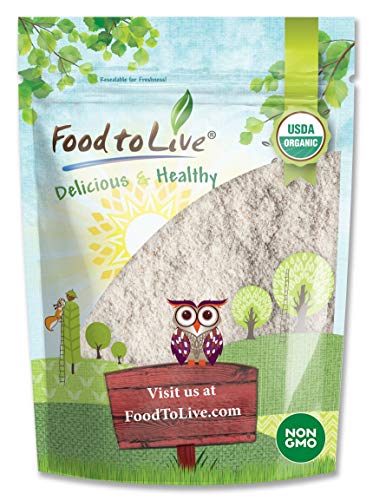
If you want to introduce a nutty, whole-grain dimension to your sourdough, this organic brown rice flour from Food to Live is a fine choice. It is stone-ground from long-grain brown rice, which means it retains the bran and germ — giving it a richer flavor profile and more fiber than white rice flour. Bakers using it in bread, crepes, and pancakes report no stale smell and a fresh, pleasant taste.
At 1.5 pounds, the bag is compact, which is convenient for bakers who rotate through multiple specialty flours. The flour is Non-GMO, organic, and vegan. Customers praise its finely milled texture that yields airy results in baked goods, noting it is equal to pricier brands. For sourdough purposes, it works well when blended with white rice flour or used in a brown rice starter that prefers a whole-grain feed.
The main limitation is the small bag size — at 1.5 pounds, regular bakers will reorder frequently. Additionally, brown rice flour’s higher oil content from the bran means it has a shorter shelf life; store it in the freezer if you do not use it quickly. This is a specialized flour for bakers who want distinct flavor and nutritional density, not for neutral dusting duty.
Why it’s great
- Organic stone-ground brown rice delivers nutty, whole-grain flavor.
- Finely milled for airy, non-dense baked goods.
- Fresh taste with no stale or rancid smell reported.
Good to know
- 1.5-pound bag is small for frequent bakers.
- Higher bran oil content requires freezer storage for freshness.
5. Birch & Meadow 3 lb Rice Flour

Birch & Meadow offers a straightforward entry-level rice flour that works for occasional banneton dusting and general gluten-free baking. The fine texture is well-suited for breading shrimp and fish with a light batter, as one reviewer noted, and it performs adequately in bread dough without grittiness. The 3.31-pound container provides decent volume at a budget-friendly price point.
The flour is Non-GMO and packaged in the USA, which offers some quality assurance. However, customer reviews reveal a significant quality-control concern: multiple buyers received the product with the lid or seal already open, spilling flour in the shipping box. Worse, the listing states no returns are allowed, which creates risk for the buyer if the packaging is defective upon arrival.
For bakers who prioritize reliability and want zero risk of wasted product, this packaging issue is a dealbreaker. If you are willing to accept the risk in exchange for the low entry cost, the flour itself is fine — fine-textured, versatile for baking and cooking, and meets the needs of light sourdough dusting. But the packaging failure rate makes it hard to recommend as a primary source for weekly bakes.
Why it’s great
- Fine, smooth texture works well for baking and light battering.
- Non-GMO, packaged in the USA.
- Budget-friendly entry point for gluten-free baking.
Good to know
- Frequent reports of lid and seal failure during shipping.
- No returns allowed on defective packaging — buyer assumes risk.
FAQ
Does superfine rice flour prevent my dough from sticking to the banneton?
Can I use brown rice flour for my sourdough starter feed?
How should I store rice flour for sourdough baking long term?
Final Thoughts: The Verdict
For most users, the rice flour for sourdough winner is the Authentic Foods Superfine White Rice Flour because its ultra-fine grind eliminates the gritty crumb and sticky banneton issues that plague standard flours. If you want a reliable mid-range option for general gluten-free baking and occasional dusting, grab the Anthony’s Premium White Rice Flour. And for high-volume bakers who burn through flour weekly, nothing beats the bulk value of the Sadaf Rice Flour 3-Pack.