Forgetting to rinse a jar for a single day can turn a promising batch of broccoli sprouts into a slimy, moldy mess. That single failure point—inconsistent daily rinsing and poor drainage—is why many people abandon home sprouting after one attempt. A well-designed sprouting kit eliminates that friction with mesh screens that drain fully and angled stands that keep jars from pooling water.
I’m Mohammad Maruf — the founder and writer behind AirfryerBite. I’ve analyzed over forty sprouting kits by comparing screen material gauge, drainage angle, glass thickness, and airflow geometry to find the setups that reliably produce crisp, fresh sprouts without rot or standing water.
This guide breaks down the concrete specs that separate functional sprouting gear from frustrating countertop clutter, so you can confidently buy the best sprouting kit for your kitchen routine.
How To Choose The Best Sprouting Kit
Not all sprouting kits are equal. The difference between a kit you use daily and one that collects dust comes down to three factors: screen material, drainage geometry, and jar construction. Here’s what to look for.
Screen Material and Gauge
The mesh screen is the core of any sprouting kit. Cheap plastic screens crack after repeated washing and can trap moisture against seeds. A 316 stainless steel mesh resists rust, allows full airflow, and is fine enough (roughly 0.5mm or smaller openings) to hold tiny seeds like alfalfa and radish while still draining quickly. If the kit uses a single-piece plastic lid with integrated mesh, check that the holes are small and evenly spaced—uneven holes let seeds escape during rinsing.
Drainage Angle and Jar Stability
Standing water inside the jar is the fastest path to mold. Look for a kit that includes a dedicated stand or drip tray that holds the jar at a 30- to 45-degree angle, allowing water to fully exit after each rinse. Some kits use inverted spouts or conical lids that serve the same purpose. Also check whether the jar rolls: faceted sides or a stable stand prevent the jar from rolling off the counter when inverted.
Jar Capacity and Glass Quality
Most kits use 32 oz (1-quart) wide-mouth jars, which yield roughly 4 to 6 cups of sprouts per batch. Borosilicate glass handles temperature changes better than standard soda-lime glass, so it’s less likely to crack if you rinse with warm water. Wide-mouth jars are easier to clean by hand, and they accept standard sprouting lids without needing adapters. Avoid kits with thin, lightweight jars—they feel cheap and are more prone to breaking during daily handling.
Quick Comparison
On smaller screens, swipe sideways to see the full table.
| Model | Category | Best For | Key Spec | Amazon |
|---|---|---|---|---|
| Malastar Complete Set | Premium Kit | Daily continuous sprouting | 316 SS mesh, 2 jars | Amazon |
| ALCEDIA Sprouting Jar | Premium Single | Attractive countertop display | Borosilicate glass, 30 oz | Amazon |
| ZESTIGREENS 2-Jar Set | Mid-Range Set | Beginners and kitchen-scrap regrowing | 2 lids, 32 oz jars, onion regrower | Amazon |
| Masontops Bean Screen | Budget Entry | Simple upgrade for existing jars | Faceted sides, 2 lids | Amazon |
| Elementi Sprouting Jar Kit | Budget 2-Pack | Budget-friendly dual-jar setup | 2 glass jars, 2 mesh lids | Amazon |
In‑Depth Reviews
1. Malastar Complete Sprouting Jar Kit

This kit includes two 32 oz wide-mouth glass jars, two 316 stainless steel mesh lids, blackout sleeves, a stainless steel stand, and a drip tray — every component you need for continuous sprouting. The 316 stainless mesh is tight enough to hold tiny broccoli and alfalfa seeds while allowing fast drainage, and the food-grade ABS plastic lids thread securely onto standard wide-mouth jars without cross-threading. Users report that a single 2-tablespoon seed dose yields a full jar of sprouts in 3 to 5 days.
The angled stand holds each jar at an optimal draining tilt, preventing standing water that causes mold. The blackout sleeves block light for bean and grain varieties that grow sweeter in darkness, and both jars and lids are top-rack dishwasher safe. One detail that stands out in customer feedback: the drip tray is unbreakable plastic, though some users note it warps slightly in the dishwasher — hand-washing is recommended for the tray.
For the price point, this kit delivers the most complete hardware set without unnecessary frills. If you plan to grow two varieties simultaneously (say, broccoli in one jar and mung beans in the other), having two identical jars with matching lids and sleeves is a serious workflow advantage over single-jar kits.
Why it’s great
- 316 stainless steel mesh retains tiny seeds
- Two jars allow continuous harvest rotation
- Angled stand prevents mold-causing standing water
Good to know
- Drip tray may warp if run through high-heat dishwasher cycles
- Blackout sleeves lack drawstrings, can be fiddly to secure
2. ALCEDIA Premium Sprouting Jar Kit
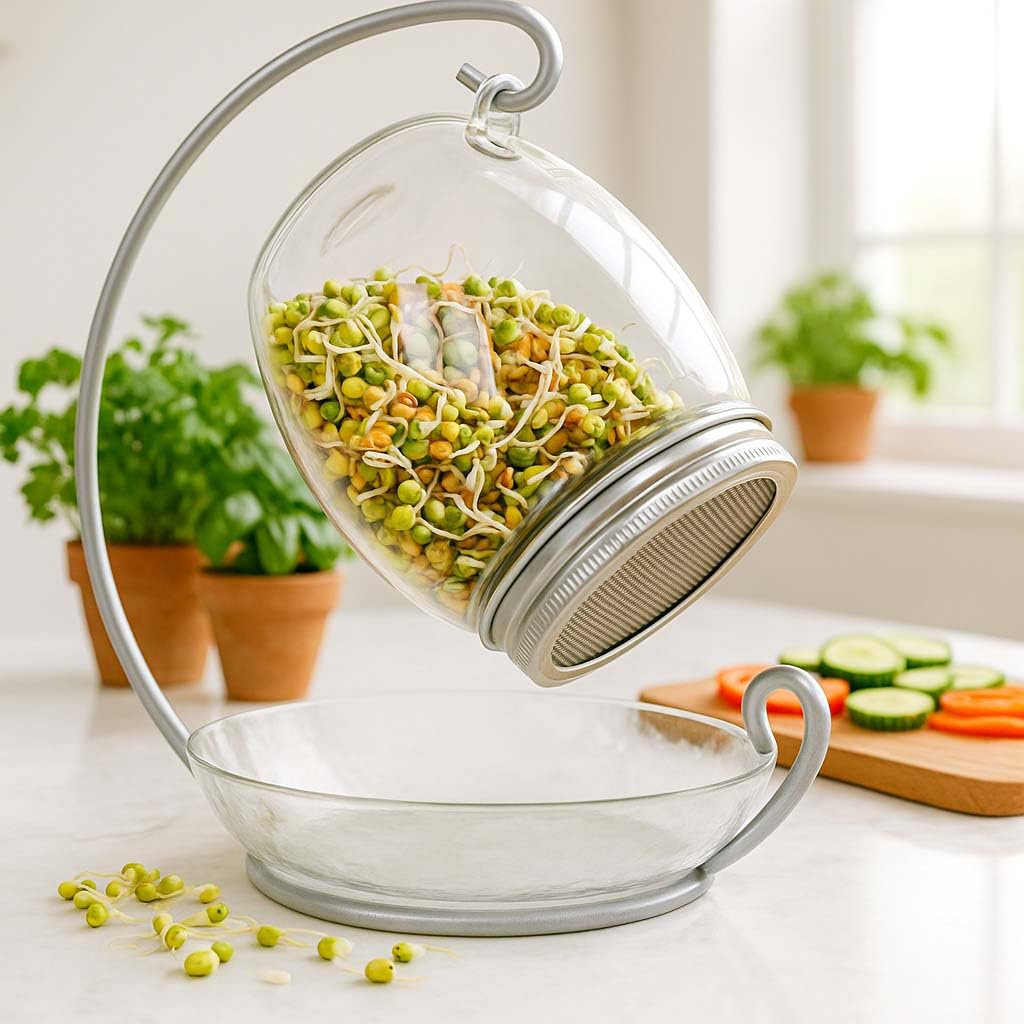
ALCEDIA takes a design-forward approach with a borosilicate glass jar that is noticeably thicker and more heat-resistant than the standard soda-lime jars found in most kits. The 30 oz capacity is slightly smaller than the typical 32 oz jar, but the wide mouth and rounded, flat-bottomed shape make hand-cleaning straightforward. The 316 stainless steel mesh lid screws on smoothly and has never shown rust in customer-reported long-term use.
The stand-and-tray system uses a hanging design: the jar suspends from the stand while the tray catches drips below. This vertical airflow geometry allows water to drain fully without the jar sitting in its own runoff. Many users mention that the kit looks attractive enough to leave on the counter — an important factor if you are the type who stores small appliances out of sight. Borosilicate glass can also go into the microwave, though the metal mesh lid must be removed first.
One trade-off: the kit includes only one jar. If you want continuous harvests (sprouting a new batch while another finishes), you will need to buy a second kit. The single-jar format works best for households that sprout once per week rather than daily.
Why it’s great
- Borosilicate glass is tougher and more temperature-resistant than standard jars
- Hanging stand design ensures full drainage without the jar sitting in water
- Attractive enough for permanent counter display
Good to know
- Single jar limits batch rotation
- 30 oz yields slightly less than standard 32 oz jars
3. ZESTIGREENS Sprouting Kit & Green Onion Regrower
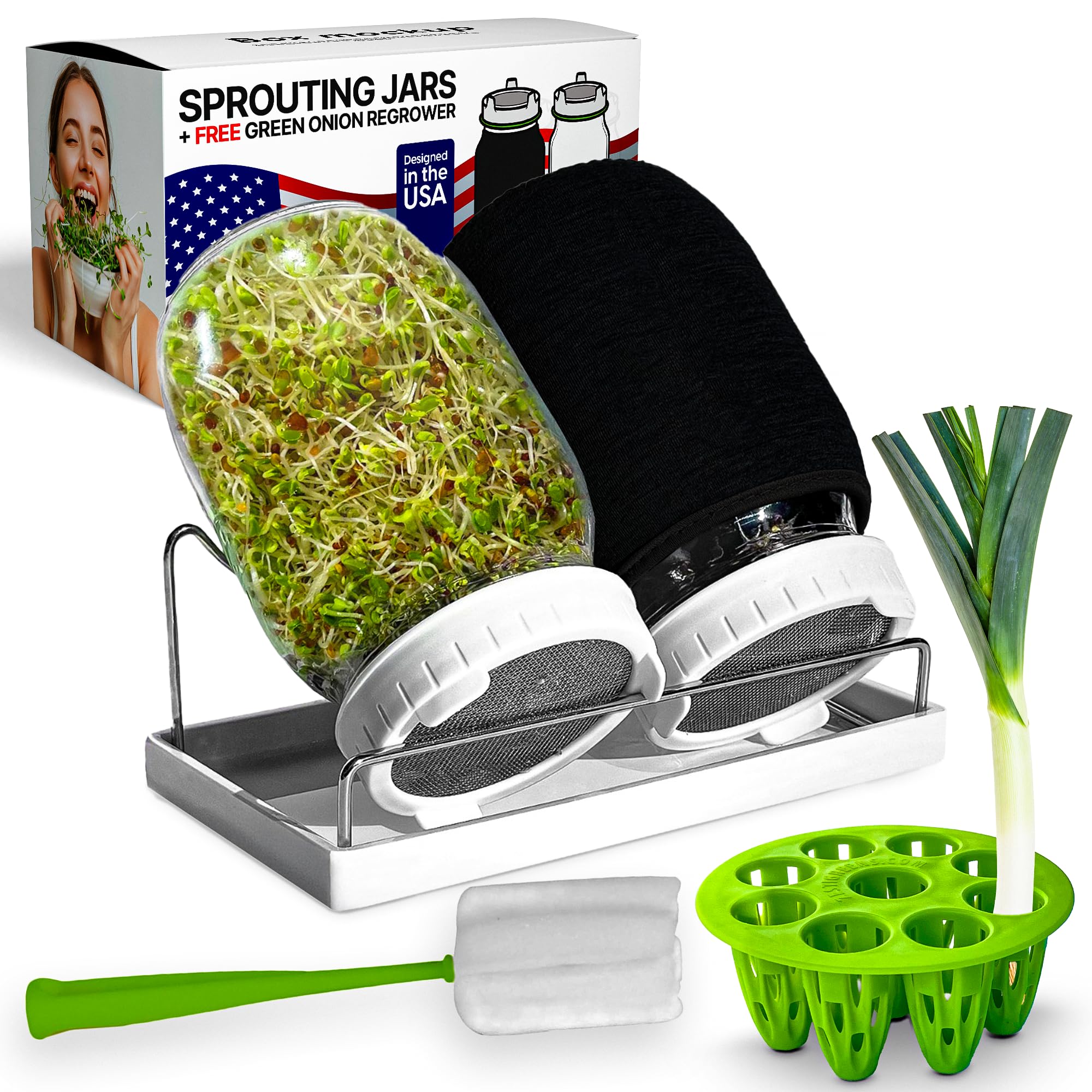
ZESTIGREENS packs twelve components into one kit: two 32 oz wide-mouth glass jars, two stainless steel mesh sprouting lids, one dedicated green onion regrower lid, a stainless steel stand, a drip tray, two blackout sleeves, and printed instructions. The metal mesh screens are fine enough for alfalfa and broccoli seeds, and the wide-mouth design makes rinsing and refilling quick. The stand tilts the jars at a stable angle, and the drip tray catches runoff without leaking onto the counter.
The unique differentiator here is the green onion regrower lid, which lets you place leftover scallion bulbs in water and regrow them hydroponically. This is a genuinely useful secondary function if you cook with green onions regularly — one user reported regrowing a full crop within a week. The blackout sleeves are made of a thicker fabric than many competitors, and they stay in place without needing to be tied.
No seeds are included, so you will need to purchase sprouting seeds separately. The customer rating of 4.7 out of 5 across over 500 reviews reflects strong satisfaction, with multiple reviews noting that the kit pays for itself in the first month compared to buying organic sprouts at the grocery store.
Why it’s great
- Green onion regrower lid adds real kitchen utility beyond sprouting
- Two jars enable continuous harvests without stopping
- Thick blackout sleeves stay put without drawstrings
Good to know
- Seeds not included — must be purchased separately
- Instructions could be clearer for the regrower lid setup
4. Masontops Bean Screen Sprouts Growing Kit

Masontops takes a different approach: instead of including glass jars, it provides two plastic Bean Screen lids designed to fit standard wide-mouth mason jars you already own. Each lid has raised standing pegs on the bottom that lift the jar off the counter when inverted, promoting full drainage. The faceted sides of the lids prevent the jar from rolling — a small but meaningful detail when you have multiple jars on the counter during sprouting season.
This kit includes two packages of Mumm’s organic seeds grown in Canada: a Sandwich Booster mix (clover and alfalfa) and a Crunchy Bean mix (lentil and chickpea). Having seeds included is a real advantage for first-time sprouters who might not know where to buy sprouting-specific seeds. The plastic lids are BPA-free and dishwasher safe, though some users note that very small seeds like alfalfa can occasionally slip through the mesh holes during the first rinse.
Because this kit does not include jars, you will need to supply your own wide-mouth mason jars. If you already have a stack of jars in your pantry, this is the most cost-effective entry point into sprouting. If you do not own wide-mouth jars, you will need to factor that into your total setup cost.
Why it’s great
- Includes two packs of certified organic, GMO-free seeds
- Faceted lid sides prevent jars from rolling
- BPA-free and dishwasher-safe construction
Good to know
- Jars not included — you must provide your own wide-mouth mason jars
- Some tiny seeds can slip through the mesh during initial rinse
5. Elementi Sprouting Jar Kit
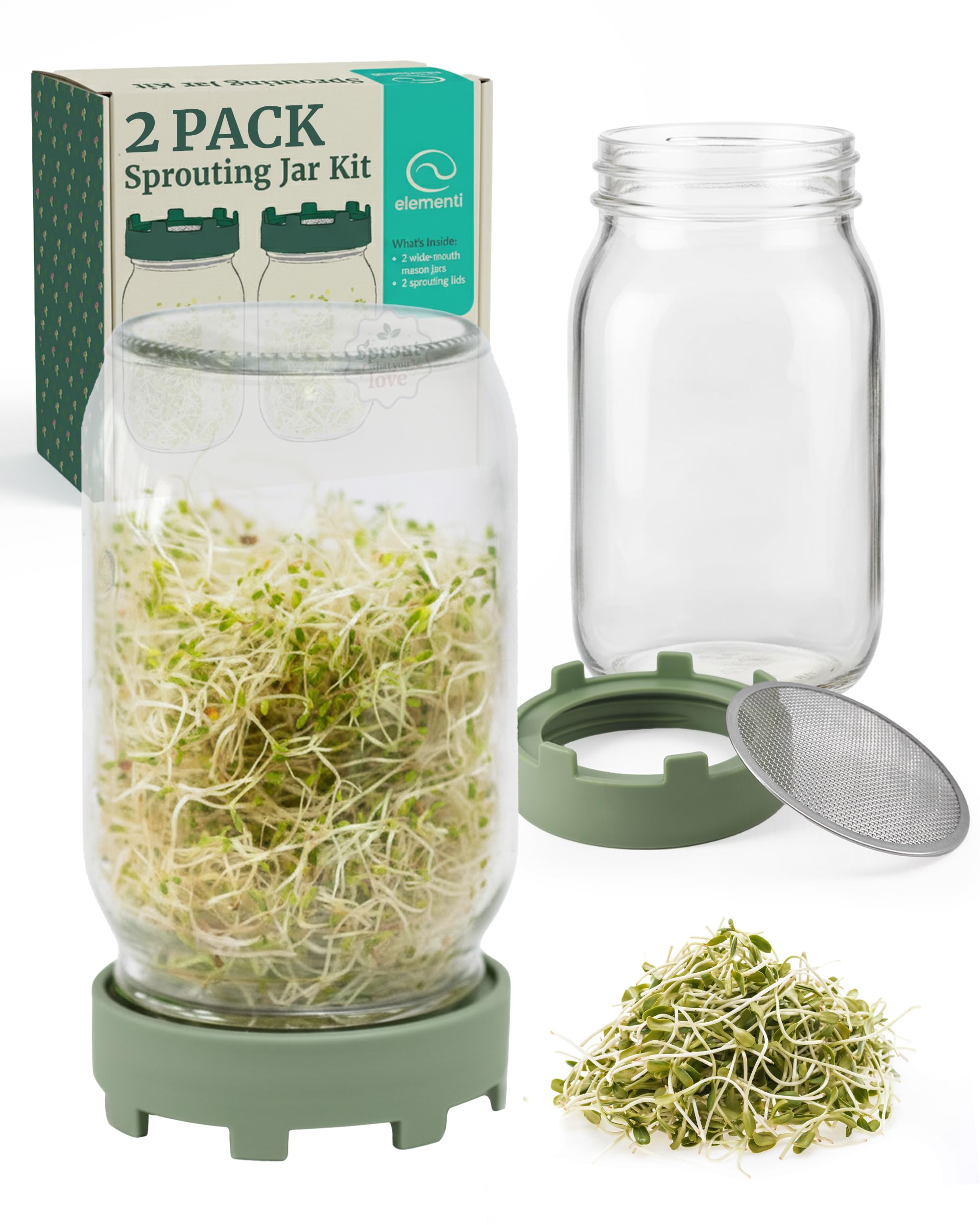
Elementi offers a straightforward dual-jar kit with two quart-size soda-lime glass jars, two plastic sprouting lids, and two detachable 316 stainless steel mesh disks. The mesh disks are rigid, rust-free, and can be removed from the plastic rim for thorough cleaning. This detachable design is a genuine advantage over one-piece lids where food residue gets trapped in the rim area. The mesh is fine enough for most seed sizes, though a few reviewers report that quinoa or very tiny seeds can occasionally stick in the mesh if not rinsed thoroughly.
The sage green lids and jars have a clean, modern look that blends into most kitchen styles. Each component is top-rack dishwasher safe, though the manufacturer warns against exposing the glass jars to water above 140°F to prevent thermal cracking — a limitation of soda-lime glass compared to borosilicate. Users consistently mention that the kit is simple to use (soak overnight, rinse and drain twice daily, harvest in 3 to 7 days) and that the mesh strainer detaches easily for a scrub.
The main compromise is drainage: without a dedicated angled stand, the jar must rest upside down on the counter or on a towel. Some users report that water tension makes it hard to fully dry the seeds before the next rinse, which can increase mold risk if you are not diligent about shaking the jar dry. For the price, though, this is a functional two-jar entry point if you are willing to manage the drainage manually.
Why it’s great
- Detachable 316 stainless mesh disks are easy to clean thoroughly
- Two jars included for continuous sprouting on a budget
- Modern sage green design looks nice on the counter
Good to know
- No angled stand or drip tray included — drainage is manual
- Soda-lime glass can crack if exposed to water over 140°F
FAQ
How often do I need to rinse sprouts in a jar kit?
What size jar works best for a sprouting kit?
Can I reuse the sprouting jar lids for different seed types?
Why do my sprouts smell sour or slimy?
Do I need to buy organic seeds for sprouting?
Final Thoughts: The Verdict
For most users, the best sprouting kit winner is the Malastar Complete Sprouting Jar Kit because it combines 316 stainless steel mesh lids, two 32 oz jars, a functional angled stand, and blackout sleeves — everything you need for continuous sprouting without having to buy extra components. If you want a single-jar kit that looks beautiful on the counter and uses tougher borosilicate glass, grab the ALCEDIA Premium Sprouting Jar Kit. And for budget-conscious beginners who already own mason jars, nothing beats the Masontops Bean Screen with its included organic seed packs.