Ditching plastic bottles for a permanent under-sink solution means trusting a membrane to strip out dissolved solids, heavy metals, and chlorine byproducts while keeping a steady flow of crisp water available on demand. The difference between a setup that delivers measurable purity day after day and one that frustrates with slow output or cryptic filter changes comes down to membrane capacity, stage count, and how the system manages wastewater.
I’m Mohammad Maruf — the founder and writer behind AirfryerBite. Over the past several years I’ve tracked the spec sheets, customer longevity reports, and third-party certification data across dozens of residential reverse osmosis systems to separate the designs that genuinely hold up from those that rely on marketing fluff.
This guide breaks down nine market-tested models ranging from budget-friendly three-stage units to fully certified high-output systems, helping you identify which combination of filtration stages, flow rate, tank or tankless design, and certification level matches your water quality and household volume. Finding the best ro water filter system for your kitchen starts with understanding the real specs that govern long-term performance.
How To Choose The Best RO Water Filter System
Selecting a reverse osmosis system for your home involves more than picking the highest GPD number. You need to match the system’s filtration stages, membrane capacity, and certification level to your specific water source — well water with high sediment demands a different pre-filter setup than treated city water with moderate chlorine levels.
Membrane Capacity and Flow Rate
The rated gallons per day (GPD) tells you how much purified water the membrane can produce under standard conditions. A 75 GPD membrane fills a storage tank slowly — expect about 0.05 gallons per minute — while a 400 GPD unit delivers roughly 0.27 GPM, enough to fill a glass in 10-15 seconds. Tankless systems require higher GPD (400-800) because they produce water on demand without a buffer tank.
Filtration Stages and Membrane Type
Most residential systems use three to six stages. The first two stages — sediment and carbon block — remove particles and chlorine to protect the RO membrane. The membrane itself is the core; thin-film composite (TFC) membranes offer the best rejection rate for dissolved solids. Additional stages like alkaline remineralization or UV sterilization address specific water quality goals such as pH balancing or bacterial protection.
Certification and Contaminant Reduction
NSF/ANSI Standard 58 certification validates the system’s ability to reduce TDS, lead, arsenic, fluoride, and nitrates. Standard 42 covers aesthetic reduction of chlorine taste and odor. Standard 372 confirms lead-free materials. A system that carries these certifications has been independently tested — always verify the scope of the certification rather than assuming blanket approval.
Pure-to-Drain Ratio and Wastewater Management
Traditional RO systems waste about 3-4 gallons of water for every gallon of purified water. Modern tankless models with permeate pumps achieve ratios of 1.5:1 or 2:1 pure to drain, drastically cutting down water waste. If you pay high water bills or live in a drought-prone area, prioritize systems with a low drain ratio and an automatic shut-off valve.
Quick Comparison
On smaller screens, swipe sideways to see the full table.
| Model | Category | Best For | Key Spec | Amazon |
|---|---|---|---|---|
| Waterdrop G3P800 | Premium Tankless | High-flow, large family | 800 GPD, 3:1 drain ratio | Amazon |
| iSpring RO500AK-BN | Premium Tankless | Alkaline + low waste | 500 GPD, NSF 58 certified | Amazon |
| APEC Water RO-PH90 | Traditional Premium | Alkaline, durable build | 90 GPD, 6-stage alkaline | Amazon |
| Waterdrop D6 | Mid-Range Tankless | Smart faucet, compact | 600 GPD, 2:1 drain ratio | Amazon |
| SimPure T1-400UV | Mid-Range Tankless | UV sterilization, near 0 TDS | 400 GPD, includes UV | Amazon |
| PureDrop PDR-100RO | Mid-Range Tankless | Compact build, fast flow | 100 GPD, tankless 3-stage | Amazon |
| LiquaGen 5-Stage RODI | Specialty RODI | Aquarium 0 TDS water | 75 GPD, deionization stage | Amazon |
| Geekpure 6-Stage | Value Traditional | Affordable alkaline upgrade | 75 GPD, 6-stage alkaline | Amazon |
| iSpring F19K75 Filter Set | Replacement Set | 2-year filter supply | 19-piece, 75 GPD membrane | Amazon |
In‑Depth Reviews
1. Waterdrop G3P800 Reverse Osmosis System
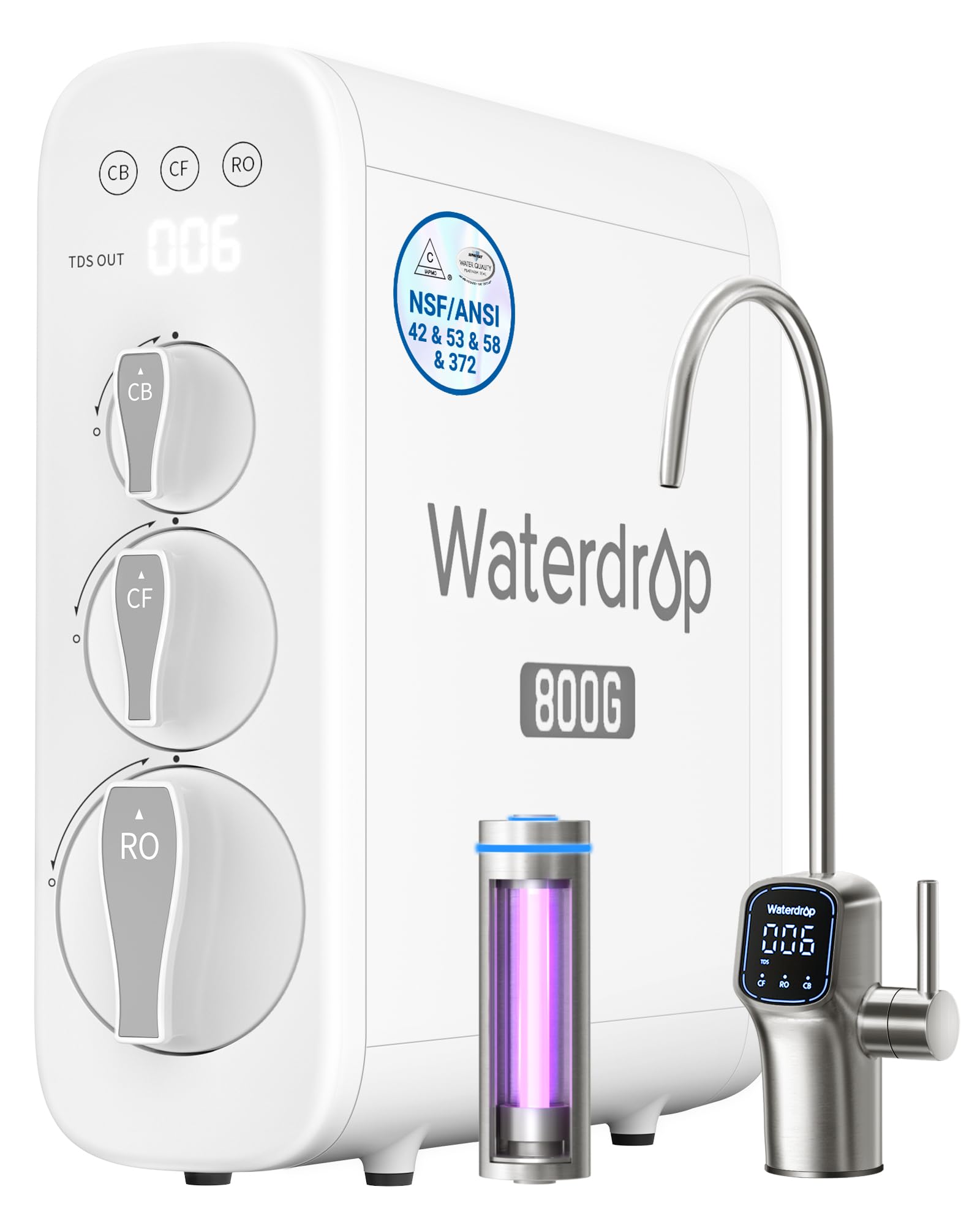
The Waterdrop G3P800 sits at the top of the under-sink RO market with an 800 GPD membrane that fills a cup in roughly five seconds. Its 10-stage filtration sequence combines sediment, carbon block, RO membrane, and a post-carbon polishing stage, and the unit carries NSF/ANSI Standard 42, 53, 58, and 372 certifications — covering TDS reduction, chlorine taste, lead, and lead-free material compliance. The 3:1 pure-to-drain ratio is among the best available, producing three cups of purified water for every cup of wastewater.
Users consistently report output TDS readings dropping from 400-500 ppm to single digits, with the smart faucet’s LED display providing real-time TDS and filter life data. The tankless design saves substantial under-sink space and eliminates the risk of biofilm growth inside a storage bladder. The pump operates quietly, though some users note a faint hum during active production.
The only downside is the installer must drill two holes — one for the faucet and one for the drain line connection. The initial setup also requires access to an electrical outlet under the sink, which may conflict with existing garbage disposal wiring. For households that prioritize certification breadth, ultra-fast flow, and minimal wastewater, this system delivers the strongest overall package.
Why it’s great
- 800 GPD flow fills a standard glass in 5 seconds
- NSF 42, 53, 58, and 372 certified across multiple contaminant categories
- 3:1 pure-to-drain ratio significantly reduces water waste
Good to know
- Requires an electrical outlet and two drilled holes for installation
- Premium price positions it as a high-investment option
2. iSpring RO500AK-BN Reverse Osmosis Water Filter

The iSpring RO500AK-BN brings together a 500 GPD tankless design with a natural alkaline remineralization stage that adds calcium, magnesium, and potassium back into the filtered water. Its 3-stage filtration — composite sediment/carbon block, high-rejection RO membrane, and carbon alkaline filter — achieves NSF 58 certification for TDS reduction while maintaining a 2:1 pure-to-drain ratio that cuts wastewater by up to 400 percent compared to conventional tank systems.
Customers report TDS readings dropping from 250 ppm to 20-120 ppm after remineralization, and the built-in self-cleaning function rinses the membrane after 24 hours of inactivity to extend its lifespan. The brushed nickel faucet and compact footprint (17.5 x 5.2 x 16.25 inches) fit easily under standard cabinets. Filter replacements are tool-free — quarter-turn twist-off cartridges that do not require shutting off the water supply.
Some users find the included faucet too small for a standard 1.5-inch sink hole, though iSpring’s customer support team has been noted for quickly sending larger faceplates or replacement faucets free of charge. The system requires a power outlet and 0.4 GPM flow rate, which is adequate for simultaneous filling of cooking pots and drinking glasses. For those who want alkaline water without the slow production of traditional 6-stage systems, the RO500AK-BN offers a strong balance.
Why it’s great
- Alkaline remineralization restores essential minerals without a separate storage tank
- 2:1 pure-to-drain ratio reduces wastewater significantly
- Tool-free, quarter-turn filter replacements require no water shutoff
Good to know
- Faucet opening size may require an adapter for larger sink holes
- Power outlet needed under sink for pump operation
3. APEC Water RO-PH90 6-Stage Alkaline System

The APEC Water RO-PH90 remains a staple in the traditional tank-based RO category thanks to its US-made filter media, genuine Dow Filmtec RO membrane, and 6-stage design that includes an alkaline remineralization filter. The 90 GPD membrane is modest by tankless standards, but paired with a 4-gallon storage tank it delivers a steady supply of pH-balanced water. The system is WQA tested and certified to remove up to 99 percent of chlorine, fluoride, arsenic, lead, and over 1,000 other impurities.
Users running city water with an incoming TDS around 225 ppm report output readings between 15-20 ppm after the alkaline stage, producing clean, smooth water with a slightly elevated pH. The all-metal, lead-free designer faucet and JG premium quick-connect fittings provide a secure, leak-resistant setup that users familiar with traditional RO systems find straightforward to install. The company’s lifetime support and two-year extended warranty upon registration add long-term value.
The tradeoff is slower production — filling the 4-gallon tank takes about 2-3 hours at 60 psi — and the tank occupies cabinet space that tankless models free up. Users with water pressure below 50 psi may need a booster pump to maintain adequate performance. For buyers who want a durable, US-made alkaline system with proven long-term support and are comfortable with a storage tank, the RO-PH90 is a reliable choice.
Why it’s great
- 100% US-made filters and genuine Dow Filmtec RO membrane
- All-metal lead-free designer faucet included
- Lifetime customer support and 2-year extended warranty available
Good to know
- Storage tank requires under-sink cabinet space
- 90 GPD flow is slower than tankless alternatives
4. Waterdrop D6 Reverse Osmosis Water Filter
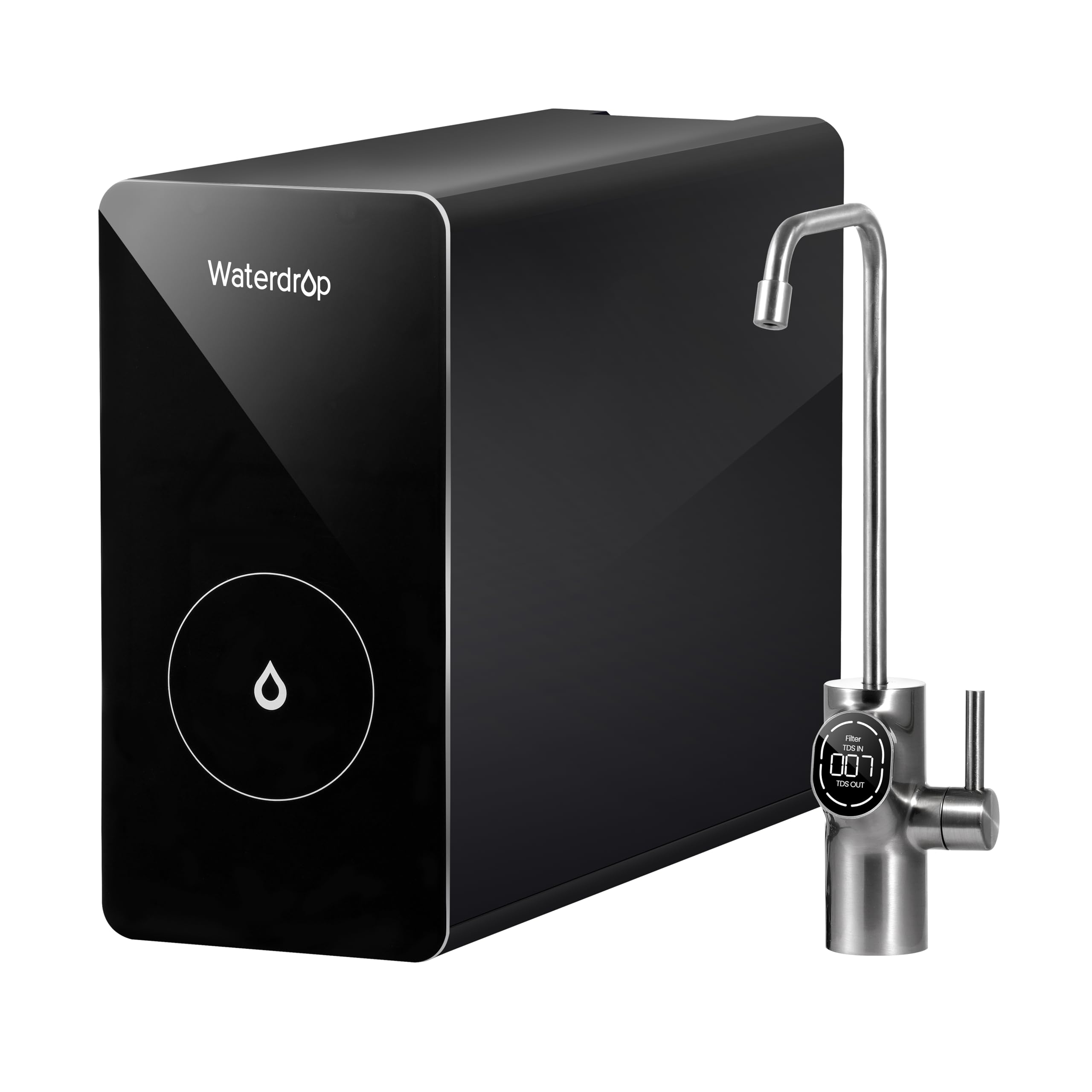
The Waterdrop D6 bridges the gap between high-output tankless systems and approachable pricing with its 600 GPD membrane, 2:1 pure-to-drain ratio, and a smart faucet that displays real-time TDS levels and remaining filter life. Its 6-stage composite filter incorporates PP cotton, activated carbon block, and a 0.0001-micron RO membrane that reduces chlorine, microplastics, salt, and radioactive substances like radium. The push-in filter design allows cartridge swaps in about two seconds without tools.
Users consistently praise the installation process, with most completing it within 30 minutes using the color-coded tubing and included quick-connect fittings. The compact dimensions (15.98 x 5.98 x 11.97 inches) occupy about 70 percent less under-sink space than traditional tank systems. Observed TDS reduction from 400 ppm to roughly 25 ppm is typical, though the system takes about 45-60 seconds of flushing to stabilize after periods of inactivity.
Some users note the pump produces a low hum during operation, and the smart faucet’s waterproof screen may have minor readability issues in direct light. An electrical outlet is required. The D6 does not carry the full set of NSF certifications that the G3P800 does, but for households that want a tankless smart system with fast flow and a lower investment threshold, it represents excellent value.
Why it’s great
- 600 GPD flow fills a cup in 8 seconds
- Smart faucet displays TDS and remaining filter life
- Push-in filter replacement takes 2 seconds without tools
Good to know
- Pump noise is noticeable during operation
- Requires consistent electrical access under sink
5. SimPure T1-400UV Tankless Reverse Osmosis System

The SimPure T1-400UV adds a UV sterilization stage to its 8-stage filtration process, targeting bacterial and viral threats that carbon-only systems cannot address. The 400 GPD membrane achieves near-zero TDS output — users report readings of 0-14 ppm from 270 ppm city water — and the 1.5:1 pure-to-drain ratio is a meaningful improvement over older 1:1 or 1:3 systems. SGS testing confirms compliance with NSF/ANSI 58 standards for TDS reduction.
Installation is straightforward for a tankless unit, though the system does require a power outlet and careful attention to the provided instructions. The UV light activates automatically based on water flow pressure, providing continuous microbial protection. The compact dimensions (15.6 x 5.3 x 15.7 inches) free up significant cabinet space compared to tank-based setups.
A few users have reported damaged O-rings on the filter housings out of the box, leading to leaks that required using spare rings included in the kit. For households on well water or those who prioritize disinfecting capability alongside RO purity, the T1-400UV is a compelling choice.
Why it’s great
- UV sterilization provides protection against bacteria and viruses
- Achieves near 0 TDS output from high-solids tap water
- Compact tankless design saves under-sink space
Good to know
- Initial flush may be required after periods of non-use
- O-ring quality inconsistency noted in some units
6. PureDrop PDR-100RO 3-Stage Under Sink RO System

The PureDrop PDR-100RO employs a 3-stage tankless design that keeps the footprint small — 5.91 x 17.72 x 18.5 inches — while delivering 100 GPD flow through a composite prefilter, high-rejection RO membrane, and post-carbon polisher. The system claims to eliminate up to 99 percent of over 1,000 contaminants including PFAS, lead, chlorine, fluoride, and arsenic. Its tankless nature eliminates the risk of secondary contamination from a storage bladder.
Users consistently report easy DIY installation with the included color-coded tubing and video guidance. TDS readings from city water around 150-200 ppm drop to 2-3 ppm, and the included extra replacement filters extend the service life before the first purchase of consumables. The small storage reservoir built into the unit allows for quick draws without waiting for the membrane to catch up.
The 100 GPD capacity is lower than larger tankless competitors, meaning simultaneous high-demand use (filling a large pot while the fridge dispenser runs) may cause noticeable slowdown. Some users note that the included faucet feels less substantial than premium metal alternatives. For apartments or smaller households that want a simple, space-efficient tankless RO with good contaminant reduction and a gentle entry cost, the PDR-100RO fits well.
Why it’s great
- Compact tankless design fits in tight under-sink spaces
- Includes extra replacement filters for extended service life
- Reduces PFAS and heavy metals effectively
Good to know
- 100 GPD flow may slow down under simultaneous high demand
- Included faucet is less robust than all-metal alternatives
7. LiquaGen 5-Stage RODI Aquarium Reef Water Filter System
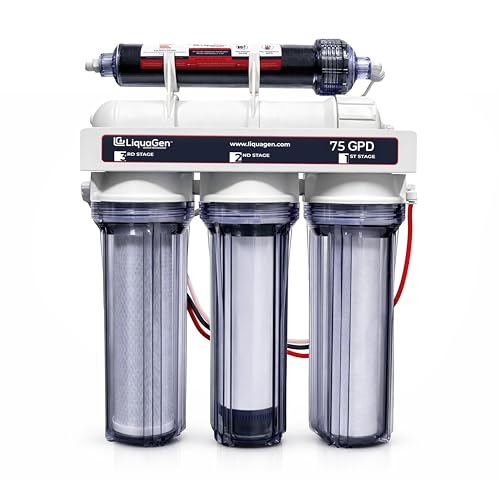
The LiquaGen 5-Stage RODI system is built for a specific niche: reef aquarium keepers who need zero TDS water free of silicates, phosphates, and nitrates that fuel algae growth. Its five stages — sediment, UDF activated carbon, coconut carbon, 75 GPD RO membrane, and nuclear-grade deionization resin — produce output TDS readings of 0 ppm from municipal supplies measuring 300 ppm or higher. The DI stage polishes the remaining ions after the RO membrane, ensuring the lowest possible conductivity.
Users running saltwater tanks confirm the unit reliably delivers 0 TDS water, with the DI resin cartridge lasting approximately 280 gallons before needing replacement. The system is mostly pre-assembled, with installation involving connecting a garden hose adapter and running tubing to the tank. The 75 GPD membrane produces about 20 gallons in 3 hours, which works well for smaller setups but may require a larger RO membrane or booster pump for tanks over 40 gallons.
Some users note the included garden hose adapter may leak or break, requiring an aftermarket replacement. The system lacks an auto shut-off valve and storage tank, so customers running it unattended risk overflow. For its intended purpose — supplying ultra-pure water for sensitive aquatic life — the LiquaGen performs reliably, but it is a specialized tool rather than a general drinking water system.
Why it’s great
- DI stage guarantees 0 TDS output for aquarium and lab use
- Mostly pre-assembled for quick installation
- Good value compared to dedicated reef-branded RODI units
Good to know
- No auto shut-off valve or storage tank included
- Garden hose adapter quality is inconsistent
8. Geekpure 6-Stage Reverse Osmosis System with Alkaline pH+

The Geekpure 6-Stage RO system delivers a full traditional tank-based setup — including a 2.8-gallon storage tank, 75 GPD membrane, and a 6th-stage alkaline mineral filter that raises pH from acidic 5-6.5 to a balanced 7.5-8.5 — at an accessible price point. The system’s components (membrane, tubing, fittings, tank, and faucet) are NSF certified for material safety. The filter life spans about 12 months for the pre-filters and 2-3 years for the RO membrane depending on feed water quality.
Users running city water with moderate TDS levels report output readings dropping to about 5-7 ppm, and the addition of calcium, magnesium, sodium, and potassium ions produces a noticeably smoother taste compared to standard RO-only systems. Installation is DIY-friendly with color-coded tubing and quick-connect fittings, and the company provides 24/7 technical support.
Some users find the initial setup instructions slightly unclear regarding drain line connections and faucet adapter sizing, but minor leaks are typically resolved with Teflon tape. The 75 GPD flow is slower than higher-capacity alternatives, so filling the tank after heavy usage can take time. For budget-conscious buyers who want a complete 6-stage alkaline system with a storage tank, the Geekpure offers strong performance per dollar.
Why it’s great
- Complete alkaline 6-stage system including 2.8-gallon tank
- pH boost from 5-6.5 to 7.5-8.5 with added minerals
- Component-level NSF certification for tank, membrane, and fittings
Good to know
- 75 GPD flow may feel slow during heavy water demand
- Setup instructions could be clearer for first-time users
9. iSpring F19K75 NSF Certified 2-Year Replacement Filter Set

The iSpring F19K75 is not a standalone RO system — it is a comprehensive 19-piece replacement filter set designed for 6-stage RO systems, specifically the iSpring RCC7AK and AquaTru Alkaline models. The kit includes 4 sediment filters, 4 granular activated carbon filters, 4 carbon block filters, 1 75 GPD RO membrane, 2 post-carbon filters, and 4 alkaline mineral filters, providing roughly two years of consumable supply.
Users confirm the individually wrapped filters arrive well-organized and labeled, making replacement straightforward. The updated FA15 alkaline filters and FT15 post-carbon filters feature push-fit quick connections that simplify the swap process. Customers report that water taste remains clean and smooth throughout the entire service cycle, with no noticeable degradation in TDS reduction performance.
A small number of users have received units with a broken filter in the packaging, likely due to shipping damage rather than manufacturing defects. The set is specific to iSpring’s 6-stage architecture and will not fit systems from other brands without adapter modifications. For existing iSpring 6-stage owners who want to lock in two years of guaranteed filter compatibility at a consolidated cost, this set eliminates the hassle of tracking individual replacement schedules.
Why it’s great
- Complete 2-year supply includes all filters for a 6-stage iSpring RO system
- Push-fit quick connections on updated alkaline and post-carbon filters
- Individually wrapped and labeled for easy identification
Good to know
- Only compatible with specific iSpring 6-stage RO models
- Occasional shipping damage reported on individual filters
FAQ
What does the pure-to-drain ratio mean and why does it matter?
Can a tankless RO system connect to a refrigerator water line?
Do I need a remineralization filter with my RO system?
How often do I need to replace the filters on an RO system?
Final Thoughts: The Verdict
For most users, the best ro water filter system winner is the Waterdrop G3P800 because it combines the fastest flow rate on this list, the most comprehensive set of NSF certifications across Standards 42, 53, 58, and 372, and the lowest wastewater ratio (3:1) in a compact tankless footprint. If you want alkaline remineralization without sacrificing speed, grab the iSpring RO500AK-BN. And for dedicated aquarium keepers who need guaranteed 0 TDS water, nothing beats the LiquaGen 5-Stage RODI.