The Manuka honey shelf is crowded with jars claiming high potency, but a label reading “Active” or “Total Activity” without a UMF or MGO number often signals a product that has been stripped of its defining antibacterial compound, methylglyoxal. The difference between a therapeutic-grade honey and a flavored table syrup comes down to independent lab certification, not marketing language.
I’m Mohammad Maruf — the founder and writer behind AirfryerBite. My approach to evaluating Manuka honey centers on verifying third-party lab results, UMF licensing status, and batch-level traceability from New Zealand producers.
After analyzing the certification data, customer feedback, and sourcing transparency of dozens of jars, I have consolidated the options into a focused guide to the best quality manuka honey that actually delivers on its potency claims.
How To Choose The Best Quality Manuka Honey
Manuka honey is judged by its unique methylglyoxal content, which dictates its potency. Without a rating system you trust, you risk paying for honey that has been blended, heat-damaged, or mislabeled. Focus on three pillars: certification, grading, and sourcing.
UMF Certification Is the Gold Standard
The Unique Manuka Factor (UMF) measures four signature compounds — including methylglyoxal, dihydroxyacetone, and leptosperin — to confirm the honey is genuine and from the Manuka bush. A UMF 10+ rating corresponds to MGO 263+. If a jar lacks a UMF license number you can verify on the UMFHA website, it may still be authentic, but you lose the strongest independent verification.
MGO Levels and Their Real-World Use
MGO (methylglyoxal) is the direct antibacterial marker. MGO 100+ is a good daily wellness booster. MGO 263+ (UMF 10+) is the entry point for targeted immune support and sore-throat relief. MGO 400+ and above are used for more intensive therapeutic purposes. Match the grade to your need — buying an MGO 1200+ jar for everyday tea is wasteful and expensive.
Raw, Unpasteurised Processing Matters
Heat destroys the delicate enzymes and natural bee pollen that contribute to Manuka’s bioactive profile. Look for “raw” and “unpasteurised” on the label, and check that the honey has been cool-processed. A thick, crystalline texture and a slightly earthy, herbal taste are signs the honey has not been over-heated.
Quick Comparison
On smaller screens, swipe sideways to see the full table.
| Model | Category | Best For | Key Spec | Amazon |
|---|---|---|---|---|
| Steens Manuka Honey MGO 263+ | Mid-Range | Daily wellness & value | UMF 10+ / MGO 263+ | Amazon |
| P.R.I Manuka Honey MGO 200+ | Mid-Range | Traceability & purity | MGO 200+ / QR traceable | Amazon |
| Cosana Manuka Honey MGO 550+ | Premium | High-potency immune support | MGO 550+ / 250g jar | Amazon |
| Nate’s Raw Manuka Honey MGO 263+ | Mid-Range | Convenient squeeze bottle | UMF 10+ / MGO 263+ | Amazon |
| New Zealand Honey Co. UMF 26+ | Ultra-Premium | Advanced therapeutic use | UMF 26+ / MGO 1282+ | Amazon |
In‑Depth Reviews
1. Steens Manuka Honey – MGO 263+

Steens delivers a MGO 263+ rating backed by UMF 10+ certification, which is the entry-level therapeutic grade that most buyers need for daily immune maintenance and sore-throat relief. The Scrape & Separate method preserves the natural crystalline structure and the nutrient-rich bee pollen components that are often filtered out of mass-market honey. At 17.6 ounces, this jar offers a meaningful volume for regular use without requiring a premium-tier budget.
Customers consistently describe the flavor as less sweet than clover honey, with a pleasant bitterness and a real raw texture that signals the honey has not been heat-damaged. The batch-number traceability lets you verify the source on Steens’ website, which adds a layer of transparency that budget blends lack. Multiple users report incorporating it into their daily coffee and tea routines for ongoing wellness support.
The raw, unpasteurised composition means you get the full enzymatic profile, but it also means the honey will crystallize faster than processed honey — this is normal and does not affect quality. Simply warm the jar gently if you prefer a liquid consistency. For anyone looking for a trustworthy UMF 10+ jar that balances potency and value, this is the most reliable pick in the list.
Why it’s great
- UMF 10+ certification ensures genuine methylglyoxal content
- Raw and unpasteurised with intact bee pollen components
- Large 17.6 oz jar at a reasonable tier price
Good to know
- Natural crystallization occurs over time
- Not suitable for those needing MGO 400+ potency
2. P.R.I Manuka Honey MGO 200+
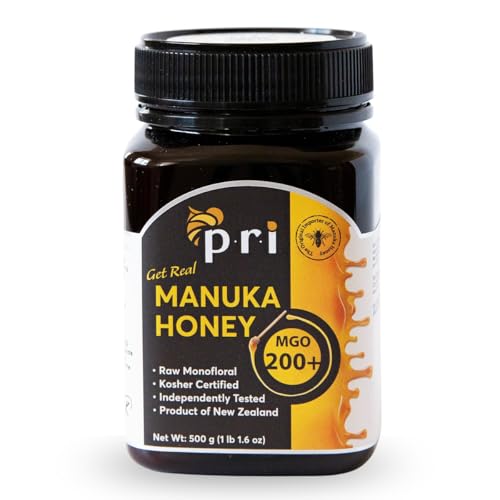
P.R.I has been bringing New Zealand Manuka honey to the US market since 1987, and their MGO 200+ offering reflects that long-standing expertise. The honey is monofloral, meaning it comes primarily from the Manuka bush, and it is cool-processed to preserve the natural enzymes that make Manuka unique. Each jar includes a QR code on the lid that links directly to batch-specific lab test results, giving you full traceability from hive to home.
At MGO 200+, this sits just below the UMF 10+ threshold but still provides measurable antibacterial activity suitable for daily immune support and digestive comfort. Users note the honey has a thick, slightly grainy texture and a light color, which is typical of a gently processed product. Several long-term subscribers report using it as a facial wash in the morning and as a wound ointment, highlighting its versatility beyond internal consumption.
The 500g (1.1 lb) jar delivers a solid amount of honey for the money, and the cool-processing ensures the natural methylglyoxal remains active. Keep in mind that MGO 200+ is a lower grade than the 263+ offerings from Steens or Nate’s, so if you need higher potency for acute conditions, you may want to step up. For everyday wellness and budget-conscious shoppers, this is a dependable, fully traceable choice.
Why it’s great
- QR code traceability for full batch transparency
- Cool-processed to retain natural enzymes
- Trusted brand with decades of market presence
Good to know
- MGO 200+ is below UMF 10+ certification level
- Firm texture may not suit all preferences
3. Cosana Manuka Honey MGO 550+
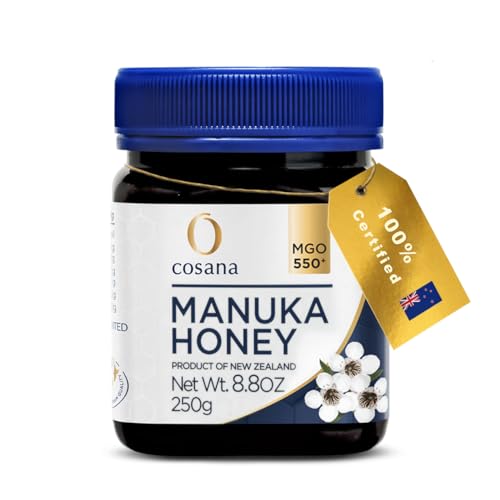
Cosana jumps to MGO 550+, a grade that places it firmly in the therapeutic range for immune system support and fighting off colds. The honey is bottled and sealed in New Zealand, and each batch is sent to a certified laboratory to confirm its MGO content. Because the company operates its own bottling plant in New Zealand, it maintains tight control over the supply chain from hive to jar.
Customer feedback points to a darker, earthier, herbal taste that sets it apart from lower-grade Manuka. Users report that one teaspoon or less is enough to notice a difference, and several mention using it to speed recovery from colds and sore throats. The 250g (8.8 oz) jar is smaller than the other options here, which is standard for higher-grade honey because of the increased cost per gram. The honey is free from glyphosate residues and pesticides, which adds to its premium positioning.
The trade-off is clear: you get significantly more methylglyoxal per serving, but you pay more per ounce compared to the Steens or P.R.I jars. This is not a honey for daily tea sweetening — it is best reserved for targeted immune moments. If you want a potent backup for when you feel under the weather, the Cosana MGO 550+ delivers verified high-grade activity without the ultra-premium price of UMF 26+ offerings.
Why it’s great
- MGO 550+ provides strong antibacterial potency
- Glyphosate-free and pesticide-free certification
- Bottled and sealed in New Zealand at own facility
Good to know
- Higher cost per gram than lower-grade options
- Strong herbal taste may be overpowering in tea
4. Nate’s Raw Manuka Honey MGO 263+
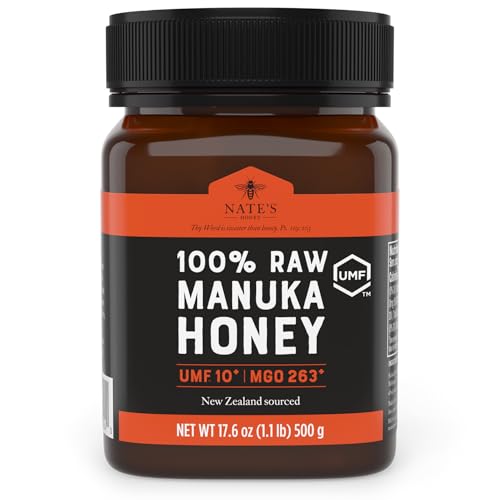
Nate’s brings UMF 10+ certification (MGO 263+) to the table with a practical twist: a squeeze bottle. This is a meaningful design advantage for anyone who has struggled with thick, crystallized honey that refuses to leave a standard jar. The honey is UMF-certified through the Unique Manuka Factor Honey Association, which tests for the same four signature compounds that guarantee authenticity. It is sourced as monofloral honey from New Zealand.
Customers specifically mention the squeeze bottle as a major convenience factor, especially for post-oral-surgery use where easy dispensing matters. The honey is described as thick and consistent, with a smooth taste that fits well into morning routines. Several users incorporate it into their daily immune support regimen and report positive results for healing and soothing. The 17.6 oz jar gives you the same volume as the Steens offering.
The UMF 10+ rating matches the Steens honey in potency, so the main differentiator here is the packaging. If you value convenience and dislike the mess of scooping honey from a standard jar, the Nate’s squeeze bottle is a compelling upgrade. Note that UMF certification is verified through the UMFHA, which adds an extra layer of trust beyond brands that self-certify. For anyone prioritizing both ease of use and verified grade, this is a strong choice.
Why it’s great
- UMF 10+ certification from UMFHA
- Squeeze bottle for easy, mess-free dispensing
- Same potent MGO 263+ as other top options
Good to know
- Plastic squeeze bottle may not appeal to glass jar purists
- Honey thickness can still require effort to squeeze
5. New Zealand Honey Co. UMF 26+ / MGO 1282+
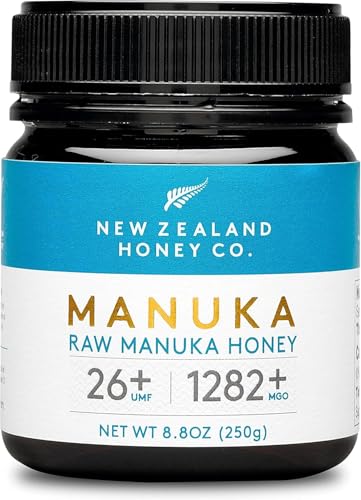
This is the highest-grade Manuka honey in the lineup, with a UMF 26+ rating that translates to MGO 1282+. At this level, the honey is considered a therapeutic-grade product used for advanced wound care, severe sore throats, and targeted digestive issues. The New Zealand Honey Co. emphasizes that only a very small fraction of Manuka honey ever reaches this grade, making it genuinely scarce.
Customer applications range from internal immune support to external wound treatment on animals. One reviewer used it on a deep laceration on a horse and reported remarkable healing, which aligns with the medical-grade reputation of high-UMF Manuka. The flavor is described as powerful and unique, and most users take it in very small quantities — a teaspoon or less per serving — because of its intensity and high cost.
The 8.8 oz jar is the smallest in this guide, which makes sense given the concentration of active compounds. It is also the most expensive per ounce by a wide margin. This product is not for casual daily use or for those who are new to Manuka honey. It is for buyers who need the highest verified potency for specific therapeutic applications and are willing to pay for the rarity. If your wellness needs do not demand UMF 26+, the lower-grade options above will serve you better.
Why it’s great
- UMF 26+ / MGO 1282+ for maximum therapeutic potency
- Scarce grade with verified authenticity
- Effective for both internal and external use
Good to know
- Extremely expensive per ounce
- Overkill for daily wellness or tea sweetening
FAQ
What is the difference between MGO 263+ and UMF 10+ Manuka honey?
How should I store Manuka honey to preserve its potency?
Can I use Manuka honey for wound healing?
Final Thoughts: The Verdict
For most users, the best quality manuka honey winner is the Steens Manuka Honey MGO 263+ because it delivers verified UMF 10+ potency and raw processing in a generous 17.6 oz jar at a balanced price point. If you want the convenience of a squeeze bottle with the same UMF 10+ certification, grab the Nate’s Raw Manuka Honey. And for advanced therapeutic use where only the highest grade will do, nothing beats the New Zealand Honey Co. UMF 26+.