The difference between a grocery store bottle and a jar of genuine quality honey is measured in clarity of origin, raw enzyme density, and the complete absence of added syrups. Cheap honey is frequently ultra-filtered or blended with rice syrup, stripping the very compounds that define real honey. For anyone who uses honey daily for natural sweetness, cooking, or wellness support, choosing the wrong bottle means paying for filler instead of substance.
I’m Mohammad Maruf — the founder and writer behind AirfryerBite. I’ve spent years analyzing honey supply chains, reading independent lab certifications, and cross-referencing UMF and MGO ratings against real user experiences to identify bottles that deliver genuine raw quality without marketing noise.
This guide cuts through the misleading labels and zeroes in on bottles that are raw, unfiltered, certified where it matters, and backed by honest customer feedback. My goal is to help you select the most reliable best quality honey based on actual specs, not shelf claims.
How To Choose The Best Quality Honey
Quality honey is defined by three pillars: how it was processed, whether it was cut with anything else, and if its origin is traceable. Straw-colored supermarket honey that pours like water has almost certainly been heated and filtered to death. Real high-grade honey retains its natural pollen, enzymes, and often crystallizes slowly over time. Understanding these distinctions is the key to spending your money on honey that tastes and works better.
Raw, Unfiltered, and Unpasteurized: The Processing Trifecta
Raw honey is never heated above typical hive temperatures, which preserves natural enzymes like glucose oxidase and diastase. Unfiltered honey means the fine pollen particles remain in the jar, providing antioxidants and supporting local allergy relief claims. Unpasteurized honey avoids the high-heat flash pasteurization that destroys beneficial compounds. If a label lacks any of these three claims, the honey has likely been processed in ways that reduce its nutritional density.
UMF vs MGO: Understanding Manuka Certifications
Manuka honey is measured by two primary metrics: the Unique Manuka Factor (UMF) rates overall purity and signature compounds such as leptosperin and methylglyoxal, while MGO measures methylglyoxal content in milligrams per kilogram. A UMF 10+ corresponds to roughly MGO 263+. Anything below MGO 100 is still authentic Manuka but lacks the elevated antibacterial potency that makes this honey category so sought after. Always look for the UMF trademark certification rather than vague “active” claims printed without independent verification.
Monofloral vs Polyfloral: Single Source or Field Blend
Monofloral honey comes predominantly from one blossom type, such as Manuka or buckwheat, giving it a distinct flavor profile and often a specific biochemical signature. Polyfloral honey, commonly labeled as “wildflower,” is a blend from multiple nectar sources and offers a more variable but often more affordable taste. For targeted wellness use, monofloral Manuka or buckwheat honey is the better choice. For general cooking and daily sweetening, a high-quality organic wildflower honey often delivers excellent value.
Quick Comparison
On smaller screens, swipe sideways to see the full table.
| Model | Category | Best For | Key Spec | Amazon |
|---|---|---|---|---|
| Sandt’s Buckwheat Honey | High-End | Dark robust flavor, immune support | 32 oz, Unfiltered, Non-GMO | Amazon |
| Nate’s Raw Manuka Honey | Premium | Daily wellness, easy squeeze use | UMF 10+, MGO 263+ | Amazon |
| Oregon Growers Wildflower Honey | Mid-Range | Versatile cooking & baking | 18 oz, Raw Unfiltered, Organic | Amazon |
| Manuka Hunters UMF 10+ | Mid-Range | Certified Manuka on a budget | UMF 10+, 8.8 oz Jar | Amazon |
| Carmichael’s Organic Honey | Entry-Level | Everyday raw organic sweetener | 32 oz, Unpasteurized, Unfiltered | Amazon |
In‑Depth Reviews
1. Sandt’s Buckwheat Honey

Sandt’s Buckwheat Honey stands apart for its exceptionally dark, molasses-like color and robust, almost malty flavor profile that clover honey cannot replicate. The bee foraging on buckwheat blossoms produces a honey high in antioxidants and minerals such as iron, zinc, and manganese, making it a traditional remedy for coughs and sore throats. The 2-pound bottle delivers excellent density — this honey is thick, slow-flowing, and clings to a spoon without being crystallized.
Unlike lighter honey that can be dominated by heat in tea, Sandt’s holds its own in strong coffee, barbecue glazes, and marinades where a deep savory-sweet note is required. The unfiltered nature means fine particles remain visible, confirming the raw state and retention of natural bee pollen. Customers consistently mention using it as a nighttime soother or post-workout recovery aid, which aligns with its higher mineral content.
This is a premium bottle at a fair size for the price tier, and it ships well-protected inside a branded box. The flavor intensity is distinct — if you prefer a mild neutral honey, this may not be your first choice. But for quality honey with verified provenance and unmatched taste depth, Sandt’s is the top performer in this lineup.
Why it’s great
- Dark, antioxidant-rich buckwheat source ideal for immune support
- Unfiltered and raw with no added flavors or preservatives
- 2-pound generous size at a mid-tier price point
Good to know
- Very bold flavor may overwhelm delicate teas or pastries
- Crystallization occurs naturally over time due to high glucose content
2. Nate’s Raw Manuka Honey MGO 263+
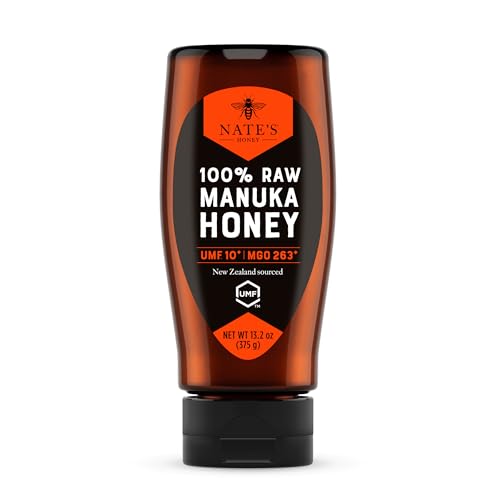
Nate’s is a well-known brand in the honey space, and its Manuka MGO 263+ offering lives up to the reputation. This monofloral Manuka is independently UMF-certified, meaning the leptosperin, DHA, and methylglyoxal compounds have been tested and validated by a third-party association. The MGO 263 rating corresponds to UMF 10+, the standard entry point for meaningful antibacterial potency.
The squeeze bottle is a practical differentiator — instead of wrestling with a jar and sticky spoon, you get a controlled drizzle for tea, oatmeal, or toast. The texture is thick but pliable enough to flow from the nozzle. Reviews consistently highlight its smooth, creamy mouthfeel and sweet earthy taste that is notably richer than generic Manuka. Customers also report using it to soothe sore throats and support recovery after oral surgery, which aligns with Manuka’s known wound-healing properties.
The 13.2-ounce bottle is a solid size for daily use without committing to a massive jar. Purity is uncompromised — no additives, no synthetic coloring, and batch-tested for authenticity. If you want a mid-power Manuka that balances wellness benefits with everyday convenience, Nate’s delivers a clean certified product in a format that encourages daily use.
Why it’s great
- UMF 10+ certified with verified MGO 263 mg/kg potency
- Squeeze bottle eliminates sticky mess and spoon use
- Rich earthy flavor that pairs well with hot beverages
Good to know
- Plastic squeeze bottle slightly less eco-friendly than glass jar
- Not the highest MGO rating if you require medicinal-grade levels
3. Oregon Growers Wildflower Honey
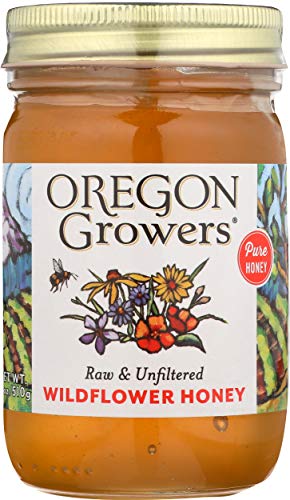
Oregon Growers delivers a raw, organic wildflower honey sourced from the Columbia River Gorge region, and the flavor reflects that micro-terroir. This is a golden amber honey with subtle floral and berry undertones often described as blackberry-forward by customers. Because it is both raw and unfiltered, the natural pollen content is fully intact — a key factor for those who use local honey to combat seasonal allergies.
The 18-ounce jar hits a sweet spot for countertop use without taking up much pantry space. This honey flows at a medium pace — not as thick as Sandt’s buckwheat but not watery like many mass-market clover blends. It is versatile enough for baking, salad dressings, yogurt, and tea without overwhelming other flavors. The organic certification means the nectar source fields are free from synthetic pesticides, which is a tangible quality marker.
Farm-direct sourcing from Oregon Growers bypasses the typical middleman, which translates to a fair price for an organic raw product. Customer feedback shows strong repeat buying and consistent praise for the clean taste and creamy texture. If you want a daily-driver honey that is certified organic, genuinely raw, and regionally distinct without paying a premium for Manuka branding, this is the most sensible choice in this guide.
Why it’s great
- 100% organic, raw, and unfiltered with intact pollen
- Distinct Pacific Northwest wildflower flavor profile
- Excellent value for organic certified honey
Good to know
- Contains blackberry notes which may not appeal to all palates
- Smaller 18 oz jar compared to some bulk competitors
4. Manuka Hunters UMF 10+
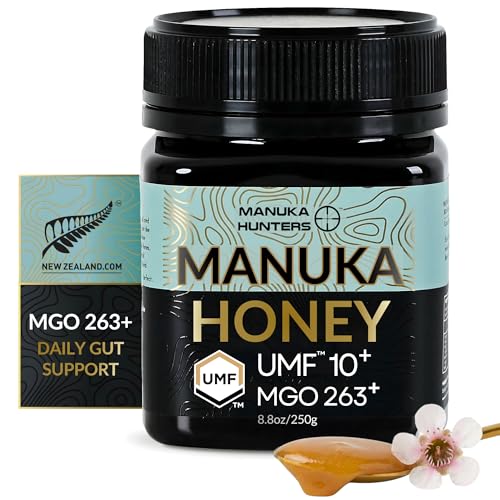
Manuka Hunters positions itself as a purist’s Manuka: harvested, tested, certified, and packed entirely in New Zealand. The UMF 10+ certification is backed by the UMF Honey Association, which independently tests for leptosperin and methylglyoxal to prevent fake labeling. This jar contains monofloral Manuka with the full bioactive profile rather than a blended product diluted with cheaper honey.
The 8.8-ounce jar is compact but the honey inside is dense and creamy — customers describe it as smooth with a pleasant floral finish. The mild flavor profile makes it approachable for daily spoonfuls or stirring into coffee without the heavy medicinal aftertaste of higher-MGO Manuka. It is gluten-free, dairy-free, and non-GMO, fitting multiple dietary restrictions. The BPA-free jar with a resealable lid helps maintain freshness and prevents moisture ingress.
For buyers who want a certified Manuka entry point without leaping into the high-MGO pricing territory, Manuka Hunters delivers authentic UMF 10+ at an accessible mid-range cost. The only trade-off is the smaller jar size, but the purity certification takes priority over volume. If you are new to Manuka and want a verified starting point, this jar offers the safest traceability in this list.
Why it’s great
- Full UMF 10+ certification with independent batch testing
- Smooth, creamy texture with mild floral sweetness
- Packed in New Zealand with sustainable beekeeping practices
Good to know
- 8.8 oz jar is relatively small for the price tier
- Not medicinal-grade; best for daily use rather than targeted high-dose therapy
5. Carmichael’s Organic Honey
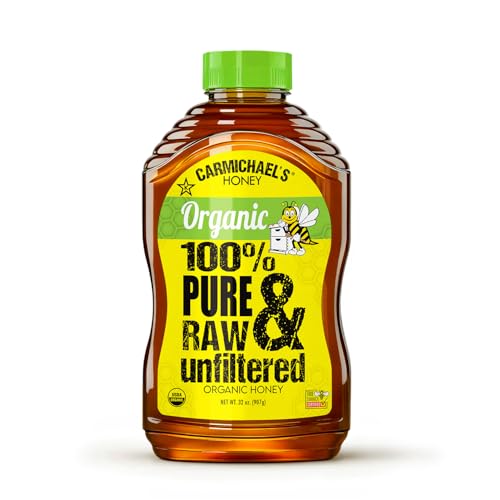
Carmichael’s offers a USDA-certified organic raw honey that checks all the core boxes: unpasteurized, unfiltered, and non-GMO. The 32-ounce size is the most generous per-unit option in this guide, making it the ideal choice for households that go through honey quickly for baking, marinades, or sweetening large batches of tea. The honey has a butterscotch-like character with light floral notes that customers consistently find sweeter and more concentrated than supermarket alternatives.
Multiple verified buyers specifically note that this honey remains fluid down to the bottom of the jar without crystallizing prematurely, suggesting the glucose-to-fructose ratio is well-balanced. The ethical sourcing is another differentiator — Carmichael’s claims regenerative and pesticide-free sourcing, which adds a layer of trust for buyers concerned about neonicotinoid residues in less expensive honey.
The only consistent issue reported is shipping damage: the cap can arrive cracked if the jar is not sufficiently padded. The aluminum seal usually protects the honey, but the packaging could be sturdier. If you prioritize a large volume of certified organic raw honey at an entry-level cost, Carmichael’s delivers reliable quality with a minor shipping caveat.
Why it’s great
- USDA Organic with raw, unfiltered, and unpasteurized processing
- Resists early crystallization — stays fluid to the last drop
- Large 32 oz jar offers the best volume in this lineup
Good to know
- Cap can arrive damaged due to insufficient box padding
- Flavor is lighter than buckwheat or Manuka options
FAQ
Does unfiltered honey contain bee parts or debris?
Why does my quality honey crystallize after a few months?
How can I tell if honey has been cut with corn syrup?
What does the MGO number mean for everyday use?
Final Thoughts: The Verdict
For most users, the Best Quality Honey winner is the Sandt’s Buckwheat Honey because it delivers a uniquely rich, antioxidant-dense profile in a generous 2-pound bottle without artificial processing. If you want a convenient daily Manuka with verified UMF 10+ potency, grab the Nate’s Raw Manuka Honey MGO 263+. And for an affordable organic workhorse that performs in any recipe, nothing beats the Oregon Growers Wildflower Honey.