The search for a gluten-free flour that actually tastes good often ends in disappointment — dense cookies, crumbly cakes, and a lingering gritty mouthfeel that kills the experience. The difference between a failed recipe and a showstopper almost always comes down to the flour blend you choose, not your baking skills.
I’m Mohammad Maruf — the founder and writer behind AirfryerBite. Over the years, I’ve analyzed the formulation of dozens of gluten-free flour blends, comparing particle size, starch composition, and protein ratios to understand what makes one mix rise like wheat while another falls flat.
This guide focuses entirely on flavor, texture, and finished-bake quality to help you pick the best tasting gluten-free flour for your specific recipes, whether you need a nutty crunch or a neutral white-flour stand-in.
How To Choose The Best Tasting Gluten-Free Flour
Selecting a gluten-free flour blend that delivers on flavor and texture requires looking past the front-of-bag claims. The particle size, starch source, and intended use determine whether your bake turns out light and tender or dense and gritty.
Particle Size and Milling Method
Superfine milling is the single most important factor for avoiding a sandy mouthfeel. Flours labeled “superfine” or “extra fine” have been ground to a smaller micron size, which allows them to hydrate evenly and mimic the smoothness of wheat flour. Standard rice flours often leave a gritty residue; superfine versions like those from Authentic Foods solve that problem entirely.
Blend Composition vs. Single-Ingredient Flours
A pre-blended all-purpose flour containing starches (tapioca, potato, corn) plus a protein source (rice, almond, or legume) tends to produce the most balanced baked goods. Single-ingredient flours like almond or white rice flour offer distinct flavors but require careful recipe engineering to avoid density or excess oiliness. For a true 1:1 wheat replacement, stick with a tested blend that includes a binder like xanthan gum.
Allergen Profile and Dietary Fit
Many top-tasting flours are also free from dairy, eggs, nuts, soy, and corn. If you are cooking for multiple food allergies, look for a certified allergen-free label — gfJules is one example that covers the top nine allergens while still producing light, fluffy results. Almond flour provides excellent flavor but is unsuitable for nut-free households.
Quick Comparison
On smaller screens, swipe sideways to see the full table.
| Model | Category | Best For | Key Spec | Amazon |
|---|---|---|---|---|
| gfJules All Purpose Flour | Premium Blend | 1:1 wheat replacement | Certified Top 9 Allergen-Free | Amazon |
| Bob’s Red Mill Paleo Keto Baking Flour | Grain-Free Blend | Low-carb & paleo baking | 10 net carbs per serving | Amazon |
| Authentic Foods Superfine White Rice Flour | Single Ingredient | Chewy breads & pizza crust | Never gritty superfine grind | Amazon |
| Sunrise Flour Mill Heritage Bread Flour Blend | Heritage Wheat | Artisan sourdough loaves | Single-pass unifine milling | Amazon |
| Yupik Blanched Almond Flour | Nut-Based | Low-carb cookies & crusts | No added sugar or oil | Amazon |
In‑Depth Reviews
1. gfJules Certified Gluten Free All Purpose Flour

gfJules has been voted number one by consumers in the Gluten Free Awards eight times, and for good reason. The blend of modified tapioca, potato, corn, and white rice flours plus xanthan gum produces baked goods that are light, fluffy, and completely free of the gritty texture that plagues many alternatives. Every batch is verified by the GFCO to contain less than 10 ppm gluten and is certified free from the top nine allergens.
The 1.5-pound pouch yields about five cups of flour, and it works as a straight 1:1 substitute for wheat flour in nearly any recipe — no additional binders or starches needed. Testers reported perfect results in cakes, biscuits, bagels, and even savory gravy, with no one detecting the absence of gluten. The white flour blend avoids brown rice flour entirely, which Jules specifically excluded because it can introduce a dry, gritty taste.
This is the most consistent performer for bakers who want a single flour that handles everything from cookies to pizza crust without guesswork. The only real trade-off is the premium price point, but for those who need both taste and certified safety, it remains the standard.
Why it’s great
- Truly smooth, non-gritty texture in finished bakes
- Cup-for-cup substitution works without additional binders
- Certified free of top nine allergens
Good to know
- Premium tier pricing compared to single-ingredient flours
- Only available in 1.5 lb or 4.5 lb pouches
2. Bob’s Red Mill Paleo Keto All-Purpose Baking Flour
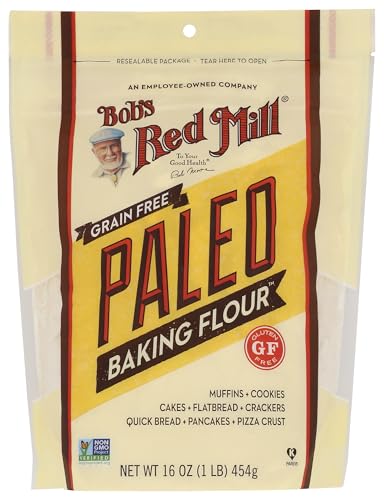
This grain-free, dairy-free, and bean-free blend from Bob’s Red Mill is a top choice for bakers on keto or paleo diets who still want hearty, satisfying baked goods. At just 10 net carbs per serving, it delivers a nutty, wholesome flavor profile that users consistently describe as delicious — especially in pancakes and pizza crust, where the back-of-package recipe has become a cult favorite.
Unlike standard 1:1 gluten-free blends that can produce sticky or gummy results, this mix yields a denser, more substantial texture. One reviewer who baked a zucchini carrot bread noted the loaf was “hearty” and far superior to lighter blends. The flour is a curated blend of several flours, saving you the expense and effort of buying and mixing individual ingredients yourself.
The main limitation is that the resealable zipper on the bag does not always seal securely, so transferring to an airtight container is recommended. Also, the one-pound bag is small for heavy bakers — there is no larger size, which is a common frustration among fans who wish they could buy in bulk.
Why it’s great
- Excellent flavor in pancakes, pizza, and bread
- Pre-blended formula saves time over mixing your own flours
- Grain-free with low net carbs
Good to know
- Bag zipper often fails to close properly
- Only available in a one-pound size
3. Authentic Foods Superfine White Rice Flour
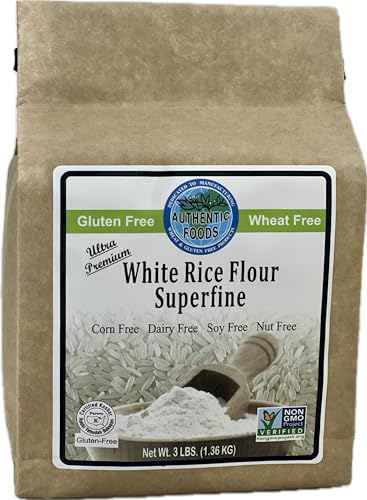
Authentic Foods has earned a loyal following among gluten-free bakers who need a single-ingredient flour that does not taste like sand. The superfine grind eliminates the gritty mouthfeel that plagues standard white rice flours, making it viable for bread, cakes, and pie crusts without the need for heavy gums or starches. Multiple reviews confirm the flour feels nearly as fluffy and smooth as regular wheat flour when properly hydrated.
The 3-pound bag offers strong value for its price. It is also free from dairy, nuts, corn, and soy, making it a safe base for those managing multiple food allergies. One tip from experienced bakers: hydrate the flour a bit longer than you would wheat flour — letting the batter rest or using near-boiling water before baking helps the grains absorb liquid fully, preventing a dry or crumbly final texture.
This flour works best when used as a component in a broader recipe rather than as a straight 1:1 substitute. For anyone who wants to build their own custom gluten-free blend from scratch, this superfine rice flour is the ideal neutral foundation.
Why it’s great
- Superfine grind eliminates gritty texture
- Large 3-pound bag at an entry-level price point
- Free from nuts, dairy, corn, and soy
Good to know
- Requires recipe adjustment for best results
- Not a 1:1 substitute on its own
4. Sunrise Flour Mill Heritage Organic Bread Flour Blend
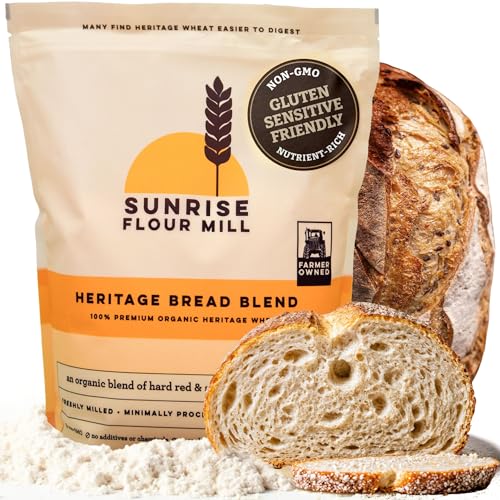
This is the outlier on the list — a heritage wheat flour blend that is not gluten-free by standard definition, but which many gluten-sensitive bakers tolerate thanks to its pre-hybridized wheat varieties (Turkey Red and White Sonora) milled via a 1930s single-pass technique. The result is a super-fine, fluffy flour that creates soft, airy loaves with a golden crust and a rich, nutty flavor profile that rivals any artisan bakery.
Customers with severe IBS and bloating issues report that 24-hour cold fermentation with this flour makes it exceptionally digestible — one reviewer described it as the only flour that allows them to eat bread again without discomfort. The 5-pound bag provides excellent value for serious home bakers who make sourdough or sandwich bread regularly. The protein content is high enough to produce a strong gluten network, delivering the spring and crumb structure that gluten-free blends struggle to match.
This flour is ideal for those who are gluten-sensitive rather than strictly celiac, and who prioritize the taste and texture of traditional bread. It is not suitable for anyone requiring a celiac-safe gluten-free diet.
Why it’s great
- Exceptional flavor and texture for artisan bread
- Single-pass milling produces super-fine, fluffy flour
- 5-pound bag offers strong per-pound value
Good to know
- Contains heritage wheat — not suitable for celiacs
- Best results require cold fermentation
5. Yupik Blanched Almond Flour

Yupik’s blanched almond flour is a straightforward, no-additive ingredient that brings a rich, nutty flavor to baked goods without any added oil, salt, or sugar. The 2.2-pound bag is a solid entry-level option for low-carb and keto bakers who want to make cookies, crusts, or almond butter from scratch. Multiple reviews highlight the fresh, non-stale aroma — a critical advantage over some almond flours that can turn rancid quickly.
The texture is noticeably coarser than superfine almond flours, which caused some cookies to spread thin in testing. One reviewer noted it worked well for making almond butter in a food processor and would repurchase for that purpose. For baking, this flour performs best in recipes that already expect a denser, crumblier result — like shortbread-style cookies or savory coatings — rather than light, airy cakes.
This is a solid choice for budget-conscious bakers who need a large volume of almond flour for frequent low-carb baking. The main drawback is that the coarser grind limits its versatility in finer pastry applications.
Why it’s great
- Fresh, nutty flavor with no stale aftertaste
- No added sugar, oil, or salt
- Good value for low-carb baking volume
Good to know
- Coarser texture may cause spreading in cookies
- Not ideal for delicate, fluffy pastries
FAQ
What makes a gluten-free flour taste better than others?
Can I use almond flour as a 1:1 substitute for all-purpose gluten-free flour?
How do I prevent gluten-free baked goods from tasting gritty or dry?
Final Thoughts: The Verdict
For most users, the best tasting gluten-free flour winner is the gfJules All Purpose Flour because it delivers a smooth, non-gritty texture and neutral flavor that works in virtually any recipe without modification. If you want a grain-free, low-carb option that still tastes hearty, grab the Bob’s Red Mill Paleo Keto Baking Flour. And for artisan sourdough lovers who tolerate heritage wheat, nothing beats the Sunrise Flour Mill Heritage Bread Flour Blend.