Ovulation, egg quality, and hormonal signaling depend on a precise cascade of micronutrients — not a generic multivitamin. The difference between a random supplement bottle and a targeted fertility stack often comes down to specific forms of folate, the dosage of CoQ10, and the balance of inositols. Getting this wrong means swallowing expensive pills that do nothing for your cycle.
I’m Mohammad Maruf — the founder and writer behind AirfryerBite. I’ve spent years analyzing supplement formulations, digging into clinical dosing protocols for CoQ10, Myo-Inositol, and active folate, and cross-referencing third-party testing to separate real fertility support from label marketing.
This guide breaks down five distinct formulations that actually align with the science of conception. Whether you need mitochondrial support, PCOS hormone regulation, or a complete prenatal fertility blend, the right vitamins for fertility depend on matching the exact nutrient form and dosage to your body’s specific needs.
How To Choose The Best Vitamins For Fertility
Fertility supplements are not one-size-fits-all. Your cycle type, age, and any diagnosed conditions like PCOS or diminished ovarian reserve change which nutrients matter most. Here are the three non-negotiable filters to apply before buying.
CoQ10 Form and Milligram Strength
Coenzyme Q10 (ubiquinone) is the mitochondrial fuel that powers egg cell maturation. Standard dry powder capsules offer poor bioavailability. Look for formulas using MCT oil or black pepper extract as carriers, and check whether the dose is 200mg (maintenance) or 600mg (therapeutic for egg quality). Gummy forms often use a different absorption technology but verify the mg per serving matches your target.
Inositol Ratio for Hormone Signaling
Myo-Inositol and D-Chiro Inositol work together to improve insulin sensitivity and ovarian function. The physiologically ideal ratio is 40:1. Many PCOS-focused supplements get this right; general blends often skip D-Chiro entirely. If you have irregular cycles or confirmed PCOS, a 40:1 complex with added folate and zinc delivers targeted cycle support that plain myo-inositol cannot match.
Active Folate vs Folic Acid
Folic acid is a synthetic form that requires enzymatic conversion in the liver. Up to 40% of women carry a genetic variation (MTHFR) that makes this conversion inefficient. Active folate, listed as L-Methylfolate or 5-MTHF, bypasses this step entirely. Any fertility supplement claiming to be comprehensive should list L-Methylfolate — not folic acid — as the folate source.
Quick Comparison
On smaller screens, swipe sideways to see the full table.
| Model | Category | Best For | Key Spec | Amazon |
|---|---|---|---|---|
| Nature’s Craft Female Fertility Supplement | Prenatal Fertility Blend | All-in-one pre-conception support | CoQ10 + Inositol + L-Methylfolate + DHEA | Amazon |
| MEDCHOICE 14-in-1 Inositol Complex | PCOS / Hormone Focus | Cycle regulation and PCOS symptom management | 40:1 Myo & D-Chiro Inositol + Folate | Amazon |
| DRFOSTER CoQ10 600mg | High-Dose Mitochondrial | Egg quality and cellular energy | 600mg CoQ10 + PQQ + Omega-3 | Amazon |
| NEVISS Sugar-Free CoQ10 Gummies | Tasty Alternative | Those who dislike swallowing softgels | 250mg CoQ10 per gummy + Omega-3 | Amazon |
| Micro Ingredients CoQ10 200mg | Value / Long Supply | Daily maintenance and heart health | 200mg per serving / 240 softgels | Amazon |
In‑Depth Reviews
1. Nature’s Craft Female Fertility Supplement

This is the most complete single-bottle fertility stack on the market. It combines CoQ10 for mitochondrial energy, Myo-Inositol and D-Chiro Inositol for hormone signaling, L-Methylfolate for MTHFR-safe folate delivery, plus DHEA, DHA, EPA, Chasteberry, and Ashwagandha. The formulation covers egg quality, ovulation regularity, and uterine environment in one 120-count bottle. Real user reports include restored ovulation after ectopic-related hormonal imbalance and verified pregnancy within a few months of use.
The active folate form is the standout here. Many so-called prenatal vitamins still use folic acid, which requires enzymatic conversion that a significant percentage of women cannot complete efficiently. Nature’s Craft uses L-Methylfolate directly, removing that metabolic bottleneck. The addition of DHEA also supports ovarian function for women over 35 or those with diminished reserve, making this a smart pick for age-related fertility concerns.
There are two practical downsides. The pills are large and carry a noticeable herbal-grassy taste — some users report fish oil burps if taken without food. The neon-yellow urine from the B-complex is harmless but can be surprising. If you are sensitive to large capsules or strong-smelling supplements, this may take some adjustment. Take with a meal to minimize nausea.
Why it’s great
- Complete blend with CoQ10, Inositol, L-Methylfolate, DHEA, and DHA in one bottle
- Active folate form bypasses MTHFR conversion issues
- Real user reports include restored cycles and confirmed pregnancy
Good to know
- Capsules are large with a strong herbal/fishy taste
- May cause nausea if taken on an empty stomach
- B vitamins turn urine bright yellow
2. MEDCHOICE 14-in-1 Women’s Inositol Complex

If PCOS is your primary fertility hurdle, this 14-in-1 complex is the most targeted option in this lineup. The 40:1 ratio of Myo-Inositol to D-Chiro Inositol matches the physiological ratio found in healthy ovarian tissue — a detail many generic inositol powders get wrong. The formula also includes bioactive folate, vitamin D3, zinc, magnesium, and botanicals designed to address insulin resistance, cortisol balance, and androgen reduction simultaneously.
The user reports are unusually specific. Multiple verified buyers with diagnosed PCOS report restored menstrual cycles after 4-5 months, some after years of amenorrhea. One user with estrogen dominance and fibroids saw her cycle return after a three-month absence and her cystic acne clear significantly. Another user with a three-year absence got her period back after the second bottle. The sugar-craving reduction and energy improvement noted in reviews align with the insulin-sensitizing effect of inositol.
The dosing protocol requires four capsules per day (two twice daily), which means the bottle lasts 30 days at the full dose. Some users start with two per day for a month to assess tolerance before ramping up. The ingredients are stimulant-free and non-habit-forming, but consistency matters — skipping doses reduces the hormone-balancing effect significantly.
Why it’s great
- Clinically appropriate 40:1 myo to D-chiro inositol ratio
- Users report restored cycles after years of absence
- Includes vitamin D, zinc, and magnesium for PCOS support
Good to know
- Requires 4 capsules daily for full dose
- Bottle lasts 30 days at serving size
- Start with 2 daily for first month to build tolerance
3. DRFOSTER CoQ10 600mg Softgels
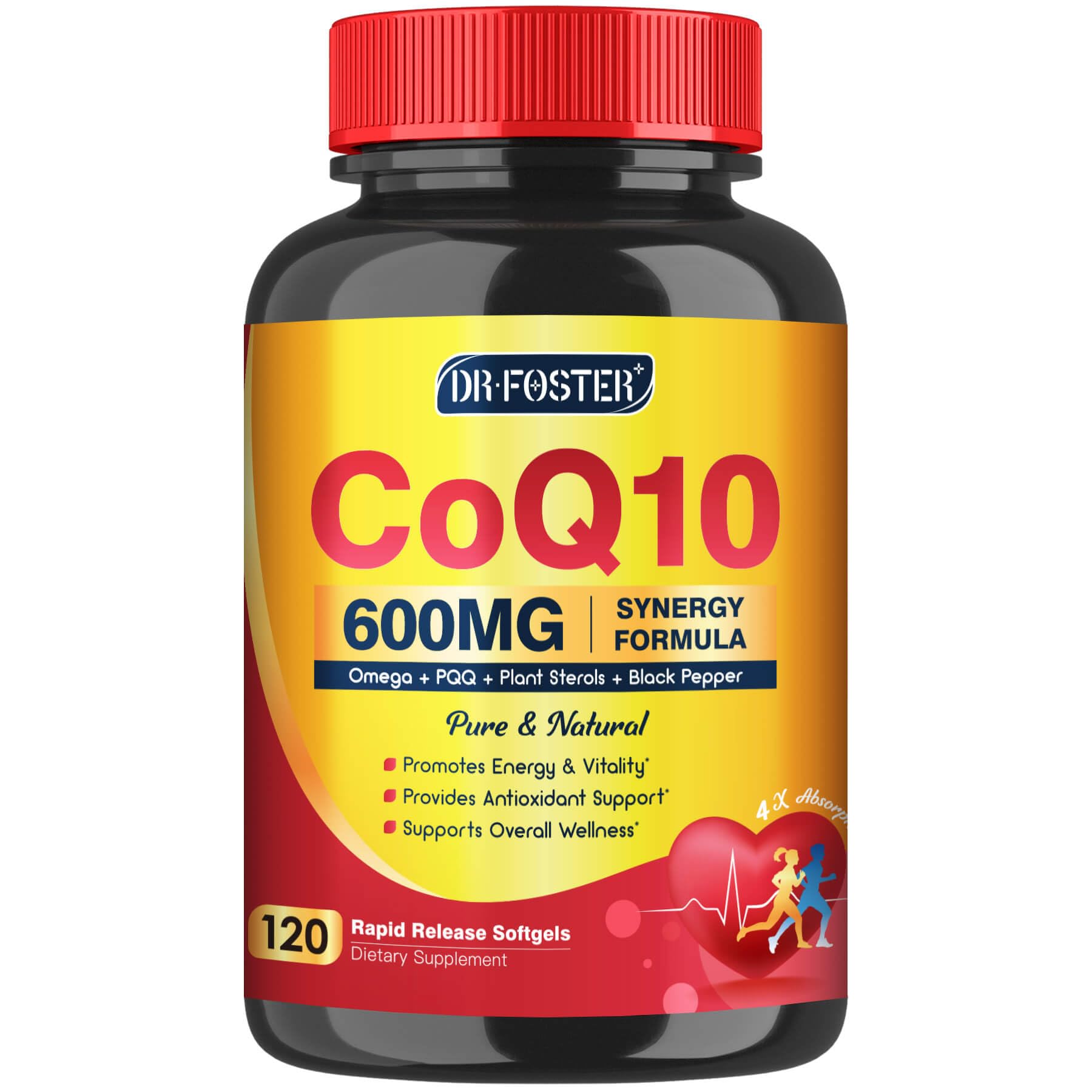
The 600mg CoQ10 dose here is the highest in this comparison — and for fertility purposes, that matters. Research on egg quality improvement in women undergoing IVF uses CoQ10 doses of 600mg daily. The DRFOSTER formula pairs this with black pepper extract and MCTs for enhanced absorption, plus 20mg of PQQ (pyrroloquinoline quinone) to stimulate new mitochondrial growth in cells. This dual mitochondrial support is what makes this product stand out for age-related fertility decline.
The addition of Omega-3-6-9 and vitamin E rounds out the antioxidant profile. Egg cells are particularly vulnerable to oxidative stress, and the lipid-rich environment of the follicle benefits from these fatty acids. Users find the softgels easy to swallow, with reports of consistent use for over two years without side effects. The 60-serving bottle means two softgels per day for a full month’s supply at the therapeutic dose.
This product is not a standalone fertility supplement — it lacks inositol, folate, and other prenatal nutrients. Its role is strictly mitochondrial and antioxidant support. For women building a complete stack, this CoQ10 product needs to be combined with a prenatal multivitamin and possibly an inositol supplement. But as a therapeutic CoQ10 source, the 600mg dose and absorption enhancers are hard to beat at this tier.
Why it’s great
- Therapeutic 600mg CoQ10 with enhanced absorption formula
- PQQ addition supports new mitochondrial growth
- Easy-to-swallow softgels with no reported side effects
Good to know
- Not a complete fertility blend — needs to be stacked
- 60 servings per bottle at 2 softgels daily
- Gelatin-based, not vegan-friendly
4. NEVISS Sugar-Free CoQ10 Gummies
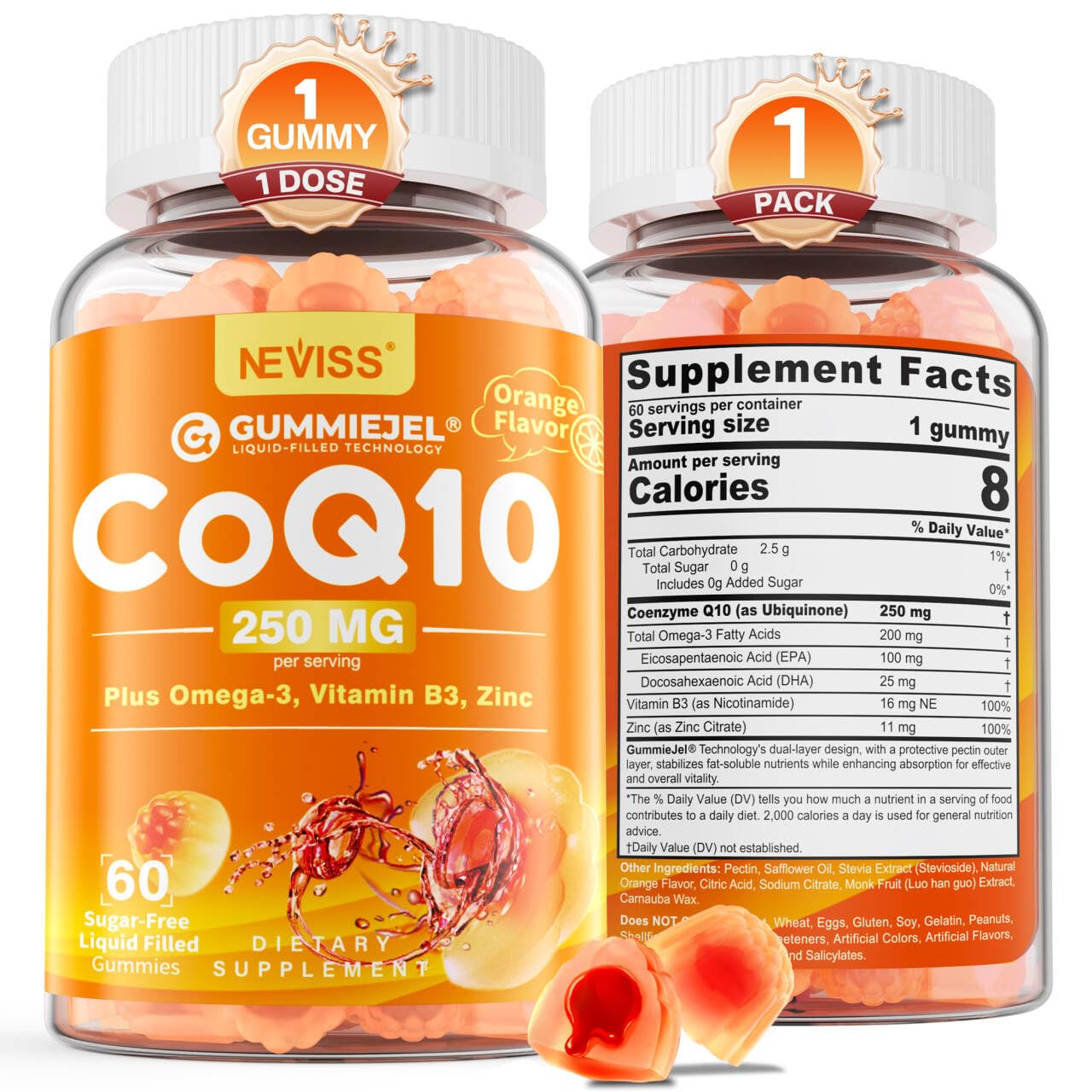
If swallowing softgels is a daily struggle, these liquid-filled gummies offer a genuinely pleasant alternative. Each gummy delivers 250mg of CoQ10 using GummieJel Technology, which encapsulates the active ingredients in an inner liquid core protected by a pectin outer layer. The manufacturer claims 5X better absorption than standard CoQ10 tablets, and the natural orange flavor makes compliance easy — especially for anyone who dreads pill-taking.
The formulation includes Omega-3 (EPA and DHA), vitamin B3, and zinc citrate. While the zinc supports immune function and collagen synthesis, the Omega-3 content is relatively low compared to dedicated fish oil supplements. The 60-gummy bottle provides a 30-day supply at 500mg daily (2 gummies) or 60 days at 250mg daily. The sugar-free claim is backed by plant-derived sweeteners, not artificial ones.
The main trade-off is dose flexibility. You cannot easily split the 250mg gummy, so adjusting your CoQ10 intake means taking one or two gummies. At the full 500mg dose, the 30-day supply is shorter than softgel-based alternatives. The sticky texture is a minor complaint from some users, but the taste gets consistent praise — several reviewers say it tastes like candy and helps them stay consistent with supplementation.
Why it’s great
- Great-tasting liquid-filled gummy for pill-averse users
- Pectin-based, gelatin-free, and sugar-free
- Includes Omega-3 and zinc for additional support
Good to know
- Gummies can be sticky and clump together
- Only 30-day supply at 500mg daily dose
- Less dose flexibility than softgels
5. Micro Ingredients CoQ10 200mg Softgels
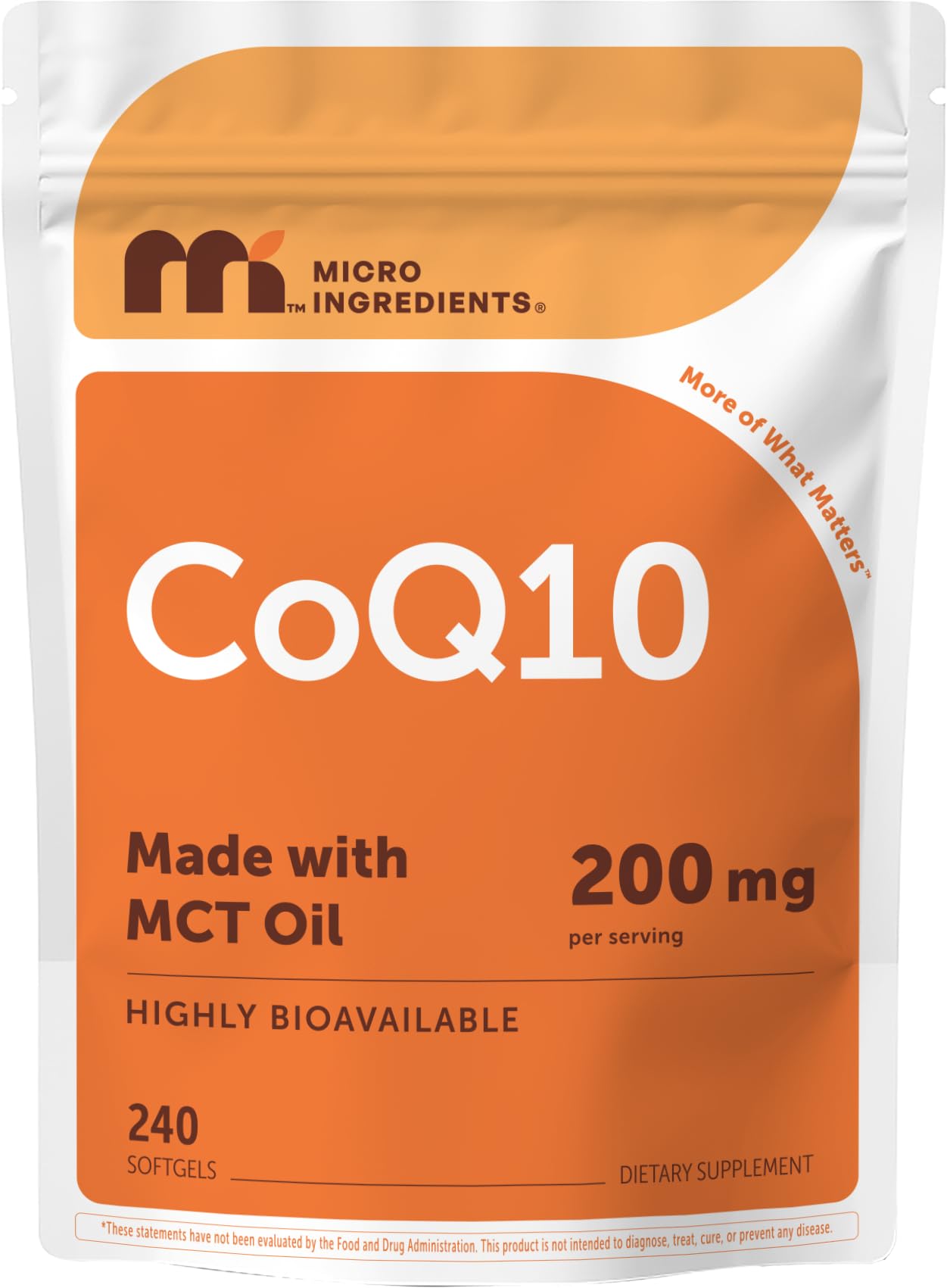
For daily CoQ10 maintenance at a entry-level cost, this 240-softgel pouch is the volume champion. Each serving of two softgels provides 200mg of ubiquinone (the standard oxidized form of CoQ10) suspended in coconut-derived MCT oil. The MCT carrier improves absorption over dry powder capsules, and the four-month supply per pouch means fewer reorder cycles.
The 200mg dose is appropriate for general heart health, statin users, and foundational mitochondrial support. For fertility-specific applications, 200mg is a maintenance dose rather than a therapeutic one. Many users split their daily intake — taking 200mg after breakfast and another 200mg after dinner — to reach 400mg total. The softgels are described as easy to swallow with no taste or smell, which is consistent with quality manufacturing.
This is a no-frills product. There are no absorption enhancers like black pepper extract, no added PQQ, and no omega-3s. It is simply CoQ10 in a well-chosen carrier oil at a reasonable price per milligram. For anyone wanting to add CoQ10 to an existing stack without breaking the budget, this works well. Just be aware that it uses ubiquinone rather than the more expensive reduced form (ubiquinol) that some prefer for higher bioavailability.
Why it’s great
- Excellent value with up to 4 months supply per pouch
- MCT oil carrier improves absorption over dry capsules
- Tasteless, odorless softgels with easy swallowability
Good to know
- 200mg is a maintenance dose, not therapeutic for egg quality
- Uses ubiquinone form, not ubiquinol
- No additional absorption enhancers or co-nutrients
FAQ
Can I take CoQ10 and inositol supplements together?
How long does it take for inositol to regulate periods with PCOS?
What is the difference between ubiquinone and ubiquinol for fertility?
Final Thoughts: The Verdict
For most users, the vitamins for fertility winner is the Nature’s Craft Female Fertility Supplement because it packs CoQ10, inositol, L-Methylfolate, DHEA, and DHA into one bottle — no stacking required. If you need specific PCOS cycle regulation, grab the MEDCHOICE 14-in-1 Inositol Complex for its clinically relevant 40:1 inositol ratio. And for targeted high-dose mitochondrial support to improve egg quality, nothing beats the DRFOSTER CoQ10 600mg with its PQQ addition and enhanced absorption formula.