A manual juicer seems simple—a reamer, a press, a handle you pull. Then you buy the wrong one. The flimsy plastic model cracks mid-squeeze. The metal press leaves seeds in your glass. The hand-carved reamer rolls a lemon across the counter instead of extracting its juice. That small, affordable tool can ruin a morning lemonade ritual or a cocktail prep session faster than any other gadget on the counter.
I’m Mohammad Maruf — the founder and writer behind AirfryerBite. I’ve analyzed the internal geometry of reamer heads, the tensile strength of hinge mechanisms, and the real-world leverage ratios of over thirty manual citrus tools to separate true performers from shelf ornaments.
This guide breaks down the five contenders that survive daily abuse, from rugged stainless-steel presses to artisan olive-wood reamers, so you can choose the best manual juicer for your specific kitchen rhythm and grip strength.
How To Choose The Best Manual Juicer
A manual juicer is a one-to-one mechanical interaction between your hand and the fruit. Get the fit wrong—too much force required, handles that slip, a press that squirts sideways—and you will resent the tool every time you pull it from the drawer. Focus on these three structural factors instead of brand hype.
Hinge Design and Bowl Geometry in Press-Style Juicers
Press-style manual juicers live and die by their hinge. A riveted hinge with a thin stamped-steel pin bends after a dozen large lemons. Look for reinforced hinges with a thick casting or a double-pin system. The bowl depth matters equally: a shallow bowl explodes juice sideways when the lemon half is oversized. A deeper, radiused bowl channels the stream downward into your glass or measuring cup. Bowl diameter must match your typical fruit size—most press models handle lemons and limes well, but small oranges require at least a 2.5-inch inside diameter.
Reamer Rib Profile for Wood or Glass Reamers
Reamer-style juicers (the cone or dome you twist into a halved citrus) depend on rib geometry. Low-profile ribs glide over the pith and extract only the surface juice, wasting the deeper pulp compartments. Tall, sharp ribs cut into the flesh and disrupt the membranes, yielding fifteen to twenty percent more liquid per fruit. Glass reamers offer a smooth, non-porous surface that resists staining but can feel slick. Olive wood reamers provide a natural grip that grabs the pith fibers, but hand-washing and periodic oiling are required to prevent drying and cracking.
Handle Grip and Leverage for Reduced Hand Fatigue
If you suffer from arthritis, carpal tunnel, or simply weak hand strength, handle design is the single most important spec on any manual juicer. A handle length of at least five inches gives your palm room to spread the force. Silicone or rubber over-molded sleeves distribute pressure and prevent the metal from digging into your skin. Avoid uncoated metal handles if you plan to juice more than one or two fruits at a time—the cold metal edge causes discomfort rapidly. For press styles, the lever-to-hinge ratio determines how much downward force reaches the fruit; a longer top arm reduces the effort needed to crush the half.
Quick Comparison
On smaller screens, swipe sideways to see the full table.
| Model | Category | Best For | Key Spec | Amazon |
|---|---|---|---|---|
| Bellemain Stainless Press | Press | High-output daily juicing | 18/10 steel bowl, silicone handles | Amazon |
| Zulay Kitchen Press | Press | Heavy-duty squeeze, arthritis users | 18/8 steel, 1.15 lbs weight | Amazon |
| LEGLO Fold-Flat Press | Press | Compact storage, light use | Stainless steel, 7.2-inch fold-flat | Amazon |
| CuttleLab Glass Reamer | Reamer | Measuring & juicing in one tool | Glass body, 2-cup capacity | Amazon |
| MaMeMi Olive Wood Reamer | Reamer | Eco-friendly, artisan kitchen | Hand-carved olive wood, 0.11 kg | Amazon |
In‑Depth Reviews
1. Bellemain Stainless Steel Lemon Press
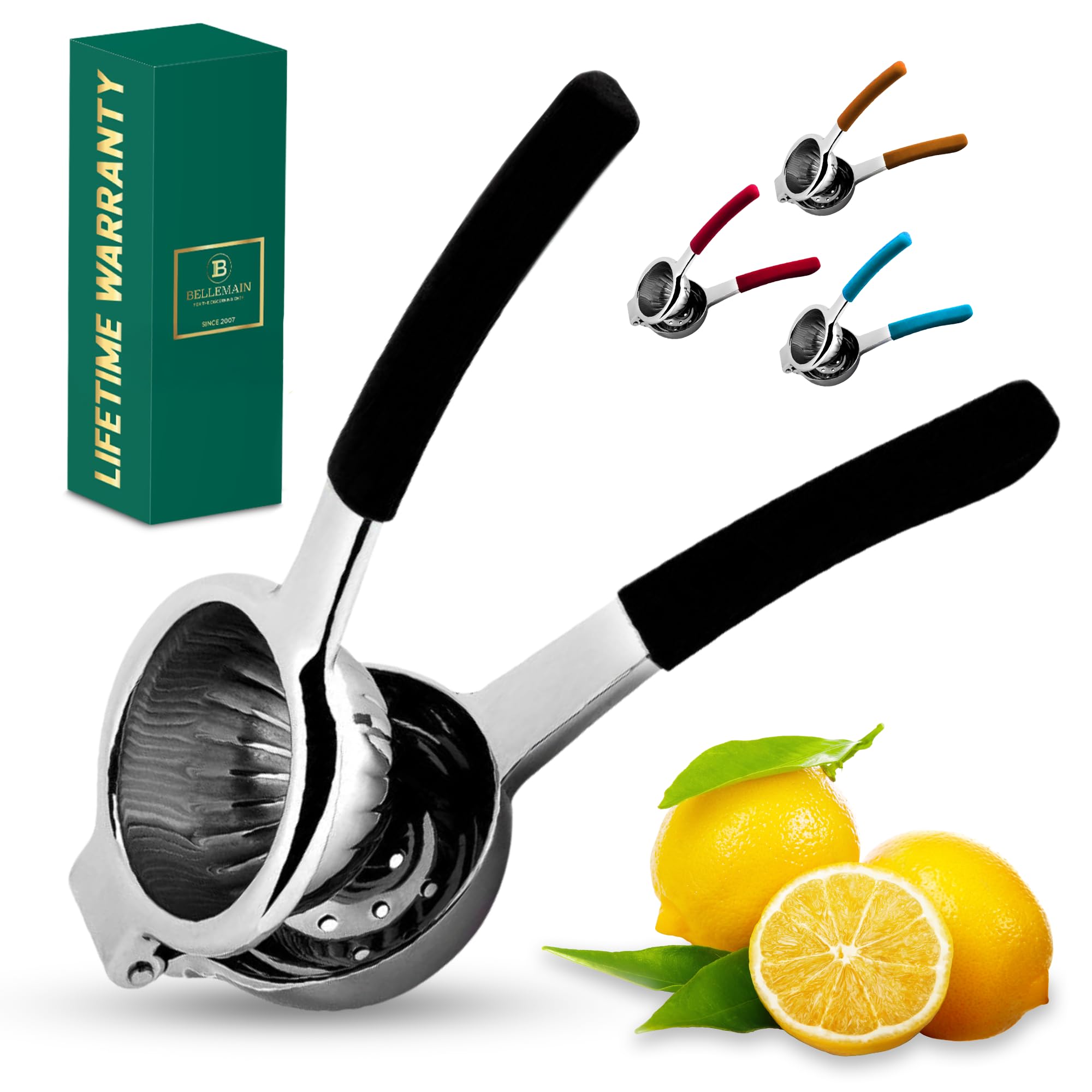
Bellemain builds this press with 18/10 stainless steel—a composition that includes ten percent nickel for superior corrosion resistance and a polished finish that won’t etch after repeated citrus acid exposure. The bowl measures roughly 2.9 inches in diameter internally, large enough to accommodate small oranges and oversized lemons without the fruit edge riding up the side. Reinforced cast hinges eliminate the wobble that plagues stamped-steel competitors after three months of daily use.
The silicone over-molded handles add a full inch of padded length beyond the metal arm, giving your palm a wider force-distribution zone. Real users report that the lever mechanism flips the spent lemon half inside out, extracting nearly every drop without the need to re-grip. The bowl’s internal ridges are moderate in height—enough to crack pulp membranes but not so aggressive that they tear the rind and release bitter oils.
Dishwasher-safe construction means cleanup is a thirty-second drop on the top rack. The primary tradeoff is the silicone sleeves: a small number of users note they can slide off over time, though a dab of food-safe silicone adhesive resolves the issue permanently. For anyone juicing multiple lemons daily for cocktails, lemon water, or marinades, this press offers the best longevity-to-effort ratio in the category.
Why it’s great
- 18/10 steel resists rust and etching better than 18/8 or plated alternatives
- Reinforced cast hinge stays tight through heavy daily use
- Deep bowl channels juice downward, reducing spray and mess
Good to know
- Silicone handle sleeves may loosen slightly; fixable with adhesive
- Requires decent hand strength for large oranges
2. Zulay Kitchen Heavy Duty Lemon Squeezer
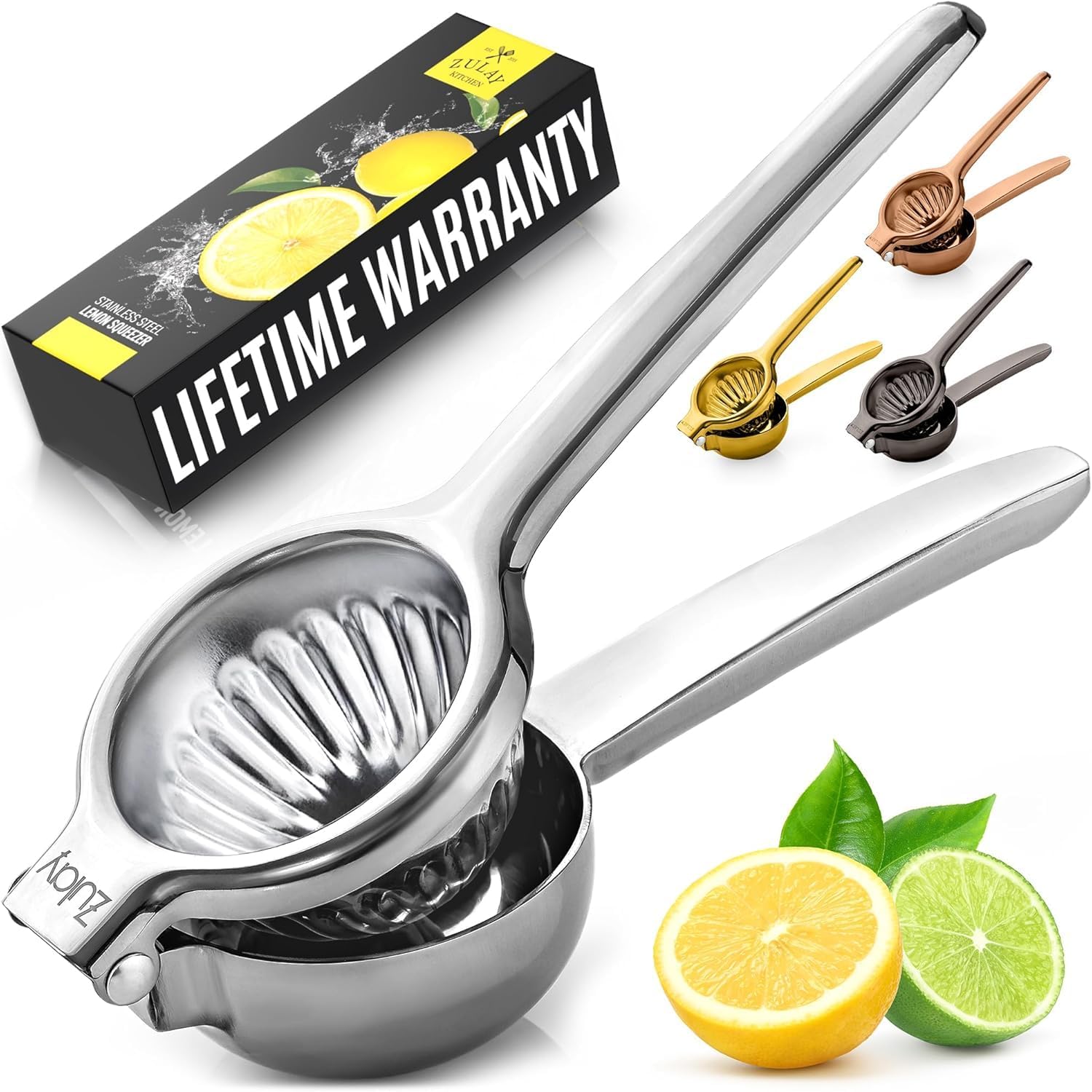
Zulay’s entry feels like a solid block of kitchen hardware the moment you lift it. Constructed from thick 18/8 stainless steel with an unibody hinge design, this press weighs over a pound—the mass itself provides inertial momentum that reduces the force your hand must supply. The bowl is machined with a tighter radius than many competitors, which allows it to grip the halved fruit and apply even pressure across the entire hemisphere.
The blue silicone sleeves on each handle are wide enough to accommodate a full four-finger grip without your knuckles scraping the hinge body. Users with arthritis and reduced grip strength consistently rank this as the most usable press in the category because the lever arm geometry shortens the travel distance—you don’t have to crush the handle all the way to the counter to get full extraction. Cleaning is straightforward: a quick rinse under running water clears the bowl, and the dishwasher handles the rest without tarnishing.
The only limitation is bowl size—it comfortably handles lemons and limes, but very large oranges may require you to cut them into smaller sections rather than halving them. Some reviewers mention that small seeds can slip past the hinge gap if you squeeze too aggressively, though this is true of nearly all press-style juicers without a built-in strainer. For the majority of citrus jobs, this is the most balanced combination of durability, extraction efficiency, and hand-friendly leverage.
Why it’s great
- Heavy 1.15-pound construction adds useful momentum during pressing
- Wide silicone sleeves reduce pressure points for arthritic hands
- Short lever travel means less wrist fatigue per squeeze
Good to know
- Bowl too small for whole large oranges without sectioning
- Small seeds can occasionally slip past the hinge during aggressive squeezing
3. LEGLO Stainless Steel Fold-Flat Lemon Squeezer
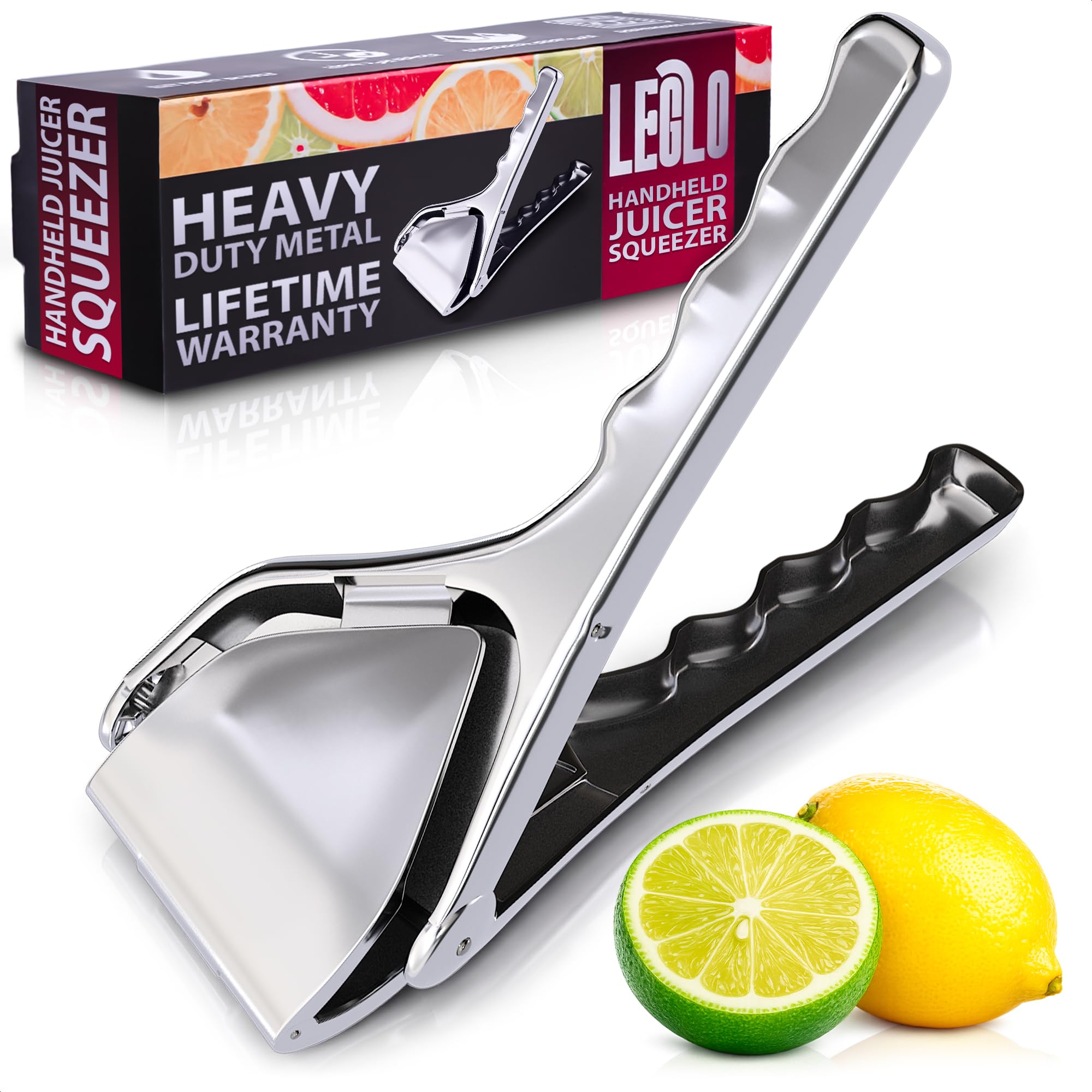
LEGLO solves the storage headache that every press-style juicer creates—bulky, awkward shapes that refuse to nestle flat in a drawer. This unit folds to a slender 7.2 by 2.7 inches, roughly the footprint of a butter knife, so it slips into even the most jam-packed kitchen drawer. The stainless steel construction is polished and rust-resistant, with no plastic parts that could crack under the mechanical stress of squeezing a hard lime.
The ergonomic handle is relatively short compared to the Zulay or Bellemain models, but the hinge mechanism is tight enough that the leverage still feels adequate for lemons and limes. Users consistently describe it as “sturdy” and “heavy for its size,” suggesting the metal gauge is sufficient for the task. Cleaning is effortless—a rinse under the faucet clears the bowl, and the fold-flat shape means water doesn’t pool in crevices. The manufacturer backs it with a lifetime guarantee, which is unusual at this tier.
The tradeoff for compactness is reach: the shorter handle means you trade some mechanical advantage, so very firm or cold lemons may require a second squeeze. Similarly, the bowl geometry is optimized for standard lemons and limes rather than oversized fruit. If counter and drawer space are at a premium and you juice one or two pieces of citrus per session, this is the most space-conscious press available without sacrificing build quality.
Why it’s great
- Folds flat to 7.2 inches for ultra-compact storage
- Full stainless steel build with lifetime guarantee
- Easy rinse-clean design with no crevice trapping
Good to know
- Shorter handle reduces leverage for firm or cold fruit
- Bowl not large enough for oranges or oversized lemons
4. CuttleLab Glass 2-Cup Juicer with Reamer

CuttleLab combines a two-cup glass measuring cup with a dome-shaped reamer that sits inside the rim, turning a single vessel into a combined juicing and measuring station. The glass is thick, borosilicate-style construction that handles thermal shock better than standard soda-lime glass. The measurement markings are embossed into the glass rather than printed, which means they will never fade, peel, or wash off even after hundreds of dishwasher cycles.
The glass reamer dome features pronounced ribs that cut into citrus pulp effectively, though the smooth glass surface requires slightly more rotational pressure than a wood reamer. The dome sits on a central pedestal with draining slots that catch most seeds, though very small pips can occasionally slip through. The spout design is thoughtfully angled to prevent dribbling down the side of the cup when you pour juice into a separate container. Users appreciate that the reamer flips out for storage, so the cup remains usable as a standard liquid measuring vessel.
The primary constraint is that this tool works best for small-batch juicing—one to three lemons or limes at a time. Repeating the twisting motion for larger quantities becomes tedious compared to a press-style juicer. Additionally, the glass base is hand-wash recommended to preserve the clear finish, despite some users reporting dishwasher success. If you value a multi-purpose tool that measures and juices without transferring liquids, this glass reamer system is the most elegant solution.
Why it’s great
- Embossed markings stay legible indefinitely—no print fading
- Glass dome reamer integrates with measuring cup for one-step workflow
- Spout design minimizes dripping during pour-out
Good to know
- Requires more hand rotation than press-style juicers
- Hand washing recommended to maintain glass clarity
5. MaMeMi Handcrafted Olive Wood Lemon Reamer

MaMeMi’s reamer is carved from a single piece of olive wood sourced from Bethlehem, making each unit visually unique with distinct grain patterns and natural color variation. The wood is uncoated, so the texture provides a tactile grip that synthetic reamers lack—the surface grabs the pith fibers rather than sliding over them, which improves juice extraction per rotation. The reamer head is shaped with asymmetrical ribs that reach deep into the fruit membrane without requiring excessive wrist torque.
At just over a tenth of a kilogram, this tool is remarkably lightweight, making it ideal for users who find metal or glass reamers uncomfortably heavy to manipulate. The handle is wide enough for a full palm grip, and the wood warms to hand temperature quickly, eliminating the cold shock of metal. Users frequently mention leaving it on the counter as a decorative piece due to the rich wood tones and visible hand-chisel marks that signal genuine artisan construction.
Wood requires specific care—hand wash only, dry immediately, and rub with food-grade mineral oil every few months to prevent the grain from drying and cracking. It is not dishwasher safe. The reamer lacks a built-in strainer, so seeds will fall into the juice unless you strain afterward. For low-volume, mindful juicing where aesthetics and sustainability matter more than speed, this olive wood reamer delivers a connection to the process that no stamped-metal tool can replicate.
Why it’s great
- Natural wood grain provides superior grip and fiber grab over smooth materials
- Extremely lightweight—ideal for users with joint sensitivity
- Unique hand-carved appearance doubles as countertop decor
Good to know
- Not dishwasher safe; requires hand wash and periodic oiling
- No seed strainer—juice must be poured through a sieve for seed-free results
FAQ
Can a manual juicer handle pomegranates or non-citrus fruit?
Why does my press-style juicer leave a dry husk but not much juice?
Final Thoughts: The Verdict
For most users, the best manual juicer winner is the Bellemain Stainless Steel Press because its 18/10 steel construction and reinforced hinge deliver consistent years-long performance without corrosion or wobble. If you want maximum hand comfort and leverage for arthritis-prone grip, grab the Zulay Kitchen Heavy Duty Squeezer. And for the cook who values countertop beauty and sustainable materials over speed, nothing beats the MaMeMi Olive Wood Reamer.