That persistent cloud of tiny black flies rising from your potting soil isn’t just annoying—it’s a sign that a breeding cycle is well underway inside your houseplants. Fungus gnat traps use specific visual lures and industrial-grade adhesives to intercept the flying adults before they can lay more eggs, breaking the cycle without spraying harsh chemicals in your living space.
I’m Mohammad Maruf — the founder and writer behind AirfryerBite. Over the years I’ve researched dozens of pest-control solutions for indoor gardeners, digging into adhesive thickness, UV resistance ratings, and the exact yellow wavelength that draws fungus gnats more effectively than fruit flies or whiteflies.
The right fungus gnat traps combine a strong, waterproof glue layer with a bright yellow surface that mimics the visual cues adult gnats use to find moist soil—trapping them on contact and preventing reinfestation when paired with proper soil management.
How To Choose The Best Fungus Gnat Traps
Fungus gnat traps are straightforward devices, but subtle differences in adhesive quality, shape, and placement hardware determine whether they decimate a swarm or just catch a few stragglers. Here are the three specs that separate effective traps from frustrating duds.
Adhesive Strength and Waterproofing
The glue layer is the entire product. Look for traps described as having “industrial-grade” or “super-strong” adhesive that remains tacky after repeated exposure to watering mist and humid indoor air. Waterproof and UV-resistant formulations stay sticky for weeks rather than drying out or becoming brittle under grow lights or near kitchen humidity.
Shape and Placement Options
Stake-style traps slide directly into potting soil, placing the sticky surface right at the soil line where adult gnats emerge. Hanging or butterfly-shaped traps work better for catching gnats already flying through the room. Some packs include twist ties or plastic holders that keep the trap upright without touching your fingers to the glue—a small convenience that matters during weekly maintenance.
Count and Coverage Area
One trap per infested pot is the minimum, but a serious infestation across multiple plants demands 20 to 30 traps deployed simultaneously. Larger packs offer better value per trap, but only if the individual traps maintain their stickiness. Check whether the advertised count matches actual contents—some packs ship short of the labeled number.
Quick Comparison
On smaller screens, swipe sideways to see the full table.
| Model | Category | Best For | Key Spec | Amazon |
|---|---|---|---|---|
| 21C 21 Century Solutions Butterfly Pack | Stake/Hanging | General indoor plant swarms | UV / waterproof dual-side glue | Amazon |
| TechOrganics Premium Traps | Stake/Hanging | Quick kitchen gnat knockdown | Includes plastic shovel + hanging wire | Amazon |
| PESTCON 60-Pack Stakes | Stake with holder | Large multi-plant collections | 60 traps + decorative stake holders | Amazon |
| MAXGUARD 30-Pack Stakes | Stake | Long-term infestation control | 3X thickness glue; lasts 6 months | Amazon |
| Gideal 6-Pack Traps | Hanging + tray | Outdoor patio / greenhouse | Removable bait tray for scent lures | Amazon |
In‑Depth Reviews
1. 21C 21 Century Solutions Yellow Sticky Fly Traps (25 Pack)

This 25-pack delivers the most balanced combination of adhesion strength, waterproof durability, and ease of use at an accessible price point. Each butterfly-shaped trap measures 5.25 x 3.25 inches and features double-sided glue that remains tacky even after repeated exposure to soil moisture and grow-light heat. Users report catching dozens of gnats within the first day of placing traps directly into moist potting soil, with many noting that the bright yellow color attracts adult gnats faster than white or blue alternatives.
The UV-resistant formulation means these traps don’t become brittle after weeks under artificial lighting or in sunlit windowsills—a common failure point in cheaper adhesive traps. Reviewers consistently mention that the glue is “extremely sticky” enough to hold small gnats without allowing escape, yet the traps peel apart easily from their backing sheet. A few customers noted that the advertised 25-count sometimes shipped short, so verify contents on arrival. The triangular base design allows either soil insertion or hanging via included twist ties, giving flexibility across different plant sizes and room layouts.
When paired with a hydrogen peroxide soil drench to kill larvae, these traps reliably break the fungus gnat life cycle within one to two weeks. The decorative butterfly shape also blends into houseplant setups better than plain yellow rectangles, making them suitable for visible placement in kitchens and living rooms without looking like pest control hardware.
Why it’s great
- Double-sided UV/waterproof adhesive stays sticky for weeks
- Butterfly shape fits visually into houseplant displays
- Includes twist ties for hanging or stake-style use
Good to know
- Some packs have shipped with fewer than 25 traps
- Adhesive is very difficult to remove from skin—use gloves
2. TechOrganics Premium Fruit Fly Traps (25 Pack)
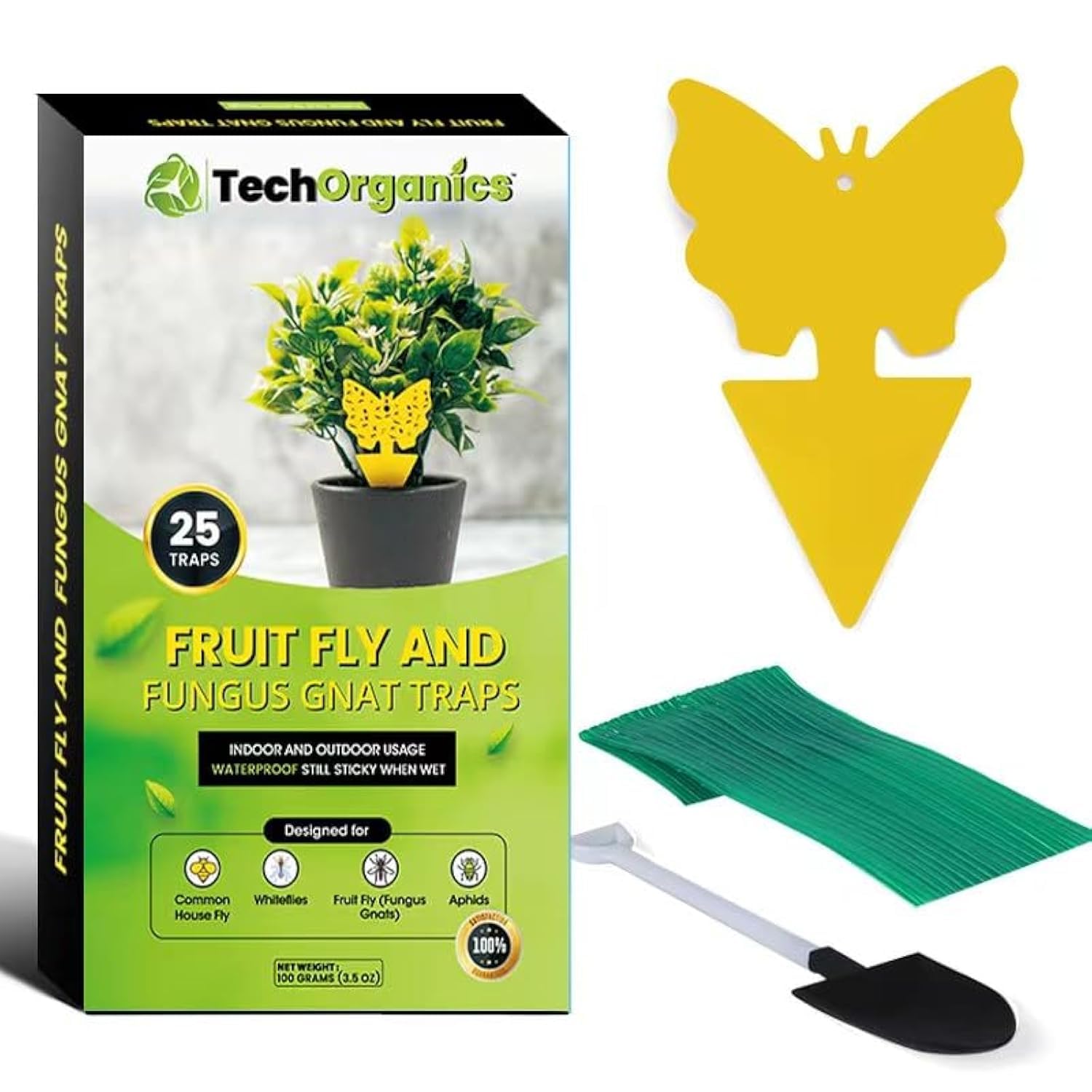
What sets this 25-pack apart is the inclusion of a small plastic shovel tool that lets you push traps into soil without touching the adhesive—a minor detail that prevents the frustrating “sticky fingers” problem common to all gnat traps. The double-sided yellow traps measure roughly the same size as standard sticky cards but come with a hanging wire that makes outdoor placement on branch stems or patio hooks equally easy. Users report that kitchen gnat infestations dropped noticeably within 48 hours of placement, often faster than previous attempts with vinegar-based traps.
The adhesive formulation holds up well against casual water contact from misting or rain, though a few reviews mention the paper backing peels off in multiple pieces rather than one clean strip. This doesn’t affect performance once the trap is deployed, but it slightly slows the initial setup process. The traps target fungus gnats, fruit flies, moths, mosquitoes, and even spiders, making them a general-purpose flying insect solution rather than a strictly specialized gnat trap. Several long-term users noted the traps remained sticky for months when placed in dry indoor conditions, though outdoor humidity shortened that lifespan.
One limitation: the bright yellow surface attracts a broad range of flying insects, so if you’re dealing strictly with soil-borne fungus gnats, some of the adhesive real estate may fill up with harmless outdoor insects if used near open windows. The shovel tool and hanging wire make this a strong choice for anyone who wants a complete starter kit without buying additional placement accessories.
Why it’s great
- Plastic shovel prevents direct glue contact during setup
- Works for both soil stakes and hanging placements
- Stays sticky for months in dry indoor environments
Good to know
- Paper backing occasionally peels in multiple pieces
- Broad attraction includes non-target flying insects
3. PESTCON 60-Pack Yellow Sticky Traps with Stake Holders

When you’re managing a collection of twenty or more houseplants, a 60-count pack eliminates the need to ration traps. Each yellow sticky card slides into a green plastic stake holder that keeps the trap upright and visible while adding a decorative element to the pot. The dual-sided adhesive is UV-resistant and waterproof, and the bright yellow surface attracts fungus gnats, whiteflies, thrips, and mosquitoes with equal effectiveness. Multiple users with serious indoor plant collections reported filling traps completely within the first week, with visible population reductions after two weeks of continuous use.
The stake holders are the standout feature here—they elevate the sticky surface above the soil line, which positions the trap exactly where emerging adult gnats first take flight. This design also prevents the adhesive from touching wet soil directly, which can reduce stickiness over time. Some reviewers found the plastic holders slightly tricky to assemble without getting glue on their fingers, but the overall setup takes under a minute per pot. The 60-trap count means you can place one in every pot and still have spares for outdoor garden beds or greenhouse use.
One caveat: while these traps catch flying adults effectively, they don’t address larvae in the soil. Several customers noted that a combined approach with mosquito bits or hydrogen peroxide was necessary for full eradication. The traps alone reduced the adult population noticeably but didn’t eliminate the infestation entirely until soil treatment was added. The decorative green holders are a welcome aesthetic upgrade over bare yellow rectangles.
Why it’s great
- 60 traps cover large multi-plant collections
- Decorative plastic holders keep traps upright and visible
- UV and water resistant adhesive lasts weeks
Good to know
- Assembly takes care to avoid glue contact
- Traps alone may not fully eradicate without soil treatment
4. MAXGUARD 30-Pack Yellow Stake Sticky Traps

MAXGUARD positions these traps as the longest-lasting option in this comparison, with the manufacturer rating each stake’s adhesive effectiveness at up to six months under normal indoor conditions. The key differentiator is a glue layer described as three times thicker than standard yellow sticky traps—a noticeable difference when you handle the stakes. The rigid plastic construction keeps the trap shape stable even in large pots with heavy soil, and a small hole at the top allows hanging with the included twist ties for outdoor use on branches or patio hooks.
Users dealing with severe infestations from contaminated potting soil found these traps caught dozens of adult gnats within hours of insertion. The extra thickness means the adhesive doesn’t lose tackiness even after catching hundreds of insects, and the waterproof formulation holds up during normal watering without turning into a slimy mess. Several reviewers with orchid collections appreciated that the stakes can be cut lengthwise with household scissors to fit smaller pots without sacrificing adhesive coverage. The non-sticky tip area makes handling and positioning much easier than fully coated traps.
The trade-off for the thick glue is a slightly higher per-trap cost compared to budget packs. At 30 traps per box, you get fewer total units than the PESTCON 60-pack, but each trap lasts significantly longer before needing replacement. For ongoing infestations that require months of continuous trapping, the MAXGUARD stakes offer better long-term value despite the higher upfront count. One user noted that the traps alone weren’t enough to kill larvae in the soil, confirming that adult trapping must pair with larvicide for complete control.
Why it’s great
- Triple-thickness glue lasts up to six months
- Rigid plastic with non-sticky handling area
- Cuttable to fit small pots without losing adhesion
Good to know
- Higher per-trap cost than budget multi-packs
- Still requires soil treatment for larvae control
5. Gideal 6-Pack Yellow Sticky Traps with Bait Tray
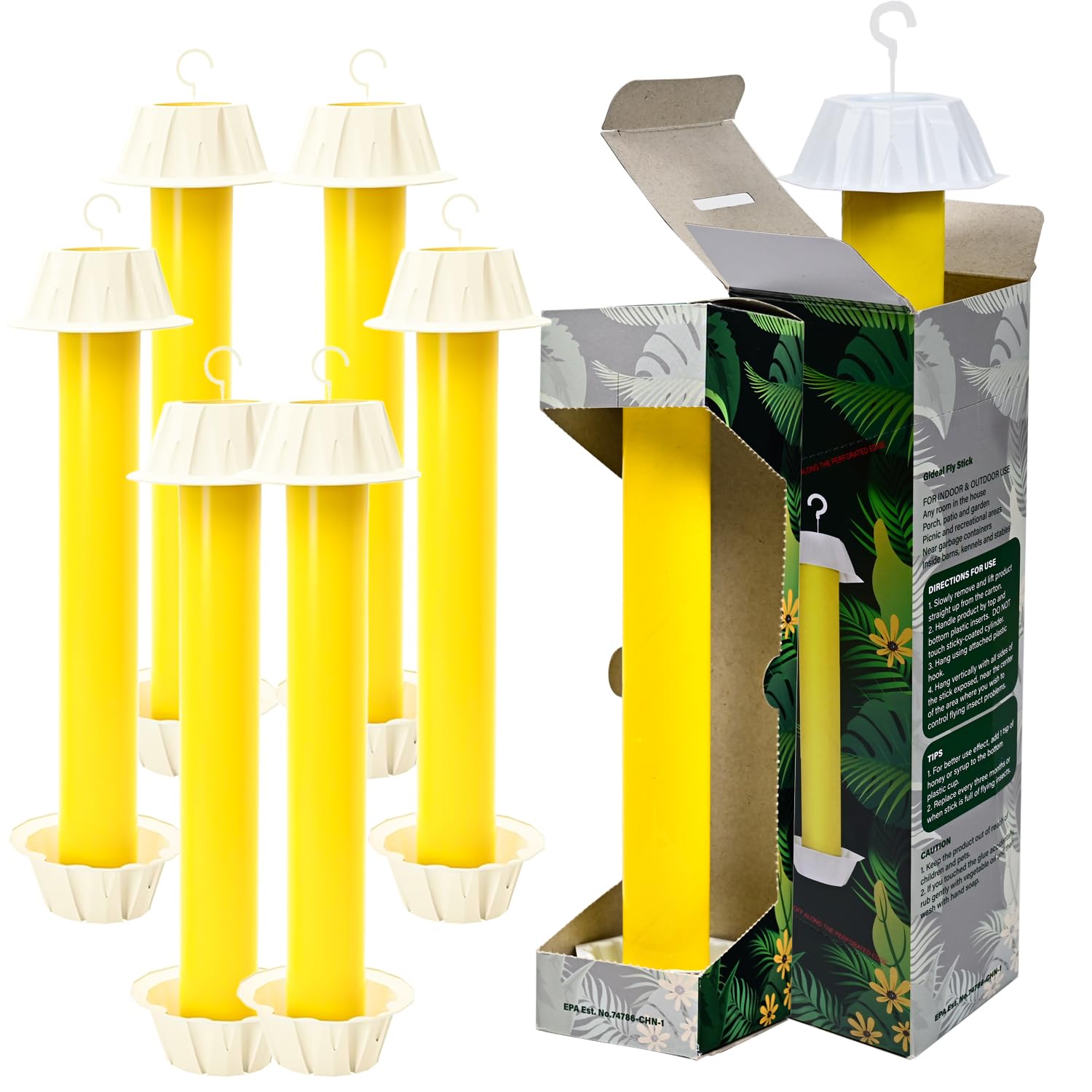
Gideal takes a different approach by combining the sticky yellow surface with a small removable tray at the base where you can add honey, syrup, or apple cider vinegar as a scent lure. This dual-attraction method—visual yellow plus olfactory bait—gives these traps an edge against fruit flies and houseflies that may not respond to color alone. Each trap stands on a stable base for tabletop placement or hangs from a top hook for outdoor use on patios, in greenhouses, or along garden paths. The six-pack format is best suited for targeted placement rather than large-scale indoor plant coverage.
Users report that the traps fill up quickly with whiteflies and gnats when placed near infested plants, with one reviewer noting that whitefly populations were eliminated within 72 hours. The sticky glue is non-toxic and odorless, and the bright yellow body attracts flying insects from several feet away. However, the adhesive is less waterproof than the industrial-grade formulations used in the MAXGUARD and 21C packs—rain exposure or direct hose spray can weaken the glue, so these work best in covered outdoor areas or indoor windowsills rather than exposed garden beds. The bait tray is a nice bonus for attracting fruit flies that might ignore plain yellow sticky surfaces.
The most significant limitation is the low trap count—six units won’t cover a serious multi-plant infestation. This pack makes more sense as a supplemental option for a single problem area or as an outdoor solution where you only need a few traps spaced around a patio. The one-year after-sales support is a confidence signal from the manufacturer, but the physical adhesive durability lags behind the thicker-glue competitors in this comparison.
Why it’s great
- Bait tray adds scent attraction for fruit flies
- Stable base and hanging hook for versatile placement
- Excellent for whitefly elimination in greenhouses
Good to know
- Only 6 traps per pack—limited coverage
- Adhesive weakened by direct rain exposure
FAQ
Why do fungus gnats keep coming back even with sticky traps deployed?
Can I reuse a sticky trap after it gets covered with gnats?
How long does a yellow sticky trap actually stay effective in a houseplant pot?
Final Thoughts: The Verdict
For most users, the fungus gnat traps winner is the 21C 21 Century Solutions Butterfly Pack because it balances strong UV/waterproof adhesive, a 25-count quantity suitable for average household plant collections, and versatile stake-or-hanging placement. If you want triple-thick glue that lasts months without replacement, grab the MAXGUARD 30-Pack. And for outdoor patio or greenhouse setups where scent lures help, nothing beats the Gideal 6-Pack with bait tray.