The scratching in the walls stops when you place the right trap, but picking the wrong one means sleepless nights, failed catches, and a colony that grows bolder each day. A kitchen mouse problem demands a trap that balances quick elimination with kitchen-safety concerns—no poison near food prep, no glue boards that leave you to dispose of a live, squealing rodent.
I’m Mohammad Maruf — the founder and writer behind AirfryerBite. I’ve spent years analyzing rodent-control hardware, from the tension curves on wooden snap traps to the infrared sensor sensitivity on electric zappers, so you know exactly which specs separate a one-night solve from a month-long battle.
After evaluating dozens of mechanical and electronic designs, these are the five models that earn a spot on your shortlist for the best mouse traps for kitchen use.
How To Choose The Best Mouse Traps For Kitchen
Three factors determine whether your kitchen stays rodent-free or becomes a buffet: the trap’s kill mechanism, its trigger sensitivity, and the disposal process. A trap that works in a garage may fail in a kitchen because of the different bait options, counter-adjacent placement, and the need for a truly sanitary routine.
Snap Traps versus Electric Zappers
Wooden snap traps rely on mechanical tension and a metal pedal that releases when a mouse applies roughly 0.025 to 0.05 pounds of force. They are cheap, reusable, and require no batteries, but they demand careful bait placement and can snap your fingers during setup. Electric traps use an infrared sensor that triggers a high-voltage shock—typically 6,000 to 9,000 volts—when a rodent enters the chamber. They offer no-touch, no-see disposal but require four AA batteries and periodic cleaning of the metal contact plates.
Trigger Sensitivity and Bait Placement
A trap with a hair-trigger pedal catches small field mice that weigh under 15 grams, while a stiffer pedal may only fire when a full-grown house mouse commits. The bait cup or reservoir design matters: open trigger plates allow mice to nibble without setting off the trap, whereas a recessed bait cup forces the rodent to step on the pedal. Pea-sized amounts of high-protein bait—peanut butter, bacon grease, or Nutella—perform best because mice cannot steal it without engaging the mechanism.
Disposal Hygiene and Reusability
Wooden snap traps are typically disposed of after one use because the wood absorbs fluids and odors that repel future mice. Plastic snap traps can be rinsed and reused but require you to handle the trap to release the rodent. Electric traps let you pull off the lid and dump the carcass directly into the trash without touching it. For a kitchen environment, where cross-contamination is a real concern, the no-touch disposal of an electric trap often justifies the higher upfront cost.
Quick Comparison
On smaller screens, swipe sideways to see the full table.
| Model | Category | Best For | Key Spec | Amazon |
|---|---|---|---|---|
| OWLTRA Indoor Electric | Electric Zapper | No-touch disposal | 8,000V shock, 4 AA batteries | Amazon |
| Victor M250BSR-2 | Electric Zapper | Smart LED alerts | Green LED indicator, 2-pack | Amazon |
| Victor M150-12 Wooden | Snap Trap | Budget multi-pack | FSC wood, metal pedal, 12-pack | Amazon |
| SEEPIS 12-Pack Plastic | Snap Trap | Durable reusability | ABS base, 0.025lb trigger | Amazon |
| Anblak Mouse Stations 6-Pack | Bait Station | Pet-safe poison housing | Keyless + key lock, ABS plastic | Amazon |
In‑Depth Reviews
1. OWLTRA Indoor Electric Mouse Trap
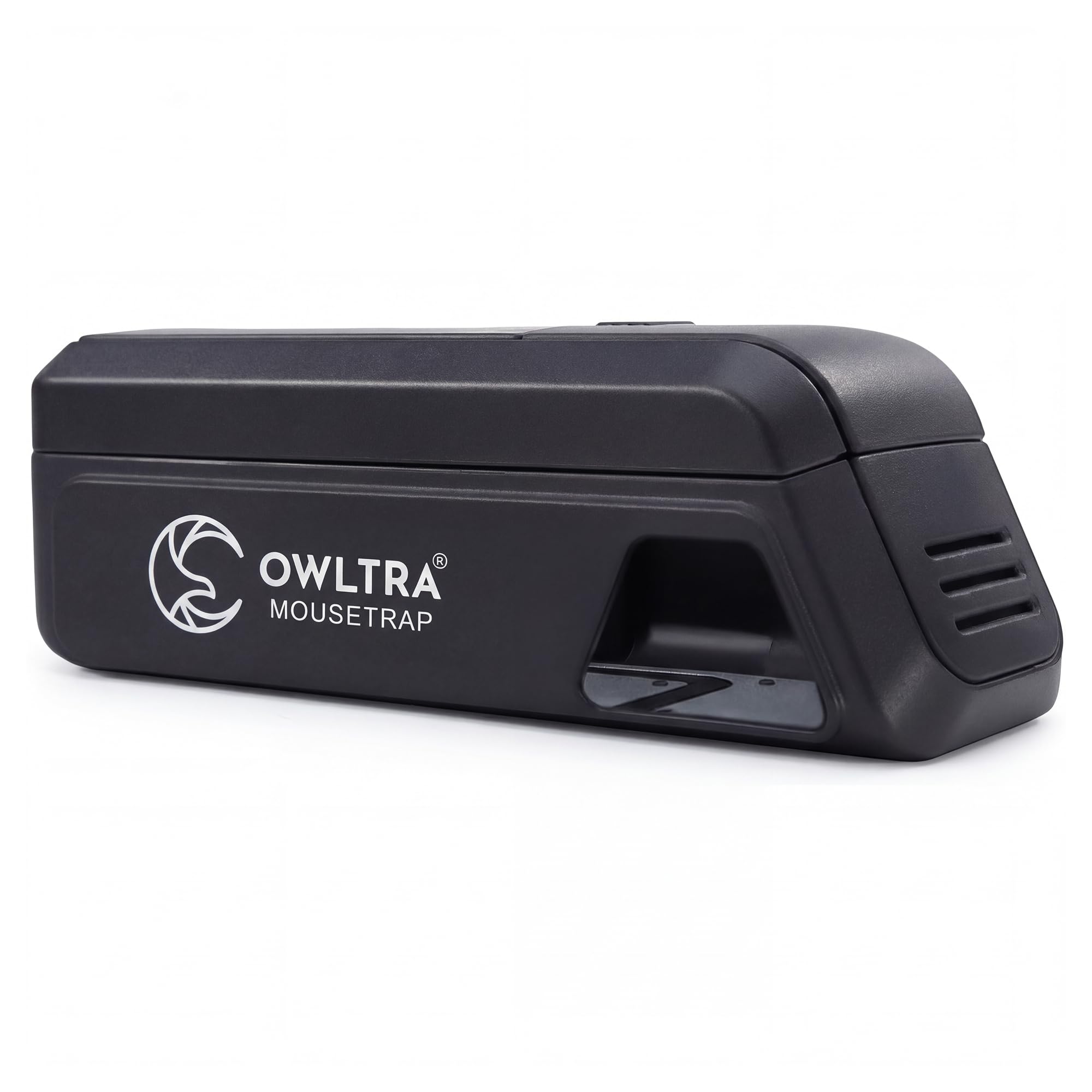
The OWLTRA earns the top spot because it solves the two biggest kitchen-trap pain points simultaneously: you never touch the rodent and you never see it die. Its infrared sensor detects a mouse as it enters the side-entry chamber—a design that prevents false triggers from curious pets—and delivers an 8,000-volt shock that stops the animal instantly. The magnetic lid lifts off without any latches or buttons, and the trap automatically deactivates when you open it, so there is zero risk of a live jolt.
Baiting is straightforward: lift the top and smear a pea-sized dab of peanut butter or bacon grease in the bait recess using a toothpick to avoid getting bait on the metal plates. The green indicator light glows steadily during normal operation and flashes when a catch is made, letting you monitor multiple units across the kitchen without kneeling down. Four AA batteries last through roughly 60 to 80 kills according to user reports, which translates to months of continuous use for most households.
One detail that matters in a kitchen setting: the trap’s 8 x 3 x 3-inch footprint tucks neatly under the refrigerator, behind the stove, or inside a lower cabinet. Users who deployed it against walls reported catches within the first two nights. The only limitation is that the chamber is sized for mice and smaller rodents—a large rat will not fit, so pair this with a rat-specific trap if you suspect a bigger intruder.
Why it’s great
- Side-entry chamber with IR sensor prevents false triggers
- Magnetic lid enables truly no-touch, no-see disposal
- Indicator light lets you check status at a glance
- Battery life supports 60+ kills per set
Good to know
- 4 AA batteries not included in the box
- Not large enough for full-grown rats
- Requires periodic cleaning of metal contact plates with hydrogen peroxide
2. Victor M250BSR-2 Electronic Mouse Trap

The Victor M250BSR-2 refines the electric-trap formula with beveled interior columns that keep the mouse positioned squarely between the metal contact plates for a guaranteed 100 percent kill rate. Earlier Victor models emitted an audible buzz when catching a mouse, which could scare other rodents away from the trap; this generation removes that sound entirely, relying on a silent green LED flash to indicate a catch. Users reported catching previously “uncatchable” mice on the first night after switching from snap traps.
The trap measures 4.56 x 4 x 7.13 inches and runs on four AA batteries, with a red LED that signals low battery before performance degrades. A common user complaint is the baiting process: bait must be applied to a small recess near the metal plate with a toothpick, and if you load bait before installing batteries, gravity causes it to fall out. The trick is to insert batteries first, then bait, then set the trap upright against a wall. Peanut butter works, but several users found bacon grease or butter more effective for bait-shy mice.
Disposal is hygienic: tilt the trap over a trash can, press the release tab, and the carcass drops out without contact. The two-pack covers multiple points of entry—one near the stove and one near the pantry—and green LED indicators let you know at a glance which trap has caught something. Users who rotated bait every 48 hours saw the highest success rates, especially when a mouse avoided the initial peanut-butter offering.
Why it’s great
- Beveled columns hold the mouse in place for consistent kill
- Silent green LED alert avoids scaring other mice
- Tool-free, no-touch disposal mechanism
- Low-battery red LED prevents failure in the field
Good to know
- Baiting is awkward due to the small recess location
- 4 AA batteries required per trap, not included
- Some users reported bait being stolen without triggering the trap
3. Victor M150-12 Wooden Mouse Traps

Victor has been making this exact snap-trap design since 1898, and the M150-12 pack proves why the formula still works. Each trap uses an FSC-certified wood base, a metal pedal, and a galvanized spring bar that delivers a clean kill in under 30 seconds when placed correctly. The 12-pack brings the per-trap cost down to pocket-change territory, making it the most economical option for covering a large kitchen or treating a multi-room infestation.
Success depends entirely on placement and baiting technique. The trap must sit perpendicular to the wall with the trigger pedal end touching the baseboard—mice run along edges and will step directly onto the pedal. Bait should be a pea-sized smear of peanut butter, not a glob; over-baiting lets mice steal food without setting off the trap. Several users noted that out-of-the-box trigger sensitivity is moderate, but a light squeeze with pliers on the retaining bar restores a hair-trigger response that catches even tiny field mice under 15 grams.
The downsides are honest ones for kitchen use: the wood absorbs blood and urine, which creates odors that repel future mice, so most users dispose of each trap after a single catch rather than reusing it. The spring bar can snap onto your fingers during setup if you lack practice, and the metal pedal requires cleaning if you want to reset a trap that misfired. Despite these quirks, the M150-12 remains the benchmark that all other snap traps are measured against, and the 12-pack gives you enough units to experiment with placement until you find the hotspot.
Why it’s great
- Proven design with over a century of field testing
- FSC-certified wood for sustainable sourcing
- 12-pack offers the lowest per-trap cost available
- Usable with or without bait as a bare-mechanical trap
Good to know
- Wood absorbs fluids, making reuse unsanitary
- Spring bar can injure fingers during setup
- Out-of-box sensitivity may need plier adjustment for small mice
4. SEEPIS 12-Pack Plastic Snap Traps

The SEEPIS 12-pack replaces the disposable wood base with an impact-resistant ABS plastic body that can be rinsed, dried, and reused indefinitely without absorbing odors or staining. The trigger mechanism fires at just 0.025 pounds of force—roughly the weight of a one-inch cube of cheese—which makes it sensitive enough to catch the smallest house mice while still holding tension for larger rodents. The wide reinforced plastic jaw spans the entire width of the trap, reducing the chance that a mouse escapes after the bar snaps.
The key design differentiator is the integrated bait cup: a recessed reservoir in the base that holds peanut butter, Nutella, or seeds without spilling onto the trigger plate. This prevents the over-baiting problem that plagues open-pedal traps, where mice groom the bait without ever applying pressure to the pedal. Users reported catches within one hour of setup, and the no-touch release mechanism lets you press the lever to drop the mouse into a trash bag without ever gripping the trap body.
Durability is a real advantage here. Where all-plastic traps from other brands snap at the hinge after a dozen uses, the SEEPIS reinforced metal spring holds its tension across repeated sets. The ABS base is weather-resistant, so these work outdoors around sheds or chicken coops as well as indoors. A few users noted that after 12 to 18 sets, the spring lever becomes slightly harder to engage, but for the pack price, the per-trap cost is still lower than single-use wooden alternatives.
Why it’s great
- ABS plastic base rinses clean and never absorbs odors
- Ultra-sensitive 0.025lb trigger catches even tiny mice
- Recessed bait cup prevents bait-theft without triggering
- Weather-resistant build works indoors and outdoors
Good to know
- Spring lever may wear out after 12-18 repeated uses
- Some users reported mice escaping from the rear of the trap
- Slightly stiffer to set than traditional wooden snap traps
5. Anblak Mouse Stations 6-Pack

The Anblak Mouse Stations are not traps themselves—they are weatherproof bait stations that house poison blocks securely away from children, cats, and dogs. Each station measures 4.72 x 3.66 x 1.25 inches and includes both a keyless press-button unlock for daily access and a traditional key lock for permanent securing. This dual-locking system ensures that a persistent pet or a curious toddler cannot pry the station open, while you can still service the bait without hunting for a key.
The 6-pack covers the perimeter of a house or the interior of a large kitchen: one under the sink, one behind the fridge, one in the pantry, and three along the garage or basement walls. The low-profile black design blends into baseboards and cabinet toe kicks, and the ABS plastic withstands outdoor weather without cracking or UV degradation. Users living in rural areas reported placing these around chicken coops and garden sheds, where the stations protected both livestock and bait from accidental exposure.
One critical detail: these stations are sized for standard 1-1/8-inch-high poison blocks, which are sold separately. They will not fit larger rat-size blocks, and the compact interior means you must break larger blocks in half. If you prefer a poison-free approach, these stations can also hold cotton balls soaked in peppermint oil as a natural repellent, but the primary design intent is bait containment. For households that must use rodenticides due to heavy infestation, these stations provide the safety barrier that snap traps and electric zappers cannot offer.
Why it’s great
- Dual keyless and key-lock mechanism for easy access plus tamper resistance
- Weatherproof ABS plastic lasts through outdoor seasons
- Low profile fits under cabinets and appliances
- 6-pack covers an entire home perimeter at once
Good to know
- Poison blocks sold separately; standard 1-1/8-inch blocks required
- Too small for rat-sized bait blocks
- Not a trap—only houses poison or repellents
FAQ
Can I use snap traps near food preparation surfaces?
How often should I check and reset traps in a kitchen?
What bait works best for mice that avoid peanut butter?
Are electric mouse traps safe to use around gas stoves or water pipes?
Final Thoughts: The Verdict
For most users, the mouse traps for kitchen winner is the OWLTRA Indoor Electric Trap because it combines instant 8,000-volt elimination with completely sanitary, no-touch disposal and an indicator light that removes the guesswork. If you want a budget multi-pack that covers every corner of the kitchen, grab the Victor M150-12 Wooden Traps—the 12-pack costs less than a fast-food meal and still delivers the same kill power that Victor has proven for 125 years. And for households that must use poison around children or pets, nothing beats the Anblak Mouse Stations 6-Pack for tamper-proof safety and weather-resistant durability.