The shelf is packed with bottles labeled “imported from Italy,” but the reality is that many contain blended oils from multiple continents, diluted with cheaper crops to cut costs. The true test of an authentic bottle is a single sensory check: a grassy, peppery finish that lingers on the back of your throat and signals high polyphenol content and early harvest fruit. That snap is the hallmark of proper cold-pressed extra virgin olive oil made in a specific Italian region, not a factory blend.
I’m Mohammad Maruf — the founder and writer behind AirfryerBite. I’ve spent years analyzing the supply chain of imported oils, cross-referencing PDO and PGI certifications against lab-test data to separate genuine estate-bottled oil from what the industry calls “olive-pomace remix.”
This guide walks you through the difference between a mass-market jug and a single-estate Sicilian harvest, so you can confidently pick a bottle that tastes of the land it came from — not a chemical lab. It is built around the single question that matters for the best olive oil from italy.
How To Choose The Best Olive Oil From Italy
Picking a genuine Italian bottle means ignoring marketing words and reading the technical details that can’t be faked. The harvest date, acidity percentage, and certification seals tell you more than any picture of a Tuscan villa ever will.
The Harvest Date Is Non-Negotiable
A fresh bottle should list the year it was milled. Olives harvested in autumn and pressed within hours yield oil with the highest polyphenol levels and the most vibrant, grassy flavor. If the bottle shows only a best-by date, assume the content is old stock that has already lost its three-month peak window. Premium Italian producers print the harvest year or the “Millesime” on the front label.
Acidity Indicates Quality Directly
By EU regulation, extra virgin olive oil must have a free acidity of no more than 0.8 grams per 100 grams. The best single-estate oils from Sicily or Tuscany routinely test between 0.2 and 0.4 percent. Acidity is not a flavor additive — it is a chemical measure of free fatty acids that rises when the fruit is damaged, stored too long, or pressed at high temperatures. A low number signals careful handling from tree to bottle.
Look For PDO Or PGI On The Label
Protected Designation of Origin means every olive was grown, harvested, and pressed within a specific Italian region under strict protocols. Protected Geographical Indication is slightly looser but still binds the oil to a defined area. Both certifications are audited by third parties. A bottle from Val di Mazara or Tonda Iblea carrying PDO status is traceable back to a single hillside.
Dark Glass Or Tin Preserves The Oil
Light and heat degrade the polyphenols and oxidize the oil within weeks. Producers who care about stability ship in opaque green or brown glass bottles, or in coated tins. A clear glass bottle sitting on a store shelf under fluorescent lights is already losing its character before you open it. If the bottle is clear, use it fast and keep it in a dark cupboard.
Quick Comparison
On smaller screens, swipe sideways to see the full table.
| Model | Category | Best For | Key Spec | Amazon |
|---|---|---|---|---|
| Zahara Extra Virgin Olive Oil | Premium/Single Estate | Award-winning taste & gifting | Acidity <0.2%, 400mg/kg Polyphenols | Amazon |
| Bono Sicilian EVOO (PDO) | Mid-Range/Certified | Authentic PDO Sicilian everyday use | Acidity 0.2–0.4%, PDO Certified | Amazon |
| Yolioo Tuscan EVOO | Mid-Range/Organic | Family-farm Tuscan early harvest | Cold-pressed 22-24°C, 25.4 oz | Amazon |
| Bono Sicilian Organic EVOO | Mid-Range/Organic | Budget-friendly certified organic | Cold-pressed & unfiltered, 16.9 oz | Amazon |
| Colavita Mediterranean EVOO | Value/Large Format | High-volume everyday cooking | 68 oz plastic jug, Kosher | Amazon |
In‑Depth Reviews
1. Zahara Extra Virgin Olive Oil – Sicilian Pure EVOO

The Zahara from Oleificio Guccione is the bottle you’d serve with a caprese salad to prove what Italian olive oil really tastes like. With a measured acidity of below 0.2 percent and polyphenol levels averaging 400 mg per kilogram, it is technically among the cleanest and most antioxidant-dense oils on the market. The Tonda Iblea olives are hand-picked from secular Sicilian trees and pressed within hours, which is why the flavor shows a bright tomato-leaf note, followed by white pepper heat at the finish.
This oil has claimed Gambero Rosso’s “3 Leaves” award for four consecutive years — that is the highest rating in Italy’s most respected olive oil guide. The bottle arrives in a designed gift box with packaging that won design awards in its own right. For a dinner party gift or a home cook who values a single-estate, early-harvest profile, this is the definitive Sicilian pick.
Buyers report that the peppery kick catches you in the back of the throat — exactly what a high-polyphenol oil should do. A few reviewers note that for raw finishing uses it shines brightest; heating it in a pan will mute the more delicate aromatic notes. Store it in the dark cabinet, use it on bread or cold dishes, and you will taste the Iblei Mountains in every drop.
Why it’s great
- Award-winning four years running — Gambero Rosso 3 Leaves
- Very low acidity (under 0.2%) paired with high polyphenol content
- Full-bodied flavor with marked tomato leaf and white pepper notes
Good to know
- Best reserved for raw finishing and cold dishes
- Comes in a 16.9 oz bottle — smaller format for premium enjoyment
2. Bono Sicilian Extra Virgin Olive Oil – Val di Mazara PDO

The Bono Val di Mazara PDO sits at a critical intersection of everyday usability and third-party verification. The PDO stamp means every olive inside that bottle came from the Val di Mazara zone in Sicily, not a mix of five countries. The certified acidity range of 0.2 to 0.4 percent is well below the extra virgin ceiling, translating to a clean, smooth taste with no rancid or metallic off-notes. It is USDA organic and Non-GMO certified, which matters if you want to avoid solvent-extracted oils that sometimes slip into low-grade imports.
The flavor profile lands in the medium-intensity zone — grassy but not overpowering, with a balanced fruit finish that makes it equally comfortable on a salad, a pasta dish, or as a dip for bread. Experienced reviewers describe it as a medium-high polyphenol oil with a slight punch but not overwhelming pungency, and they often use it to blend with other oils for custom dressing profiles. The 16.9-ounce bottle is a sweet spot for a kitchen that cooks Italian several times a week without feeling precious about the pour.
The main practical trade-off is that at this price point, it sits between a value jug and a premium single-estate. You are paying for the PDO certification and organic guarantee rather than a limited-production micro-lot. For a mid-range bottle that you can trust from a sourcing standpoint, the Bono PDO is the most audit-safe choice on this list.
Why it’s great
- PDO and USDA organic certifications guarantee regional origin
- Low acidity (0.2–0.4%) for a smooth, clean finish
- Medium-high polyphenol content adds a pleasant pepper finish
Good to know
- Some local European retailers sell it for less — best value on Amazon if you can’t find it locally
- Bottle is not UV-protected dark glass; store in a dark cabinet
3. Yolioo Tuscan Organic Extra Virgin Olive Oil – Early Harvest
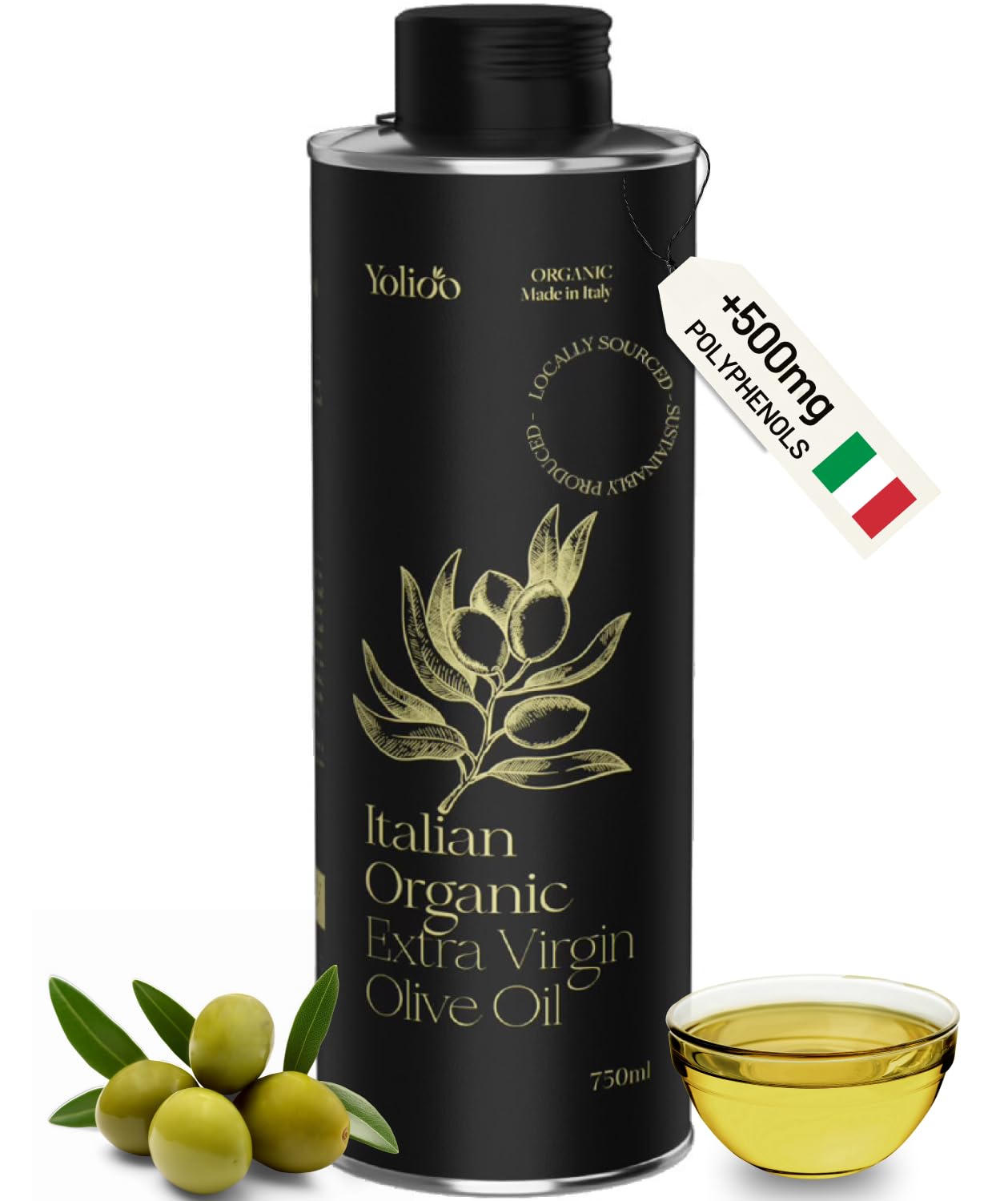
The Yolioo Tuscan Early Harvest draws from a third-generation family farm near Florence, and the production method leans into speed: the olives are pressed within six hours at a controlled 22–24 degrees Celsius to maximize polyphenol retention. That short window between tree and mill is exactly what separates a fresh, pungent oil from one that tastes flat. The result is a balanced oil with a subtle hint of lemon and a smooth fruit body, according to verified buyers who use it on focaccia and pasta.
The 25.4-ounce bottle gives you nearly 250 milliliters more volume than the standard 16.9-ounce format, which makes it a strong option for households that cook Italian cuisine multiple times a week. The brand claims full traceability back to the farm and certification for both organic and extra virgin grade. A few buyers have reported receiving dented cans, and the packaging is a metal canister rather than a glass bottle, so inspect on arrival if you plan to gift it.
In the flavor department, the Tuscan profile here is milder compared to Sicilian oils like the Zahara. It lacks the aggressive pepper punch that polyphenol hunters crave, but it is exactly the right oil for everyday dressings, sautéed vegetables, and marinades where the oil should support the dish rather than dominate it. If you want a Tuscan bottle with more bite, look for a different harvest year, but for a reliable family-farm oil at a fair volume-to-price ratio, this is a solid pick.
Why it’s great
- Pressed within six hours of harvest for peak freshness
- Larger format (25.4 oz) at a mid-range price point
- Third-generation Tuscan family farm with full traceability
Good to know
- Metal canister can dent during shipping
- Milder flavor profile — not as pungent as concentrated Sicilian oils
4. Colavita Mediterranean Extra Virgin Olive Oil – 68 oz Jug

The Colavita Mediterranean is the workhorse bottle that serious cooks keep on the counter for sautéing, roasting, and anything that requires a generous pour. In a two-liter plastic jug, you get a cold-pressed Mediterranean blend sourced from Italy, Greece, Spain, Tunisia, Turkey, and Morocco. This is not a single-origin oil, and Colavita does not pretend it is — the point here is a reliable, full-bodied extra virgin oil that handles heat okay and still tastes good on a salad at a price that makes guilt-free drizzling possible.
The flavor is velvety and smooth with a mild almond finish, and the OU Kosher certification adds a layer of dietary assurance. Buyers with Italian heritage in the reviews note that this is the brand their families have used for years, and it delivers consistent quality across batches. The main drawback is the plastic bottle: light penetrates clear plastic more easily than tin or dark glass, so you should transfer a portion to a small dark bottle for daily use and store the jug in a dark pantry.
If you are cooking Mediterranean-style meals daily — think roasted vegetables, pan-seared chicken, and garlic-heavy sauces — this jug will last you a month and save you money versus buying three separate 16.9-ounce premium bottles. For finishing oils and dipping, you can pair it with a smaller single-estate bottle. The Colavita is the best foundation oil in this lineup, not the star of the show.
Why it’s great
- Large 68 oz jug offers excellent cost per ounce for daily cooking
- Full-bodied Mediterranean blend with a smooth almond finish
- Trusted brand with consistent quality over many years
Good to know
- Plastic jug allows light penetration — store in a dark cabinet
- Blend of multiple countries, not a single Italian region
5. Bono Sicilian Organic Extra Virgin Olive Oil – 16.9 oz
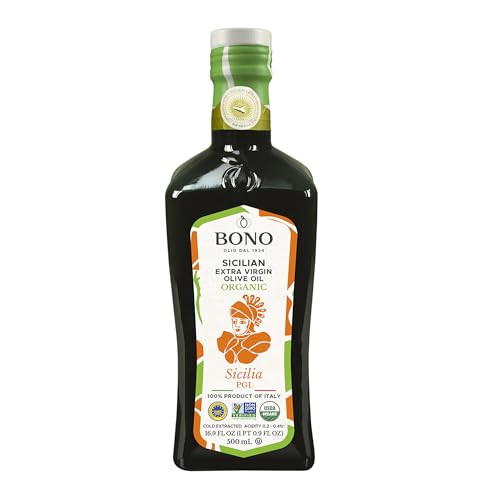
The standard Bono Organic is the entry-level Sicilian bottle that gives you certified organic, cold-pressed, and unfiltered olive oil without the higher price tag of its PDO sibling. It is made from certified organic olives with no pesticides or chemicals, and it is cold-pressed and left unfiltered, which means tiny olive particles remain suspended in the oil, adding a cloudy complexity and a deeper mouthfeel. Many buyers describe it as the best-tasting organic option they have used on salad and bread.
The flavor profile reads as robust and fruity with a classic Mediterranean punch, and it works equally well for cooking and finishing because the unfiltered solids add body even after the oil is heated. At 16.9 ounces, it is a standard format that fits easily in the cabinet door. The main note from the reviews is that some buyers find it slightly expensive for the volume when compared to blended value jugs, but they still rate it five stars because the taste is genuinely superior to the commodity oils at the supermarket.
The primary technical difference between this and the Bono PDO reviewed earlier is the certification — this one carries USDA Organic but not the specific regional PDO status. The acidity is not printed on the label, so you are trusting the brand’s reputation rather than a third-party chemical snapshot. For someone who wants a reliable entry to Sicilian organic oil without jumping to the premium tier, this is the bottle to grab.
Why it’s great
- Certified organic, cold-pressed, and unfiltered for a robust mouthfeel
- Rich, fruity Sicilian flavor that works for both cooking and finishing
- Solid introductory organic option from a reputable Sicilian producer
Good to know
- Acidity percentage not printed on the label
- Does not carry PDO certification — regional origin is less traceable
FAQ
Does “imported from Italy” mean the olives are Italian?
How can I tell if the olive oil in my hand is fresh?
What does the “pepper” test tell me about quality?
Can I cook with premium Italian olive oil or only drizzle it?
Final Thoughts: The Verdict
For most users, the best olive oil from italy winner is the Zahara Extra Virgin Olive Oil because it combines the sharpest polyphenol profile with four years of Gambero Rosso awards at a price that still feels fair for a single-estate Sicilian. If you want a PDO-certified bottle that you can use daily without saving it for special occasions, grab the Bono Val di Mazara PDO. And for cost-conscious family cooking where the jug lasts a month, nothing beats the Colavita Mediterranean blend.