Antibiotics don’t discriminate. They wipe out the infection driving you to the pharmacy, but they also decimate the protective bacterial colonies lining your intestines. The result—loose stools, bloating, yeast overgrowth, and a digestive system that feels completely untrustworthy—is a side effect nearly every woman on antibiotics experiences but rarely anticipates.
I’m Mohammad Maruf — the founder and writer behind AirfryerBite. I’ve spent years analyzing supplement hardware: CFU counts, strain selection, acid-resistant capsule technology, and prebiotic fiber synergy to separate formulas that actually survive digestion from those that don’t.
Rebuilding gut terrain during a course of antibiotics requires a strain-specific, high-potency approach that replenishes what the medication erases. That’s precisely what the best probiotics for women on antibiotics deliver — targeted microbial support that stabilizes digestion without interfering with your prescription.
How To Choose The Best Probiotics For Women On Antibiotics
Not every probiotic sold on Amazon is designed to survive the hostile environment of a gut being bombarded by antibiotics. You need a formula engineered with specific CFU thresholds, targeted strains, and delivery technology that guarantees live cultures reach your intestines rather than dissolving uselessly in stomach acid.
CFU Potency During Antibiotic Treatment
Standard maintenance probiotics hover around 10 to 20 billion CFU per serving. During an antibiotic course, you want at least 50 billion CFU. The reason is simple: antibiotics kill indiscriminately, so your supplement needs to flood the system with enough live organisms to outpace the destruction. Formulas packing 100 billion CFU give you room to adjust dosage without running out mid-treatment.
Strain Selection and Colonization Ability
Lactobacillus rhamnosus GG, Lactobacillus acidophilus, and Bifidobacterium lactis are the three strains most frequently cited in clinical research for surviving antibiotic co-administration. Look for a formula that lists specific strain names rather than vague “probiotic blend” language. Targeted strains like L. rhamnosus GG have documented adhesion to intestinal walls, meaning they actually stay and repopulate rather than passing straight through.
Acid-Resistant Delivery Systems
Enteric coating or acid-resistant capsules are non-negotiable during antibiotic recovery. Standard gelatin capsules dissolve in the stomach, exposing fragile bacteria to pH levels of 1.5 to 3.5—enough to kill the majority before they reach the colon. Delayed-release capsules or vegetable-based acid-resistant shells protect the CFUs until they hit the small intestine, where the pH is neutral enough to allow release and colonization.
Prebiotic and Postbiotic Synergy
Prebiotics are soluble fibers that feed probiotic bacteria and help them establish colonies faster. Postbiotics are the metabolic byproducts of fermentation—short-chain fatty acids that directly nourish intestinal cells. A formula that combines all three (PRE + PRO + POST) accelerates recovery by providing both the soldiers and the food supply. Single-niche probiotics without prebiotic fiber often take weeks longer to show results.
Quick Comparison
On smaller screens, swipe sideways to see the full table.
| Model | Category | Best For | Key Spec | Amazon |
|---|---|---|---|---|
| NATURE TARGET 100B | Prem. Women’s Formula | Max potency + vaginal/UT support | 100B CFU, 31 strains, enzymes | Amazon |
| Physician’s Choice Women’s | Women’s Health | Feminine balance + digestion | 50B CFU, 6 strains, prebiotic | Amazon |
| Flora Super 8 | Yeast Balance | Yeast balance maintenance | 42B CFU, 8 strains, raw | Amazon |
| Physician’s Choice 60B | General Purpose | Broad digestive recovery | 60B CFU, 10 strains, prebiotic | Amazon |
| Garden of Life 3-in-1 | Triple-Action | Pre+pro+postbiotic synergy | 30B CFU, 16 strains, gluten-free | Amazon |
In‑Depth Reviews
1. NATURE TARGET Probiotics for Women, 100 Billion CFU

This formula sits at the top because it addresses every vulnerability antibiotics create in a woman’s gut. The 100 billion CFU count is the highest in this lineup, and the inclusion of 31 distinct strains means you get broad-spectrum coverage—critical when antibiotics have already decimated your microbial diversity. The advanced enteric-coated capsules protect those CFUs from stomach acid, so the live cultures actually reach the intestine where they can colonize. I also appreciate the digestive enzyme blend, which helps break down food while the probiotics repopulate, reducing the bloating that often accompanies recovery.
What makes this especially relevant for women on antibiotics is the fivefold feminine health system: D-mannose, cranberry extract, hibiscus, dandelion, and targeted pH-balance strains. Women finishing a course of antibiotics frequently deal with urinary tract irritation or yeast overgrowth. This formula addresses both digestive and urogenital recovery in a single capsule, eliminating the need for separate supplements. At 180 capsules per bottle with a recommended dosage of two per day, it provides a 90-day supply that comfortably covers a full antibiotic course plus several weeks of rebuilding.
Customer feedback consistently highlights normalized bowel movements within two weeks and relief from the loose stools that plague antibiotic users. The capsule size is manageable, and no refrigeration is required, which matters when you’re already managing multiple medications. For a woman who wants maximum CFU density, strain diversity, and feminine health support in one purchase, this is the strongest contender.
Why it’s great
- 100 billion CFU is the highest potency in this guide—ideal for aggressive repopulation during antibiotics
- Enteric-coated capsules ensure strains survive stomach acid and reach the intestines alive
- Includes digestive enzymes, prebiotics, and women’s health blend in one bottle
- 90-day supply reduces the cost per serving significantly
Good to know
- Two capsules per day may feel like more than a single-dose competitor
- Some users need a week of adjustment before full digestive comfort sets in
2. Physician’s Choice Probiotics for Women, 50 Billion CFU

This probiotic was designed specifically around feminine health, meaning the six targeted strains were chosen to support pH balance, urinary tract integrity, and vaginal flora—three areas that antibiotics disrupt most aggressively in women. The 50 billion CFU per serving sits in a strong mid-range potency zone that works well for maintenance during a course of antibiotics without overwhelming a sensitive digestive system. The inclusion of organic prebiotics provides the fuel necessary for those strains to establish colonies faster.
The real differentiator here is the Pro-Cran and D-Mannose component. Cranberry proanthocyanidins prevent bacteria from adhering to urinary tract walls, while D-mannose helps flush irritants from the bladder. Women who have experienced post-antibiotic UTIs or yeast infections will find this dual-action approach particularly valuable. The acid-resistant capsule technology is identical to what Physician’s Choice uses in their general-purpose 60 billion formula, meaning the strains survive the stomach environment reliably. No refrigeration is required, and the capsules are small enough to swallow easily.
Reviews from women who took this alongside antibiotic courses report noticeably less bloating and more regular bowel movements within the first week. A subset of users noted that the formula helped prevent the yeast overgrowth that often follows a round of broad-spectrum antibiotics. The one-month supply is adequate for short treatment cycles, but users on longer antibiotic protocols may want to purchase the two-month bottle to ensure uninterrupted coverage.
Why it’s great
- Specifically formulated for women’s pH, urinary, and vaginal health—three systems antibiotics attack
- Cranberry and D-Mannose provide targeted UTI prevention
- Organic prebiotics feed probiotic strains for faster colonization
- Acid-resistant capsules survive stomach digestion reliably
Good to know
- Only 6 strains, which limits diversity compared to wider-spectrum formulas
- 50 billion CFU may feel insufficient for heavy antibiotic courses
3. Flora Super 8 High Potency Probiotics, 42 Billion CFU
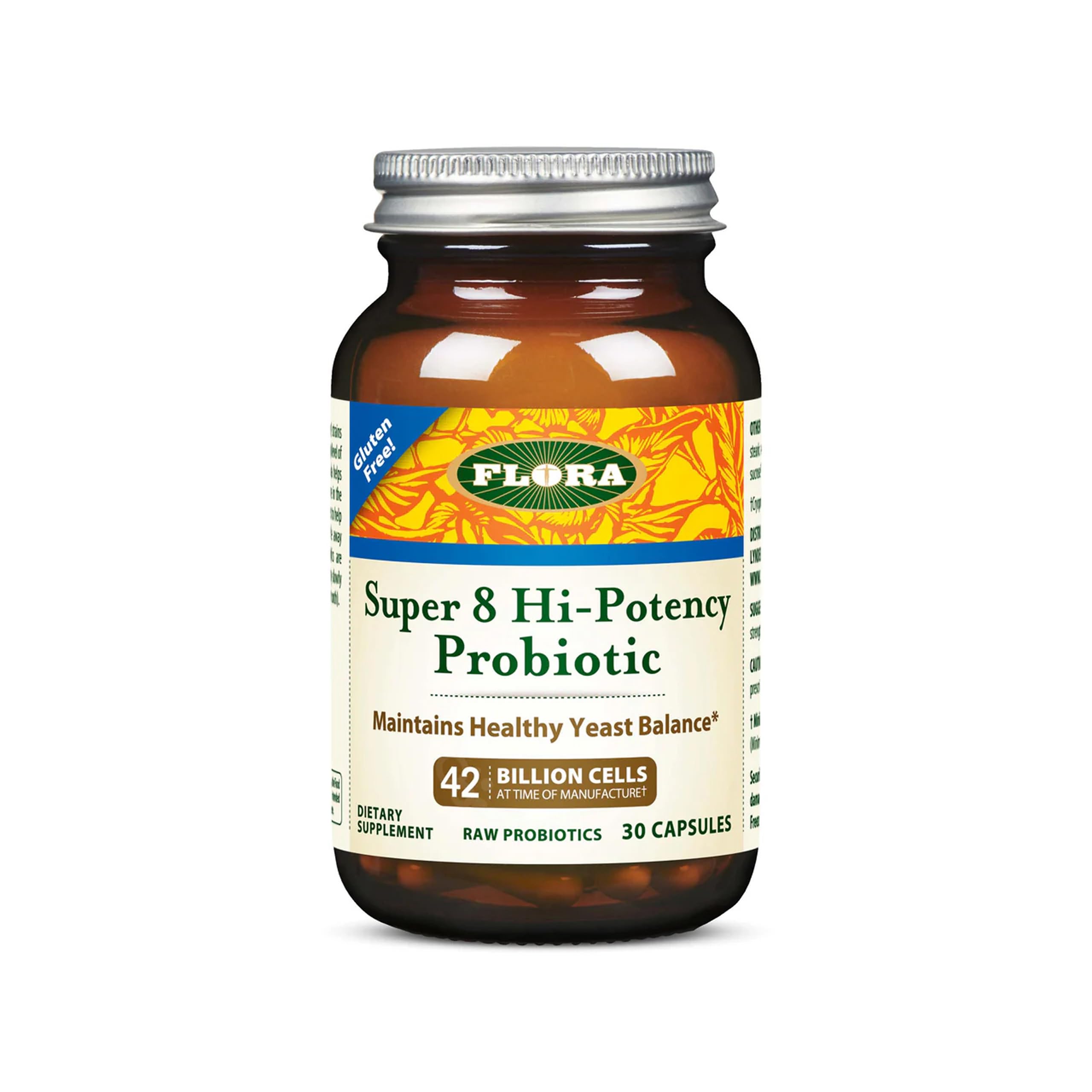
Flora’s Super 8 formula prioritizes yeast balance above all else, which is exactly what many women need when antibiotics kill off the beneficial bacteria that normally keep Candida in check. The 42 billion CFU count is moderate, but the strain composition is heavily weighted toward Lactobacillus acidophilus, the species most directly associated with maintaining a healthy yeast equilibrium. This is a raw, unprocessed formula, meaning the cultures are never heat-treated, which preserves viability better than many shelf-stable alternatives.
What sets this apart is the explicit design for yeast management. Each capsule delivers a higher percentage of acidophilus relative to other strains, and the remaining seven strains—including L. rhamnosus and L. plantarum—provide digestive coverage without diluting the antifungal focus. Users who have experienced post-antibiotic thrush or vaginal yeast infections will appreciate that this formula was engineered specifically for that scenario rather than as a general-purpose probiotic that happens to mention yeast support. The capsules are gluten-free and vegetarian, and the raw status means no synthetic binders were used during manufacturing.
Long-term users report that this is the only probiotic that has kept their digestive system stable over years of intermittent antibiotic use. The one downside is that this formula requires refrigeration, which can be inconvenient when traveling or storing alongside room-temperature medications. For women whose primary post-antibiotic concern is yeast overgrowth rather than general digestion, this focused formula outperforms broader-spectrum options that lack the acidophilus concentration needed for true yeast suppression.
Why it’s great
- High acidophilus concentration directly targets yeast balance after antibiotics
- Raw, unprocessed formula preserves maximum culture viability
- Gluten-free and vegetarian with no synthetic binders
- Eight diverse strains cover digestive support alongside yeast management
Good to know
- Requires refrigeration, which limits portability
- 42 billion CFU is lower than other options for aggressive repopulation
4. Physician’s Choice Probiotics 60 Billion CFU, 10 Strains

This is the general-purpose heavyweight from Physician’s Choice, and it earns its place in this guide because of the 60 billion CFU potency paired with 10 diverse strains and organic prebiotics. For women who want a reliable, gender-neutral formula that doesn’t sacrifice CFU density, this delivers. The acid-resistant capsule technology has been tested across years of customer use, and the shelf-stable bottle means you can keep it in the cabinet alongside your antibiotics without worrying about refrigeration.
The strain lineup includes L. rhamnosus, L. acidophilus, and B. lactis—the three strains most frequently cited in antibiotic co-administration studies. The organic prebiotic blend (inulin from chicory root) provides soluble fiber that feeds the incoming bacteria and helps them establish colonies more quickly. Users who have cycled through multiple probiotics often report that this formula resolves the bloating and loose stools associated with antibiotics faster than lower-potency alternatives. Each bottle contains 30 capsules, and the recommended dosage is one per day for maintenance or two after heavy meals, giving you flexibility during intensive antibiotic periods.
Customer feedback spanning eight years of product history shows consistent results: reduced bloating within the first week and normalized bowel movements within two to three weeks. Several reviewers mention that their physician specifically recommended this brand, which adds a layer of clinical credibility. The formula is third-party tested for purity and potency, and it’s manufactured in the USA under strict quality control. For women who don’t need the feminine-specific ingredients of the targeted formula but still want robust CFU support, this is the most straightforward choice.
Why it’s great
- 60 billion CFU with 10 strains hits the sweet spot for antibiotic recovery
- Acid-resistant capsules and shelf-stable bottle simplify daily use
- Organic prebiotics accelerate colony establishment
- Eight years of positive customer feedback with physician endorsements
Good to know
- No feminine-specific ingredients like cranberry or D-mannose
- 30-day supply runs out faster if doubling dosage during antibiotic course
5. Garden of Life Dr Formulated Once Daily 3-in-1 Probiotics
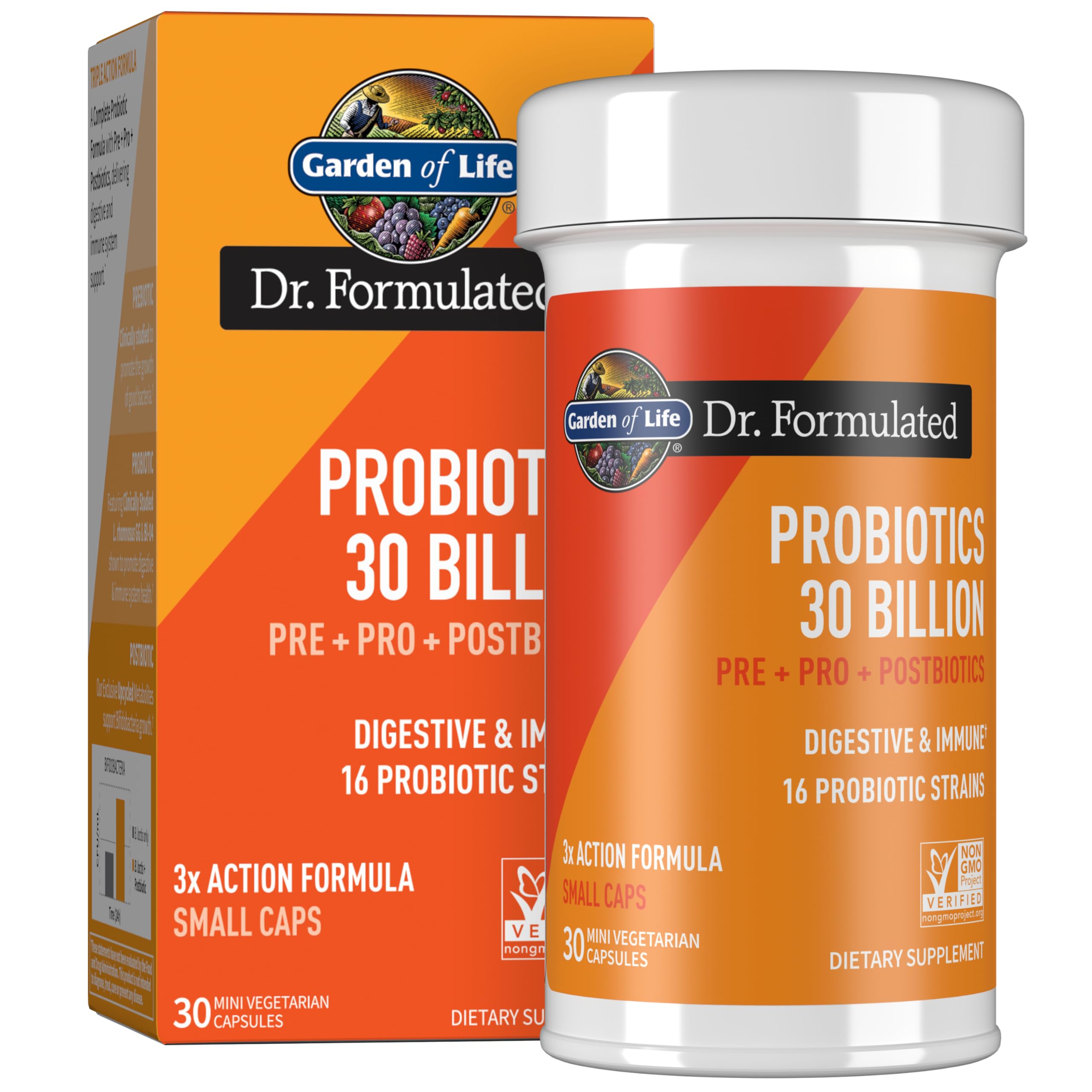
Garden of Life’s 3-in-1 formula is unique in this list because it combines probiotics, prebiotics, and postbiotics in a single vegetarian capsule. The 30 billion CFU count is the lowest here, but the inclusion of postbiotics—the short-chain fatty acids that directly nourish intestinal cells—compensates by accelerating tissue repair in a gut damaged by antibiotics. The 16-strain diversity is impressive, and the formula includes L. rhamnosus GG, one of the most clinically studied strains for antibiotic-associated diarrhea prevention.
The PreforPro prebiotic component is worth calling out because it uses a specific bacteriophage technology that selectively feeds beneficial bacteria without feeding pathogenic strains—a sophisticated approach that matters when your microbiome is destabilized. The formula is non-GMO Project Verified and NSF Certified Gluten-Free, which gives users with celiac disease or gluten sensitivity confidence in the purity of the ingredients. Shelf-stable convenience means no refrigeration is required, and the once-daily dosage is simple to maintain alongside a medication schedule.
Customer reviews from women who took this after antibiotic courses for conditions like cellulitis report effective rebalancing without gastric irritation. The triple-action design means you’re not just adding bacteria—you’re providing the food supply and the tissue-repair metabolites that speed recovery. For women who prefer a lower CFU count with a more scientifically layered formulation, this delivers results that feel disproportionate to its modest 30 billion CFU label. It’s a thoughtful choice for sensitive stomachs that react poorly to high-potency blasts.
Why it’s great
- Prebiotic + probiotic + postbiotic combination accelerates gut lining repair
- 16 strains provide excellent diversity for a 30B CFU formula
- L. rhamnosus GG is clinically validated for antibiotic-associated diarrhea
- Non-GMO and NSF gluten-free certified for purity
Good to know
- 30 billion CFU is lower than any other option in this guide
- No feminine-specific support for urinary or vaginal health
FAQ
How many hours should I wait after taking an antibiotic to take a probiotic?
Can I take a probiotic while on antibiotics without asking my doctor?
Should I continue taking probiotics after my antibiotic course finishes?
Why do some probiotics require refrigeration while others are shelf-stable?
Can probiotics interfere with the effectiveness of my antibiotics?
Final Thoughts: The Verdict
For most users, the probiotics for women on antibiotics winner is the NATURE TARGET 100 Billion CFU formula because it delivers the highest potency, broadest strain diversity, and a complete women’s health system in one bottle—all wrapped in enteric-coated capsules that guarantee survival. If you want targeted feminine pH and urinary support without the highest CFU count, grab the Physician’s Choice Women’s Probiotic. And for a scientifically layered triple-action formula that goes easy on a sensitive stomach, nothing beats the Garden of Life 3-in-1.