Most bagged soils turn into concrete within weeks, suffocating basil roots and stunting rosemary before it ever gets a chance to flavor a single dish. The difference between an herb garden that thrives and one that languishes is almost always the soil structure — not the seeds, not the sun, and certainly not some mysterious “gardener’s touch.”
I’m Mohammad Maruf — the founder and writer behind AirfryerBite. I’ve spent years analyzing potting media formulations, tracking pH stability across brands, and reviewing how different substrates handle the delicate balance of aeration, drainage, and moisture retention required by culinary herbs.
Nothing derails a fresh harvest faster than the wrong growing medium. That’s why I put together this guide to the soil for growing herbs, breaking down exactly which blends deliver the light, fluffy texture and nutrient profile that basil, thyme, mint, and parsley need to produce vigorous, aromatic leaves all season long.
How To Choose The Best Soil For Growing Herbs
Culinary herbs have fine, sensitive root systems that demand a specific physical environment. Unlike deep-rooted vegetables or hardy shrubs, herbs like basil, cilantro, and dill develop best in a medium that provides excellent air porosity while holding just enough moisture to prevent wilting. A single bad mix can lead to root rot, leggy growth, or leaves that lack essential oils and aroma.
Aeration and Drainage
Herb roots need oxygen as much as they need water. A soil mix that compacts easily will suffocate roots, leading to yellowing leaves and stunted growth. Look for blends that include perlite, coarse sand, or pumice to create air pockets. The mix should feel light and fluffy in your hand, not heavy or clumpy. When you squeeze a handful, it should hold its shape briefly then crumble apart — not form a hard mud ball.
Moisture Retention Without Saturation
Herbs prefer consistent moisture but absolutely cannot tolerate standing water. Coco coir and sphagnum peat moss are excellent at holding water while still allowing excess to drain. Avoid soils that feel dense or contain large amounts of fine clay, which traps water around roots. The ideal medium allows water to flow through freely while the organic components hold a thin film of moisture around each particle.
pH Range and Nutrient Profile
Most culinary herbs thrive in a slightly acidic to neutral pH range between 6.0 and 7.0. Soil that is too acidic locks up essential nutrients like calcium and magnesium, while alkaline soil can cause iron chlorosis. Many premium herb soils come pre-buffered with calcium or lime to stabilize pH. Look for blends that specify their pH range and contain slow-release organic nutrients like kelp meal or worm castings rather than synthetic fertilizers that can burn tender roots.
Quick Comparison
On smaller screens, swipe sideways to see the full table.
| Model | Category | Best For | Key Spec | Amazon |
|---|---|---|---|---|
| Coast of Maine Bar Harbor Blend | Premium Organic | Serious herb containers | 16 qt, lobster & kelp meal | Amazon |
| Midwest Hearth Premium Mix | Professional Blend | Seed starting & rooting | 8 qt, peat + vermiculite + perlite | Amazon |
| NUTRIFIELD Coco Coir | Organic Coir | Custom soil mixing | 9 qt, RHP certified, calcium buffered | Amazon |
| Jessi Mae Potting Soil | Specialty Indoor | Small indoor herb pots | 4 qt, slightly acidic, perlite | Amazon |
| Voulosimi Perlite | Soil Amendment | Improving drainage of any mix | 10 qt, chunky grade, pH 7.0 | Amazon |
In‑Depth Reviews
1. Coast of Maine Bar Harbor Blend Potting Soil
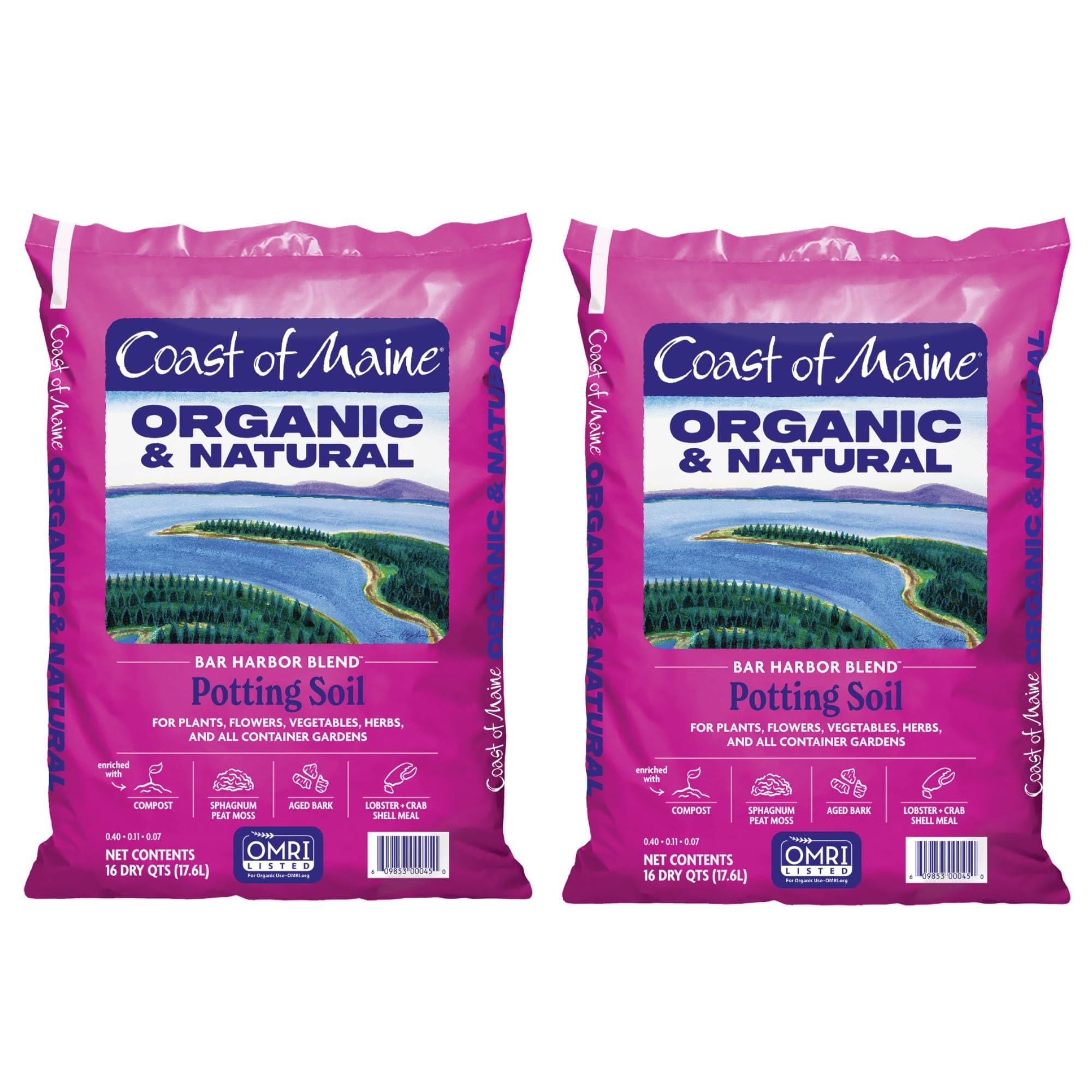
The Coast of Maine Bar Harbor Blend is the most nutrient-dense potting soil on this list, formulated specifically for vegetables, herbs, and container gardening. Its dark, compost-rich base includes sphagnum peat moss, perlite, lobster shell meal, crab shell meal, and kelp meal — providing a slow-release nitrogen source that feeds basil, parsley, and mint for weeks without additional fertilizer. The 16-quart bag offers generous volume for multiple large containers or a substantial raised bed planter.
The physical texture is what sets this blend apart. It feels dark, crumbly, and alive — not dry and lifeless like many mass-produced bagged soils. The perlite and compost create a structure that holds moisture without becoming waterlogged, while the organic shell meals release calcium and chitin that strengthen plant cell walls. Users consistently report faster growth and denser foliage compared to standard potting mixes.
This is a premium organic product made in the USA with sustainable, regenerative practices. The only consideration is that the bag is heavier than standard mixes due to the compost content, and some users note that adding extra perlite can improve drainage for herbs that prefer drier conditions like thyme and oregano. For a complete, ready-to-use herb soil that requires no mixing, this is the clear winner.
Why it’s great
- Rich organic nutrient profile with lobster and kelp meal
- Excellent moisture retention without compaction
- Approved for organic gardening, 16-quart value size
Good to know
- Heavier than synthetic mixes due to compost content
- Very moisture-retentive — add perlite for drought-tolerant herbs
2. Midwest Hearth Premium Potting Soil Mix

The Midwest Hearth Premium Potting Soil Mix uses the same three-ingredient formulation professional growers rely on: sphagnum peat moss for water retention, perlite for aeration, and vermiculite for nutrient-holding capacity. At 8 dry quarts, it’s a mid-sized bag that works beautifully for starting herb seeds or potting up a windowsill collection of basil, chives, and cilantro.
The texture is notably light and fluffy right out of the bag, with no large bark chunks or woody debris that can interfere with delicate root development. The pH is controlled to a balanced level suitable for a broad spectrum of plants, which means you won’t need to worry about acidity swings that can stress young herbs. The resealable bag design is a practical touch for anyone who doesn’t use the entire bag in one planting session.
This mix is optimized for root growth and germination. Users who started petunia and vegetable seeds in this medium reported faster germination rates and healthier root systems compared to standard big-box soils. For herb gardeners who want a clean, consistent, professionally formulated base that they can customize with additional amendments, this is an excellent choice.
Why it’s great
- Professional three-part blend for optimum aeration
- Light, fluffy texture ideal for seed starting
- Resealable bag, made in USA
Good to know
- Requires pre-moistening before use for best results
- No added fertilizer — plan to supplement for heavy feeders
3. NUTRIFIELD Coco Coir Premium RHP Certified

The NUTRIFIELD Coco Coir is a 100% pure coconut fiber medium that has been washed and pre-buffered with calcium to stabilize pH and lower electrical conductivity (EC). RHP certification means the consistency and quality meet European horticultural standards — no pathogens, no weed seeds, and a predictable physical structure batch after batch. This is the foundational ingredient for custom-mixing your own perfect herb soil.
What makes this coir exceptional for herbs is its water retention capacity. Coconut coir can hold up to ten times its weight in water while still maintaining excellent air porosity — a combination that basil and mint crave. The fine, loose texture straight out of the bag requires no soaking or breaking apart, unlike compressed coir bricks. It’s ready to use immediately as a standalone medium or as a base to which you add perlite, worm castings, or compost.
Users consistently praise its cleanliness — no bark, no dust, no foreign materials — and its ability to blend seamlessly with other soil components. This is not a complete potting soil on its own for long-term herb growth (it lacks built-in nutrients), but it is the best raw material for gardeners who want full control over their herb mix. Combined with a balanced organic fertilizer, it produces exceptionally vigorous root systems.
Why it’s great
- RHP certified for consistent quality and cleanliness
- Pre-buffered with calcium, pH stabilized, low EC
- Excellent water retention with superior aeration
Good to know
- Contains no added nutrients — requires fertilization
- Loose fill bag can be messy to handle
4. Jessi Mae Potting Soil

The Jessi Mae Potting Soil is a hand-mixed, small-batch organic blend designed specifically for indoor container plants. Its slightly acidic pH makes it particularly well-suited for herbs like parsley and cilantro that prefer a pH around 6.0 to 6.5. The 4-quart size is compact enough for a kitchen windowsill setup or a couple of medium terracotta pots without excess waste.
The texture is light and airy, thanks to generous perlite inclusion, which ensures excess water drains quickly — critical for indoor pots that lack the natural evaporation of outdoor environments. The organic composition means no synthetic chemicals that could build up in the soil over time. Users report that snake plants and peace lilies thrive in this mix, indicators that the drainage and aeration balance is well-calibrated.
The one quirk noted by multiple users is that the soil has a distinctive earthy, organic smell upon opening that dissipates after a day or two. This is a natural byproduct of the composted organic materials and not a defect. For anyone keeping a small herb collection on a countertop or shelf, this bag delivers a premium, ready-to-use mix without the need to buy a giant bag that takes months to use.
Why it’s great
- Hand-mixed in small batches for consistent quality
- Slightly acidic pH ideal for many culinary herbs
- Light, fluffy texture prevents indoor overwatering issues
Good to know
- Small 4-quart bag — not for large container gardens
- Organic smell is noticeable for first few days
5. Voulosimi Organic Perlite

The Voulosimi Organic Perlite is not a standalone soil but a horticultural amendment that transforms any potting mix into an herb-friendly medium. These large, chunky perlite particles create substantial air pockets in dense soil, preventing the compaction that causes root suffocation. With a neutral pH of 7.0, it won’t alter the acidity of your base mix.
The chunky grade here matters. Unlike the fine, dusty perlite found at big-box stores that breaks down quickly and floats to the top of pots, these larger pieces maintain their structure over multiple growing seasons. When mixed at a 1:3 ratio with coco coir or peat-based soil, it creates the perfect environment for rosemary, thyme, and sage — herbs that demand sharp drainage and cannot tolerate wet feet.
Users consistently note minimal dust compared to standard perlite brands, which means less respiratory irritation when mixing. The 10-quart bag provides enough volume to amend several large containers or a whole windowsill collection. For anyone whose herb plants have been struggling with yellow leaves or stunted growth, adding this perlite to the existing soil is often the single most effective fix.
Why it’s great
- Large, chunky particles provide superior aeration
- Very low dust compared to standard perlite
- Neutral pH, won’t alter soil chemistry
Good to know
- Not a standalone soil — must be mixed with a base medium
- Particle size can vary between batches
FAQ
Can I use regular garden soil for growing herbs in containers?
Why does my potting soil need perlite or vermiculite for herbs?
Final Thoughts: The Verdict
For most users, the soil for growing herbs winner is the Coast of Maine Bar Harbor Blend because it combines rich organic nutrition with a texture that supports vigorous root growth and aromatic leaf production right out of the bag. If you want complete control over your mix, grab the NUTRIFIELD Coco Coir as a pristine base and combine it with the Voulosimi Perlite for a custom blend that outperforms any pre-mixed bag. And for a clean, small-batch option ideal for windowsill kitchens, the Jessi Mae Potting Soil delivers quality without excess volume.