The burning sensation of a nocturnal leg cramp ripping you out of deep sleep is a specific form of misery that sends thousands of people searching for potassium supplements each month. Whether you are managing dysautonomia symptoms, pushing through a keto-flu phase, or simply trying to reclaim post-workout recovery without that dead-tired feeling, the right electrolyte source can make the difference between a functional day and a write-off.
I’m Mohammad Maruf — the founder and writer behind AirfryerBite. I spend my time dissecting supplement chemistry and real-user outcomes, specifically analyzing how potassium forms (bicarbonate, chloride, citrate) affect absorption speed, digestive comfort, and practical daily compliance for people who need reliable electrolyte support.
After combing through hundreds of verified buyer experiences and laboratory specs for chewable gummies, effervescent tablets, bulk powders, and rapid-dissolve capsules, I have narrowed the field to the five formulations that actually deliver on their promises. Whether you prioritize rapid symptom relief or budget-friendly bulk mixing, this guide walks you through the strengths and quirks of the current market leaders so you can match the format to your specific physiology. This is your straightforward, evidence-informed resource for finding the best potassium drinks and supplements available right now.
How To Choose The Best Potassium Drinks
The potassium supplement aisle looks deceptively simple — every bottle promises cramp relief and energy. But the form of potassium, the delivery mechanism, and the serving size dramatically affect whether that supplement actually works for your body without turning your stomach inside out. Here are the three critical factors that separate an effective buy from a regretful one.
Potassium Form: Bicarbonate, Chloride, or Citrate
The chemical salt attached to the potassium ion changes how fast it dissolves in your digestive tract and how much you absorb. Potassium bicarbonate is widely considered the cleanest form — it is naturally buffered and tends to cause less gastric upset than potassium chloride, which is what most table-salt substitutes use. Potassium citrate offers an alkalizing effect that some users with kidney concerns prefer, but it can taste more acidic. If you have a sensitive stomach, starting with a bicarbonate-based product is almost always the safer bet.
Format Fit: Gummies, Capsules, Tablets, or Bulk Powder
Your daily compliance hinges entirely on how easy the product is to actually take. Gummies are the highest-compliance format for people who hate swallowing pills or have dysphagia, but they typically cost more per dose. Capsules deliver high milligram counts quickly and are portable, though some users report empty capsules or inconsistent fill. Effervescent tablets like Nuun dissolve in water and double as a hydration ritual, which works well for active people who already drink water during workouts. Bulk powder is the most economical option — a single kilogram of potassium chloride powder can last a year — but it requires careful measuring and a strong stomach to tolerate the intense salinity.
Serving Size and Total Daily Potassium
Most adults need around 2600–3400 mg of potassium per day from all sources. But on-product labels can be misleading: a gummy delivering 500 mg per serving sounds high until you realize you need six servings to hit a meaningful dose. Capsules with 1020 mg per serving reduce the pill burden significantly. The key is to calculate how many servings you will actually take per day and compare that to your dietary intake. Starting low (around half the recommended serving) and working up over several days is the single most effective way to avoid the explosive GI side effects that some reviewers describe.
Quick Comparison
On smaller screens, swipe sideways to see the full table.
| Model | Category | Best For | Key Spec | Amazon |
|---|---|---|---|---|
| Vitassium FastChews | Chewable Tablet | Rapid dysautonomia relief | 125 mg sodium + 25 mg potassium per chew | Amazon |
| kindnature Potassium Gummies | Gummy | Daily electrolyte balance | 500 mg pure potassium bicarbonate per serving | Amazon |
| Nutricost Potassium Chloride Powder | Bulk Powder | Long-term budget mixing | 1 kg / 365 mg potassium per 0.7 g serving | Amazon |
| Puregen Labs Potassium Bicarbonate | Vegetarian Capsule | High-dose capsule support | 1020 mg potassium bicarbonate per serving | Amazon |
| Nuun Sport Electrolyte Tablets | Effervescent Tablet | Active/hydration pairing | 5 electrolytes, 1 g sugar per tab | Amazon |
In‑Depth Reviews
1. Vitassium FastChews

Vitassium FastChews are engineered for a very specific, high-need use case: rapid symptom intervention during a POTS flare or dysautonomia episode. Each chewable tablet delivers 125 mg of sodium alongside 25 mg of potassium (both from citrate salts), creating a targeted electrolyte spike that users report starts working in minutes — far faster than swallowing a capsule or dissolving a powder. The fruit punch flavor is intentionally strong to mask the bitterness of the salt, but verified buyers consistently note that the taste is tolerable and far less chalky than standard sodium tablets.
What sets these apart from general electrolyte supplements is the explicit design for medical dietary management of high-sodium diets. The dosing protocol is unusual — users are instructed to wait 2-3 minutes before drinking water after chewing to kickstart sublingual absorption. This technique directly addresses the swallowing difficulties that many POTS patients experience, making the FastChews a practical tool for people who cannot handle pills or gummies during symptomatic episodes.
Cost-conscious users should note that each tablet contains only 25 mg of potassium, so these are not a stand-alone potassium supplement for general deficiency correction. They function best as a rapid-rescue tool for sodium-and-electrolyte balance in conjunction with a broader daily potassium strategy. The 60-count bottle will last a low-dose user roughly four months, which customers in the POTS community consistently describe as very cost-effective for the symptom relief provided.
Why it’s great
- Works within minutes for dizziness and fatigue relief
- Chewable format ideal for those with swallowing difficulties
- Gluten-free, vegan, and allergen-friendly ingredient list
Good to know
- Potassium dose per tablet is only 25 mg — not a primary potassium source
- Strong artificial fruit taste that some find overpowering
- May provide insufficient sodium for very high-need users
2. kindnature High Potassium Gummies
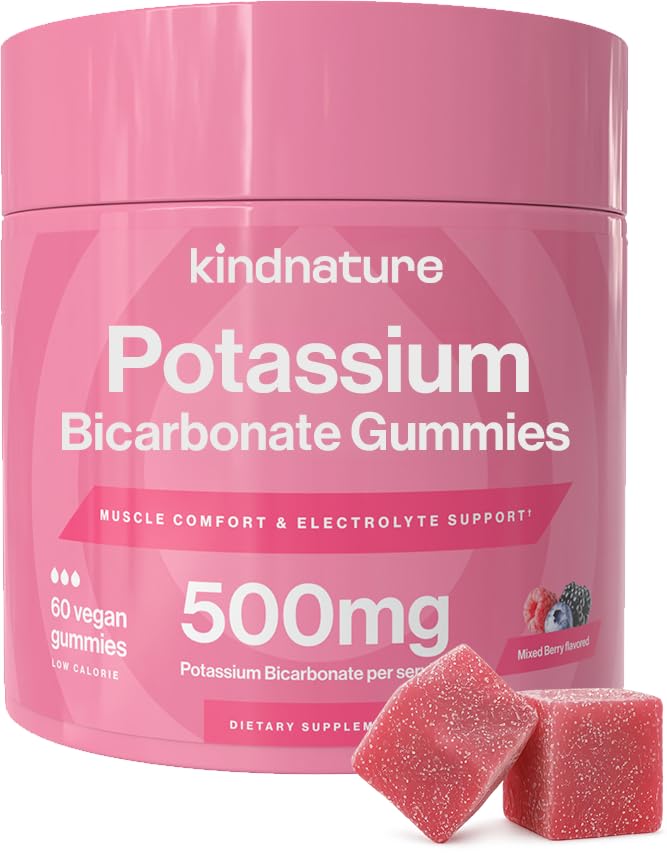
kindnature positions itself as the world’s first pure potassium gummy, and the chemical honesty here matters — instead of relying on a mixed “potassium complex” or blending in magnesium and calcium, each serving delivers a clean 500 mg of potassium bicarbonate. For athletes, keto dieters, or active adults looking to replenish what sweat and low-carb diets deplete, this format eliminates the guesswork. The mixed berry flavor is genuinely pleasant, and reviewers consistently mention that the gummies taste good enough to take without dread — a non-trivial factor for daily compliance.
The 500 mg per two-gummy serving is a meaningful dose for addressing nocturnal leg cramps and mild electrolyte fatigue, and multiple verified buyers report that their nighttime muscle spasms stopped entirely within the first week of use. Because the potassium is in bicarbonate form rather than chloride, users are less likely to experience the harsh, metallic aftertaste or stomach irritation that can come with powder-based chloride products. The formula is vegan, non-GMO, and soy-free, which broadens its appeal for families and those with dietary restrictions.
The main trade-off is cost per dose. Compared to bulk powder or 240-count capsules, a 30-day supply of gummies sits at the higher end of the value spectrum. Users who need more than 500 mg of supplemental potassium per day will burn through the bottle quickly. Additionally, the texture is a softer chew that may not hold up well in warm conditions, so storing the bottle in a cool, dry place is advisable to prevent the gummies from sticking together.
Why it’s great
- First gummy with pure potassium bicarbonate — no filler blends
- Pleasant mixed berry taste makes daily dosing easy
- Effective for stopping leg cramps according to multiple verified reviews
Good to know
- Higher cost per milligram compared to capsule or powder formats
- Soft gummies may clump in hot environments
- Only 500 mg per serving — may require multiple servings for high-need users
3. Nutricost Potassium Chloride Powder
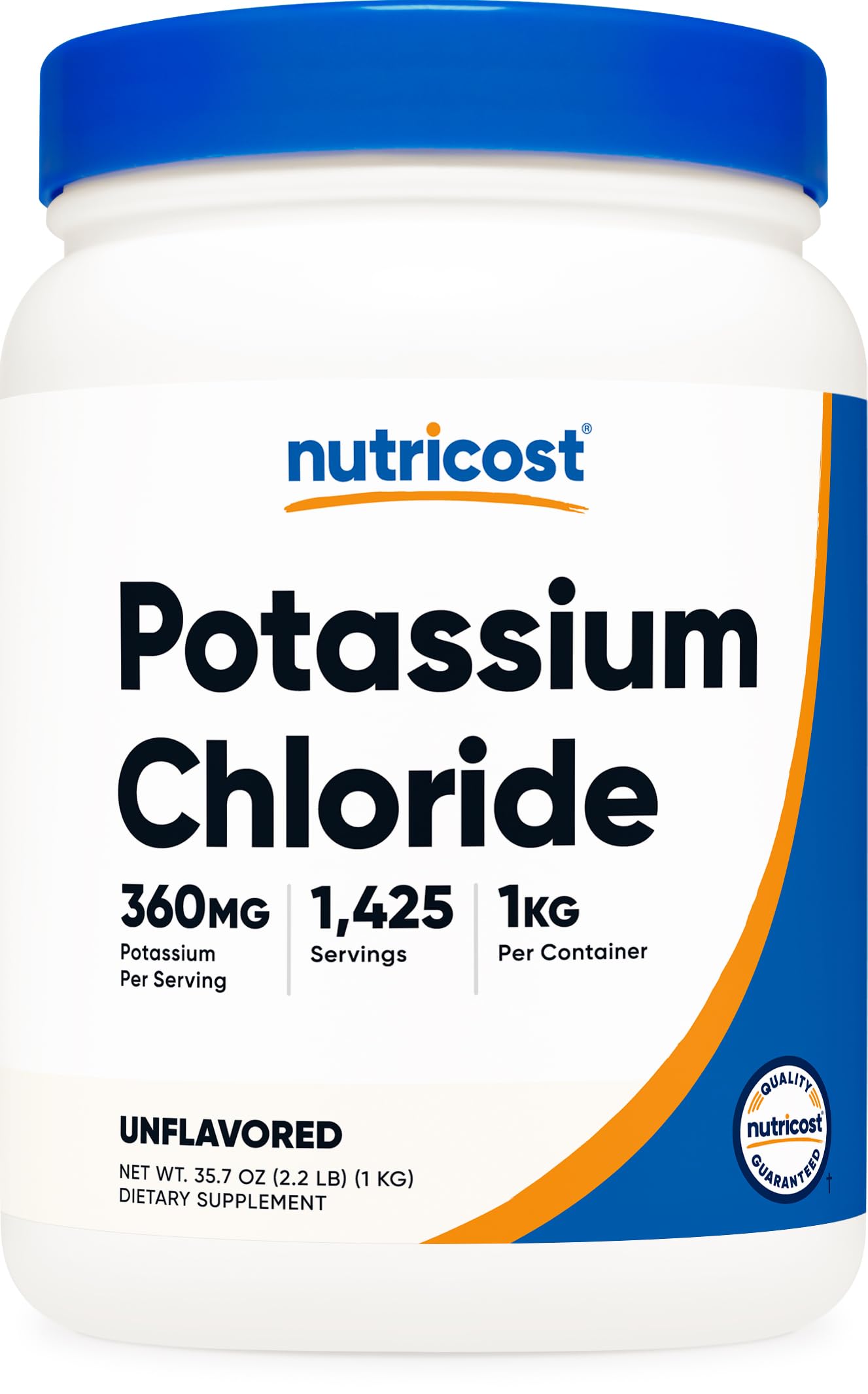
Nutricost’s Potassium Chloride Powder is the volume play for anyone who needs consistent, long-term electrolyte supplementation without recurring monthly purchases. A single kilogram bottle provides roughly 1,428 servings at the recommended 1/8 teaspoon (0.7 g) dose, each delivering 365 mg of potassium from potassium chloride. When mixed with a pinch of sea salt and water, this creates a DIY electrolyte drink that costs pennies per serving — a compelling value proposition for keto dieters, fasting protocol adherents, and athletes who go through multiple bottles of branded electrolyte mixes every month.
The fine powder dissolves quickly in cold or room-temperature water with minimal clumping, and the taste is straightforward: salty and slightly bitter, which is characteristic of potassium chloride. Users frequently pair it with a zero-calorie flavor packet or squeeze of lemon to mask the mineral notes. The product is manufactured in an NSF-certified, GMP-compliant, FDA-registered facility, which provides a meaningful quality assurance layer for bulk supplements that lack individual capsule seals.
The primary caution with this product is dose sensitivity. Potassium chloride is more aggressive on the stomach lining than bicarbonate, and multiple reviewers report severe GI cramps and explosive diarrhea when consuming the full recommended serving on an empty stomach. Starting at half or even a quarter of the serving mixed into a full glass of water, taken with food, is essential. Additionally, users on ACE inhibitors, potassium-sparing diuretics, or anyone with kidney concerns should consult a doctor before adding a bulk chloride supplement, as hyperkalemia risk increases with concentrated potassium sources.
Why it’s great
- Extremely economical — roughly 1,400+ servings per container
- Fine powder dissolves quickly with minimal clumping
- NSF-certified facility with third-party quality standards
Good to know
- Potassium chloride form can cause severe GI distress on empty stomach
- Salty, bitter taste requires flavoring for palatability
- Dosing requires measuring scoop and careful calculation
4. Puregen Labs Potassium Bicarbonate 1020 mg
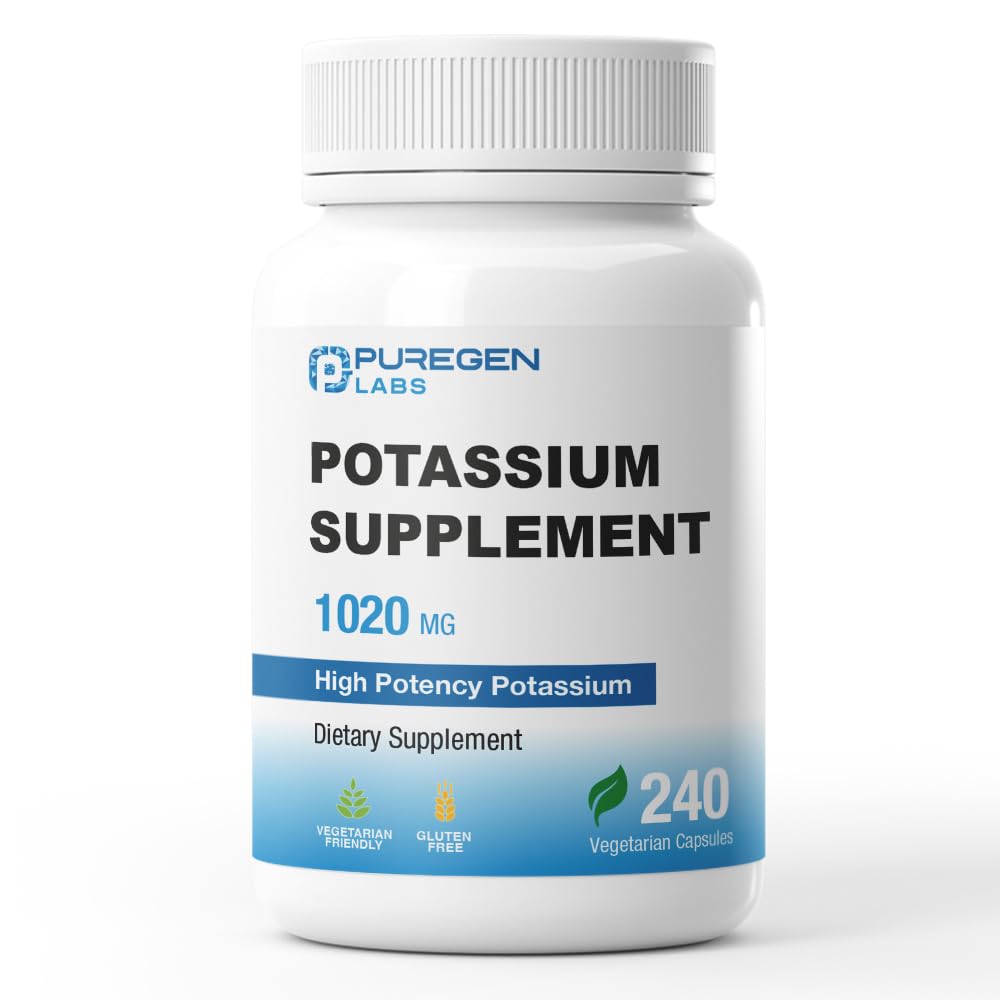
Puregen Labs targets the serious supplement user who wants a high-potency, low-pill-burden option. Each two-capsule serving delivers a substantial 1020 mg of potassium from potassium bicarbonate, which is roughly 30% of the daily recommended intake for adults. For someone managing diagnosed potassium deficiency, dealing with menopause-related fatigue and brain fog, or recovering from extended water fasts, this concentrated dose significantly reduces the number of capsules needed per day compared to lower-strength alternatives. The vegetarian capsule shell dissolves reliably, and the bicarbonate form is gentler on the digestive tract than chloride.
Verified buyer reports highlight two distinct populations that benefit most from this product. Menopausal women in their 50s report dramatic improvements in energy levels and sleep quality within the first week of use — a clinical improvement that aligns with potassium’s role in nerve signaling and muscle relaxation. Fasting users note that the capsules prevent the heart palpitations and general weakness that can accompany prolonged electrolyte depletion, making the 1020 mg serving size particularly valuable for extended fast durations over 48 hours.
The quality concerns are real and require attention. Several customers consistently report finding 10–12 empty capsules in each 240-count bottle, raising questions about fill consistency in the manufacturing line. While the overall cost per serving remains competitive, the empty-capsule defect means the effective count is lower than the label states. Users should also note the product warning about potential drug interactions. Anyone on blood pressure medications, NSAIDs, or digoxin needs medical clearance before adding this potassium dose.
Why it’s great
- High 1020 mg per serving reduces daily pill burden significantly
- Bicarbonate form is gentle and well-tolerated by most stomachs
- Life-changing energy and sleep improvements reported by older women
Good to know
- Multiple reports of 10+ empty capsules per bottle
- Must consult doctor if on heart or blood pressure medications
- High dose raises hyperkalemia risk if dietary intake is already adequate
5. Nuun Sport Electrolyte Tablets

Nuun Sport is the established mainstream player in the effervescent electrolyte category, and its longevity in the market is built on a balanced five-electrolyte formula that includes sodium, potassium, chloride, magnesium, and calcium. Each tablet dissolves in about 16 ounces of water with a satisfying fizz, and the citrus fruit flavor is consistently praised as refreshing without the syrupy sweetness of traditional sports drinks. The formula contains only 1 g of sugar per serving, making it compatible with keto, paleo, and low-carb lifestyles — a major differentiator from Gatorade or Powerade.
The real-world application for Nuun is hydration ritual adherence. Users who previously struggled to drink enough water report that the flavor and mild carbonation make them crave more fluid intake, indirectly solving chronic dehydration alongside the electrolyte replenishment. Half-marathon runners, hot yoga practitioners, and endurance cyclists specifically note faster recovery times and reduced muscle cramping compared to water alone. The tube format is genuinely convenient for tossing into a gym bag, backpack, or car cup holder.
The trade-off is electrolyte dose strength. Nuun Sport is formulated for general hydration maintenance, not therapeutic potassium replacement. Each tablet contains roughly 200 mg of potassium, which is significantly lower than dedicated potassium supplements. For someone with diagnosed potassium deficiency or severe leg cramps, a gummy or capsule product will deliver a more meaningful dose. The tablets also have a tendency to cause burping due to the carbonation, and the larger tabs need to be broken in half to fit standard 500 ml water bottles. Price per serving is higher than bulk mixing, but the convenience factor justifies the premium for many active users.
Why it’s great
- Pleasant citrus fizz encourages higher water intake throughout the day
- Low sugar and keto-friendly — works with most dietary restrictions
- Portable tube format fits easily into active lifestyles
Good to know
- Only 200 mg potassium per tablet — lower than dedicated supplements
- Carbonation can cause burping in some users
- Higher cost per serving compared to bulk powder alternatives
FAQ
Why does potassium bicarbonate cause less stomach upset than potassium chloride?
Can I get enough potassium solely from gummies or do I need a multi-format approach?
Final Thoughts: The Verdict
For most users, the best potassium drinks winner is the kindnature Potassium Gummies because the pure bicarbonate form, pleasant taste, and 500 mg serving size strike the best balance between effectiveness and daily compliance for general leg cramp prevention and electrolyte support. If you want rapid symptom relief during POTS flares or dizziness episodes, grab the Vitassium FastChews. And for budget-conscious bulk mixing that can last a full year, nothing beats the Nutricost Potassium Chloride Powder.