You are staring at a murky stream, miles from a faucet, and the only thing between you and dehydration is a thin plastic tube. That is the moment a water filtration straw earns its place in your pack. The difference between a smart buy and a dangerous mistake comes down to microns, membrane material, and flow rate — specs that determine whether you get clean water or a mouthful of grit and bacteria.
I’m Mohammad Maruf — the founder and writer behind AirfryerBite. After analyzing dozens of portable water filters, cross-referencing lab certifications, and digging into real user experiences across survival, hiking, and travel scenarios.
This guide breaks down the top portable filters by actual performance metrics so you can confidently choose the best water filtration straw for your next backcountry trip or emergency kit without gambling on hollow marketing claims.
How To Choose The Best Water Filtration Straw
A water filtration straw is not a gadget you buy based on brand loyalty. The wrong choice means you either struggle to sip through a clogged membrane or trust a filter that lets microscopic parasites slip through. Focus on these four factors before clicking add to cart.
Micron Rating: The True Gatekeeper
The micron rating is the single most important spec. A 0.1-micron hollow fiber membrane stops bacteria like E. coli and Salmonella as well as protozoan parasites such as Giardia and Cryptosporidium. A 0.01-micron membrane adds even tighter protection against smaller particles. If the listing does not clearly state the micron size with a certification, move on.
Stages of Filtration: Beyond the Membrane
A five-stage system — coarse screen, PP cotton, activated carbon, hollow fiber ultrafiltration, and a final fine screen — removes sediment, improves taste, and extends the life of the membrane. Two-stage carbon-only filters may improve taste but do not reliably remove bacteria. Count the stages.
Flow Rate and Filter Capacity
Flow rate measured in milliliters per minute determines whether sipping feels natural or exhausting. A 500 ml/min rate is the sweet spot — fast enough for direct drinking without back-pressure. Filter capacity (liters or gallons) tells you how much water the straw can process before replacement. Look for at least 4,000 liters for serious backcountry use.
Build Materials and Portability
Stainless steel outer tubes offer durability and crack resistance compared to plastic housings that can shatter under pressure or in freezing conditions. Weight under 3 ounces ensures the straw disappears into a pocket or survival pouch. Removable end caps allow back-flush cleaning to restore flow rate after filtering silty water.
Quick Comparison
On smaller screens, swipe sideways to see the full table.
| Model | Category | Best For | Key Spec | Amazon |
|---|---|---|---|---|
| LifeStraw Sip | Premium | Daily travel and restaurant use | Stainless steel tube, 1000L capacity | Amazon |
| LifeStraw Personal | Mid-Range | Backpacking and emergency kits | 0.2-micron hollow fiber, 4000L capacity | Amazon |
| Emblem Outdoor 4-Pack | Multi-Pack | Family emergency preparedness | 5-stage filtration, 1584 gallons total | Amazon |
| Rebel Tactical | Budget | Budget-conscious outdoor use | 5-stage, 0.1-micron, 5000L capacity | Amazon |
| FS-TFC Pocket Filter | Pump Design | Filling bottles from shallow sources | 0.01-micron membrane, 4000L capacity | Amazon |
In‑Depth Reviews
1. LifeStraw Sip – Reusable Stainless Steel Water Filter Drinking Straw
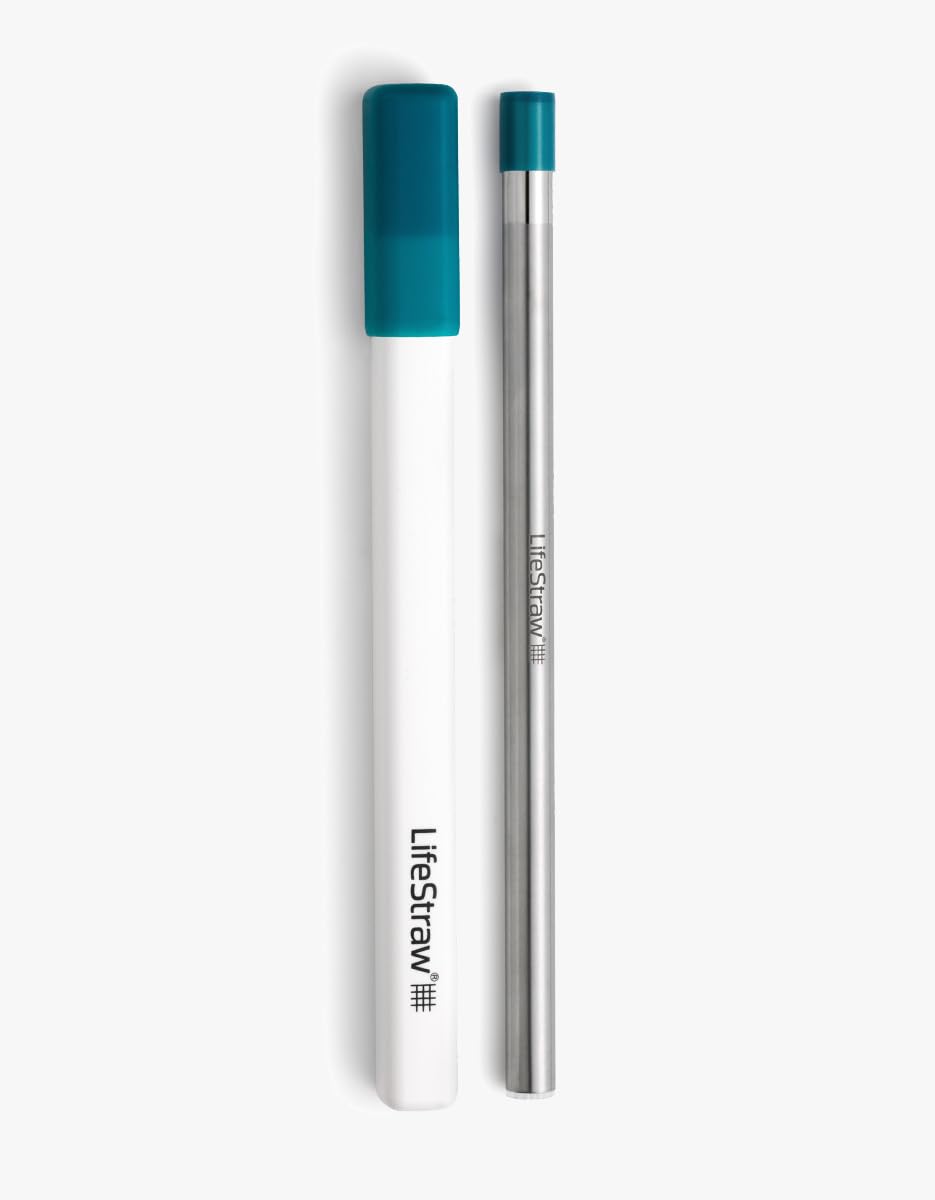
The LifeStraw Sip stands apart because of its stainless steel outer tube and silicone mouthpiece — a combination that resists cracking and feels natural to sip from. The hollow fiber membrane removes 99.999% of bacteria and 99.999% of parasites while also cutting microplastics down by 99.999%. At just 0.22 pounds with a 1,000-liter filter lifespan, it is the most travel-friendly premium option for someone who needs filtered water at restaurants or during international trips without relying on bottled water.
Real users report using this straw daily for months in Southeast Asia with zero illness. The included leak-proof carry case makes it easy to slip into a purse or personal item for air travel. The filter is not replaceable, so after roughly one year of heavy use the entire straw becomes a single-use item, which matters for long-term sustainability. Some owners also note that the stainless steel gets warm in direct sun, but the silicone tip stays comfortable.
The Sip does not improve taste noticeably because it lacks an activated carbon stage. If you are filtering tap water with chlorine or funny flavors, the absence of carbon means the taste will remain unchanged. For plain backcountry streams or emergency water, this is a non-issue — the membrane stops the biological hazards, which is the entire point of a water filtration straw.
Why it’s great
- Stainless steel construction resists cracking in packs and cold conditions
- Compact with carry case — fits in a pocket or crossbody bag discreetly
- Fast flow rate with no back-pressure compared to other membrane straws
Good to know
- Filter is not replaceable — straw must be replaced after 1,000 liters
- No activated carbon, so does not remove chlorine taste or chemical odors
- Higher upfront cost than plastic alternatives with similar capacity
2. LifeStraw Personal Water Filter
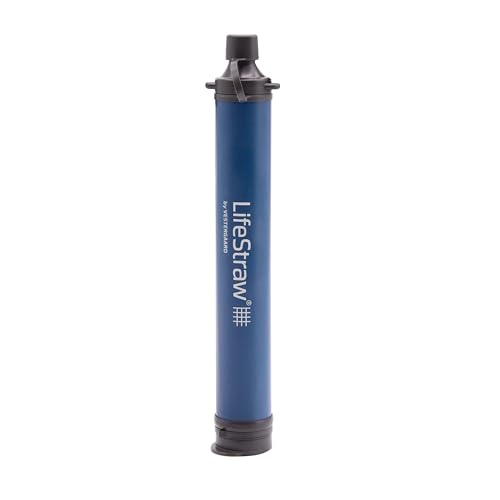
The standard LifeStraw Personal Water Filter is the benchmark that every other water filtration straw gets compared to, and for good reason. Its 0.2-micron hollow fiber membrane is EPA-certified to remove 99.999999% of bacteria and 99.999% of parasites while weighing only 2 ounces. With a 4,000-liter lifespan — enough for over five years of individual use — it delivers the best capacity-to-weight ratio in this category. The navy blue variant tested here keeps the same internals as the classic model.
Backpackers consistently report that this straw flows easily without requiring dangerous suction pressure. The membrane handles silt, sand, and microplastics without clogging prematurely, though back-flush cleaning after silty water is recommended. The plastic housing is durable enough for bug-out bags and vehicle kits but can become brittle if stored wet in freezing conditions — always dry it completely before winter storage.
The unlimited shelf life means you can stash one in an emergency kit and forget about it for years. The only downside is the lack of a pre-filter cap for really turbid water — if you are faced with pond water full of visible debris, using a bandana or coffee filter as a pre-strainer extends the membrane life. For the price, this remains the goldilocks option for anyone who wants proven performance without a premium price tag.
Why it’s great
- 4,000-liter capacity at only 2 ounces — unmatched longevity per gram
- Proven track record with decades of field use across all continents
- Unlimited shelf life makes it ideal for emergency go-bags and survival kits
Good to know
- Plastic housing can crack if stored wet and allowed to freeze
- No built-in pre-filter for water with large visible sediment
- Flow rate slows noticeably as the membrane loads with fine particles
3. Emblem Outdoor Portable Water Filter Straw 4-Pack
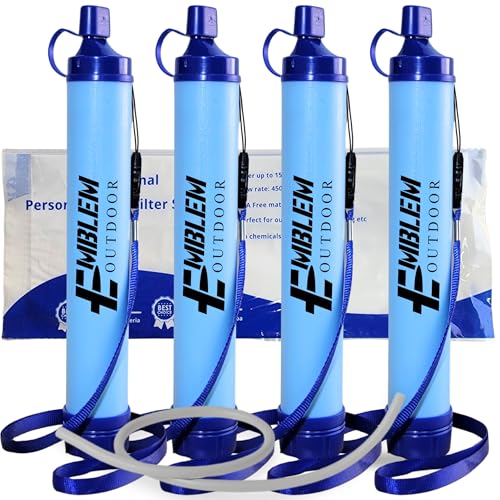
The Emblem Outdoor 4-Pack flips the script on value by giving you four complete water filtration straws with 396 gallons of capacity each — totaling 1,584 gallons of clean water. The five-stage filtration system uses a 0.1-micron hollow fiber membrane, dual-layer PP cotton, coconut shell activated carbon, and a coarse screen to handle sediment, chlorine, microplastics, and biological contaminants. Each straw weighs only 2.5 ounces and measures 8.27 inches, making it easy to distribute among family members or pack one in every vehicle.
Users report consistent flow at 500 ml/min without the sucking struggle that plagues lower-end straws. The activated carbon stage actually improves taste, which matters when pulling water from stagnant sources. The end caps are removable for back-flush cleaning, and the straws fit standard 28mm bottle threads and soft pouches. The five-year shelf life means this set is ready for long-term storage in an earthquake kit or basement prep bin.
The plastic housing is not as burly as stainless steel options, but for the price per straw, this is a non-issue for emergency use where the straw lives in a sealed bag. The included carry straps are a thoughtful touch, though some users replace them with paracord for durability. If you need a multi-pack for group camping, family preparedness, or rotating between bags, this is the most practical buy on this list.
Why it’s great
- Four straws at a combined 1,584-gallon capacity for one purchase
- Activated carbon stage removes chlorine and improves taste significantly
- Fits standard 28mm bottles and soft pouches for versatile use
Good to know
- Plastic housing less durable than stainless steel for extreme conditions
- Carry straps are functional but feel basic compared to aftermarket options
- Flow rate drops if membrane is not back-flushed after silty water use
4. Rebel Tactical Water Filter Straw
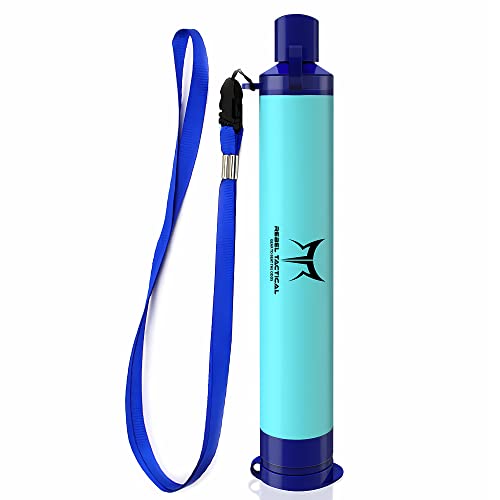
The Rebel Tactical straw delivers the longest individual filter capacity on this list at 5,000 liters with a five-stage 0.1-micron hollow fiber design. At just 2 ounces and 7.1 inches long, it matches the portability of the LifeStraw Personal while offering 25% more total water throughput. The removable end caps allow easy cleaning, and the straw fits standard bottles and soft pouches without adapters. Users have tested it with coffee grounds and murky water successfully, confirming the membrane does its job.
The flow rate is rated at 500 ml/min, and real-world feedback confirms it drinks easy without needing excessive suction. The hollow fiber membrane handles sediment well, though the pre-filter screen catches larger debris before it reaches the fine membrane. The plastic body feels robust enough for casual camping and emergency use, but repeated drops on rocks may compromise the outer shell over time — treat it with care compared to stainless steel alternatives.
The manual states it is not certified against viruses, which is common for 0.1-micron filters — viruses require a 0.01-micron membrane or chemical treatment. For survival scenarios involving only surface water known to carry viruses, pair this with purification tablets. For the capacity and price, this straw is the smartest budget-conscious choice for someone who wants a long-lasting filter without paying a premium for the brand name.
Why it’s great
- 5,000-liter capacity — highest single-filter lifespan in this comparison
- Five-stage filtration catches sediment, chlorine, and biological contaminants
- Ultra-light at 2 ounces with removable end caps for easy cleaning
Good to know
- Plastic housing may crack under extreme pressure or freeze-thaw cycles
- Not certified for virus removal — requires backup chemical treatment
- Flow rate slows faster than premium alternatives in silty water conditions
5. FS-TFC Pocket Water Filter Survival 0.01 Micron

The FS-TFC Pocket Water Filter is the only unit on this list with a 0.01-micron membrane, making it the tightest filter here — capable of stopping particles down to the virus range. The collapsible pump handle design allows you to pump water from shallow streams directly into a bottle or hydration pack without submerging the filter completely. The triple filtration (sediment pre-filter, 0.01-micron membrane, activated carbon fiber) targets 99.99% of harmful substances while improving odor.
The 4000-liter capacity matches the LifeStraw Personal, but the pump action gives you more control over flow rate when filling containers. Users report it works well for filling bottles from shallow puddles where a straw cannot reach the bottom. The pump handle initially feels tight out of the box — raising it straight up to a 90-degree angle before pumping loosens the seal. The filter element is replaceable, meaning the housing can outlast several membrane swaps, which is rare in this price range.
The weight of 8.8 ounces is significantly heavier than straw-only filters because of the pump mechanism. This makes it less ideal for ultralight backpacking but excellent for base camps, vehicle kits, and mission trips where you are not counting every gram. The collapsible water pouch included in the package adds versatility for gravity-fed filtration. If virus-level protection is your priority, this is the only filter in this group that delivers that spec.
Why it’s great
- 0.01-micron membrane stops viruses — only filter here to claim this
- Pump action fills bottles from shallow water sources easily
- Replaceable filter element extends the life of the pump housing
Good to know
- 8.8 ounces is heavy compared to sub-3-ounce straw filters
- Pump handle requires initial force to break in the seal
- Not as discreet for restaurant or travel use as a simple straw
FAQ
Can a 0.1-micron water filtration straw remove viruses?
How do you clean a water filtration straw in the field?
Is stainless steel or plastic better for a water filter straw?
Final Thoughts: The Verdict
For most users, the water filtration straw winner is the LifeStraw Personal Water Filter because it combines a proven 0.2-micron membrane, 4,000-liter capacity, and 2-ounce weight at a price that beats every premium option. If you want stainless steel durability for daily travel and restaurant use, grab the LifeStraw Sip. And for family emergency preparedness on a budget, nothing beats the Emblem Outdoor 4-Pack for total gallon capacity per dollar.