The difference between a dense, deflated sourdough loaf and one with a dramatic oven spring, a blistered ear, and a shattering crust often comes down to the vessel you bake it in. A true sourdough bread oven traps the steam released by the dough during the first minutes of baking, creating the humid microclimate that delays crust set and allows the loaf to expand fully. Choosing the wrong baker means fighting a constant battle against flat tops, thick crusts, and disappointing crumb structure.
I’m Mohammad Maruf — the founder and writer behind AirfryerBite. I spend my days analyzing the thermal properties of baking vessels, comparing internal dimensions and steam retention mechanisms, and cross-referencing user feedback from hundreds of home bakers to separate marketing claims from real-world performance.
This guide breaks down the top contenders across material types and price tiers, giving you the concrete specs and real-world results you need to choose with confidence. Whether you prefer enameled cast iron, porous stoneware, or a dedicated temperature-controlled starter station, this analysis of the sourdough bread oven category will help you find the right tool for the crust and crumb you chase.
How To Choose The Best Sourdough Bread Oven
Selecting the right sourdough bread oven requires understanding how heat transfer, steam management, and internal geometry interact. Most home bakers start with a standard Dutch oven, but specialized bread ovens introduce design elements that directly impact crust formation and loaf height. Consider these factors before making a purchase.
Material: Cast Iron vs. Stoneware
Cast iron, whether enameled or bare, offers the highest heat capacity and thermal conductivity among common baking materials. It absorbs heat rapidly and radiates it evenly, which translates into consistent browning and caramelization. Enameled cast iron provides a non-reactive, rust-resistant surface that requires no seasoning but can be slightly less porous than bare cast iron. Stoneware, on the other hand, excels at moisture management. Unglazed stoneware pulls moisture from the dough surface during the initial bake, promoting a thin, crackly crust. Glazed stoneware retains more steam, which can produce a chewier crust. The trade-off is that stoneware heats up more slowly and holds less thermal energy than cast iron, meaning longer preheat times and potentially less oven spring for very wet doughs.
Internal Geometry: Dome Height and Base Profile
The single most overlooked spec in a bread oven is the internal height from the base to the top of the lid. A shallow lid will compress the loaf as it rises, preventing the signature “ear” and limiting expansion. A true dome-shaped lid with at least 5 to 6 inches of vertical clearance gives the dough room to expand upward without hitting the lid. The base profile also matters: a low-profile base with raised ridges, like the one on dedicated bread ovens, allows steam to circulate under the loaf and promotes even browning across the bottom. Wider bases accommodate larger batards or boules, but the dome height remains the primary constraint for loaf size.
Steam Management: Lid Design and Sealing
Steam is the mechanism that delays crust formation. A tight-fitting lid that keeps steam trapped inside the vessel is non-negotiable. Some bread ovens incorporate a small dimple or channel in the lid that allows a controlled release of steam, while others use a perfectly flat seal. The best designs create a self-circulating environment where condensation forms on the lid and drips back onto the dough, maintaining humidity without pooling water on the surface. Unglazed stoneware lids absorb some moisture and release it slowly, extending the steaming window. Enameled lids reflect heat and can create a slightly drier top surface, which can result in a thicker crust if not managed with a longer covered bake time.
Size and Handling: Weight, Capacity, and Accessories
A bread oven that holds a 1-kilogram loaf is ideal for most home bakers, but the physical weight of the vessel when empty and when full of hot dough matters for everyday usability. Cast iron bread ovens typically weigh 10 to 14 pounds; stoneware versions range from 6 to 8 pounds. If you have limited upper-body strength or wrist mobility, the lighter stoneware option may be safer to maneuver in and out of a hot oven. Look for wide, comfortable handles that provide a secure grip with oven mitts. Some models include a banneton proofing basket, scoring lame, or silicone sling in the box, which can reduce the total cost of entry for a new sourdough baker.
Quick Comparison
On smaller screens, swipe sideways to see the full table.
| Model | Category | Best For | Key Spec | Amazon |
|---|---|---|---|---|
| Le Creuset Bread Oven | Premium Enameled Cast Iron | Serious enthusiasts wanting consistent domed rise | Domed lid with raised ridge base, 1.6L capacity | Amazon |
| Brod & Taylor Sourdough Home | Temperature-Controlled Station | Starter maintenance and proofing temperature control | Heats and cools, 41-122°F range, compact | Amazon |
| Emile Henry Bread Cloche | Glazed Stoneware Cloche | Artisan-style crust with even steam retention | Bell-shaped lid, 3-cup flour capacity, 500°F | Amazon |
| Nuovva Enameled Dutch Oven | Mid-Range Enameled Cast Iron | Budget-conscious bakers wanting even heat distribution | 6-qt capacity, dark blue enamel, 14″ wide | Amazon |
| CRUSTLOVE Cast Iron Kit | All-in-One Cast Iron Kit | New bakers wanting a complete starter bundle | 5-qt pre-seasoned cast iron + banneton, lame, sling | Amazon |
| EDGING CASTING Dutch Oven | Budget Enameled Cast Iron | Everyday sourdough with small roasting tasks | 6-qt capacity, dual handles, red enamel, 500°F | Amazon |
| Sassafras Superstone Covered Baker | Unglazed Stoneware Baker | Bakers who prioritize a shattering crust and artisan crumb | Unglazed interior, 15″ long loaf shape, 500°F | Amazon |
In-Depth Reviews
1. Le Creuset Enameled Cast Iron Signature Round Bread Oven

Le Creuset’s bread oven is engineered specifically for sourdough: the tight-fitting domed lid is noticeably taller than a standard Dutch oven lid, giving wet dough the vertical clearance it needs for a pronounced oven spring. The low-profile base features raised ridges that mark the loaf with the brand’s three-ring signature while elevating it slightly to allow steam to circulate underneath, preventing a soggy bottom. The matte black satin enamel interior develops a natural patina over time, which actually enhances non-stick performance and browning consistency with repeated use.
The porcelain enamel finish eliminates the risk of rust and requires no seasoning — a clear advantage for bakers who want to focus on dough rather than maintenance. At 1.6 liters, the capacity is intentionally sized for a 1-pound loaf, which matches the sweet spot for most artisan recipes. The 9.5-inch diameter fits comfortably in a standard home oven, and the lid handle stays cool enough to grasp with a thick mitt. Users consistently note that the domed lid eliminates the ceiling-crashing problem they experienced with flat-lid Dutch ovens, producing loaves with a more consistent ear and higher overall volume.
On the downside, the price positions it firmly at the premium end of the market, and the capacity is small by cast iron standards — you won’t roast a whole chicken in this vessel. Some users have reported that the white Le Creuset logo is a sticker that can melt during high-temperature preheating, so remove it before first use. If you bake more than two loaves per week and want heirloom durability with zero learning curve, this is the reference standard for the category.
Why it’s great
- Domed lid design provides exceptional vertical clearance for dramatic oven spring
- Raised ridge base promotes even bottom browning and prevents soggy crust
- No seasoning required, dishwasher safe, and backed by Le Creuset’s long-standing warranty
Good to know
- Small 1.6-liter capacity limits loaf size to about 1 pound of dough
- High price point makes it a serious investment for occasional bakers
- White logo sticker on lid can melt if not removed before oven use
2. Brod & Taylor Sourdough Home

This isn’t a baking vessel — it’s a temperature-controlled fermentation station designed to solve the biggest variable in sourdough consistency: starter temperature. The Sourdough Home uses a thermoelectric module to both heat and cool, maintaining any set temperature between 41°F and 122°F regardless of your kitchen’s ambient conditions. For a starter fed 1:4:4 at 45°F, users report being able to go 5 to 6 days between feedings without the starter falling dormant. That’s a practical game-changer for bakers who don’t bake every day but want to keep a vigorous culture alive.
The internal compartment measures 7.5 x 5.125 x 5.5 inches, which fits a standard 1-quart wide-mouth jar with room to spare. The sealed door and internal fan keep the temperature stable within roughly 1°F of the set point, which eliminates the seasonal slump that slows proofing in winter or over-ferments dough in summer. The quiet operation — the fan is barely audible from a few feet away — means you can keep it on the counter without noise annoyance. The included temperature chart shows feeding intervals at different set points, helping you plan around your schedule rather than your starter’s cycle.
The obvious limitation is that it does nothing for the actual baking process; you still need a separate oven and baking vessel. The plastic construction feels sturdy but not luxurious, and some users find the interior seam tricky to clean if starter overflows. At the premium end of the price spectrum, it’s a specialized tool best suited for committed sourdough bakers who struggle with inconsistent results due to shifting kitchen temperatures. If your starter already thrives at room temperature, this unit won’t add much to your workflow.
Why it’s great
- Heats and cools to maintain exact fermentation temperature year-round, up to 122°F and down to 41°F
- Enables weekly feeding schedules with a 1:4:4 ratio, reducing maintenance for infrequent bakers
- Compact, quiet operation with stable temperature control within roughly 1°F of set point
Good to know
- Only holds a single 1-quart jar; does not accommodate multiple starters or large dough batches
- Plastic exterior may feel less premium than its price suggests, and interior seams can trap overflow
- Serves starter management only — you still need a separate baking vessel and oven
3. Emile Henry Bread Cloche
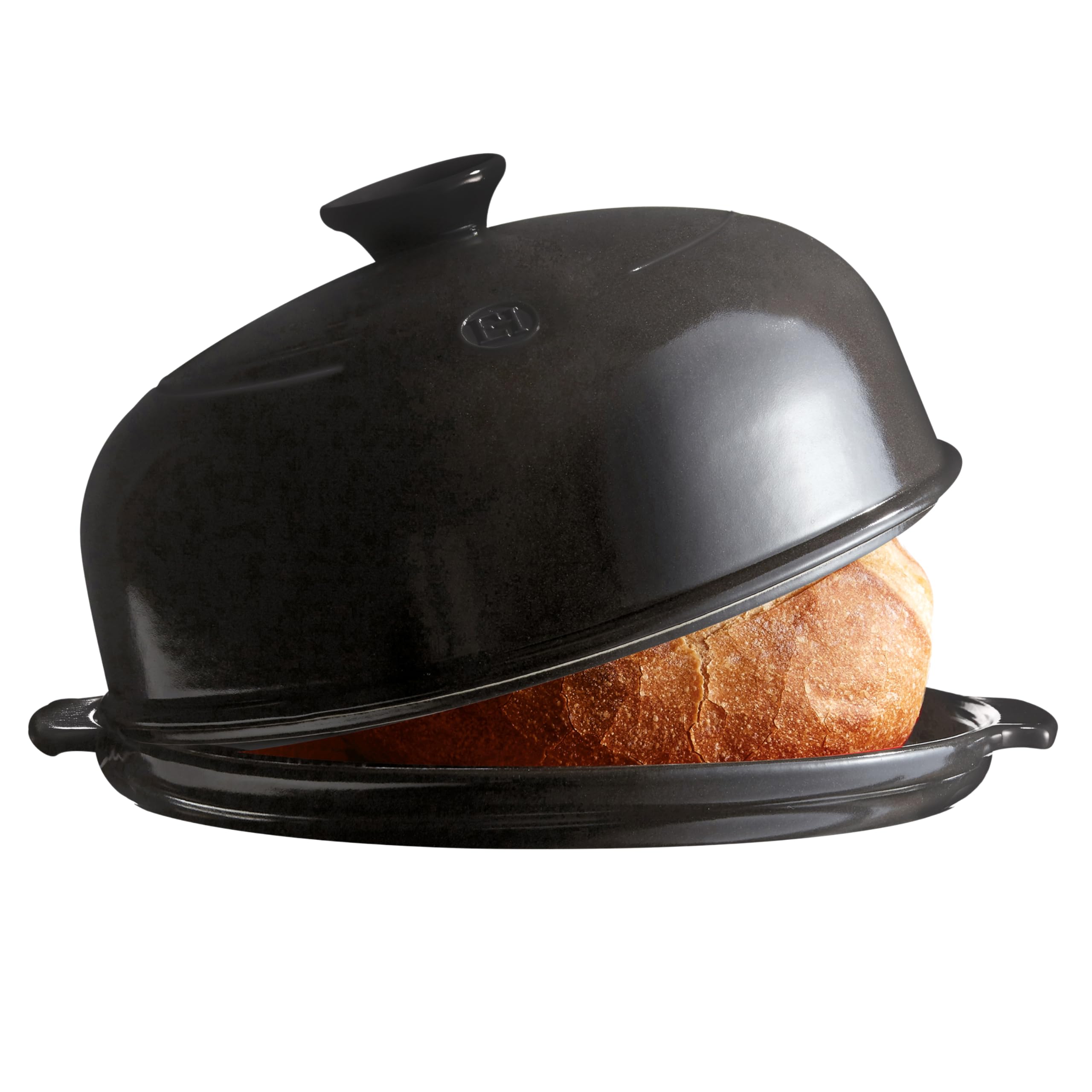
The Emile Henry Bread Cloche is a bell-shaped ceramic baker that mimics the steam-injected ovens used in artisan bakeries. The design is simple: a flat ceramic base and a domed lid that traps the moisture released from the dough during the first 15 minutes of baking. The glazed interior creates a sealed environment that holds steam effectively without absorbing it, which means the crust develops a deep golden color with a crisp, shattering texture. The cloche is sized for a round loaf made with 3 cups of flour, typically yielding a 1.5-pound boule with excellent internal height.
The ceramic material is fired at 2100°F, giving it a maximum oven-safe temperature of 500°F with a thermal shock rating that allows it to go directly from the freezer to a hot oven — a useful feature for bakers who freeze shaped dough overnight. The base is wide enough to accommodate a parchment sling, making transfer into the preheated cloche safer. Users report that the cloche produces consistently better crust than standard Dutch ovens, with a thin, crackling exterior and a soft, open crumb. The 10-year warranty from Emile Henry signals confidence in the materials and craftsmanship.
The main challenge is handling the preheated lid and base separately — you need a safe spot on the stovetop or an extra oven rack to hold the hot lid while loading the dough. The weight is manageable at 6.5 pounds, but the lack of side handles on the base can make removal from the oven awkward. It’s also the most fragile option in this guide; ceramic can chip or crack if dropped. For bakers who prioritize crust texture above all else and are willing to handle a two-step loading process, this cloche delivers results that rival professional bakery output.
Why it’s great
- Bell-shaped lid traps steam effectively for a deep golden, shattering crust with a tender interior
- Ceramic material allows freezer-to-oven thermal shock with a 500°F max temperature
- Backed by a 10-year warranty from a respected French ceramics manufacturer
Good to know
- No handles on the base, making it awkward to lift the hot vessel from the oven
- Ceramic construction is more fragile than cast iron and can chip on impact
- Loading dough requires safely maneuvering the hot lid and base separately
4. Nuovva Enameled Cast Iron Dutch Oven
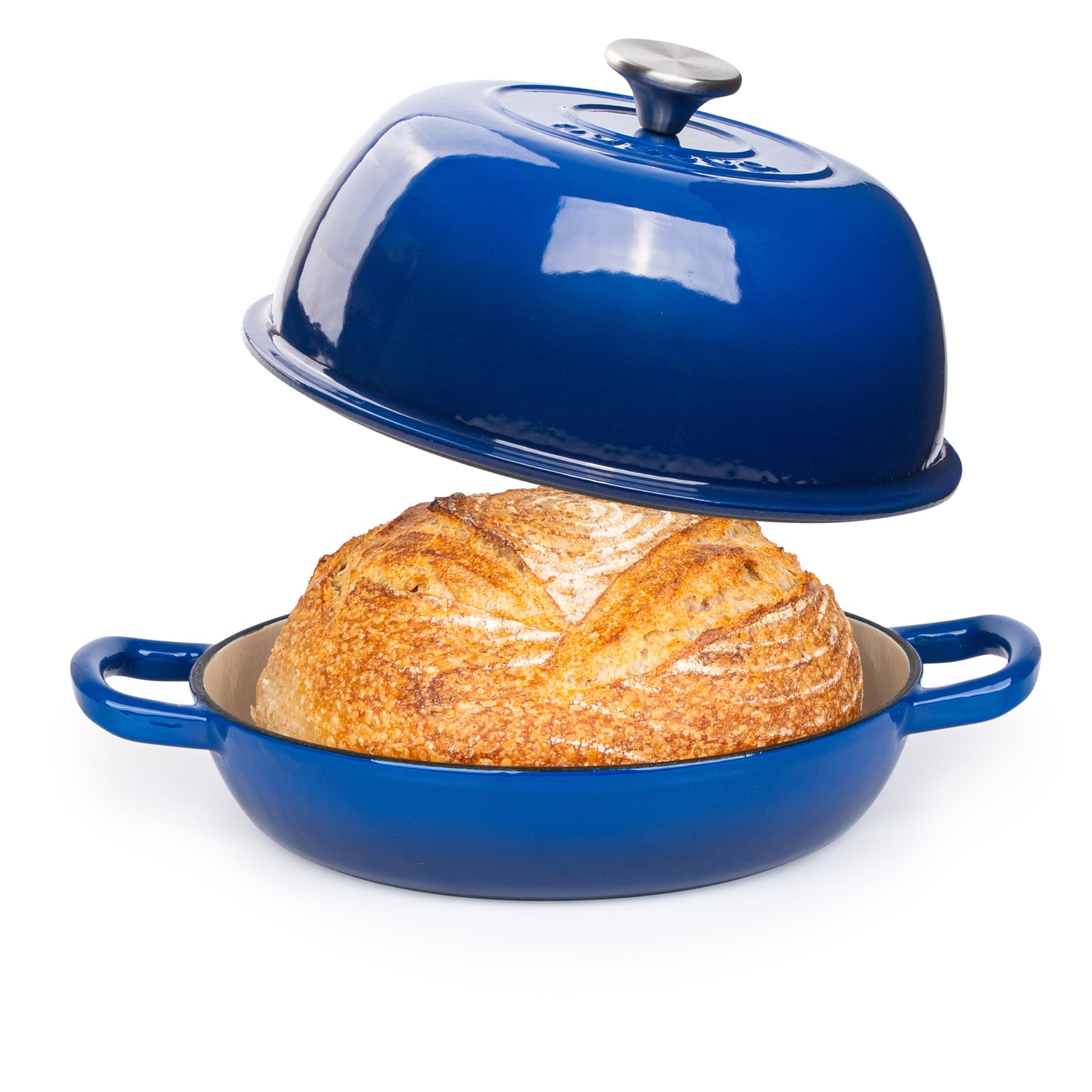
The Nuovva bread oven takes a slightly different approach to sourdough baking: instead of a tall dome, it uses a lower-sided Dutch oven design that makes it easier to slide the baked loaf out without reaching deep into a hot pot. The 6-quart capacity is generous for bread — it handles a 1.5-kilogram boule with room to spare — and the enameled cast iron construction provides the same heat retention and even heat distribution as higher-priced competitors. The dark blue enamel finish is attractive enough to double as a serving piece on the table.
The domed lid, while not as tall as the Le Creuset bread oven’s dome, still provides enough vertical clearance for a decent oven spring in most standard sourdough recipes. Users report that the steam retention is excellent, producing loaves with a high rise and a crispy crust. The enameled interior makes cleanup straightforward — a quick wipe with a damp towel after the pot cools is usually sufficient. At roughly 12.6 pounds, it’s heavy but standard for a cast iron pot of this size, and the handle size is comfortable even with thick oven mitts.
Where this unit falls slightly short is in the dome height: if you bake very high-hydration doughs that expand aggressively, the loaf may still touch the lid and create a flattened top. The 14-inch width also means it needs a larger footprint in your oven, so check your oven’s internal dimensions if you plan to bake multiple loaves simultaneously. For the price point, the Nuovva offers performance that closely mirrors premium brands without the price premium, making it a strong mid-range contender for daily sourdough baking with the added benefit of roasting versatility.
Why it’s great
- Low-sided design makes removing baked loaves safer and easier than deep Dutch ovens
- 6-quart capacity accommodates large boules and doubles as a roasting pot for other meals
- Enameled cast iron delivers heat retention and steam trapping comparable to premium brands
Good to know
- Dome height is shorter than dedicated bread ovens, which can limit oven spring for very wet doughs
- Heavy at over 12 pounds, and the 14-inch width requires ample oven space
- Enameled surface is not dishwasher safe and requires gentle hand washing
5. CRUSTLOVE Cast Iron Dutch Oven for Bread Baking Kit

CRUSTLOVE packages a 5-quart pre-seasoned cast iron Dutch oven with a complete set of sourdough accessories that cover the entire workflow from proofing to scoring. The kit includes a 10-inch banneton proofing basket with a linen liner, a metal and plastic dough scraper, a scoring lame with replaceable blades, a silicone bread sling, a dough whisk, a pastry brush, and a recipe booklet. For a new sourdough baker, this eliminates the need to source each tool separately, and the bundle cost is lower than buying the components individually.
The Dutch oven itself is standard pre-seasoned cast iron — no enamel coating — which means it requires manual seasoning to maintain its non-stick surface and rust resistance. The 5-quart capacity is appropriate for a 1-kilogram boule, and the cast iron delivers the high thermal mass needed for consistent oven spring. The kit’s accessories are functional rather than premium: the banneton is coiled cane with a cotton liner, the lame uses standard double-edged blades, and the silicone sling helps transfer the shaped dough into the hot Dutch oven without burning your hands.
The main drawback is the lid design: unlike most Dutch ovens, the CRUSTLOVE lid has no knob on top, which makes lifting the hot lid a bit awkward — you have to grip the edge with a mitt, and the cast iron edge can be sharp. Some users also note that the pre-seasoning is light, so you’ll want to apply a few coats of oil before the first bake. For bakers who want a single-box solution that gets them from mixing to slicing without separate purchases, this kit provides excellent value, but experienced bakers may prefer a dedicated bread oven with more vertical clearance.
Why it’s great
- Complete 10-piece kit includes banneton, lame, sling, scrapers, and whisk — everything a new baker needs
- Pre-seasoned cast iron delivers reliable heat retention and crust formation for sourdough
- Bundled cost is lower than purchasing the Dutch oven and accessories separately
Good to know
- Lid lacks a handle knob, making it difficult to lift when hot — you must grip the sharp edge
- Pre-seasoning is minimal; additional oil seasoning is recommended before first use
- Bare cast iron requires drying and oiling after each wash to prevent rust
6. EDGING CASTING Enameled Cast Iron Dutch Oven
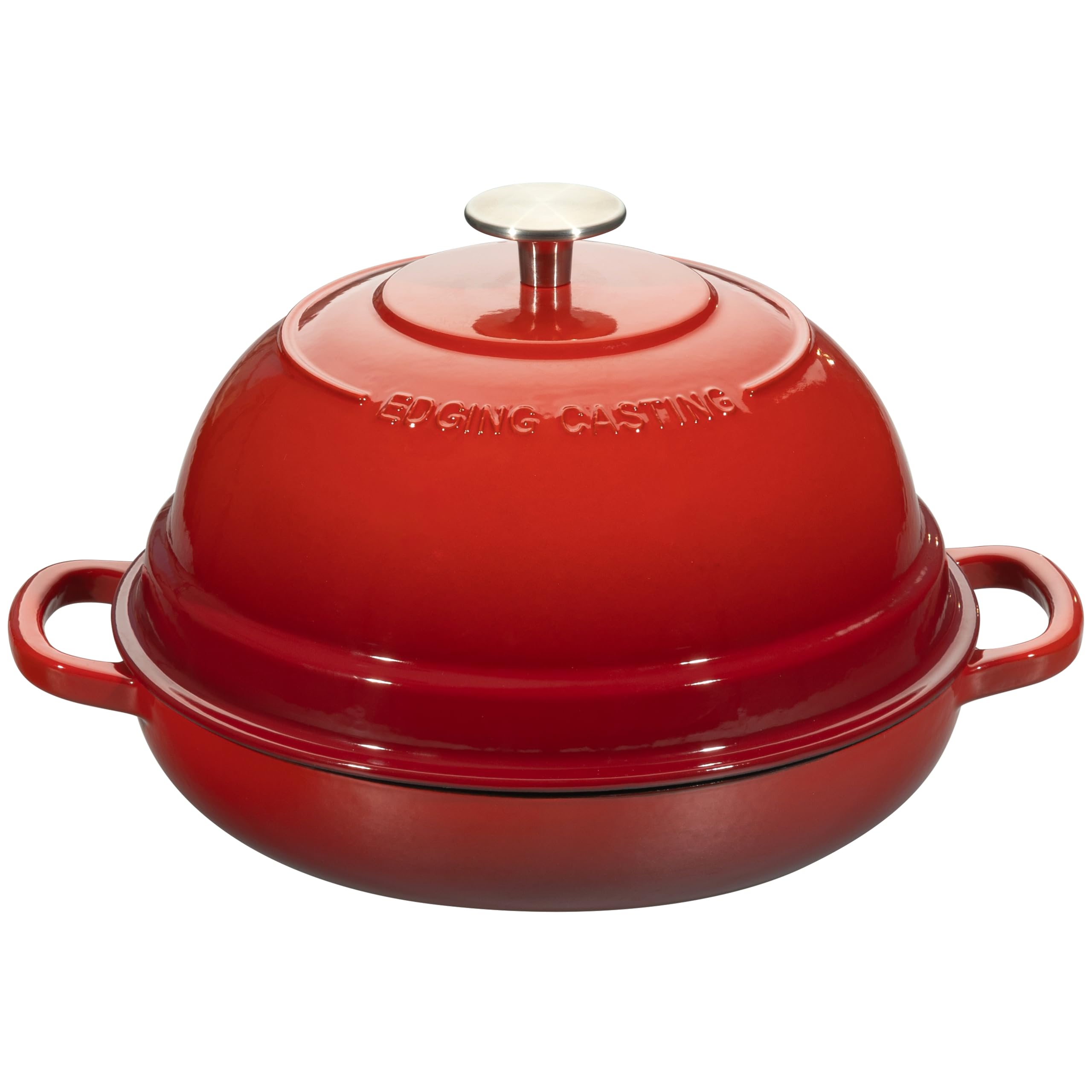
The EDGING CASTING bread oven is the most accessible entry point in this guide, offering enameled cast iron construction with a 6-quart capacity at a price that undercuts the competition by a significant margin. The glossy red enamel exterior is visually appealing, and the stainless steel knob and comfortable round handles make handling straightforward. The 10.3-inch diameter and 7.3-inch height provide decent internal volume for a 1.5-pound loaf, and the domed lid traps enough steam to support a reasonable oven spring.
The key selling point here is value: you get the thermal performance of enameled cast iron — including compatibility with gas, induction, ceramic, and electric cooktops — at roughly one-third the price of premium European brands. Users report that the heat distribution is even and that the vessel produces good crust and crumb on standard sourdough recipes. The 12-pound weight is typical for cast iron, and the dual handles make it easier to lift than single-handle alternatives. Some users also use it for roasting chicken and making stews, appreciating its versatility despite the bread-focused design.
The enamel quality is not on the same level as Le Creuset or Staub. The interior enamel is smooth but may show minor imperfections under close inspection, and some users have reported chipping after several months of heavy use. The oven-safe rating of 500°F is adequate for bread baking, but the lid fit is not as tight as higher-priced models, which could allow some steam to escape during the critical first minutes of baking. For bakers on a tight budget who need a functional cast iron bread oven today, this model delivers acceptable results, but serious enthusiasts will quickly outgrow its limitations.
Why it’s great
- Enameled cast iron construction at a price point that is significantly lower than major brands
- 6-quart capacity is generous for bread and versatile for roasting and braising other dishes
- Compatible with all cooktop types including induction, and dual handles improve safety
Good to know
- Enamel quality is mid-tier and may show minor imperfections or chip with heavy use over time
- Lid fit is not as tight as premium models, which may reduce steam retention during baking
- Some users report the need for careful handling to preserve the enamel finish on the rim
7. Sassafras Superstone Covered Bread Baker
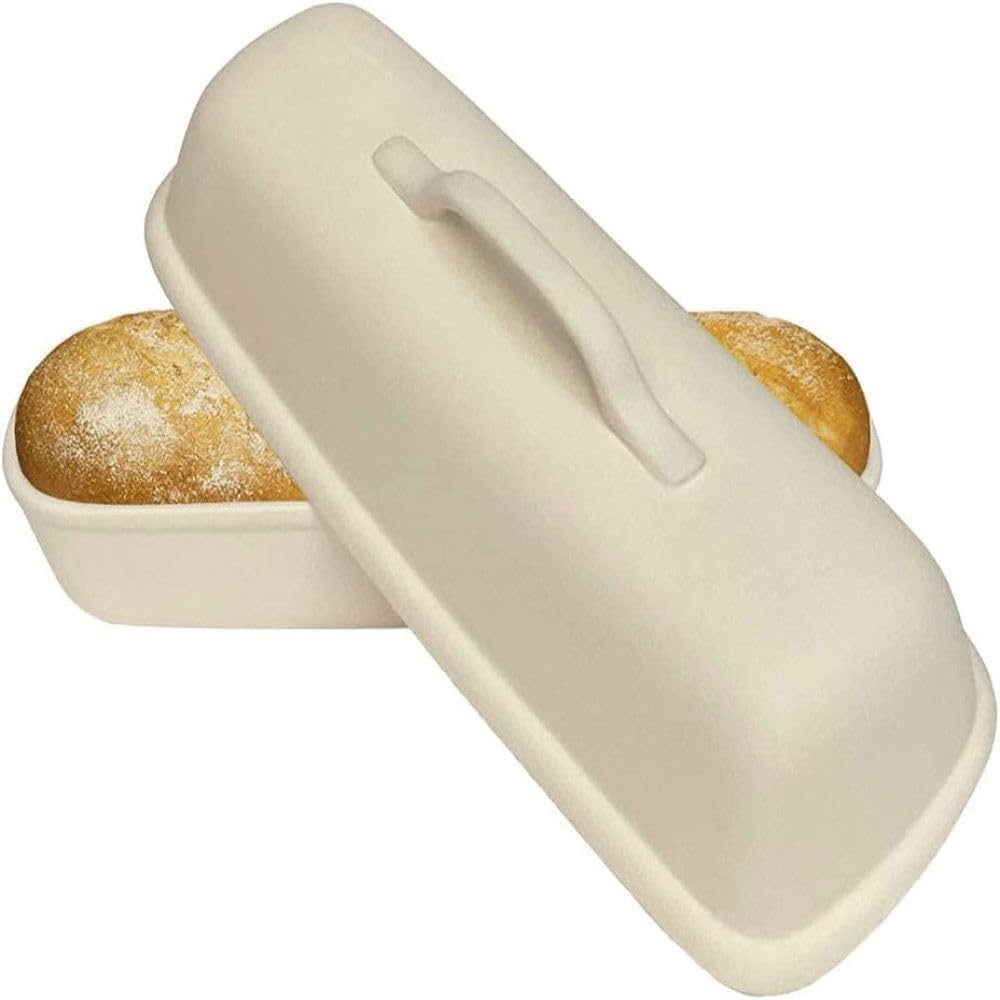
The Sassafras Superstone Covered Baker is a stoneware vessel designed specifically for oblong artisan loaves. The unglazed interior surface is the defining feature: it actively draws moisture from the outer layer of the dough during baking, which promotes the thin, crackly crust that sourdough enthusiasts prize. The glazed bisque exterior provides a clean, classic look that transitions from oven to table. The baker measures 15 inches long and 7 inches tall, sized for a 1.5-pound batard or Italian loaf made with 3 cups of flour.
Baking technique with this stoneware baker differs from cast iron. The manufacturer advises against preheating the oven — instead, place the covered baker in a cold oven and set the temperature to 450-500°F. Soaking the lid in water for 30 minutes before baking adds additional steam, which combines with the porous stoneware to create a highly humid environment. Users report that the resulting crust is noticeably thinner and more brittle than what cast iron produces, with a light interior crumb that rivals bakery quality. The stoneware is fired at 2100°F and withstands temperatures over 500°F, and it’s dishwasher safe for easy cleanup.
The oblong shape limits what you can bake — this is not a vessel for round boules or for roasting. The porous unglazed surface requires seasoning with oil before first use to prevent excessive sticking, and even then, a parchment sling or generous dusting of cornmeal is essential. The packaging from Sassafras has been criticized by users as insufficient, leading to occasional damage in transit. For bakers who primarily bake batards or baguette-style loaves and demand a thin, shattering crust, the Superstone Covered Baker delivers a texture profile that no enameled cast iron vessel can replicate.
Why it’s great
- Unglazed stoneware interior pulls moisture from the dough surface, creating an exceptionally thin, crackly crust
- Oblong shape is optimized for batards and Italian loaves, matching the form factor most artisan bakers use
- Withstands temperatures over 500°F and is dishwasher safe for convenient cleaning
Good to know
- Oblong shape limits versatility — not suitable for round boules or non-baking cooking methods
- Unglazed surface requires pre-seasoning with oil and the use of parchment or cornmeal to prevent sticking
- Packaging during shipping can be inadequate, with some units arriving chipped or cracked
FAQ
What is the ideal internal height for a sourdough bread oven to prevent the loaf from hitting the lid?
Does an unglazed stoneware bread baker really produce a crispier crust than enameled cast iron?
Can I use a regular enameled Dutch oven for sourdough if I don’t have a dedicated bread oven?
Final Thoughts: The Verdict
For most users, the sourdough bread oven winner is the Le Creuset Enameled Cast Iron Signature Round Bread Oven because its tall domed lid and raised ridge base provide the most consistent oven spring and crust development with zero maintenance. If you want a complete starter setup that includes a proofing basket and scoring tools in one box, grab the CRUSTLOVE Cast Iron Kit. And for a shattering crust that mimics a brick-oven bakery, nothing beats the Sassafras Superstone Covered Bread Baker with its moisture-wicking unglazed interior.