Finding a pasta that tastes like the real thing while keeping your carb count in check is the single greatest hurdle of a low carb diet. The wrong choice leaves you with a gluey, bland, or rubbery bowl that makes you miss the original even more.
I’m Mohammad Maruf — the founder and writer behind AirfryerBite. I’ve spent years analyzing the nutritional profiles, texture mechanics, and cooking behavior of low carb pasta alternatives to separate the edible options from the disappointing ones.
This guide breaks down the specific features that matter for low carb dieters, including net carb count per serving, fiber density, and how well each noodle holds sauce. These are the criteria I used to compile the definitive list of the best pasta for low carb diet.
How To Choose The Best Pasta For Low Carb Diet
Not all low carb pasta is created equal. The difference between a satisfying meal and a disappointing one comes down to three critical factors: the base ingredient, the net carb calculation, and how the noodle behaves when cooked.
Base Ingredient: Konjac, Heart of Palm, or Wheat Blend?
Konjac noodles (shirataki) are almost pure glucomannan fiber, delivering near-zero digestible carbs. They have a distinct gelatinous bounce and work best in brothy or heavily sauced dishes. Heart of palm noodles, like Palmini, offer a firmer bite closer to al dente pasta with slightly more carbs—around 4g net per serving. Wheat-based low carb pastas (like Barilla Ready Pasta) cut carbs but still contain 30-40g per serving, making them unsuitable for strict keto but viable for moderate low carb plans. Your choice depends on whether you prioritize absolute carb elimination or texture that mimics real pasta.
Net Carbs: The Only Number That Matters
Low carb eating revolves around net carbohydrates, which equals total carbs minus fiber. A true keto-friendly pasta should deliver 5g net carbs or fewer per serving. Konjac noodles often land at 0-1g net carbs, while heart of palm options sit around 4g. Always check the label and ignore marketing claims—some “low carb” pastas still pack 20g+ net carbs per serving. If you are strict keto, konjac is the safer bet. If you allow a slightly higher carb ceiling for better texture, heart of palm or a premium wheat blend works.
Texture and Sauce Adhesion
Alternative pastas often struggle to hold sauce. Konjac noodles are slippery; they require a thorough rinse and a dry pan-fry (no oil) to remove excess moisture before sauce will cling. Heart of palm noodles absorb flavors better but can be slightly crunchy if undercooked. Read reviews for specific texture feedback—most buyers can tolerate a minor textural difference if the flavor absorption is strong. If you plan to use heavy cream sauces or pesto, opt for a noodle shape like fettuccine or angel hair that captures more sauce per bite.
Quick Comparison
On smaller screens, swipe sideways to see the full table.
| Model | Category | Best For | Key Spec | Amazon |
|---|---|---|---|---|
| Palmini Angel Hair | Heart of Palm | Best overall texture | 4g net carbs per serving | Amazon |
| Soeos Organic Konjac | Konjac | Variety pack value | 0g net carbs per pack | Amazon |
| 52USA Konjac Shirataki | Konjac | Best for stir-fry | 0g net carbs per pack | Amazon |
| Skinny Pasta Chicken Soup | Konjac Soup | Instant meal | 70 calories per cup | Amazon |
| Barilla Ready Pasta | Wheat Pasta | Convenience on budget | 60-second microwave prep | Amazon |
In‑Depth Reviews
1. Palmini Low Carb Angel Hair

Palmini uses hearts of palm rather than konjac, producing a noodle that looks and chews much closer to traditional angel hair pasta. At only 4g of net carbs per serving, it strikes the best balance between carb restriction and genuine pasta satisfaction. The noodles come pre-cooked in pouches and require only a 5-minute soak in boiling water or a quick pan sauté to reach al dente texture.
Because the base is a vegetable rather than a fiber gel, Palmini absorbs sauces rather than repelling them. Marinara, alfredo, and pesto all cling naturally without requiring the dry-fry trick needed for konjac noodles. Multiple verified buyers report that family members who do not follow low carb diets could not tell the difference when the noodle was paired with a robust sauce.
The main trade-off is portion sizing. Each 12-ounce pouch serves one generous portion or two smaller sides. The product is also priced higher per ounce than konjac alternatives, but the superior texture and lower preparation effort justify the difference for most users who prioritize a realistic pasta experience.
Why it’s great
- Firm al dente texture closest to real pasta
- Sauces cling naturally without special prep
- Only 4g net carbs per serving
Good to know
- Higher cost per ounce than konjac noodles
- Single pouch serves only one person
2. Soeos Organic Konjac Noodles
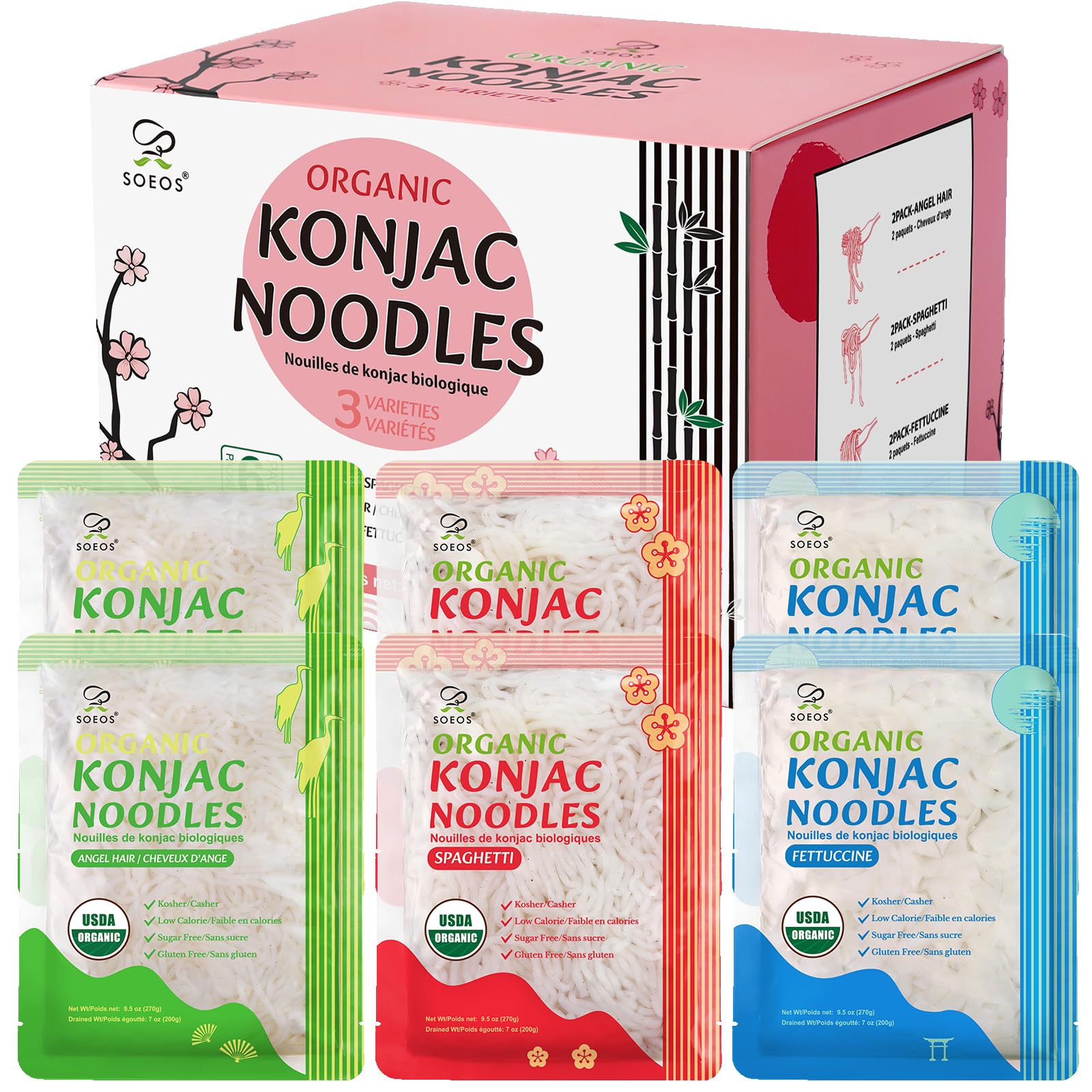
Soeos packages six pouches across three shapes—angel hair, spaghetti, and fettuccine—giving you the flexibility to match the noodle to the dish without committing to a single shape. Each pouch delivers near-zero net carbs and about 10 calories, making this one of the most diet-friendly options in the list. The organic certification adds confidence for buyers who prioritize clean ingredient sourcing.
Like most konjac noodles, these have no inherent flavor and require proper preparation to reach their best texture. Verified buyers recommend rinsing thoroughly under cold water for 30 seconds, then dry-frying the noodles in a non-stick pan over medium heat for 2-3 minutes to evaporate excess moisture. This step eliminates the slight rubbery edge and allows the noodles to absorb the flavors of your sauce.
Buyers consistently note that these noodles work exceptionally well in Asian-style dishes like pad thai, yakisoba, or ramen. The angel hair variant is thin enough to mimic rice noodles, while the fettuccine shape holds up to heavier cream-based sauces. The value per serving is strong, though the texture still carries the unmistakable konjac chew that some users never fully adjust to.
Why it’s great
- Three shapes for different recipes
- Organic konjac with zero net carbs
- Great value for a six-pack bundle
Good to know
- Requires rinsing and dry-frying for best texture
- Konjac chew may not appeal to everyone
3. 52USA Konjac Shirataki Noodle

52USA delivers a 52.8-ounce bundle across three varieties (angel hair, fettuccine, spaghetti) that covers most low carb cooking scenarios. The standout feature reported by buyers is the lack of the typical konjac odor. Many konjac noodles carry a distinctive earthy or fishy smell straight out of the package, but 52USA has minimized this to the point where a simple cold rinse eliminates it entirely.
The spaghetti-shaped noodles have a texture that multiple reviewers compare to ramen noodles, which is a specific advantage for anyone craving that bouncy, slightly chewy mouthfeel. Stir-frying these noodles in a hot pan with a small amount of shallot oil or sesame oil creates a noodle dish that feels indulgent while staying at zero net carbs. The fettuccine shape works well for cream-based sauces and baked casseroles.
Buyers note that the single-pack serving size is relatively modest—about one portion per pouch. For a family of four, you will need to open multiple pouches. The per-serving cost is slightly higher than buying konjac noodles from an Asian grocery store, but the convenience of pre-packaged, odor-free noodles delivered to your door offsets this for most users.
Why it’s great
- Minimal odor straight from the package
- Spaghetti shape mimics ramen texture
- Zero net carbs and fat-free
Good to know
- Small single-serving pouches
- Higher per-serving cost than bulk options
4. SKINNY PASTA Chicken Soup
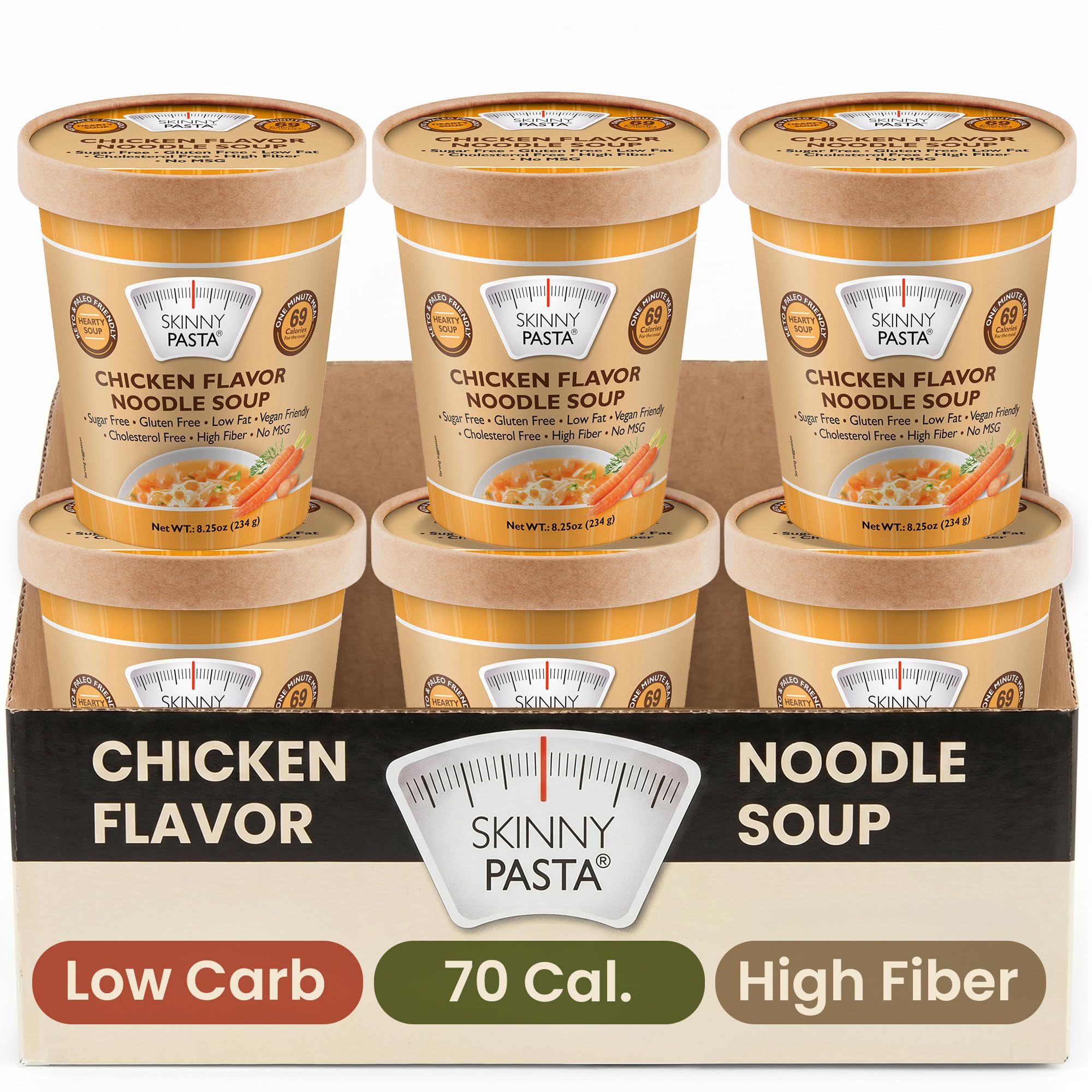
SKINNY PASTA reimagines the cup-of-soup concept for the low carb world. Each cup contains 69 calories, 7g of fiber, and only 1g of net carbs. The noodles are made from konjac coated with oat fiber, giving them a more robust texture than plain shirataki noodles. Just add boiling water, wait one minute, and you have a hot meal that tastes like chicken noodle soup without the carb load.
Buyers consistently praise the flavor profile, noting that the broth tastes richly seasoned despite being low in sodium compared to many instant soups. The vegetable flakes are recognizable (carrots, celery, onion), adding visual and textural depth. The noodles themselves hold up well even after sitting in hot liquid, retaining a pleasant chew without turning mushy or bloating.
The primary caution is the sodium content. Each serving contains roughly 2500mg, which is over 100% of the daily recommended value. If you monitor sodium intake closely, this product is better as an occasional convenience rather than a daily staple. The price per cup is also higher than making soup from scratch, but the convenience factor is undeniable for office lunches or travel.
Why it’s great
- Ready in one minute with hot water
- Recognizable chicken soup flavor
- Only 1g net carbs and high fiber
Good to know
- Very high sodium per serving
- Premium price per cup
5. Barilla Ready Pasta Rotini

Barilla Ready Pasta is the only conventional wheat-based option on this list, which means it is not suitable for keto or very low carb diets. Each 7-ounce serving contains roughly 30g of net carbs. It earns a place here because many people following a moderate low carb lifestyle (50-100g per day) still crave real pasta and need a quick, affordable option that doesn’t require boiling a pot of water.
The convenience factor is unmatched. The pouch goes straight into the microwave for 60 seconds, and the pasta comes out with an al dente texture that rivals stovetop-cooked dried pasta. Buyers consistently report that the texture is firm, not mushy, and that the taste is identical to traditional Barilla rotini. This makes it an excellent emergency staple for days when you need a real pasta fix without the carb load of homemade fresh pasta.
If you are following a strict keto or diabetic meal plan, skip this product. But for the wider low carb audience that allows a controlled amount of carbohydrates, Barilla Ready Pasta provides the closest approximation to the real experience at a budget-friendly entry price. Use it as an occasional side dish or light main course rather than a daily carb source.
Why it’s great
- Real pasta texture in 60 seconds
- Non-GMO ingredients with no boiling
- Most affordable per-serving cost
Good to know
- ~30g net carbs per serving
- Not suitable for keto or very low carb
FAQ
Can I eat low carb pasta every day on a keto diet?
How do I stop konjac noodles from being rubbery?
Is heart of palm pasta lower carb than konjac pasta?
Do shirataki noodles cause digestive issues?
Final Thoughts: The Verdict
For most users, the pasta for low carb diet winner is the Palmini Low Carb Angel Hair because it delivers the closest texture to real pasta with only 4g net carbs and excellent sauce absorption. If you want maximum carb restriction and versatility across dish types, grab the 52USA Konjac Shirataki Noodle. And for an instant office-friendly meal that keeps net carbs near zero, nothing beats the Skinny Pasta Chicken Soup.