Backpacking fuel isn’t about what tastes best fresh out of a wrapper — it’s about what survives a week in your pack at 85°F without turning into an unidentifiable mess. The best bars for the trail deliver a tight balance of caloric density, structural integrity, and a protein-to-weight ratio that actually earns its place in your bear canister.
I’m Mohammad Maruf — the founder and writer behind AirfryerBite. I have spent years analyzing the intersection of food science and outdoor gear, cross-referencing hundreds of user field reports and manufacturer lab specs to determine which backpacking bars hold up under real trail conditions.
This guide breaks down the physical tolerances — melt point, squish factor, and packaging durability — of the top contenders to help you find the protein bars for backpacking that will actually still be edible by day four.
How To Choose The Best Protein Bars For Backpacking
Selecting a bar for the trail is fundamentally different from choosing a post-workout snack. You need something that won’t disintegrate under pressure, delivers sustained energy over hours of moderate-intensity movement, and doesn’t add unnecessary weight to your pack. Here are the specific specs to evaluate before you buy.
Assess the Structural Integrity in Heat
The single most common failure mode for a backpacking bar is thermal collapse. Bars with a high chocolate coating or nut butter center begin to soften around 75°F and can completely liquefy above 90°F. Look for bars that maintain a chewy consistency at higher ambient temperatures — oat-based and whole-grain formulations tend to hold their shape better than those with large chocolate chunks or soft caramel layers. The best trail bars survive being stuffed in a hip pocket for a full afternoon of hiking in direct sun without turning into a sticky sleeve disaster.
Calculate Caloric Density Per Ounce
Every gram you carry costs energy. A bar should deliver at least 100 calories per ounce to justify its weight in your pack. Bars below this threshold force you to carry more mass for the same energy return, which directly reduces your pack efficiency. Premium backpacking bars typically land between 110 and 130 calories per ounce — anything in that range is pulling its weight. Check the total weight against the total calories before assuming a bar’s size translates to usable fuel.
Match Protein and Fiber to Activity Intensity
For sustained, moderate-intensity hiking over multiple days, you need a bar that provides steady energy release without triggering digestive discomfort. Bars with 10 to 15 grams of protein are ideal — higher amounts can slow digestion and cause bloating on the move. Fiber should sit between 3 and 7 grams per bar; too little leaves you hungry quickly, too much can cause gastrointestinal distress when you’re already dehydrated. The sweet spot for a full-day push is a bar with 10 to 12 grams of protein and 4 to 6 grams of fiber, backed by complex carbohydrates from oats or whole grains.
Evaluate Packaging and Portion Control
Backpacking requires minimizing waste. Single-wrap bars that are thin and flexible pack flat into food bags without creating awkward air pockets. Avoid bars with bulky plastic trays or double-layer packaging — those add unnecessary gram weight and take up space. Also consider whether the bar is easy to break into pieces on the trail. Some bars are dense enough that splitting them requires two hands and a hard surface, which is inconvenient when you’re eating while moving. The best backpacking bars unbuckle without shattering.
Quick Comparison
On smaller screens, swipe sideways to see the full table.
| Model | Category | Best For | Key Spec | Amazon |
|---|---|---|---|---|
| CLIF BAR Variety 16-Pack | Energy Bar | Sustained all-day hiking fuel | 240-250 calories per bar | Amazon |
| RXBAR Nut Butter & Oat | Protein Bar | Clean ingredient trail snacks | 10g protein per bar | Amazon |
| Quest Chocolate Explosion | Low-Sugar Protein | Low-net-carb backcountry snacking | 3g net carbs per bar | Amazon |
| Ready Chocolate Peanut Butter | High-Fiber Protein | Satiety on long hiking days | 7g fiber per bar | Amazon |
| CLIF BAR Variety 30-Pack | Energy Bar | Multi-day bulk supply | 3 classic flavors in bulk | Amazon |
In‑Depth Reviews
1. CLIF BAR Variety 16-Pack
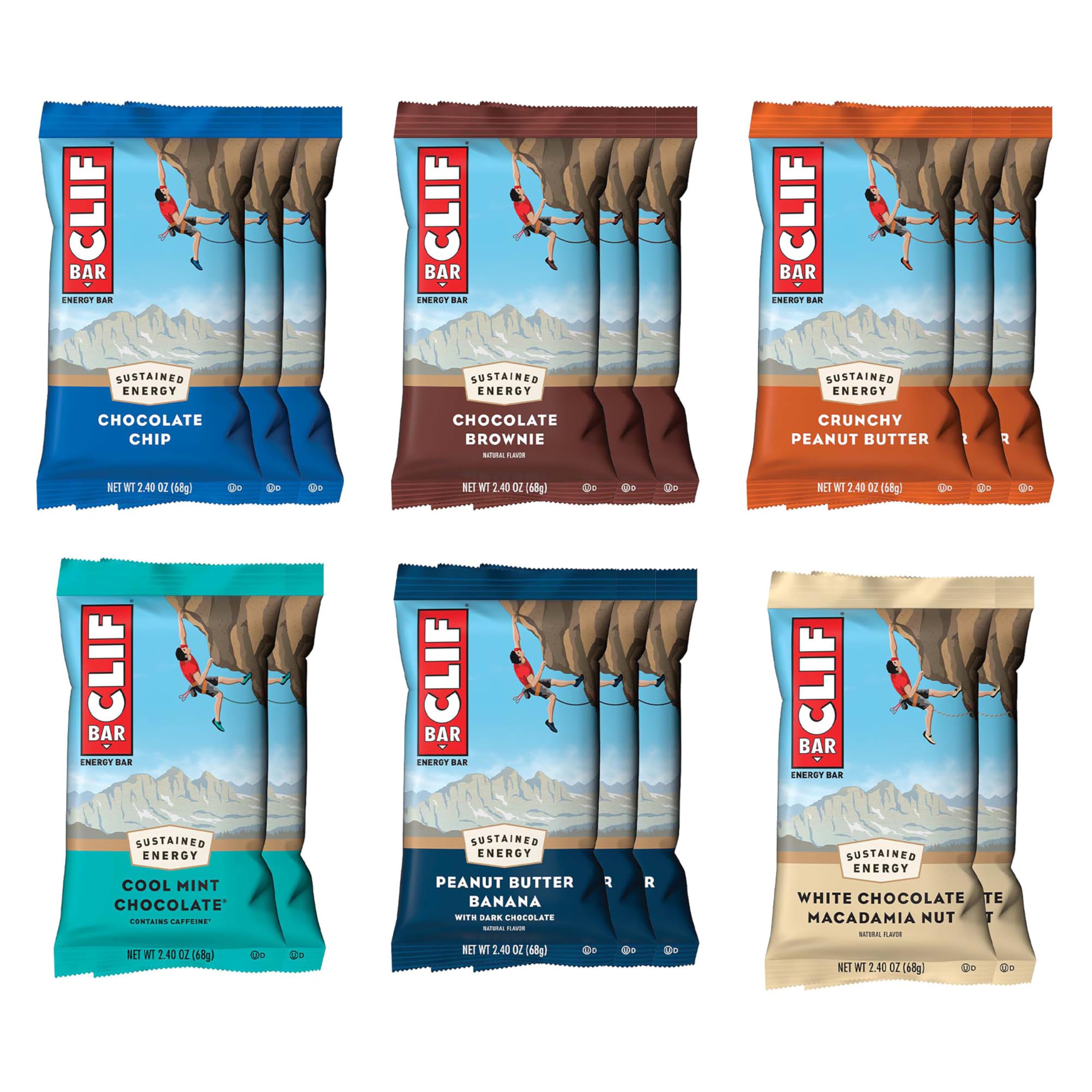
The CLIF BAR variety pack earns the top spot because it was purpose-built for the exact scenario you’re facing: sustained, moderate-intensity activity over hours on the trail. Each bar delivers between 240 and 250 calories from a mix of organic rolled oats, soy protein, and a controlled fat profile — the classic 10-11 grams of protein per bar hits the sweet spot for muscle recovery without slowing you down.
Structurally, these bars hold up much better than soft-coated alternatives. The oat-based matrix stays chewy rather than melting into a sticky mess, even when stored against your body heat in a hip belt pocket for three hours. The variety pack (Chocolate Chip, Crunchy Peanut Butter, White Chocolate Macadamia) prevents flavor fatigue across a five-day trip. Users consistently report that these bars remain intact and edible through rough packing conditions.
The only trade-off is the modest protein count — at 9 to 11 grams per bar, this is not a high-protein recovery bar for post-summit refueling. It is optimized for ongoing energy delivery, not immediate muscle repair. But for your primary trail fuel source, that is exactly the right profile. The 16-count box gives you enough supply for a week-long solo trip or a group outing with minimal weight penalty per bar.
Why it’s great
- Excellent caloric density at 240-250 calories per bar
- Oat-based structure resists melting and squishing in warm packs
- Variety pack prevents flavor boredom on multi-day trips
- Non-GMO with no high fructose corn syrup or artificial ingredients
Good to know
- Protein content (9-11g) is modest compared to dedicated protein bars
- Contains soy and common allergens — confirm sensitivity before bulk purchase
2. RXBAR Nut Butter & Oat Dark Chocolate Peanut Butter
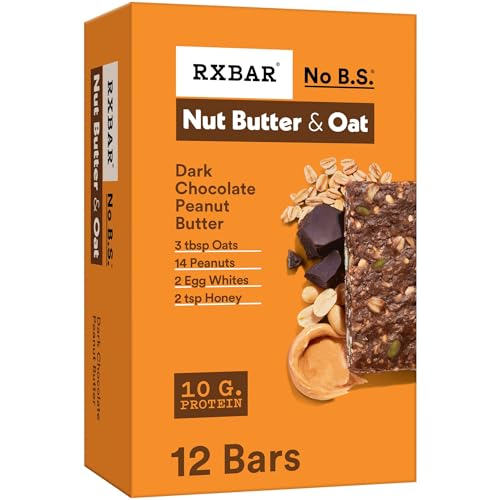
The RXBAR Nut Butter and Oat line is built around a radically simple ingredient deck: oats, honey, peanuts, egg whites, and dark chocolate. That short label matters on the trail because fewer ingredients typically mean less processing and a lower risk of gastrointestinal surprises during high-exertion days. The 10 grams of protein per bar come from egg whites and peanuts, providing a complete amino acid profile without relying on isolated soy or whey.
Texture-wise, these bars land in a soft-yet-crispy zone — the oat base gives them enough structure to survive a pack crush, but the nut butter center can soften noticeably above 80°F. They are best suited for cooler trail conditions or for storage inside an insulated food bag rather than a hip pocket. Users note that the bars remain fresh for weeks after opening, which is useful for resupply logistics on longer trips.
The main downside is caloric density: at roughly 210 to 220 calories per bar, they are lighter than the CLIF BAR alternative, meaning you need to pack more units to hit the same total fuel target. That adds bulk and weight. But if your priority is ingredient transparency and avoiding artificial additives, the RXBAR formulation is hard to beat for a clean trail snack that doesn’t taste like a compromise.
Why it’s great
- Short, recognizable ingredient list with no artificial additives
- Egg white protein provides complete amino acid profile
- Gluten-free and kosher certified for dietary flexibility
- Stays fresh for weeks after opening — good for resupply
Good to know
- Softer texture can melt in high heat and direct sun
- Lower caloric density requires more bars per day of fuel
3. Quest Chocolate Explosion Protein Bars

Quest’s Chocolate Explosion bar is a metabolic outlier in this lineup — 20 grams of protein, 1 gram of sugar, and just 3 net carbs per bar, making it ideal for backpackers who are managing blood sugar or following a low-carb eating protocol on the trail. The protein blend (whey isolate and casein) provides both fast and slow-digesting fractions, theoretically offering sustained amino acid delivery across a longer window than a pure whey bar.
The structural reality is more complex. The bar is studded with chocolate chunks and a decorative sprinkle coating that tends to flake off during handling. In a pack pocket, those chocolate pieces can soften and re-solidify, creating a crumbly texture rather than a cohesive block. The bar holds its shape reasonably well at moderate temperatures but is not as stable as a dense oat-based formulation — expect some dust at the bottom of your food bag by day three.
Where this bar truly earns its place is the post-camp recovery slot. The high protein count supports overnight muscle repair after a heavy mileage day, and the low sugar content means no insulin spike before sleep. At 210 calories per bar, it is calorically light for its weight, so do not rely on it as a primary fuel source — treat it as a targeted recovery tool for evenings at camp.
Why it’s great
- 20g protein per bar for post-hike muscle recovery
- 1g sugar and 3g net carbs support low-carb and ketogenic trail diets
- Whey-casein blend provides slow and fast-release protein fractions
- Crunchy chocolate texture adds sensory variety during long trips
Good to know
- Sprinkle coating and chocolate chunks crumble in packs
- Modest caloric density requires supplemental fuel sources
4. Ready Chocolate Peanut Butter Protein Bars
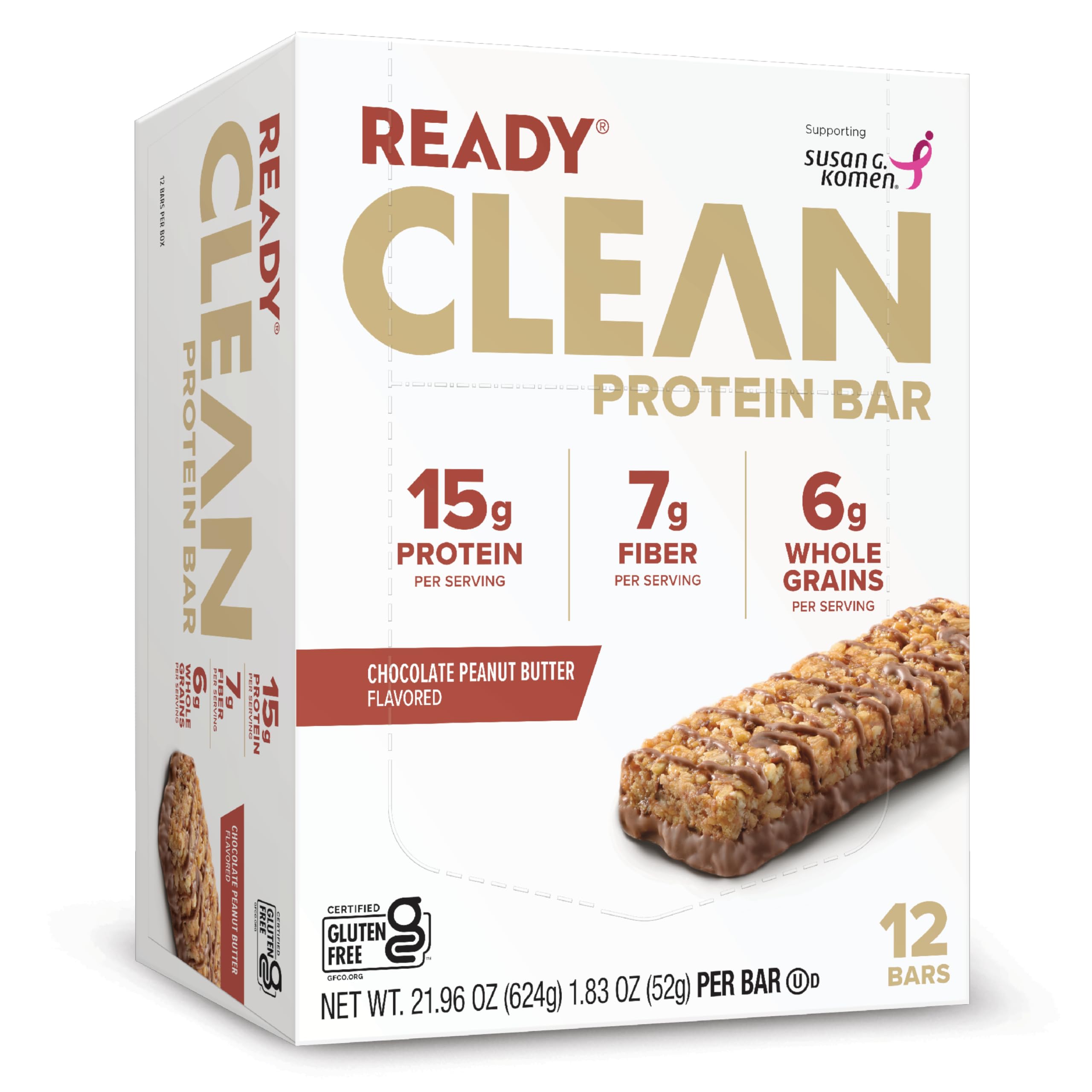
The Ready brand bar stakes its claim on one spec that directly affects trail performance: 7 grams of fiber per bar, paired with 15 grams of whey protein and 6.5 grams of whole grains. For backpackers, that fiber load translates to slower glucose release and a longer period of satiety — meaning you can go an extra hour between snack breaks without your energy dropping off a cliff.
Texture is a strong point here. The bar delivers a pronounced crunch from the whole-grain matrix, and users consistently describe the mouthfeel as “satisfying” — not the chalky or rubbery consistency that plagues many high-fiber bars. The chocolate peanut butter flavor is balanced at sweet-and-salty, which reduces the craving for additional sweets during the afternoon lull. The bar is also free of sugar alcohols, which can cause bloating on long water-rationed sections of trail.
The primary caveat is that this bar is less heat-tolerant than the oat-based alternatives. The peanut butter core softens noticeably above 80°F, and the bar’s crunch can degrade if it undergoes repeated temperature cycling between warm days and cool nights. Use it as a breakfast bar or a pre-camp snack — not something you stash in a pocket for midday munching in direct sunlight.
Why it’s great
- 7g fiber per bar significantly extends satiety between meals
- 15g whey protein supports muscle maintenance on multi-day trips
- Free from sugar alcohols, reducing GI distress risk
- Pleasant crunchy texture that avoids chalky or rubbery feel
Good to know
- Peanut butter core softens rapidly above 80°F
- Temperature cycling can degrade the crunch factor
5. CLIF BAR Variety 30-Pack

The 30-pack CLIF BAR variety box is the most logical option for group trips, long-distance thru-hikers, or anyone who wants to eliminate the headache of resupply logistics. It packs 30 individual bars in three classic flavors — Chocolate Chip, Crunchy Peanut Butter, and Chocolate Brownie — all delivering the same proven 10-11 grams of protein and 240-250 calorie energy platform that made the 16-pack our top pick.
Bulk purchasing for backpacking carries a hidden advantage: consistency. When every member of your group eats the same bar formulation, you eliminate the risk of someone hitting a motivational low because their personal bar supply ran out. The flavors are widely accepted even by picky eaters, and the oat-based matrix handles compression and moderate heat without catastrophic failure. Users report that these bars routinely survive full weeks in a bear canister without significant degradation.
The obvious counterpoint is that a 30-bar commitment locks you into a single product for an extended period. If you discover on day two that the chocolate brownie flavor doesn’t sit well with your digestion at altitude, you’re stuck with 27 bars of the same thing.
Why it’s great
- Bulk supply ideal for group trips and long-distance thru-hikes
- Proven oat-based structure resists pack compression and moderate heat
- Consistent nutrition profile simplifies food planning
- Three classic flavors appeal to a wide range of palates
Good to know
- Limited to three flavors — higher risk of flavor fatigue on extended trips
- Large quantity commitment makes mid-trip substitution impossible
FAQ
How many protein bars should I pack per day for backpacking?
Will protein bars melt in my backpack during summer hiking?
What’s the difference between energy bars and protein bars for the trail?
Final Thoughts: The Verdict
For most users, the protein bars for backpacking winner is the CLIF BAR Variety 16-Pack because its oat-based structure delivers the best balance of caloric density, heat resistance, and sustained energy release for multi-day trails. If you want clean, minimal ingredients with a short label, grab the RXBAR Nut Butter & Oat. And for targeted low-carb recovery at camp after high-mileage days, nothing beats the Quest Chocolate Explosion for high protein without the sugar load.