A range hood caked in years of grease isn’t just an eyesore — it’s a fire hazard. That sticky, brown film clogs filters, reduces airflow, and silently strains your ventilation motor, forcing it to work harder and louder. Finding a formula that actually dissolves this baked-on grime without requiring ten scrubbing sessions is the real challenge.
I’m Mohammad Maruf — the founder and writer behind AirfryerBite. I’ve spent countless hours analyzing commercial cleaning chemistry, comparing active ingredients, and studying user reports to identify which degreasers truly cut through the heavy, carbonized buildup on hood surfaces, filters, and fans.
Whether you maintain a busy home kitchen or a commercial line, the right chemistry is non-negotiable. This guide breaks down the top contenders for the best range hood degreaser, evaluating their concentration, safety profiles, and real-world performance against the toughest grease.
How To Choose The Best Range Hood Degreaser
The chemistry of a degreaser varies significantly. Choosing based on the type of residue and your cleaning method saves time and prevents damage.
Concentrated vs. Ready-to-Use (RTU)
Concentrated formulas offer the highest value for heavy-duty jobs. You dilute them yourself, typically at ratios like 3:1 or 4:1 water to concentrate, depending on the soil level. This is ideal for soaking filter baskets. Ready-to-use (RTU) sprays are convenient for quick wipe-downs on the hood’s exterior and surrounding walls but are less economical for heavy carbonized buildup. For deep cleans on the fan blades and interior chimney, a concentrated solution is almost always the better choice.
Safety Profile: Skin, Fumes, and Food Contact
Not all degreasers are created equal when it comes to safety. Look for formulas labeled non-caustic and non-flammable to protect your hands and eyes during cleaning. Many commercial-grade products are safe for food-contact surfaces when rinsed properly with water, which is critical in a kitchen. Avoid products with harsh fumes like lye-heavy formulas if you have respiratory sensitivities, and always wear gloves, even with “gentle” solutions.
Specific Application: Commercial vs. Home Use
The type of hood system dictates the best chemical. For residential hoods with mesh or baffle filters, a foam-free or low-foam liquid is fine for surface cleaning. For commercial self-cleaning water wash hood systems, you need a surfactant-based hood detergent specifically designed to mix with the wash cycle water and prevent scale and clogging in the tubes and pumps. Using a general degreaser in a self-cleaning system can damage the equipment and void warranties.
Quick Comparison
On smaller screens, swipe sideways to see the full table.
| Model | Category | Best For | Key Spec | Amazon |
|---|---|---|---|---|
| Dawn Professional Heavy Duty Degreaser | Concentrate | Deep soaking of filters and heavy buildup | 3x faster grease cutting, 1 Gal (3-Pack) | Amazon |
| Dawn Professional 3-Pack Carton | Concentrate | Multi-surface kitchen cleanups | Non-corrosive to hands, 1 Gal (3-Pack) | Amazon |
| EcoGen Commercial Hood Cleaner | Concentrate | Water wash exhaust hood systems | Non-toxic, unscented, 4 Gallons | Amazon |
| Captive-Aire Surfactant Hood Detergent | Surfactant | Self-cleaning hood fire suppression systems | USDA A1 Biodegradable, 2 Gallons | Amazon |
| Quality Chemical Oven & Grill Cleaner | Heavy-Duty | Extreme carbon buildup on grills and hoods | Lye-based formula, 128 oz (4-Pack) | Amazon |
| Diversey Suma Foam Free Cleaner | Ready-to-Use | Quick spray-and-wipe cleaning | Ready-to-use, free-rinsing, 32 oz (12-Pack) | Amazon |
| HOODMART Concession Hood System | Hardware | Complete ventilation replacement | Stainless steel, 8′ system, 18-gauge | Amazon |
In‑Depth Reviews
1. Dawn Professional Heavy Duty Liquid Degreaser, Pine Scent
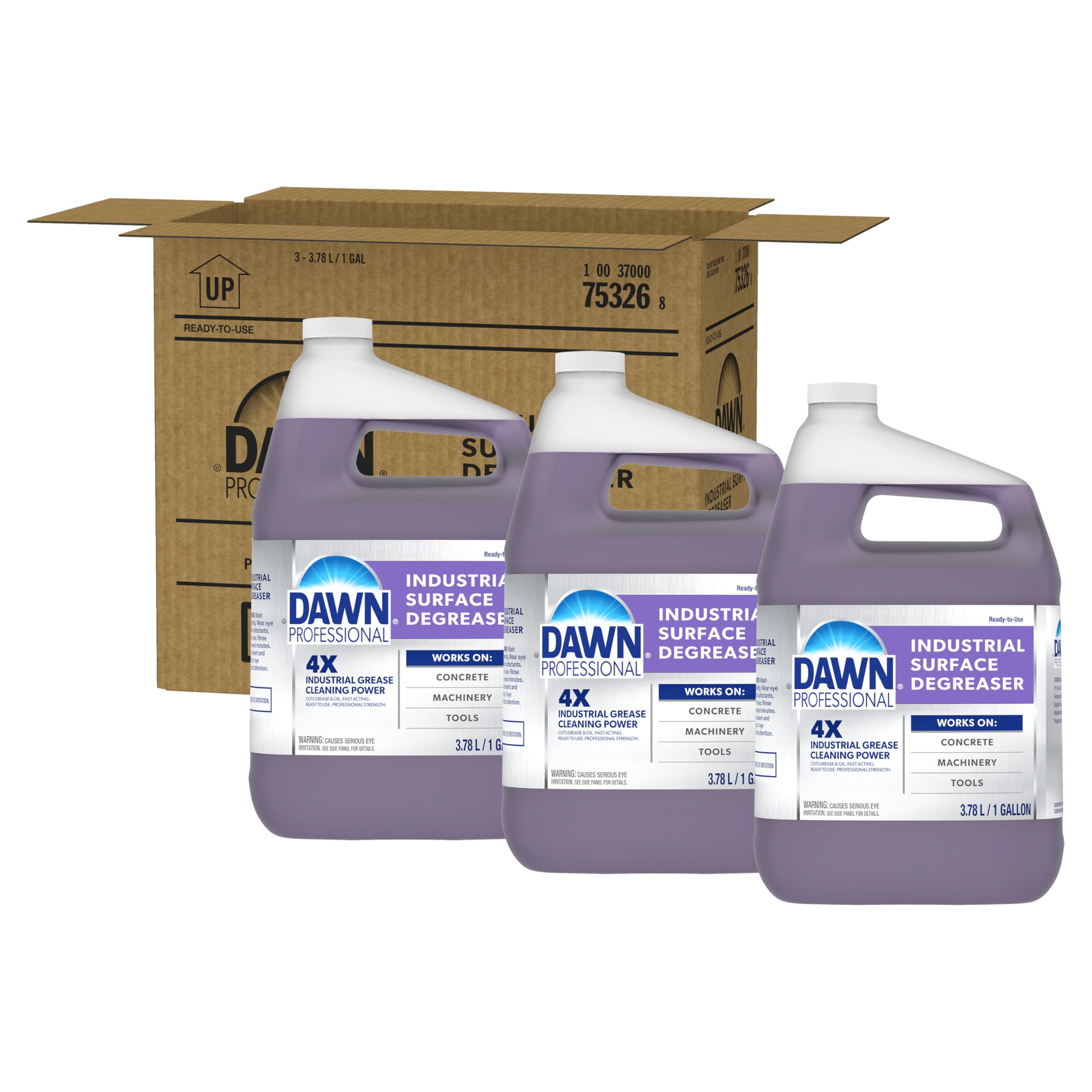
This is the gold standard for commercial degreasing in a residential context. The concentrated formula cuts through the thick, carbonized grease found on range hood filters and fan blades three times faster than standard household cleaners. Multiple user reports confirm that soaking hood filters in a 3:1 water-to-concentrate solution dissolves buildup without any scrubbing, saving significant elbow grease.
The chemistry here is designed for safety: it is phosphate-free, noncaustic, and nonflammable, making it gentle on skin compared to industrial lye-based alternatives. It also meets the requirements for use on food-contact surfaces when followed by a water rinse, adding versatility for cleaning the entire kitchen. The 1-gallon size in a 3-pack provides exceptional value for heavy users.
The primary complaint is packaging-related — the jugs are prone to leaking during shipping if the seal is compromised or the cap isn’t fully secured. This is a logistics issue rather than a product flaw. Also, the pine scent, while effective at masking grease odor, may be too strong for those sensitive to fragrance in enclosed spaces.
Why it’s great
- Cuts grease three times faster than standard cleaners.
- Non-caustic and safe on hands without gloves for short periods.
- Excellent value with 3 gallons of concentrated power.
Good to know
- Bottles are known to leak during shipping due to packaging.
- Strong pine scent can be overpowering for some users.
- Heavy weight (30 lbs) makes handling the carton cumbersome.
2. 04852 Heavy Duty Degreaser 1 Gallon 3 Bottles/Carton

Structurally similar to the top pick, this version focuses on the same core formula — full-strength cleaning for tough, greasy soils on range hoods and ovens — without the pine scent variation. It is a staple for cleaning crews due to its non-corrosive nature on hands, meaning you can work longer without glove fatigue when wiping down hood surfaces.
The primary use case here is high-volume cleaning where speed matters. The heavy-duty concentrate actively breaks down the sticky film on hood interiors when sprayed on and allowed to dwell for a few minutes. It also works effectively on other kitchen surfaces like walls behind equipment and floors, making it a versatile tool for a deep kitchen clean.
However, buyers should note that this is an identical product sold under a slightly different listing, and the same packaging flaw exists. A significant number of units arrive with missing inner caps, resulting in leaks. A minority of users also report a watery consistency leading to quick consumption, though this may be a dilution issue or a counterfeit risk given the popularity of the Dawn brand.
Why it’s great
- Effective on surfaces like range hoods and ovens.
- Formulated to be non-corrosive to bare hands.
- Great for cleaning professional scrubbers and equipment.
Good to know
- Some bottles arrive without a screw cap, causing leaks.
- A few users report a watery consistency that feels less concentrated.
- Strong chemical smell displeases some buyers.
3. EcoGen Commercial Hood Cleaner Concentrate
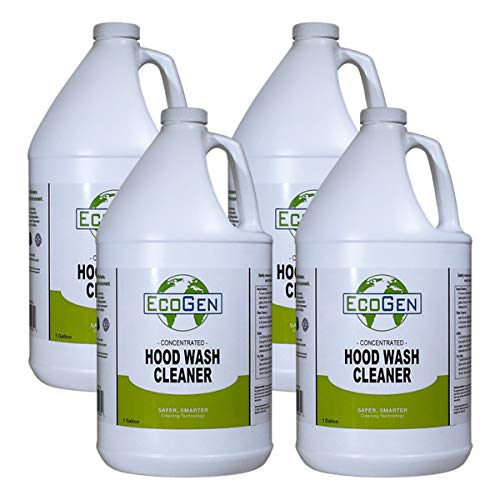
Specifically engineered for self-cleaning water wash exhaust hood systems, EcoGen’s formula prevents clogging and scaling in tubes, valves, and pumps. The product is designed to be added directly to the detergent tank of the hood wash system at a ratio of one quart per gallon of water, where it works during the automatic wash cycle to break down grease before it solidifies.
The formula is a point of pride: it is water-based, biodegradable, unscented, and dye-free, with no irritating fumes or harsh chemicals. This makes it a strong choice for kitchens where staff have respiratory sensitivities or where strict green cleaning protocols are in place. It also works as a manual degreaser for filters, grills, and fry vats, though its primary strength is in automated systems.
User feedback is polarized. Many professional users find it effective for maintaining clean hood systems and appreciate its non-toxic profile. However, a minority report that it is too weak for extremely heavy, neglected buildup, requiring a more aggressive chemical or manual scrubbing. It is best suited for regular maintenance rather than a one-time rescue of a heavily caked system.
Why it’s great
- Designed specifically for water wash hood systems.
- Non-toxic, unscented, and free from harsh fumes.
- Concentrated 4-gallon pack provides long-lasting use.
Good to know
- Underwhelming performance on very heavy, neglected grease.
- Some users found it no better than cheaper alternatives.
- Packaging as “4 gallons” may confuse buyers expecting larger bottles.
4. Captive-Aire Surfactant Industrial Strength Cleaner & Degreaser

This surfactant-based cleaner is designed for a very specific purpose — use in CORE fire protection systems and self-cleaning hood systems in commercial kitchens. It acts as a cleaning agent that is released during the wash cycle to suppress grease buildup, which is critical for fire safety. The formula is earth-friendly, carrying a USDA A1 biodegradability rating.
Users of this product almost exclusively have commercial water wash hoods from Captive-Aire or similar brands. It is not intended for manual spray-and-wipe cleaning of residential filters. When used in the correct equipment, it works effectively to keep the grease in suspension so it doesn’t accumulate in the system’s plumbing, which is a common cause of fire suppression failure.
Performance reports are starkly divided. Professional operators with established cleaning routines praise it as essential for maintaining their hood system. However, some home or small business users attempting to use it for manual scrubbing find it severely lacking in cleaning power. It is critical to understand that this is a surfactant for automated wash systems, not a general-purpose heavy-duty degreaser.
Why it’s great
- Essential additive for self-cleaning water wash hoods.
- Helps suppress grease fires by preventing buildup.
- Biodegradable and environmentally friendly.
Good to know
- Useless for manual cleaning — it is a surfactant, not a solvent.
- Mixed reviews on effectiveness even for its intended use.
- High cost for a 2-gallon pack compared to concentrates.
5. Quality Chemical Oven Cleaner & Grill Cleaner Heavy-Duty Degreaser

This is the heavy artillery for carbonized grease that has been baked on for months. The formula contains lye (sodium hydroxide), making it significantly more caustic than the Dawn-style concentrates. It is designed for flat grills, commercial ovens, and the thick, crusty buildup inside range hoods and on fan blades where lighter cleaners fail.
The application method is important: spray on, wait one hour, then pressure wash. Users report excellent results on engine sludge and transmission cleaning, which mirrors the extreme, stubborn grease found on neglected hood interiors. A little goes a long way, making the 4-gallon pack economical despite the premium price point. The lack of strong smell is a surprising benefit for a lye-based product.
Safety is a major concern here. The chemical burns skin on contact and requires full protective gear: gloves, eye protection, and long sleeves. It is not safe for food-contact surfaces unless extremely thoroughly rinsed, and aerosolizing it can cause respiratory damage. This is strictly for experienced users who understand the risks of working with a caustic agent.
Why it’s great
- Unmatched power against carbonized and baked-on grease.
- Effective on engines, grills, ovens, and hoods.
- Minimal odor for a heavy-duty industrial cleaner.
Good to know
- Contains lye; causes chemical burns on skin contact.
- Requires full protective gear and a pressure washer.
- Overkill and dangerous for light or routine maintenance.
6. Diversey Suma Foam Free Liquid Oven & Fryer Cleaner
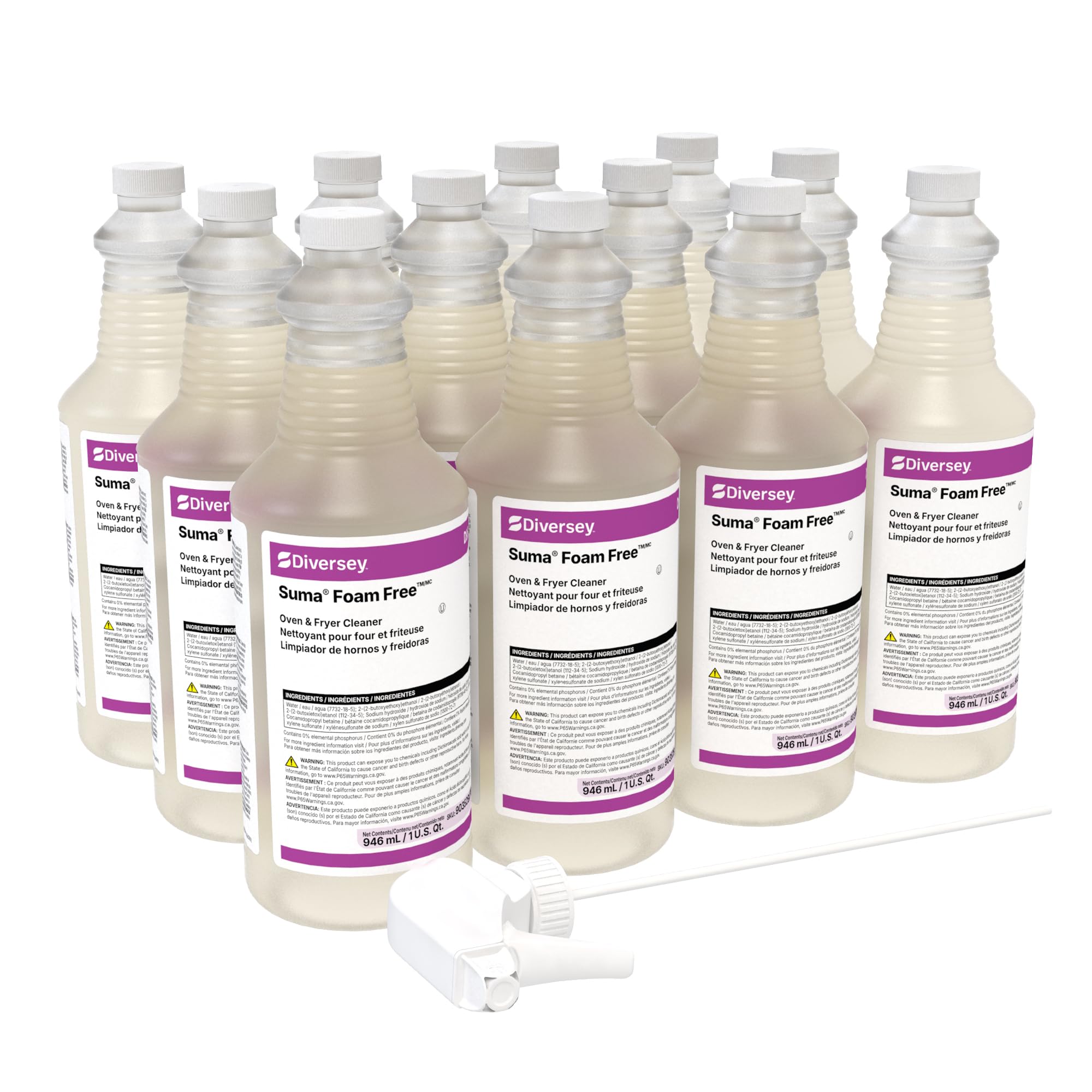
For those seeking a no-mix, no-fuss solution for light to moderate grease, this Diversey formula is ideal. It is a ready-to-use spray that cleans ovens, grills, hoods, and deep fryers effectively. The foam-free and free-rinsing design means it leaves no residue, which is crucial for kitchen surfaces that come into contact with food.
The product is designed to cling to surfaces without running off, providing longer contact time to break down greasy and carbonized soils without hard scrubbing. It is a staple in many commercial cleaning businesses because it is safe for use on a variety of surfaces and doesn’t require dilution or special equipment. The 12-pack case offers a long-term supply for regular maintenance.
However, the formula is toxic and corrosive, requiring the use of gloves and safety glasses at all times. One reviewer claimed it causes permanent lung damage if aerosolized. It is not a “green” or gentle product. Also, the sprayer nozzle is only included with the case pack, and individual bottles may be sold without a sprayer, which is an annoyance for new buyers.
Why it’s great
- Convenient ready-to-use format saves time.
- Free-rinsing and leaves no sticky residue.
- Effective on tough soil without hard scrubbing.
Good to know
- Toxic and corrosive; requires heavy protective gear.
- Sprayer nozzle may not be included with individual bottles.
- Serious respiratory concerns if the product is aerosolized.
7. HOODMART 8′ Concession Trailer Hood System

While not a degreaser, this entry represents the hardware that degreasers are meant to protect. The HOODMART system is a complete commercial-grade range hood designed for food trucks and concession trailers. It features an 8-foot hood with a direct drive exhaust fan, variable speed control, and built-in lights, all constructed from 18-gauge stainless steel.
The system includes baffle-style grease filters and stainless steel grease cups, which are exactly the components that a good degreaser needs to maintain. The welded liquid-tight seams prevent grease from leaking into hidden areas, making it easier to clean. The 2-year warranty and NSF/UL approvals speak to its build quality for a mobile kitchen environment.
Installation is a significant undertaking — users recommend four people to lift the 294-pound unit. There are no included instructions, which can be a problem for DIY installers. Despite this, the quality is widely praised as an excellent value for a food truck setup, offering a professional solution at a price point well below permanent restaurant installations.
Why it’s great
- Complete system with fan, lights, and controls included.
- Heavy-duty 18-gauge steel construction with welded seams.
- NSF and UL approved for commercial use.
Good to know
- Extremely heavy (294 lbs) requiring multiple people to lift.
- No installation instructions are provided.
- Not a degreaser — it is the hood system itself.
FAQ
Can I use a regular kitchen degreaser on my range hood filter?
Is it safe to use oven cleaner on the inside of my range hood?
What is a surfactant-based hood detergent and do I need it?
Final Thoughts: The Verdict
For most users, the best range hood degreaser winner is the Dawn Professional Heavy Duty Liquid Degreaser because it offers the perfect balance of non-caustic safety, concentrated power, and exceptional value for deep-cleaning filters and hoods. If you need a formula specifically for a self-cleaning water wash system, grab the EcoGen Commercial Hood Cleaner. And for tackling extreme, neglected carbon buildup that other cleaners cannot touch, nothing beats the Quality Chemical Oven & Grill Cleaner.