Roots don’t lie. If your raised beds are producing pale leaves, stunted stems, or fruit that just won’t size up, the problem is almost certainly what’s underneath the surface. Commercial topsoil from a bulk bin is often dead—compacted, depleted of organic matter, and lacking the microbial life that drives nutrient cycling. The right soil blend for a raised bed is a living system: it must drain quickly to prevent waterlogged roots, hold enough moisture to survive a hot afternoon, and deliver a steady release of nutrients without synthetic boosters.
I’m Mohammad Maruf — the founder and writer behind AirfryerBite. I’ve spent years analyzing soil chemistry, organic certification standards, and the real-world performance of bagged mixes so you can skip the trial-and-error cycle that kills a season’s worth of planting.
Whether you are starting a new bed from scratch or recharging tired soil for another season, selecting the right bagged mix determines how much water, fertilizer, and frustration you invest. This guide breaks down the specific ingredients, texture, and nutrient profiles that separate a productive bed from a disappointing one, and it will help you find the absolute best soil for raised veg beds for your specific growing style.
How To Choose The Best Soil For Raised Veg Beds
Not every bag labeled “garden soil” belongs in a raised bed. Many big-box options are designed for in-ground use—they’re heavy, compact quickly, and lack the drainage that an elevated bed requires. For a raised bed you need a mix that stays loose, holds moisture without becoming mud, and provides a steady nutrient supply across the entire growing season. Here is what to look for.
Organic Matter vs. Fillers
The backbone of good raised bed soil is organic matter—compost, aged bark, peat moss, or coco coir. These materials create air pockets that roots need and hold moisture that plants draw from between waterings. Beware of bags that list “forest products” or “screened topsoil” first; these are often fillers that lack structure and microbial life. A quality blend lists compost, sphagnum peat, or coir as a primary ingredient.
Drainage Aids (Perlite, Pumice, Sand)
Raised beds drain faster than ground soil, but they also dry out faster. The ideal mix includes perlite or pumice to create physical gaps that prevent compaction. Without these, rain and repeated watering collapse the pore space, turning your bed into a dense block that suffocates roots. A mix with visible white perlite flecks is a good sign that the manufacturer prioritized aeration.
Organic Certification and Mycorrhizae
Certified organic soil guarantees no synthetic pesticides, herbicides, or persistent fertilizers are in the bag—critical for food crops you intend to eat. Beyond certification, look for mycorrhizal fungi (endo and ecto strains) in the ingredient list. These beneficial fungi attach to root systems and dramatically improve water and nutrient uptake, which translates to larger, more resilient plants without extra feeding.
Quick Comparison
On smaller screens, swipe sideways to see the full table.
| Model | Category | Best For | Key Spec | Amazon |
|---|---|---|---|---|
| PRO-Mix Organic Vegetable & Herb Mix | Premium Mix | Long-season feeding, large beds | 2 cu. ft., feeds up to 3 months | Amazon |
| Coast of Maine Bar Harbor Blend | Premium Mix | Container & raised bed vegetables | 16 qt, lobster/crab shell meal | Amazon |
| Espoma Organic Vegetable & Flower Soil | Amendment Blend | Mixing with native soil | 1 cu. ft., Myco-Tone inoculant | Amazon |
| MODELLOR Coco Coir Brick | Base Component | Custom DIY soil blending | Expands to 18–20 gallons | Amazon |
| Envelor Organic Coco Coir Brick | Base Component | Moisture retention & aeration | Expands to 18 gallons | Amazon |
In‑Depth Reviews
1. PRO-Mix Premium Organic Vegetable & Herb Mix (2 cu. ft.)
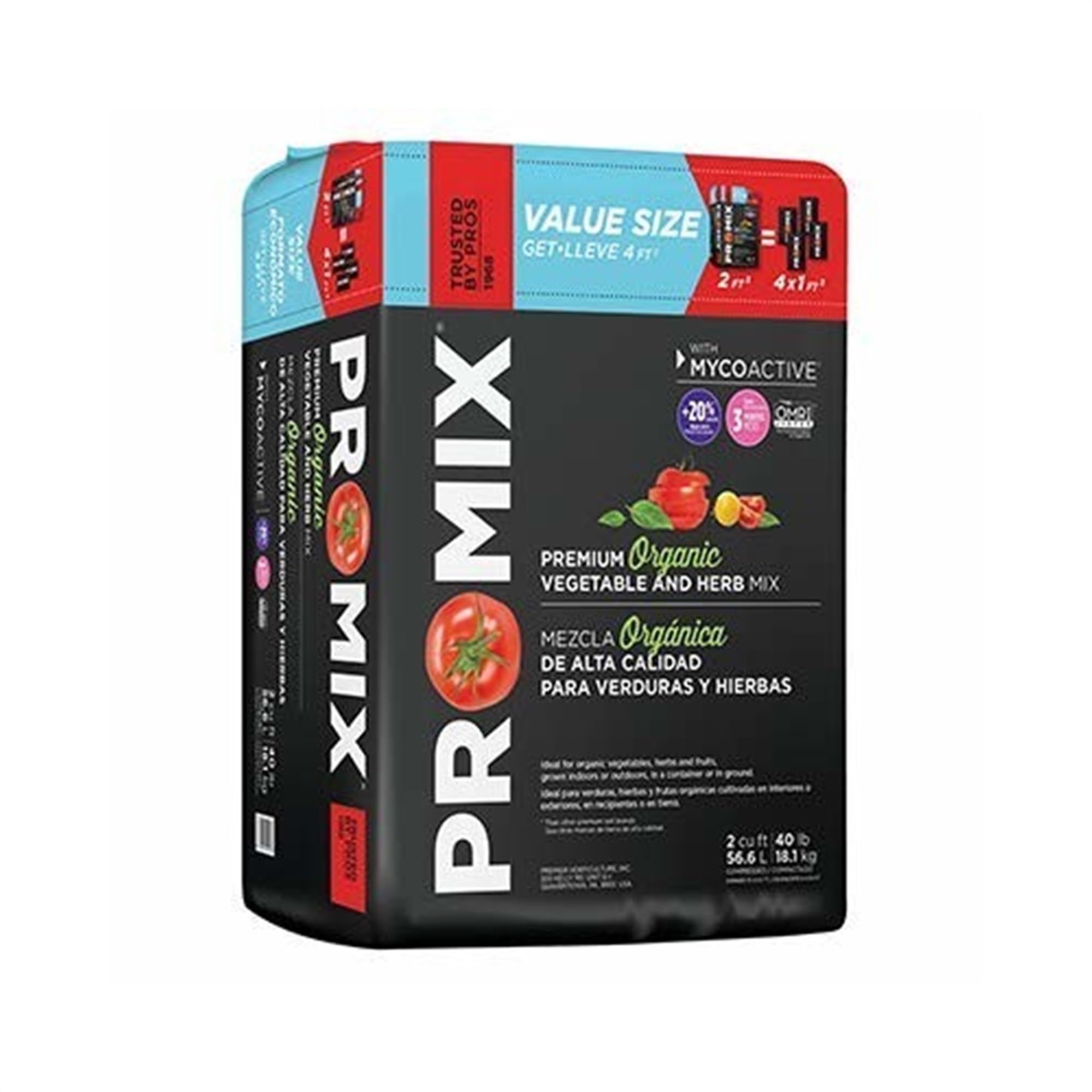
This is the same mix commercial greenhouses reach for, and for good reason. The PRO-Mix formula combines sphagnum peat moss, composted pine bark, perlite, and an organic fertilizer charge that continues feeding for up to three months after planting. The texture is light and fluffy straight out of the bag—no need to amend with extra perlite unless you are working with extremely heavy clay conditions.
In raised beds, this mix holds its structure through multiple waterings without compacting into a brick. The 2 cubic foot bag stretches to fill a standard 4×4 foot bed to a depth of around six inches, making it a practical option for large setups. Multiple reviewers confirmed that switching to this soil from generic bagged mixes immediately resolved stunted growth and leaf yellowing in tomatoes and peppers.
One consistent note from experienced gardeners is that the price fluctuates more than typical garden soils, so it pays to watch for stock-up moments. The organic fertilizer charge means you can skip liquid feeding for the first two months, which simplifies maintenance for beginners who tend to over-fertilize. It also makes an excellent seed-starting medium if you sift out the larger bark pieces.
Why it’s great
- Certified organic with slow-release nutrients that last a full season
- Light, aerated texture resists compaction in raised beds
- Large 2 cu. ft. bag provides excellent coverage for medium-to-large beds
Good to know
- Contains some small bark pieces that may need sifting for seed-starting
- Price can vary widely seasonally; buy when it dips
2. Coast of Maine Bar Harbor Blend Potting Soil (16 QT)
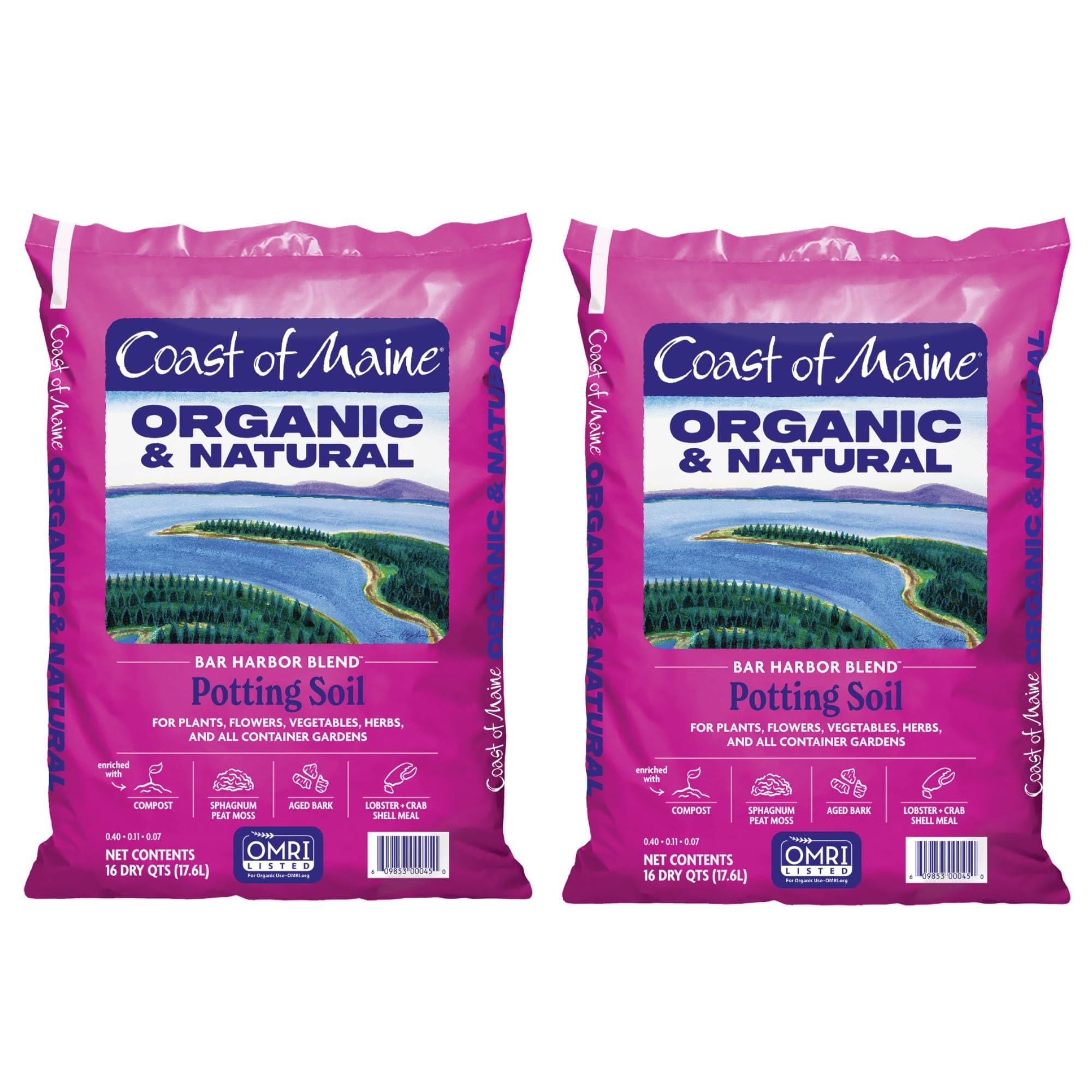
Coast of Maine’s Bar Harbor Blend stands out because of its unique marine-based ingredient list: sphagnum peat moss, compost, perlite, lobster and crab shell meal, and kelp meal. The shellfish meal provides a slow-release source of calcium and chitin, which naturally suppresses soil-borne fungal pathogens while feeding the plants. This is not a generic mix dressed up with coastal branding—the nutritional profile is genuinely different from anything else widely available.
In container and raised bed use, the soil holds a dark, rich crumble that experienced gardeners immediately recognize as high compost content. Reviewers consistently mention that their tomatoes, peas, and potatoes grew more vigorously than expected, with some noting they had to add extra perlite to increase drainage for their specific high-rainfall climate. The 16-quart bag is ideal for filling smaller raised beds or refreshing existing beds that need a nutrient boost mid-season.
The organic certification adds peace of mind for food crops, and the blend is suitable for both indoor and outdoor container gardening. Because it contains real compost, do not expect a sterile “peat-only” texture—this is a biologically active soil that smells earthy and looks like actual garden dirt. If you want a plug-and-play option that does not require additional fertilization for the first month, this is a strong competitor.
Why it’s great
- Marine-sourced ingredients provide calcium and natural disease suppression
- Rich, biologically active compost texture promotes strong root growth
- Approved for organic gardening with no synthetic additives
Good to know
- May need extra perlite in very rainy climates or heavy clay environments
- Available in smaller volume than bulk options; plan coverage carefully
3. Espoma Organic Vegetable & Flower Garden Soil (1 cu. ft.)

Espoma positions this mix as an in-ground amendment, but it works beautifully in raised beds when blended with existing native soil or a base like coco coir. The key ingredient is Myco-Tone — a proprietary blend of endo and ecto mycorrhizae that colonize root systems and dramatically improve water and nutrient uptake. If your native soil is poor or compacted, adding this mix introduces the biological life necessary to break down organic matter into plant-available food.
The texture is a true loam rather than a bark-heavy mulch. Gardeners in challenging climates, including high desert zones, have reported that this soil restored their faith in bagged mixes because it did not turn into a water-repellant crust after the first irrigation. The 1-cubic-foot bag is easy to handle and transport, but for larger beds you will need multiple bags or a complementary bulk base to achieve sufficient depth.
Some users noted that indoor plants potted in this mix developed fungus gnats—a common issue when compost-rich soil is brought indoors. For outdoor raised bed use, this is rarely a problem, but it is worth knowing if you plan to use leftover soil for houseplants. The organic certification and lack of synthetic plant foods make it a safe choice for edible crops, and the mycorrhizae inoculant gives it a biological edge over simpler peat-and-perlite blends.
Why it’s great
- Myco-Tone mycorrhizae boost root nutrient absorption naturally
- True loam texture drains well without becoming hydrophobic
- Certified organic, free of synthetic chemicals and fillers
Good to know
- Designed as an amendment; works best blended with native soil or a coco coir base
- Smaller bag volume requires multiple bags for large beds
4. MODELLOR Premium Super Washed Coco Coir Brick (10 lb)
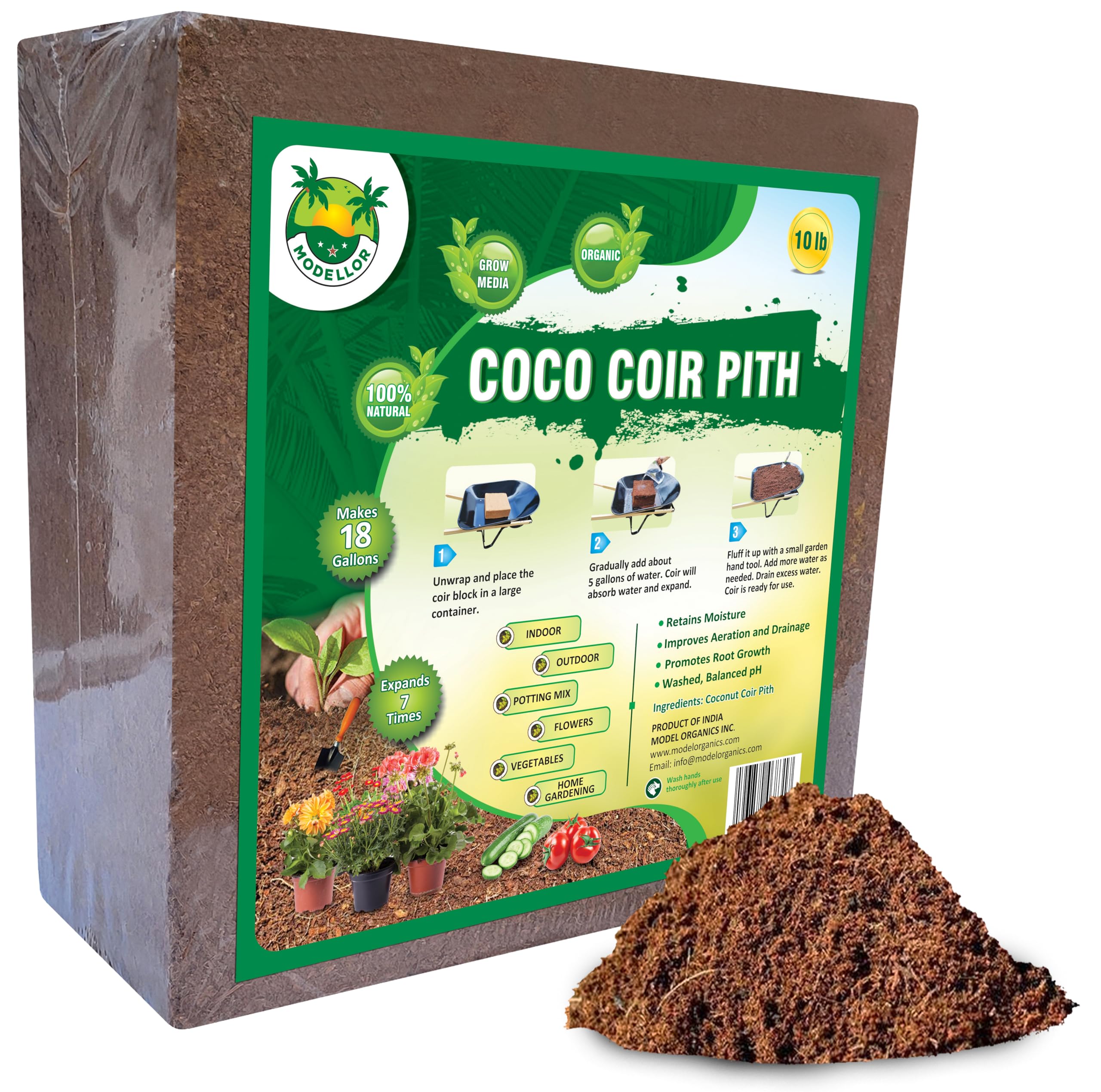
Coco coir is not a complete soil—it is the structural base that replaces peat moss in many modern raised bed recipes. The MODELLOR brick is triple-washed to remove excess salts, which means you can hydrate it and use it immediately without rinsing. One 10-pound brick expands to 18 to 20 gallons of fluffy, pH-balanced coir, giving you the volume to build a custom mix at a much lower effective cost than pre-bagged blends.
When used in raised beds, coir improves moisture retention without waterlogging, and its fibrous structure creates the aeration channels that vegetable roots love. Many experienced gardeners use coir at a 1:1 ratio with compost, then add perlite and a slow-release organic fertilizer to create a bespoke raised bed mix that outperforms most commercial blends. The MODELLOR brick earned high marks from reviewers for producing consistent, low-salt results batch after batch.
One practical note: hydrating a coir brick takes some time and a large container—plan for about 15 to 20 minutes of soaking and fluffing before it is ready to mix. Using warm water speeds the process significantly. If you are willing to do the mixing yourself, this approach gives you complete control over your soil composition and is notably more economical for filling deep beds.
Why it’s great
- Triple-washed, low-salt, and pH-balanced—no rinsing required
- Expands to a massive 18–20 gallons from a single compact brick
- Eco-friendly alternative to peat moss, renewable and biodegradable
Good to know
- Requires time and a large container to hydrate and fluff
- Must be mixed with compost and fertilizer—it is not a complete soil alone
5. Envelor Organic Coco Coir Brick (10 lb)

Envelor’s coir brick delivers essentially the same expandable volume as the MODELLOR option at a slightly lower effective cost, making it an excellent entry point for gardeners who want to experiment with DIY soil mixing. Each 10-pound block expands to approximately 18 gallons of medium when hydrated with warm water. The coir is pH-balanced and free of chemical additives, suitable for both outdoor raised beds and indoor container gardening.
In raised bed use, the coir performs well as a water-retentive base that reduces watering frequency. Reviewers have used it to amend heavy clay soil, as a standalone hydroponic medium, and as a bedding material for worm farms, demonstrating its versatility. One caveat: the brick takes longer to hydrate than some users expect—plan for a full 20 to 30 minutes of soaking and manual fluffing before it is ready for mixing.
For a raised bed mix, pair this brick with high-quality compost and a balanced organic fertilizer. Do not use it as a complete soil replacement on its own; it lacks the nutrient density that fruiting vegetables need. However, as a peat moss substitute that improves drainage and moisture retention simultaneously, it is a solid value for budget-conscious growers who are willing to invest a little labor.
Why it’s great
- Excellent value for the large volume of medium produced
- pH-balanced and chemical-free, safe for organic gardening
- Versatile—works in raised beds, hydroponics, and as a soil amendment
Good to know
- Hydration takes 20–30 minutes and significant manual effort
- Nutrient-free; must be blended with compost and fertilizer for vegetables
FAQ
Can I use potting soil for raised vegetable beds?
How much coco coir should I mix into my raised bed soil?
Final Thoughts: The Verdict
For most users, the best soil for raised veg beds winner is the PRO-Mix Organic Vegetable & Herb Mix because it combines certified organic ingredients, a long-lasting fertilizer charge, and a light aerated texture that resists compaction through the entire season. If you want a biologically active mix with unique marine-derived calcium and chitin, grab the Coast of Maine Bar Harbor Blend. And for budget-focused gardeners who prefer to build their own custom mix, nothing beats the value and control of starting with the MODELLOR Coco Coir Brick as a base.