Arsenic is a heavy metal that slips past basic carbon filters and silently accumulates in your body, linked to long-term health risks that no standard pitcher filter can address. The only reliable defense is a system built with the correct filtration technology—reverse osmosis or specialized adsorption media—that is independently certified to reduce this specific contaminant to safe levels.
I’m Mohammad Maruf — the founder and writer behind AirfryerBite. I have spent years analyzing water filtration hardware, cross-referencing third-party lab certifications like NSF/ANSI 58 and 53, and mapping the specific contaminant reduction claims of dozens of systems to separate true arsenic protection from marketing fluff.
After reviewing hundreds of product specs and real user reports, I have narrowed the field to the systems that genuinely deliver. This guide breaks down the water filter to remove arsenic that earns its place through hard certification data, real-world performance, and durable build quality.
How To Choose The Best Water Filter To Remove Arsenic
Arsenic in drinking water is often undetectable by taste or smell, and common faucet-mount or pitcher-style filters do not address it. Choosing an effective system requires understanding which technologies have been proven in independent testing to reduce arsenic below the EPA maximum contaminant level of 10 parts per billion.
Reverse Osmosis vs. Specialized Adsorption
Reverse osmosis (RO) systems are the most widely certified method for arsenic removal, with NSF/ANSI Standard 58 requiring at least 95% reduction of both Arsenic V and Arsenic III. RO pushes water through a semi-permeable membrane at 0.0001 microns, physically blocking arsenic molecules. Some systems add a remineralization stage to restore healthy pH. Adsorption-based filters, such as those using Bayoxide E33 or titanium dioxide media, target arsenic through chemical bonding and are typically tested under NSF/ANSI Standard 53, but they do not remove dissolved solids or other heavy metals as broadly as RO does.
Certification Is Non-Negotiable
A filter that claims to remove arsenic must have verifiable certification from an accredited laboratory like WQA, NSF, or IAPMO. Look for the specific standard number (NSF 58 for RO, NSF 53 for adsorption) on the product page or manufacturer website. Generic language such as “reduces heavy metals” without a named standard is not sufficient proof. Systems that are certified to NSF 58 also generally address lead, fluoride, chromium, and dozens of additional contaminants in one pass.
Flow Rate, Filter Life, and Waste Water
Arsenic-specific systems vary significantly in how much water they produce per minute and how often filters need replacing. Under-sink RO units typically deliver 50 to 100 gallons per day and require filter changes every 6 to 24 months depending on feed water quality. Countertop RO units offer plug-and-play convenience but may have smaller tanks and slower flow. Gravity-fed systems like Berkey require no electricity but depend on media that must be primed and maintained correctly. RO systems also produce waste water—the pure-to-drain ratio can range from 1:1 to 5:1, so inspect this spec if water conservation is a priority.
Quick Comparison
On smaller screens, swipe sideways to see the full table.
| Model | Category | Best For | Key Spec | Amazon |
|---|---|---|---|---|
| APEC Water ROES-50 | Under-Sink RO | Reliable long-term performance | NSF 58 certified, 50 GPD | Amazon |
| iSpring RCC7AK | Under-Sink RO | Alkaline remineralization | 6-stage, 75 GPD, NSF 58 | Amazon |
| Aquasana SmartFlow | Under-Sink RO | Ultra-high contaminant reduction | 99.99% removal, WQA certified | Amazon |
| VonWater CT910G | Countertop RO | No-install convenience | 7-stage, 528 gallon capacity | Amazon |
| Ecoviva Mate 3 | Countertop RO | Smart auto-fill pitcher | 8-stage, 3:1 pure to drain | Amazon |
| Aigerri Countertop RO | Countertop RO + UV | High efficiency (5:1 ratio) | 5-stage, UV sterilization | Amazon |
| Travel Berkey | Gravity-Fed | Off-grid and travel use | PF-2 arsenic reduction elements | Amazon |
| Crown Berkey 6-Gallon | Gravity-Fed | Large family capacity | 6-gallon, 6000 gal filter life | Amazon |
| Frizzlife DS99 | Countertop Carbon Block | Budget-friendly taste improvement | 8-stage, 0.5 micron filter | Amazon |
In‑Depth Reviews
1. APEC Water ROES-50

The APEC ROES-50 is a five-stage under-sink reverse osmosis system that delivers 50 gallons of purified water per day while removing up to 99.99 percent of total impurities, including arsenic, lead, fluoride, chlorine, and over 1,000 other contaminants. Its NSF/ANSI Standard 58 and 372 certifications provide third-party verification that the system actually reduces arsenic to safe levels—a critical distinction from uncertified filters that only claim heavy metal reduction. The quick-connect fittings and color-coded tubing make installation straightforward for anyone comfortable working under a sink.
Owner feedback consistently highlights the system’s ability to reduce high total dissolved solids (TDS) readings from 300–500 ppm down to single digits, producing noticeably cleaner and better-tasting water. Many users report replacing filters every six to twelve months based on usage and incoming water quality, and APEC’s customer support receives frequent praise for responsive service when replacement parts are needed. The system requires a dedicated faucet hole or drilling, and the 3.2-gallon storage tank means you have purified water on demand without waiting.
The primary trade-off is that the plastic housing can develop cracks if the canisters are overtightened, and a few long-term owners have noted leaks after two to three years of use. APEC has a reputation for mailing replacement parts quickly, but the crack risk is worth factoring into your maintenance plan. For anyone needing a rigorously certified, battle-tested RO system that addresses arsenic at a reasonable operating cost, the ROES-50 remains one of the most proven options on the market.
Why it’s great
- NSF 58 certified for arsenic reduction with verifiable test data
- Five-stage filtration addresses lead, fluoride, chlorine, and TDS in one pass
- Long filter life of 6–24 months keeps annual operating costs low
Good to know
- Plastic canisters may crack if overtightened during filter changes
- Requires under-sink space and a dedicated faucet installation
- System must be flushed 2–3 times initially to clear carbon dust
2. iSpring RCC7AK

The iSpring RCC7AK is a six-stage under-sink RO system that pairs a standard 75-gallon-per-day membrane with an additional alkaline remineralization stage. The mineral cartridge restores beneficial calcium, magnesium, and potassium to the purified water, raising the pH from the naturally acidic output of RO back to a balanced level. The entire system is certified to NSF/ANSI Standard 58, confirming its ability to reduce arsenic, lead, fluoride, chromium, and over 1,000 other contaminants. The patented top-mounted faucet design simplifies installation by eliminating the need to reach underneath the sink to tighten the faucet nut.
Users routinely report that the water tastes noticeably cleaner and less bitter than from standard carbon filters, with several reviewers noting improved coffee and tea flavor after switching from tap or Brita-filtered water. The transparent first-stage housing lets you monitor sediment buildup, so you know exactly when to swap the pre-filter. The push-to-connect fittings and detailed manual make the initial setup achievable in roughly two hours, even for those with minimal plumbing experience. iSpring also offers multiple filter bundle options that cover six-month, one-year, two-year, and three-year replacement cycles.
The main drawback reported by a subset of owners is that the faucet can feel slightly wobbly after installation, though it remains functional. A few users experienced a cracked clear housing over time, but iSpring’s Atlanta-based support team—frequently name-checked as “Nick” in reviews—replaced the defective components quickly under warranty. If you want RO-level arsenic protection with the added benefit of remineralized, spring-like water, the RCC7AK is a strong mid-range contender.
Why it’s great
- Six-stage design includes alkaline remineralization for balanced pH
- NSF 58 certification covers both Arsenic V and Arsenic III reduction
- Transparent first-stage housing helps track sediment buildup visually
Good to know
- Faucet mounting may feel less solid than competing designs
- Clear filter housing has been known to crack under prolonged use
- Requires about two hours for initial installation and flushing
3. Aquasana SmartFlow

The Aquasana SmartFlow under-sink reverse osmosis system sets itself apart with WQA certification to NSF/ANSI Standards 42, 53, 58, 401, and CSA B483.1. This means it has been independently verified to reduce arsenic, lead, PFAS (PFOA and PFOS), fluoride, nitrates, nitrites, microplastics, and chlorine by up to 99.99 percent. The system also includes a remineralizer that adds back calcium and magnesium, improving taste and pH balance. Its patented SmartFlow technology is designed to produce more pure water with less waste and longer filter life compared to conventional RO membranes.
Owners consistently compliment the noticeable improvement in water taste, especially for drinking and coffee brewing, and many appreciate that the system operates without electricity. The brushed nickel faucet looks clean on most countertops. However, the installation experience is where opinions split sharply. Several users describe the process as straightforward when following the diagram carefully, while a notable minority report serious issues—including manifold leaks under pressure, missing parts, and a poorly designed faucet washer that can cut the tubing. A few reviews mention catastrophic failure after a few months, with water leaking from the main unit.
Aquasana’s customer service receives mixed marks: some owners had quick, helpful resolutions for drain line clogs or small leaks, while others were frustrated by denied warranty claims for Amazon purchases. The system also consumes significant under-sink cabinet space, and maintenance requires bi-weekly draining and occasional bleach cleaning every six months. If you are willing to accept a slightly higher installation risk for exceptional certified contaminant reduction and a built-in remineralizer, the SmartFlow delivers class-leading water quality—but inspect every connection carefully during setup.
Why it’s great
- WQA certified to five NSF standards including 58 for arsenic reduction
- Remineralizer restores beneficial minerals for better taste and pH
- Patented SmartFlow technology improves efficiency and filter longevity
Good to know
- Inconsistent build quality; some units develop manifold or faucet leaks
- Large footprint consumes significant under-sink storage space
- Customer support responsiveness varies depending on purchase channel
4. VonWater CT910G
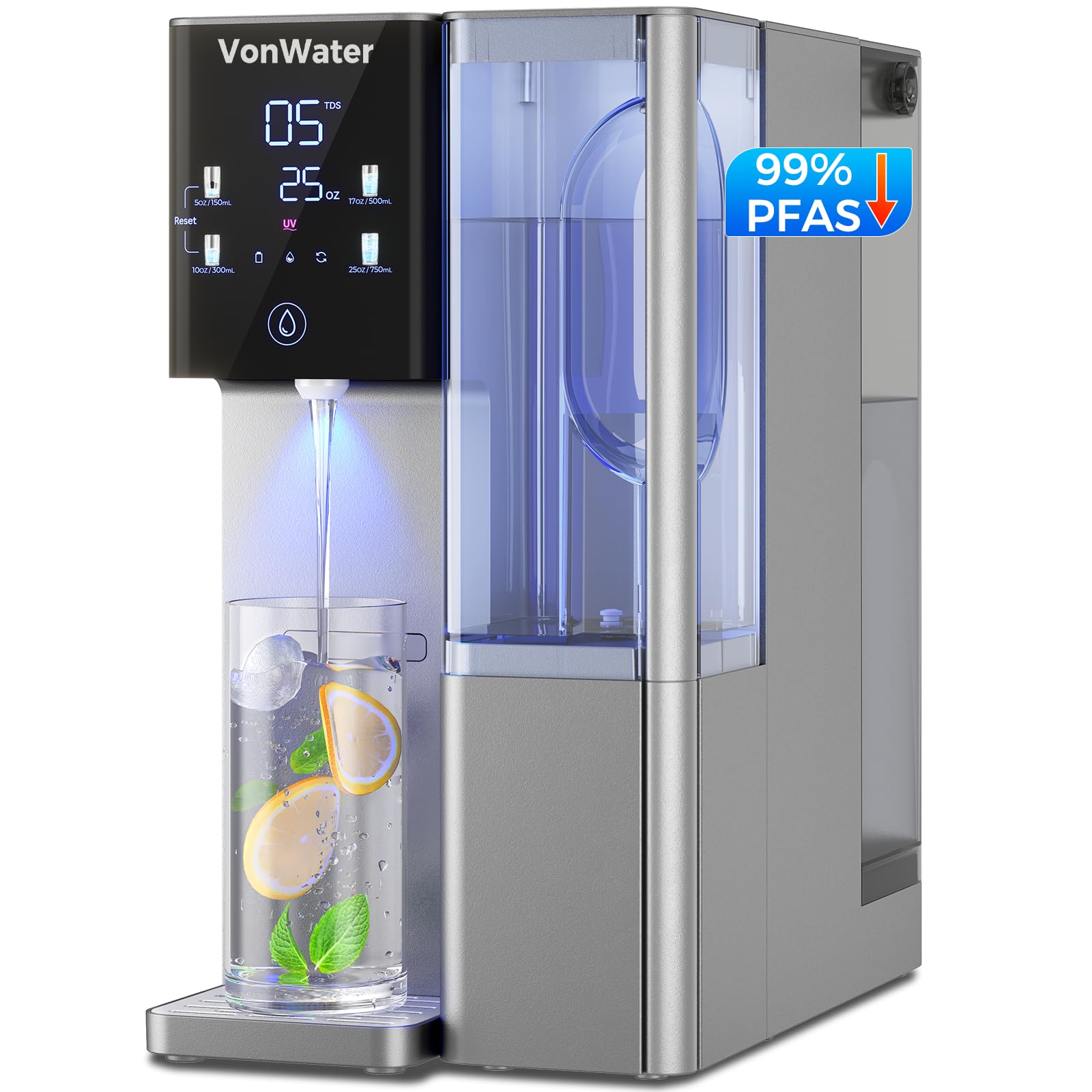
The VonWater CT910G is a seven-stage countertop reverse osmosis system that requires no permanent installation—just plug it in, fill the 5.5-liter feed tank, and it begins producing purified water automatically. It is constructed from BPA-free, lead-free materials and tested to NSF/ANSI Standards 372, 42, and 58. The 0.0001-micron RO membrane claims 99.99 percent reduction of arsenic, PFAS, heavy metals, chlorine, and fluoride. A standout convenience feature is the removable 1.2-liter auto-fill pitcher that can be stored in the refrigerator for chilled water, plus five programmable water volume options ranging from 5 ounces to unlimited dispensing.
Buyers frequently highlight the simplicity of setup and operation, with several noting that the system produces noticeably cleaner and fresher water from day one. The real-time TDS display and filter life indicator remove guesswork from maintenance—when the indicator flashes red, it is time to replace the filter. The 3:1 pure-to-drain ratio is more efficient than many traditional RO units, meaning less water goes down the drain. The system delivers 100 gallons per day, filling a 5-ounce cup in about eight seconds, which is competitive for a countertop design.
Some owners find the unit slightly bulky on the counter at 13.4 inches wide and 15.3 inches tall, and the feed tank must be topped off manually. A few users noted that the initial priming process takes one to two hours. The company provides 18 months of after-sales support and lifetime technical assistance, and customer service reviews are generally positive. If you rent your home or prefer not to modify your plumbing, the CT910G offers a complete RO solution with strong arsenic certification and the flexibility of a pitcher-based dispensing system.
Why it’s great
- NSF 58 certified with 7-stage filtration for broad contaminant removal
- Removable 1.2L auto-fill pitcher stores directly in the refrigerator
- Real-time TDS display and filter life indicator simplify maintenance
Good to know
- Manual refilling of the feed tank required; no direct plumbing connection
- Countertop footprint is larger than some competing countertop units
- Initial priming cycle takes one to two hours before first use
5. Ecoviva Mate 3
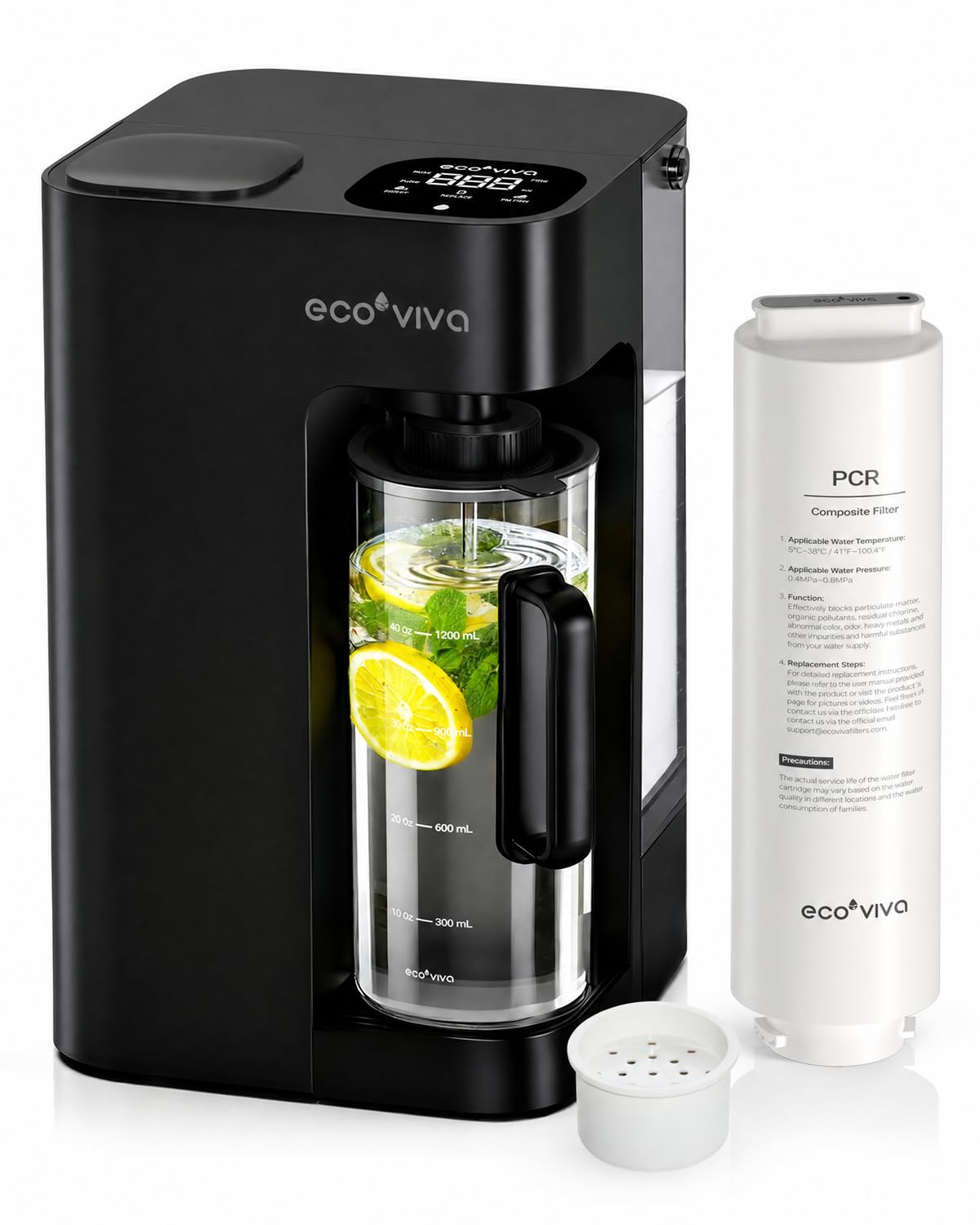
The Ecoviva Mate 3 is an eight-stage countertop reverse osmosis system designed for plug-and-play use with no installation required. Its compact 9 x 9-inch footprint and 5-liter raw water tank make it suitable for kitchens, RVs, and office spaces where under-sink access is unavailable. The filtration chain includes a PCR composite filter, a PPC dual technology stage, and a remineralization cartridge on the pitcher that adds minerals back for improved taste. The smart display shows real-time TDS and filter life, and the pitcher docks with the machine spout for hands-free auto-fill up to 44 ounces.
Reviews consistently praise the system for reducing tap water TDS from over 300 ppm to under 10 ppm, producing water that tastes clean and is noticeably lighter on coffee and tea. Owners of pets with health concerns—such as cats prone to urinary crystals—specifically mentioned buying this unit to avoid microplastics from gallon jugs. The self-cleaning cycle every 12 hours helps keep the membrane fresh. At a 3:1 pure-to-drain ratio, it is three times more efficient than older RO models, and the annual filter replacement cost is low enough that many users feel it pays for itself by replacing bottled water purchases.
Several users noted that the waste water volume during the purification cycle is higher than they expected, though the 3:1 ratio is still industry-leading for a countertop unit. The filter replacements were scheduled to become available starting June 2025, so early adopters should verify long-term supply. Ecoviva backs the unit with a five-year warranty (excluding filters) and responsive customer support. For those who want a smart, self-monitoring RO system that delivers certified arsenic reduction without drilling or plumbing, the Mate 3 is a compelling choice.
Why it’s great
- Eight-stage RO filtration with remineralization for balanced water taste
- Smart auto-fill pitcher with hands-free docking and real-time TDS display
- Self-cleaning cycle every 12 hours maintains membrane performance
Good to know
- Waste water volume during purification may seem high to new users
- Replacement filter availability started mid-2025; check current stock
- Raw water tank must be refilled manually between cycles
6. Aigerri Countertop RO with UV
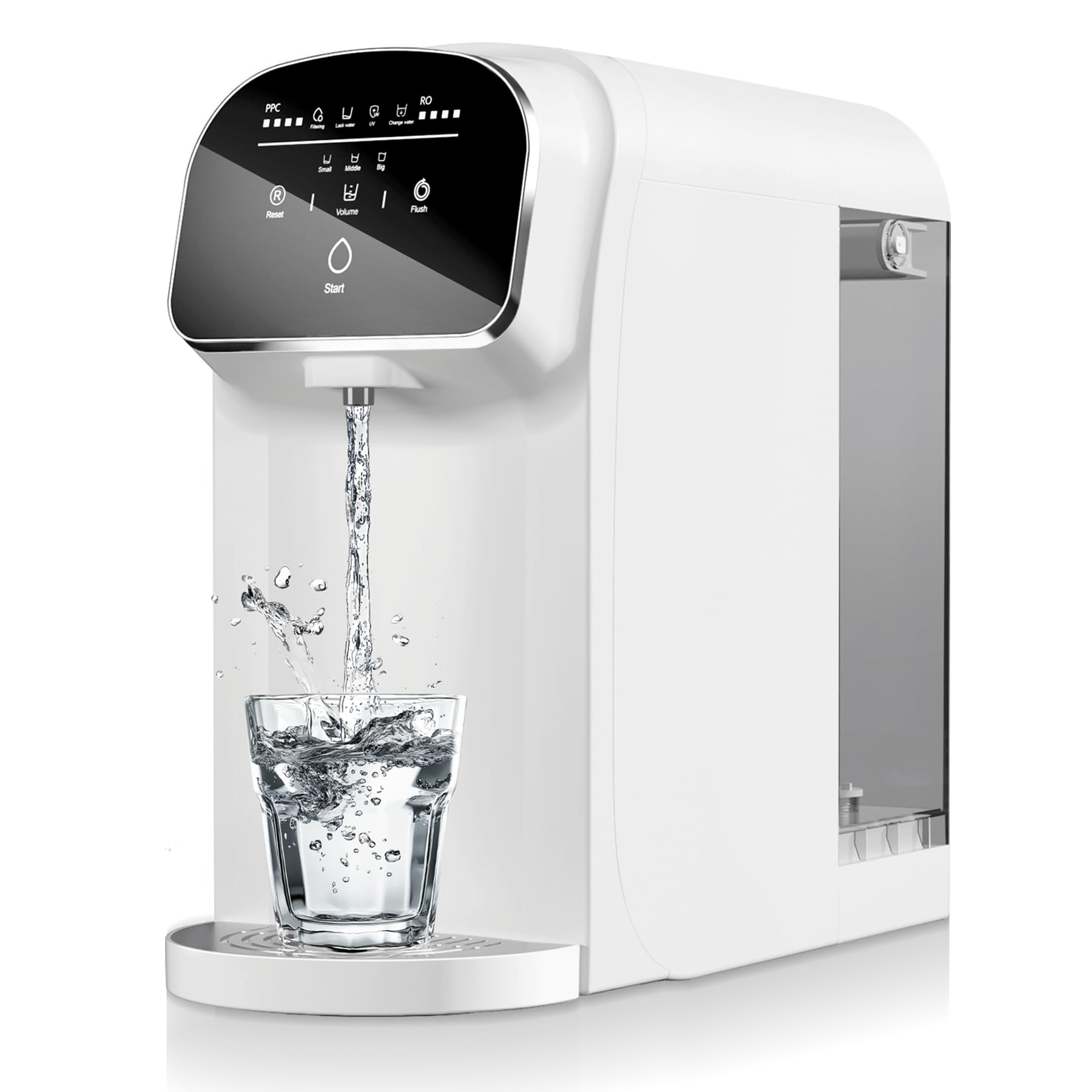
The Aigerri countertop RO system combines a five-stage reverse osmosis membrane with an integrated UV sterilization lamp, adding an extra layer of microbial protection that is uncommon in this price tier. It achieves a 5:1 pure-to-drain ratio—among the best in its class—meaning five cups of purified water for every one cup of waste water. The unit has a 5-liter raw water reservoir and a 2-liter purified water tank, and it is designed to deliver up to 529 gallons of filtered water across the included filter set. NSF/ANSI 372 certification confirms lead-free construction, and the system targets reduction of arsenic, PFAS, TDS, and heavy metals.
Owner feedback emphasizes the easy setup: simply unpack, plug in, and use the control panel to start filtration. Many reviewers note that the water clarity and taste improved dramatically compared to their previous tap or carbon filter water, and several users specifically mentioned using it for CPAP machines, coffee brewing, and infant formula. The compact design measures 7.4 inches deep by 16.2 inches wide, making it one of the slimmer countertop units available. The UV stage is a differentiator for anyone concerned about bacteria or viruses in addition to chemical contaminants.
The manual has been described as somewhat vague, and a few users found that the PPC and RO filters wore out faster than expected—likely due to high sediment in their local water supply. The control panel is touch-sensitive, which some users found overly responsive. The unit requires 22 inches of vertical clearance when the lid is open, so measure your under-cabinet space carefully. For households that want the highest available efficiency ratio combined with UV peace of mind, the Aigerri is a well-engineered mid-range pick.
Why it’s great
- 5:1 pure-to-drain ratio minimizes water waste significantly
- UV sterilization stage adds microbial protection beyond standard RO
- Compact 7.4-inch depth fits tight counter spaces and RVs
Good to know
- Filter lifespan may be shorter in areas with high sediment or TDS
- Touch-sensitive control panel can register accidental presses
- Requires 22 inches of vertical clearance when lid is fully opened
7. Travel Berkey with PF-2 Elements
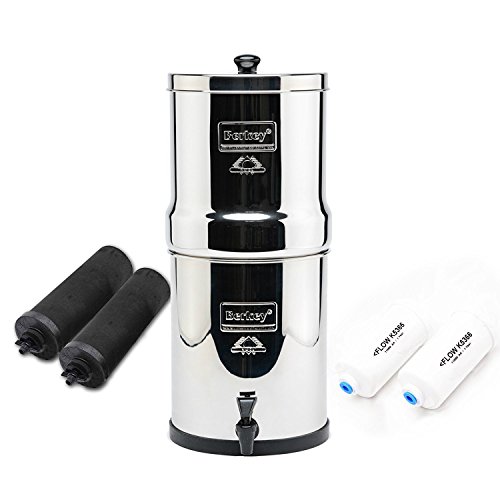
The Travel Berkey is a gravity-fed stainless steel water filter that requires no electricity, plumbing, or water pressure to operate. It uses two Black Berkey Elements to remove over 200 contaminants, and the included pair of PF-2 elements targets fluoride and arsenic specifically. The PF-2 elements are filled with an adsorption media designed to reduce arsenic through chemical bonding rather than RO membrane exclusion. The system holds 1.5 gallons in the upper chamber and filters at roughly 0.75 gallons per hour once the elements are properly primed. This makes it a viable option for off-grid homes, camping, RV travel, and emergency preparedness.
Long-term users frequently report that the water tastes remarkably clean and “like spring water,” and that the Black Berkey elements last up to 6,000 gallons each—potentially several years for a small household. Several reviews specifically mention buying the Travel Berkey to remove arsenic from well water and seeing measurable improvement. Assembly is straightforward, but the priming process can be finicky: the Black Berkey elements require manual priming with a rubber bulb, and the PF-2 elements need to be flushed through numerous tanks of water before the oily residue clears. Some users underestimated the effort required for initial preparation.
The main practical concern is that the Travel Berkey is relatively expensive upfront compared to RO systems with similar arsenic reduction claims, and the PF-2 elements need to be replaced approximately every year at additional cost. The 1.5-gallon capacity works for one to two people but requires frequent refilling for larger households. Berkey offers a lifetime warranty on the stainless steel chambers, and customer support is generally well-regarded. If you need arsenic reduction without depending on the electrical grid or municipal water pressure, the Travel Berkey with PF-2 elements is the most rugged, field-proven solution available.
Why it’s great
- PF-2 elements specifically formulated for fluoride and arsenic reduction
- No electricity, plumbing, or water pressure required for operation
- Black Berkey elements last up to 6,000 gallons per pair
Good to know
- Priming and initial flushing process is time-consuming and messy
- 1.5-gallon capacity requires frequent refilling for larger households
- High upfront cost; PF-2 elements add an annual consumable expense
8. Crown Berkey 6-Gallon
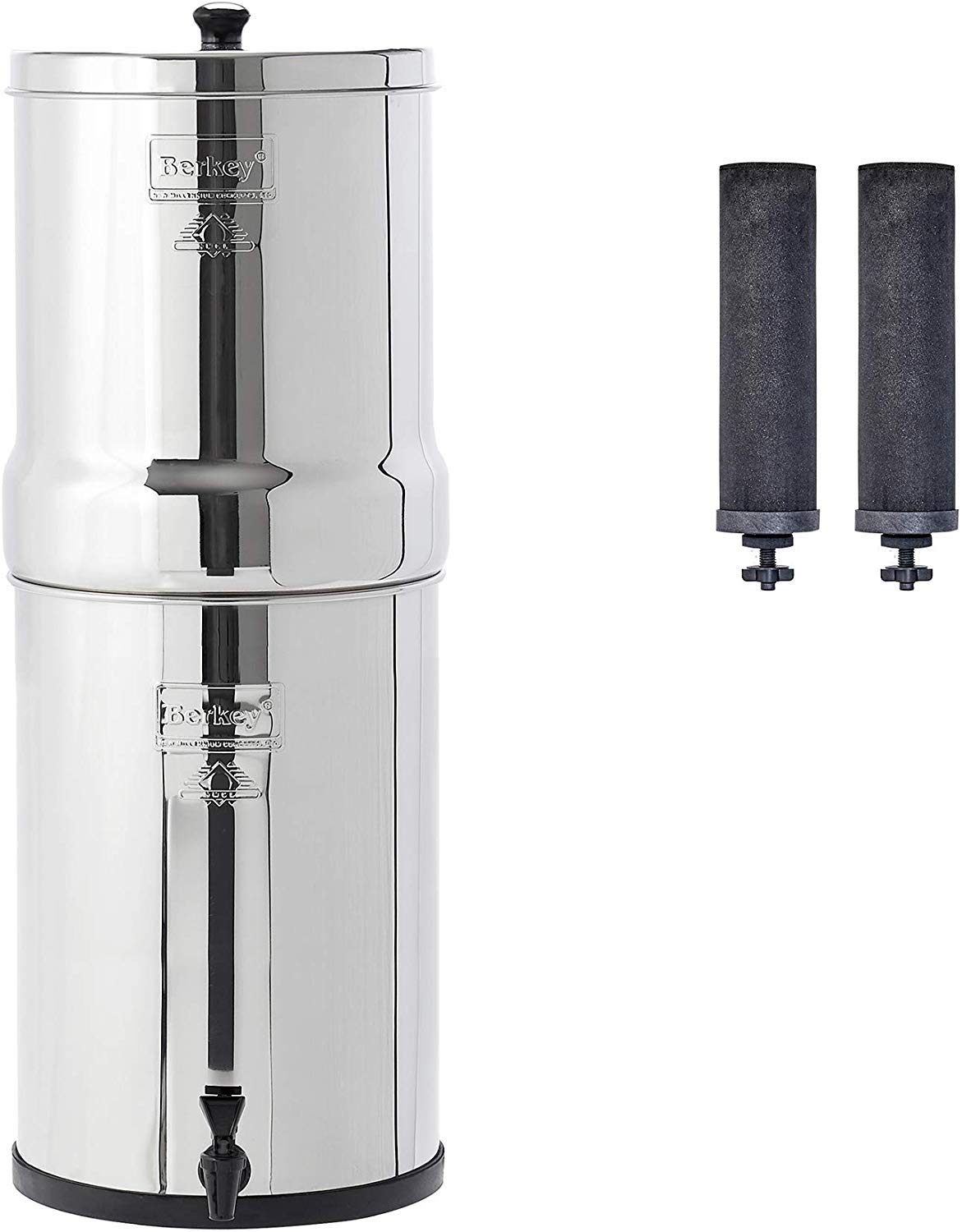
The Crown Berkey 6-Gallon system is the largest gravity-fed unit in the Berkey lineup, standing 30 inches tall and holding approximately 5 gallons of filtered water at a time. It ships with two authentic Black Berkey Elements (BB9-2) that remove or dramatically reduce over 250 contaminants, and like the Travel Berkey, it can be paired with optional PF-2 elements for arsenic and fluoride reduction. The stainless steel construction is durable and corrosion-resistant, and the system requires no electricity, making it suitable for both daily countertop use and emergency situations where power is unavailable.
Owners consistently mention the ability to produce enough clean water overnight for a family of four to six people. Many switched from expensive water delivery services or bulky bottled water storage and report significant long-term savings. The water clarity and taste are repeatedly praised as superior to tap and even to some under-sink RO units. Assembly is simple—the upper chamber sits on the lower chamber with the elements screwed in from above—though the priming process and initial flush (especially if using PF-2 elements) can take multiple tank cycles before the water runs clear and free of any residual taste.
A minority of users have reported leaks originating from the plastic spigot rather than the stainless steel body, and some have chosen to replace it with a higher-quality metal spigot. Berkey’s customer service has generally been responsive in sending replacement parts for these issues. The system is large and requires dedicated counter space or a sturdy table. For households that need high-volume gravity-fed filtration and want the option to add dedicated arsenic-reduction media, the Crown Berkey is the most capable non-electric solution available.
Why it’s great
- 6-gallon capacity provides filtered water for a family of 4–6 overnight
- Authentic BB9-2 Black Berkey Elements remove over 250 contaminants
- No electricity required; ideal for off-grid and emergency preparedness
Good to know
- Plastic spigot can leak over time; metal replacement may be needed
- 30-inch height requires dedicated counter or table space
- PF-2 elements for arsenic reduction are sold separately
9. Frizzlife DS99
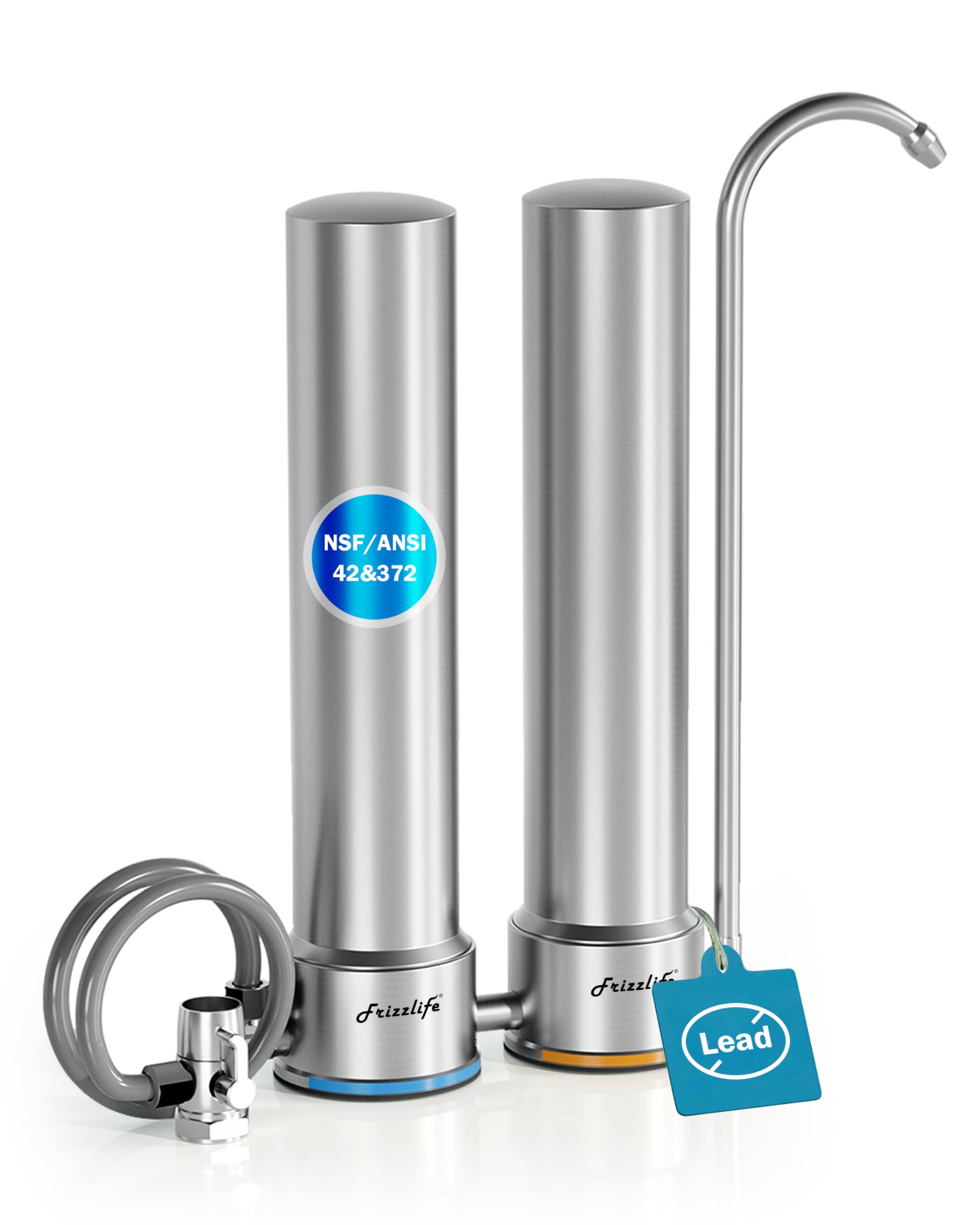
The Frizzlife DS99 is an eight-stage countertop filtration system built with a 304 stainless steel housing and a 0.5-micron carbon block filter. It uses KDF media combined with activated coconut shell carbon to reduce lead, chlorine, heavy metals, VOCs, and bad tastes and odors. The system delivers up to two gallons per minute at 60 psi, filling an 8-ounce cup in about two seconds. It installs by attaching a hose directly to the existing sink faucet using one of six included thread adapters, and a switch on the diverter valve lets you toggle between filtered and unfiltered water instantly.
Buyers frequently describe the installation as genuinely easy—taking roughly 5 to 15 minutes with no tools required—and the water taste improvement is noticeable, particularly the removal of chlorine. The 1mm thickened filter housings have passed 100,000-cycle water hammer tests, so build quality is solid for the price tier. The first-stage filter lasts up to 8 months, and the second stage lasts up to 12 months, with replacement cartridges sold separately at reasonable cost. Several users noted that a small amount of water dribbles from the filter outlet after shutting off the valve, but this is normal pressure release and drains into the sink.
The critical limitation is that the DS99 is not certified for arsenic removal. Its 0.5-micron pore size is far larger than the 0.0001-micron rating of an RO membrane, and it lacks the adsorption media specifically formulated for arsenic. The system excels at improving taste, reducing sediment, and lowering chlorine and lead, but should not be relied upon as a primary arsenic defense. For budget-conscious households whose water is tested low in arsenic but high in chlorine and sediment, the DS99 is an affordable taste and clarity upgrade.
Why it’s great
- Stainless steel 304 construction with 1mm thickened housing is very durable
- Ultra-fast 2 GPM flow rate fills glasses in seconds
- Tool-free 15-minute installation works with most standard faucets
Good to know
- Not certified or designed to remove arsenic from drinking water
- Filter outlet may drip briefly after shutoff due to residual pressure
- Not compatible with pull-down sprayer faucets
FAQ
Do countertop RO filters remove arsenic effectively?
Can a gravity-fed filter like Berkey remove arsenic?
What is the difference between Arsenic V and Arsenic III in water filtration?
Final Thoughts: The Verdict
For most users, the water filter to remove arsenic winner is the APEC Water ROES-50 because it combines NSF 58 certification, proven long-term durability, low operating costs, and a filter life that stretches up to 24 months. If you want alkaline remineralization for balanced pH and better taste, grab the iSpring RCC7AK. And for off-grid or no-electricity scenarios, nothing beats the Travel Berkey with PF-2 elements.