Choosing a pressure cooker that won’t leach chemicals into your family’s meals is harder than it looks, especially when marketing terms like “non-stick” and “stainless steel” blur the line between safe and suspect. The real challenge isn’t finding a pot that cooks fast—it’s finding one that cooks clean, using materials that have zero business being in your food. Every layer of coating, every gasket material, and every pot’s base metal directly impacts what ends up on your plate.
I’m Mohammad Maruf — the founder and writer behind AirfryerBite. I’ve spent years analyzing material safety data sheets, ceramic coating formulations, and stainless steel grades to help home cooks separate genuinely non-toxic cookware from cleverly marketed alternatives.
After evaluating dozens of pots for internal construction, sealing systems, and certified non-toxic materials, I’ve narrowed the field to seven models that prioritize your health. This guide breaks down the most important specs and safety features for choosing the best non toxic pressure cooker for your kitchen and your peace of mind.
How To Choose The Best Non Toxic Pressure Cooker
The safest pressure cooker starts with the pot material and ends with the gasket. Everything else—wattage, presets, capacity—is secondary if the cooking surface itself isn’t clean. Focus on these three factors first.
Pot Material: Why Stainless Steel and Ceramic Win
The inner pot is where your food directly contacts the cooker for the entire cooking cycle. Standard non-stick coatings rely on PTFE (polytetrafluoroethylene), a plastic-based chemical that can release fumes when overheated. Non-toxic options use either 18/10 or 304-grade stainless steel—a completely inert alloy—or a ceramic-based non-stick coating made from silicon and oxygen, not plastic. Stainless steel is indestructible and will never degrade into your food. Ceramic coatings chip under metal utensils but remain chemically neutral even when scratched. Never buy an electric pressure cooker whose inner pot is described only as “non-stick” without specifying it is ceramic or PFOA/PFAS-free.
Gasket and Seal Material: The Hidden Chemical Route
The sealing ring (gasket) in a pressure cooker handles extreme heat and pressure cycling. Most are made from silicone, which is inherently stable up to temperatures well above any pressure cooker’s maximum. However, cheaper models may use rubber blends or BPA-containing plastics for the lid assembly. Look for explicit “BPA-free” and “food-grade silicone” in the product specs. A silicone gasket that retains smells is annoying but safe; a plastic lid component that warps under heat is a direct health risk.
Electric vs. Stovetop: Which Construction Is Cleaner?
Electric pressure cookers (like the Instant Pot and Ninja listed below) use a removable inner pot that can be swapped for a stainless steel or ceramic version. Always verify the included pot material—some budget electric models include a PTFE-coated pot by default. Stovetop pressure cookers (like the WMF and Hawkins models) are almost always made of solid stainless steel or aluminum with a ceramic coating, with no separate inner pot to swap. Stovetop models generally offer fewer points of chemical exposure because the cooking chamber itself is the pot. For electric models, the safest configuration is a stainless steel inner pot paired with a stainless steel lid—no plastic contacting food at any stage.
Quick Comparison
On smaller screens, swipe sideways to see the full table.
| Model | Category | Best For | Key Spec | Amazon |
|---|---|---|---|---|
| Ninja HyperHeat 9-in-1 | Electric | Fast cooking with PFAS-free ceramic pot | 100% PFAS-Free Ceramic Nonstick Pot | Amazon |
| Instant Pot Duo 7-in-1 | Electric | Iconic electric with tri-ply stainless steel pot | 18/8 Stainless Steel Tri-Ply Bottom Pot | Amazon |
| Midea 12-in-1 | Electric | Large families needing stainless steel safety | 8 Qt Stainless Steel Inner Pot | Amazon |
| CARORI 12-in-1 | Electric | Versatile multi-cooker with stainless steel liner | 1200W, 70 kPa, Stainless Steel Pot | Amazon |
| Universal 6.3 Qt Stovetop | Stovetop | Stovetop versatility with induction compatibility | 11.6 PSI, 80 kPa, Pure Stainless | Amazon |
| Hawkins Ceramic Nonstick | Stovetop | Budget-friendly ceramic non-stick without PFAS | 5L, German Ceramic, No PFAS/Heavy Metals | Amazon |
| WMF Perfect Rapid | Stovetop | Premium German 18/10 stainless steel build | Cromargan 18/10, 2-Stage Cook Regulator | Amazon |
In‑Depth Reviews
1. Ninja HyperHeat 9-in-1 Electric Pressure Cooker (PC201)
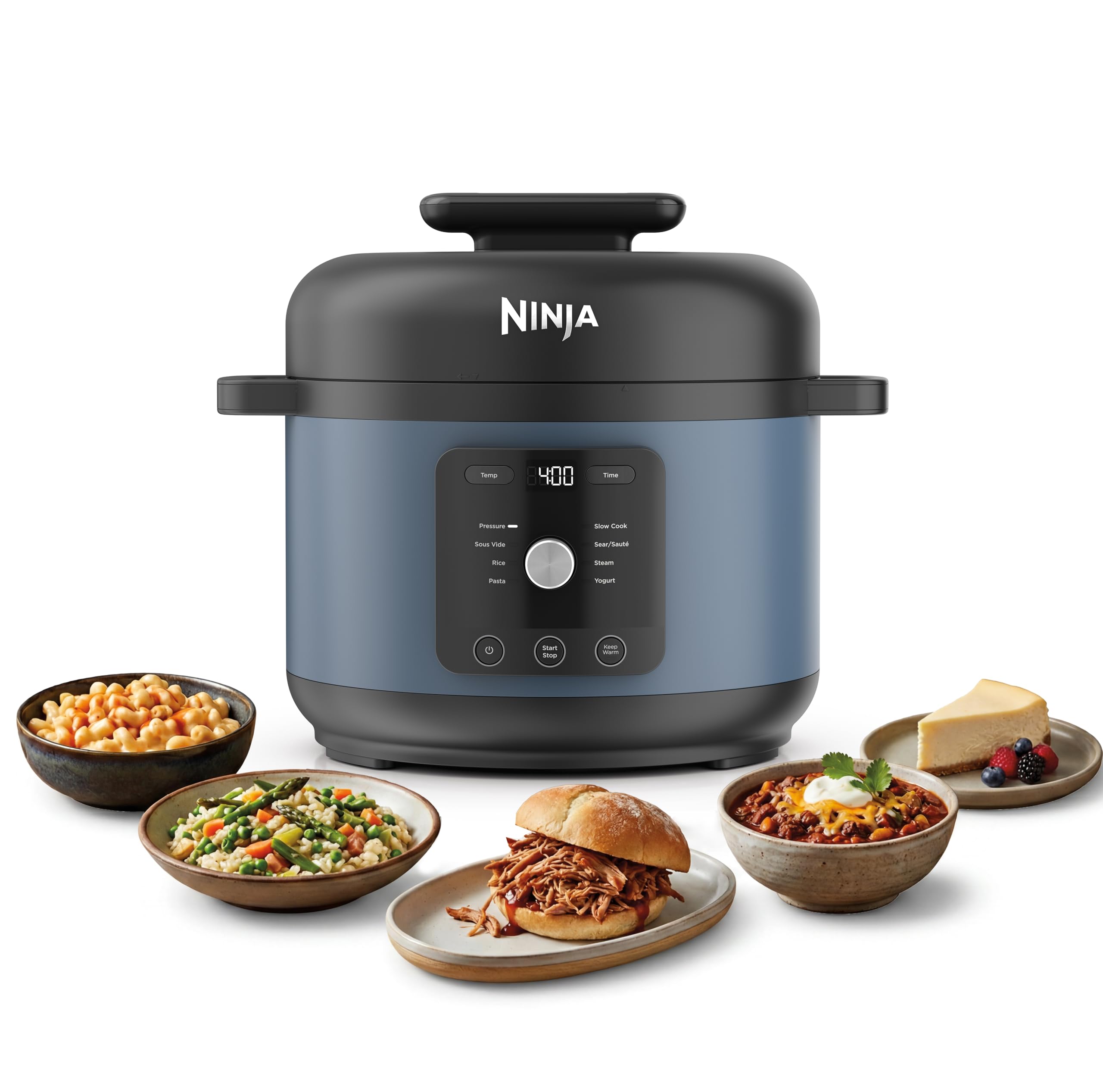
The Ninja HyperHeat is the only electric pressure cooker in this lineup that ships with a 100% PFAS-free ceramic non-stick pot as standard equipment. That’s a critical distinction: many electric cookers advertise “non-stick” without specifying whether the coating is ceramic (safe) or PTFE/PFOA-based (toxic when overheated). Ninja’s 6.5-quart removable SimpliServe pot uses a ceramic coating reinforced for high-heat searing and sautéing up to 338°F, and it wipes clean with zero chemical residue. The 1200-watt HyperHeat base builds pressure noticeably faster than the standard 1000-watt competitors, cutting cooking time by roughly 15-20% on dense foods like whole chickens and pot roasts.
The 9-in-1 functionality includes pressure cook, slow cook, rice cooker, sous vide, steamer, sear/sauté, yogurt maker, warmer, and sterilizer—matching the Instant Pot feature set but delivering more power. The wide 9.5-inch diameter cooking surface provides enough room to sear a 4-pound chicken without crowding, which creates deeper browning and richer flavor before the pressure cycle begins. Users consistently report that the silicone sealing ring does not absorb odors as aggressively as other electric models, likely due to the tighter seal and higher initial pressure build rate. The outer lid is dishwasher safe alongside the pot.
The main trade-off is the lack of a dedicated slow cook lid (you use the same pressure lid with the valve open) and no spare sealing ring included in the box. The ceramic coating is more fragile than stainless steel—metal tongs or abrasive pads will chip the surface over time. However, for anyone prioritizing a completely PFAS-free cooking surface without sacrificing speed, the Ninja HyperHeat is the most confident recommendation in the electric category right now. It outperforms the Instant Pot Duo in power and coating safety while matching its versality.
Why it’s great
- Explicitly PFAS-free ceramic non-stick pot is the safest coated option in the electric category
- 1200W heating system builds pressure faster than standard 1000W electric cookers
- Wide 9.5-inch cooking surface for superior searing before pressure cooking
- Silicone sealing ring resists odor absorption better than typical electric models
Good to know
- Ceramic coating is more delicate than stainless steel—use wooden or silicone utensils
- No dedicated slow cook lid included; the pressure lid must be used with valve open
- No spare sealing ring provided in the box
2. Instant Pot Duo 7-in-1 Electric Pressure Cooker (6 Qt)

The Instant Pot Duo is the benchmark electric pressure cooker for a reason: its 18/8 stainless steel inner pot with a tri-ply aluminum core is completely inert, food-safe, and virtually indestructible. There is no non-stick coating anywhere on the cooking surface, which means zero risk of PFAS, PFOA, or PTFE exposure, even at maximum temperature. The tri-ply construction provides even heat distribution across the entire 6-quart capacity, eliminating hot spots that can scorch dairy-heavy soups or chilis. The 1000-watt heating element is slightly less powerful than the Ninja’s, but it reaches the 11.6 PSI operating pressure reliably and maintains it within a narrow temperature band throughout the cooking cycle.
The 7-in-1 functionality covers pressure cook, slow cook, sauté, steam, rice, yogurt, and warm—fewer presets than the Midea or CARORI, but each mode is calibrated with the precision of a decade of user data. The Easy-Release steam switch allows both natural and quick release without disassembling the valve, which is a meaningful safety upgrade over older models. The stainless steel steaming rack is included, and the lid’s inner sealing ring is replaceable—a good thing, because the silicone will absorb strong odors like curry or chili after repeated use. Over 13 one-touch smart programs are available, but power users will likely default to the Manual pressure mode with custom time adjustments.
The key limitation for non-toxic shoppers: the lid is an assembly of stainless steel and plastic components. While the food-contacting surfaces are all metal, the steam release mechanism and handle include engineering plastics. These parts never contact food directly, but some users prefer an all-metal construction. The stainless steel pot will discolor with hard water and protein residue (a cosmetic issue, not a safety one), and the learning curve for pressure release timing is steeper than with more automated models. However, for durability and absolute material safety on the cooking surface, the Instant Pot Duo remains the most proven electric platform.
Why it’s great
- Tri-ply 18/8 stainless steel inner pot is completely inert with zero coating chemicals
- Proof-tested over a decade with hundreds of millions of cooking cycles
- Easy-Release steam switch enables safe hands-off pressure release
- Dishwasher-safe lid and pot simplify cleanup of a completely non-reactive surface
Good to know
- Stainless steel pot stains from hard water and protein—use Bar Keepers Friend
- Sealing ring absorbs strong odors and may need periodic replacement
- Plastic components in lid assembly, though no food contact occurs
3. Midea 12-in-1 Electric Pressure Cooker (8 Qt)

The Midea 12-in-1 delivers the largest cooking capacity in the electric tier—8 quarts of stainless steel inner pot space without any non-stick coating. Like the Instant Pot, the cooking surface is raw 304-grade stainless steel, meaning zero chemical migration into food at any temperature or pressure. The REALSAFE SYSTEM includes nine layers of protection (pressure limit, over-temperature, overpressure automatic release, anti-blockage, safety lock, lid detection, temperature fuse, pressure regulator, and anti-scorch), which makes this one of the most redundantly safe electric pressure cookers on the market for users who are nervous about pressure cooking. The 12-in-1 preset library covers the usual bases—pressure cook, sauté, steam, slow cook, oatmeal, soup, rice, bean/chili, yogurt—plus a sterilizer mode that is useful for meal-prep containers.
The 8-quart capacity is the strongest argument for the Midea. It handles a 6-pound roast or a whole chicken with room for vegetables underneath, making it the best option for batch-cooking families or anyone who wants to meal-prep a week’s worth of protein in one cycle. The stainless steel pot is noticeably lighter than the Instant Pot’s tri-ply construction, which makes it easier to handle when full but also slightly less effective at retaining heat during the sauté phase. Users report that the stainless base heats evenly for pressure cooking but may develop a brief hot spot in the center during open-lid searing. The lid and pot are both dishwasher safe, and the included accessories (rice ladle and measuring cup) are functional but basic.
The primary compromise is build refinement. The Midea’s control panel uses a push-button interface that feels less premium than the Instant Pot’s knob-and-button combo, and the lid alignment can be finicky during the first few uses. The lack of a tri-ply bottom means sautéing requires more attention to avoid sticking, especially with lean proteins. For non-toxic shoppers who need maximum capacity in an electric format with a verified stainless steel interior and a robust safety system, the Midea delivers at a lower investment point than the Ninja or Instant Pot.
Why it’s great
- 8-quart 304 stainless steel inner pot with zero coating—largest in the electric tier
- REALSAFE SYSTEM with nine independent safety mechanisms
- Sterilizer mode adds practical value beyond standard cooking presets
- Dishwasher-safe pot and lid for easy cleaning
Good to know
- Single-layer stainless pot can create hot spots during open-lid sautéing
- Lid alignment requires practice—takes a few cycles to seat smoothly
- Control interface is less refined than the Instant Pot’s system
4. CARORI 1200W 12-in-1 Electric Pressure Cooker (8 Qt)
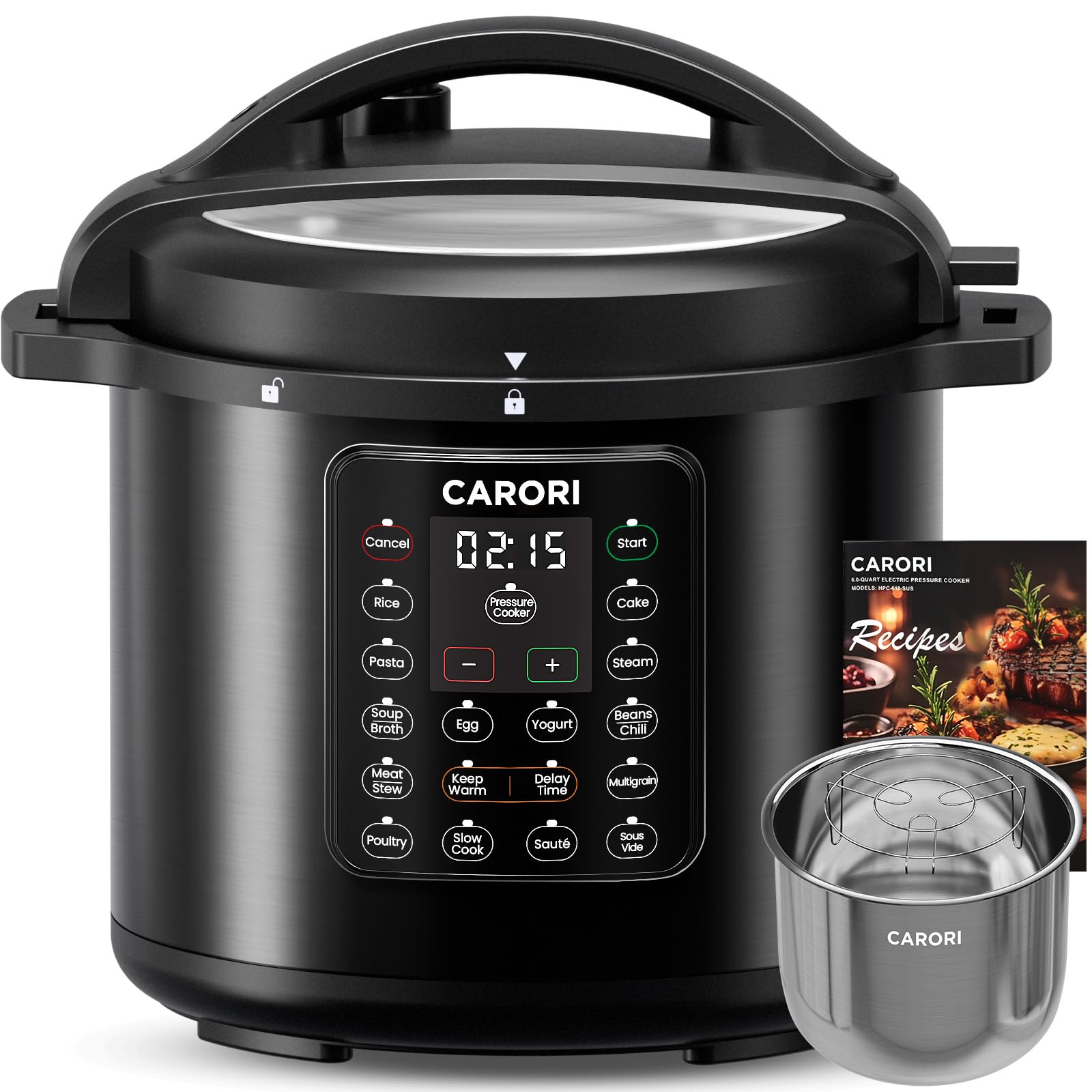
The CARORI 12-in-1 bridges the gap between budget electric pressure cookers and premium models by pairing a 1200-watt heating element with an included stainless steel inner pot. This is an important distinction: the product listing shows two pot variants—a stainless steel option and a ceramic non-stick option—and the stainless steel version is the one that qualifies as non-toxic. At 70 kPa (approximately 10.2 PSI), the CARORI runs at slightly lower pressure than the Instant Pot’s 11.6 PSI, which means cooking times are roughly 10% longer for dense foods like dried beans or whole roasts, but the 1200-watt base compensates by reaching pressure faster. The 8-quart capacity matches the Midea, serving up to eight people in a single batch.
The 12-in-1 preset library covers pressure cook, rice cooker, slow cooker, steamer, yogurt maker, food warmer, stock pot, and sterilizer—plus a sauté function that handles aromatics and browning before switching to pressure mode. The stainless steel pot is dishwasher safe, and the condensation cup collects overflow during high-pressure cooking. Users consistently praise the quick-release valve design, which vents steam in a controlled stream rather than an aggressive burst. The control panel uses push-button and touch controls with a digital display that shows real-time pressure status and temperature, which is more informative than the basic timer displays on some competitor models.
The trade-off is material refinement. The stainless steel pot is a single-layer construction, not tri-ply, so heat distribution during open-lid sautéing is less even than the Instant Pot’s bonded base. Some users report that the outer housing feels lighter than premium electric models, though the sealing mechanism is reliable. The included accessories (rice spoon, measuring cup, steaming rack) are adequate but feel budget-tier. For non-toxic shoppers who want a large-capacity electric pressure cooker with a stainless steel cooking surface and faster-than-average pressure build, the CARORI offers strong utility at a more accessible entry point.
Why it’s great
- 1200W heating element builds pressure quickly despite slightly lower 70 kPa max
- 8-quart stainless steel inner pot provides chemical-free cooking surface
- 12-in-1 functionality with informative digital pressure and temperature display
- Controlled quick-release valve design reduces steam burst intensity
Good to know
- Single-layer stainless pot may create hot spots during sautéing without liquid
- 70 kPa operating pressure adds roughly 10% cooking time vs. 11.6 PSI models
- Outer housing and accessories feel less substantial than premium electric cookers
5. Universal 6.3 Qt Stainless Steel Stovetop Pressure Cooker

The Universal stovetop pressure cooker is the simplest path to a fully inert cooking chamber: a solid stainless steel body with an included extra tempered glass lid for use as a standard stockpot. There is no non-stick coating, no plastic inner pot, and no heating element to fail—the vessel itself is the appliance. Construction is from 304-grade stainless steel with a thick encapsulated aluminum base for induction compatibility and even heat distribution across all stovetop types (gas, electric, halogen, vitro-ceramic, and induction). The pressure rating of 80 kPa (11.6 PSI) matches the Instant Pot’s operating pressure, ensuring identical cooking times for any recipe designed for an electric pressure cooker.
The 2-in-1 versatility is genuine: use the pressure lid for fast braises, stews, and beans, then swap to the glass lid for slow simmering, pasta boiling, or soup finishing. The 4-layer safety system includes an easy-lock lid, safety valve, secure lid window, and pressure release valve—all mechanical, with no electronics to misinterpret a signal. The silicone gasket is replaceable and food-grade, and the lid’s locking mechanism is intuitive even for first-time stovetop pressure cooker users. The 6.3-quart capacity (6 liters) is slightly smaller than the 8-quart electric models but handles 7 servings comfortably. The absence of electric components means zero plastic in the cooking zone, making this the most chemically minimal option in the lineup.
The main drawback is the manual operation. Unlike an electric model that manages pressure automatically, this pot requires you to adjust the stovetop heat once it reaches pressure, and you must manually time the cooking cycle. The first few uses involve a learning curve: finding the right burner setting to maintain steady pressure without tripping the safety valve takes practice. The stainless steel body heats up quickly but can also scorch dairy or sugar-based sauces if the heat is not managed correctly. For cooks who prefer total control and want a pressure cooker that contains absolutely no plastic in the cooking path, the Universal is a durable, transparent choice.
Why it’s great
- Fully stainless steel cooking chamber with zero plastic or coating in the food path
- Includes an extra tempered glass lid for standard stockpot use
- 80 kPa operating pressure matches electric cookers—recipes are interchangeable
- Induction-compatible encapsulated aluminum base works on all cooktop types
Good to know
- Manual heat management required—stovetop burners must be adjusted after reaching pressure
- Stainless steel is reactive to acidic foods if left in the pot after cooking
- No electronic timer or presets—set a separate kitchen timer for each recipe
6. Hawkins Ceramic Nonstick Pressure Cooker (5L)

The Hawkins Ceramic Nonstick Pressure Cooker is the only stovetop model in this lineup that uses a ceramic-based non-stick coating instead of bare stainless steel. The key distinction: this coating is explicitly certified as free of PFAS and heavy metals, using a German ceramic formulation that bonds to the aluminum body at high temperature. The ceramic surface allows cooking with significantly less oil—a genuine advantage for health-conscious cooks who want to reduce fat without dealing with protein sticking to stainless steel. The 5-liter capacity (approximately 5.3 quarts) serves 5 to 7 people, making it the most compact stovetop option in the group but still adequate for family meals. The Granite Contura shape provides a curved interior that promotes even heat distribution across the aluminum base.
The cooker uses an inner lid design—the lid fits inside the pot body rather than clamping over the rim. This is a traditional Indian pressure cooker design that allows for a more compact seal but creates a narrower opening for loading and unloading food. The ceramic coating is rated to handle high heat without degrading, which is a meaningful improvement over first-generation ceramic non-stick cookware that failed under sustained high temperatures. Users report that the ceramic surface releases food easily even with minimal oil, and cleanup is notably faster than stainless steel—no soaking required for stuck-on rice or dal.
The drawbacks are significant. The aluminum body, even with ceramic coating, raises questions for some non-toxic shoppers because aluminum is a reactive metal. While the ceramic layer isolates food from the aluminum, any chipping or scratching of the coating over time could expose the base metal. The cooker is explicitly not dishwasher safe, and multiple user reviews mention a loud pressure release noise that can be startling. The lid’s sealing mechanism requires firm alignment to close properly, and the noise during pressure release is louder than any other model in this roundup. For budget-conscious cooks who want a ceramic non-stick pressure cooker with verified PFAS-free construction, the Hawkins delivers on coating safety but requires careful handling and noise tolerance.
Why it’s great
- German ceramic coating is certified PFAS-free and heavy-metal-free
- Ceramic surface enables low-oil cooking with easy food release
- Compact 5-liter capacity suits 5-7 person meals without excess bulk
- Significantly faster cleanup than stainless steel—food slides off with a rinse
Good to know
- Aluminum base—ceramic coating isolates food, but chips could expose reactive metal
- Not dishwasher safe; hand washing required to preserve ceramic layer
- Inner lid design creates a narrow opening and produces loud pressure release sounds
7. WMF Perfect Rapid Cooker (6.5L)

The WMF Perfect Rapid Cooker represents the highest standard of material purity in this roundup. Its vessel is forged from Cromargan 18/10 stainless steel—a proprietary WMF alloy containing 18% chromium and 10% nickel, with the remaining 72% being high-grade steel. This is the same corrosion-resistant, hygienic, and completely inert material used in WMF’s professional restaurant cookware. There is no coating, no aluminum core, and no plastic lining anywhere in the cooking chamber. The 6.5-liter capacity (22 cm diameter, 18.5 cm height) is optimized for the TransTherm base, a layered disc that distributes heat across the entire bottom surface for even cooking on any cooktop, including induction. The polished stainless steel finish is dishwasher safe and will look identical after a decade of use.
The 2-stage cooking regulator is the engineering highlight. It offers two distinct temperature settings: 110°C (gentle setting) for delicate vegetables and fish, and 129°C (intensive setting) for meats, potatoes, and stews. The extra-large cooking indicator on the lid handle shows the current pressure stage visually, so there is no guesswork about when to reduce heat. The 5-stage safety system includes TÜV certification (German Technical Inspection Association), an automatic steam release mechanism, and a small residual pressure indicator that physically prevents opening the lid until all pressure has dissipated. Unlike the plastic-heavy safety systems on some electric models, the WMF’s components are predominantly metal, with only the sealing ring and removable lid handle using plastic (neither is dishwasher safe).
The cost is the highest in this guide by a significant margin, and the value proposition is specific: you are paying for German manufacturing tolerances, an alloy that will outlast any electric appliance, and a cooking regulator that delivers truly differentiated results for delicate versus tough ingredients. Some user reports mention noise during the initial pressure build phase—the cooker is not silent—and one review describes a handle breaking upon arrival, which suggests quality control can occasionally falter at the unit level. The lack of any non-stick coating means that starchy dishes like risotto or oatmeal will require attention and stirring to prevent sticking. For the most chemically discerning cook who wants a pressure cooker that is essentially heirloom-quality metal with no chemical trade-offs, the WMF is the gold standard.
Why it’s great
- Cromargan 18/10 stainless steel is the most inert, corrosion-resistant pot material available
- 2-stage cooking regulator gives genuine temperature differentiation for delicate vs. intense cooking
- TransTherm base ensures even heat distribution across all cooktop types including induction
- TÜV-certified 5-stage safety system with mechanical residual pressure lock prevents premature opening
Good to know
- Highest investment in this guide—reflects German engineering and premium alloy costs
- Stainless steel requires attention to prevent sticking with starchy dishes like rice or oatmeal
- Plastic lid handle and sealing ring are not dishwasher safe despite the pot being dishwasher safe
FAQ
Is a pressure cooker with a stainless steel inner pot automatically non-toxic?
Can a ceramic non-stick pressure cooker be considered safer than stainless steel?
Does the pressure cooker gasket leach chemicals into food?
How can I tell if an electric pressure cooker’s inner pot is truly stainless steel or just coated to look like it?
Final Thoughts: The Verdict
For most users, the non toxic pressure cooker winner is the Ninja HyperHeat 9-in-1 because its 100% PFAS-free ceramic non-stick pot delivers the best balance of safety, speed, and cleaning ease in an electric format. If you want the absolute material purity of a fully inert cooking chamber with zero coating risk, grab the Instant Pot Duo with its tri-ply stainless steel pot and decade of user reliability data. And for stovetop purists who demand heirloom-quality construction and the lowest possible chemical exposure path, nothing beats the WMF Perfect Rapid Cooker with its Cromargan 18/10 alloy and German mechanical engineering.