Walking into a kitchen store and seeing rows of “wood” boards labeled as organic or natural means little when the glue, finish, or species used can leach synthetic chemicals into your evening meal. The real test for a safe wooden board is whether the wood itself is untreated and sealed with nothing more than food-grade oil or wax.
I’m Mohammad Maruf — the founder and writer behind AirfryerBite. I’ve spent years analyzing the material science behind kitchen tools, focusing on how grain structure, wood density, and finishing compounds affect both knife longevity and the purity of your food.
This guide cuts through the marketing to identify the non toxic wood cutting boards that actually meet the standard of food-safe construction and durable daily use.
How To Choose The Best Non Toxic Wood Cutting Boards
Choosing a safe wooden board requires looking past the label to the actual material and finish. Many boards labeled “natural” still use synthetic sealers that can chip into your food over time. Focus on these three elements: the raw wood species, the grain orientation, and the finishing substance.
Wood Species and Grain Orientation
Hardwoods like maple, walnut, and olive are naturally dense and resist moisture absorption, reducing the chance of bacterial growth without needing chemical treatments. End-grain construction, where the wood fibers run vertically, allows knife blades to slide between fibers rather than cut through them, which keeps your knives sharper longer and lets the board “self-heal” after cuts. Edge-grain boards are more affordable but will show knife marks sooner and require more frequent oiling to stay sealed.
Finish and Maintenance Required
A truly non toxic board is finished with nothing more than food-grade mineral oil, beeswax, or a blend of both. Any board that arrives with a glossy, hard-sealed surface likely uses a synthetic urethane or lacquer. Wood boards must be oiled regularly — typically every two to four weeks — to maintain their moisture barrier. Skipping this step causes the wood to dry out, crack, and become a harbor for bacteria.
Quick Comparison
On smaller screens, swipe sideways to see the full table.
| Model | Category | Best For | Key Spec | Amazon |
|---|---|---|---|---|
| Sonder Los Angeles Alfred | Premium End Grain | Organized meal prep with sorting wells | 17x13x1.5 in Black Walnut End Grain | Amazon |
| BABILONIA Black Walnut | Premium End Grain | Heavy-duty chopping with juice groove | 19.7×12.2×1.7 in Walnut End Grain | Amazon |
| Artistic Chef’s Kitchen | Artisan End Grain | Visual appeal and charcuterie serving | 15.5×11.5×1.1 in Walnut End Grain | Amazon |
| CONSDAN Hard Maple | Edge Grain | Large surface with built-in handles | 20x15x1.5 in Maple Edge Grain | Amazon |
| John Boos B Series | Edge Grain | Compact square prep with professional build | 12x12x1.5 in Maple Edge Grain | Amazon |
| Winco WCB-1824 | Oversized Board | Maximal counter coverage for small kitchens | 24x18x1.75 in Rubberwood | Amazon |
| Naturally Med Olive Wood | Artisan Single Piece | Small chopping and cheese presentation | 14×8.27×0.79 in Olive Wood | Amazon |
In‑Depth Reviews
1. Sonder Los Angeles Alfred Cutting Board
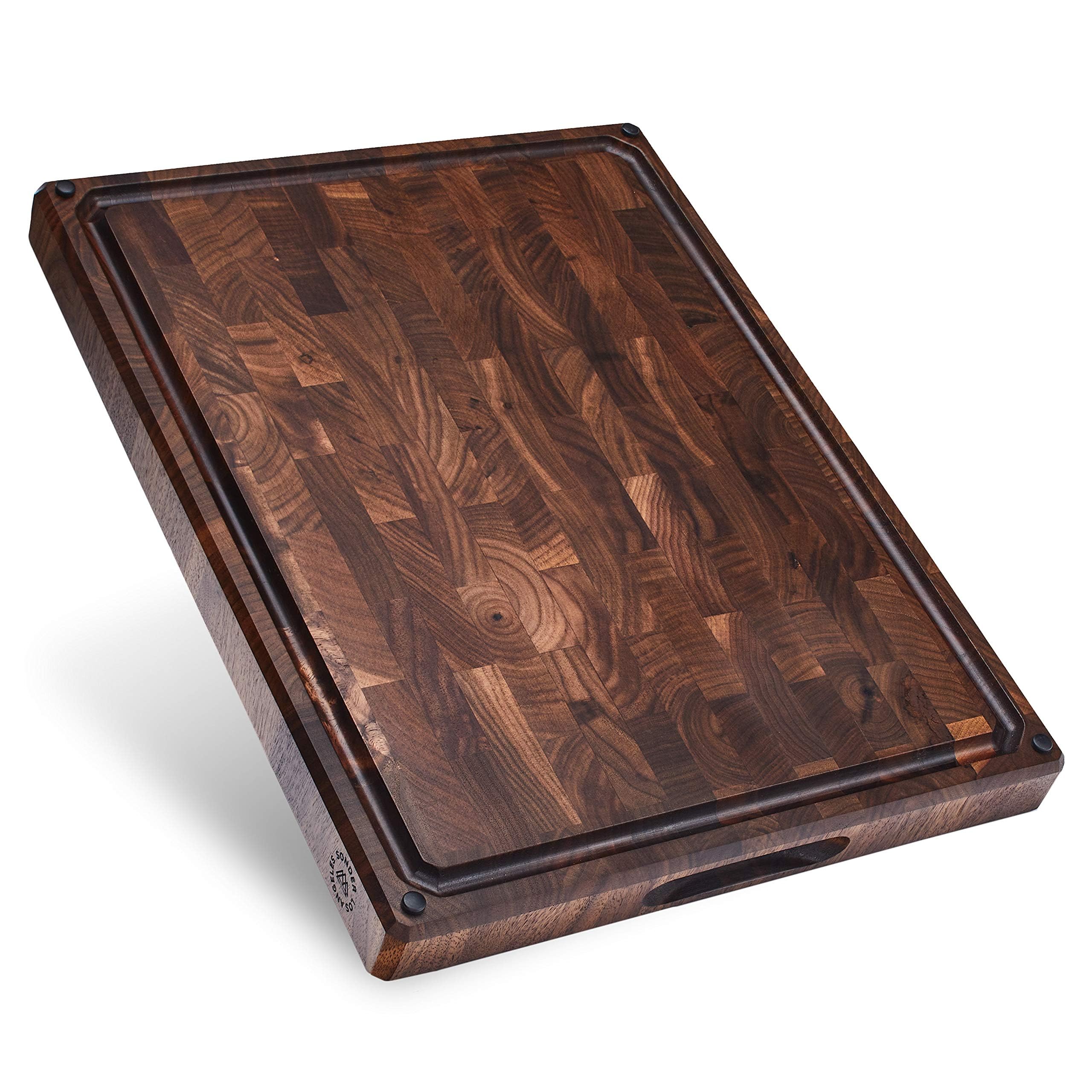
This American-made board uses true end-grain Black Walnut, meaning each cut slides between the wood fibers rather than shearing them. The result is a surface that “self-heals” over time, keeping knife edges sharper and the board looking newer for longer. At 1.5 inches thick and 7.5 pounds, it’s heavy enough to stay planted during aggressive chopping without needing a damp towel underneath.
The built-in sorting compartments and a deep 3.5 fluid-ounce juice groove make it especially useful for multi-ingredient prep. Sliced tomatoes, diced onions, and minced herbs can each sit in their own well, while the groove catches runoff from juicy meats or ripe fruit. Removable non-slip feet add stability, and the board ships in a gift box with care instructions emphasizing hand washing and oiling every two to three weeks.
Users consistently note the board’s smooth, silky finish right out of the box and the absence of any synthetic film. Several long-term owners report no warping or splitting after months of daily use, provided they follow the oiling routine. The only trade-off is that the sorting wells reduce the flat cutting area slightly compared to a solid rectangle of the same outer dimensions.
Why it’s great
- End-grain Walnut is exceptionally knife-friendly and self-healing after cuts
- Built-in sorting wells and deep juice groove improve multi-item prep workflow
- Non-slip rubber feet and side finger grooves for secure handling
Good to know
- Sorting wells slightly reduce the usable flat surface area
- Requires oiling every two to three weeks to maintain moisture barrier
2. BABILONIA American Black Walnut Cutting Board
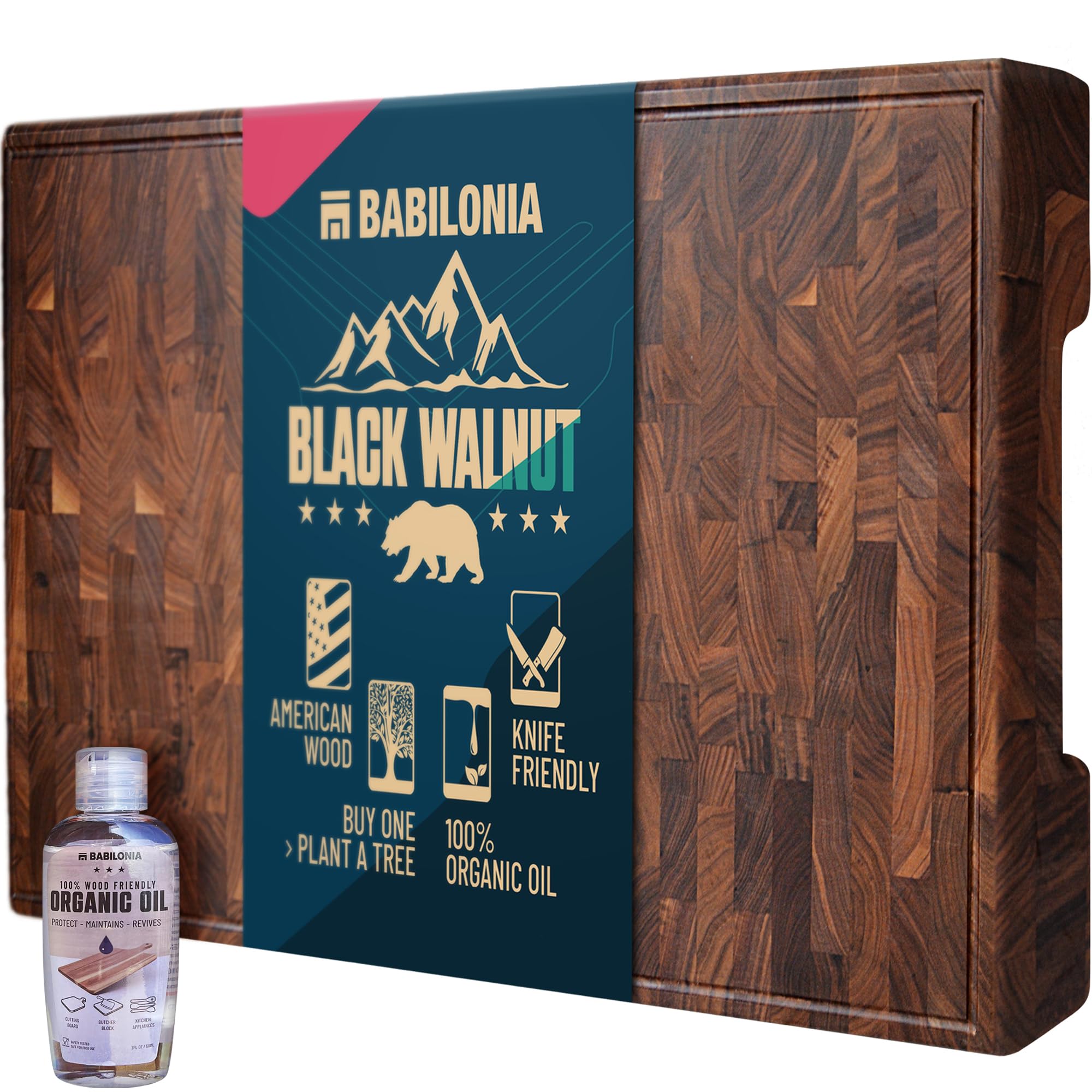
At 1.7 inches thick and just shy of 20 inches long, this board is built for volume. The end-grain Black Walnut construction offers the same knife-dulling resistance and self-healing properties as the Sonder board but with a broader surface area suitable for breaking down large cuts of meat or multiple heads of vegetables at once. It weighs 8.8 pounds, so it stays put on the counter without shifting.
This board comes pre-seasoned with food-grade mineral oil and includes a free bottle of organic oil and a small plate for serving. The reversible design means one side functions as a traditional chopping surface while the other features a notch and plate slot for sliding chopped ingredients directly into a bowl — a thoughtful detail for cooks who hate stopping mid-prep. Rubber feet on the bottom protect your countertops from scratches and moisture.
Owners praise the visual warmth of the walnut grain and report that the board resists showing deep cut marks even after heavy use. One reviewer did experience a split after two months but noted the manufacturer replaced it quickly after explaining the likely causes. Consistent with all wood boards, it must be hand washed and oiled regularly; skipping this step can lead to drying and cracking.
Why it’s great
- Oversized 19.7-inch surface handles large meal prep tasks
- Includes free organic oil and plate for immediate use and serving
- Reversible design with a notch for sliding food into bowls
Good to know
- Heavy at 8.8 pounds, may be cumbersome to lift and wash
- A few units arrived with minor finish inconsistencies despite overall high quality
3. Artistic Chef’s Kitchen End Grain Cutting Board
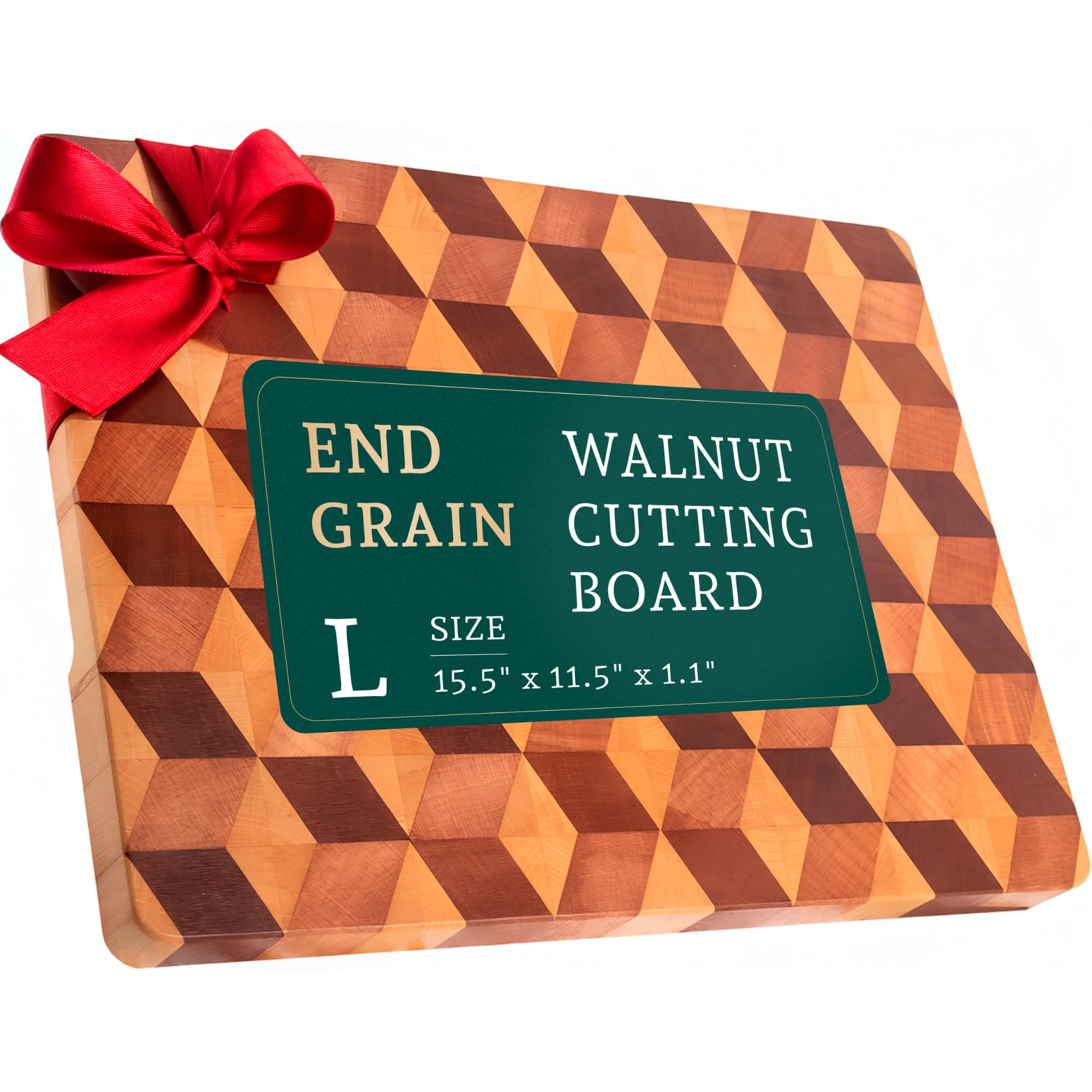
This handcrafted board combines Walnut, Ebony, and Beech woods into a visually striking end-grain pattern that looks more like fine woodworking than a simple kitchen tool. The end-grain orientation keeps knives gliding between the fibers, preserving their edge while the board’s surface naturally closes up after each cut. At 1.1 inches thick and 2.55 kilograms, it’s lighter than the premium end-grain options, striking a middle ground between sturdiness and portability.
Four non-slip rubber feet on the underside prevent sliding, and two side handles make carrying the board to the sink or serving table easy. The board is exclusively finished with food-grade oil — no varnish or synthetic lacquer — making it a truly non toxic option right out of the box. Due to the natural variation in wood grain, every board has a slightly unique pattern, which adds to its appeal as a gift or display piece.
User reviews highlight its dual role as a prep board and a charcuterie serving platter. A few buyers noted that the thickness is less than premium competitors, but they also pointed out that the lighter weight makes it easier to handle. Multiple applications of mineral oil before first use are recommended, as the end-grain can be thirsty. The 3D-like pattern collects oil in the crevices, so wiping it clean after oiling requires a bit more attention.
Why it’s great
- Distinctive three-wood pattern adds visual warmth to any counter
- End-grain construction is gentle on knives and self-heals over time
- Includes non-slip feet and side handles for secure use and transport
Good to know
- At 1.1 inches thick, it’s less substantial than thicker end-grain boards
- Multiple oiling sessions required before first use due to end-grain absorption
4. CONSDAN Hard Maple Cutting Board
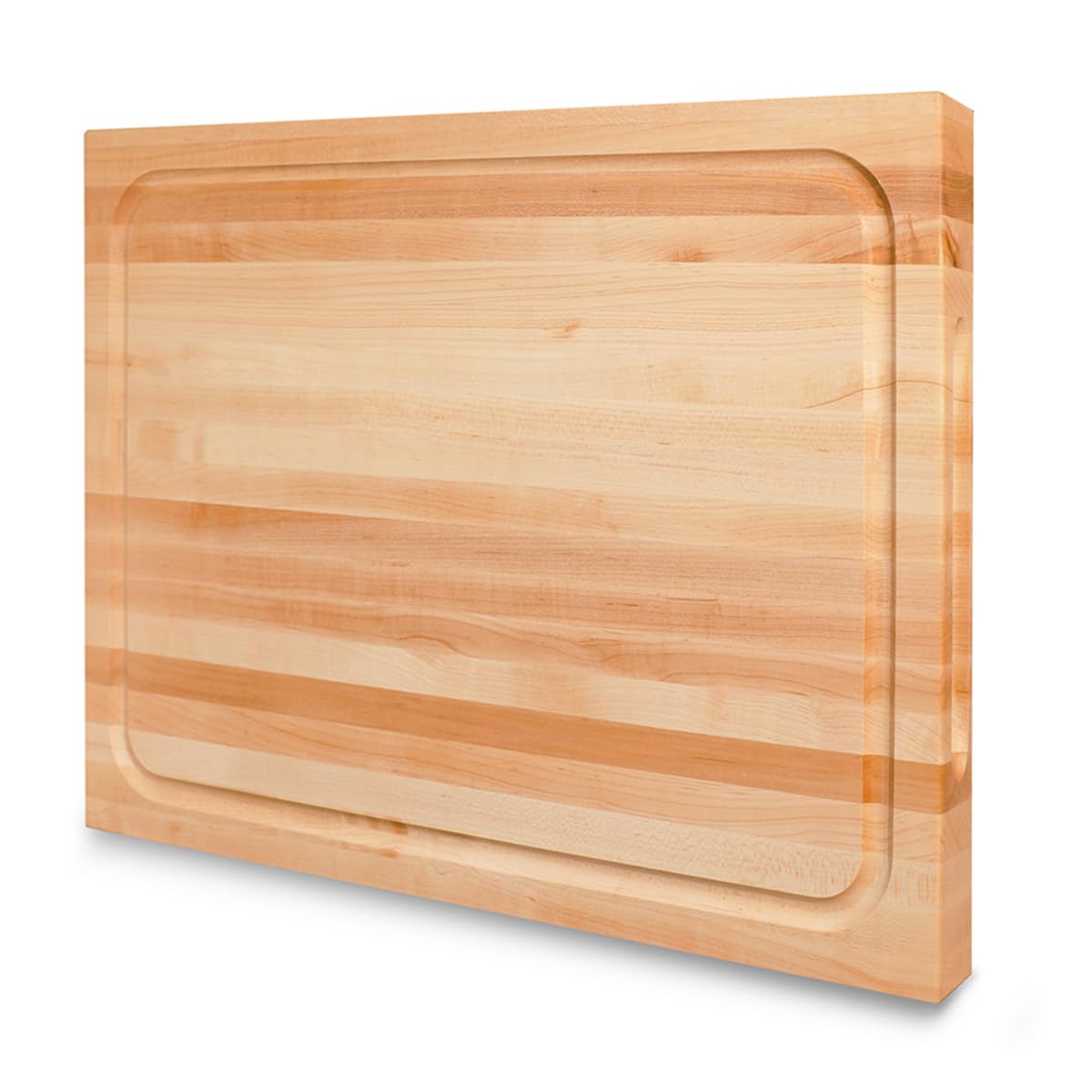
This 20-by-15-inch board is the largest in the edge-grain category here, made from solid American Hard Maple with a tight, closed grain that resists absorbing moisture and odors. The surface is pre-finished with a food-grade wax oil — no synthetic sealers — which meets the non toxic criteria while providing a smooth working surface that’s gentle on knife edges. Invisible inner handle grooves on both sides allow for easy lifting even though the board weighs 13.3 pounds.
A deep perimeter juice groove captures liquids from meat, fruit, and vegetables, keeping countertops clean during prep. The rectangular shape fits over a sink or stove in small kitchens, effectively adding counter space when not in use. The board’s edge-grain construction makes it more affordable than end-grain of the same size, though it will show knife marks more readily and may require slightly more frequent oiling to maintain its sealed finish.
Buyers frequently mention the board’s heft and how flat it remains over time — no warping or cupping reported even after months of daily use. A few users noted that the initial scuffing from shipping cleaned up easily with wood wax. The lifetime warranty against defects in materials and workmanship adds peace of mind, though the warranty excludes damage from misuse or natural wear. Hand wash only, and oil every two to four weeks.
Why it’s great
- Large 20×15 surface area with deep juice groove for mess-free prep
- Invisible edge handles make lifting and carrying easy
- Lifetime warranty on materials and workmanship
Good to know
- Edge-grain construction shows knife marks more visibly than end-grain
- At 13.3 pounds, it’s quite heavy for regular sink washing
5. John Boos B Series Square Maple Board
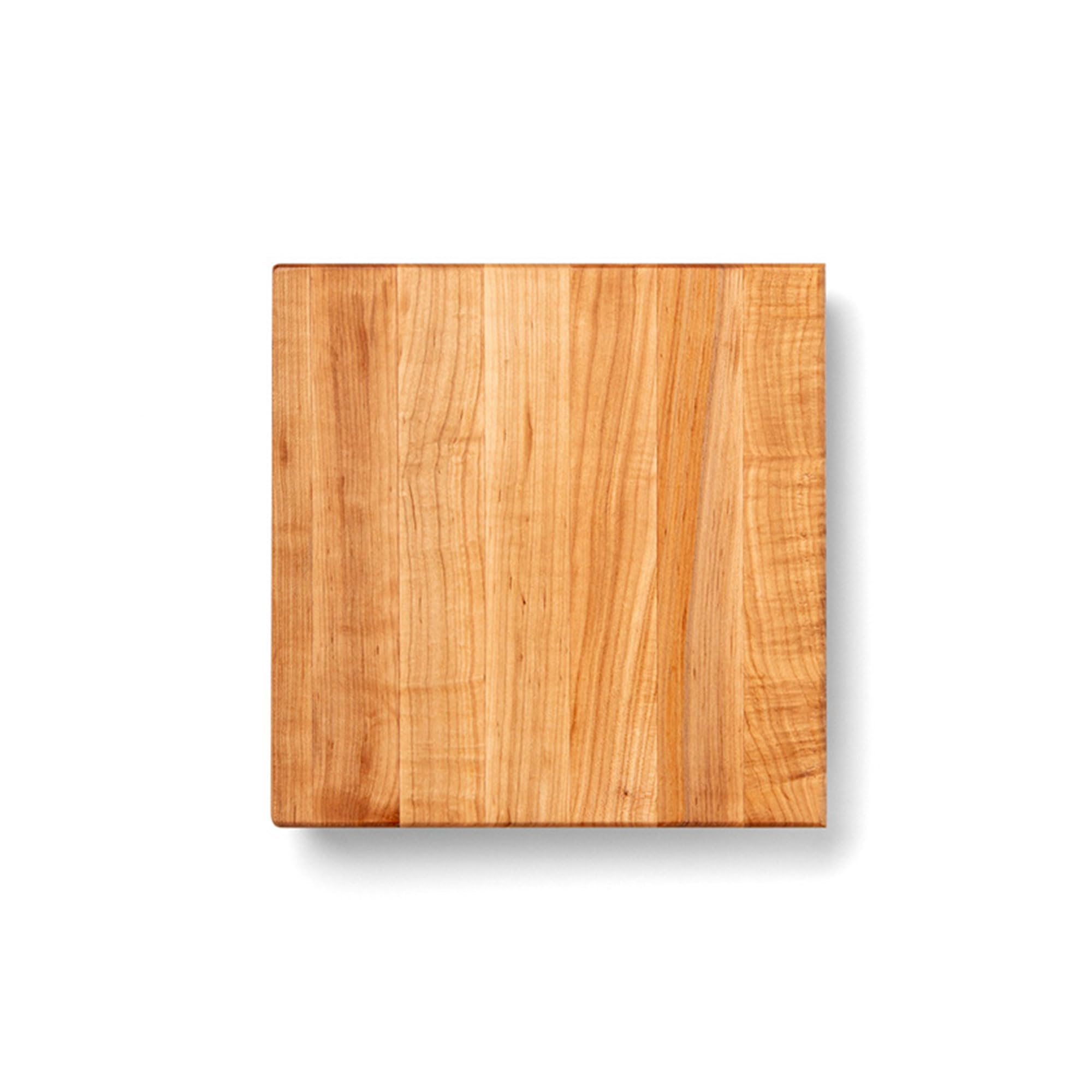
John Boos has been a staple in professional kitchens since 1887, and this 12-inch square board brings that commercial-grade build to the home counter. It’s edge-grain Northern Maple, 1.5 inches thick, with an oil finish that leaves the wood bare of any synthetic coatings. The raised bun feet keep the board elevated for airflow underneath, preventing moisture buildup and allowing for easy pickup.
At 6 pounds, this board is lighter than many of the larger options but still heavy enough to resist sliding during aggressive chopping. The square shape is ideal for two-person meal prep — enough room for a few vegetables and a protein but compact enough to store in a cabinet or leave on a small island. Maple is naturally harder than walnut, which means it’s more resistant to deep gouging but slightly less forgiving on knife edges than end-grain.
Customer reviews consistently call out the board’s professional-grade feel and the inclusion of a small bottle of Boos Block Mystery Oil with the purchase. Long-term users emphasize that regular oiling — about once a week for the first month, then every two weeks — is necessary to prevent drying. A few noted that the board can show knife marks over time, but that is typical for edge-grain maple. It is not dishwasher safe and should be hand washed only.
Why it’s great
- Professional-grade edge-grain maple resists deep cutting and warping
- Raised bun feet allow airflow and prevent countertop moisture damage
- Compact 12-inch square fits well in small kitchens or for quick prep
Good to know
- Edge-grain maple will show knife marks with regular use
- Requires weekly oiling at first to maintain proper moisture levels
6. Winco WCB-1824 Wooden Cutting Board

This board prioritizes sheer surface area above all else. At 24 inches by 18 inches and 1.75 inches thick, it’s large enough to cover a double-basin sink, effectively creating an extended counter space in a tiny kitchen. It’s made from rubberwood — a dense, eco-friendly hardwood that is naturally resistant to moisture absorption — and finished with a food-safe oil, making it a truly non toxic choice for those who need maximum working room.
The board weighs 17.8 pounds, meaning it will not slide or shift during heavy use. The substantial thickness also means it can double as a heat-safe platform for hot pots or appliances. Rubberwood is harder than both maple and walnut, which makes it very durable but also slightly harder on knife edges over the long term. It’s recommended for cooks who prioritize a massive stable work surface over preserving the absolute sharpest edge on their knives.
Buyers commonly use this board to cover their sink, creating an island-like work area in apartments with limited counter space. The eco-friendly tag is genuine — rubberwood is a byproduct of latex production, making it a sustainable hardwood choice. A few customers reported minor damage to the corners during shipping due to the board’s size, but the overwhelming consensus is that the dimensions and build quality justify the purchase for anyone who needs a serious prep surface.
Why it’s great
- Massive 24×18 surface covers sinks and creates counter space
- Eco-friendly rubberwood is dense, durable, and moisture-resistant
- Stays flat and stable at nearly 18 pounds
Good to know
- Hard rubberwood composition is tougher on knife edges than maple or walnut
- Large size can be cumbersome to wash and store
7. Naturally Med Olive Wood Board

Handcrafted from a single piece of olive wood, this board showcases natural grain patterns that no two buyers receive exactly alike. Olive wood is one of the hardest fruitwoods available, with a natural density that repels moisture and bacteria without any chemical treatment. At roughly 14 inches long and 0.79 inches thick, it’s best suited for small chopping tasks — a few cloves of garlic, a wedge of cheese, or a single fruit — rather than whole-meal prep.
The wood comes with no varnish or synthetic finish; it is simply sanded smooth and left bare. This makes it a genuinely non toxic option for anyone concerned about coatings. Olive wood’s natural oil content helps it resist drying out faster than other hardwoods, though it should still be hand washed and oiled occasionally to maintain its luster. The board is thin enough to be stored in a drawer or displayed upright on a counter as a rustic serving piece.
Customer feedback overwhelmingly focuses on the board’s beauty and the high quality of the olive wood grain. Some buyers have noted that hand-selected pieces can vary, with the occasional board requiring a light sanding if the surface feels rough. One reviewer sent back a board with a small crack and received a replacement promptly. The board is not thick enough for heavy-duty chopping, but for light prep and charcuterie serving, it’s a handsome, safe choice.
Why it’s great
- Single-piece olive wood with unique natural grain on every board
- Naturally dense and bacteria-resistant without chemical finishes
- Thin and lightweight for easy storage or display
Good to know
- Thin profile not suitable for heavy chopping or large volumes
- Individual wood variation means some boards may need light sanding
FAQ
How often should I oil a non toxic wood cutting board?
Is bamboo considered a non toxic wood for cutting boards?
Can I use a non toxic wood cutting board for raw meat?
What is the ideal thickness for a durable non toxic wood cutting board?
Final Thoughts: The Verdict
For most users, the non toxic wood cutting boards winner is the Sonder Los Angeles Alfred because its end-grain Walnut construction delivers the best balance of knife protection, self-healing durability, and organized prep features. If you want a larger surface for heavy-duty volume, grab the BABILONIA Black Walnut. And for a compact, professional-grade board that fits small kitchens, nothing beats the John Boos B Series.