An onigiri mold is the fastest way to turn a bowl of warm rice into tidy, portable triangles without the sticky mess of shaping by hand. The difference between a mold that works and one that frustrates comes down to release mechanism, material composition, and whether it accommodates fillings without collapsing.
I’m Mohammad Maruf — the founder and writer behind AirfryerBite. I spend my days analyzing kitchen gadget specifications across dozens of categories, and I have put hundreds of hours into understanding how plastic, stainless steel, and bamboo onigiri molds behave with short-grain Japanese rice versus medium-grain Calrose.
This guide breaks down the top options by material durability, batch output, and ease of cleanup so you can pick the right tool for your bento routine. Read on for the best onigiri mold options that deliver consistent results without rice sticking or seams splitting.
How To Choose The Best Onigiri Mold
Onigiri molds look simple, but the wrong choice leads to sticky cavities, fragile construction, or microplastic shedding. Focus on three factors before buying.
Material: Plastic, Stainless Steel, or Bamboo
Polypropylene plastic molds are lightweight, dishwasher-safe, and rarely crack from drops, but buyer reviews sometimes mention uncertainty about BPA-free status. Stainless steel offers peace of mind against microplastic concerns and cleans thoroughly, though the spring-loaded press designs can trap food particles. Bamboo looks natural and feels traditional — authentic Japanese shops use wet bamboo molds for a fluffy texture — but requires soaking before use and hand-washing to prevent grain splitting. Never buy bamboo that lacks FDA certification or FSC sourcing.
Cavity Count and Press Mechanism
Single-cavity molds force you to shape each ball individually, which negates the time-saving benefit. A 6-in-1 batch mold cuts down prep dramatically if you pack lunches for multiple people. Look for a two-part construction where a base plate or press pushes the formed rice out cleanly — single-piece clamshell designs often collapse the triangle when opened.
Fillings Compatibility
If you plan to stuff onigiri with tuna, umeboshi, or salmon flakes, check cavity depth. Shallow molds (around 1.5 cm deep) leave no room for a filling pocket. Deeper cavities around 2.5 cm allow you to place a spoonful of filling in the center before covering with rice. Bamboo molds with thin side walls also make stuffed rice balls impractical because the sides flex and break the shape.
Quick Comparison
On smaller screens, swipe sideways to see the full table.
| Model | Category | Best For | Key Spec | Amazon |
|---|---|---|---|---|
| DumFurc 6-in-1 | Plastic Batch | Family meal prep | 6 cavities per press | Amazon |
| Choxila 3-Piece Stainless | Stainless Steel | Microplastic-free shaping | Spring-loaded press | Amazon |
| Akebono Sangyo CH-2110 | Japan PP Plastic | Kids’ lunch portions | Dishwasher-safe PP | Amazon |
| BENTOOL Bamboo Set | Bamboo 3-Pack | Eco-friendly traditional | FDA 21 CFR certified | Amazon |
| Tuiiopoli Bamboo | Single Bamboo | Japanese restaurant style | FSC-certified bamboo | Amazon |
In‑Depth Reviews
1. DumFurc 2PC 6-in-1 Onigiri Mold
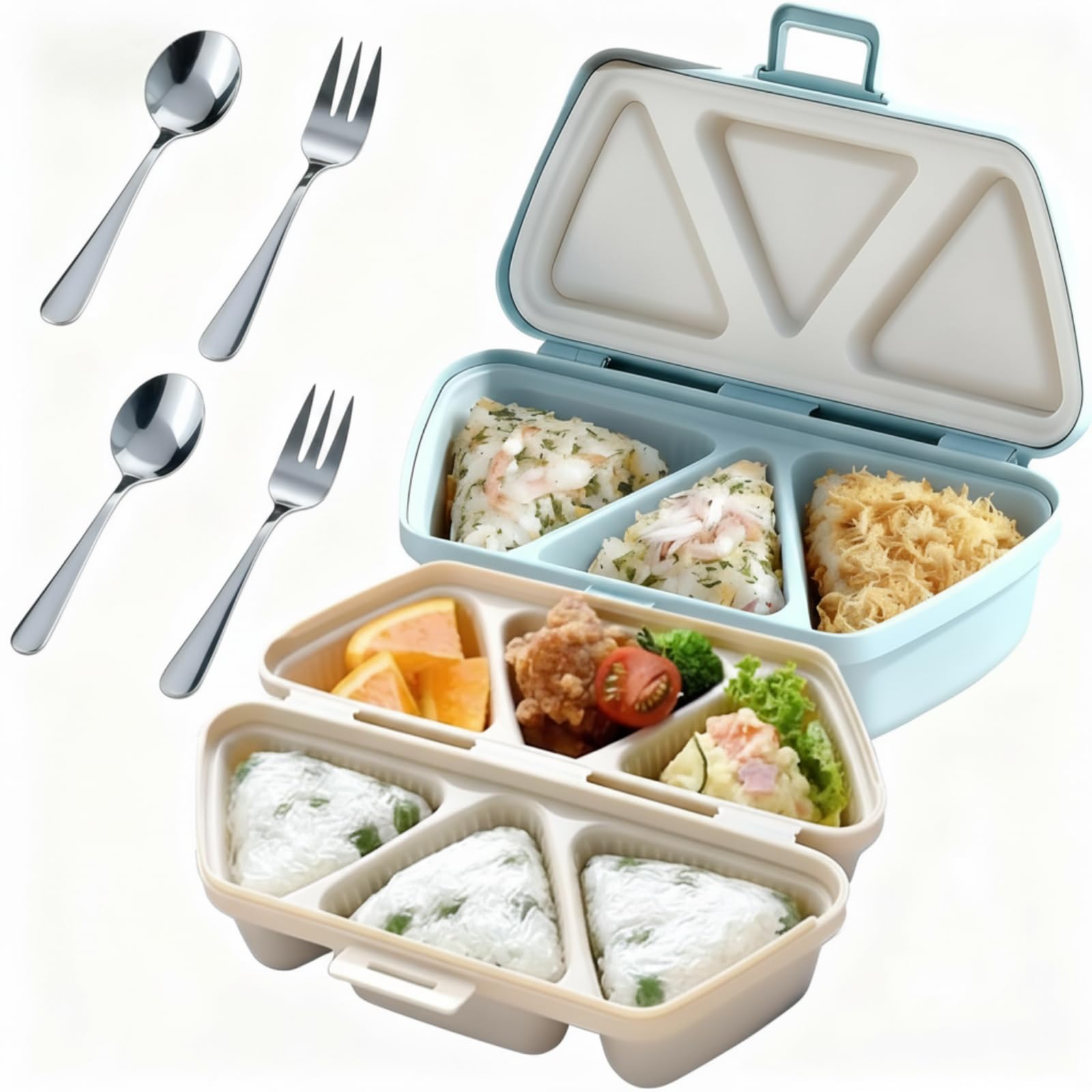
This two-piece set packs the highest batch-efficiency of any mold tested — six uniform triangles in a single press with a hinged lid that folds flat for storage. The polypropylene construction releases rice cleanly when you tap the mold upside down on a cutting board, and the compact footprint slides into even a crowded drawer.
Customer reviewers consistently mention the time savings for school lunches and the ability to refrigerate formed rice balls inside the mold before transferring them to nori wraps. The mold holds up to repeated dishwasher cycles without warping, and the textured cavities keep rice densities consistent across all six compartments.
One caveat: the first-time user needs to slide the tab firmly to unlock the mold before filling. A few early reviews noted difficulty opening the mold, but that resolves once you locate the release latch. The BPA-free claim is not explicitly listed on the packaging, so buyers concerned about plastic should consider lining each cavity with plastic wrap.
Why it’s great
- Produces six onigiri in one press, cutting meal prep time dramatically
- Foldable design stores flat without taking up drawer space
- Dishwasher-safe plastic resists stains and odors after repeated use
Good to know
- Release latch can be stiff out of the box; requires a firm sliding motion
- BPA-free certification not printed on the unit itself
- Single-piece clamshell means no separate press plate for stuffed rice balls
2. Choxila 3 Pack Onigiri Mold Stainless Steel

The Choxila set solves the microplastic anxiety many parents have when forming hot rice with kids. The primary triangle mold is formed from grade 304 stainless steel with a spring-loaded press plate that compacts rice and releases it with the push of a plunger. The kit also includes a musubi press and a rice ladle, making it a complete starter bundle.
Users who dip the mold in cold water before each fill report zero sticking, and the metal surface wipes clean under running water without soap residue. The spring mechanism does require care when disassembling — losing the small spring renders the press inoperable. The press plate sits flush inside the mold, meaning the gap between metal surfaces can trap rice paste if not rinsed immediately.
The stainless steel feels noticeably heavier than a plastic mold, which provides stability on the counter but makes the set less portable for picnics. Multiple reviews highlight that adults and children alike enjoy the tactile satisfaction of the spring-loaded release, and the set has enough shape variation to make both classic triangles and rectangular musubi for Spam-based Hawaiian recipes.
Why it’s great
- Stainless steel construction eliminates risk of microplastic shedding in hot rice
- Spring-loaded press plate gives clean, single-motion release every time
- Three-piece bundle (mold, press, ladle) covers multiple Japanese and Hawaiian shapes
Good to know
- Small spring can be misplaced during disassembly; keep a container nearby
- Gap between mold wall and press plate requires thorough scrubbing
- Weight is heavier than plastic alternatives, less ideal for on-the-go use
3. Akebono Sangyo CH-2110 Onigiri Rice Ball Maker

The CH-2110 from Akebono Sangyo represents the gold standard in plastic batch molds — manufactured in Japan from polypropylene, it uses a two-piece system rather than a clamshell. The base tray holds six triangular cavities open at both top and bottom, and a separate press plate pushes all six formed rice balls out simultaneously. This design eliminates the tearing that happens when you pry open a clamshell.
Customer feedback consistently praises the sturdy, thick walls that prevent warping even after hundreds of uses. The cavities produce onigiri on the smaller side — roughly 40 grams each — which makes the mold ideal for children’s lunches or portion-controlled snacks. The instructions printed directly on the top plate remove any guesswork.
The absence of an explicit BPA-free label on the Amazon listing causes hesitation among some buyers, though Japanese food-grade polypropylene is generally considered safe. Rinsing with water and a quick spray suffices for cleanup, and the entire unit is dishwasher-safe. At 188 mm diameter, the compact round footprint stores easily.
Why it’s great
- Dual-piece design presses rice out cleanly without tearing the triangle shape
- Compact circular footprint fits neatly into small drawers or lunch bags
- Thick, rigid PP construction withstands daily use without cracking
Good to know
- Onigiri size is smaller than standard, averaging 40 grams per ball
- No explicit BPA-free certification printed on the unit
- Round shape wastes some surrounding drawer space compared to rectangular molds
4. BENTOOL Onigiri Mold Set

The BENTOOL set brings authentic Japanese technique home with three FSC-certified bamboo molds that prioritize a fluffy rice texture rather than dense, compressed balls. While most plastic molds squeeze rice into hard blocks, the bamboo surface allows the rice grains to retain a light, airy structure — the same approach used by onigiri shops in Japan. Each mold cavity holds roughly half a cup of rice, producing adult-sized onigiri.
FDA testing certification (21 CFR Part 175.300) from Intertek backs the food-safety claims, which is a rare transparency for bamboo kitchen tools. The set includes a board for pressing, and the molds release the formed rice easily after a quick water rinse. Bamboo requires hand-washing and occasional oiling to prevent the grain from drying and splitting.
Several reviewers note that the bamboo interior feels slightly rough compared to polished plastic. Soaking the mold in water for two minutes before each use solves the sticking problem completely. The set comes with three identical molds, so you can fill all three simultaneously and speed up your assembly line. These molds produce large onigiri that accommodate generous fillings — a weakness of shallower designs.
Why it’s great
- FDA-certified FSC bamboo offers peace of mind for food contact safety
- Bamboo surface preserves fluffy rice texture instead of compressing it into hard blocks
- Three molds in one set enable simultaneous assembly-line production
Good to know
- Requires soaking in water before each use to prevent sticking
- Bamboo grain can feel rough; hand-wash only and avoid dishwasher
- Slightly heavier than plastic molds; less portable for picnics
5. Tuiiopoli Onigiri Bamboo Rice Ball Mold Set
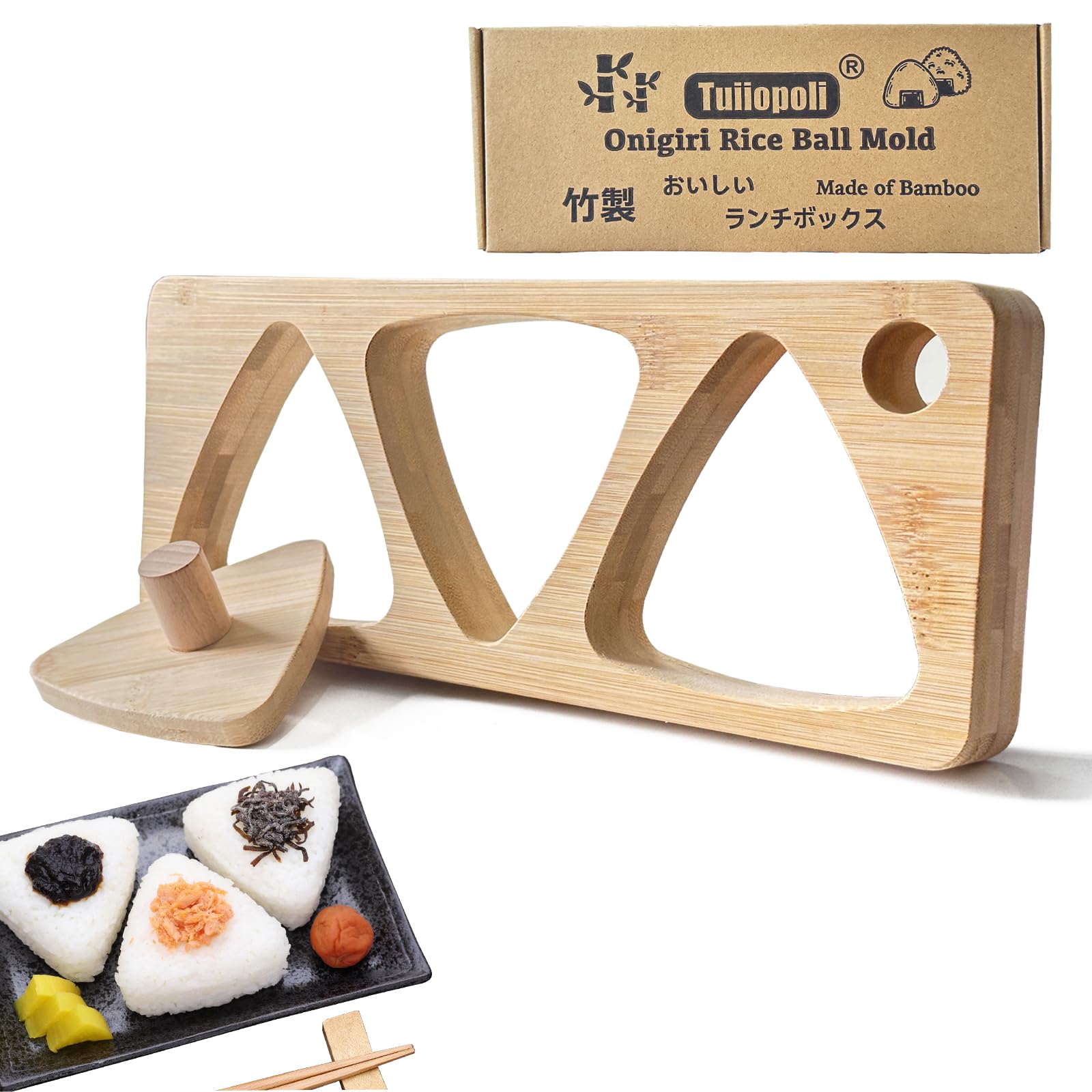
This single-piece bamboo mold with a separate press plate replicates the design favored by Japanese restaurants for its simplicity and natural non-stick performance after soaking. The FSC-certified bamboo is sanded smooth with no added coatings or paint, making it safe for direct food contact. The press plate sits atop the filled cavity and slides forward to eject the formed rice ball cleanly.
Customer reviews show strong satisfaction with ease of use and cleanup, but the bamboo walls measure thinner than the BENTOOL set. That thinness means the mold flexes slightly when you pack rice, making stuffed onigiri prone to splitting. The cavity depth is also shallower, limiting the amount of filling you can conceal inside each ball.
At the budget-friendly end of the bamboo spectrum, this mold works best for simple, unfilled triangles or for shaping leftover rice. Washing by hand and drying immediately extends the life of the bamboo. The included press plate has a comfortable grip, and the whole setup weighs only 340 grams, making it the most portable option of the five reviewed.
Why it’s great
- FSC-certified bamboo with no paint or coatings for natural food contact
- Press plate enables easy rice ejection after soaking the mold
- Light weight and compact size make it ideal for travel or picnics
Good to know
- Thin bamboo walls flex under pressure, limiting stuffed onigiri options
- Shallow cavity allows only minimal filling volume
- Dries out over time; occasional food-safe mineral oil treatment recommended
FAQ
Will a stainless steel onigiri mold scratch my non-stick rice cooker bowl if I scoop rice directly from it?
How do I prevent bamboo onigiri molds from developing mold inside the grain?
Can I use an onigiri mold for short-grain brown rice or quinoa?
Final Thoughts: The Verdict
For most users, the best onigiri mold winner is the DumFurc 6-in-1 because it delivers the fastest batch output and stores flat, making daily lunch prep effortless for families. If you want zero microplastic contact and a satisfying spring-loaded release, grab the Choxila Stainless Steel set. And for traditional fluffy rice texture with an eco-friendly build, nothing beats the BENTOOL bamboo set.