A proper balsamic vinegar should coat the back of a spoon with a syrupy cling, not run off like colored water. Too many bottles on grocery shelves deliver a thin, sharp, one-note acidity that burns the palate rather than enriching a dish. The difference between an entry-level vinegar and a truly great one comes down to the density of the cooked grape must, the absence of caramel coloring as a cheat, and the months or years spent resting in wooden barrels to build complexity.
I’m Mohammad Maruf — the founder and writer behind AirfryerBite. I’ve spent years analyzing the technical specs of artisan vinegars, from acidity levels and viscosity to aging methods and certification markings, to separate real quality from clever packaging.
Whether you are drizzling it over ripe tomatoes and fresh mozzarella, glazing roasted vegetables, or finishing a steak, you need a vinegar that balances sweetness with tang without overwhelming. This guide covers everything you need to pick the best tasting balsamic vinegar for your kitchen, from traditional Modena imports to flavored sampler sets that add versatility without sacrificing authenticity.
How To Choose The Best Tasting Balsamic Vinegar
The label is the first place you find out whether a bottle is worth the spot on your pantry shelf. Cheap vinegars use caramel coloring to fake the deep brown syrupy look, while authentic ones get that color and texture naturally from cooked grape must and barrel aging. Knowing what to scan for in the fine print makes the difference between a vinegar that impresses and one that disappoints.
PGI/IGP Certification and Origin
A bottle labeled “Balsamic Vinegar of Modena IGP” means it was produced in the Emilia-Romagna region of Italy following strict production rules. That certification guarantees the vinegar contains at least 20 percent grape must and has been aged for a minimum of 60 days. Vinegars without any regional certification often rely on shortcuts like added sugar, thickeners, or artificial coloring to imitate the real thing.
Acidity Level and Viscosity
Standard balsamic vinegar sits around 6% acidity, but the best-tasting options usually range from 4% to 6%. Lower acidity generally indicates a sweeter, more concentrated must that has been cooked down longer, giving the vinegar a syrupy thickness. Vinegars that pour like thin red wine vinegar have likely been diluted with cheap wine vinegar and lack the density needed for finishing dishes.
Ingredients List — Grape Must vs. Caramel Color
The single biggest red flag on any balsamic label is “caramel color” or “sulfites.” A quality vinegar lists “cooked grape must” and “wine vinegar” as its primary ingredients — nothing more. If you see thickeners like cornstarch or modified food starch, the producer is compensating for a lack of natural viscosity from proper aging and must reduction.
Quick Comparison
On smaller screens, swipe sideways to see the full table.
| Model | Category | Best For | Key Spec | Amazon |
|---|---|---|---|---|
| Due Vittorie Oro Gold | Premium IGP | All-purpose finishing & marinades | 6% acidity, aged in oak barrels | Amazon |
| QO Organic Thick Aged | Organic IGP | Organic kitchen staples | 4% acidity, no added sugar | Amazon |
| Oliviers&Co Modena IGP | Artisan IGP | Drizzling & finishing dishes | 100% cooked grape must, no caramel | Amazon |
| Napa Valley Naturals Grand Reserve | Mid-Range 2-Pack | Everyday salads & value | 4% acidity, 12.7 oz per bottle | Amazon |
| Kouzini Ultra Premium 6-Pack | Flavor Sampler | Gifting & variety exploration | 60ml travel-size, 6 flavors | Amazon |
In‑Depth Reviews
1. Due Vittorie Oro Gold, Barrel Aged Balsamic Vinegar of Modena IGP

This is the bestselling balsamic vinegar in Italy for a reason. The Oro Gold starts with Trebbiano and Lambrusco grapes from the Modena region, then spends a good part of its life in durmast oak barrels that transfer tannins and woody essences into the vinegar. The result is a naturally dense liquid with 6% acidity that hits the palate with black cherry undertones and a finish that is smooth rather than harsh. It carries PGI (IGP) certification, so you know the production chain is traceable back to Emilia-Romagna.
In the kitchen, this vinegar behaves like a reduction straight from the bottle — thick enough to cling to the sides of a salad bowl or to form a stable glaze on grilled meats without needing to be boiled down. Customers consistently mention the “full-bodied sweetness” and the way it balances acidity without making your mouth pucker. The built-in pourer on the heavy glass bottle makes drizzling precise, which matters when you are finishing burrata or a caprese salad.
It is categorized as premium, but the 16.9-fluid-ounce pack of two lowers the per-ounce cost compared to many single-bottle competitors. If you want a single vinegar that works equally well for marinades, dressings, drizzling, and finishing, this is the most versatile option in the list with zero compromise on ingredient purity.
Why it’s great
- PGI-certified Modena origin with full traceability
- Thick, reduction-like consistency straight from bottle
- Balanced 6% acidity with smooth black cherry finish
Good to know
- Premium tier pricing, though the 2-pack provides better per-ounce value
- Some users prefer a lower acidity for sweeter applications
2. QO Organic Thick Aged Balsamic Vinegar of Modena
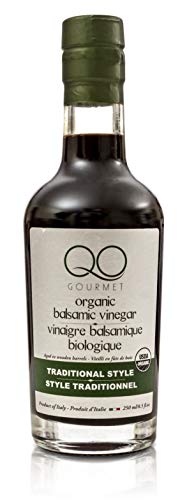
The QO vinegar is the only certified organic option on this list, with dual certification from CCPB Italy and the USDA. That matters because grapes are among the most pesticide-sprayed crops, and a vinegar that relies on cooked grape must as its base carries any residue from the vineyard into the bottle. This one is made in small batches in Modena and barrel-aged to reduce acidity to 4%, which gives it a noticeably sweeter, more syrupy profile than the average balsamic.
It has no added sugar, no caramel coloring, and no thickening agents — the viscosity comes entirely from the reduction of the must during cooking and the aging process in wooden barrels. Customers report using it as a glaze for roasted vegetables and as a finishing touch on sandwiches, where the density ensures it does not soak into the bread and make it soggy. The heavy-bottomed glass bottle gives the product a premium feel on the countertop.
At roughly 8.5 fluid ounces per bottle, this is a smaller volume than the Due Vittorie pack, but the organic certification and the ultra-low acidity make it the best choice for anyone who prioritizes clean ingredients and a sweet-tangy balance that works well on fruit and lighter salads.
Why it’s great
- USDA and CCPB organic certified — clean from vineyard to bottle
- 4% acidity offers a naturally sweet, syrupy texture
- No added sugar, caramel color, or thickeners
Good to know
- Smaller 8.5 oz bottle means higher per-ounce cost
- Sweet profile may not suit those wanting a sharper vinegar bite
3. Oliviers&Co Balsamic Vinegar of Modena IGP
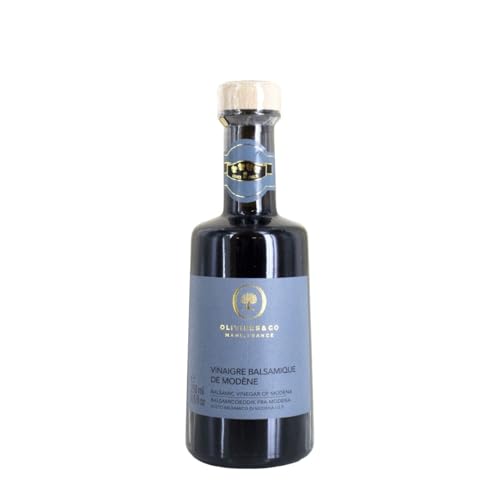
America’s Test Kitchen named this vinegar a taste-test winner, beating out bottles that cost significantly more. The Oliviers&Co vinegar is made entirely from cooked Trebbiano grape must with no caramel coloring, no added sugar, and no thickeners. It is aged in a blend of oak, chestnut, juniper, and cherry wood barrels, which imparts layers of flavor that go beyond the simple sweet-and-sour baseline — notes of cherry and oak emerge, with a velvety texture that coats the tongue without burning.
Customers who switched to this bottle noted that pricier aged vinegars sometimes tasted like “fruit jam” rather than balanced balsamic, whereas this one maintains a savory backbone that works on everything from grilled steak to fresh strawberries. The 8.5-fluid-ounce bottle is on the smaller side, but the concentration means a little goes a long way — a few drops are enough to finish a dish.
If you want a single reference-point vinegar that professional testers agree is superior without crossing into ultra-premium pricing, this is your bottle. The wooden barrel blend creates a complexity that entry-level balsamics cannot replicate, making it ideal for anyone who finishes dishes with a drizzle rather than mixing it into a bulk dressing.
Why it’s great
- America’s Test Kitchen taste-test winner
- Four-wood barrel aging (oak, chestnut, juniper, cherry) for layered flavor
- 100% cooked grape must, zero caramel or additives
Good to know
- 8.5 oz single bottle — less volume than the 2-pack options
- Premium positioning despite not being the most expensive on the list
4. Napa Valley Naturals Grand Reserve Balsamic Vinegar 2-Pack

This 2-pack from Napa Valley Naturals delivers 25.4 total ounces of vinegar at a per-ounce cost that undercuts most Italian imports by a wide margin. The acidity sits at 4%, matching the lower end of the spectrum, which produces a noticeably thicker, sweeter vinegar than standard grocery-store bottles. Customers who have been buying this brand for years specifically mention the viscosity — it pours like a light syrup rather than thin wine vinegar — and the fact that it needs no olive oil to make a satisfying salad dressing.
It is not PGI-certified Modena vinegar, so the grapes are sourced from global orchards rather than the Emilia-Romagna region. However, the flavor profile consistently earns five-star ratings for its balance of sweetness and tang, with repeat buyers calling it “addicting” and noting they use it on chicken, salmon, vegetables, and even ice cream. The wine-bottle packaging looks elegant on the counter and reseals well.
If you go through balsamic vinegar quickly — dressing multiple salads per week, marinating proteins, or drizzling over roasted Brussels sprouts — this 2-pack is the most practical choice. It sacrifices regional certification and barrel-aging complexity for volume and consistency at a budget-friendly tier.
Why it’s great
- Two 12.7 oz bottles offer the best total volume for the price
- Low 4% acidity gives a thick, syrup-like body
- Versatile enough for salads, meats, and even desserts
Good to know
- Not PGI/IGP certified — grapes sourced globally rather than exclusively from Modena
- Lacks the complex barrel-aged notes of the Italian IGP options
5. Kouzini Ultra Premium Balsamic Vinegar 6-Pack

Kouzini offers something none of the other products do: six different balsamic flavors in travel-sized 60ml glass bottles. The set includes Royal Fig, Raspberry, Blueberry, Traditional, Jalapeno Lime, and Orange Mango Passionfruit, all made in Modena, Italy, using Trebbiano and Lambrusco grapes. The consistency is described as halfway between a plain balsamic and a glaze reduction — thick enough to cling but not as syrupy as a full reduction.
These vinegars contain no preservatives, no artificial colorings, and no added sugars, relying on the natural sweetness of the cooked grape must and the fruit infusions. Customers consistently favor the Royal Fig and Blueberry flavors for their intense, concentrated fruit notes, while the Jalapeno Lime offers a mild heat that works well on seafood. The small bottles are convenient for tossing into a bag for restaurant use or for gifting to foodie friends.
This is not the right choice if you need a single large bottle for daily salads, but it is the best option for anyone who wants to explore how different fruit infusions perform on various dishes without committing to full-sized bottles they might not enjoy. The sampler format also makes this the strongest gift candidate among the five products.
Why it’s great
- Six distinct flavors in one purchase — great for variety and gifting
- Made in Modena with no preservatives or added sugars
- Compact 60ml bottles are TSA-friendly and portable
Good to know
- Small bottles limit per-use value compared to full-sized options
- Some flavors lean sweet — not ideal for savory-only applications
FAQ
What is the ideal acidity percentage for a sweet balsamic vinegar?
How can I tell if a balsamic vinegar uses caramel coloring?
Why are some balsamic vinegars much thicker than others?
Final Thoughts: The Verdict
For most users, the best tasting balsamic vinegar winner is the Due Vittorie Oro Gold because it combines PGI certification, 6% acidity, and oak-barrel aging into a thick, versatile vinegar that performs equally well in dressings, marinades, and finishing drizzles. If you want USDA organic certification with a sweeter 4% profile, grab the QO Organic Thick Aged. And for a budget-friendly 2-pack that covers everyday salad and cooking needs without sacrificing thickness, nothing beats the Napa Valley Naturals Grand Reserve.