Slick chemical coatings make egg cookery simple until they flake, scratch, and degrade, leaving you questioning what’s really in your breakfast. Switching to a bare metal pan eliminates that uncertainty, but it also introduces a new skill: managing heat and fat to prevent sticking without a synthetic crutch. This guide focuses exclusively on pans built from stainless steel, carbon steel, or cast iron — materials that deliver permanent durability and a toxin-free cooking surface for your morning eggs.
I’m Mohammad Maruf — the founder and writer behind AirfryerBite. I’ve spent years analyzing cookware metallurgy, seasoning science, and thermal dynamics to separate marketing claims from real-world performance in the non-toxic kitchen market.
Whether you are avoiding forever chemicals or simply tired of replacing pans every year, understanding the thermal properties and surface preparation of each material is the key to finding the right pan for eggs not nonstick that works with your stove and routine.
How To Choose The Best Pan For Eggs Not Nonstick
Choosing a bare-metal egg pan means evaluating how heat transfers from your burner to the food and how the surface interacts with fat. Each material — stainless steel, carbon steel, and cast iron — behaves differently, and the right choice depends on your stove type, patience for seasoning, and desired egg texture.
Match Material to Your Stovetop and Routine
Stainless steel works on any cooktop, including induction, but requires precise preheating and sufficient oil to prevent egg adhesion. Carbon steel heats faster and is lighter than cast iron, making it a strong choice for gas and electric burners where quick temperature changes matter. Cast iron retains heat for long periods, ideal for low-and-slow egg cooking on electric coils or in campfire settings, but its weight and slower response can frustrate cooks who want rapid control.
Surface Smoothness and Seasoning Potential
Stainless steel will never develop a seasoning layer — its non-stick performance depends entirely on the Leidenfrost effect, where a hot pan and a thin layer of oil create a temporary barrier. Carbon steel and cast iron, in contrast, build polymerized oil layers that improve with each use. The smoother the base surface, the faster and more even the seasoning. Machine-polished pans, such as those from Field Company, reach egg-ready non-stick performance in days rather than weeks.
Weight and Handle Ergonomics
Egg pans are used for short, repetitive tasks — flipping, swirling, and sliding the finished product onto a plate. A pan that is too heavy fatigues the wrist, while a pan with a long, poorly balanced handle makes single-handed manipulation awkward. Look for a pan weight under 3 pounds for comfortable daily use, and check whether the handle stays cool on the stovetop or requires a silicone grip for safety.
Quick Comparison
On smaller screens, swipe sideways to see the full table.
| Model | Category | Best For | Key Spec | Amazon |
|---|---|---|---|---|
| de Buyer Mineral B 8″ | Carbon Steel | Precise heat control | 2 mm carbon steel, 0.4 L capacity | Amazon |
| Field Company No.6 8.38″ | Cast Iron | Smooth vintage feel | 3 lbs, machine-polished surface | Amazon |
| Cuisinart MultiClad Pro 8″ | Stainless Steel | Quick heating, any cooktop | Tri-ply, 8-inch, oven-safe 550°F | Amazon |
| DELARLO Tri-Ply 12″ | Stainless Steel | Batch cooking, family meals | Tri-ply aluminum core, 3 qt capacity | Amazon |
| Lodge 8″ Carbon Steel | Carbon Steel | Camping, high-heat searing | Pre-seasoned, PFOA & PTFE free | Amazon |
| Field Company No.4 6.75″ | Cast Iron | Single egg, individual servings | 1.86 lbs, 5.25″ cooking surface | Amazon |
| Lodge BOLD 12″ Cast Iron | Cast Iron | Heat retention, large batches | 8.95 lbs, naturally seasoned | Amazon |
In‑Depth Reviews
1. de Buyer Mineral B Carbon Steel Fry Pan 8″

The de Buyer Mineral B 8″ is the gold standard for uncoated egg pans because its 2 mm carbon steel body heats faster and responds to temperature changes more precisely than cast iron, giving you the control needed for delicate omelets. Seasoning is straightforward — remove the beeswax coating with hot water, apply a thin oil layer, and heat until smoking — and within a few uses the surface becomes reliably non-stick for eggs without any synthetic chemicals. The 5.5-inch cooking surface is compact, which forces you to use the right amount of fat and prevents the egg from spreading too thin.
The pan’s sloped sidewalls make flipping easy, and the long handle stays relatively cool on the stovetop, though it gets hot in the oven. At roughly 2 pounds, the weight is manageable for daily egg work, and the lifetime warranty from a French manufacturer that has been forging cookware since 1830 speaks to its durability. Many users report that their first egg after initial seasoning slides right out with minimal butter.
The key disadvantage is the initial seasoning ritual — the beeswax must be completely removed or the first few meals will taste waxy. Also, the cooking surface is smaller than the rim diameter suggests, so if you regularly cook two or three eggs at once, consider the 10-inch version. This pan demands ongoing maintenance: no soap, no metal scrubbers, and immediate drying to prevent rust.
Why it’s great
- Superior heat responsiveness for precise egg cooking
- Naturally non-stick after proper seasoning
- Lifetime warranty from a historic French brand
Good to know
- Requires thorough beeswax removal before first use
- Small effective cooking area — best for single eggs or omelets
- Needs careful drying and oiling after each wash
2. Field Company No.6 Small Cast Iron Skillet 8.38″
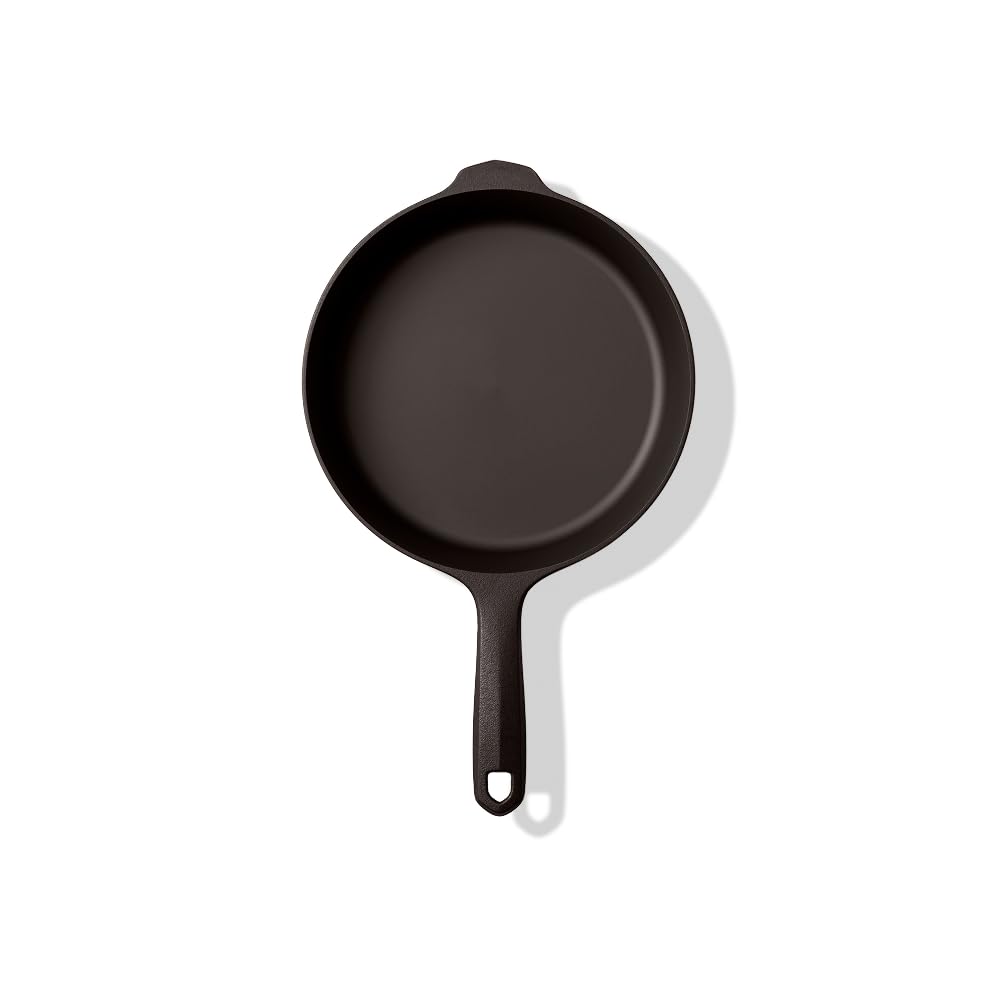
Field Company’s No.6 skillet reimagines cast iron for egg cookery by machine-polishing the cooking surface to a smoothness that rivals vintage Griswold pans, which means seasoning builds evenly and quickly. At 3 pounds, it is significantly lighter than traditional cast iron skillets of the same diameter, and its 7-inch flat cooking surface is ideal for two eggs or a single serving of scrambled eggs. The pan arrives pre-seasoned with three coats of organic grapeseed oil, so you can cook eggs on day one without any special preparation.
The heat retention is exactly what you expect from cast iron — once hot, the pan stays hot, which is excellent for achieving a crispy edge on a fried egg but requires careful burner management to avoid overcooking. Users report that after one month of daily use, the seasoning matures to the point where eggs slide around the pan with minimal butter. The handle is designed for balance and feels natural when tilting the pan to baste butter over the egg whites.
The premium construction comes with a premium price tag that exceeds most entry-level cast iron options. The handle also gets hot during prolonged stovetop use, so a silicone cover is recommended. Additionally, the pan is not dishwasher safe and requires hand washing with a nylon scrubby and immediate drying — typical for all bare cast iron.
Why it’s great
- Silky smooth surface speeds up seasoning dramatically
- Lightweight for cast iron — easy to handle and flip
- Pre-seasoned and ready for eggs immediately
Good to know
- Premium price — costs more than traditional cast iron pans
- Handle gets hot; needs a silicone grip for safe handling
- Not dishwasher safe; requires careful hand washing
3. Cuisinart MultiClad Pro 8″ Open Skillet

The Cuisinart MultiClad Pro 8″ skillet is the most affordable way to cook eggs on a bare metal surface without sacrificing build quality, featuring a fully clad tri-ply construction that eliminates hot spots. Stainless steel will never become non-stick through seasoning, so success depends entirely on the Leidenfrost technique — preheat the pan until a water droplet beads and skates across the surface, then add oil and eggs. Once you master that sequence, this pan produces eggs that release cleanly without tearing.
The cast stainless steel handle stays cool on the stovetop and is riveted for strength, and the pan is oven-safe up to 550°F, which makes it useful for finishing frittatas or keeping a breakfast plate warm. At just over 2 pounds, the 8-inch size is light enough for comfortable daily use, and the tapered rims pour cleanly if you want to drain butter or make a quick sauce. Users report that a paste of Bar Keepers Friend keeps the interior looking new even after months of egg cooking.
The small diameter limits you to one or two eggs at most, and the pan does not come with a lid. More importantly, stainless steel demands more attention to heat management than carbon steel or cast iron — if the pan is not hot enough, eggs will stick aggressively, and if it is too hot, the butter burns. This is not a pan for cooks who want a forgiving surface.
Why it’s great
- Exceptional value for tri-ply stainless steel construction
- Oven-safe to 550°F and dishwasher safe
- Cool-touch handle stays comfortable during use
Good to know
- Requires precise preheating to prevent sticking
- Small cooking surface — best for a single egg or small omelet
- No lid included
4. DELARLO Tri-Ply Stainless Steel Pan 12″

The DELARLO 12-inch tri-ply skillet is built for volume — its wide cooking surface handles four to five eggs simultaneously, making it the right choice for feeding a family without relying on non-stick coatings. The pan combines an 18/10 stainless steel cooking surface, an aluminum core for rapid heat distribution, and an 18/0 stainless exterior that works on induction cooktops. The glass lid is a practical addition that allows you to steam eggs or keep food warm without transferring to another dish.
Users consistently emphasize that preheating is the key to non-stick performance on this pan. When the pan is properly heated, the tri-ply aluminum core distributes heat evenly from the center to the sidewalls, preventing the localized burning that often happens with thinner stainless pans. The 3-quart capacity also makes this skillet useful for tasks beyond eggs — sautéed vegetables, pan sauces, and even shallow frying all benefit from the generous cooking area.
At 3.9 pounds, the pan is heavier than the Cuisinart 8-inch model, and the handle is not designed for easy one-handed flipping when loaded. The manufacturer recommends cooking on medium-low heat to avoid warping and never heating the pan empty. Dishwasher use is not recommended, and the stainless interior will require periodic polishing with a specialized cleaner to maintain its appearance.
Why it’s great
- Large 12-inch surface handles multiple eggs and family portions
- Tri-ply aluminum core provides rapid, even heat distribution
- Included glass lid adds cooking versatility
Good to know
- Heavier than smaller stainless skillets; not ideal for wrist-flick flipping
- Requires careful preheating and medium-low heat
- Hand washing recommended; not fully dishwasher safe
5. Lodge 8 Inch Carbon Steel Skillet
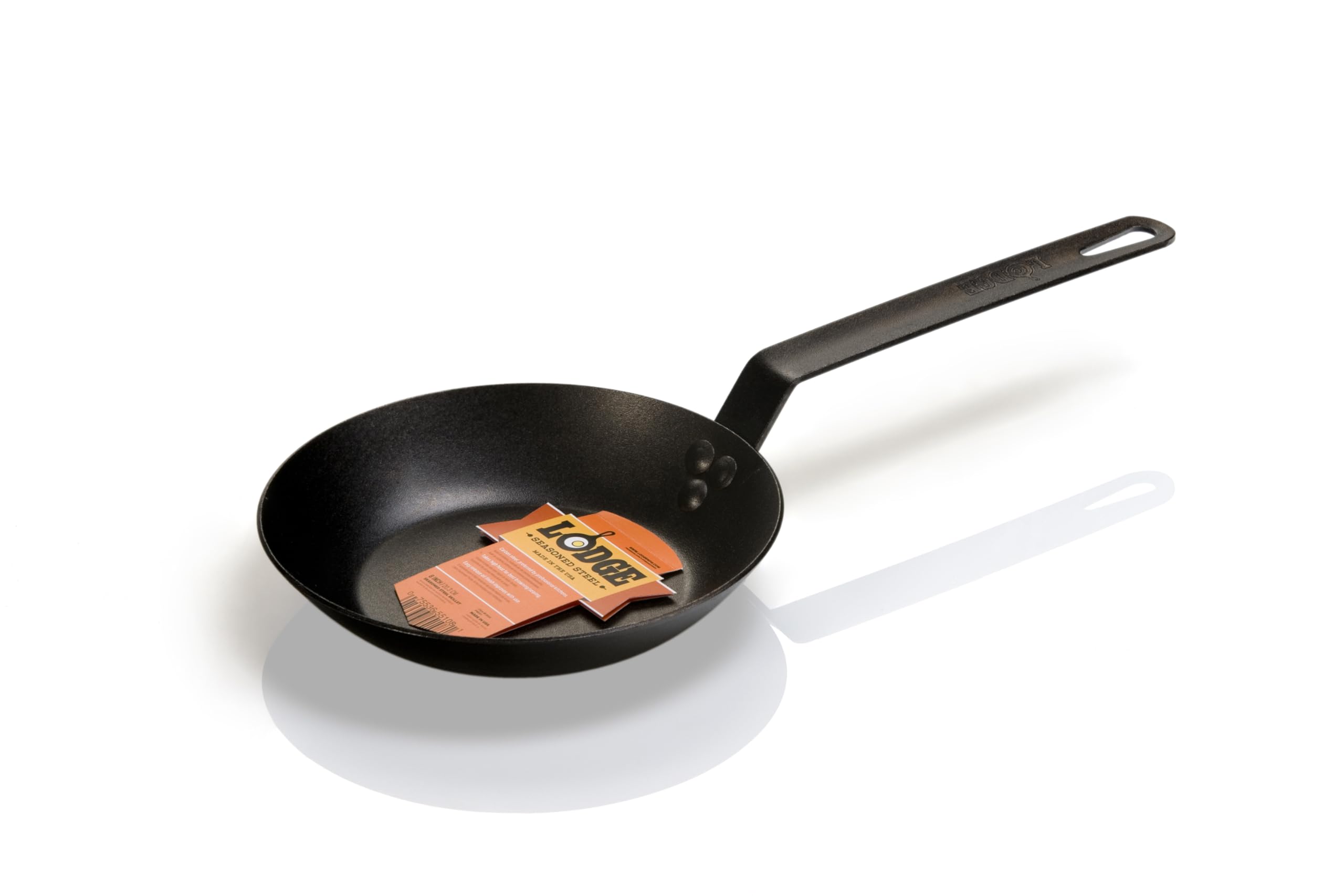
The Lodge 8-inch carbon steel skillet offers a rugged entry point into uncoated egg pans at a budget-friendly price, pre-seasoned with 100% natural vegetable oil and free of PFOA and PTFE. Carbon steel heats up faster than cast iron and cools down quicker, which gives you more agility when cooking delicate eggs on a gas burner or over a campfire. The long handle provides leverage for flipping, and the pan’s lightweight profile makes it easy to pack for outdoor cooking without compromising on durability.
Users note that once the seasoning builds up, eggs and omelets slide off effortlessly, but the factory surface has a slight texture that may take longer to become glassy smooth compared to de Buyer or Field Company pans. The pan is oven-safe, though the plastic handle is a limiting factor — it can withstand moderate heat but is not designed for high-temperature broiling. The textured interior also makes cleaning slightly more difficult until the seasoning fully matures and fills in the micro-pores.
The primary drawbacks are the riveted handle interior, which creates small crevices that trap food and require careful scrubbing, and the fact that the 8-inch size is noticeably smaller than the rim diameter suggests. Buyers looking for a 10-inch surface should check the larger Lodge model. Like all carbon steel, this pan must be kept dry and oiled after every use to prevent rust.
Why it’s great
- Budget-friendly entry to carbon steel egg cookery
- Pre-seasoned with natural oils; no synthetic chemicals
- Lightweight and portable for camp cooking or travel
Good to know
- Slightly textured surface takes time to become fully non-stick
- Plastic handle limits oven temperature range
- Riveted handle interior is hard to clean thoroughly
6. Field Company No.4 Mini Cast Iron Skillet 6.75″
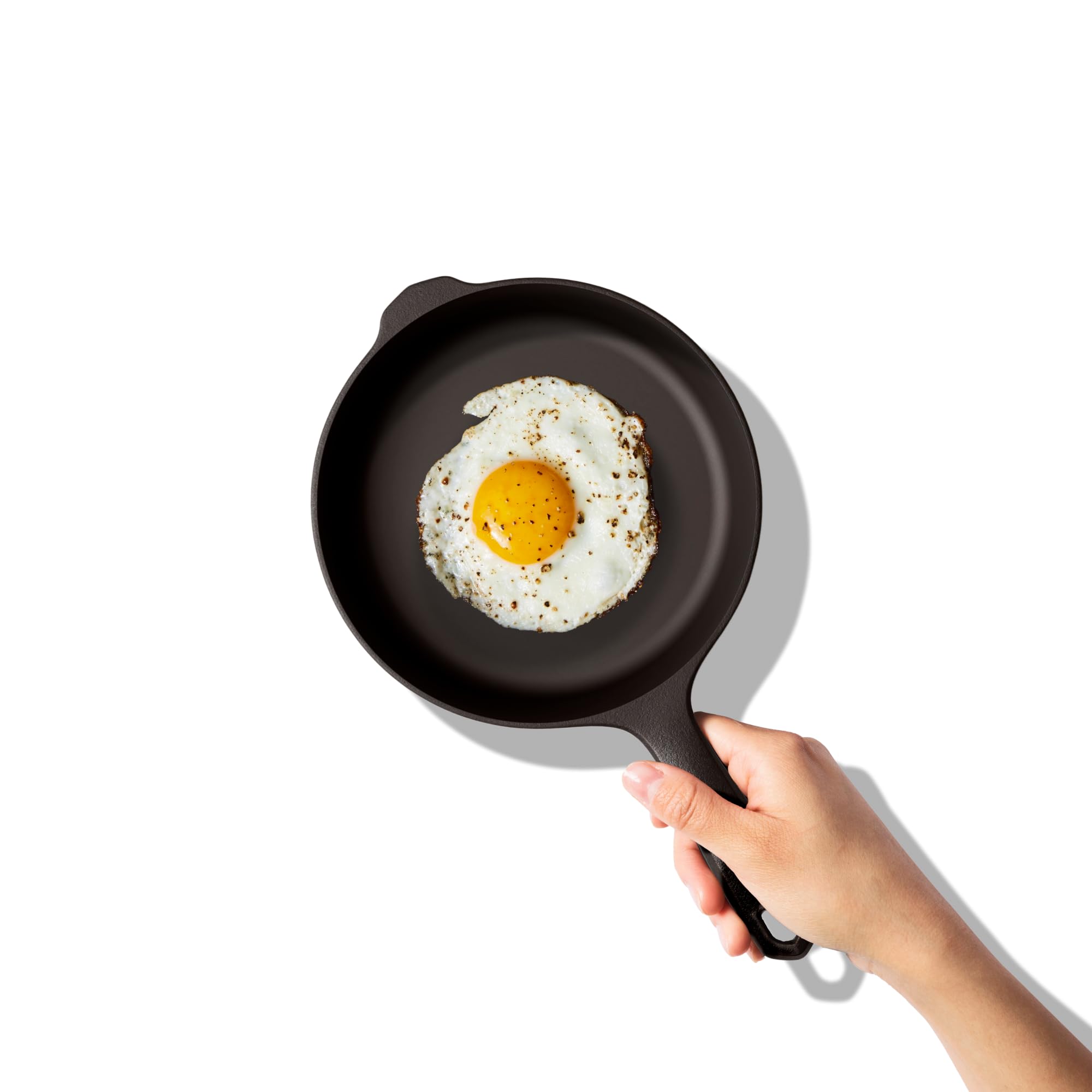
The Field Company No.4 mini skillet is purpose-built for anyone who cooks a single egg each morning and wants a pan that heats quickly without wasting energy on a large surface. At 1.86 pounds and 6.75 inches in diameter, it is the lightest cast iron skillet in this roundup, and its machine-polished cooking surface reaches non-stick performance faster than textured cast iron alternatives. The 5.25-inch flat cooking surface concentrates heat perfectly for one fried egg, melting butter evenly across the cooking zone.
Like the larger No.6, this pan arrives pre-seasoned with organic grapeseed oil and is ready to use immediately. Users report that after a few weeks of daily egg cooking, the seasoning becomes so slick that eggs slide around with just a nudge of the pan. The compact size also makes it ideal for warming tortillas, toasting spices, or making a single crêpe. The handle is proportionate to the pan size and stays cooler than full-size cast iron handles during stovetop use, though extended cooking still demands a silicone grip.
The limitation is obvious: you cannot cook more than one egg, and the low sidewalls make it easy to accidentally flip food out of the pan. At a premium price for such a small cooking surface, this pan is a specialized tool rather than a multipurpose workhorse. It also requires the same hand-washing and drying routine as any bare cast iron pan, which some users consider excessive for a single-egg task.
Why it’s great
- Ultra-light and compact for single-egg efficiency
- Smooth machined surface seasons fast and evenly
- Pre-seasoned and ready to cook on day one
Good to know
- Only suitable for one egg; limited versatility
- High price for a very small pan
- Low sidewalls can cause spillage during flipping
7. Lodge BOLD 12 Inch Seasoned Cast Iron Skillet

The Lodge BOLD 12-inch cast iron skillet is the heavyweight champion of this list, designed for cooks who need to produce large quantities of eggs — think breakfast for a crowd, meal-prep scrambled eggs, or a massive frittata. Its 12-inch diameter provides a generous 5-liter capacity, and the sloped sidewalls make it easier to stir, flip, and serve compared to traditional straight-sided cast iron pans. The pan is naturally seasoned with vegetable oil and ready to use immediately, with a surface that becomes more non-stick the more you cook on it.
Cast iron’s legendary heat retention means that once the pan reaches temperature, it will not fluctuate when you add cold eggs — a real advantage when cooking a dozen scrambled eggs at once. Users report that after a few uses, the seasoning holds eggs without sticking as long as enough fat is used. The loop handles are a modern design choice that allows for easy hanging storage, though they do not provide the same grip comfort as a long handle when trying to tilt the pan.
The pan weighs nearly 9 pounds, which makes it impractical for casual daily egg flipping and impossible for most people to handle with one hand when full. The pre-seasoning is adequate but not as smooth as machine-polished options, so you may need a longer break-in period before eggs release effortlessly. Like all cast iron, it is not dishwasher safe and must be dried and oiled after each use to prevent rust.
Why it’s great
- Massive cooking surface for large batches of eggs
- Superior heat retention keeps temperature stable
- Sloped sidewalls improve stirring and flipping access
Good to know
- Extremely heavy — not suitable for one-handed use
- Loop handles are less ergonomic for tilting
- Surface texture requires extended seasoning for full non-stick performance
FAQ
Why do my stainless steel eggs always stick even with oil?
How long does it take for a carbon steel pan to become non-stick for eggs?
Can I use metal utensils on a carbon steel or cast iron egg pan?
Final Thoughts: The Verdict
For most users, the pan for eggs not nonstick winner is the de Buyer Mineral B 8″ because its carbon steel construction provides the fastest heat response, the smoothest seasoning surface, and the best balance of weight and control for daily egg cookery. If you want a machine-polished cast iron feel with zero break-in time, grab the Field Company No.6. And for budget-conscious cooks who are willing to master the Leidenfrost technique, nothing beats the value of the Cuisinart MultiClad Pro 8″.