A griddle’s non-stick performance, rust resistance, and overall lifespan depend entirely on one thing: the oil you choose to season it with. The wrong oil can leave a sticky, uneven coating that flakes off under heat, while the right oil polymerizes into a hard, slick layer that protects the surface meal after meal. Understanding which fats create the most durable seasoning is the difference between a frustrating cooking surface and one that improves with every use.
I’m Mohammad Maruf — the founder and writer behind AirfryerBite. I’ve spent years analyzing how different oils react to high heat, studying polymerization rates, smoke points, and the long-term effects of various plant-based and blended seasonings on everything from cast iron griddles to carbon steel flat tops.
This guide cuts through the marketing noise to the specific chemistry that matters, so you can confidently choose the best oil to season a griddle for your cooking style and cookware material.
How To Choose The Best Oil To Season A Griddle
Selecting a seasoning oil goes beyond grabbing the cheapest bottle on the shelf. The ideal oil forms a hard, glass-like polymer layer when heated past its smoke point, bonding to the metal and filling microscopic pores. This process blocks moisture, prevents rust, and creates the non-stick surface that makes griddle cooking so satisfying.
Prioritize High Smoke Point Oils
Oils with smoke points above 450°F polymerize more efficiently without burning into sticky residue. Low smoke point oils like flaxseed or unrefined olive oil can break down before they fully bond, leaving a tacky surface that attracts food particles. Safflower, avocado, and refined coconut oils all offer the heat tolerance needed for a clean, hard seasoning.
Look for Non-Rancid, Plant-Based Formulas
Animal fats like bacon grease or lard can go rancid over time, introducing off-flavors and sticky buildup. Plant-based oils that resist oxidation — such as grapeseed, safflower, or highly refined coconut oil — stay stable at room temperature and do not spoil. If you season infrequently, non-rancid formulas save you from having to strip and re-season months later.
Choose Between Liquid Oil and Paste Blends
Liquid oils apply quickly and spread thin, ideal for daily maintenance after cooking. Beeswax-based pastes (often blended with grapeseed or sunflower oil) require a bit more elbow grease to spread but build a thicker, more durable layer that lasts longer between applications. Beginners often find pastes easier to control without over-oiling, while experienced users appreciate the speed of liquid touch-ups.
Quick Comparison
On smaller screens, swipe sideways to see the full table.
| Model | Category | Best For | Key Spec | Amazon |
|---|---|---|---|---|
| Crisbee Cream | Paste | Deep season restoration | 6 oz beeswax & sunflower oil | Amazon |
| Heritage Products Avocado | Liquid | Low-smoke maintenance | Avocado oil blend, 8 oz | Amazon |
| Clark’s Coconut Oil | Liquid | Non-rancid daily care | Refined coconut oil, 12 oz | Amazon |
| Lancaster Cast Iron Seasoning | Paste | Even, consistent coating | Beeswax, grapeseed & safflower | Amazon |
| Walrus Oil Safflower | Liquid | High-heat quick seasoning | 100% safflower, NSF certified | Amazon |
In‑Depth Reviews
1. Crisbee Cream Cast Iron and Carbon Steel Seasoning

The Crisbee Cream is a beeswax-based paste blended with non-GMO sunflower oil, designed for both initial seasoning and daily maintenance of cast iron and carbon steel griddles. Its thick consistency forces you to apply a thin, controlled layer, which reduces the risk of pooling or sticky buildup that plagues over-eager oil applications. Users report that one tube lasts significantly longer than liquid bottles because the wax stretches the coating without needing heavy saturation.
Crisbee excels at repairing existing seasoning issues like flaking or uneven spots. Multiple owners of vintage Griswold and Wagner skillets note that a few oven cycles with this paste restored a smooth, dark patina that had degraded over decades. The sunflower oil component polymerizes well at standard oven temperatures, while the beeswax adds a protective barrier that resists moisture better than pure oil alone.
The paste form means you must warm the griddle slightly before application — around 150°F — so the wax softens enough to spread. This extra step is minor once you build the habit, and the results speak for themselves. For anyone dealing with a griddle that has sticky spots, rust patches, or uneven non-stick performance, Crisbee Cream offers one of the most reliable fixes in this category.
Why it’s great
- Beeswax base builds a thicker, more durable seasoning layer than liquid oils
- Excellent for restoring old or damaged seasoning without stripping
- Very economical — small amount goes far, tube lasts months
Good to know
- Requires warming the griddle before application for best spread
- Paste texture takes slightly more effort to rub in compared to liquid
2. Heritage Products Cast Iron Seasoning Oil

Heritage Products builds its formula around avocado oil, which naturally smokes less than many alternatives under high griddle heat. This low-smoke characteristic matters when seasoning indoors — you avoid setting off smoke alarms while still achieving full polymerization. The oil is entirely plant-based and solvent-free, making it food-safe immediately after curing.
One of the strongest selling points is its resistance to rancidity. Unlike bacon grease or lard, Heritage’s avocado blend does not turn stale on the shelf or inside the griddle’s seasoning pores. Users who own Blackstone griddles and vintage cast iron alike confirm that the oil leaves no sticky residue and does not develop off-flavors even when left unheated for weeks. The bottle size at 8 ounces offers a good balance between upfront cost and long-term value for regular maintenance.
A few users received bottles with minor leaking during shipping, a packaging issue that Heritage would benefit from addressing. Once the bottle arrives intact, however, the oil itself performs consistently. If you season a griddle every few days and want a quick, low-odor option that does not require oven curing, this liquid makes the process almost effortless.
Why it’s great
- Low smoke point relative to other high-heat oils, ideal for indoor seasoning
- Non-rancid formula stays fresh even with infrequent use
- Plant-based and solvent-free, safe for vegan kitchens
Good to know
- Bottle cap design can lead to spills during pouring
- Some customers reported leaking packages during transit
3. Clark’s Cast Iron Seasoning Oil
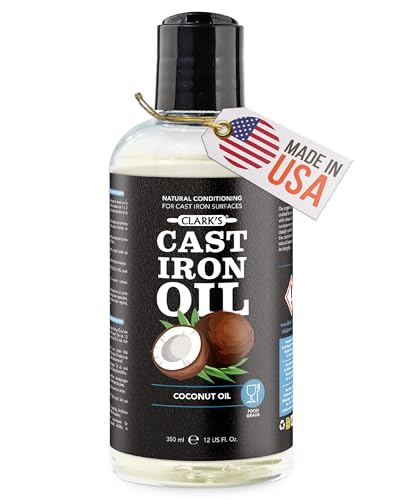
Clark’s uses highly refined, food-grade coconut oil as its sole ingredient, which gives it a flavor-neutral profile and exceptional resistance to rancidity. Coconut oil’s molecular structure polymerizes into a hard, smooth finish that repels moisture effectively — a key advantage for griddles stored in humid environments or used outdoors. The 12-ounce bottle offers the largest volume among the liquid options reviewed here, making it a strong economic choice for heavy users.
Application is straightforward: clean and dry the griddle, apply a few drops, rub it thin with a cloth, then heat until the oil stops smoking. Because coconut oil is solid at room temperature, you may need to warm the bottle slightly if your kitchen runs cold, but it melts immediately upon contact with a warm pan. Owners of century-old cast iron heirlooms report that Clark’s maintains seasoning without flavor transfer, even when baking bread directly on the seasoned surface.
The only real trade-off is that coconut oil does not build seasoning as quickly as beeswax pastes. This is a maintenance oil rather than a deep-restoration tool. If your griddle already has a decent patina that just needs regular reinforcement, Clark’s is one of the most reliable, low-fuss options you can buy.
Why it’s great
- Refined coconut oil will never go rancid, even with infrequent use
- Large 12-ounce bottle provides excellent volume per application
- Prevents rust effectively by repelling moisture from the metal surface
Good to know
- Solid at room temperature, may need slight warming before use
- Builds seasoning more slowly than paste blends or beeswax formulas
4. Lancaster Cast Iron Seasoning

Lancaster combines locally sourced beeswax with grapeseed and safflower oils to create a paste that melts smoothly into a very thin, even film. The beeswax acts as a carrier that forces even distribution, preventing the thick pools that sometimes happen with liquid oils. Once polymerized, the finish is noticeably darker and smoother than what most single-oil products produce.
Users report that the seasoning outside the griddle — the sides and handles — stays non-stick longer with Lancaster than with alternatives. The beeswax creates a more durable barrier against moisture, which is especially helpful for griddles that live near a sink or in a damp garage. Several customers also discovered it works well on wooden cutting boards, though its primary design is for cast iron and carbon steel cookware.
The small 2-ounce tin looks tiny compared to 8-ounce bottles, but a little product goes shockingly far. Many owners report getting dozens of applications from a single tin because the paste does not saturate the cloth the way liquid oil does. If you prioritize coating consistency and longevity over raw volume, Lancaster punches well above its physical size.
Why it’s great
- Beeswax base creates an exceptionally even, streak-free seasoning layer
- Very concentrated — a 2-ounce tin lasts through many applications
- Protects exterior surfaces from rust longer than liquid oils
Good to know
- Small container volume may seem expensive per ounce initially
- Paste requires warming the griddle before spreading effectively
5. Walrus Oil Cast Iron Oil

Walrus Oil uses 100% pure safflower oil with a smoke point between 450°F and 500°F, one of the highest in this lineup. This thermal ceiling means the oil fully polymerizes before it burns, leaving a clean, hard seasoning without sticky carbonized spots. It is NSF certified for food contact, which adds a layer of third-party verification that the oil is safe for repeated use on cooking surfaces.
The liquid form makes application nearly instant — a few drops spread with a paper towel, then heat the griddle until smoking stops. Users who maintain multiple pieces of cast iron or a large flat-top griddle appreciate the speed; you can season an entire Blackstone cooking surface in under two minutes. The oil is also 100% vegan and plant-based, fitting seamlessly into kitchens that avoid animal products.
Some users noted that the bottle’s wide mouth can cause accidental over-pouring, which wastes oil and can create sticky patches if not wiped thoroughly. A precision tip or dropper insert would improve the experience significantly. For the price and performance, however, Walrus Oil delivers a reliable high-heat liquid seasoning that competes well with avocado-based alternatives.
Why it’s great
- Very high smoke point (450-500°F) ensures complete polymerization without burning
- NSF certified, 100% food-contact safe for peace of mind
- Fast, easy liquid application ideal for large griddle surfaces
Good to know
- Wide bottle opening makes it easy to pour too much oil at once
- Safflower oil may polymerize slightly less hard than beeswax blends
FAQ
Can I use regular cooking olive oil to season a griddle?
How often should I re-season my griddle with oil?
Is beeswax-based seasoning better than liquid oil?
Does the oil I season with affect the taste of my food?
Can I use the same oil for a Blackstone griddle and a cast iron skillet?
Final Thoughts: The Verdict
For most users, the best oil to season a griddle winner is the Crisbee Cream because its beeswax-and-sunflower paste delivers the most durable, even seasoning layer with minimal product, and it repairs existing damage better than any liquid oil. If you want fast, low-smoke daily maintenance, grab the Heritage Products Avocado Oil. And for a large-volume, non-rancid option that never spoils, nothing beats Clark’s Refined Coconut Oil.